
Prepping Skis (Part 1)

Dripping the wax

Way back when in the last century, after I started skiing, ski bottoms were wood. Then, Kofix, the first polymer bottom, came out in 1956 followed by P-Tex 2000 in 1966. Since then, every ski has a polyethylene bottoms. The lure, besides better gliding over the snow, was that with P-Tex, one didn’t have to ever wax your skis again.

So much for nostalgia. Besides helping the skis run better, wax also helps protect the bottoms of the skis from damage. Again, back in the last century’s good old days, I’d apply a coat of paraffin to the bottoms of a new pair of skis, scrape it off, buff it from tip to tail, and then repeat the process twice.

What this did and still does is fill in the pores in the polyethylene and make it slicker. Slicker means the ski goes faster, easier to skid and/or turn.

Before each ski trip, I’d prep our family’s skis, and each night after skiing, I’d apply a new coat of wax. In the late 80s, hotels and condos had a room where one could prep skis, but they seemed to have disappeared along with the typewriter.
Ironing the wax

Newer ski bottoms are better, but I still wax before each trip. If nothing else, it gets me excited about the coming ski trip. Here’s the process.

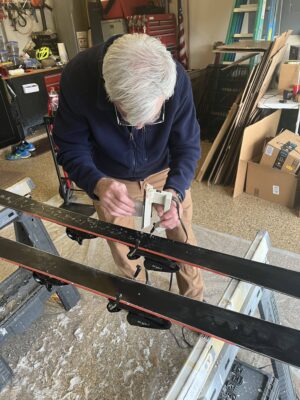
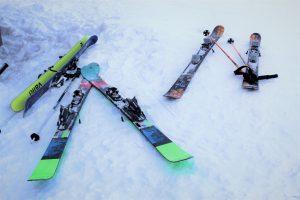
Step 1 – set up your work area. This will be messy, so I recommend covering the floor under the sawhorses with plastic used to protect walls and floors when you paint. This way, when you are done, you can pick up the plastic that contains the wax shavings and put it in the trash.

Step 2 – wipe down the skis with a damp (don’t use soap!) rag to clean any dirt or grit off the bottoms.

Step 3 – Drip the wax in a wavy line down the ski using an iron (mine is an old travel iron). It doesn’t matter if you start at the tip or the tail, and when you’re done with each ski, the trail of wax should be about 3/8 to ½ inch wide. For this base wax, you can use paraffin that, once upon a time, you could get in small slabs where the canning goods were at the supermarket, but it is getting harder and harder to find. I’ve switched to LFTurari Ski and Snowboard Wax. The link to get it on Amazon is here.

Step 4 – use the flat bottom of the iron to flatten the wax on the bottom
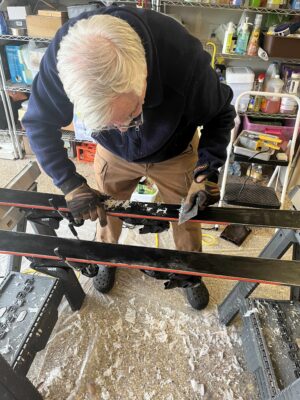
scraping

of the ski. Don’t worry if some drips over the edge. Be careful not to leave the iron on the bottom on any spot for more than a few seconds. By the time you finish the second ski, the wax on the first one has cooled sufficiently to scrape.

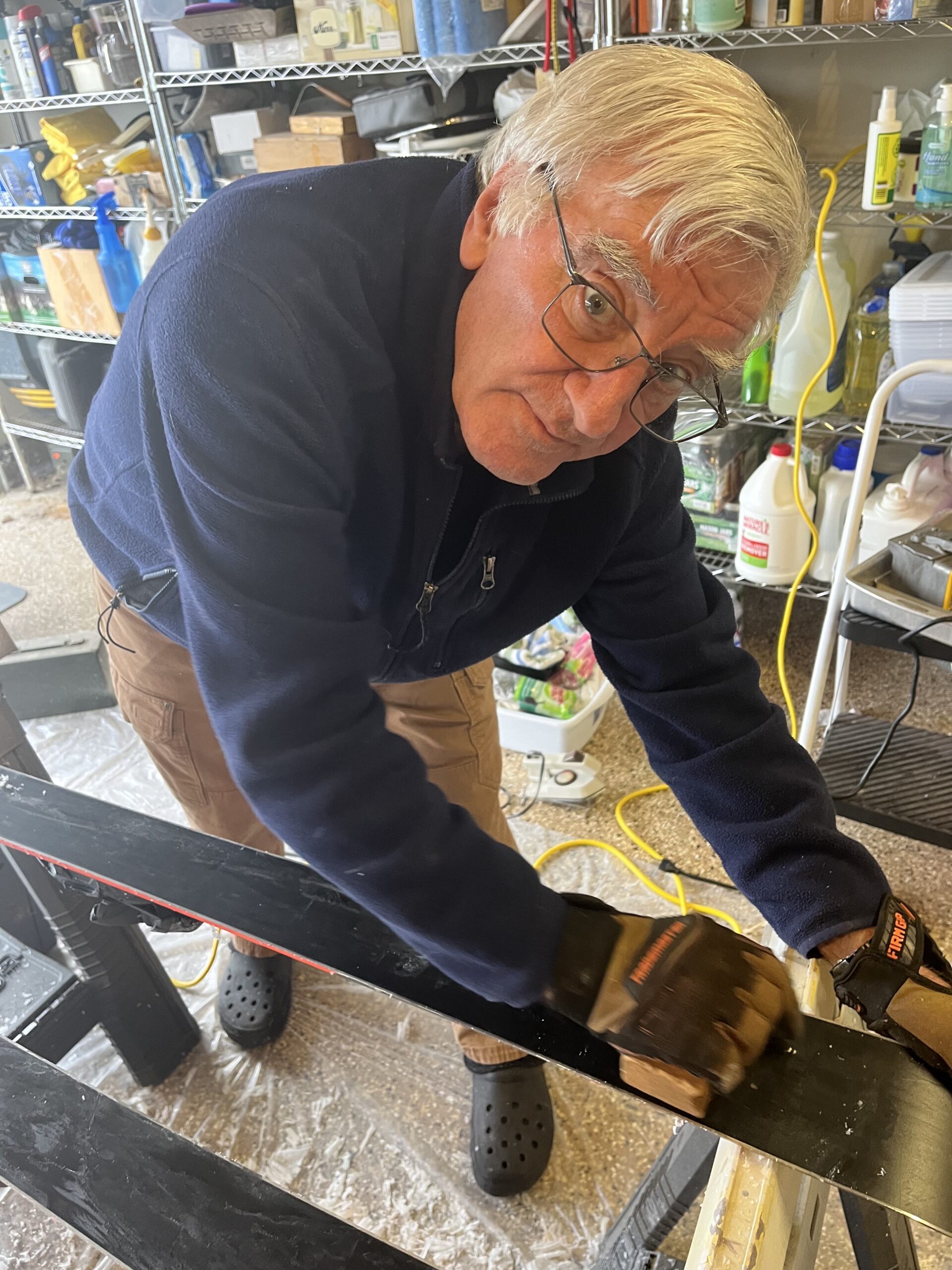
Step 5 – scrape the wax off from tip to tail by holding the scraper at a 30 – 45 ° angle to the bottom and scrape from tip to tail. My scraper is the blade from an old kitchen bench scraper which are easy to find. Just make sure that you deburr it before you use it.

Step 6 – buff the wax, again moving the cork or plastic brick from tip to tail. I prefer cork. This step pushes it into the P-Tex and smooths it out.

Step 7 – run the scraper down the edges to remove any remaining wax. Then, pick up the plastic!

Warning, depending on the snow conditions, your skis may feel sluggish at first until the wax wears off. However, the more you do this, the more protected your bottoms are, and if you wax for specific conditions, the prepped bottoms should hold and retain the wax better.
The Older We Get- The Better We Were

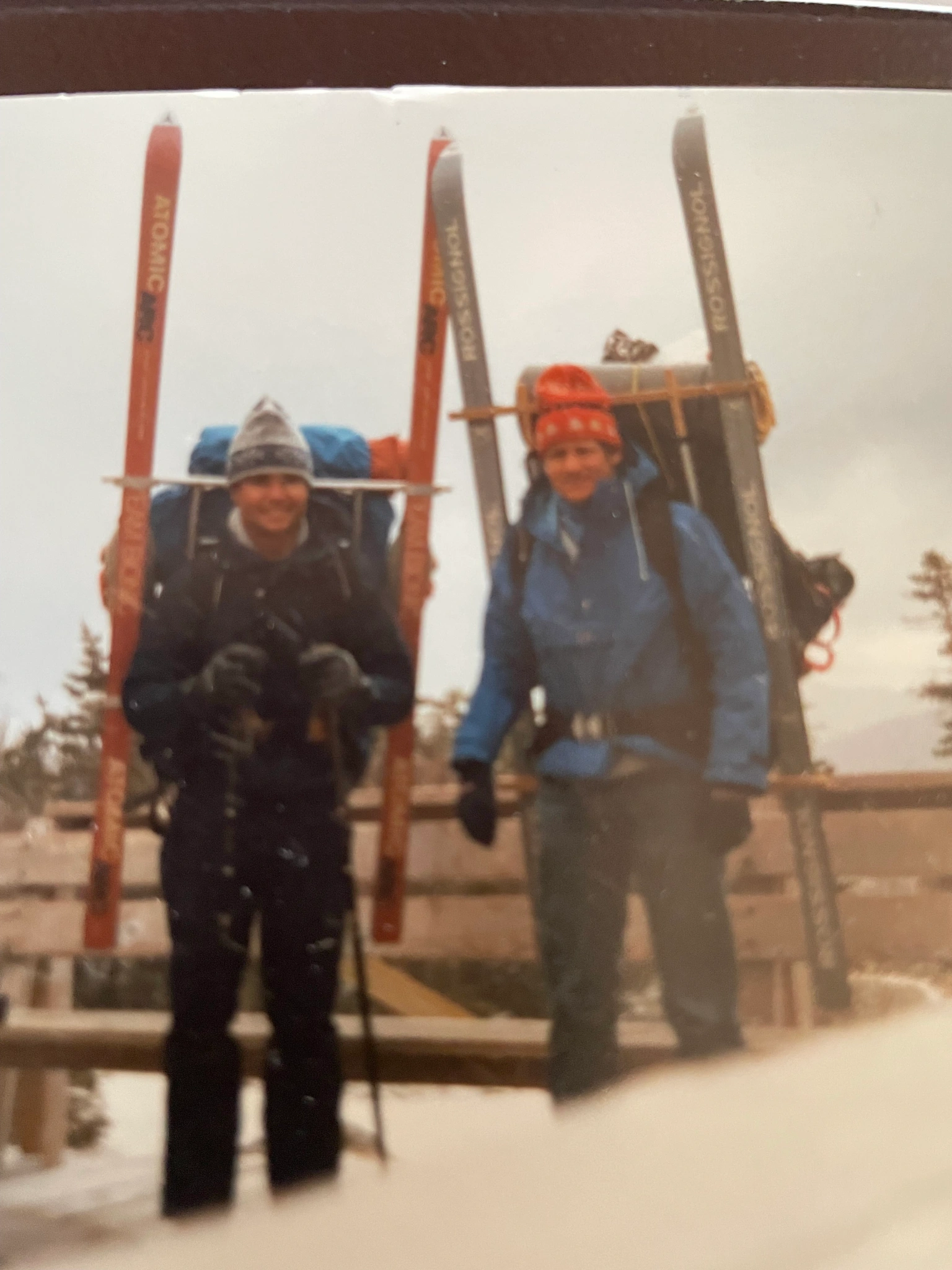
Howard Johnson’s at Tuckerman Ravine- 1984

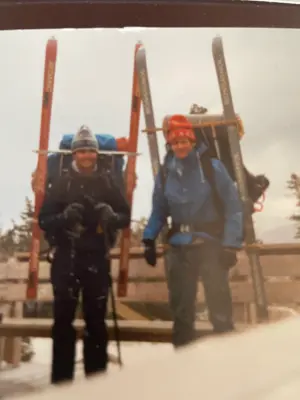
So, I was surprised this week when my friend Eric, from Tahoe (formerly of Vermont), mailed me some pictures from way back when we skied Tuckerman Ravine together. Looking at these 40 year old photos, I thought back to a time when we laid down the only tracks one day in Dodge’s Drop ( and Eric had a cast on his wrist). We had some good times up there as we skied it many times together. But the thing that is amazing about this picture is the equipment we used. I mean, look at the skis. Probably 203 or 205 cm GS skis. Look how narrow compared to today’s equipment. 

The other interesting thing about these pictures was the external frame packs we used. We added cross bars with latches and wing nuts to secure the skis to the frame. He was from Vermont and naturally used wood. I was from the steel city and with the help of my dad, we used aluminum cross bars. All in all, with the boots secured in the bindings, our clothing and food for the week, sleeping bag and mat, the pack weighed in at around 85 pounds which was a pretty good load to haul to the shelters where we stayed. One year, I thought I would save some time and make peanut butter and jelly sandwiches ahead of time. By the time the week ended, that package of sandwiches had been slept on, eaten from, and generally the once nice, neat stack of sandwiches had turned into a peanut butter dough ball. Lots of memories came flooding back to me as I opened the envelope this week from my friend.

In today’s world, people who climb and ski as we did, use internal frame packs. There are slots in the side of the packs that allow easy placement of the skis and the internal frames are much better suited to securing a lot of cargo. Lots of guys today use skins on their skis for climbing, and AT equipment to hike and ski to their destinations. Eric and I basically hauled our alpine equipment up to the shelter, and from there basically climbed up in our ski boots with our skis over our shoulders. Equipment surely changes and evolves over the years and skiing is no exception.

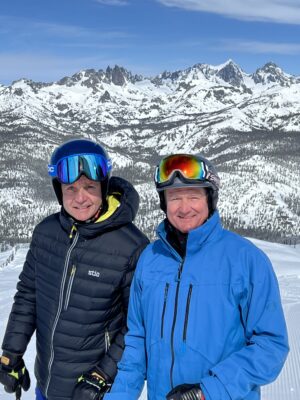
40 years later at Mammoth Mountain, California.

The other things that evolve over time are the stories that we tell about the old days. Sure, there are embellishments, the runs are bigger and badder than perhaps they were, and the stories that we tell each other evolve with the passage of time. But like my friend Paul Vey still says many years later, our trip down Corbet’s Couloir at Jackson Hole, was the highlight of his athletic career. He played Div 1 basketball at UVM and that is still saying something. Somehow the beers taste better when the stories start cranking up. Eric’s wife Helen usually disappears when she starts hearing the old stories. She has heard them way too many times. But when pictures like these start showing up again, they remind me of a time gone by and the good times that we had. I mean, we are still at it – 40 years later. Maybe not camping and hiking Tuckerman Ravine anymore, but still skiing in some pretty good places and having a pretty good time. And still skiing relatively well. 

So, if you get a chance, go look in your old photo boxes and take some time to review your old times with great friends. They will remind you that friendships are important and like equipment and stories, they evolve over time. Having friends that you can still do things with after many years is a true blessing. Encourage each other to stay in shape, stay at it, and make the effort to get together whenever you can. And always remember- the older we get……………the better we were.

ICYMI for March 2024

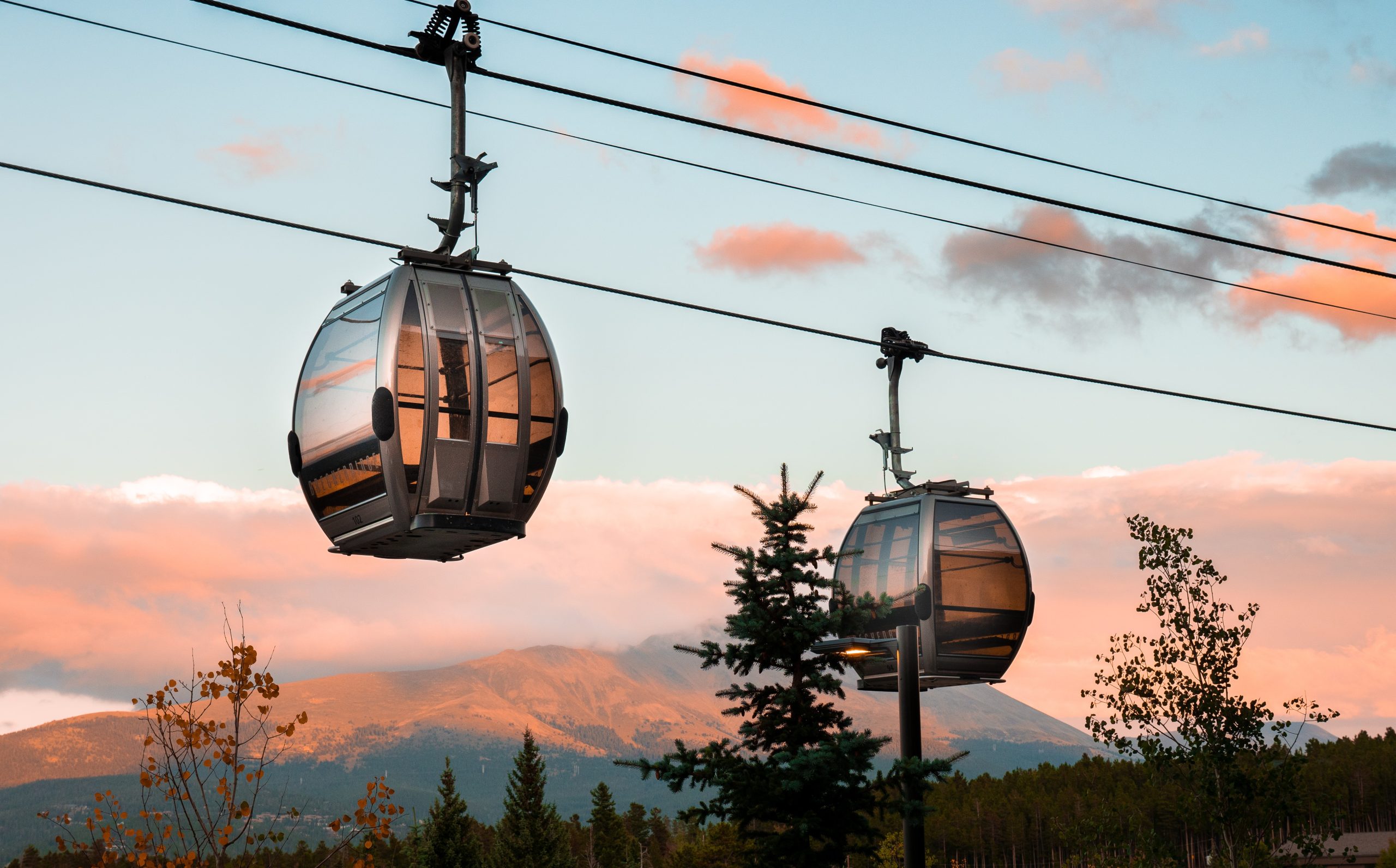
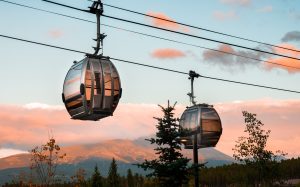
A sunset shot of two gondolas in Steamboat, CO Photo by Phoenix Dorninger on Unsplash

Days are getting longer and warmer, and spring skiing is the reward we downhillers get for braving frosty fingers and toes until now.  Let’s hope the snow holds until April or May. Until then, enjoy these events and deals happening at the destinations we love.  Here are bits and pieces from here and there for March for skiers and riders.

Sugarloaf

The largest ski area East of the Rockies just got even larger with the opening of West Mountain in mid-February.

 “We are thrilled to announce the highly anticipated grand opening of West Mountain”, shares Karl Strand, President & General Manager.  “The magnitude and pure impact of this type of terrain expansion can’t be understated.  It’s the largest terrain expansion to happen in the Northeast since the late 1970’s.”

West Mountain expansion includes 12 new alpine trails, covering approximately 120 acres. The expansion will increase Sugarloaf’s total skiable acreage by nearly 10%, catering to both beginner and intermediate skiers and riders.

They are transported by the new Bucksaw Express, a high-speed detachable quad which will increase Sugarloaf’s uphill capacity by 2,400 skiers per hour. It transports skiers and riders up to Bullwinkle’s Restaurant, providing convenient access to the heart of the mountain and revolutionizing the way guests access and navigate the slopes.

 “West Mountain creates a new family-friendly zone, something Sugarloaf has needed for quite some time”, shares Strand, “the accessibility of the lift and terrain provides a progression platform unlike anything we’ve ever had here.  Our instructors and families will have a separate zone creating confidence and a “safe” zone, if you will, for beginner and intermediate level skiers.”

Extended Hours at Aspen

Starting March 1, all four resorts that make up Aspen/Snowmass are extending the hours of lift operations, to coincide with extended hours of sunlight.

Aspen Mountain: Silver Queen Gondola, Ajax Express and FIS Lifts will operate until 4pm The last ride down on Silver Queen Gondola is 4:30pm.

Highlands: Exhibition Lift will operate until: 4pm. Loge Peak will operate until 3:30pm.

Buttermilk: Summit Express will operate until 4pm.

Snowmass: Big Burn and Elk Camp Gondola will operate until 4pm. The Village Express Lift will operate until 4:00pm to the summit and until 4:15pm to the mid-point.

Steamboat

The popular pre-pandemic free daily mountain tour program for adults only with “yellow jacket” volunteer hosts has been changed into a ticketed tour for all ages, especially families.

Guides still take participants on greens and blues (no blacks), focusing on connecting the various peaks and lifts, along with historic tidbits. 

Now called Full Steam Ahead Mountain Tour, it is being offered Monday-Thursday through early April, 10am to Noon.  The formerly-free tour is now $20 for adults 13+, and free for a child aged 10-12 with a paid adult ticket (children younger than 10 are not permitted on the tour, and children 10-17 must be accompanied by a paying adult).  

Advance registration is required, as is a lift ticket or pass.   Steamboat is a member of the Ikon Pass system, and also offers resort-specific passes. Meet at 9:45am the base of the new Wild Blue Gondola, at which whisks riders to the top of the appropriately-named Sunshine Peak.  https://www.steamboat.com/things-to-do/activity-details/mountain-tours

Skier/Snowboarder Responsibility Code – More Thoughts

Let’s face it, unless you’re an active ski instructor trying to instill key concepts to your students, or a parent/grandparent trying to explain this thing to a relative or grandchild, when’s the last time you actually read this “Code”, now with 10 points?

Instead of reading each numbered point, let’s think about the most important messages we’re trying to convey to anybody and everybody we think needs to know this stuff.

Using the numbered list, and starting with kids, I ‘d go with these over everything else:

1. Ski or snowboard at a speed you can control. That means being able to slow down quickly to avoid other people, trees or objects in front of you. Why? So you don’t get injured, and so you don’t injure other people, because either of those outcomes will wreck your day.

2. Understand who has the right-of-way. That means people who are ahead of you or downhill from you have the right-of-way. Why? Because they are unable to see skiers/riders behind them, and it’s not always safe to be turning one’s head around anyway while descending a ski hill. The rule is simply: anybody ahead/downhill of you have the right to keep on skiing, and YOU have a responsibility to keep out of their way.

For my own kids I always gave them a“perimeter” concept which went like this:

Always keep an eye out for who is getting too close to you. Always try to find space where your progress downhill is not continually interfered with by nearby skiers. This was helpful because –  being kids – they’d always find the loophole in my directions.  

For example, they quickly explained that sometimes there’s a skier on the right, and even on the left, who is either right next to them, or a bit above or below. So who’s got the right of way now, they’d ask me?

3. Stop where you can be seen. This one I demonstrated physically, on the hill, when I took my kids to terrain where there was a slight rise, and then a dip. I’d lie down (assuming no one was around), then yell to them, asking: “CAN YOU SEE ME NOW?” Of course, I chose a spot where the person lying down would be 100% hidden from a downhiller perhaps only 10-15 yards uphill. It amazed my kids that I’d disappeared.

To me, that was possibly the most dangerous situation of all. And once I’d shown my kids how someone lying down on the snow, but slightly ahead of them, and hidden by a dip in the trail following a slight rise, could appear invisible until it was too late, and a fast skier might collide directly into the “lying down” skier/rider. DANGEROUS TO BOTH PARTIES.

4. Get your bearings, and look uphill to make sure it’s safe to start downhill.

5,6,7. (Obey signs, keep off closed trails)  All helpful, but secondary and common sense. Obviously, much more important in the big mountains out West.

8,9. Know how to load/unload lifts, and someone should be with a newbie who does not know such things. The code should indicate that ski area personnel are authorized to “pull lift tickets” from drunk and/or drug-affected individuals. On roads, police will arrest people for such violations, and it should be the same on ski hills and mountains.

10. Finally, besides trading contact info, and especially if it seems someone’s unwilling to share contact info, it’s never a bad idea to get a quick picture of the person.

See full list here: https://seniorsskiing.com/skier-snowboarder-responsibility-code/

Editor’s Note –  

We invite you to add your comments about experiences with downhillers who have violated the safety code. Even more, we invite you to contribute a full article on your opinion of the current state of safety and courtesy on the slopes today.  Add your comment directly to the article, or send us your full article to info@seniorsskiingmedia.com

anne-nygard

Importance of Rental Demo Skis

I love to ski. (My wife says I live to ski).  Most of my adult working life I was too busy  to research new ski technologies and techniques. It is why I wound up skiing the same pair of Head Monsters for a decade until they wore out, and how I learned how important the demo process is to finding the perfect new pair of skis.

For years, my purchasing research typically was reading a few articles, talking to fellow skiers, and with a (hopefully) knowledgeable ski shop salesperson.  Invariably, I would buy what one of them recommended.  Maybe you have, too.

Photo by Anne Nygård on Unsplash

The last time I brought the Monsters in for sharpening, I was told there was nothing left to sharpen. Obviously, I had skied and sharpened the metal edges to death, and they finally died. It was time to buy a new pair. (Not my Salomon boots! I’ve had them spot-stretched three times, and they fit like a glove. I have had to replace the heelpieces, though.)

Instead of running to any ski shop to buy something, I chose to rent on my first full-week trip of the season and not rush to buy new ones. I’ve always shlepped my ski stuff wherever I’ve skied, both domestically and internationally, so this was an extra perk. (The serious convenience of shipping instead of shlepping skis to and from ski trips is a different subject.)

Flying into SLC in the early afternoon for a 70+ Ski Club trip, there was plenty of time to get to a ski shop to rent skis (fitted to my own great boots, of course). We discussed my ability, and he began to point out the differences of several brands and models he was considering for my skill level and body weight.

I asked if I could ski a different pair each day that he would suggest based on my feedback, and he agreed, even encouraging that.  A good shop will let you swap as often as you want. So, I rented for the week, and took the first pair he suggested.

During the next five days I tried to remain focused on the skis while still enjoying my skiing each day, trying all different types of terrain, speeds and turns and paying attention as much as I could to weight shifting, balance, chatter, turn radius, carving, etc.

Whenever I had a few moments, I would dictate my impressions about the skis into my phone. At the end of the day, I would return the skis to the shop, meet the same sales/manager guy, and report what I liked and didn’t like, what it felt like, etc., compared to the previous day’s skis. Then, he would recommend a different pair for the next day based on my pros and cons, and repeat the process for the entire week.  

 At the end of the week I knew exactly which skis I liked the best and why– enough to buy them 

I know ski performance can vary substantially between skis models. I just never felt it myself, until that week, and the differences were both noticeable and meaningful. Simply, my new skis improved my skiing and my enjoyment of skiing. I couldn’t be more satisfied.

They fit me and my ski style better than any other I’ve used in decades, even before the Monsters. They require the least amount of work to achieve the level of comfort I want while skiing, without the negatives of the others.

I can’t recommend this “trial” approach to purchasing skis strongly enough, especially if your purchasing method is to talk with sales folks, read a few articles and ask other skiers how they like what they’re skiing on. Most ski shops will apply your rental fee towards the purchase of a new pair from them at the end of the week, whether you rent one pair for the week or a different pair every day.  Some will even sell you the actual demo pair that you fell in love with.

When these skis are worn out, I’ll be sure to find a new pair the same way.

Personal History of Hunter Mountain

Photo Credit Hunter Mountain

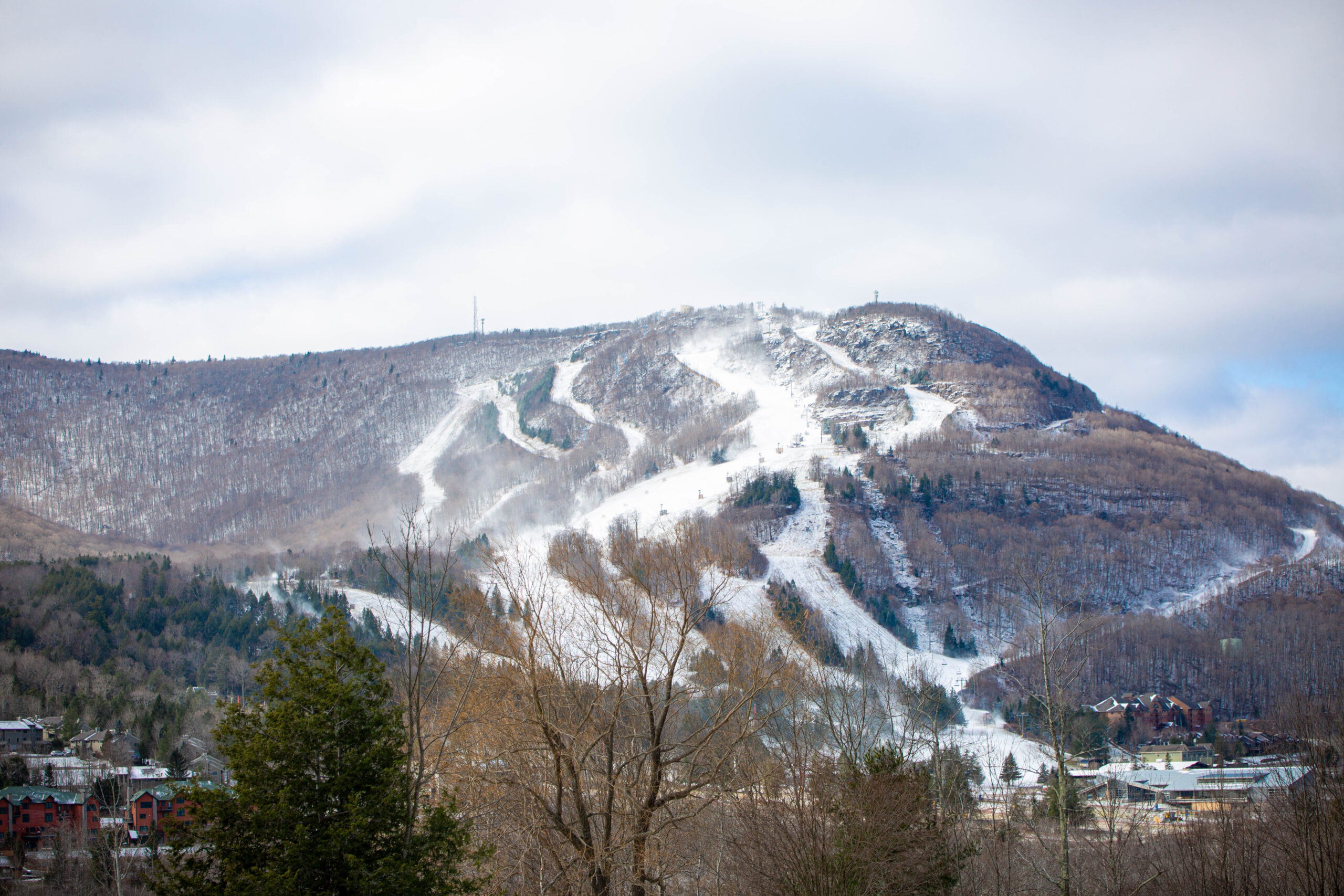
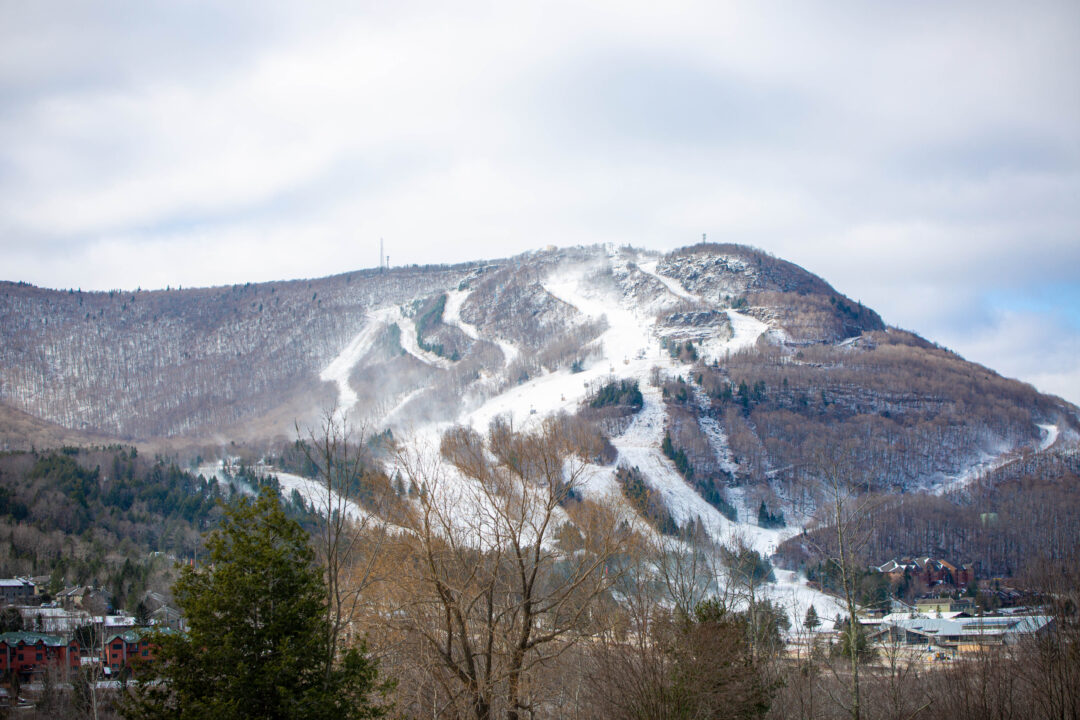
Every time I drive Route 23A to Hunter Mountain, I am reminded of a lifetime connection to the area. I learned to ski here, and so did my kids, but I started visiting Tannersville long before the ski mountain opened in January, 1960.

My family spent two weeks each August at the Rose Garden Hotel when I was little. It was owned by childhood friends of my father from Frankfurt. It was always a joyful annual reunion – for those like my father who had escaped to America before WWII, for those with tattooed numbers on their arms who had survived the concentration camps, and for the American-born generation like me defying the goals of the “Final Solution”.

In addition to the rambling hotel building, there was a separate smaller one we all called The Casino. It was a multi-use facility for the grown-ups gambling for pennies on Canasta, Mah Johng or poker, rainy day activities for us kids, and dances and staff performances that were never the quality of “Dirty Dancing” for everybody.   

It was in the swimming pool in the front of the hotel, adjoining the road, that a son of one of my father’s friends taught me to swim.  I remember wishing he was the big brother I never had. Float. Breathe. Swing your arms like a windmill and kick your legs like you are running.  And I did not drown.

In high school, I discovered skiing when a friend – the only person my age who owned a car – invited a bunch of us to go skiing at newly-opened Hunter.  It was a day-trip, because we could afford gas and equipment rentals, but not a hotel. 

 At the time, I was a pretty accomplished ice skater – good enough to be an after-school and weekend instructor at the Wollman Rink in Central Park. But one day on skis told me I would rather go downhill than around in circles.  

What was then called Hunter Mountain Ski Bowl was founded by Broadway theater people who had skied in Europe on tour and wanted somewhere to ski close to home. But they knew nothing about operating a ski hill and soon sold out to a local company, the Slutzky Brothers Construction Company, which had bulldozed some trails. Brothers Orville and Isadore (Izzy) Slutzky, also were the children of immigrants.

For a time, Hunter was known for its snowmaking – it was a pioneer in the then-new technology – and for its nightlife.  Most of the world’s snowmakers in the 60s and 70s learned from their son/nephew David Slutzky, who pretty much perfected the technique. I don’t think he’s ever gotten full credit for that. The snowmaking – not the party scene.

Hunter also became popular with restaurant chefs who came to the USA when Julia Childs put French cooking on the American map, and who missed skiing their native Alps. They would ski Hunter on Mondays, when their restaurants were closed, and created their own ski club. The US Chefs Ski Club was founded by Andre Soltner, the fabled owner of Lutece, NYC’s top restaurant at the time, and apres ski featured fine French wines, not beer. The club still exists, including charity fund-raising races and other events.  Some members are 40-year-plus friends. 

Another club with deep roots at Hunter, the 70+ Ski Club, will hold their 47th annual race and fun day Wednesday March 6. 

Sometime after I grew up and had kids, the Rose Garden Hotel became the Villa Vosilla. By then, I had traded broadcast news to be a travel writer and ski writer, which meant access to Hunter’s owners for interviews. This is when I told Orville Slutzky about my Rose Garden Hotel history, including learning to swim in the pool there.

 “We built it,” he said simply, in his cluttered office on the second floor overlooking the lodge’s cafeteria.

The beloved vacation retreat of my childhood has changed names and ownership once again. Now, it is the upscale Melour Resort. A thick row of greenery now blocks the view from the road of the swimming pool and the hotel behind it built by the Slutzky Brothers Construction Company.

Hunter also has changed ownership. After Orville and Izzy passed away, the second-generation sold out to the Peak Resorts group, which owned several resorts in the Northeast.  A few years later, Peaks sold to Vail Resorts, which operates it today, putting Hunter on the Epic Pass.

I’ve been known also to get wistful looking at the windows where Orville’s office used to be. They are covered over now and I have no idea what is there. Maybe storage, which is pretty much what his wonderfully messy desk and shelves were.

While I have skied uncounted times at the resort the Slutzkys built and put on the world ski map, I never stayed again at that hotel of my childhood.  Maybe one day soon.

stay warm

What A Ski Instructor Wants You To Know About Keeping Warm

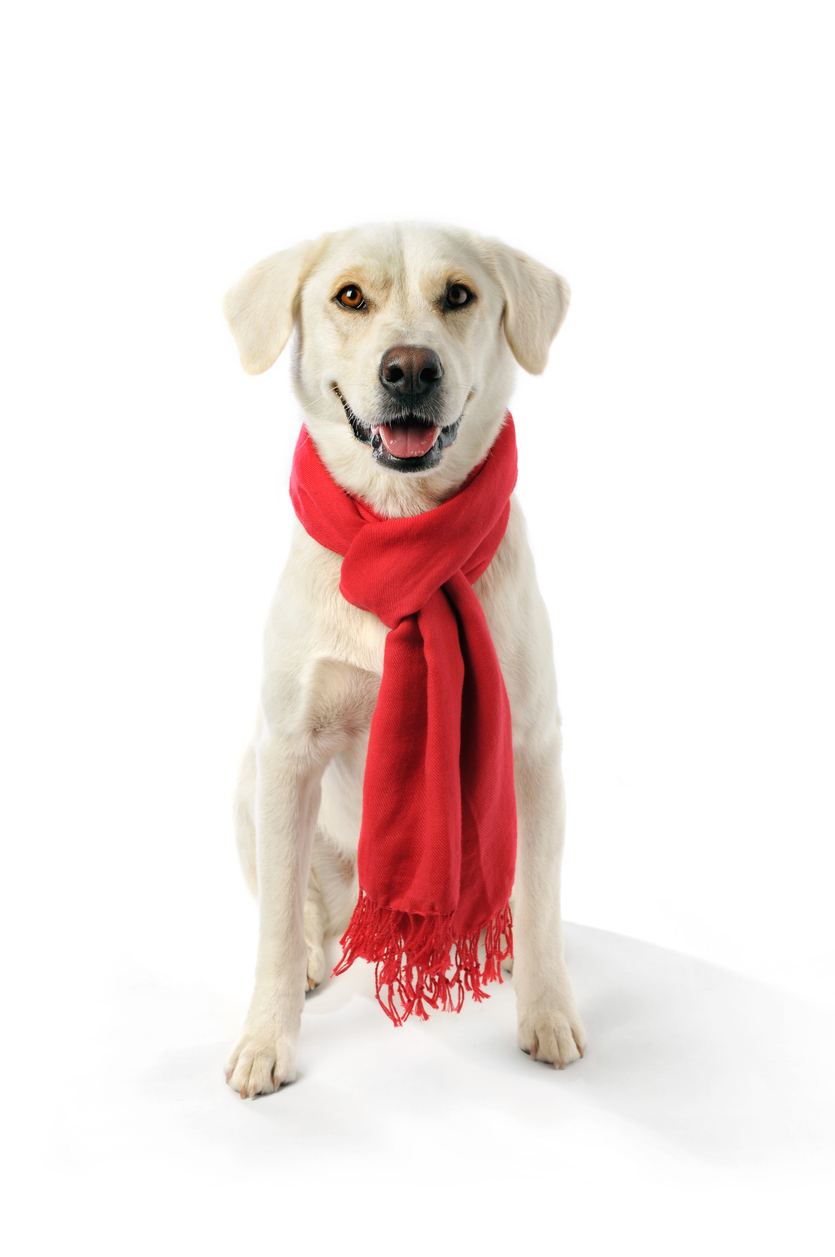
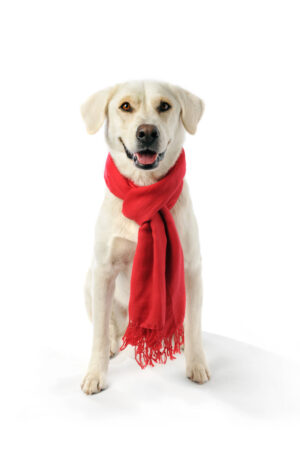
Rescued male Labrador mix wearing his winter scarf ready to go! Credit:Stephanie Phillips

by Stacey Smith

I have been a ski instructor for 18 years. I am also a parent to two grown adults who learned to ski as children by going to work with me. Keeping all of us warm and comfortable for entire days on the slopes was my responsibility, and I make sure my clients, at any age, are warm and comfortable to ensure they have their best day on snow.

Layers

There’s one word to describe how to stay warm – layers. Today’s materials and fabrics are so much thinner and warmer than the heavy knits of decades ago. 

Start with a base layer consisting of a long sleeve top and long underwear bottoms or even yoga pants. Long underwear is made in so many different materials and weights, such as fleece for cold, sub-zero days, and thin polyester blends for warmer spring skiing days.

Stay away from anything with a tight ankle cuff as you will want the ability to pull your pant leg up and over your calf when getting fitted for ski boots.

Socks Are Important

If your feet get cold, that will be enough to distract you from your ski experience. Find a good pair of synthetic/wool blend socks. Just make sure they are long enough to go over your calf.  

Stay away from cotton socks and anything shorter than crew length. Anytime bare skin rubs against the inside of the boot, it creates friction and becomes very uncomfortable. The more coverage you have on your foot and calf, the better.

Fleece

Keeping your body’s core warm is key if you’ll be outdoors for any length of time. Depending on the weather forecast, you may want to wear a thin fleece pullover or vest under your jacket or coat. They can always be taken off if you get too warm.

Snow Pants

Either bibs or standard snow pants, will do. Do yourself a favor and wear the most

comfortable pair of winter boots you have to the mountain. You’ll thank me for that advice at the end of your day!

Mittens or Gloves

Which you choose is an individual preference. In my experience, a thin glove liner in a mitten can help to ensure even more warmth on cold days. If you use hand warmers, the liner acts as a barrier to your skin preventing any burns if the handwarmers get too hot.

Helmets

I cannot stress enough the importance of a helmet, for two reasons, first to protect your head. Secondly, you will find it much warmer than a hat. You don’t need to buy a helmet; you can rent them at most ski areas and most ski schools require them with lessons, including for kids.

If you are renting and feel funny putting your head in a helmet worn by others, wear a balaclava (combined neck warmer and cap) or a thin hat/cap underneath the helmet. This will add an extra layer of warmth. Just be sure the hat is thin enough, so the helmet fits properly.

 Neck Warmers

These are a great way to close the gap between neck and helmet. Depending on the weather, choose toasty fleece or something thinner.  A scarf can work, too, provided the ends are tucked securely into your jacket. The last thing you want is your vision obstructed by a scarf fluttering in the wind as you’re sliding on snow, or – worse – caught in the chairlift when you exit.

 Goggles

These are important all winter, especially when weather conditions are snowy, windy, or just brilliantly sunny. It’s difficult to listen and watch your instructor if you must constantly turn away or cover your eyes because of blowing wind and snow.

 Boots

I mentioned handwarmers with gloves or mittens and it should be noted, toe warmers are also a great thing to have on very cold days. They are best applied when you put on your ski boots,  or right before you go to the rental shop to save time.

When fitting your ski boots, do not place any other clothing in the ski boot other than your sock. The single biggest complaint I hear from “first time” clients when we meet on the snow is “My feet hurt, my boots are too tight”. It’s usually because they have their underlayers and pants tucked into their boot and then the boots are buckled tightly, causing their circulation to be cut off.

I hope this helps you prepare for your first time or perhaps your grandchild’s first time on the slopes. Positive experiences on snow create future skiers and that’s always been my goal!

 Bio

Stacey Smith grew up in NH not far from the Mt. Washington Valley. I realized when mychildren were young, that I could become a ski instructor and at the same time they could learn to ski. I spent close to 18 years teaching all ages and abilities to make their first turns on snow. These days, I live in southeastern MA with my husband. He doesn’t ski but loves apres ski, and we both enjoy all things related to skiing, travel and food.

North Creek Snow Train

90th Anniversary of the First North Creek Snow Train

Photo Credit North Creek Depot Museum

There was no Alpine ski racing at the first Lake Placid  Olympics in 1932 – the first downhill competition in the winter games was held four years later at Garmisch-Partenkirchen Germany. But that didn’t mean there wasn’t plenty of enthusiasm for winter sports in the US at the time and it was shared by skiers throughout the Northeast.

One group that was especially active was based in Schenectady N.Y. where the General Electric Company had gathered engineers and other scientists from throughout the world. Notable among them was Nobel Prize winning chemist and avid outdoorsman Irving Langmuir and his protege at GE, atmospheric scientist Vincent Schaefer who became the first president of the newly organized Schenectady Wintersports Club. 

From the start, skiing was a part of the group’s focus and trails were cleared on local hills. Looking farther afield, Langmuir, with Schaefer alongside, flew his plane over the region looking for a place where there was was snow and train tracks. There was little snow in the winter of 1933 but at the suggestion of a Delaware and Hudson Railroad executive, the pair scouted hills near train tracks that ran alongside the Hudson River leading to the hamlet of North Creek NY. 

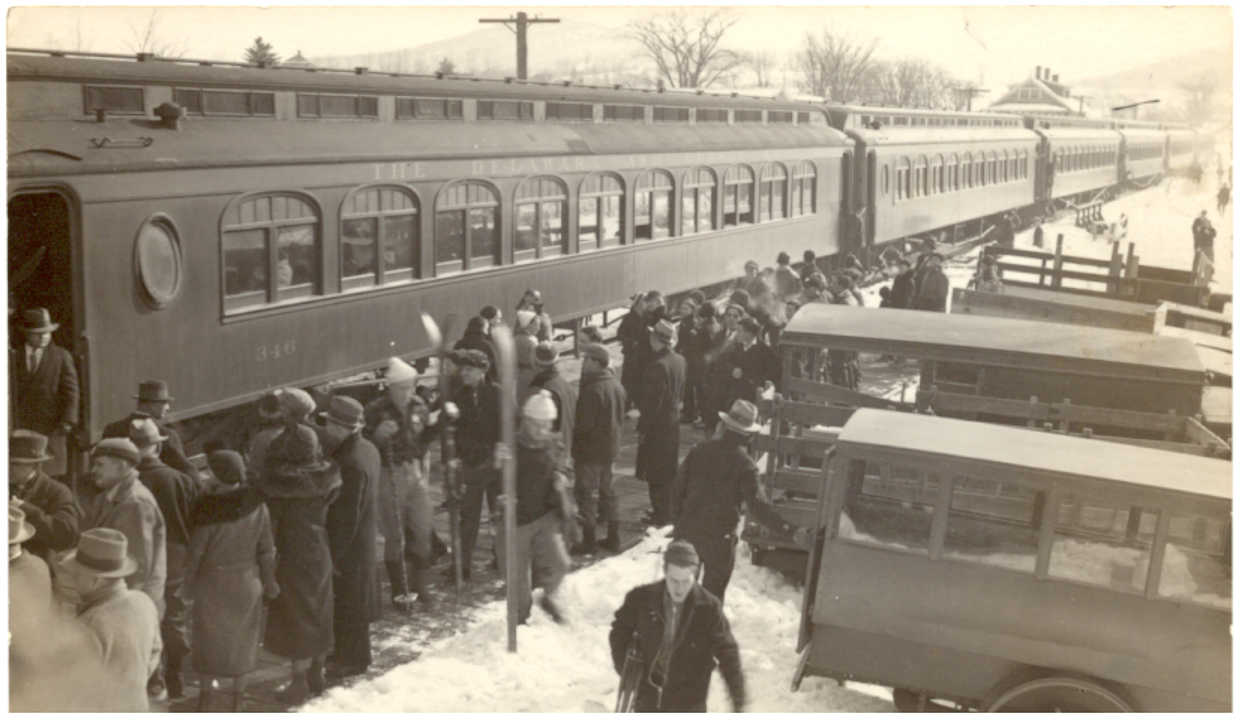
Following the 1932 Olympic Games the local American Legion had cleared several trails on local hills, and after several postponements, on March 4, 1934,  the first snow train traveled from Schenectady to North Creek carrying  378 passengers who paid $1.50 for the same day round trip ticket. 

The first trip was Sunday only. But starting in 1936, the  trains originated in New York City, loading at 11:59 PM  Friday evenings and arriving in North Creek at 8 AM Saturday. From there, it was “Ride Up, Slide Down”, the popular slogan coined by Wintersports Club member Bill Gluesing. People were transported by car, or truck, or school buses with ski racks attached,  from the village up to the nearby Barton Garnet Mines where they skied back down, mostly on logging roads 10- 20′ wide. 

In addition to area hotels, accommodations were often provided by local residents who would meet passengers on arrival at the railroad station offering rooms for the night. 

An early hero of this adventure was Schenectady nurse Lois Perret who formed the Safety Committee on site. A precursor to the National Ski Patrol, the committee provided first aid at the site and swept the trails when it was time for the train to leave in the afternoon.  The train trip home was often a highlight with baggage cars cleared and musicians and dancing on board for entertainment. 

The ski trains continued through the 1930s but were halted with the start of World War II. After the War, busses replaced trains for group travel to North Creek and The North Creek Ski Bowl, known as “Little Gore” . New York State opened  the current “Big” Gore Mountain ski area just outside the village in 1964 and skiing remains a popular activity in North Creek today.  

The 90th anniversary of the first snow train has been featured throughout the winter with the highlight set for a  three day celebration March 2-4 in North Creek. An extensive collection of snow train history is maintained by the North Creek Depot Museum located on the site of the original train terminal in the village. It is open to the public daily from May through October. 

France Vs Italy

France vs. Italy: And It’s Not About Soccer

Market day in Val Cenis

Looking for a traditional French village with a ski resort, I came across Val Cenis in Savoie, at the southern side of the highest paved mountain pass in Europe, Col de l’Iseran, 2,764 meters. In winter the closest airport is Turin and then the Frejus Tunnel. Flying to Geneva is also a possibility.

We sought the French atmosphere of a traditional village. On the recommendation of a friend, we stayed in the village of Lanslevillarde. The Arc River flows through the town which is on the north bank, whilesouth side, where the skiing is, has hundreds of ski-in ski-out vacation apartments. The town is at 1,500 meters and the highest lift goes up to 2,850 meters. We rented a cozy two-bedroom apartment with a fire place in the center of town on the north side of the river. The owner was an alpine guide and very French, that is, not as accommodating as he might have been. More on him later. Scouting out the restaurants we found traditional Savoie fare, Fondue, Tartiflette, and Pizza.

Skiing down to the restaurant in Val Cenis

The skiing can be divided between, the tree lined trails starting at 2,100 meters and going down to the village and the open areas above the tree line up to the top. This is an area of untapped potential. The skiing above the tree line is has great potential. For the most part it’s natural snow and the red runs with a 700-meter vertical are really great for cruising: the excitement of a good pitch without moguls. The drawback is that the lift going up to 2,850 meters is an old fashioned non-detachable chairlift that takes forever to get to the top. On a sunny day this could be plus, but in inclement weather going up is an unpleasant experience. Also, there’s only one mountain restaurant in this sector.

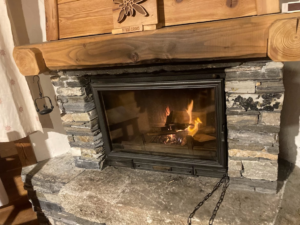
The fire place in our rented flat

We were there for two weeks, half of the time enjoying the sunshine but experiencing poor visibility on the other days. But on the days with poor visibility, I skied the runs below the tree line down to village taking advantage of the better visibility and enjoying the uncrowded non-stop runs with verticals of 500 – 600 meters. Artificial snow provided good cover all the way down to the village.

Oh, about the owner. Two days before our planned departure, he alerted us to the chance that French farmers protesting against the government might block the Frejus tunnel on the day we had planned to drive back to the airport in Italy. We couldn’t take the chance of missing our flight, so we revised our plan and left a day early. But where to go for these remaining days? A quick look at the map pointed me to the Sauze d’Oulx, part of the huge “Milky Way” ski region linking Sestriere with Montgenevre. We left Val Cenis on a grey Friday morning and two hours later arrived in sunny Italy. The local tourist office found us a pleasant hotel for one night. We checked in, and got dressed for skiing. A short walk up the hill to the lift and I was back in my element. Long red runs, great for non-stop cruising and sunshine, with a plethora of restaurants on the piste offering a wide range of Italian cusine. While I was skiing my partner was surveying the possibilities for dinner. She found a great restaurant with tapas and gourmet Piedmont delicacies plus a selection of Piedmont’s famous Barolo and Barbera wines. Rising early the next morning, I got in another few hours of fabulous skiing, before getting in the car for the drive the airport.

The score: Italy 1, France nil.

arapahoe-basin-Colorado Ski Country

Alterra Buys A-Basin

Add another mountain to the growing list owned by Alterra – Colorado’s Arapahoe Basin, which everybody calls A-Basin.

A favorite of locals and those who prefer an old-fashioned, low-key destination, A-Basin has been part of the Ikon Pass system since 2019.

Devoted fans hope Alterra won’t change it into a glitzy resort like its neighbors, Vail and Breckenridge, which are owned by Vail Resorts and on the Epic Pass. So far, all that’s been announced is improvements to parking and snowmaking, perhaps as early as next season.  This season, there are no chan

ges to the Ikon Pass.

A-Basin sits on the Continental Divide and offers some of North America’s highest-elevation and most-challenging terrain, paired with a laid-back vibe.  More than 80% of the mountain is blue, black or double-black – seriously, a place for serious skiers.

Iconic terrain includes steep, funnel-shaped Pallavicini, the East Wall, the Steep Gullies, plus the Beavers and Montezuma Bowl, some of North America’s newest terrain.

A-Basin is just 68 miles from Denver and boasts the longest season in Colorado, often running through the 4th of July, when the day includes fireworks.

The Beach, a stretch of prime real estate at the base, transforms into one of Colorado’s longest-standing après traditions.

Over the last 27 years, owners  Dream Unlimited Corp., together with the Arapahoe Basin management team, expanded A-Basin to 1,428 acres, replaced all of the lifts and most of the buildings, and opened the two highest elevation restaurants in North America, Il Rifugio and Steilhang Hut.

In 2018, A-Basin pledged to be carbon neutral by 2025 and recently the resort made a huge step toward that goal by officially using 100% renewable electricity.

“Arapahoe Basin is considered legendary for a reason. From its unparalleled terrain, to its commitment to sustainability, A-Basin has a team that has a passion and commitment for this unique place and its traditions, making it an ideal fit for the Alterra Mountain Company family,” said Jared Smith, President & CEO of Alterra Mountain Company.

Alan Henceroth, A-Basin’s Chief Operating Officer who has been with A-Basin for 36 years and has been the steward of the mountain’s unique culture.

“A-Basin has a long-time and loyal following among skiers and riders in Colorado and we care deeply about the culture of A-Basin that brings them back,” he said, adding, “we have every faith that Alterra is committed to helping us maintain A-Basin’s authenticity.”