Marble Mountain Newfoundland

Come From Away – To Ski

Marble Mountain Newfoundland

I had never kissed a cod. Or toasted bannock over a fire. Phrases like Owshegettinonb’y don’t flow off my tongue, and I didn’t know the meaning of mauzy. These experiences were all rites of passage when I skied Marble Mountain in Newfoundland, in eastern Canada.

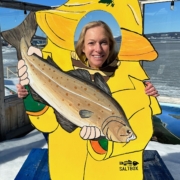
Bannock is a strip of dough wrapped around a stick that you roast, marshmallow-like, over a bonfire. Owshegettinonb’y translates in the local dialect as “How are you?” and mauzy means muggy.  And that flirtatious cod was part of a “screech-in” ceremony popular at pubs: recite anoath, chug a shot of rum, smooch the fish…. and I became an honorary Newfoundlander.

A land of fjords and barren mountains, Newfoundland is indeed a place apart, an island 11 miles from the Canadian mainland. It didn’t become part of Canada’s confederation until 1949—it had been a British dominion. Even its time zone is quirky, offset from Atlantic Standard Time by 30 minutes instead of the conventional hour.

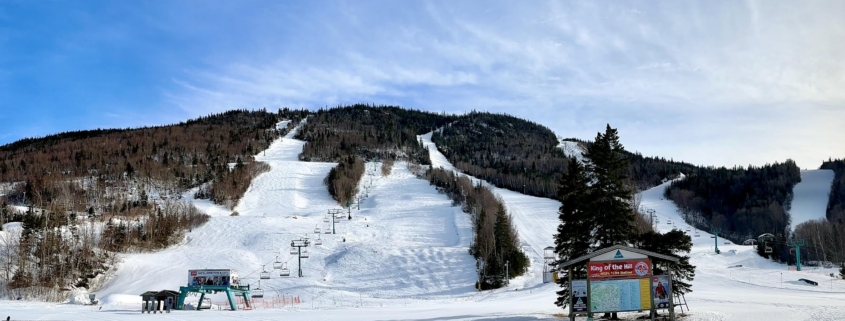
Marble Mountain Resort rises above the Humber River Valley. Although the mountain has the longest vertical drop (1,700 feet) of any resort in Atlantic Canada, most of its other stats are piddling: just 250 acres and 43 trails. But those ski runs are very, very steep, interspersed with stands of fir, spruce, and birch that pack in powder for tree skiing after a storm. And snow it does: Marble receives an average of 16 feet of snow each year, compared to 12 feet for Mont Tremblant in Quebec.

It feels like a time warp back to what ski resorts were in the 1970s. People leave their regular shoes in cubbies in the airy post-and-beam base lodge and brown-bag it for lunch. Lift ticket prices are also Old School: about $US 40. The resort has been operated by the provincial government since 1988.

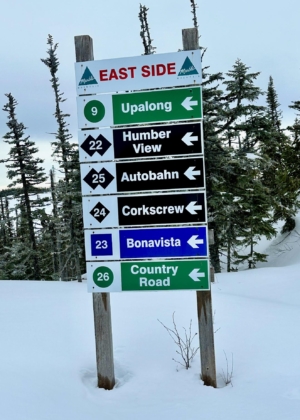
Although the vibe is folksy, lifts and grooming are 21st century. Wait lines are rare for the Lightning Express high-speed detachable quad that carries skiers and boarders from the base to the summit of Mount Musgrave. From there, choose black into MacLeod Nine or Deep Bight; blue for Chilliwack, Knute Chute, and a bunch of other cruisers; or green onto Country Road, a three-mile wrap-around trail overlooking the Humber River.

I especially enjoyed the “over the river and through the woods” feel of the intermediate runs. They meander past copses of fir, swoop over dips, and skim ridges overlooking the river. For fast-lane carving, the wide, perfectly pitched Blow Me Down black diamond is almost always groomed. Long-timers still call this trail OMJ—an acronym for “Oh My [fill in the blank]—the reaction of unwitting skiers when they pop over the ridge into the steep descent.

Marble Mountain Newfoundland Signs

Since Marble Mountain is mainly a family ski area, experts can usually suss out untracked powder lines, such as the gladed trees flanking the double-black diamonds of Boomerang and Ugly Stick and the groves along the ski boundary near Tuckamore Tangle.

Nearby Gros Morne National Park, a UNESCO World Heritage Site, offers backcountry skiing, cross-country skiing with 13 miles of groomed trails and snowshoeing. It’s one of the few places where you can actually see the earth’s mantle (middle layer), a stark orangish expanse exposed by 400 million years of weathering.

Deer Lake is the nearest airport.  Air Canada offers flights from Montreal Toronto and other cities.There is base area lodging at Marble Villa.

The kindness with which Newfoundlanders welcome strangers is legendary. After the 9/11World Trade Center attacks in 2001, nearly 7,000 airline passengers were diverted to the island’s Gander International Airport. Residents took stranded travelers into their homes, cooked them meals and shared their wardrobes. Their generosity touched hearts worldwide and inspired the Broadway musical Come from Away.

That friendliness continues on the mountain today. Be prepared to chat a lot on chairlifts. “Where are you from?” locals ask when they’re seated next to an unfamiliar face. That question is almost always followed up by another: “And how do you like it here?”

“A lot,” I answer.

The Punch Bicycle Turn

I first started playing around with this teaching tool when teaching kids to transition from “Mr. (or Ms.) V” which was a stable wedge to “Mr. (or Ms.) H” with the skis parallel. 

Let’s start with your body position on the skis. First, your shins should be pressed hard against the tongues of your boots, and your butt must be forward of your heels, or at least over them. Do NOT bend at the waist because then your rear goes aft. BTW, flexible boots help. 

Hands out in front of you as if they were on the handlebars of a bike (hence part of the name), and your feet shoulder-width apart. From a traverse, plant the pole 10 – 12 inches to the outside of the front tip of the downhill ski. The pole plant can be just a tap or a hard stab. Which you prefer doesn’t matter because this is a timing device to start the turn.

As you plant the pole, press forward and slightly into the hill with your knees, and then relax the forward pressure. This causes you to rise, and as you do, “punch” with your outside, or uphill hand in the direction you want to turn. The up motion unweights the skis and the punch causes your shoulders and most importantly, your hips, knees, and boots to rotate through the fall line. In the beginning, the punching movement needs to be exaggerated, but over time, the movement becomes natural and not aggressive.

Start on gentle slopes and start linking the turns with the mantra, “Plant, down, up, turn the body and down.” 

Coming out of the turn, hold the traverse until you are ready to make the next turn. The longer you hold the turn into the hill, the more you will slow. 

The result of this technique should be round turns. Initially, the turns will be sloppy in that you are skidding the tails of the skis as you come around. However, as you learn to roll your knees into the hill to edge the skis, you will feel this glorious feeling in your legs as the skis carve. The sensation comes from the resistance, i.e., the skis are not sliding down the hill but are making two clean lines in the snow, which if you stop and look back, you can see. Because the skis are on edge, you should be more stable.

You can watch me do this on the racing trail at Crested Butte.

And OBTW, this type of turn works on hard-packed snow and frozen granular because the ski edges will cut into the snow holding you on the line you want to ski.

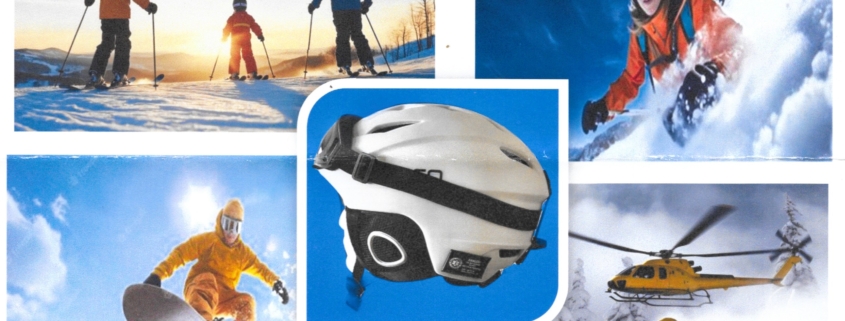
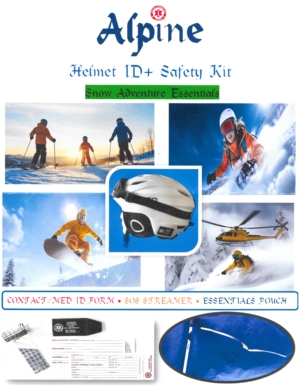
The Alpine Helmet ID+ Kit transforms your helmet from just protection to a first responder’s info source

Safety on the slopes is consistently the top concern of SeniorsSkiing.com readers. Now you may elevate your safety, and that of others, with the Alpine Helmet ID+ Kit. 

This unique skier/snowboarder safety solution integrates Emergency Medical Services (EMS) with Search and Rescue (SAR). The ultra-compact and durable Kit combines your medical/contact ID with a high-visibility Trail Marker designed for maximum emergency assistance. The “dual-purposed” Kit allows instant access to your essential personal information while empowering another skier to provide a SAR tool to deploy the high-visibility Trail Marker that helps rescuers pinpoint your location rapidly. The Alpine Helmet ID+ Kit is your ideal “ski buddy.” The Kit offers peace of mind by combining critical information with high-visibility rescue features, helping ensure rapid response to unanticipated events on the slopes.

This Kit includes:

  • Waterproof/Weather-Resistant Medical ID and Contact Form:  Safeguard your important medical details with this durable, easy-to-access synthetic ID that can withstand the harshest conditions.
  • 30” High-Visibility SAR SOS Streamer: This long, reflective streamer ensures you will be quickly spotted in an emergency, enhancing your visibility to Ski Patrol (and SAR) on the slopes.
  • The 1”x 1 7/8” Vinyl Essentials Carrying Pouch adheres to the helmet using an industrial-grade weatherproof adhesive for secure attachment, making it easily accessible in any situation. The adhesive used is a unique industrial/automotive formulation that performs well at high speeds, is weatherproof and unaffected by low temperatures. The formulation is free of plasticizers found in most adhesives that degrade helmets over time.  
  • The pouch includes an EMS Identifier logo to notify first responders plus also features a WARNING label to prevent helmet removal by non-professionals. The Pouch explicitly warns bystanders “DO NOT REMOVE THE HELMET” as any movement could exacerbate a spinal injury. Keeping the helmet on also provides physicians with information indicating the mechanisms of trauma to guide their evaluation and treatment.
  • The pouch is universally positioned on the left rear of the helmet. This allows emergency personnel to quickly and easily locate your vital information. This instant access to your information saves valuable time and eliminates the need to search through clothing layers. 
  •  The medical data form is a synthetic material impervious to moisture and tearing. Your information is easily printed with a pencil. The pencil is recommended as the synthetic form is non-porous and ink is not absorbed leading to smudging and fading.  The graphite “lead” lasts indefinitely yet is easily erasable, permitting you to “Edit with Ease” to keep your data current and avoiding 3rd party intervention.
  • Once affixed to the helmet, your “Safety Companion” now travels with you automatically everywhere you go and is always ready!
  • The holographic SOS Streamer/Location Identifier is highly reflective both day and night.  Each streamer is designed with a short flap that makes opening much easier, especially when wearing gloves.
  • The dual purpose of instant access to medical ID plus the SOS trail marker is a unique concept of combining EMS with SAR to better facilitate response to an incident.

The Alpine Helmet ID+ Kit is very well thought out, quite simple, yet very effective in an emergency. The retail cost of a 2-pack is normally $6.99 Thanks to an agreement between SeniorsSkiing.com and the makers of the Alpine Helmet ID+ Kit SeniorsSkiing.com readers can use Coupon Code SS65 and get the 2-pack for only $5.00 total. Isn’t your safety and that of your loved ones worth $2.50 a person? We think so. That’s why the Alpine Helmet ID+ Kit will be on our helmets this season. To get your discounted kit, click on their banner ad.  

Your helmet protects your head. Now use it to protect your life with the Alpine Helmet ID+ Kit

For more information visit https://www.emergencyid.net/. If you want to purchase the Alpine Helmet ID+ Kit in bulk for your group or organization, simply contact them at info@emergencyid.net for special pricing.

Cross Country Ski Socks

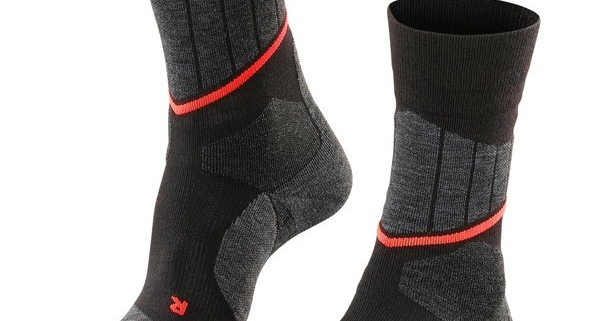
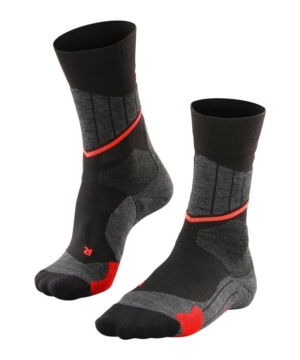
Falke cross country ski socks from Europe

Socks for cross country (XC) or Nordic skiing are an essential matter and vastly underrated when it comes to skiing comfort. Ski socks are a base layer that is next to your skin. They control moisture and keep out the cold. They can prevent the formation of blisters. They can make your ski boots feel too tight or too loose. Skiers will “evaluate” their socks by comfort, fit, and durability. In 2024, the price for a pair of Nordic ski socks ranges from $15-30 per pair.

Peek in my sock drawer and you’ll find more than ten different brands of cross country ski socks (and a bunch of snowboard socks, too). In alphabetical order my collection includes Bridgedale, Darn Tough, Falke, Farm to Feet, Fischer Durazone, Norpen, Point 6, Paka, Swiftwick, and Thorlo. Aficionado, indeed.

The key characteristics of a cross country ski sock (besides what I mentioned above about comfort and fit include materials, sizing, thickness, height, odor resistance, and moisture control. Technology has come a long way and that is why some pairs cost more than $30 these days. Sock technology gives us elasticity for stretching and to avoid bunching, moisture transport to keep the foot dry even though our feet perspire while XC skiing, and to provide cushioning and durability.

Sock fit involves flat seams and avoiding bunching inside the boot, because these issues will lead to foot or toe blisters, which can hurt, and take time to heal which will curtail your skiing. Once the sock is on, I like to pull on the sock toe area to make sure it is a comfortable fit. I also wiggle my toes after I put my foot inside the boot. Does it feel too tight or too loose in your boots? Does it feel comfortable or are there pressure point issues? 

Sock sizing is usually offered in size ranges (such as 9-11) for men, women, and kid sizes, so read the label to be certain that you are getting the correct pair of socks.

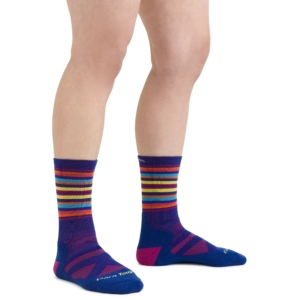
Darn Tough Marine Nordic Ski Socks

The anatomical design of a sock is intended to fit snugly around your foot and calf zones without cutting off circulation in the boot. Socks have light, medium, and heavy thicknesses and this will offer some choices with regard to comfort in the corresponding warm-to-cold temperatures. Wear heavy or thick socks when it is very cold (below 20 degrees Fahrenheit, in single digits, or below zero) and wear light socks when it is warmer or in the spring time. The size and cut of the ski boot (width, toe box, in-step, arch) may be significant for sock comfort. If your ski boots are too big or too small, the type of sock that you wear will impact the feel of the boot. Loose ski boots will be more difficult to control and ski boots that are too tight may make your feet uncomfortable or cold because of restricted blood circulation in your feet. It is a good idea when trying on new ski boots to wear the socks that you would wear on the trails when skiing.

Toe Warmers and Liner Socks 

Toe warmers are an air-activated stick-on little pad intended to be placed over the sock above or below the toes inside the boots. Open the package and remove the pad’s adhesive cover, and stick them on your socks in the toe area and then slide your foot inside the ski boot. The toe warmers should last about 5 hours but occasionally they do not work after opening the package (and shaking the pad to activate the chemical heating element). I have had many successful experiences will toe warmers in frigid temperatures.

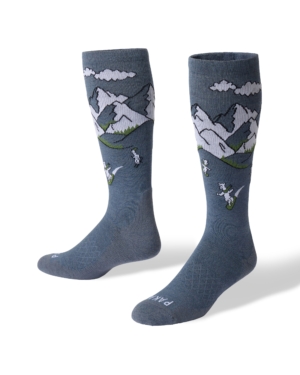
Paka ski socks made with Alpaca fiber

Liner socks are one very thin layer of sock material made of silk or synthetics. The liner will allow moisture transport and prevent rubbing of the ski sock and the foot. I’ve used liner socks with my thinner ski socks for many years. Liners will add thickness to your sock setup but admittedly using liners appears to be a practice used mostly by old time skiers. Most sock manufacturers will claim that liner socks are unnecessary because all of the properties needed for comfort and moisture transport are built into their socks. This is true as many ski socks today use blended materials. For example, my newest pair of Paka ski socks have 30% Alpaca fiber, 7% Tencel, 59% recycled nylon, and 4% Spandex to provide padded cushioning, a tightened compression arch, ventilation and odor resistance.

Water Transport Trick

After I finish skiing, I dry my ski boots by stuffing newspaper or other types of packing paper in my boots. This absorbs the moisture that the ski socks have passed out to the inside of the ski boot. The next morning before I put my boots on, I remove the paper from my ski boots and enjoy dry boots to hit the trails. This practice may be old school, but it works. Boot dryers are a mechanical way to dry your ski boots and there are many different types of contraptions available in this area if you want to pay for it.

Alpine vs Nordic Ski Socks

Most “regular” ski socks for Alpine skiers are almost up to the knee but XC skiers do not need such long socks. The XC ski boot is lower on the leg compared to the Alpine ski boot and the sock length should correspond. Additionally, XC skiers’ feet are very active with every kick and glide, so there are different requirements for the sock compared to Alpine skiing. When purchasing socks for XC skiing, I look specifically for Nordic or Cross Country ski socks rather than “ski socks.”

Foot Odor

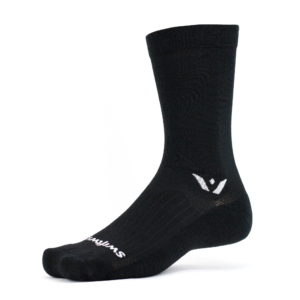
Swiftwick Nordic Ski Sock

Repelling foot odor is a key aspect of ski socks and many labels will claim “odor resistant.” Sock material made from the Merino wool sheep breed are famous for this characteristic. Additionally, when the Merino fiber is knitted rather than woven, it is super soft. This material insulates and it absorbs and releases heat and moisture very well as a breathable fiber. Merino wool also avoids slippage to resist blister formation on your foot. Of course, if your ski boot already smells badly, it may be difficult for the sock to combat foot odor.

Sock Care

Caring for your ski socks is important because salt buildup can occur from perspiration that gets into the ski boot. It is recommended to wash ski socks in cold water with regular detergent and then hang them to let them dry. In other words, do not put your ski socks in the dryer. This will be important to avoid shrinkage of your socks.

That’s the download on everything XC ski hosiery except for answering the question regarding my favorite XC ski socks. I’m constantly changing my sock preference and continue to acquire more different brands. Currently, the newest brands that I’m enjoying for daily skiing include Paka and Falke but the brands that I use the most during the season include the Fischer Durazone and the Norpen brands. When the temperatures get warmer, I use my lighter brands such as Darn Tough and Point 6.

See you well-socked on the trails! For an accompanying article see Fitting XC Ski Boots.

Skiing Yellowstone’s Backcountry

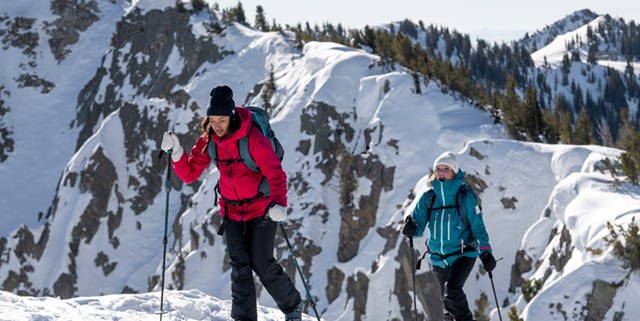
Why would you hike up a mountain just to ski down when you could ride a chairlift to accomplish the same thing with a lot less bother? As an 80-year-old backcountry ski guide in Yellowstone National Park, let me  explain.

As active seniors, we all know the benefits of maintaining a vigorous, active lifestyle, particle in a natural outdoor setting. Combine that with skiing truly untracked powder – and there you have it. Any backcountry ski adventure can be rewarding, but skiing Yellowstone’s backcountry is beyond rewarding – it’s magical.

Yellowstone is the wildest landscape remaining in the contiguous US, and in fact, one of the few fully intact temperate zone ecosystems on the planet. Combine that with the rich cultural history of the world’s first National Park, and what more could you ask? Oh yeah, how about setting tracks in pristine snow that might not see another skier the entire season.

 Here are some tips to transition from a polished resort skier to a backcountry adventurer.

Backcountry Skiing

 With modern BC equipment, the skiing skills we already have seamlessly transition to the backcountry, but that leaves two issues – fitness required to climb a mountain and dealing with the objective risk of skiing in a wild, unmanaged setting. As seniors who maintain an active lifestyle, we are already positioned to transfer aerobic fitness from these other activities to backcountry skiing. Fortunately, skinning up a mountain is exactly the type of conditioning required to – skin up a mountain. A great way to get in shape and connect with nature.

As far as risk, it’s a tradeoff. Swap a resort with squadrons of unguided missiles for an unmanaged environment where misidentifying a safe travel route could end badly. No way would I trade the antiquated long narrow, straight skinny skis and leather boots I learned to telemark on for today’s light in-bounds gear. But the old days had the advantage of a long, slow learning curve spent with knowledgeable friends and learning safe downhill skills by osmosis.

 Today with modern gear, the siren call is to immediately jump into challenging terrain, that coincidently, also holds high objective risk. As legendary avalanche guru, Bruce Tremper, is fond of saying, “The trouble with learning backcountry skills on your own is that the final exam might come before the introductory lecture.”

Such objective risk might be the single greatest barrier to a senior skier interested in venturing beyond resort boundaries. The question becomes, how do you mitigate this concern? Of course, learning backcountry travel in the company of experienced friends is an option, but you had better trust them.

As a skiing partner of mine would say, “You can be friends with anyone you want in the bar, but you had better choose your friends wisely in the backcountry.”

Gradually stepping into the ‘side-country’ is also an option. Many resorts allow uphill travel, a great conditioning tool and a good way to become familiar with backcountry gear, hone your uphill technique, and make similar-minded friends. Backcountry guiding has also blossomed in the past few years.

Long a European tradition, there are many qualified backcountry guiding services, like Yellowstone Ski Tours, the outfit I work for. Others include licensed backcountry guides from Big Sky and from Jackson Hole, the two major downhill resorts closest to Yellowstone National Park.

Jesse  Logan skis more than 100 days a year in the backcountry  in the NE corner of Yellowstone National Park.  He has guided backcountry skiers for a decade and enjoys skiing with anyone wishing to broaden their backcountry experience to include the rich natural and cultural history of the world’s first National Park.

Confessions of a Former Non-Helmet Wearer

Photo by Sam Clarke on Unsplash

For decades, as in almost seven, the only time I wore a helmet while skiing was running a downhill race. During my 18 years of flying helicopters and fixed-wing airplanes in the Navy, I wouldn’t think of climbing into the cockpit without a helmet. When riding my bike, I wore a helmet. In a race car, I wore a helmet. 

Helmets while skiing? Nah!!!! They’re for little kids who might run into trees or lift towers, but not for me. Neither of my adult children wore helmets past age six.

The cold wind whistling past my face and ears was the order of the day. On warm sunny days, it was baseball hats and sunglasses.

Over the years, helmets began to proliferate but neither my brother who is 13 years my junior, nor I owned a helmet for skiing. The first of the non-helmet wearers in the family to fall was my son. He’s another Naval Aviator and is involved in test flying. On one trip, he showed up wearing a ski helmet!!!

OMG!!!

That’s when the chorus from my grandchildren about wearing a helmet began. “Grampy, you need to wear a helmet. We like skiing with you, but you’re old, and we don’t want you to get hurt.”

Another refrain was “Helmets are cheaper than brain surgeons.” That’s when my son, the mechanical engineer and test pilot sent me an email listing the top-rated helmets and a description of the rating system. His note said, “Buy one!”

I turned the shaming at the other hold-out, my brother. We both bought the same helmet before we went to Whistler last winter. 

My advice is by one that meets ASTM standard F2040 or if you live in Europe, CE EN 1o77. Also, try it on in the shop wearing what you wear on the slopes. Bring your goggles because they may not be compatible with the helmet.

Here are some lessons learned from skiing with this newfangled thing called a ski helmet. One, I seem to ski faster with the helmet because the sensations of speed going past my ears is different.

Two, will need to figure out how to keep your ears warm. I won’t ski when the wind chill is well below zero, but even when I did, in my pre-helmet days, ears were toasty warm under my 100% wool Moriarty hat. Wearing a helmet is another reason not to ski when it is -100 F outside and the wind chill makes it -300. There was a time when I would, but not anymore and now I can blame my helmet.

Letter to Editor: Appreciation for Skiing in North Carolina

Photo by Elijah Mears on Unsplash

I have had the great privilege of being a winter sportsman all my life, including working in the ski industry for many years. I’ve been blessed to have skied and mountain climbed all over the world, and as an active 70 plus skier I have a newfound appreciation for smaller ski areas and gentler slopes, I will leave the majestic and very challenging upper slopes of Europe and great US ski areas to the younger and fitter.  For us older but wiser types, North Carolina has several wonderful beautiful alpine and Nordic destinations, and the ones recovering from hurricane Helene our Asheville and Boone areas will appreciate your business.

My younger 60 year old buddy and I just spent a great pre Thanksgiving day skiing Cataloochie followed up by some Mexican food and drinks with my son, daughter and son in law in Asheville, which is open again for business, and many resorts in the area such as Runbling Bald at Lake Lure are offering great deals as we recover, and most of our areas offer free or reduced tickets to 70+ skiers and discounts for veterans. Friends and family are going to try to ski all six of our state’s areas this season. We’re also going to ski NASTAR.

Randy Johnson’s book on Southern snow is the bible for both resort and off piste, and the North Carolina ski areas website has good basic info as well.

At 72, I take each day I get to ski as a special blessing. Look for me –  I’m the guy with the old straight skis and the US Biatholon beenie.

Cheers, Mountain Mike

SILVIES IN WINTER Ranches are the XC Rage – Here’s the Newest

Photo credit Silvies Valley Ranch

One of cross country (aka “Nordic” and “XC”) skiing’s delights is the variety of venues – maybe day areas near you, distant destinations, options from golf courses to lodges to entire regions with hundreds of kilometers of groomed trails (think Lake Tahoe, Sun Valley, Anchorage, and more). And that’s just in the U.S., with many choices in Canada too.

Every fall, you’ll find magazine, newspaper, and on-line articles on Nordic “where to” and “best of,” and every year guest ranches concentrated in the U.S. Rockies get high listings. Current favorites with on-site groomed trails include a cluster in Colorado (Devils Thumb, Latigo, Vista Verde, Three Forks, C Lazy U…); several in Wyoming (Brush Creek, Trail Creek, Darwin, Turpin Meadow); a bunch in Montana (Lone Mountain, B Bar, Paws Up, Triple Creek, and Rock Creek are probably the best known); and at least one in Idaho (Western Pleasure Guest Ranch). You’ll find them written up in publications ranging from USA Today to Forbes to Cigar Aficionado. A fair number are within a half hour drive of alpine ski resorts.

Back in the Day

The 1980s and 1990s were the heyday of new XC areas, including winter guest ranches. Over the past decade several of the latter have closed for reasons including “going private” and families leaving the business. So, it’s exciting to introduce you to a new ranch resort located in central-eastern Oregon that offers XC as their major winter draw.

Silvies Valley Ranch (https://silvies.us/) is both vast and rural/remote, definitely a destination rather than day operation. Vast: 150,000 acres! Remote from airports: located about 3 hours by car east of Bend, OR (near Mt. Bachelor downhill resort), with Boise, ID another 3+ hours further east. The nearest town is tiny Seneca, OR (population around 200).

Silvies is a long-time working cattle ranch as well as – much more recently – a renowned golf destination, listed among the top 100 in the world. It’s likely that portions of their four golf courses, from par 3 to 18 holes plus a putting course, will be increasingly incorporated into the groomed ski trail system while protecting delicate grasses on tees and greens.

This first winter of operations, you’ll find 24 km/15 miles of trail with both classic tracks and skating lanes. You may not encounter the astounding range of activities that Silvies offers in summer (including trained goats for caddies, multiple shooting ranges, ATV/UTV tours, and of course trail rides with ranch horses). Nevertheless, recognizing that most of us XC ski only two to three hours on a typical day, and winter days can be short, there’s plenty to keep you entertained indoors and out – snowshoeing, warming hut for sledders on a ginormous hill, sleigh rides, whiskey tasting, sourdough cooking classes, a new disk golf course…

Silvies also offers the luxury of a handsome, 13,000 square foot, full-service spa “where nature nurtures your soul” with heated indoor pool for exercise and water therapy; a whole menu of treatments in addition to massage; hot tubs and Finnish dry saunas, fitness room; and even a climbing wall beside the pool.

Ski Stuff

Groomed trails at most winter guest ranches are largely adapted from roads or summer paths or run across meadows, generally following routes of least resistance and most grooming convenience. In contrast, Silvies brought in Oregonian Tim Gibbons, a professional trail designer, to choose and build scenic trails mostly suited to beginner and intermediate skiers, with expansive views of beautiful high desert country. They run through old growth Ponderosa pine, juniper, and sage, open and rolling, with gentle grades and good runouts. There’s even an area on a driving range for practicing downhill techniques. Trail access is ski in/ski out from your lodging.

At this time, there’s no daily ski school/guide service although both are likely in the future along with a series of warming huts. Instead, Silvies is offering special ski weekends with U.S and Canadian certified professional ski instructor Ingrid Granlin, owner of Bend-based Glide Nordic (https://www.glidenordic.com/). Ingrid can provide expert instruction in classic (“track”), skating, and backcountry skiing. Lessons are 1.5 hours long and can cater to any ability. Private lessons are also available by reservation.

The Ranch has snowshoes for guests as well as a limited supply of classic skis, but it’s probably wise to either bring your own gear or rent it at recommended shops in Boise or Bend.

 Lodging and Dining

Guests have the choice of several types of cabin, some with their own hot tub, as well as rancher suites – lovely, bright, and airy rooms, with individual décor. Silvies is known for its fine but informal dining, featuring beef from the ranch that’s 50% Angus/ 50% Herford cross, free range and 100% grass fed.

If you’re swept away by your initial visit, the ranch has recently introduced a real estate element with off-the-grid “eco-cabins” presenting grand views and easy access to ski trails.

Dahu Ski Boots: A Case of Superior Design Creating Superior Comfort and Performance

SeniorsSkiing.com recently spoke with Dano Bruno, product manager at Dahu ski boots, about the company and what makes Dahu boots different from the dozens of boot brands available. Prior to helping develop Dahu he was Tanners Hall’s (a free skiing icon with 11 X-Games medals) technician and worked with many of the top athletes at Dalbello ski boots. It only took a couple of minutes into the conversation to realize Dano really knows his stuff. 

Dano, how did Dahu get its name? 

In Swiss, and European mountain lore you always think of the mountain goat or the Ibex. They’re such strong animals who can ascend and descend the mountains with ease. It’s a mythical mountain goat whose left legs are longer than its right legs so it can ascend and descend in the same direction. I like to think that’s a little bit like Dahu. You can get to and around the mountain more comfortably. Whether you’re on the mountain riding day in and day out or only riding five days a year, you know you’ll be comfortable and stable. I think it correlates pretty well.

Alright, how about some history on how Dahu came about?

So back in ‘09/’10 is roughly when it was first introduced by the original Swiss owner/engineer. I became involved somewhere around ‘10/’11 as an Ambassador in North America. The boot needed more work. In late ‘17 I officially got involved and put a team together to completely rebuild the boot. We made all new molds for both shells and for liners. We basically took the concept, and, in my opinion, we created a true ski boot and launched it in 2019. It had two issues right out-of-the-box. It honestly didn’t fit very well, and it didn’t ski very well either. It was back to the drawing board. We always believed capturing that true out-of-the-box fit was number one. Number two was designing a boot that skied well. 

There are two critical parts of a boot. The inner boot or liner and the outer shell. There are three critical components needed for a ski boot to perform well on snow:  A stiff sole, a stiff spine, and two stent lateral bands that run diagonally along your ankle bones from somewhere on the cuff or the spine of the boot diagonally through and down into the sole of the boot. If you know those three critical aspects of a shell, you know our boot checks all of those off.

What are the most important attributes of a good fitting ski boot?

There are four pillars for people to consider when buying boots: It’s easy on and off, it’s comfortable, it’s warm, and it skis great. Everyone’s looking for the “best boot”. What they’re really looking for is the most comfortable boot. I think Dahu offers a boot that’s very comfortable and skis really well. I’ve got coaches, ski patrollers, and ski school instructors using our boot. They love it because instead of having their ankle locked in a ski boot and always slightly bending their knees, they’re able to basically be in a winter boot with 200 grand primal PrimaLoft insulation. They sometimes tell me it’s a beautiful thing. On the other hand, there are many people who never take the shell off. They get into Dahu for the four pillars. 

Is your inner boot like a snowboard boot?

We are a ski boot through and through not a snowboard boot. We have nothing to do with snowboarding. You can’t take our liner out and snowboard in it since it doesn’t fit the parameters of the snowboard binding. 60% of our owners never take the inner boot out of the outer shell.

Can you walk around the lodge or to the parking lot in your inner boot? 

Absolutely. You can 100% walk around in the liner. You can walk from the parking lot to the hill and slide your shells on. I always laugh when I tell the story about how one day, I think it was a big powder day in Vail, I shoveled my driveway in my liners and skied most of the day. On the way home my wife called and asked me to run the market and grab some more pasta or something. I ran into the market in my liners. I think that’s a big advantage.

What goes in to making Dahu liners a superior fit?

We focus on what’s called the last. It’s a foot-shaped form which determines the overall fit. We began by looking at thousands and thousands of 3D images of people’s feet and legs. If you look at a ski boot last generally speaking, compared to the last of winter footwear, the last that shoe is made on is a much different shape. A ski boot last is going to be very narrow and very low volume. When people get into a ski boot the first thing they say is “wow it’s really tight”. That’s because a traditional piece of winter footwear doesn’t feel so tight. We add lots of different, very modern synthetic materials to the outside of the liner so we’re able to build this really, high-quality product. Sometimes this gets lost in the ski shop. As a product manager I attend many boot-fitting clinics and try to get the guys in the shop to really look at the liner and understand that this provides so much of the fit and how the boot actually skis because when you interface this really high-quality liner (built in Italy) with the shell; that’s what makes the boots ski so well. There’s virtually no movement in the system.

We have two patents on our boots. One is called “Tri Lock”. If you look at the soul of the liner, there are grooves that run vertically from toe to heel. When you look inside the shell, you’ll see we don’t have a traditional foot board. There are grooves that run in the shell and when those grooves interface becomes very rigid like a gear in a car. The result is when you pressure the tip of your ski and get it on edge there’s virtually no movement in the system. Remember, we use three-dimensional imaging so the way the rest of the shell wraps around the liner on its own creates a very tight fit. Due to the research and materials that went into the liner you have a more comfortable fit. You don’t have to have your liner so tight because when you step into the exterior shell that’s what really makes the difference in terms of performance. The design of the exterior shell allows the liner to be more comfortable and less constricted. It’s actually the way you blend the design of the liner related to the design of the internal part of the shell coming together to create a very tight link between foot and liner. 

Given the unique liner-to-shell interface you just described, how are testers reacting to it?

I sent a pair of boots to a gentleman who has 90,000 people following him on Facebook. I was hesitant to send him boots since I get a little nervous when I do. I kind of know what’s going to happen. The problem with just sending a demo pair out is that you’re at the mercy of the recipient who may not be the most knowledgeable person. He’s actually been a very experienced boot fitter for many years. I know most of the boot testers. We’ve all been doing this for some time. Not long ago I entered several Dahu boots into an annual boot test. The response among the testers was rather funny. They pulled me aside and said, dude what are you trying to do? Bury yourself?

I told them you’ve known me a long time. I wouldn’t do this if I didn’t think the boot would stand up. Why would I enter the test and be worried about losing my job? I could completely bury my company. Well, it was cool when they started to go out and ski on the boot. There was one tester who had his head wrapped around one foot. He went out 120 stiffness model and, no kidding, he came back and signaled me to come over. He asked, what’s up with this thing?

Do you have a 135 stiffness model here? I said yeah, so I grabbed the 135. With his high-performance boot on one foot and the Dahu on the other foot he goes out and skis. When he gets back, he’s got a little bit of smile on his face.  “Wow, give me the other one”. He said. So, he put the other boot on and goes skiing with both boots. When he returned, he wanted something a little more aggressive. I did a couple things to the boots and in the end the testers basically said bravo. They didn’t think this boot would stand-up against the benchmarks of other brands in the marketplace. It surprised all of them

Where can readers of SeniorsSkiing.com check out Dahu?

We have test centers around the country. Your readers can visit our website skidahu.com and click on test center to know where to find us. We have test centers in Vail, Beaver Creek, Aspen, Park City and Snowmass and we work very closely with Gravity Sports at Mount Bachelor in Oregon and in the Midwest and we’re opening a Dahu stand-alone test center at Lions Head in Vail.

Dahu is currently owned by the Progression Brands Group, an American company and is still built in Montebelluna, Italy.


Short Swings for February 2025

As always, there’s lots happening at our favorite ski/snowboard resorts in February, especially outdoor events now that the days are getting longer. This month’s Short Swings features two areas hosting important major competitions, new snowcat skiing and an uphilling program.

Tenny Mt World Pro Tour

Women’s Ski Jumping at Lake Placid

Last year, the Olympic Regional Development Authority committed to including women in this year’s Ski Jumping World Cup. It’s happening February 6-9, 2025.  It is the first time ever that women will compete in a World Cup in the United States.

Beyond that effort, the Olympic Authority is addressing the imbalance of prize pay-out between women and men with a new campaign, “Flight for Fairness”. It is intended to deliver equal prize money to women for this event, via funding support from the Olympic Authority, partners, sponsors, and spectators.

Athlete prize money is integral to athlete development, fueling their ability to continue to train and prepare for success. Currently, the women’s purse is more than $120,000 less than what the men get.  That’s not fair, but it’s the same in other sports, too, including women’s soccer and women’s basketball.

To help close the gap and support equity in sport, the proceeds of tickets sold will be allocated to the prize money given to the women.  So attend the event and support and encourage women ski jumpers.

Tickets and more information: Olympic Jumping Complex: 2025 FIS Ski Jumping World Cup

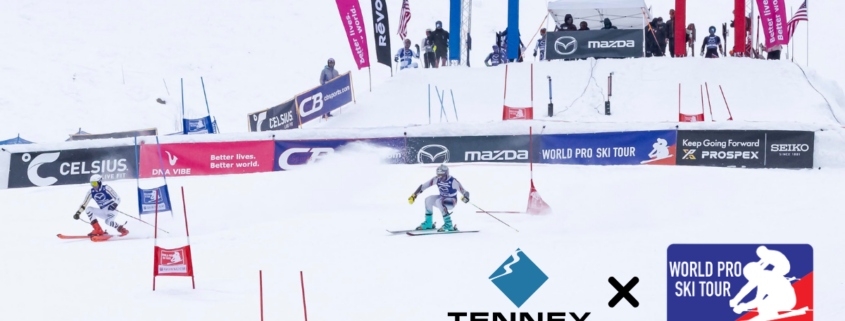
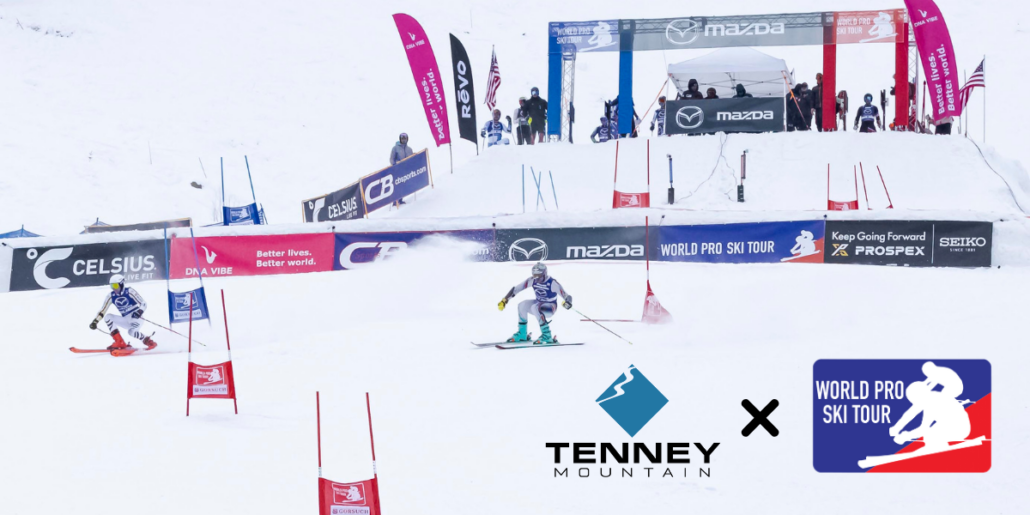
The World Pro Ski Tour at Tenney Mountain

The WPST is making its only stop on the East Coast at Tenney Mountain on March 14-16. It’s a fantastic lineup of elite athletes from around the world, showcasing the remarkable talent and competition that make professional ski racing so exhilarating to watch.

The races will consist of qualifiers and four separate pro races – two men’s and two women’s –  where athletes meet on the hill for a dual super slalom, single-elimination, bracket-style competition.

In addition to the races, there are vendors offering products and giveaways and entertainment.

More information here – https://skitenney.com/world-pro-ski-tour/

Uphill Breakfast Club at Buttermilk

Grab your skins and head up to Buttermilk for the weekly Friday Morning Uphill Breakfast Club.  From 8:45 to 10am, the Cliffhouse Restaurant awards early-morning climbers with a full breakfast buffet for just $8, a bargain in pricey Aspen-Snowmass.  Then head uphill for breathtaking panoramic views of Pyramid Peak and the Marroon Creek, and either ski down or reward yourself with a chairlift ride down.

More information here – https://www.aspensnowmass.com/visit/events/friday-morning-uphill-breakfast-club

New Snowcat Skiing at Deer Valley

The resort’s major expansion this season is bringing many changes, including the opportunity to explore its untouched deep powder terrain.  The snowcat can take 12 passengers, for $2,000 per person, or $20,000 for a private group of up to 12.  Each group has dedicated Ski Patrollers and guides, and each participant is issued avalanche gear and a lift ticket to use after the snowcat day is over, if you have any legs or lungs left.

The price includes breakfast in the 2002 Room at Deer Valley’s Snow Park Lodge, followed by a warm-up run on Bald Mountain to the backside into Park Peak Meadow, where the snowcat is waiting to whisk you to an untouched playground of exclusive skiing.  With a second snowcat stationed at the bottom of each run, skiers can get speedy access back uphill for multiple repeated descents.  The snowcats are equipped with coolers for snacks and refreshments, hopefully including something bubbly to toast the day after the last run.

Yes, of course, $2,000 is pricey, but still far less expensive than heli-skiing.

More information here – https://www.deervalley.com/things-to-do/activities/deer-valley-cat-skiing

See you on the slopes!

Getting a Grip on Being a Senior Skier

A Sunny Day!

Age is an insidious thing. No matter how hard we try, once we pass 50 or so, with each passing year, we are physically weaker, our bodies more fragile, and it takes longer to recover from illness and injury. Those are simple facts of life.

This degradation takes time and creeps up on us and would give anything to have the strength and stamina on the slopes from my 50s.

Aging has also dictated changes in where I ski, when I ski, in what conditions I ski, and how I ski. Unlike others, I can fall back on my experience as a ski instructor. At 60, the certified instructor in me started assessing my skiing technique, i.e., how I turned a pair of skis.

Transitioning from 203cm skis to the new shaped skis only 180cm long required an adjustment on how one makes turns. For almost seven decades, I skied (except on a racecourse) with my boots almost touching each other. Certification back in the 60s required one to emulate what the oldest readers of this publication will remember as PSIA’s “Final Forms.” 

When I noticed my balance wasn’t as good as it was in my 50s, so my feet started moving farther apart. Now, almost 80, my feet are 6- 10 inches apart on steep runs or when the snow is clumpy or uneven.

Under the age of 50, short radius turns the Austrians called wedeln, and the Americans called short swing down the fall line were a matter of pride. I can still do them, but an almost 80-year-old brain says wait a minute, each turn takes energy! So, why not make carved turns with a greater radius and save energy.

Those who carve their turns know they take less energy than skidding. A skidded ski is more difficult to control than one on its edge and knifing through the snow. Carved turns make skiing on hardpack, frozen granular, and even ice easier!!!

The other major change was slowing way down. speed. Now, my grandkids tell me I am skiing way too slow! Then I cut loose for a run to put the young whippersnappers in their place!

I am also much more careful of the conditions. I love deep powder, but two or three runs of a thousand or more feet of vertical in thigh or waist-deep snow is exhausting. The cut-up, clumpy stuff that’s left over requires energy sapping strength to plow through. Groomed runs are preferable, the steeper the better.

Ice, i.e., the stuff that looks like a hockey rink, forget it. It’s time for a beer! Can I ski ice? Yes. The risk of getting hurt in a fall on a surface as hard as concrete isn’t worth it. As retiree, I can always find another off-peak, weekday to ski or pick a mountain that doesn’t have ice!