Short Swings!
The other night, on Netflix, we watched “David Attenborough: A Life on Our Planet.” Sir David, 94 (93 when he narrated the film), is the British naturalist/broadcaster who has been filming and educating the broader public about the natural world since the 1950s.
“A Life on Our Planet” is an incredibly beautiful visual statement. Sir David talks about and shows an abundance of lifeforms and discusses how accelerated natural resource destruction is rapidly leading to an ecosystem that, eventually, will no longer sustain human life.
Referring to the film as a “witness statement,” he presents both beauty and destruction and, with calm and reassurance, explains what we can do to bring Earth back to a state that will sustain all animal life – humans included – for future generations.
Why am I calling this important film to your attention?
As people of a certain age, who love being outdoors, I expect you appreciate the fragility of our ecosystem. Overactive smokestacks. Rainforest destruction. Increasingly violent storms. Dying coral reefs. Depleted ocean life. Melting glaciers. Diminishing polar caps. These and other harbingers don’t bode well for the future.
I know many among us whose interest in short term pleasures limit their thinking to their own lifespans. We lived through what we were handed. Future generations will do the same.
I view it differently. We live longer and better because of industrial progress. But nature and humankind is now out of balance. The relationship must be adjusted in order for life on Earth to be protected.
As skiers we’re beginning to experience the results. Fifteen or 20 years ago I read a study indicating that by 2030, natural snow in Park City would allow only the top half of the mountain to be skied. I think it will take longer. Another sign of unreliable conditions: snow making everywhere. including at the top of Sun Valley.
We don’t need to worry about skiing during our lifetimes. And our children probably will be fine. It’s the future generations we need to think about.
John Donne published “No man is an island,” in 1624. Over the years I’ve come to understand it as a meditation on our interconnectedness, both as humans and as pixels in the larger picture. It’s reproduced below. But for those who remember the poem, it’s important to recall the final words: “…never send to know for whom the bell tolls; it tolls for thee.”
No man is an island entire of itself; every man
is a piece of the continent, a part of the main;
if a clod be washed away by the sea, Europe
is the less, as well as if a promontory were, as
well as any manner of thy friends or of thine
own were; any man’s death diminishes me,
because I am involved in mankind.
And therefore never send to know for whom
the bell tolls; it tolls for thee.
Don’t Be The Reason We Can’t Have A Season
A lift line, last week, in Cervina, Italy. Not too much social distancing.
“Don’t be the reason we can’t have a season,” is the guidance from Paul Pinchbeck, head of the Canadian Ski Council. Last week, he and other ski industry representatives participated in a Zoom media briefing organized by the North American Snowsports Journalists Association. That clever rhyme captures a sense throughout the industry that responsible behavior — social distancing, wearing masks, etc. — will help areas remain open. Irresponsible behavior already has forced Cervina, in Italy, to close. That decision was quickly followed by Italian Premier Giuseppe Conte announcing that all of the nation’s ski areas, as well as gyms, pools and movie theaters would be closed until Nov. 14.
Among other US locations, concerns about complying with public health regulations are surfacing in Summit County, Colorado. Alan Henceroth, Arapahoe Basin’s COO, recently blogged about the sharp increase in cases across the county. He attributes them to “…socialization – an evening party, drinks after work, hanging too close with too many people. Many of the transmissions have occurred in the late evening, after partying, when peoples’ guards are down.” He warns that if it doesn’t get better, among other things, it will hamper the ability to ski.
Some states have a more laissez faire attitude and, most likely won’t do anything to close their areas. Utah, I expect, is one. But, as this week’s Question For You asks, what will happen if an area’s core operating group catches the ‘rona?
Certainly, après ski carousing does not apply to senior skiers ;>)
P.S. Wednesday, in an effort to halt Covid, France and Germany announced ski resorts would be closed until the beginning of December.
470
That, according to the National Ski Areas Association (NSAA) was the number of ski areas last season, in the United States. Of the 37 states with areas, New York has the most (51). Next is Michigan (40), followed by Colorado and Wisconsin (31, each). Click here to see entire state-by-state list of areas.
James Taylor: American Standard
Peak Obsession Trailer
Jeremy Jones is the founder of Jones Snowboards and creator of some very interesting film projects. In this half-hour film, he documents a few of the ascents/descents he is attempting in his quest to climb and ride each of the lines in 50 lines chronicled in the book, “The Fifty Classic Ski Descents of North America“.
A Friend…
I have a skier friend experiencing debilitating side effects from a chemotherapy-related process to boost her bone marrow. She’s a fine skier with a great mind and intelligent sense of humor. She emailed to describe what she’s going through. It’s not pleasant, but she’s among a handful of people I know who has the grit to get through it. Her experience is a sharp reminder of how fortunate it is simply to get through our days in comfort and good health and to appreciate what we have…as long as we have it.


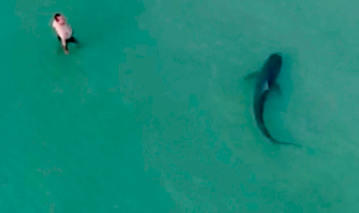

 We see this type of poor judgment when people drink and drive. Or when they back up and over a cliff taking a selfie.






 From the way things appear to be shaping up, fewer and fewer older skiers will be using planes to get to their favorite resorts. There’s a reluctance to get on planes until the virus is under control.


 skiers for the lifts. The site also sells gondola-shaped key chains. When I visited, many of the products were discounted.











 the venerable store near the mouth of Big Cottonwood Canyon, is an absolutely terrific place. Its location is ideal for people skiing Alta, Snowbird, Solitude or Brighton. It is consistently well-stocked with the top equipment and clothing brands. And the personnel are knowledgeable, helpful, and friendly. Years ago, when we visited with kids in tow, The Lift House is where we rented. Over the years, it’s one of the places I’ve relied on for quality tunes. It’s the kind of place with a deep inventory of useful accessories And when they have a sale, they really mean it. Many people stop on the way to the mountain to purchase discount lift tickets. For example, a weekday at Snowbird costs $130. At The Lift House, it’s $97. An Alta day pass is $125. At The Lift House it’s $105, a better deal than the $119 if purchased directly from Alta online. There are other excellent shops in the area, most with similar brands, some specializing in only the most expensive ski and casual clothing. When headed in the direction of Big and Little Cottonwood Canyons, The Lift House is highly recommended.



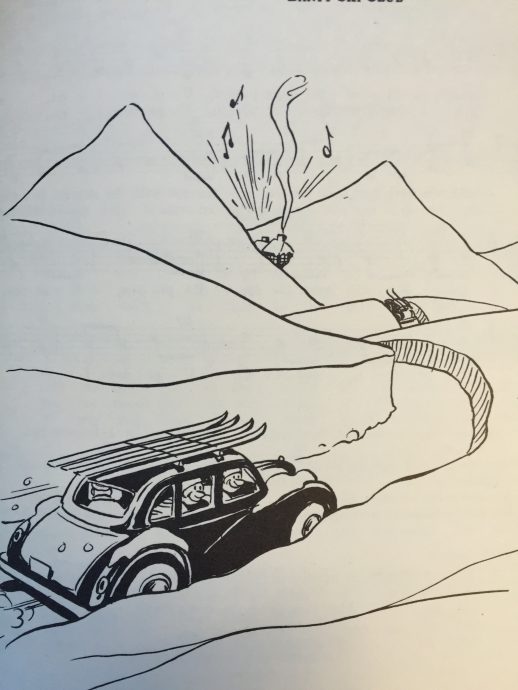
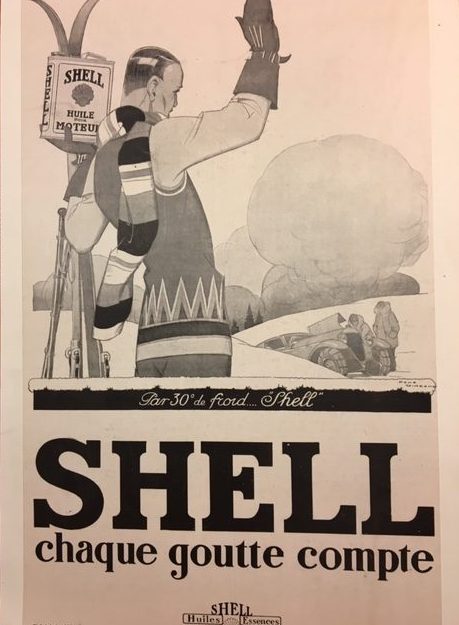 As romantic as the skiing road trip seems, moving from one place to another can be a pain. There’s packing and unpacking. Moving stuff in and out of hotel rooms and friends’ homes. Waking up in unfamiliar places, etc. etc. It gets old, especially as we get older.
  that are. They can be pricey at big name resorts. But some digging can produce surprising bargains.


 But there are more subtle things that are part of Alta’s draw. There is a unique Alta culture that understands and appreciates its rich history, its remarkable beauty, and, for those who know and love it, it’s essence.


 It takes a lot of time and costs quite a bit to do this. We don’t pay contributors or ourselves. But we do have considerable back office and related expenses. Some of this is defrayed by our handful of advertisers.
 Every donor will receive



 Ski For Light is the all-volunteer, non-profit that organizes an annual cross-country skiing week for the blind and visually-impaired. The group has openings for volunteer guides for this year’s ski week, Feb 8-16 in Casper WY. Interested in volunteering? Contact Bob Civiak at