

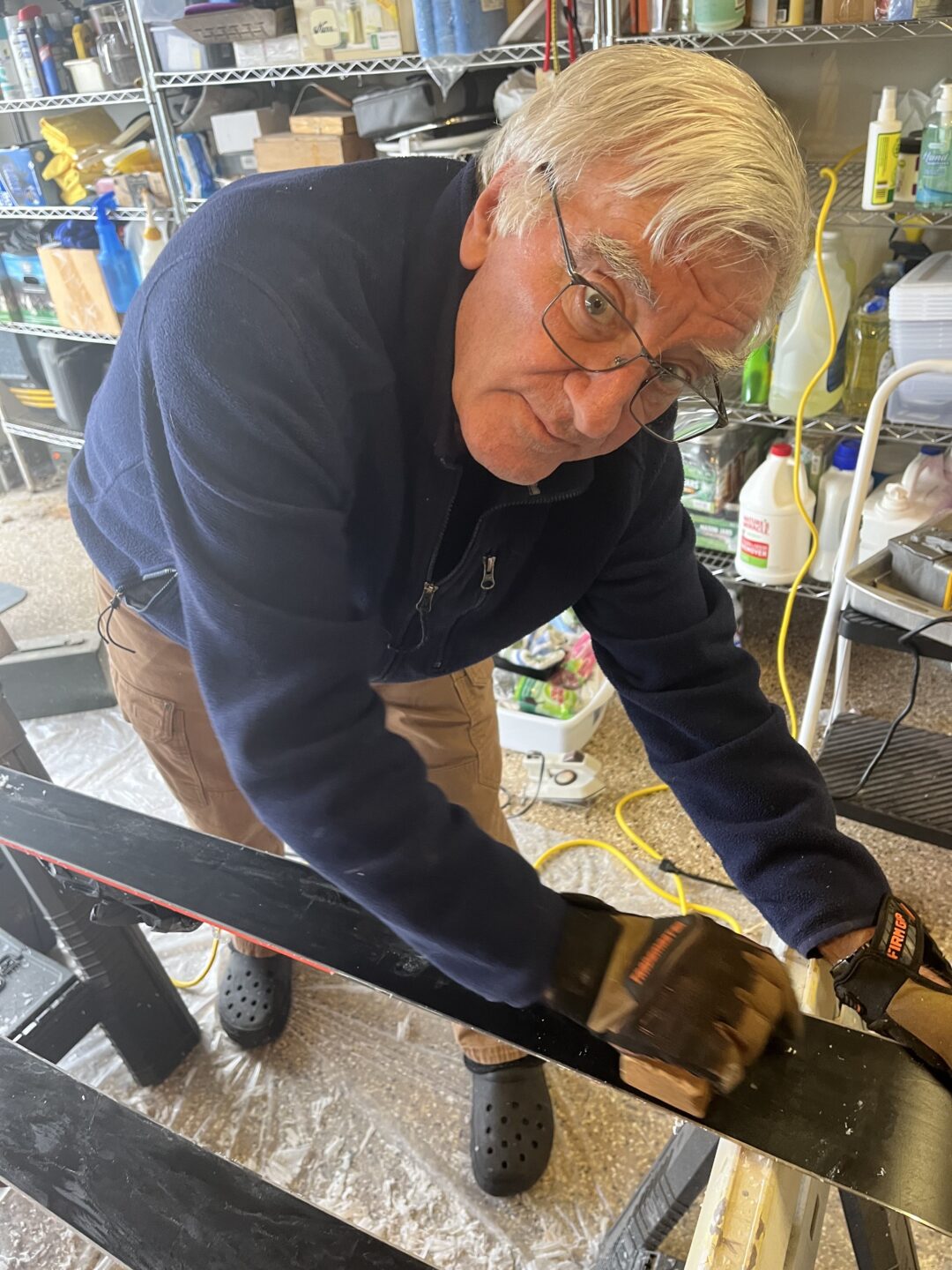
Prepping Skis (Part 1)
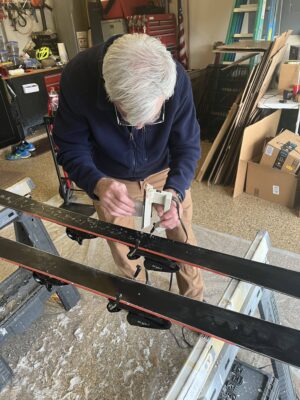
Dripping the wax
Way back when in the last century, after I started skiing, ski bottoms were wood. Then, Kofix, the first polymer bottom, came out in 1956 followed by P-Tex 2000 in 1966. Since then, every ski has a polyethylene bottoms. The lure, besides better gliding over the snow, was that with P-Tex, one didn’t have to ever wax your skis again.
So much for nostalgia. Besides helping the skis run better, wax also helps protect the bottoms of the skis from damage. Again, back in the last century’s good old days, I’d apply a coat of paraffin to the bottoms of a new pair of skis, scrape it off, buff it from tip to tail, and then repeat the process twice.
What this did and still does is fill in the pores in the polyethylene and make it slicker. Slicker means the ski goes faster, easier to skid and/or turn.
Before each ski trip, I’d prep our family’s skis, and each night after skiing, I’d apply a new coat of wax. In the late 80s, hotels and condos had a room where one could prep skis, but they seemed to have disappeared along with the typewriter.
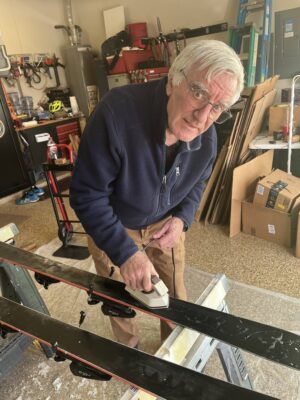
Ironing the wax
Newer ski bottoms are better, but I still wax before each trip. If nothing else, it gets me excited about the coming ski trip. Here’s the process.
Step 1 – set up your work area. This will be messy, so I recommend covering the floor under the sawhorses with plastic used to protect walls and floors when you paint. This way, when you are done, you can pick up the plastic that contains the wax shavings and put it in the trash.
Step 2 – wipe down the skis with a damp (don’t use soap!) rag to clean any dirt or grit off the bottoms.
Step 3 – Drip the wax in a wavy line down the ski using an iron (mine is an old travel iron). It doesn’t matter if you start at the tip or the tail, and when you’re done with each ski, the trail of wax should be about 3/8 to ½ inch wide. For this base wax, you can use paraffin that, once upon a time, you could get in small slabs where the canning goods were at the supermarket, but it is getting harder and harder to find. I’ve switched to LFTurari Ski and Snowboard Wax. The link to get it on Amazon is here.
Step 4 – use the flat bottom of the iron to flatten the wax on the bottom
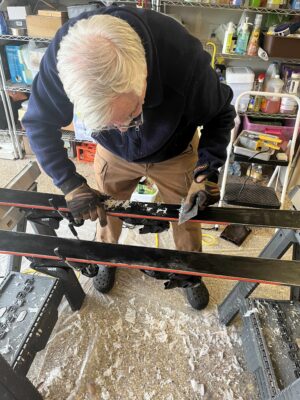
scraping
of the ski. Don’t worry if some drips over the edge. Be careful not to leave the iron on the bottom on any spot for more than a few seconds. By the time you finish the second ski, the wax on the first one has cooled sufficiently to scrape.
Step 5 – scrape the wax off from tip to tail by holding the scraper at a 30 – 45 ° angle to the bottom and scrape from tip to tail. My scraper is the blade from an old kitchen bench scraper which are easy to find. Just make sure that you deburr it before you use it.
Step 6 – buff the wax, again moving the cork or plastic brick from tip to tail. I prefer cork. This step pushes it into the P-Tex and smooths it out.
Step 7 – run the scraper down the edges to remove any remaining wax. Then, pick up the plastic!
Warning, depending on the snow conditions, your skis may feel sluggish at first until the wax wears off. However, the more you do this, the more protected your bottoms are, and if you wax for specific conditions, the prepped bottoms should hold and retain the wax better.

- Musings from Whistler - March 19, 2026
- Northstar – a Gem Discovered - February 19, 2026
- Notes From a Few Days at Palisades - February 19, 2026

Thx much, Vg info, always wanted to know this process
Marc:
Thanks for the tips, this is pretty much what I do to prepare the skis for my wife & myself. I also purchased a Swix electric edger that really helps to keep our ski edges sharp. It’s easy to use (instead of the old filing procedure) and it certainly helps on the icy slopes we see quite a bit of up here in New England.
Keith Wentzel
Hi Marc,
Thanks for an excellent article: yes waxing does make a difference: even for non racers. A dedicated wax iron through which you can set an appropriate temperature for the wax you use is a big upgrade. The major wax companies all make them and a reasonable model is less than $100.
The best way to clean your bases is to hot scrape: wax and scrape while the wax is still mollten. The molten wax penetrates the base and floats the schmutz to the surface where you can scape it off. Don’t use commercial wax removers they contaminate the bases.
If you can, don’t scrape the wax until the next day: more wax will continue to penetrate into the base the longer the wax sits. Serious ski racers have their skis hotboxed: after waxing the ski is placed in a container that keeps the ski hot for 24 hours.
Spend some money: $5 and buy a thick plastic scraper for a wax company. Mucus better than hardware store. Easiest way to sharpen is drywall screen lining on your bench.
Oh yes, a bench, not saw horses where the ski can slip slide and tango. Again all the wax companies make portable benches and ski vices that won’t let your darlings escape their padded grasp. I made my bench by placing a sheet of thick plywood over the existing bench to get the dimensions I wanted and to mount the vices.
A wet dry vac is the best way to clean up the mess.
There are many other tools you need to prepare edges but these require skill to use and I won’t include and would require more words than I care to write, and you dear reader, care to read.
The wax I have been using for years is Hertel Hot Sauce which has a huge temperature and snow range and stays in the base far longer than other waxes I have used. On those spring days when your bases load up w grease and pollens Hertels Spring solution solves the problem. Although at the end of the day you still have a greasy mess to hot scrape away.
So wax your way to enlightenment and be a slippery slider.
Good turns to you,
Dr. Dick
Agree with Richard’s comments plus I would add that a good set of brushes would be better than buffing…. A cleaning brush, an all purpose brush, a finishing brush and a structure brush
Decades ago, I waxed four pairs of skis for the family. Ski vises weren’t very common so I traced the front and heel of a ski boot and built an adjustable ski holder, just like stepping into the ski with your boot but upside down. A short time later a similar item came on the market made of plastic.
Nostalgia is great. Your post brought back fond memories. “Back in the last century’s good old days, I’d also apply a coat of paraffin wax to the bottoms of a new pair of skis, scrape it off, buff it from tip to tail, and then repeat the process twice.”
A satisfying task no matter how much it improves the function of the ski.
I too am a waxing addict; however, in the past couple of years TOKO came out with a spray on High Performance Liquid Paraffin wax that is killer! I can hot wax about every 3-5 outings and use the spray wax in between. This stuff is amazing and VERY easy to use (spray on and then, depending upon the hardness of the wax, brush anywhere from 2-6 hours later and you’re good to go).
We just returned to NC from a ski trip to Colorado. Before heading to Winter Park, we skied a day at Eldora, which was having a ski fest. There was a booth with a company “Dynamic Wax” which claims to be a patented “Nano-particle technology” that you spray on, spread over surface, leave in for 5-7 minutes then buff. They claim it is all weather compatible and lasts for 15+ days of skiing.
Anyone else heard of this? It seems to work pretty
well, we all bought some after they waxed our skis with this.