

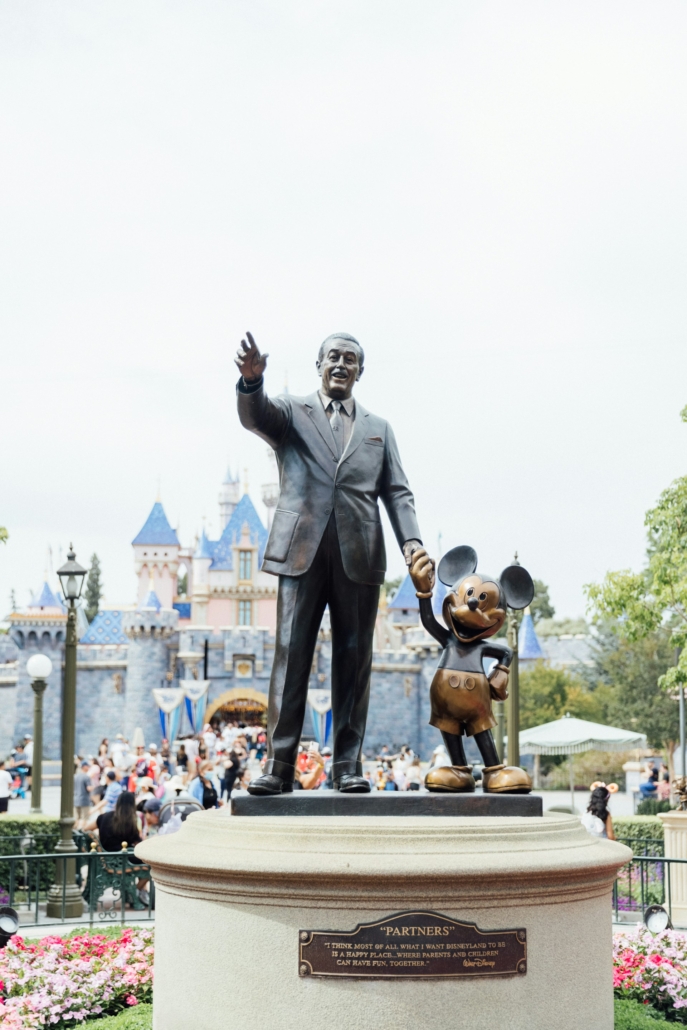
Mineral King: The Disney Ski Resort That Never Happened
Photo by steven lozano on Unsplash
You could call this story “The Mouse That Didn’t Roar.” Or “The Biggest Ski Area That Wasn’t.” I’m talking about Mineral King, a ski resort in the Sierra Nevada Mountains slated to be built in the mid-1960s by Walt Disney Productions, but never happened. A passionate winter sports enthusiast, Walt Disney started skiing in the 1930s. He was an early investor in Sugar Bowl at Lake Tahoe, and also produced the opening and closing ceremonies for the 1960 Winter Olympics in Squaw Valley (now Palisades Tahoe).
In 1965, his company received a permit from the U.S. Forest Service to explore the skiing potential at Mineral King, named after an 1870s silver strike that soon fizzled. Set at 7,800 feet, the pristine, glacier-carved valley is surrounded by 12,000-foot peaks, alpine lakes, and wildflower-filled meadows.
Most important for snowsports lovers — those lofty summits receive 200 inches of snow annually. “I thought [Mineral King] was one of the most beautiful spots I had ever seen, and we want to keep it that way,” Disney said.
Walt died in 1966, but his vision lived on. Under the 1969 master plan, the ski area would initially stretch across five bowls and accommodate more than 8,000 skiers, with vertical drops of 3,700 feet, 22 lifts, and runs up to four miles long. Some people speculate that the animatronic ursines of Country Bear Jamboree at Disney World were originally planned for Mineral King. But I digress.
Walt never intended a Fantasyland-on-snowflakes. His concept called for lifts hidden behind ridges, underground parking, and alpine-style architecture like Vail or Whistler today.
The snag? Getting there.
Mineral King was reachable only via a treacherous 25-mile road open only in summer. Disney’s permit hinged on building an all-weather highway, part of which would cut through Sequoia National Park. A cog railway was later proposed to carry skiers to the resort.
With support from the U.S. Forest Service, California Governor Ronald Reagan, and even the Sierra Club, what could go wrong? Plenty.
In 1969, the Sierra Club reversed its stance and filed lawsuits to stop the project. “Protectionists vs. Recreationists—The Battle of Mineral King,” The New York Times headlined. The fight became one of the 20th century’s first big environmental confrontations. Although Disney won the legal wrangling, including at the U.S. Supreme Court, corporate interest waned as litigation and construction costs ballooned. The railway alone was projected at $25 million ($146 million in 2025 dollars) and the massive ski resort turned into Disney’s Never-Ever-Land.
In 1978, Congress added Mineral King to Sequoia National Park, forever ending winter sports development.
Today, Mineral King remains serenely unspoiled—a snowy Shangri-La. It holds a small glamping resort, two campgrounds, and about 65 privately owned cabins, some more than a century old. Rivers thread the valley; alpine lakes shimmer beneath granite peaks.
I visited in September 2025 with John Uhlir, a volunteer with the Mineral King Preservation Society. From 2008 to 2011, John conducted snow surveys here for the State of California. He’sone of perhaps 100 people who’ve actually skied these slopes.For snow surveys, John skinned up for hours near Farewell Gap. “Afterwards, I’d ski down the 2,500 feet of vertical in less than 12 minutes,” he said. “Snow conditions are a lot like Mammoth.”
The only road in or out remains the 698-turn beast (John has counted them) that once flummoxed Disney execs. But it’s doable. Allow 90 minutes for the 25 miles.
We met Laile Di Sivestrio, an interpretive ranger and historical archaeologist for Sequoia and Kings Canyon National Parks. She’s also a fifth-generation cabin owner, who led us on the three-mile Nature Trail. Enclosed by mountains, the valley feels less like a box canyon (which it is) and more like an alpine amphitheater, reminiscent of Saas Fee in Switzerland. Aspens were starting to blaze into color, and red currants dangled from bushes.
We paused at a Native American grinding rock, then clambered past a waterfall to the Black Wolf mine. Of roughly 200 mining claims filed here, 11 percent were by women—even though female ownership was illegal at the time.
Yosemite—just 75 miles away as the raven flies—draws 20,000 daily summer visitors. Here, I saw fewer than two dozen.
Driving home, I pondered the grand “what ifs?” What if Mineral King had been built? Was a skier’s paradise lost? Was nature’s wonderland saved? Then there’s that serpentine road. Does preserving wildness mean not everyone gets to see it?
I’m glad Mineral King stays wild—a Sleeping Beauty untouched by development’s kiss. And that road? It flips the skier cliché: instead of earning your turns, you drive hairpin turns to earn yourmountain views. Nonetheless, looking at the peaks, I could picture where blue cruisers and mogul runs might have been. Even John looked wistful. Pointing to White Chief, he said, “If you took down 14 trees, what a run that would be.”
Mineral King Road is generally open Memorial Day through October. Repairs are underway through 2027—check closures [nps.gov/seki/planyourvisit/conditions.htm] There’s no winter access except for cabin owners.
Visalia, 30 miles from the road’s start, makes a great base for exploring, with a charming early-20th-century downtown and great restaurants. Or, continue past Visalia to Mammoth.
- Mineral King: The Disney Ski Resort That Never Happened - January 19, 2026
- Steppe-ing Up in Kazakhstan – Skiing at Shymbulak - March 5, 2025
- Come From Away – To Ski - February 18, 2025


I remember the fight to save Mineral King. I’ve hiked through Sequoia and crossed the range to Lone Pine. All these years later, the decision not to build Mineral King was for the best.
I agree. Mineral King feels like Nature’s time warp, with vistas that remain wild.
Before mineral king Walt tried to develop San Gorgonio in Southern California. It was also stopped, but continues to be a favorite ski touring destination
You should do a write up about that area as well.
Ironically, Disney thought that Mineral King would be easier to develop than San Gorgonio, because the project originally had the support of the Sierra Club. That changed to opposition in 1969.
There is a wonderful book written by Kathryn Mayer and Greg Glasgow called Disneyland on the mountain, The ski Resort that never was. The book tells the story of what happened from inception to its sad end. A good read for ski enthusiasts.