

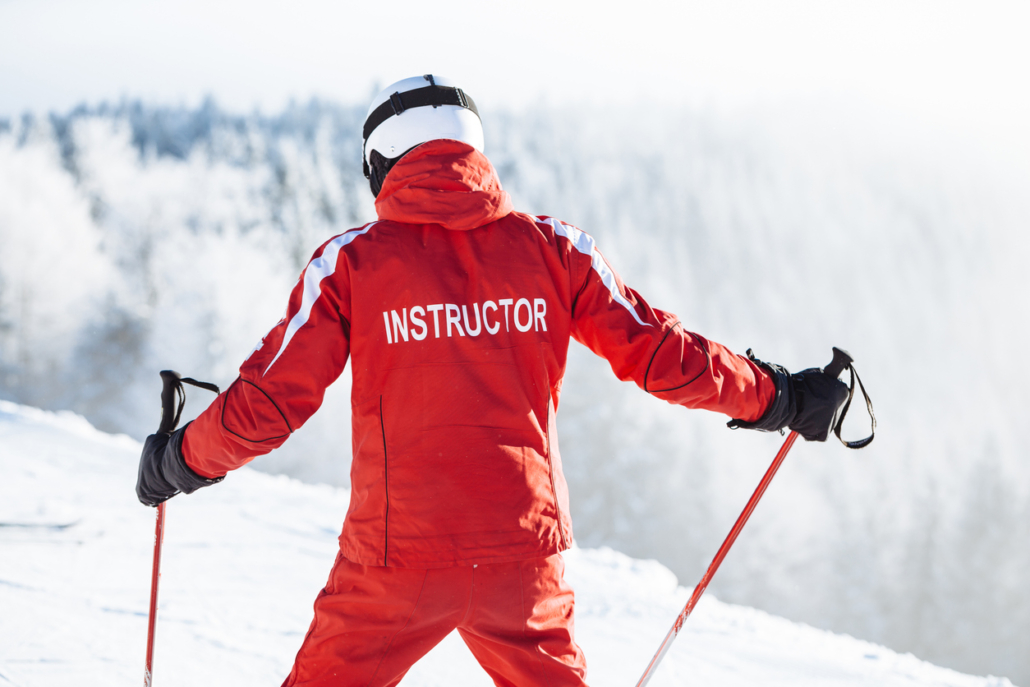
“Senior Skills” seminar provides useful tips for one’s technique quiver
Credit:4maksym
As a certified ski instructor I’m required to take a biennial clinic in which we upgrade our teaching and skiing skills.
The Professional Ski Instructors of America, or PSIA, offers a broad menu of topics to focus on. Having just turned 71, the “Senior Skills” clinic at Vermont’s Sugarbush resort naturally caught my eye. I was hoping to pick up some tips to combat fatigue and get ideas for my own adult students at New York’s Windham Mountain Club where I teach part-time.
But I wondered. What special skills or techniques exist for senior skiers? Aside from, hopefully, a greater degree of common sense and a more acute awareness of one’s limits, what can seniors do on the slopes to soften those inevitable aches, pains and tired muscles that emerge toward the end of a ski day?
As it turns out, there’s no silver bullet for senior skiing proficiency, but there are adjustments one can make in technique, as pointed out by our course conductor, Killington trainer Keith Hopkins.
He started out the two-day clinic by reminding us of the basics, that there are three moves or skills involved in turning a ski.
Those are pressure, or the amount of force being exerted on a ski; edging or the act of tipping the ski or skis on edge and rotation or steering of the skis by applying a twisting motion that starts with the feet.
Many skiers, Hopkins pointed out, especially older ones who grew up before shaped skis were on the scene, tend to start their turns with pressure. That can be by upweighting or the up movement at the start of a turn.
Instead, Hopkins had us try starting our turns by tipping our skis on edge earlier, that is before the pressure and steering starts.
There’s a lot of physics and technical detail involved here, but the bottom line is that can help us extend our outside leg sooner and with less effort. And it lets the ski, which is designed to turn, do more of the work.
Most of the participants in the clinic were like me in their 60s and 70s who started skiing back in the day when we were on longer often stiffer skis. While shaped skis have now been around for decades, old habits, especially those connected to muscle memory, can die hard. This move toward engaging our edges sooner was a good reminder of how to best use modern ski design.
There were other moves as well. Along with edging, Hopkins had us working to extend our outside leg earlier in our turns. By keeping one’s legs extended a bit longer, there’s more time for the blood to carry fresh oxygen to the muscles. That can combat the inevitable “burn” one gets during a long or non-stop ski run. Those are just a few of things that senior skier can think about to minimize fatigue and maximize fun.
- “Senior Skills” seminar provides useful tips for one’s technique quiver - March 19, 2026
- Adirondack’s historical Hickory Ski Center will not operate this season - November 20, 2025
- Historic Hickory Ski Area Becomes Film Subject - March 5, 2025

Cool article. Thanks. I wonder if skis with more sidecut would also save energy, when skiing groomed.
The ski rating that aligns with what you refer to as side cut today is a skis radius meaning the radius of the circle if you were to lie a ski flat and trace it (then extrapolate the rest of the circle. A smaller radius ski when put on edge will make a sharper turn so if that is what you are looking for then yes. As Rick mentioned above starting the turn with getting the ski on edge is key to being able to take advantage of the “sidecut”
Please lookup Harold Harb’s PMTS system
Earlier this week I attended the PSIA-Northwest Senior Specialist 2 (SR2) certification event at Mount Hood Meadows, so Rick’s post seems most timely and accurate. The PSIA SR2 certification curriculum builds on the SR1 curriculum, emphasizing senior motivations and “low-impact” skiing. This approach includes various elements meant to lessen impact on the joints and reduce muscular effort, such as skiing with much lower edge angles through the turn and adopting a more vertical stance to stack skeletally rather than muscularly. I would add one point of clarification: the idea is not so much to “extend the outside leg” (often a bracing move) as to “move forward along the length of the ski” (a dynamic balancing and pressure management move). To Linda’s question, yes, skis that have more sidecut and are narrow underfoot enable early edge engagement on the groomers, facilitating turn initiation and arcing the ski using its shape. Such skis are very versatile and are my basic teaching ski.
Thanks for the tips, Rick. I’m a 77 year-old PSIA instructor and would like to add a few comments that might help our senior community regarding your points above.
The key difference that makes our shaped skis so much easier to turn than our old straight skis is that when put on edge, the ski will naturally carve an arc/circle in the snow. Has pointed out, this is a more efficient way to turn and will require less energy; however, it will result in the skis going faster through the turn. If you’re not accustomed to this, you will probably react by shifting your body/pressure toward the back of the ski which will result in less control. It will also require your quads to work hard supporting your upper body (that is why your legs burn).
I suggest that to start making this change to your skiing, begin on green runs until you get used to the feeling of speed that comes from allowing the skis to make a round shape. And while it was mentioned that you should tip your skis on their edges to start the turn, I would recommend that you start by pressuring the front of your outside ski by bending your ankle to push your shin into the tongue of your boot. This will result in the edge at the tip of your ski engaging first. It also will keep you from ‘falling behind’ your skis as they gain speed (or “staying out of the backseat“ as it’s often referred to).
I hope this helps and encourage those who are not already doing this to experience the fun our “new” ski technology provides.
Thank you for the tips Rick. I’m a 74-year instructor at Hyland Hills Ski Area in Minneapolis, MN. Yes, in Minneapolis. I have been privileged to work with a wonderful 83-year-old instructor, Roger Wangen. Roger has been teaching for over 40 years, and about 15 years ago he developed a program, based on the concept of Soft Skiing for adults 55 and older. This technique was introduced some 30 years ago by Lito Tejada-Flores. Our program focuses on the tips Rick mentions and more. In lieu of talking about pressure, we recommend focusing on two things: “bending the ski and completing the arc”. There are five ways to bend the ski: 1. balanced athletic position; 2. tip the edge; 3. shift weight; 4. Leaning; and, 5. motion (up & down). And by completing the Arc you’re able to manage the speed depending on the radius of the arc. Utilizing these, along with the shape of the skis, helps the ski turn you instead of you turning the ski. Therefore, skiing becomes efficient, effortless and fun by reducing risk of falling and being less tired when done.
Rick, after we skied together at Windham earlier this season, I have been applying your tip of using your ankles. Each turn I make I say “ankles” before I initiate the turn, has made it easier, the skis turn quicker and I am able to keep my body facing downhill. I skied effortlessly at Powder Mountain in Utah for 11 days straight without getting exhausted and the last 3 days we did close to 30,000 vertical each day although I was tired when I got home. I guess that’s ok for 82 years.
Good article and good input. I too clinic every year. I am an active PSIA Level 3 Alpine Certified Instructor. This last month, January 26′ I was surprised to receive my Full Cert 60 year pin from PSIA. My wife asked why I had tear in my eye upon receiving…
Reality check I guess… to actually see this… PSIA Instructor for “60 years.”..humm.
I thank God I am still skiing and playing golf, I am living Toby Keith’s song, “Don’t let the Old Man in.”
If you pressure the ski correctly it will bend into the turning arc. This made carved turns possible before “shaped” skis. True race skis have much less side it than recreational skis and to achieve a carved turn you must bend the ski. In the old days almost all skis were too stiff to bend and many racers wanted very stiff skis which the companies were happy to make. The great Ingemar Stenmark realized this and Elan made him soft skis he bent into the best arcs of his day. I believe one year he won all eight gs races and seven of eight slaloms. This wasn’t equaled until Mikela Shiffrin. This year she has won all but one slalom race she entered. The one she didn’t win she came in second a heartbeat out of first. Like Stenmark she frequently wins by over a second. Think Stenmark holds the greatest margin of win in a World Cup race – over three seconds.
In short, skis, just like tennis rackets or golf clubs, have a “sweet spot”… hit that sweet spot on your outside ski, and cruising becomes fairly effortless… (Find the Sweet Spot under your big toe). Throughout the turn, gradually, press the “gaspedal” until the pedal hits the metal, release and step on to the new outside ski. Try this in BLTs (Big Long Turns) on an easy “Green” cruiser… Almost feels like bicycling on the beach…
Regarding the point about edging/carving with today’s shaped skis – I worked on this a little today at Wolf Creek, CO in the spring snow. I understood the general principle, but one thing that can happen when you do a lot of edging/carving is that you will pick up speed compared to more skidded turns. However, in the spring snow, this is less of a tendency, because the heavier spring snow will let you gain less speed. So today I was able to do more carved turns initiated by edging my skis without picking up more speed than I wanted, and thus I tired less quickly than I might have in the spring snow. So I think this tip particularly applies in the dense spring snow.
I am 81. When younger, I was a strong recreational skier who loved quick turning and moguls. Cruising was OK. At 109lbs, hacked up snow was tiring. When I got shaped skis, attempts to let the ski do it by “just roll ankles or knees” just caused edge catches. Fortunately I was introduced to Taos NM adult week long lesson packages for all level skiers. Over the next 14 years I’ve taken 8 weeks of lessons, emphasizing Improved stacked stance, subtle early weighting of outside ski, soft pressure, instead of hard edging, even in bumps, and more. I now ski using so much less effort on every turn. Think how that adds up over the day. The hacked up snow is Somehow smoother. And I don’t know how to describe the centrifugal swoosh I feel on blue trail turns. So much fun. I think if more mountains had reasonable senior lesson packages, more senior women would be enjoying skiing.