Tag Archive for: 2015-16 winter prediction

Winter 2015-16 Forecast Update: El Nino Rises

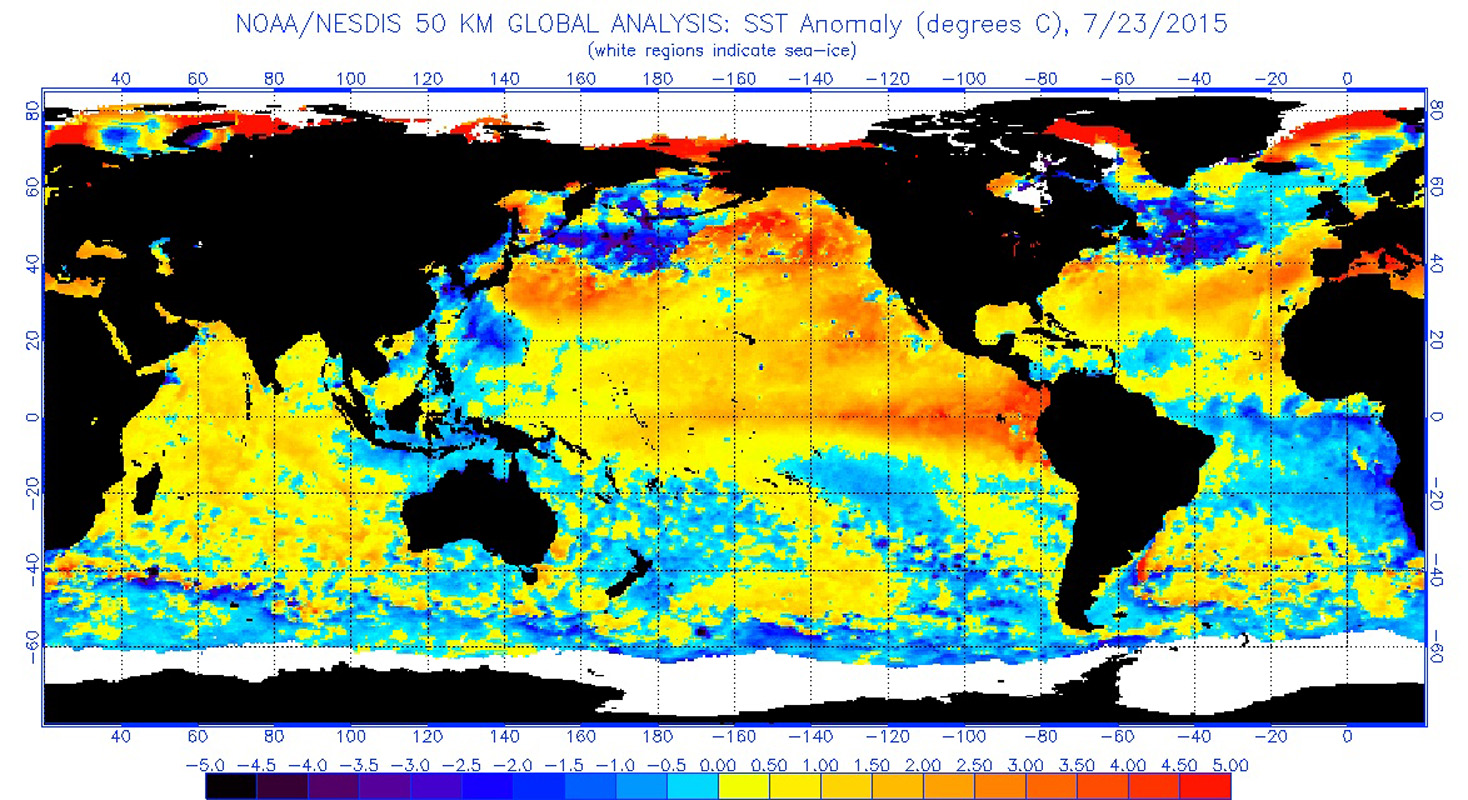
This Just In: The Sea Surface Temperature Off Ecuador Exceeds Records.

In its August update, NOAA’s National Weather Service reports this year’s El Nino is roaring along to record highs. NWS predicts that sea surface temperatures in the eastern Pacific will peak in the late fall/early winter near or exceeding 2 degrees C/ 3.2 degrees F above normal.  “If this forecast comes true, it will place the 2015 event among the strongest El Niños in the (admittedly short) 1950-2015 historical record.

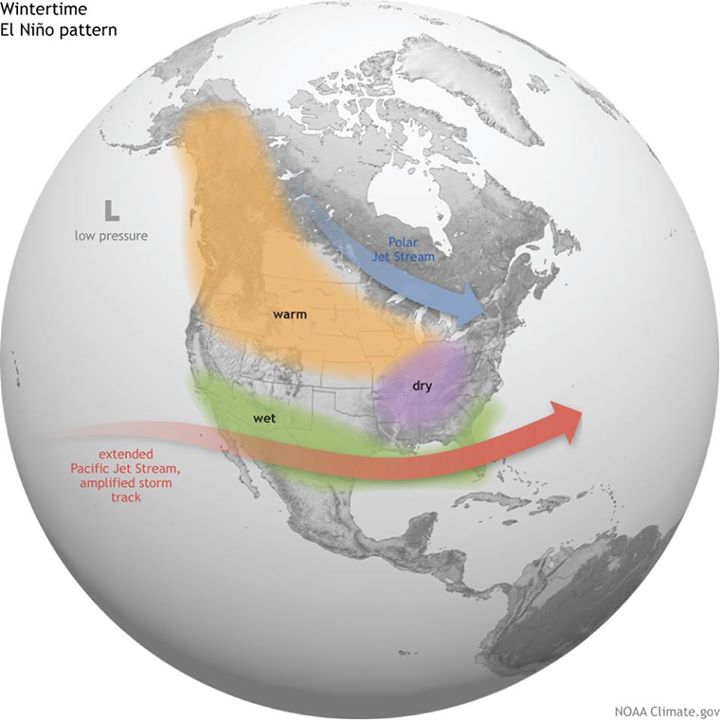
What this means is that forecasters can be assured the odds are growing that El Nino will play a role in various parts of the US as far as winter climate is concerned. As we reported earlier, a strong El Nino event brings wet and cool winter from the West Coast across the lower half of the US,  drier and warmer in the Northern Rockies, Ohio Valley, Great Lakes and Northeast.

Winter forecast 2015-16 shows how the jet stream funnels warm air across the southern US. Credit: NOAA/NWS

Winter forecast 2015-16 shows how the jet stream funnels warm air across the southern US.
Credit: NOAA/NWS

So, we will most likely have a very different winter than we had last year, especially in the northeast where the snow depth and temperature will not come close to the near-Armageddon experience of last season.

To brush up on El Nino meteorology basics, click here. 
 

Early 2015-16 Winter Forecast: El Nino Cometh

A Strong El Nino Is Not Too Cool News For Skiers.

ElNino2


The latest (July 15th) word from NOAA (National Oceanic and Atmospheric Administration) and other weather watchers is that the El Nino currently growing off the west coast of South America is gaining intensity.  El Nino is the weather phenomenon that occurs when Eastern Pacific waters are warmed through a combination of factors, starting with increased cyclones in the Indonesian archipelago, the reversal of the trade winds from easterly to westerly off South America, and the resulting flood of warm Western Pacific waters eastward.  This has an direct impact on our weather and, in fact, weather around the global.

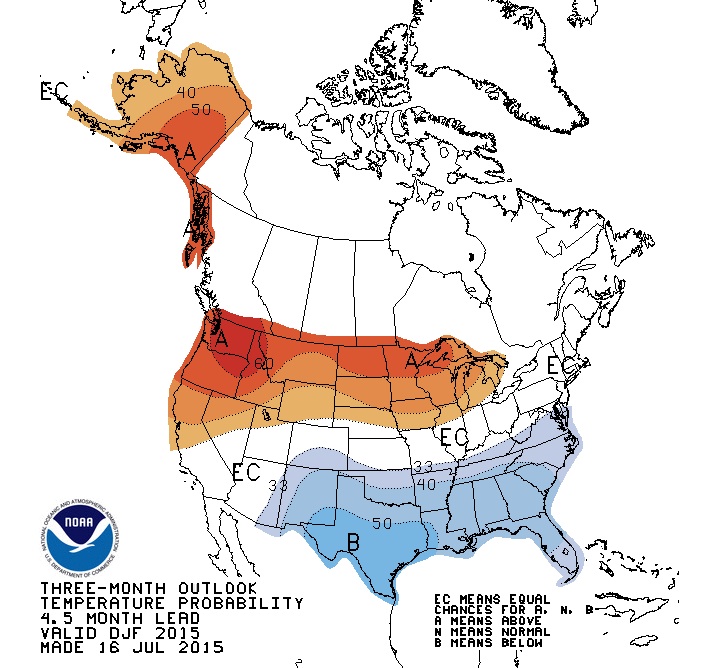
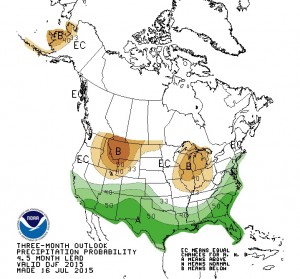
Dec-Jan-Feb Prediction Charts for Precipitation and Temperature reflect impact of El Nino. Credit: NOAA

Dec-Jan-Feb Prediction Charts for Precipitation and Temperature reflect impact of El Nino.
Credit: NOAA

TPrecipPredictionWhen an El Nino comes in, intensity clearly matters.  As of July, this year’s El Nino has a running start, driving the Sea Surface Temperatures (SST) off South America up +1.5 degrees above normal.  Some models have that going up even further later in the year.

According to NOAA, this year’s El Nino has a 90% chance of lasting through February 2016 and an 80% chance of lasting through April next year.  The last strong El Nino in 1997-98 brought major flooding to the West, especially California where storms caused half a billion dollars in damage and loss of life.  This winter, this El Nino’s level of intensity is predicted to have the following effects on our weather:

  • There will be a milder hurricane season this summer and fall in the Atlantic, a busier one in the Eastern Pacific. The National Hurricane Center has predicted below-normal storm activity for the Atlantic Hurricane Season which started June 1 and an above-normal season for the Eastern Pacific, thanks to El Nino.
  • It will be wetter this winter in the southern US from around Interstate 80 to the Mexican border.
  • It will be drier in the Northern Rockies, Ohio Valley, Great Lakes and Northeast.
  • It will be cooler in the southern band from Southern California to the Gulf states to the Carolinas.
  • It will be warmer in the Pacific Northwest to the Great Lakes and the Northeast.

Forecasting weather six months out is obviously an exercise in probability.  What’s interesting this year is that the variables are not wishy-washy; the SST is demonstrable, leading one to think that the chance for coming close to prediction is better than not.

SeniorsSkiing.com will keep you posted as the weather predictors weigh in.