
Short Swings!
We are entering a season of uncertainty.
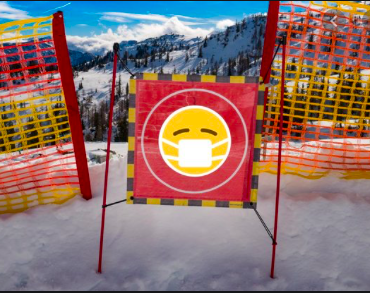
Some resorts have discontinued walk-up ticket sales, some will require advance reservations, many will require masks and social distancing; for others, it will be business as usual. Some, unfortunately, will not open at all.
Many resorts are bracing for a sharp reduction in the number of vacationers arriving by air. Air traffic is down, and projections of COVID spiking as Winter advances do not bode well for ski areas.
Quarantine restrictions will impact long weekend trips to the Rockies, unless, of course, you live nearby. Same will apply to the longer ski vacation. You’ll be able to fly from New York, New Jersey, or New England to Utah and enjoy the sunshine and powder. But several of the Eastern states require either quarantine or a negative 72- hour COVID test when returning home. As of this writing, it’s virtually impossible to secure a 72-hour test in Utah unless you’re scheduled for surgery or showing symptoms. Maybe that will change for visiting skiers; a possible but unlikely prospect.
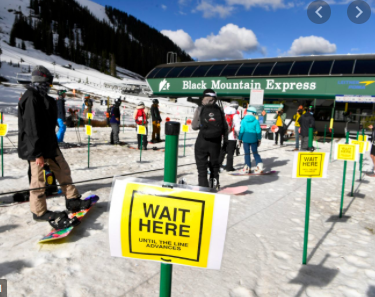 However you get to your resort of choice, expect to have a temperature check and, if you’re solo, ride the lift alone. Refuge in the lodge on a cold and/or stormy day may not be as accessible as in past seasons. Seating will be limited. Food and beverage orders may have to be called in. You may find yourself sitting outside, sheltered by temporary windbreaks.
Maybe this will change by the time snow flies, but entry restriction for Americans traveling to Canada and the EU will require most of those in the U.S. to ski in the U.S.
I decided on a workaround to reduce these and other obstacles this season. We rented what looks like a lovely house in Santa Fe with the expectation of skiing the cluster of areas relatively close by.
If you’re fortunate enough to live near an area, the complications will be much reduced.
An alternative available to many readers will be substituting or mixing cross-country, snowshoeing, fat biking and other activities with Alpine. If you are in or near snow country, these opportunities exist in local parks and golf courses, at some Alpine areas and in freestanding X-C resorts.
In anticipation of this likely shift, we’re extending our Nordic and snowshoe coverage. The new Make More Tracks Resource Guide is an extensive collection of articles to help you get into Nordic activities. In early November, an entire issue will be dedicated to Nordic, and, throughout the season, each issue will have a Nordic-themed article.
My first priority for the season is to use Alpine boards on New Mexico’s slopes and trails. Like, most of you, I love to be outside in Winter, playing in the snow. I haven’t been on X-C skis since the last Ice Age. But given the prospects for this season of uncertainty, it certainly will be part of my outdoor Winter mix.
Big Bargains with Indy Pass

Indy Pass holders get two days at each of 55 North American resorts. Available in two versions: Indy Pass+ has no blackouts and costs $299; Indy Pass has blackouts and costs $199. The program offers generous refunds if the pass is used only a few days. There are 20 participating resorts in the West, 17 in the Midwest, and 18 in the East. Click here to register.
Amazon Patents Skier Drone
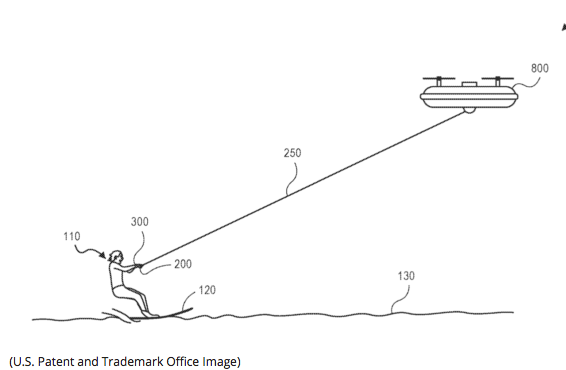
In past issues, we’ve highlighted a series of devices intended to propel or pull individual skiers up the hill. Amazon recently received a patent for a drone that would pull skiers uphill, follow them down, and repeat the process. Will it happen in our lifetimes? No answer to that question, but if it does, it may be the end of chairlift small talk.
Those Lifetime Guarantees
 The zipper broke on one of my lightweight Patagonia fleeces. It was in the back of the car when I passed a Patagonia store, open but closed to customers. I called the number on the door, and an employee came out. He took the fleece, filled out a form, and told me to expect the repaired product in three to seven weeks. It was delivered, repaired, cleaned and free of charge fewer than two weeks later. Good on you, Patagonia.
 The Eddie Bauer daypack I purchased in the early 70s has been returned multiple times in the past half century. Once a seam was unraveling. Another time, a zipper was jammed. The company offered to replace it, but I have a sentimental attachment to that old, well-used pack. Each time it’s been repaired , cleaned and returned at no cost to me. Thank you, Eddie Bauer.
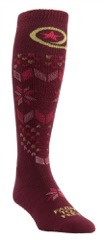
Ditto for Farm to Feet, DarnTough, SmartWool, IceBreaker and other reliable brands, although they sometimes require the purchaser to jump through a few hoops.
Bottom Line: When purchasing outdoor clothing and other gear, consider the extra value of brands with lifetime warranties. That way, the purchase becomes an investment.
Gaiter vs. Face Mask
Gaiter
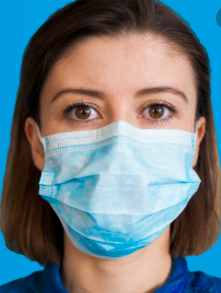
Face Mask
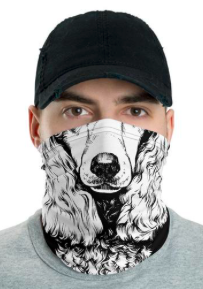
A recent Duke University study determined that breathable neck gaiters (I love my Buff) are far less effective blocking pathogens than standard surgical or cotton cloth masks. The study used a neck fleece made of polyester spandex. Lesson learned: Wear neck gaiter for warmth. Wear cloth or surgical mask for virus protection.
Study and Ski in the Haut Savoie
The French language Alpine French School in the ski resort of Morzine has a new facility in Samoëns ski resort with direct links to the Grand Massif area that includes Flaine and Les Carroz. Many courses combine French and skiing. The school, oriented to long term residents, has strict COVID protocols. A variety of accommodations are available. Click here for more info.
A Trick To Try at Home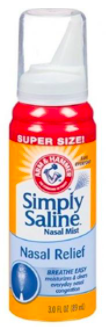
I’m always running out of eyeglass cleanser. The Internet has numerous DIY recipes some of which work pretty well. But recently I was in a pinch and used a few squirts of Arm & Hammer™ Simply Saline Nasal Mist to clean my glasses. Worked just fine and the slender canister seems to be bottomless after months on the job.
White Out
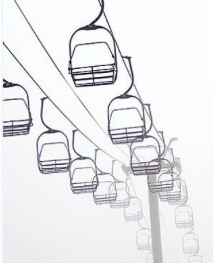
Thinking about past winters when you were discovering the joys of being outside in the snow? This three-minute watercolor animation is beautiful and special. Click here. or the image below.
Endnote
We’re experiencing a congruence of odd events.
- The global COVID problem has a disproportionate impact on older people. Simple precautions are known to reduce its impact, yet many don’t believe the virus is real and/or resist being told what to do.
- The environment is responding to centuries of unwise management. Punishing storms and wildfires are disrupting millions of lives. What we thought was permanent mountain and sea ice is melting at alarming rates.
- Divisions in beliefs and thinking are dangerously polarized.
I’m not a gardener but I subscribe to the adage of tending our own gardens. Whether you take that literally or metaphorically, looking after the things that matter most to us require being attentive to nurturing and improving the things we value and protecting the things we love.  For our U.S. readers, whatever your political persuasion, this can be interpreted as a call to vote.
✪✪✪✪✪✪✪✪✪✪✪✪✪✪✪✪✪✪✪✪✪✪✪✪✪✪✪
As we start our 2020-21 weekly schedule, Mike and I look forward to providing you with meaningful and entertaining content about what every SeniorsSkiing.com subscriber has in common: the love of skiing or boarding or simply being outdoors in the snow.