
Layering Redux: More Tips For Senior Skiers
What A Modern Senior Skier Needs To Know About Layers.
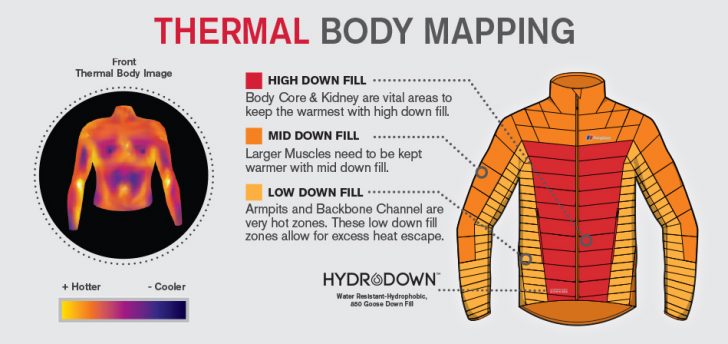
Body mapping clothing–allocating insulation in different zones–is an innovative idea being used by clothing manufacturers.
Credit: Berghaus
[Editor Note: Last September, SeniorsSkiing.com published an article about layering prompted by an unfortunate experience in extremely cold weather when we over-layered and paid the price for it. This year, here’s a list of tips from Val E., our new correspondent who has deep background in the ski industry. He’s bringing us up to date on the new technology view of layering. Here’s his advice.]
Thoughts On Hats, Gloves, Socks:
- A thin skull cap (1/32 inch thick) doesn’t add much warmth to a helmet (which has about an inch of foam). However, a balaclava protects your face, neck areas exposed to cold air.
- Let’s be real, glove liners (very thin gloves made out of silk, wool or synthetic fabric) add very little warmth to a decent pair of gloves. They also separate your fingers if you’re wearing outer mittens. But liners do keep your hands drier by taking moisture off your skin, and, most importantly, they protect your skin from exposure when you take your outer gloves off.
- Socks must be skiing-specific,(i.e., not hunting socks, etc.) made of a synthetic or wool/synthetic combination. And, a ski sock must be knee high, no exceptions. All real ski socks are, anyway. Thicker is not always better, because comfort, staying dry and avoiding blisters are critical. Avoid old school equally thick tube shape socks. And, only one sock per boot! Never use sock liner, no matter what the propaganda says. Feel cold? Get the boot fitting right, install heaters, take a break inside.
Base Layer Thoughts:
- Lightweight (thick as a nylon sock) –For warm weather or people who “run hot”
- Midweight (thick as a cotton t-shirt) –For most conditions or most people
- Heavyweight (thick as a warm flannel) –For cold conditions or people who “run cold”
- Three-quarter base layer pants are relatively new and very practical, because a skier doesn’t need to have pants extend into the boots which can get bunched up and cause comfort and circulation problems.
- Compression base layers (shirts, pants, socks) are becoming more popular. Manufacturers claim they support muscles, improve recovery time, and more. There are skiers who love them and skiers who don’t. Try a pair of compression socks to see what you think. [Editor Note: See our article on Injinji compression toe socks here.]
- These days, some base and mid layers have extended sleeves with so called thumb loops to keep the sleeves in place. Majority of outer jackets on the market have sleeves cut longer than we are accustomed to. You can adjust them with Velcro closures. The idea is to keep the wrist area well covered for people of different height.
Outer Layer Thoughts:
If you ski most of the time in:
- Wet conditions (high humidity, wet snow, rain, wind), then stick to pants and jackets made of the best waterproof/breathable fabric (Gore-tex, Dermizax).
- Dry climate and not very cold conditions with moderate snowfall, you can select clothing made of any breathable membrane fabric.
- Warm conditions with no or limited precipitation, then try a soft shell jacket. These are highly breathable, windproof and water resistant (but not waterproof!).
- Many companies use the idea of mapping insulation or “body-mapped clothing” in mid and outer layers, putting more insulation in the zones, where the skiers need them most. Mapping for women and men is different.
For an in-depth discussion of technical clothing of all kinds, check out this article from the European Outdoor Conservation Association.
And here’s a short video produced by Berghaus on its experiments with body mapped outer layers in Greenland. Worth a look.