Tag Archive for: National Ski Areas Association

Short Swings!

Last week’s column highlighted responses to a question posed to several friends: How much vertical footage is needed to have a satisfying day on the hill? For this week’s column, I posed the same question to all readers. Your input over the past several days says a lot about your passion for the sport. Not enough room to include all responses, but here’s a selection:

Fellow ski journalist, Dave Irons, 82, reports, “…all I need is a morning that includes 5-10 runs.” He and his 60-year old daughter ski Shawnee Peak (ME). “The 1200 feet of vertical is plenty. She’s…in great shape, which is why she is good for a few more runs after the old man is ready for a beer.”

John Emery, 67, and his wife ski Bogus Basin (ID). “I still track and log my vert, not for bragging purposes but to keep myself honest.” 

Rick Hovey is 66 and a resident of Park City (UT) since the mid-70s. Typically, he skis one million vertical and 80 days a season. Poor guy, last season he clocked 58 days and 900K vert. He writes, “I expect to meet my goals this year but will try to be satisfied with what I get.”

Rich Spritz writes, “My goal is to ski my age, though this year I may miss 70.” His family has a rule: “three runs counts as a day.” To anyone challenging the rule he suggests skiing three at “Breckenfridge” when it’s 7°F with wind howling, “then come meet inside by the fire and tell me that doesn’t count as a ski day!”

Susan Shaffer, Chapel Hill, NC, has skied one million vertical for several seasons. Last March, when areas closed, she was three days short of skiing her age. 

Tony’s local area is Cannonsburg (MI) with 250’ vertical. The area is a few miles from where he and his wife are on patrol (99 years of patrolling between them). For Tony, a light day is 100 runs or about 25,000 feet. “It’s a lot cheaper than the gym and lots of fresh air.”

At 74, Kevin Toolan’s perfect day is about 4 hours with his 6 and 10-year old grandsons at Okemo (VT) followed by lunch, a glass of wine and a nap. 

Peter Hogan skis Copper Mountain with his step-son. They enjoy lunch at a sheltered woodsy spot with a view, then ski the bowls and take a long “butt-kicking” mogul run before a few beers.

Connie Grodensky writes, “Skiing local is what skiing is about this year.” She takes 10-run days at Mt. Bachelor (OR) and is happy to leave before the crowds arrive. 

Ed Schultz, 76, skis 15 runs at Brantling (NY), with 250’ vertical. It’s small but in region that receives lots of snow.

Bob Ohrt, provides these words of wisdom: “Have been skiing local for many years. Depending on the year, ‘local’ might be a 300′ valley or a 3,000′ resort. It really doesn’t matter. Skiing is the experience and the sensation. Every ‘where’ can offer different joys. Ski what you have got.”

Many thanks to everyone who took the time to share their thoughts.

Skier’s Six-Word Challenge

Here’s the challenge: summarize your thoughts about the season in 6 words. Several have been received. If you want to enter SeniorsSkiing.com’s Six Word Challenge, you may win a Booster ski boot horn, a great gift for any older skier. 

Here’s a selection from the past week.

Louis Vigorita, Ventura, CA, commented on escaping Covid isolation: 

Out of the bubble, into the snow.

Susan Zangrilli, Sandy, Utah, expressed one of this season’s dilemmas: 

Mask, balaclava, gaiter, helmet, goggles. Breathe? 

Her husband, David, laments not being able to boot-up in the Alta locker-room: 

Boots on. Boots off. Sans bench.

Bob Ohrt puts this optimisitc spin on the season:

It’s the smiles not the miles.

And Jan Brunvand, Salt Lake City, who’s already skied seven days, sent this about his season’s goals: 

Fifty days? Good luck with that!

Enter SeniorsSkiing.com’s Six Word Challenge. Summarize how you feel about this season in six words. Winners will receive a Bootster ski boot shoe hornSend entries to jon@seniorsskiing.com.

Passes Surpassed Lift Tickets Last Season

National Ski Areas Association reports that last season, skier/boarder visits using season passes were greater than visits using single and multi-day lift tickets…a first for the industry.

May Be Best Lift Deal in the US

Colorado Ski Country USA’s $35 Gems Card provides two 2-for-1 adult lift tickets or two 30-percent (30%) off adult lift tickets at each of these Colorado resorts: Arapahoe Basin, Cooper, Echo Mountain, Eldora, Granby Ranch, Hesperus, Kendall Mountain, Loveland, Monarch, Powderhorn and Sunlight. For more information: www.ColoradoSki.com/Gems.

Better Mapping

You may have noticed a new look in the trail maps at places like Vail, Sun Valley, Squaw and Alpine Meadows, Stowe, Mt Snow, and Killington. They are among the areas utilizing  the services of VistaMap, a company providing a comprehensive system for creating and maintaining trail and guest maps. Like any good map, these are easy to read and understand. The technology utilized let’s them be updated easily. Click here to visit Vistamap‘s website.

Liftopia’s Assets Acquired

Remember Liftopia, the online ticket seller, which advertised extensively over the past few seasons? The company went under earlier this year after several resorts were not paid for the tickets Liftopia sold. The company’s liquidated assets were acquired by Skitude, a European ski-oriented tech.

Two Interesting Short Ski Films

Abandoned (24 minutes) tells the stories of several defunct Colorado areas.

Made Back East (21 minutes) follows a group of ski friends as they ski backcountry in New York and Vermont.

One Wonderful Ski Video

Twelve year old, Jacob Smith was diagnosed with a brain tumor at age 8. After years of surgery, he is well  but legally blind. This 7 minute video tells Jacob’s story, including his descent on skis of Big Sky’s Big Couloir. Need a pickmeup? Don’t miss this one!

Short Swings!

The other night, on Netflix, we watched “David Attenborough: A Life on Our Planet.” Sir David, 94 (93 when he narrated the film), is the British naturalist/broadcaster who has been filming and educating the broader public about the natural world since the 1950s. 

“A Life on Our Planet” is an incredibly beautiful visual statement. Sir David talks  about and shows an abundance of lifeforms and discusses how accelerated natural resource destruction is rapidly leading to an ecosystem that, eventually, will no longer sustain human life. 

Referring to the film as a “witness statement,” he presents both beauty and destruction and, with calm and reassurance, explains what we can do to bring Earth back to a state that will sustain all animal life – humans included – for future generations.

Why am I calling this important film to your attention?

As people of a certain age, who love being outdoors, I expect you appreciate the fragility of our ecosystem. Overactive smokestacks. Rainforest destruction. Increasingly violent storms. Dying coral reefs. Depleted ocean life. Melting glaciers. Diminishing polar caps. These and other harbingers don’t bode well for the future.

I know many among us whose interest in short term pleasures limit their thinking to their own lifespans. We lived through what we were handed. Future generations will do the same.

I view it differently. We live longer and better because of industrial progress. But nature and humankind is now out of balance. The relationship must be adjusted in order for life on Earth to be protected.

As skiers we’re beginning to experience the results. Fifteen or 20 years ago I read a study indicating that by 2030, natural snow in Park City would allow only the top half of the mountain to be skied. I think it will take longer. Another sign of unreliable conditions: snow making everywhere. including at the top of Sun Valley.

We don’t need to worry about skiing during our lifetimes. And our children probably will be fine. It’s the future generations we need to think about.

John Donne published “No man is an island,” in 1624. Over the years I’ve come to understand it as a meditation on our interconnectedness, both as humans and as pixels in the larger picture. It’s reproduced below. But for those who remember the poem, it’s important to recall the final words: “…never send to know for whom the bell tolls; it tolls for thee.”

No man is an island entire of itself; every man 

is a piece of the continent, a part of the main; 

if a clod be washed away by the sea, Europe 

is the less, as well as if a promontory were, as 

well as any manner of thy friends or of thine 

own were; any man’s death diminishes me, 

because I am involved in mankind. 

And therefore never send to know for whom 

the bell tolls; it tolls for thee. 

Don’t Be The Reason We Can’t Have A Season

A lift line, last week, in Cervina, Italy. Not too much social distancing.

“Don’t be the reason we can’t have a season,” is the guidance from Paul Pinchbeck, head of the Canadian Ski Council. Last week, he and other ski industry representatives participated in a Zoom media briefing organized by the North American Snowsports Journalists Association. That clever rhyme captures a sense throughout the industry that responsible behavior — social distancing, wearing masks, etc. — will help areas remain open. Irresponsible behavior already has forced Cervina, in Italy, to close. That decision was quickly followed by Italian Premier Giuseppe Conte announcing that all of the nation’s ski areas, as well as gyms, pools and movie theaters would be closed until Nov. 14. 

Among other US locations, concerns about complying with public health regulations are surfacing in Summit County, Colorado. Alan Henceroth, Arapahoe Basin’s COO, recently blogged about the sharp increase in cases across the county. He attributes them to “…socialization – an evening party, drinks after work, hanging too close with too many people. Many of the transmissions have occurred in the late evening, after partying, when peoples’ guards are down.” He warns that if it doesn’t get better, among other things, it will hamper the ability to ski.

Some states have a more laissez faire attitude and, most likely won’t do anything to close their areas. Utah, I expect, is one. But, as this week’s Question For You asks, what will happen if an area’s core operating group catches the ‘rona? 

Certainly, après ski carousing does not apply to senior skiers ;>)

P.S. Wednesday, in an effort to halt Covid, France and Germany announced ski resorts would be closed until the beginning of December. 

470

That, according to the National Ski Areas Association (NSAA) was the number of ski areas last season, in the United States. Of the 37 states with areas, New York has the most (51). Next is Michigan (40), followed by Colorado and Wisconsin (31, each).  Click here to see entire state-by-state list of areas.

James Taylor: American Standard

Like many of you,, I started lsitening to James Taylor in the later 60s and kept on listening for the next decade or so. His style always brings back long winter drives to Killington and Stowe and sweaty summers as a single in Manhattan. Earlier this year, he released his American Standard album. Not to be confused with the plumbing fixture company, American Standards (aka The American Songbook) usually is interpreted as popular tunes from the 1920s through the 1950s. Think Frank Sinatra, Ella Fitzgerald, Sarah Vaughn, Tony Bennet, and the many others from that rich and wonderful musical era. Now James Taylor applies his special genius to the genre. It’s wonderful listening. Click on the image above to hear and learn more.  


Peak Obsession Trailer

Jeremy Jones is the founder of Jones Snowboards and creator of some very interesting film projects. In this half-hour film, he documents a few of the ascents/descents  he is attempting in his quest to climb and ride each of the lines in 50 lines chronicled in the book, “The Fifty Classic Ski Descents of North America“.

A Friend…

I have a skier friend experiencing debilitating side effects from a chemotherapy-related process to boost her bone marrow. She’s a fine skier with a great mind and intelligent sense of humor. She emailed to describe what she’s going through. It’s not pleasant, but she’s among a handful of people I know who has the grit to get through it. Her experience is a sharp reminder of how fortunate it is simply to get through our days in comfort and good health and to appreciate what we have…as long as we have it.

Short Swings

Short Swings!

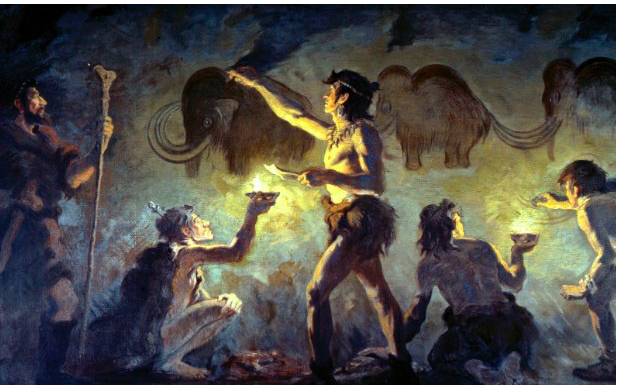
Storytelling is one of the things that distinguishes us from the rest of the animal kingdom. Cave drawings and other prehistoric clues inform us that storytelling predates written history. It preserves memory, forms order out of chaos, and binds people together.

It shows itself in every culture in the form of religion, entertainment, and politics, to name a few.

SeniorsSkiing.com is a storytelling vessel. For the past six years, we have delivered a weekly menu of stories about our shared interest. Volunteers write the stories, Mike and I included. 

I love making up and telling stories and have been doing it in one way or another most of my life. It formed the basis of my professional career, developing narratives that would help clients and employers present themselves in the best possible light or help them rise to the top in a field of fierce competition.

When my kids were young, they went to sleep listening to bedtime stories. Many were made up spur of the moment and probably lost to their young memories. One that stuck with me was the tale of the squeaky forest where trees made squeaky sounds when the wind blew. That was where the squeaky floorboard in one of their bedrooms had come from. They’re now in their 40s. I need to ask if they remember that one.

Two of our grandchildren 6 and 7, soon to be 7 and 8 are on the East Coast. When we’re together they love it when I tell them stories before they go to bed.

But now we’re separated for an indefinite time because of the virus. They’re in Rhode Island and we’re in a remote location on the Colorado Plateau. Thank God for Facetime. A few nights a week, we gather electronically, they in bed, me in the high desert, and I tell them a bedtime story. 

They always ask if it’s fiction or non-fiction. Sometimes I tell them. Sometimes I let them figure it out on their own. I always ask whether or not they liked it. And in the time between those bedtime stories, I’m thinking of another theme or plot or set of characters.

They don’t know it yet, but their next story will be a true one; about the odor of fresh baked bread from the Freihofer’s Bakery in North Troy, NY. I’ll try to paint a word picture of that warm and delicious smell, and I’ll explain how a few mornings each week when I was their age a horse-drawn wagon would stop in front of our house and the Freihofer Man would walk onto our porch with a large tray of freshly baked goods, and my mother would make a selection and ask me what I wanted. I’ll pepper the story with the hay-laced horse droppings that were left on the road. They’re of an age where that type of detail will add credence to the tale and help the story become a permanent memory of their grandfather’s childhood.

Perhaps one day it will influence them to tell their own stories to their own children and grandchildren about a time long ago when they could no longer go to school or play with their friends in the park or attend birthday parties. A time when they and their parents left their home in the big city and escaped to their summerhouse near the beach. A time when their grandfather, Poppa, told them bedtime stories through Facetime and kissed them goodnight over the phone.

US Ski Industry May Lose $2B

National Ski Areas Association, the trade group for U.S. ski areas projects that the season’s early close will result in losses approximating $2 billion, about 30% of season revenues. 

Ski Blandford Closes Permanently

Ski Blandford, about 25 miles from Springfield, MA, announced it’s permanent closure. The area was owned and operated by the Springfield Ski Club from 1936 until 2017 and was the oldest continuously operating club-owned ski area in North America. It was purchased by Ski Butternut which invested substantial sums in the area. Ski Blandford had 27 trails, five lifts and 465’ vertical.

Vail Furloughs Employees, Reduces Capital Improvements

The announcement was made in an April 1 letter to employees from Vail CEO Rob Katz. Year-round hourly employees in the US are being furloughed for “the next one to two months” without pay but with full healthcare coverage with the company paying all premiums. A six-month salary reduction is being implemented for all U.S. salaried employees. Katz is giving up 100% of his salary for six months. The company is reducing capital expenditures by $80-$85 million, “…with the intention to defer all new chair lifts, terrain expansions and other mountain improvements.” 

Goggles For Docs

Goggles for Docs is an effort to get used or new ski goggles into the hands of healthcare workers who currently have no eye protection as they treat COVID-19 patients. Click here, select a state and hospital, fill in the form, and ship your goggles. Some states have reached their capacity with donations. Others, such as Connecticut, New Hampshire, Oklahoma and Pennsylvania are in need.

Cold War

Source The New Yorker Illustration by Thomas Danthony

That’s the title of an article about the science of avalanche study in the March 23 issue of The New Yorker magazine. Authored by James Somers, it starts in Alta, Utah and moves to Davos, Switzerland. The article covers some of the history of avalanche control, including a 1397 Swiss law prohibiting logging because old-growth trees helped minimize avalanche damage. For readers interested in avvys and what is being done to understand and control them, this is an excellent read.

R.I.P. Copper Mountain’s “First Chair Frank”

“First Chair Frank” Walter

Frank Walter, known as Copper Mountain’s most dedicated skier, died on March 5. He was 97 years old. Known locally as “First Chair Frank,” he was born in 1922, raised in Boston, graduated from Tufts University and served in WWII as a fighter pilot for the U.S. Marines Corps, rising to the rank of captain. Post-service he received a Masters degree in engineering from MIT and became a VP in the Chrysler Corporation. One year, Frank skied 160 days out of the 162 Copper was open. During another season, when he was in his early 60s, Frank skied 8.7 million vertical; about 45,000 vertical feet per day. A few years ago, Copper Mountain named a run, Frank’s Fave, in his honor.

An Idea

Some ski friends invited us to a Zoom Après Ski Cocktail Hour where we’ll discuss our respective ski seasons. We participated in a Zoom Cocktail Hour a few days ago with three friends. Two were nearby; the other was in Calgary. A very nice respite from this isolation.

Newest Issue of Skiing History Magazine

The March/April issue of Skiing History Magazine is now available online. If you’re a member of International Skiing History Association, the print edition may already have arrived. If you’re not a member, click on ISHA’s adjacent ad to receive a free digital subscription. You’re in for a nice treat.

Short Swings!

Why aren’t skis designed for and marketed to the 20% of the U.S. skiing population over the age of 52? In other words, is the industry ready for a senior’s ski?

I’m asking now, because this is the week ski manufacturers write orders for next year’s crop. They’ve gathered at the Denver Convention Center for the Snow Show, the industry’s annual trade exposition.

There will unisex skis, women’s skis, and kids skis. But nothing specifically for the older skiing population.

One question is why should there be? We know that numerous models in the unisex category are suitable for older skiers. In his annual ski review process, Jackson Hogen of Realskiers.com identifies the characteristics that define skis for the older set. They generally have softer flex, which helps them engage with snow with minimal exertion. This allows skiers to turn more easily and to ski longer without tiring. (Readers can locate the list of Best Skis for Senior Skiers by clicking “Community,” then “Subscriber Only Content.”)

Shouldn’t older skiers simply shop for those characteristics when they shop for skis?

Alberto Varagas illustration from WWII honoring ski troops.

A similar argument could be made for women’s skis. When they were introduced, with few exceptions, manufacturers simply changed the cosmetics of existing models and targeted them at women. There were some companies that designed skis specifically for female size and physique, assembling panels of racers and others to help define what should go into the female model.

The manufacturers recognized the potential for women’s skis. It seems they made a good bet.

Why aren’t they placing a similar bet on a ski for seniors? Older skiers ski more frequently than the national average. Our reader surveys show that 25% intend to purchase new skis in the coming season. The surveys also show that 68% are financially independent (i.e. they have money to spend).

I’ve heard the argument that older skiers might be reluctant to admit or to accept their age status. That may or may not be a real obstacle.

I’ve also heard that the state of the ski industry is such that manufacturers are shifting money from marketing to providing retailers with bigger discounts. That way, some brands are able to dominate display space and account for a larger share of the retailer’s sales.

If a ski manufacturer simply wanted to explore the possibilities, it could apply different graphics to suitable existing models and test them in a handful of outlets. Alternatively, it could select existing models best suited to the older skier and identify them with a sticker or a hangtag, or give sales staff the information that would help present the skis to older customers.

Those are possibilities. But visit the ski section of the Snowshow, and virtually everyone representing the ski companies – the marketers, the salespeople, etc – are young. Can we really expect them to understand the value of making or marketing a ski that may appeal to the one-in-five U.S. skiers who ski more, spend more, and try new products in order to stay in the game?

Industry To Try Luring Drop-Outs

National Ski Areas Association is looking at new goals for increasing the number of skier/boarder days. They include getting people who left to return to the sport. One estimate indicates that in the past decade, up to 8.5 million skiers/boarders dropped out for more than a year. Other figures suggest that up to 15 million skiers/boarders left for a year then returned. Given rising costs of getting on a hill, competition from Disney, Princess Lines, etc., student loan and mortgage payments, and stagnant wages, it’s not hard to see why the number of skiers/boarders in the U.S. hasn’t grown in 35 years.

Climate Change Initiative Heats Up

This week, the Outdoor Industry Association (OIA), SnowSports Industries America (SIA) and National Ski Areas Association (NSAA) formed the Outdoor Business Climate Partnership to provide leadership on climate change. Several  state ski area trade associations immediately followed suit. They are Colorado Ski Country USA, Ski Utah, Ski California, Ski Vermont, Ski Areas of New York, Ski New Mexico and the Pacific Northwest Ski Areas Association. The announcement from the state groups included the following statement:

“Pursuit of climate change solutions is a defining issue for ski areas across the United States…As economic drivers in our respective states we urge policy makers to understand that we can’t wait for lasting, bipartisan action to reduce carbon emissions, promote energy innovation and support a rapid, responsible transition to a clean energy economy. We applaud and join with the broader outdoor recreation community and the National Ski Areas Association as they pledge leadership and advocacy for climate solutions across the country. We pledge to do the same with our respective state advocacy efforts.”

Join Us in the Alps

Join us the week of March 10 when we ski in the Aosta Valley with guides from AlpskitourEach day, we’ll go to a different resort in Italy, Switzerland and France. The all-inclusive price — $4,500 to $5,500 per person– depends on where you fly to and whether you stay in a 3 or 5 star hotel. Orsden is a sponsor and giving a parka to each participant. If interested, email me: jon@seniorsskiing.com.

Coming Soon: SeniorsSkiing.com Annual Fundraising Campaign

In a few weeks, we’ll start our second annual fundraising campaign. Please support our efforts to bring you weekly information and to advocate on behalf of older snow sports enthusiasts. Thank you!


Now Available: 2017-18 List of 112 US Resorts Where Seniors Ski Free

This Season, Free Skiing Will Be Available To Senior Skiers At 112 Resorts Across 26 States.

The list of resorts is available to SeniorsSkiing.com subscribers. The annual SeniorsSkiing.com report was first issued for the 2015-16 season.

The number of resorts reporting free skiing privileges for seniors increased slightly from last season. Most provide free skiing at age 70.

According to recent National Ski Areas Association statistics, 20% of the nation’s total skiing/boarding population are 52 and older (1,843,000). Those 52-62 total 1,220,000 participants; 62-71 total 510,000, and 72+ total 113,000.

Each resort establishes its own age threshold for free skiing. People in their 60s ski free at nine resorts in six states. Those 70-79 have a choice of 62 resorts in 22 states, and those 80 and older ski free in 40 resorts in15 states.

The three states with the most areas offering free skiing are New Hampshire with 11 and California and Michigan, each with 10. New Mexico, New York, and Pennsylvania each have 8 resorts with free skiing. Maine has 7, Vermont has 6, and Washington has 5.

Three resorts, Alta Sierra (California), Welch Village (Minnesota), and Sugarbush (Vermont), have a minimum age of 90 to ski free.

Many resorts have a range of discounts for older skiers purchasing lift tickets and other products and services. The editors of SeniorsSkiing.com advise looking online or asking before making purchases.

The free list is available to SeniorsSkiing.com subscribers. Existing subscribers have immediate access to the list by clicking Community in the menu bar and then Subscriber Only Content in the dropdown box. New visitors to the site must enter their email address to have access.

ShortSwings!

According to NSAA (National Ski Areas Association) last season there were 8.4 million active U.S. skiers and boarders: 6.5 million skiers; 2 million boarders.

The number is significantly lower than reported by SIA (Snowsports Industries America), which, for 2015-16 reported 11.6 million skiers and 7.6 million boarders. NSAA collects its information from a sample of resort skiers. SIA uses other criteria.

What is striking about NSAA’s figures is that those who are 51 and older represent 1.84 million of the total. Our reader surveys show that the majority of you are skiers, not boarders. With some slight (an imprecise) mathematical adjustment, we can assume that older skiers comprise about 27% of the country’s total skier population.

Which brings us to an announcement this week from Squaw Valley Alpine Meadows about its association with a big Chinese skiing-related enterprise. Modern skiing is relatively new in China and is growing briskly as China’s

Zhangjiakou Wanlong Ski Resort

middle class grows. According to the China Ski Association, referenced in Squaw’s announcement, the number of skiers in China has increased from 200,000 in 2000 to 12.5 million in 2015.

For 2000/01 NSAA reported total U.S. skiers/boarders at 9.3 million. Our numbers are going downhill.

China currently has 93 resorts, compared to 463 in the US during the 2015-16 season. US and Canadian areas, especially those in the West, expect more visitors from China.

Colorado

Eldora Mountain Resort, near Boulder, has a new high speed detachable six-pack. It also will have free Wi-Fi in its day lodges.

Montana

Good news for Big Sky skiers! United Airlines is expanding service to Bozeman Yellowstone International Airport. In December it will increase by 30% flights and available seats to Bozeman from San Francisco, Los Angeles, Denver, Chicago, Houston and New York/Newark.

Utah

Deer Valley Resort is vying to be named the World’s Best Ski Resort by the World Ski Awards. The group already has named DV the United States’ Best Ski Resort. Voting for the 5th annual World Ski Awards takes place through September 22, 2017 at worldskiawards.com. In addition to public input, votes are cast by ski tourism professionals worldwide.

Vermont

Dutch Hill, ski area of my youth and for many years abandoned, is scheduled to re-open for backcountry skiing.

Other

HBO has a new must watch documentary featuring Carl Reiner and other celebrated people in their 90s (and older). It’s titled, “If You’re Not in The Obit, Eat Breakfast.”  It is uplifting and inspiring.

WalletHub, which among other financial services, offers free credit scores and full credit reports, just published its take on the best and worst places to retire. Their analysts compared affordability, quality of life, health care and availability of recreational activities for thecountry’s 150 largest cities. Their #1 pick is Orlando, followed by Tampa, MIami, Scottsdale, Atlanta, Salt Lake City, Honolulu, Denver, Austin, and Las Vegas.

WalletHub also compares best and worst. For example, Yonkers, New York, has the fewest property crimes (per 1,000 residents), giving it a score of 10; 9.3 times fewer than Salt Lake City, the city with the most and a score of 93. View the full report and your city’s rank: https://wallethub.com/edu/best-places-to-retire/6165/  

Mountain Collective Pass is currently priced at $469. The price generally climbs as the season approaches. It provides two days at each of 16 big name resorts, most of which are in the US and Canada. Subsequent days are discounted 50%. No blackout days and lots of extra goodies.