

Editorial: Too Many Incidents And Accidents
It’s Time To Update The Responsibility Code.
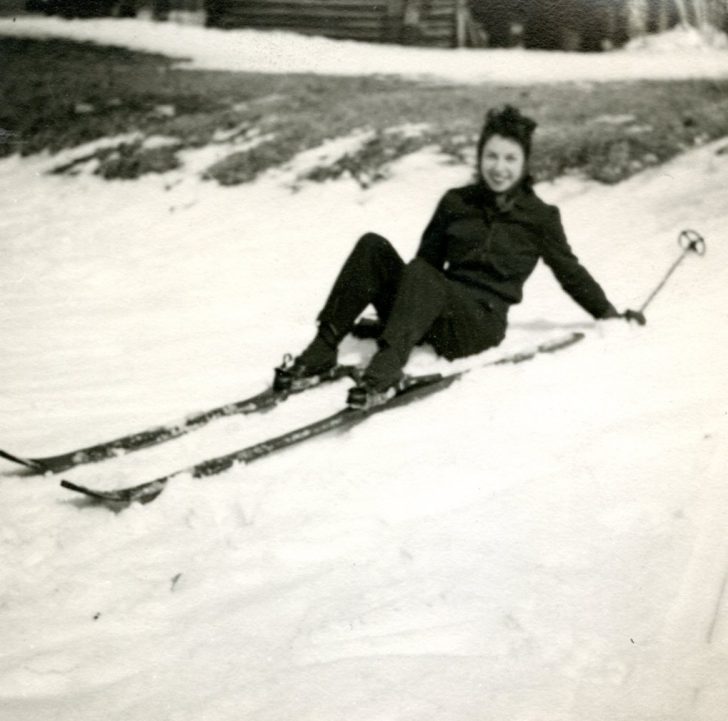
Whoops.
Many senior snow sports enthusiasts have been participating in the sport for decades, in some cases, starting as children or high school or college students. Each year, they return to the ski hills, older, less strong, less stamina, but still dedicated to the sport they love.
They come back despite the concern that most senior skiers share: Getting hit and injured by another skier/boarder.
In late spring 2019, SeniorsSkiing.com conducted its annual survey of readers. Among other topics, we asked what most aggravated them about their on-slope experience.
About half reported they experienced a variety of near-misses, injuries, or dangerous behavior of others. A subsequent SeniorsSkiing.com article reported on the writer being blind-sided by another skier who left the scene. This prompted additional comments from other readers expressing dismay and anger about being involved in similar incidents.
Sensing a need for our readers to express their views about these on-hill collisions and near-misses, we launched “Incidents And Accidents”, a series of personal reports from readers in an attempt to further understand and communicate what was happening. We asked readers to report what occurred and what lessons they learned from the experience.
The combination of comments to Incidents And Accidents and the open-ended responses to the survey formed a clear picture of what seniors saw happening on ski slopes that made them cautious, apprehensive, angry, and even frightened about the sport they’ve been engaged in for so many years.
Their observations can be grouped into three categories:
1) Skiers/boarders skiing out of control or too fast for conditions or their skill level,
2) Reckless and rude skiers/boarders distracted, stoned, intoxicated, or not paying attention, and
3) Skiers/boarders not following proper rules of conduct, ignoring trail etiquette, violating right-of-way protocols, and/or not warning about passing.
Too much speed, lack of attention, and non-compliance with standard on-slope protocols are the dangers. These behaviors result in actual or potential accidents and collisions, leaving senior skiers annoyed and disappointed in how their sport is conducted.
Readers report a) being hit from behind sometimes with serious, long-term injuries; b) being passed too close by a speeding skiers/boarders; c) reckless emergence from side trails or trail junctions, and, perhaps most unsettling, d) being knocked down and the other party not remaining at the scene.
As a result, senior skiers devised their own self-protection tactics, adapting their on-snow experience to better deal with potential injury.
Our readers report adopting a number of self-protection tactics. These include a) avoiding crowds or crowded days; b) staying away from beginner areas; c) maintaining a predictable rhythm of turns; d) vigilantly monitoring surroundings and uphill activity, and e) remaining with friends. Basically, they are skiing defensively at all times, some to the point of being ultra, self-consciously cautious on the slopes.
They have also prescribed actions to take if there is a collision, namely, get an ID from the other party, taking a picture of both the ID and the other’s face with a Smartphone, and report the incident to ski patrol and the resort. If circumstances warrant, call 911 or the police, especially if there are serious injuries involved.
That our senior readers—long time veterans of the sport—have generated their own rules and guidelines for dealing with out-of-control skiers/boarders is telling. While they have learned to adapt, they have done so in the absence of more proactive efforts by ski resorts to curb out of control behaviors.
Skiing/boarding without fear of getting hit wouldn’t be such an issue if resorts stepped up to their responsibility to keep all customers safe.
When we asked our readers for advice on what ski resorts can do to better control danger on the slopes, their solutions were insightful. Rather than put the task of enforcing rules squarely on Ski Patrol whose primary function is rescue and trail management, readers recommend ski resorts create a new role of “Safety Guard” who can be visibly monitoring critical hot spots. Safety Guards can pull tickets, track violators, and bring offenders into “time out”. The resort can establish a system where repeat offenders are barred. Resorts can also visually post the number of tickets pulled in a day. Some resorts already use these tactics. For example, Vail is a pioneer in posting and enforcing ski safe rules.
 While enforcement and monitoring is critical to making a safe skiing/boarding policy stick, there is an important role for greater awareness and education. Our readers state that resorts should invest in posting the Responsibility Code more prominently. They also recommend displaying the Code and the ski patrol’s hot line number on lifts, in restaurants, and on runs.
Where do new skiers/boarders learn the Responsibility Code? In lessons where instructors can explain the Code and interpret situations in real time so students can learn to identify what to do.
Finally, to make all these provisions work, ski resorts need to design and implement a safety process. To take the role of monitoring and enforcement seriously, the resort needs to collect incident reports in a consistent and timely manner, analyze the data collected, report it to customers, and use that data to inform policy and decisions.
Recommendations To Ski Area Operators and The Ski Industry: Update The Responsibility Code
At this writing, Vail Ski Resort, CO, has a model program that other resorts can learn from. Its Mountain Safety Program includes a comprehensive list of activities. Education, enforcement, monitoring are keystones. Slow zones and high traffic areas get special attention. Tickets are lifted and daily enforcement results are posted for all to see. At Vail, on-hill safety is a managed priority.
It would be ideal if other resorts copied or adopted a Vail-like program. It wouldn’t take much for resort management to create a new role of Safety Manager who can implement new monitoring and enforcement procedures, perhaps adding responsibilities to an existing position. Also, the national snow sport organizations can help with a set of suggested ideas for the position of Safety Manager with a job description and on-snow deployment techniques and interactions with staff and guests
Right now, resorts have a wide-ranging and inconsistent set of initiatives—and attitudes—when it comes to programs like this. Industry guidance would be helpful in creating consistency and momentum, but that’s not going to happen next season.
So we ask ski resort management and the ski industry to take a small, simple step that will bring attention to on-slope safety and may actually help invigorate awareness of the problem.
Our readers have told us they see an opportunity to update the Responsibility Code, the ski industry’s only guidelines for on-snow safety that hasn’t substantively changed since it was created in the mid-1970s.
SeniorsSkiing.com believes there should be a new provision to “Stay On The Scene” in case of an accident as well as “Provide or Call Help For A Downed Skier/Boarder”. While we’re at it, why not review the other rules and bring them up to date.
These are common sense additions that can help prevent bad situations from becoming worse. Adding these to an updated Code is doable, reasonable, and non-controversial.
It’s up to the ski industry and resort management to decide how to address the on-slope safety issue for everyone, not just seniors. Resorts can consider naming a Safety Manager, enlisting Safety Guard volunteers, and creating awareness with signage and messaging. Those steps require leadership, commitment, and investment. They are also low cost, high impact.
And, right now, the ski industry can update the Responsibility Code, one simple step that can be done easily, signaling a broad-based effort to curtail unsafe behavior on the hill.
Let’s start there.