Tag Archive for: Ski For Light

Short Swings!


This misguided soul gave up on New Year’s resolutions many years ago when I accepted that I could correct my errant ways on an as-needed basis or in response to my wife’s frequent course corrections.

But it’s the start of a New Year, and I’d like to share a few ski-related resolutions that I plan to keep.

  1. Ski more days this season than last. Last season delivered some terrific skiing experiences in Utah, Colorado and the Alps, but when totaled up, there were too few of them. This season, I want to ski at least half my age.
  2. Ski more frequently with others. Historically, much of my slope time has been solo. But I enjoy the camaraderie of skiing with others. This season, I plan to make more of an effort.
  3. Follow the snow. There are times when I find myself in a self-imposed rut, skiing the same runs in the same sequence. Several seasons ago, I decided to spend each day following the best snow and found it liberating.
  4. Spend more relaxing ski days with my wife. She likes to be out on bluebird days when we cruise and enjoy leisurely lunches. It’s both relazing and non-taxing.
  5. Try telemarking again. Years ago I took a telemark lesson at Alta and thoroughly enjoyed it. Approached correctly, it’s not a knee-stressor. Definitely want to try it again.
  6. Advocate for skier safety. Accident prevention and reporting are part of the dark underside of the ski industry. Areas pay lip service to the safety issue but resist efforts to be transparent. As so many of you have reported, patrol does little to slow or control reckless skiers and boarders. Our new Incidents and Accidents feature is a step toward greater transparency. This year, Mike and I plan to do more.

Wishing you a Healthy, Snowy, and Safe 2020!


Knee Issues? Roam’s Elevate Changes Everything!

Roam’s Elevate Ski Exoskeleton is a breakthrough product that supports knees and quads and allows older skiers to ski longer and without pain. Unlike other knee assist devices, Elevate utilizes a small computer that senses body position and other factors as it signals the soft exoskeleton around the knees. This short video explains all. The company has demo locations at resorts in California, Utah, Idaho and Montana where you can give Elevate a 2-hour try for $25. Reservations required. Click here for more info.

Remarkable Avalanche Article

Last Sunday The New York Times Magazine published “What I Learned in Avalanche School.” Authored by novelist Heidi Julavits, it explores the limitations and possibilities of how we make decisions. While the context is backcountry skiing, the ideas apply to life. Superbly written! Be sure to visit the Reader Comments, as well. Click here.

Last Season’s Ski Insurance Payouts

Generali Global Assistance sells Ski and Mountain Travel Insurance. Last season, sickness, injury or death accounted for 62% of claims and weather for 27%. The average cost of ski trips protected by the company was $2,463.

Sprinter Van Service Between Boston and Ski Areas

GoSherpa provides home-to-slope transportation from Boston to 27 New England ski resorts. The vans are spiffy, the costs are reasonable, and they pick you up from and deliver you home to home! Visit the GoSherpa website for details.

“Ski For Light” Seeking Volunteers
Ski For Light is the all-volunteer, non-profit that organizes an annual cross-country skiing week for the blind and visually-impaired. The group has openings for volunteer guides for this year’s ski week, Feb 8-16 in Casper WY. Interested in volunteering? Contact Bob Civiak at civiak@gmail.com or call 603-715-0817. Click here for details on the 2020 Ski For Light International Week.


Indy Pass Adds Maine Area
Mt. Abram in Greenwood, Maine has joined the national Indy Pass. The 60-year-old family-owned area has 4 lifts and 1,150’ vertical. Indy Pass offers two days at each of 47 ski areas, 40 of  which provide pass holders with unrestricted, season-long access. Current cost is $239. For details visit indyskipass.com.

New Year’s Fireworks

Since many of us didn’t celebrate at a ski resort, here’s what it looked like at a variety of places. 

ASPEN

ALTA, UT
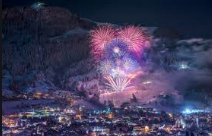
KITZBUHEL, AUSTRIA

JACKSON HOLE, WY

THE CANYONS AT PARK CITY, UT

MOUNT SUNAPEE, NH

TAOS, NM
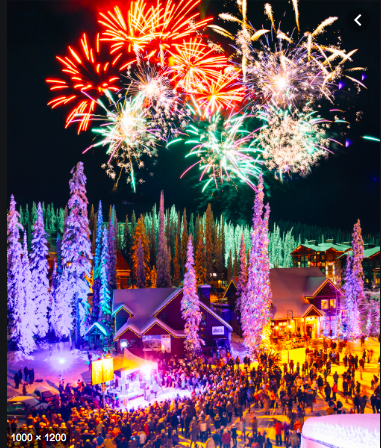
BIG WHITE, BC

BRISTOL MOUNTAIN, NY
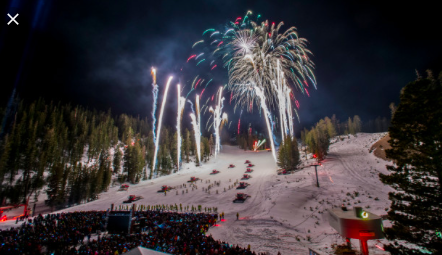
MAMMOTH MOUNTAIN, CA


Ski For Light: Why A Guide Keeps Coming Back

[Editor Note: This article was written by Robert Civiak, a 25-year Ski For Light volunteer guide. It previously appeared in the Ski For Light Bulletin, Summer, 2018. For Part 1: A Skier’s Experience. click here.]

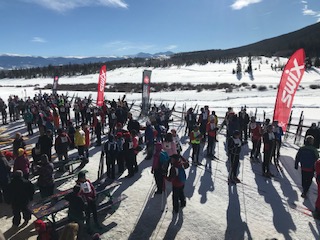
Start of the end-of-week race at Ski For Light.

Part 2: A Guide’s Story.

In 1992, after several years of bad snow in the mid- Atlantic region, I signed up to go to Colorado for a week to be a guide for Ski For Light. At least I would get to ski on some good snow. Well, I have missed only two years of guiding since then. The reason is simple. I like it. No, that is wrong—I love it.

Why do I love it? It took me some soul searching to figure that out. I have to admit that it does feel good to help other people, but most of my reasons are more selfish. Of course, even feeling good about yourself for helping people is selfish, but here are the real selfish reasons why I love being a guide.

Volunteer SFL guide Bob Civiak has been helping blind XC skiers for 25 years.

First and foremost, I love cross country skiing. Going to Ski for Light forces me to make time in my life for a full week of skiing no matter what. But I could go skiing for a week without being a guide, so there must be something else. A major reason at the beginning was that I liked racing. I was never a successful competitive racer and when I started SFL, I was already in my mid 40’s and so my prospects for winning races did not look good. However, in my first year, I guided Janice Newman, and she was the first woman finisher in the 10K race. Boy, was that a rush. My second year was even better, I guided Laura Oftedahl to first place overall, finishing ahead of several Norwegian men. That was my peak success as a racing guide. I was hooked.

I am no longer able to guide the fastest skiers at SFL, but still thoroughly enjoy guiding and take great pride in doing it well. Now my competitive juices are stoked by helping skiers who want to ski better than they have before. In 2017, I helped Ron Baron, who had never skied 10K, reach that milestone on Thursday. The next day, race day, he did it again, but was 30 minutes faster. I vicariously shared Ron’s sense of accomplishment and took pleasure in the look on his face when we finished, but I can’t deny how much I enjoy the personal triumph of being a good teacher and spurring him on to do his best.

Is there something more at SFL? We all know there is. The atmosphere at our events is totally unique. I have never been in a more supportive and positive environment. For 51 weeks a year, I tend to be a little cynical, to see the glass as half empty, and to fret about where the world is heading. I simply can’t do that at SFL. I get caught up in the passion of everyone helping everyone else, hugging, and spreading positive cheer. All of the glasses at SFL are at least half full, if not brimming over. People are there to have a good time and won’t let anything spoil that. As I’ve heard from SFL leaders, “If you cut through it all, SFL is just one big party.” What’s not to like about a big party.

After 25 times at SFL, I have made dozens (if not hundreds) of good friends. By now, I would be going if for no other reason than to have a good time with my friends. On top of that, I get a new person to guide and to bond with each year and form a new friendship.

Blind skier Chris Leghorn (l) and her guide. Chris has been attending SFL for 19 years. Credit: Pam Owen

But there are even more things I love about SFL. Before I came, I never could have imagined the personal inspiration I would get from spending time with people who refuse to let their disabilities keep them from achieving remarkable things. I am not only talking about skiing. There’s also sit skiing, traveling, finding their way around hotels, running meetings, and organizing the event. I am amazed at the lawyers, scientists, business owners, consultants, entrepreneurs, judges, teachers, bankers, and high level government workers I have met at SFL. If even a tiny amount of SFL’s motto— “if I can do this, I can do anything”—has found its way to me, I am a winner. SFL blind people take minor adversities completely in stride. Bump into a pillar—don’t complain—that just becomes a reference for future navigation.

I have left my most selfish and embarrassing reason for last. Of course I have learned that every blind person is unique and has their own mind, wants, and desires. As a guide, I respect and support that; however, when we are walking and they are holding my arm, or when we are skiing and I am guiding, they depend upon me, and I am leading the way. I never had children, and the idea that someone would rely on me and allow me to make decisions about their safety and well-being is something that I revel in. I have several other reasons I like being with blind people. They tend to be open, honest, unpretentious, vulnerable, free to ask for help, appreciative of things that I can do easily, and willing to help me when they can.

There you have it. I don’t consider myself a do-gooder. Rather, I like skiing, I take pride in being a good guide, and I like to be in charge. I also like being appreciated and hugged, getting a vicarious thrill from other people’s achievements, and getting caught up in the magical positive spirit of SFL. All of that, and seeing my good friends, is why I keep coming back.

Click here to donate, volunteer, or become a guide at Ski For Light.


Ski For Light: A Blind Skier’s Experience

Part 1: The Skier

[Editor Note: We met Chris Leghorn in a local North Shore community acoustic music jam. She sang and played her Martin HD 28 with both gusto and gentleness, depending on the song. In talking with her, we learned she had taken part in 19 Ski For Light events since 2001 as a cross country skier.  She started going to Ski For Light just as she was starting to experience adult onset blindness. Her story is inspirational and certainly worth hearing. In Part 1, we will tell Chris’ story; in Part 2, we will hear from a volunteer guide. We interviewed Chris after she returned from the Ski For Light 2019 gathering which took place this year in Granby, CO.]

Ski For Light is an all-volunteer, non-profit organization founded in the US in 1975 and modeled after the Norwegian Ridderrenn, a program that teaches blind, visually-, and mobility impaired people to cross-country ski. Each year, the US-based organization holds a week-long cross-country event at a different host resort. About 240-280 people attend, 100 or so blind or visually-impaired, another 12-15 mobility impaired, and the rest volunteer guides and organizers, some of whom travel from Norway, the UK, China, and even Barbados for the event. Many of the attendees return to SFL year after year. Aside from coming to learn or just enjoy cross-country skiing and to grow in independence, the SFL gives blind or mobility-challenged attendees a chance to not think much about being disabled for the week. They are just another participant at the event. The motto of SFL is “If I can do this, I can do anything” describes the attitude that drives the organization’s mission.

Chris with her guide at Ski For Light. Credit: Pam Owen

SeniorsSkiing.com: Chris, how did you get involved with Ski For Light?

Chris: I had heard of Ski For Light in 2001 when my eyesight was getting worse. I read some inspiring articles about the event that motivated me to try it out.  I knew I needed to find a way to do things I loved with assistance.  So, I went to my first SFL that year when I still had some vision.

SeniorsSkiing.com: What attracted you to SFL?

Chris: To my knowledge, SFL is the only event of its kind in the US. Many Alpine ski resorts have programs for blind skiers, but SFL is unique in what it offers.  The program was imported to the US from Norway where the Ridderrenn provided an opportunity for blind people to enjoy the winter. [Note: The Ridderrenn or “Knight’s Race” was started in 1964 by Erling Stordahl, who is blind, when he found he could ski with confidence in the tracks of army trucks without being afraid of bumping into anything. That basic idea formed a framework for Ski For Light.]

I had skied in my college years and had lived on a farm where there was a lot of opportunity to be on skis and outdoors in the winter.  But, before SFL, I hadn’t skied in 25 years. I was always athletic and loved the outdoors, and I needed to find a way to do activities in a different way. I still am very active, despite my blindness. I also do long-distance cycling, hiking, and kayaking.  I have completed three Blackburn Challenges in my double sea kayak. I am always looking for people to participate in these activities with me. [Note: The Blackburn Challenge is a 20-plus mile, arduous ocean rowing race around Cape Ann, MA.]

SeniorsSkiing.com: What is it like to ski with a guide?

Chris and Guide placed in end-of-week race. Credit: Pam Owen

Chris: It is awesome. We are paired with a guide for the whole week. New guides are given some training before the event. Everyone learns a common language to use like “half-track right”, “tips left”, and things like that. But we also talk about how we like certain directions. For example, if we are turning, does the skier prefer degrees or hands of a clock for reference.  Or does the skier want constant feedback or just some communication before a big turn or terrain change. I like to rank hills according to steepness from 1-5 and also length from short to long, i.e., a “long three”.  This communication helps me accurately determine what’s ahead.

The skier and the guide ski side-by-side in parallel tracks about four to six feet apart. Some skiers, however. prefer the guide to be ahead of them, others behind.  Again, it’s a preference you have to work out together. Once you work out the communications, it’s a matter of just heading out and doing it.

Every year, I try to express the depth of my gratitude to my guides for giving so much of themselves so that I can have a beautiful week of feeling free on the snow. Their response to my gratitude is always, “We are the winners here.”

Skiers and Guide ski in parallel tracks. Credit: Pam Owen

SeniorsSkiing.com: What have you learned about yourself through SFL?

Chris: I’ve learned that I take my attitude about my blindness too seriously, or rather my fear of how I am being judged about my blindness. There are many amazing sight-impaired people at SFL, and, in their presence, I have learned to be more relaxed about who I am as a person with failing eye sight. There is an incredible spirit of positivity that words can’t explain at Ski For Light.

When I am cross-country skiing beside my guide, I feel so free because I am not attached to my [guide] dog or holding onto someone’s arm. It’s a freedom I don’t feel much anymore, and it’s very special.


For more information about Ski For Light, donating, volunteering, or becoming a guide, click here for the SFL website.