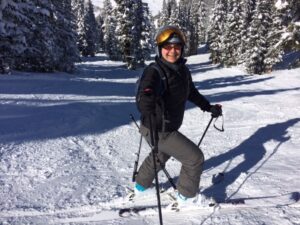
My Ego as a Senior Skier

The aging process does weird things to the mind. We remember days of yesteryear winding down through moguls on a steep run all day, thinking it was fun. Or floating through knee-deep powder all day from when the lifts open until they close. Today, in my dotage, when confronted with a steep pitch full of knee-high, well-rounded moguls, I go around. Or, after two long runs through knee- or thigh-deep powder, my legs say we’re done for the day. The mind is willing, but the body says, “Hell no.”
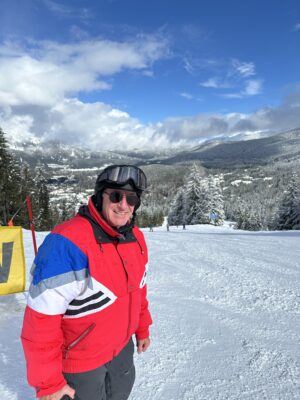
A Sunny Day!

Unfortunately, I don’t live near a ski area where I can ski seven days a week. Each year, I work hard to get in less good shape than the previous year. And, what trainers tell me, getting into good skiing shape gets harder with every coming year. The message is that you can’t beat Father Time.

So why ski? Given the image the marketing folks want to portray, if one is not blasting through the trees in deep powder, or bouncing through the moguls, or leaping off rocks, one right after the other, why do I ski?

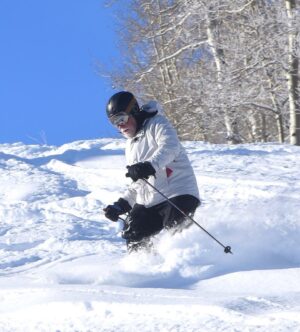
Because I love it. At 78, my ego no longer needs to be fed by a run through knee- deep moguls or skiing fast down a double diamond. Instead, I enjoy making a round carved turn that controls my speed on any pitch. I now only ski on groomed runs no matter how steep and stay out of trails that look like a hockey rink, bumps and now, even glades unless they are wide open. Nor do I ski in soft, mushy, clumpy snow. So what?

Now I take my time, stopping more often. Each run is precious because it may be my last – not because of death, but because of injury. Like most senior skiers, I am most afraid of being injured by an out-of-control skier who is either stoned, inebriated, skiing
way too fast for the conditions, on a run well beyond his/her ability, or a combination of all the above.

My bones no longer break; they are more likely to shatter. A simple fracture that will heal in a 40-year-old body in a month or two may take major surgery and heal in six or more months if it ever does. So, yes, I am careful where and what I ski and in what
conditions.

I even find myself taking in the vistas around me. There’s not a photograph that does justice to the majesty of snow-covered mountains, whether in Vermont, California, New Mexico, British Columbia, Austria, or New Zealand. There’s nothing like breathing in the cold, crisp air while giving your thighs a breather and admiring the work of Mother Nature.

Double diamond, expert, intermediate, beginner, if it is groomed, I’m in. To me, the degree of difficulty of the trail is irrelevant.

My ego is in doing what I must to keep skiing for as long as Father Time allows. My ego is the simple act of being able to turn a pair of skis and carve a turn in any condition I choose.

My ego is in the fact that I am skiing, not what I am skiing.
Major Changes Coming to Powder Mountain


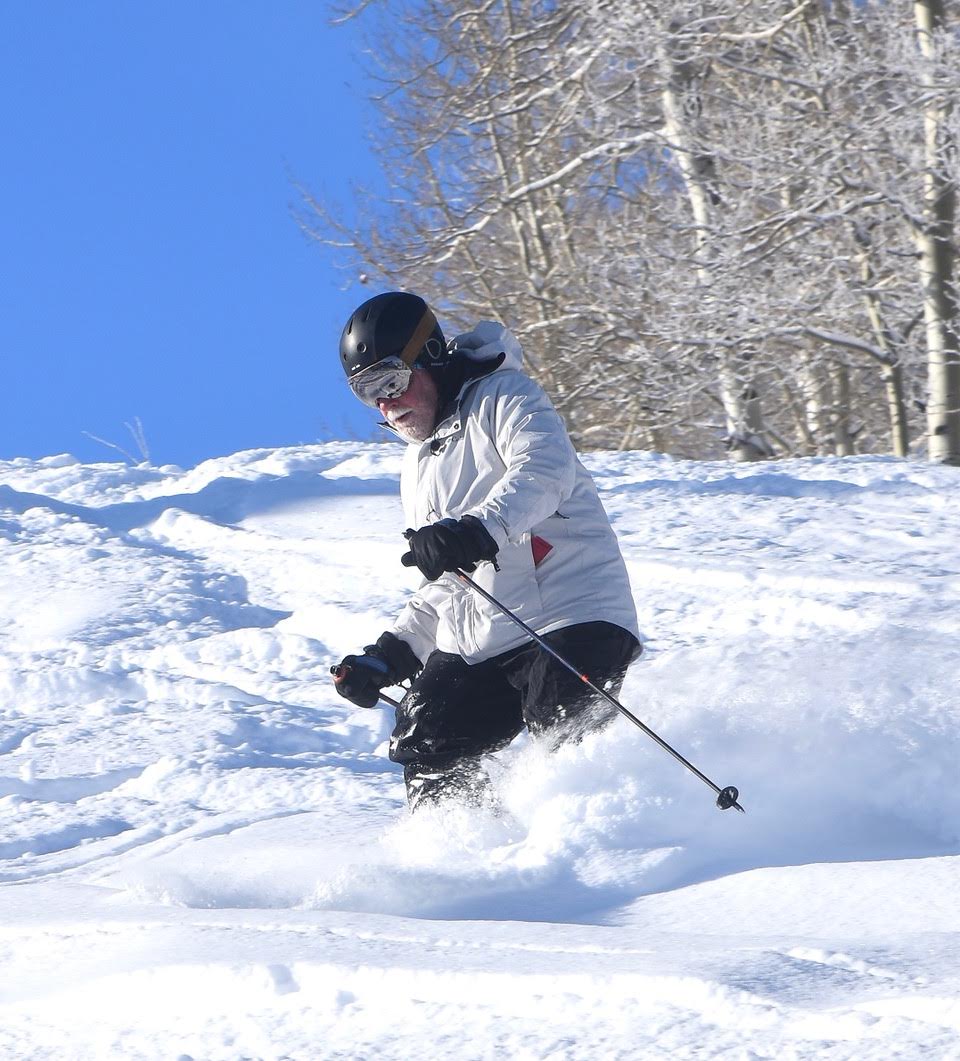
Photo by Dave Sartwell of fellow Contributor Mike Roth skiing at Powder Mountain

Powder Mountain is about to embark on a private/public ski area development venture. In a bid to sell more real estate, a large segment of the mountain will become the exclusive domain of the on-mountain home owners. Like Homewood in California and Windham Mountain in New York, Utah’s Powder will be a hybrid model with major changes for longtime devotees. Those changes start next season.

“In order to pay our bills, we need to sell more real estate, and to do that we are introducing private homeowner-only skiing,” said Reed Hasting, in a letter to the community in Dec of 2023. The new CEO of Powder Mountain added, “We will be designating the Village and Mary’s lifts, which serve beginner and intermediate terrain, plus a new lift on Raintree for this private skiing, starting a year from now.”

With more than 8,500 acres of skiable terrain, Pow Mow, as it is known by the locals, is the largest ski area in North America. Located in the Wasatch mountains just thirty minutes northeast of Ogden, Utah, it is best known for receiving more 500 inches of snow each year – and free skiing to those who are 75+.  Powder hounds from across the country trek here to ski the off-piste, tree-ladened slopes and laid-back vibe.

 Reed, the co-founder of Netflix, got involved with Powder last April, and then took majority control of the resort in late summer by pledging a reported $100 million in new investment. He signed a development agreement with Meriwether Companies, a leading resort developer perhaps best known for their development of Kelly Slater’s Surf Ranch, to head this new effort.

 They immediately removed from the market 25 of the 57 lots in the Overlook area that had been listed for $1 million each while they develop a new master plan.

 In the meantime, they are investing in some infrastructure upgrades. The horribly slow Paradise lift will be replaced by a high-speed detachable quad that will cut the ride time in half. Additional terrain will be accessed by a new fixed-grip quad on Lightning Ridge, which had been accessible only by cat skiing or skinning in the past. The cat skiing will be moved to another part of the mountain. The new owners are also upgrading the Timberline triple lift with a fixed-grip quad.

 “We believe this blend of public and private skiing secures us decades of exceptional uncrowded skiing for all, funded partially by real estate. To stay independent and uncrowded, we needed to change, and we didn’t want to join the successful but crowded multi-resort pass model (ie, Snowbasin) or sell to a conglomerate (ie, Vail),” Reed stated.

Construction Begins This Summer

This ambitious plan will affect their 2024 summer operations.

“Construction will begin this summer on a number of lift and maintenance infrastructure upgrades that are set to greatly enhance the on-mountain experience at Powder Mountain,” they announced. “We will not be operating lift-accessed mountain biking this summer (2024) due to on-mountain summer construction needs. We appreciate all of the planning and hard work that has gone into making lift-serviced mountain biking at Powder possible for the past two summers, however after evaluating all options, this is a necessary step in order to complete our ambitious plans of installing four new lifts.”

Some new homes already have been built in the designated private area. A few are really are spectacular with truly wonderful views of the mountains.  Meaghan O’Neill recently wrote in Architectural Digest that, “… buildings by acclaimed architects like Marmol Radziner, Olson Kundig, and MacKay-Lyons Sweetapple Architects, the Summit Powder Mountain village promises sprawling views of the Great Salt Lake and a stunning organic modern aesthetic.”

The new grand design has yet to be rolled out.

Changes to Season Passes

There have been several changes in the ticketing prices. For this next year they are lifting season pass caps, but intend to control numbers by limiting day passes.  In a blow to seniors, the complimentary 75+ season pass has been eliminated.

What will the future hold for Pow Mow?

Will this become a private club for the super rich or a necessary blend of public/private that will keep the area open to the general public for generations to come? Stay tuned.

Get the Grandkids Skiing with Early Purchases of Season Passes

If you are like me, whenever I think about holiday gifts for my adult kids and grandkids, I immediately put the thought away, thinking I don’t have the time right now and will do it later. That turns out to be around December 15th, when panic sets in. Not anymore. Now, I gift my adult children season passes, so we can all ski together, including the grandkids.

It was my wife’s idea last season to give multi-resort season passes as holiday gifts. When the monetary – and monetary – shock wore off, I realized it was a wonderful, and sensible idea.  After reviewing the major choices and where the kids and grandkids would ski, we decided to go with Ikon over Epic and Mountain Collective.

Given the date in mid-December when we looked into this, delaying was not an option, since sales would cease in two days. So, I went online, bought two Ikon full passes for five days at each participating resort, and then declared an early happy hour for my wife and me.

Here’s why it was great:

My son lives in the San Francisco Bay area with his wife and three daughters, all of whom are under 7 yrs old, so their passes are relatively inexpensive, which is why I chose the adult pass as a gift. My wife and I live in Massachusetts. We’ve met to ski together in Utah twice in the past three years, and the older one, who is now 6, is now skiing greens with full confidence. The other two girls are younger, and like younger siblings everywhere, they don’t want to be left behind.

In late December, my son, his wife and the three girls were invited by friends to spend the holiday week in Steamboat Springs, an Ikon resort. In February, my son took the family to Palisades Tahoe, another Ikon resort. Later this season, their family joined us at Snowbird, where we got a couple of timeshare units into which we can squeeze everyone for 4-5 days. 

The icing on the cake for our three-generation ski trip was that the kids had already skied multiple days at multiple resorts, and were more than warmed up for skiing with their grandparents.

My point is simple:

If you want to ski with adult kids and your grandkids, the little ones must be skiers. Buying a mega-pass product makes it much easier to create opportunities to ski together with the younger generations.  We would have ended up buying them a lot of day tickets anyway, which would have been much more expensive, so this mega-pass situation is looking pretty, pretty good!

NOTE: We lucked out big time, because my wife made her suggestion TWO days before pass sales stopped last fall. And as anyone who’s been in this mega-pass world knows, when pass sales end THEY’RE OVER.

So, think about it. In some respects, it is literally the Christmas/Holiday gift that keeps on giving. Because what’s more fun than skiing with your adult son or daughter and his or her child or children?

Passes are on sale, do it now, you won’t regret it!  Or, skip the passes for your kids and buy them for your grandkids.  Do whatever works best for you, with the goal of skiing with your family.

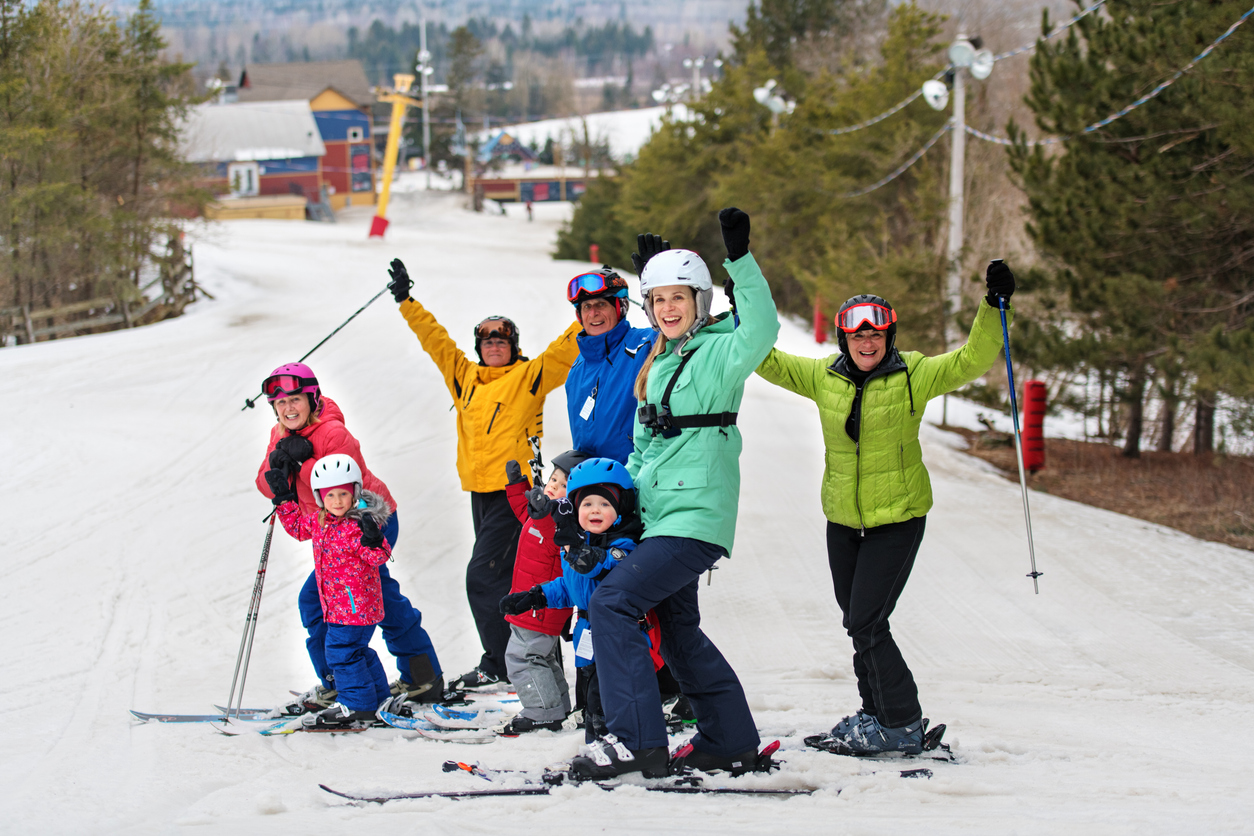
Families and friends in a ski resort

ICYMI for the End of This Season

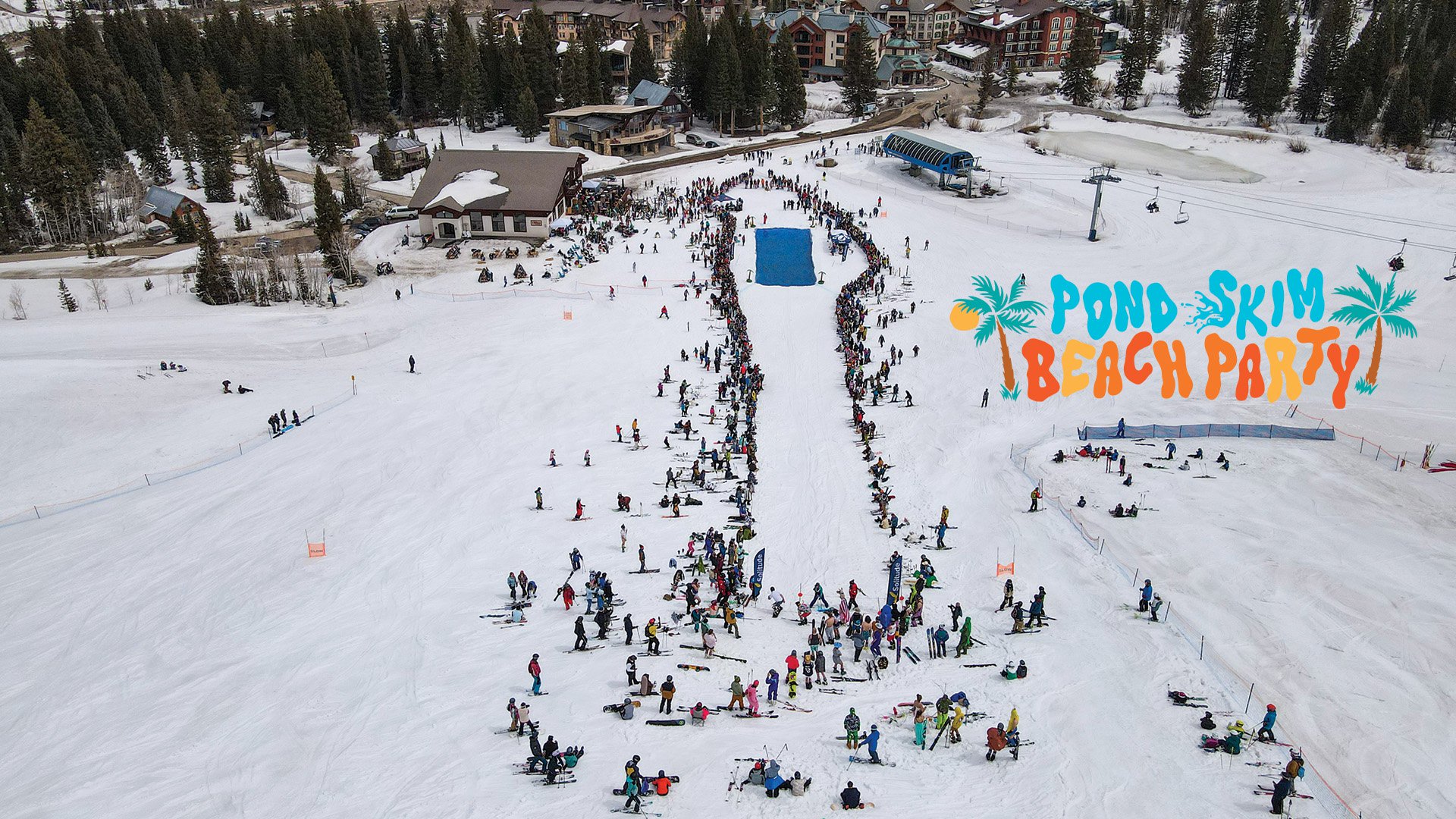
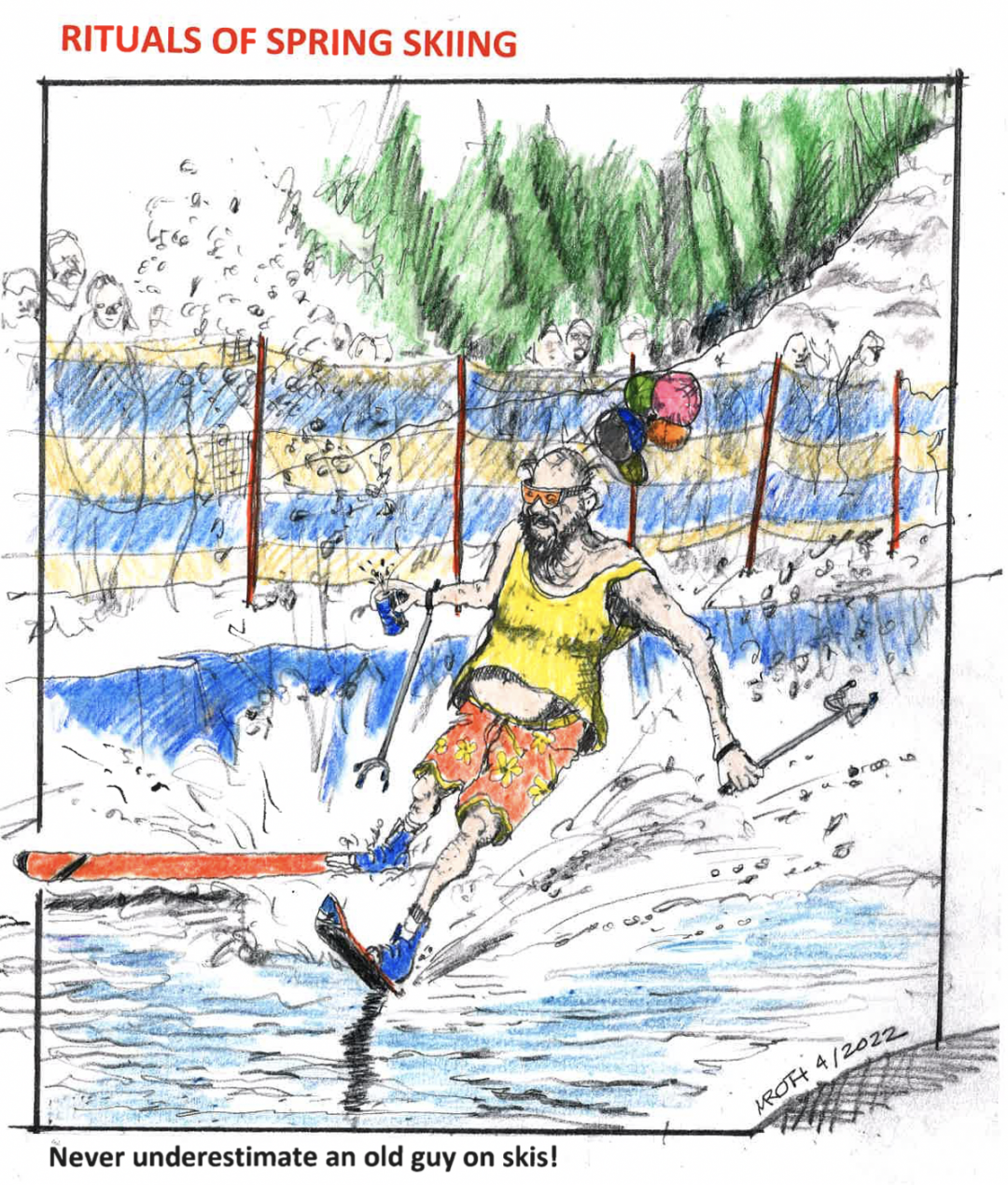
Three cheers for spring.  It means longer hours to linger in the sunshine, wearing fewer layers, ditching goggles for sunglasses, and also enjoying oodles of end-of-season events and early bird discounts for next season, including new season pass options. Here is a round-up of what to check out before you pack away your skis, snowboards, neck warmers and base layers for golf clubs, tennis rackets, mountain bikes and tank tops, including always good-for-laughs pond skimming contests .  Don’t forget the SPF!

In the West

Jackson Hole again features its annual Rendezvous Music Festival the first weekend in April, 5/6 with FREE concerts both downtown in Town Square and at the Teton Village base area, including Country super-star Luke Grimes.  You can also download a Spotify playlist.  Jackson Hole is scheduled to close for the season on Sunday, April 14 https://www.jacksonhole.com/rendezvous

For the 2024/25 season, all Big Sky single day or multi-day lift tickets purchased from the resort will include Tram access, and the new Twin Tips Pass includes early and late season access.  Note that skiers/riders with Ikon, Mountain Collective, and Big Sky Resort passes without tram access will continue to have pay for the tram on a per-ride basis.  Pass prices here. https://bigskyresort.com/24-25-season-passes

Also, the resort is offering 35% discounts through April 28 to explore the challenging terrain off the Lone Peak Tram and upper mountain when you book with a Tram Guide.

Snowbasin is offering a year-round Premier Pass that includes summer activities such as gondola rides and mountain biking trails, and no black-out days in any season.  It’s relatively inexpensive for what it offers – $1,129 for adults to 64 and $829 for adults 65+ – which includes five days of skiing/riding at sister resort Sun Valley, free public transportation on the UTA Bus system, and multiple discounted Buddy and Family passes.  More information here.   https://www.snowbasin.com/tickets-passes/season-passes/

The end-of-season Pond Skimming fun at Steamboat is Sunday, April 14, one week before the official closing date on April 21.  https://mtn-resorts.com/Steamboat-Springs-Event.php?id=49

In the East

Family-owned and operated Tenney Mountain in New Hampshire has one of the least expensive pass deals anywhere, with no blackout dates and six Buddy Passes included in every purchase.  Prices are $399 for ages 19-64, $299 for Veterans/Military and Seniors 65-79, through April 30th.  80+ skis and snowboards FREE.  A bonus is that skiing icon and super-nice guy Dan Egan – who grew up nearby and grew up skiing here – is the new GM, and there are chances to ski with him and learn from him.  More information here. 

https://tenney-mountain.axess.shop/en/Products/Tickets/Category?cID=1

Pennsylvania destinations Blue Mountain Resort in Palmerton and Camelback Resort in Tannersville, now under the same corporate ownership, have a a new joint pass program for skiing, snowboarding and snow tubing. The Peak to Peak Poconos Pass offers unlimited skiing and riding at both for the upcoming 2024/2025 season.  Purchase now and it includes the remainder of the current season.  Adult prices are $899 through April 3. They are also Ikon Pass members.

Pond skimming at Whiteface is Saturday, April 6.  https://whiteface.com/event/pond-skim/

Pond skimming at Stratton is Sunday, April 7.  https://www.stratton.com/things-to-do/events

Spring Bash Weekend at Saddleback is April 5-7, with the fan favorite Pond Skimming contest on Sunday the 7th.  https://www.saddlebackmaine.com/event/spring-bash-pond-skim/

Mike Roth’s Take on Spring Rituals

In Canada

The resorts of Quebec continue to offer a bargain deal for first-timers through the end of the current season.  The Never Ever Days program, for ages 5 and up, is a lesson at a ski resort with a certified instructor, plus full equipment rental for only $29.95 Canadian, which is more like $25 US. The program has helped introduce more than 30,000 already this season.  That’s great news for the future, thanks to introducing newbies to the sport we all love.  More information here.  https://boutique.maneige.ski/en/products/mpf

The annual World Ski & Snowboard Festival at Whistler, April 8-14, is a week full of events and action on and off the slopes. It features ski and snowboard competitions, music, art, photography, filmmaking and exciting nightlife, plus some of the best skiing and après sessions of the season, most of which are FREE and others ticketed. The annual Slush Cup pond skimming event is on the final day.  See the full schedule of events here.

ttps://www.whistler.com/events/world-ski-snowboard-festival/

See you on the slopes – if not again this season, fingers crossed for next season.

$6,000 Lifetime Pass Offer From Washington State Ski Area

With Ikon and Epic season passes costing around $1,000, and some walkup day passes hitting $300, a $6,000 Lifetime Pass sounds like a great deal.

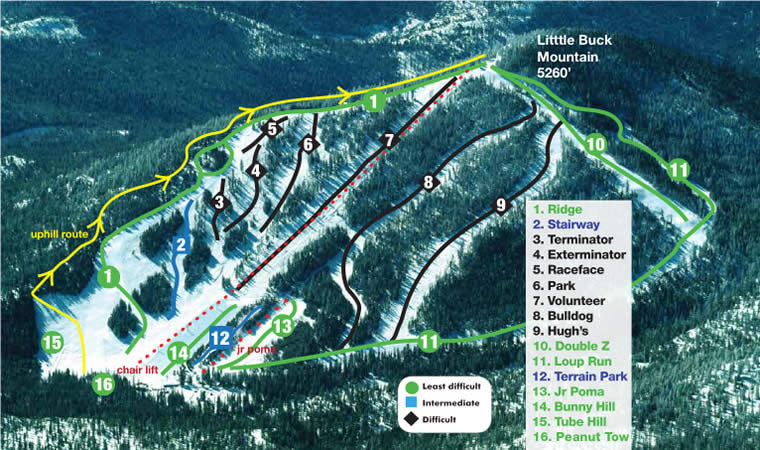
That’s what’s being offered by Loup Loup Ski Bowl, a small and fiercely independent ski destination in Okanagan, in central Washington State about 125 miles northeast of Seattle.  It’s an innovative effort to create a cash flow to survive changing times and the changing temperatures and snowfall levels they bring.

Currently, the area which locals call simply “The Loup”, sells a season pass for $569 for adults 20-64, $450 for seniors 65-69, and $190 for a 70+ Super Senior.  

Clearly, the younger you are, the better a deal it is, since 30 or 40 years of skiing for $6,000 is a better deal than ten. That’s the current break-even point for the lifetime pass, less if pass prices go up for inflation.

Loup Loup also is not hiding the fact that this $6,000 lifetime pass deal will help it survive. This is what you’ll see on the destination website:

https://skitheloup.org/plan-your-visit/passes-tickets/

Win #1 –  By purchasing a Lifetime Pass now, you are entitled to skiing at the Loup for the rest of your life and the life of the Loup.

Win #2  – By purchasing a Lifetime Pass now you help ensure that there is a Loup Loup Ski Bowl for you, your family, and the community to enjoy long into the future. The longer the Loup can thrive and survive the more benefit you get from your Lifetime Pass.

Win #3  – By purchasing a Lifetime Pass for you or a loved one you can inflation proof your or their skiing…for life! Think about it, in the 60’s a brand new car was $3,000 …now the average price is nearly $50,000! Skiing unfortunately has suffered the same effects of inflation and it’s very likely to continue. With your purchase, you can side step inflation and help save a small community ski hill at the same time.

And if that still doesn’t tip the scales…forecasters are already predicting a greater than 70% chance of a La Nina cycle by mid summer…so with a little luck and a whole lotta snow dances…this low snow year will just be a distant memory!

Loup Loup is offering only a limited number of passes at this price, so don’t delay if you want one.

Let’s hope The Loup survives.  Small, independent areas like this are crucial to the future of the ski/snowboard industry. This is where we and the kids and the grandkids learn to ski, before we move on to larger areas like those on the Ikon, Epic and Mountain Collective passes.

Let’s also keep watch to see if this idea spreads to other small, independent areas like Loup Loup Ski Bowl.

See you on the slopes!

Tuning Skis (Part 2)

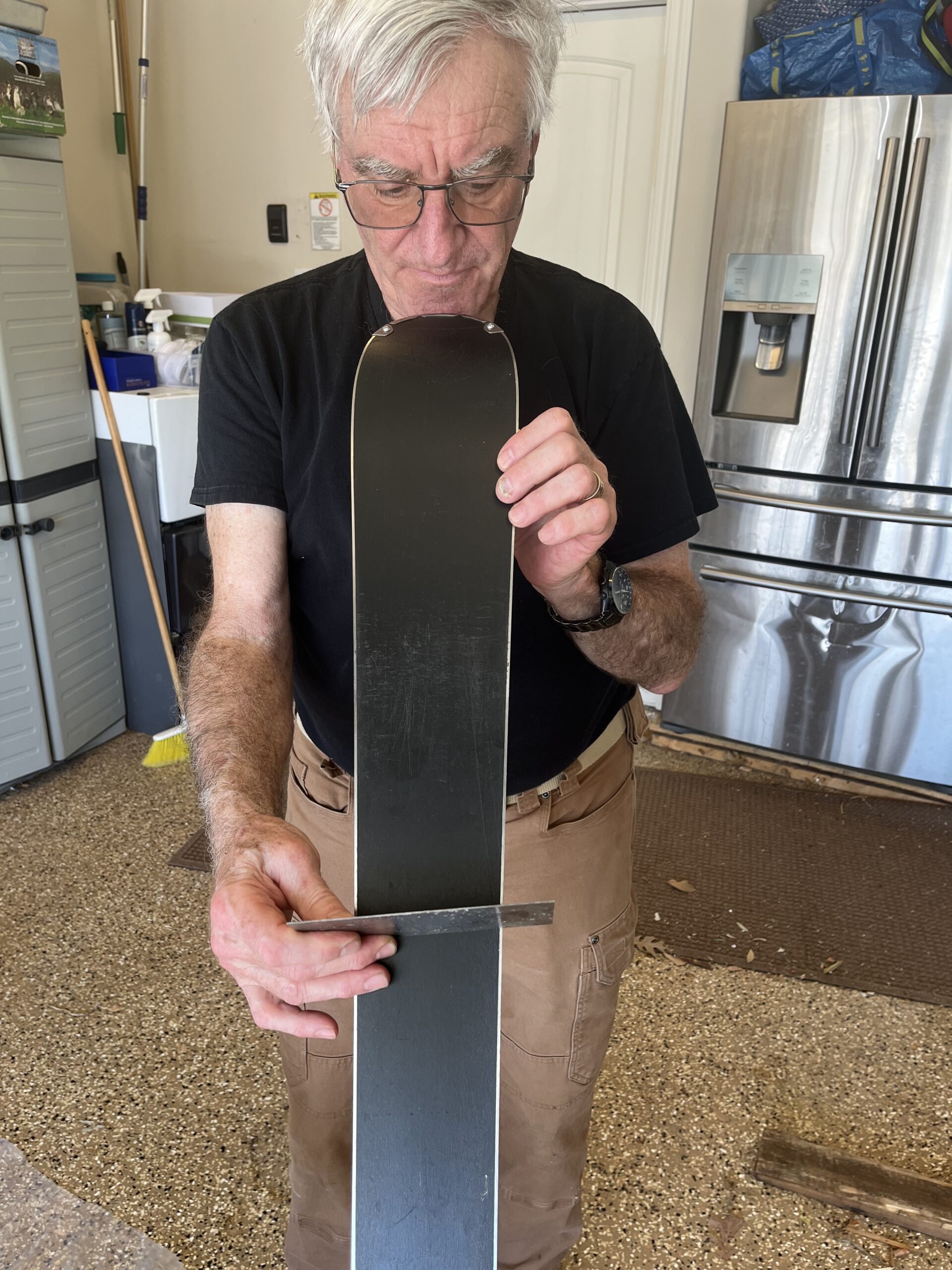
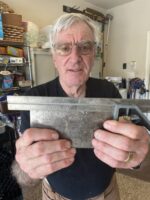
Photo 1: Checking the square of the scraper

As a young ski racer, I learned the importance of properly tune skis. Now as an old a recreational skier, I can assure you skiing “tuned” skis makes the sport more enjoyable. 

Tuning a pair of skis answers three questions. One, do the bindings work as advertised? Two, are the bottoms flat, not convex or concave? And three, are the edges are sharp from tip to tail.  

The bindings are the easiest to check. Simply twist the toe piece left and right. It should turn smoothly. If you feel a grinding feeling, there may be crud inside that has to be flushed out. FYI, if you carry your “naked,” i.e. not in a bag or container, a ski rack on the top of the car, you will have dirt and grit in your bindings. 

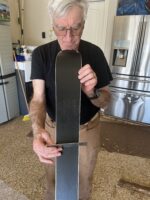
Photo 2: Looking for concavity-convexness.

Open and close the heel piece. Again, it should move smoothly. If it doesn’t, use a hose to clean both t

he toe and heel pieces. Do not use soap or a degreaser which will clean out the dirt as well as all the lubricants.

And last, know your ski binding DIN number. The industry went to great lengths in the 1970s and early 80s to standardize boot sole shapes and the boot binding interface. Out of that came a chart that considers, your age, ability, and weight to create a binding setting number. You should know it and check and see if it moved.

In an earlier piece about waxing skis, I mentioned a scraper. Photo one shows me checking to make sure that it is square. Why? The scraper is the perfect tool to check to see if you have a concave or convex bottom.

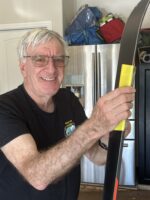
Photo 3: Using the file

To determine if you have a convex bottom, (Photo 2) as you slide the scraper down the ski, you can see daylight along the edges, and the scraper will rock on the P-Tex. In other words, the bottom is higher than the edges. If it is, the ski will swim, even dart to one side when you try to ski with them flat. 

If the bottom is concave, with the scraper resting on the edges, you can see a gap between the scraper and the P-Tex. A concave bottom is another bad condition which causes the ski to be hooky when on edge and often hard to turn. 

Neither condition is good. To fix either, take your skis to a ski shop that has a bottom grinder that will true up the bottoms. Note, that grinding the bottoms will take off both P-Tex and the steel edges and must be done very carefully. BTW, another reason to wax skis frequently is that it reduces P-Tex wear.

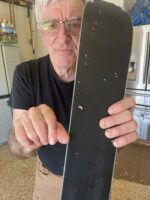
Photo 4: Edge sharpness

Most ski bottoms, even after several seasons are neither concave nor convex, but their edges are dull. First, when you look at the edges, they should be 900 where the edge meets the snow. Often, you will, as you run your fingers gently down the edges, feel burrs or imperfections caused by hitting rocks, bare spots, pieces of wood, etc. Both edges need to be smooth and “sharp.”

Most ski shops have files designed specifically for this task. You simply run them down the ski, from tip to tail to smooth out the edges. (Photo 3). When you are finished, use the back of your thumbnail, and gently draw it across the edge at a 900 angle (Photo 4). The edge should scrape off some nail. Once you are finished filing the edges, wipe them down with a damp cloth to clean off any reside and you are done.

Trust me, if your skis are tuned properly, you’ll notice the difference.

CADS: Where Are They Today?

Dr. Jaime Green (circa 2016) wearing CADS.

Riding a chair lift last month, I saw them on a skier below. Ten days later, I saw them again, this time at an area 2,000 miles away.

CADS…  Constant – force Articulated Dynamic Struts … the odd looking, butt-to-boots device designed to keep skiers with knee and other lower body strength and stamina issues on the slopes and skiing without pain. Twenty years ago, it was not unusual to see people wearing CADS. Two of my friends wouldn’t slide downhill without them. That was then. In recent years I hadn’t seen anyone on the slopes wearing them.

What happened?

No marketing. No advertising. No distributors, according to Walter Dandy who first imagined CADS in the 1980s while nursing a case of sore thighs riding up a chairlift at Heavenly Valley after a long run in heavy Sierra snow, he had the concept and the vision. In Tony Nespor, he found the engineer he needed to refine the parts for manufacture.

The idea was a simple one: ‘artificial strength’, a way to use upper body weight to stabilize the ski on the snow, like a suspension system in an automobile.  And that strength needs to be constant. The answer turned out to be a rubber spring that kept up the pressure steady on the skis. It meant less muscle fatigue, less knee strain, and less lower back strain. .

The pully-like devise looked strange: a rubber spring at the skier’s boot is attached to a string that runs up the back of the skiers legs where it is attached to a harness and waist belt.  At the end of a run, it is detached for the lift ride back up the hill. At the top it is then re-attached, which that can take as little at 11 seconds once the skier gets used to the process.

Sure CADS felt strange when first used. But as prominent ski writer Nicholas Howe wrote in Skiing Magazine, “The only strange part comes when the afternoon ends, and my legs feel as if it were still morning.”

Dandy had a prototype of “my contraption” ready to go in the spring of 1987. He approached K-2 but the ski manufacturer indicated it had no money to develop the devise. He then secured interest from George Gillette at Vail and then funding assistance from the ambassador Paul Nitze, an investment banker and  former chairman of the Aspen Ski Company. The first sale was to the Dave Gorsuch ski shop at Vail where CADS were introduced to the public.

The early feedback was very solid. “95% of the early people who tried CADS, bought them.” said Dandy.

Ed Blumstein was one of those. The Philadelphia attorney who vacationed at Vail was one of the early users. ” They made me a more comfortable skier.  CADS extended my skiing life 15 years.”

The early deal was that buyers would receive a box.  Boots and pants would be sent back to Dandy so the device could fitted then returned. There was a money back guarantee if the purchaser didn’t like the product.

Said Dandy: “Only a couple ever came back.”

By the mid-1990s, CADS were catching on not only at Vail and Beaver Creek but also with Izzy Slutsky and Karl Plattner at Hunter Mountain and nearby Windham in New York. Said Plattner at the time: “The two best things ever to happen to skiing were snowmaking and CADS.”

There was other positive feedback too. CADS were accepted early on by orthopedists at the noted Steadman-Hawkins Sports Medicine Foundation in Vail who endorsed the devise. Prominent ski journalists across the country wrote glowing articles. The 1964 Olympic slalom medalist Jimmy Heuga who was diagnosed with multiple sclerosis skied on CADS when he could no longer walk unassisted.

So why with all the positive vibes when they were introduced are CADS not commonly seen on the slopes today?

They are still available to purchase. Today they cost $695 by mail with some assembly required.

‘We sell a handful a year.” says Handy, who still does demonstrations at his home in Vail.

And right now, that seems to be the future too. There is no distributor working the market and CADS hasn’t advertised in 25 years. Seeing the device at work on a slope these days, like I did recently, qualifies as a rare sighting. Handy estimates that there are a maximum of 1,000 people using them today.

What’s next for CADS?

Says Handy: “Maybe I should get in touch with Taylor Swift

New Don Burch Video: Wonderment of Skiing

This week Don Burch brings us A very personal account of what skiing means to him.  Enjoy!


Skiing Ski Santa Fe

View from the top of Gayway

When one thinks of the first ski areas in the U.S., one thinks of Sun Valley or Stowe. Few know that in 1936, in the Sangre de Cristo Mountains east of Santa Fe, NM, Robert Nordhaus installed a rope two to haul people up the slopes of what is now Ski Santa Fe. It was used as a training area for the 10th Mountain Division during World War II.

Ski Santa Fe is about 40 – 60 minutes northeast of New Mexico’s capital, depending on your starting point. Its base elevation of 10,350 feet makes it one of the highest ski areas in the country.

After skiing Ski Santa Fe for three days over the President’s Day weekend. The conditions were excellent, and the lower half of the mountain had a mix of natural and manmade snow. 

The trails remind me of skiing in New England, i.e. narrow, sometimes really steep and bordered by large trees. The trail mix of Ski Santa Fe is 40% expert, 40% intermediate and 20% beginner which tells you who skis the mountain. There are many places at Ski Santa Fe, particularly off where you can ski in and around the trees. The North and South Burn trails off the Tesuque Peak Lift are a giant glade with steep to not-so-steep routes through the trees.

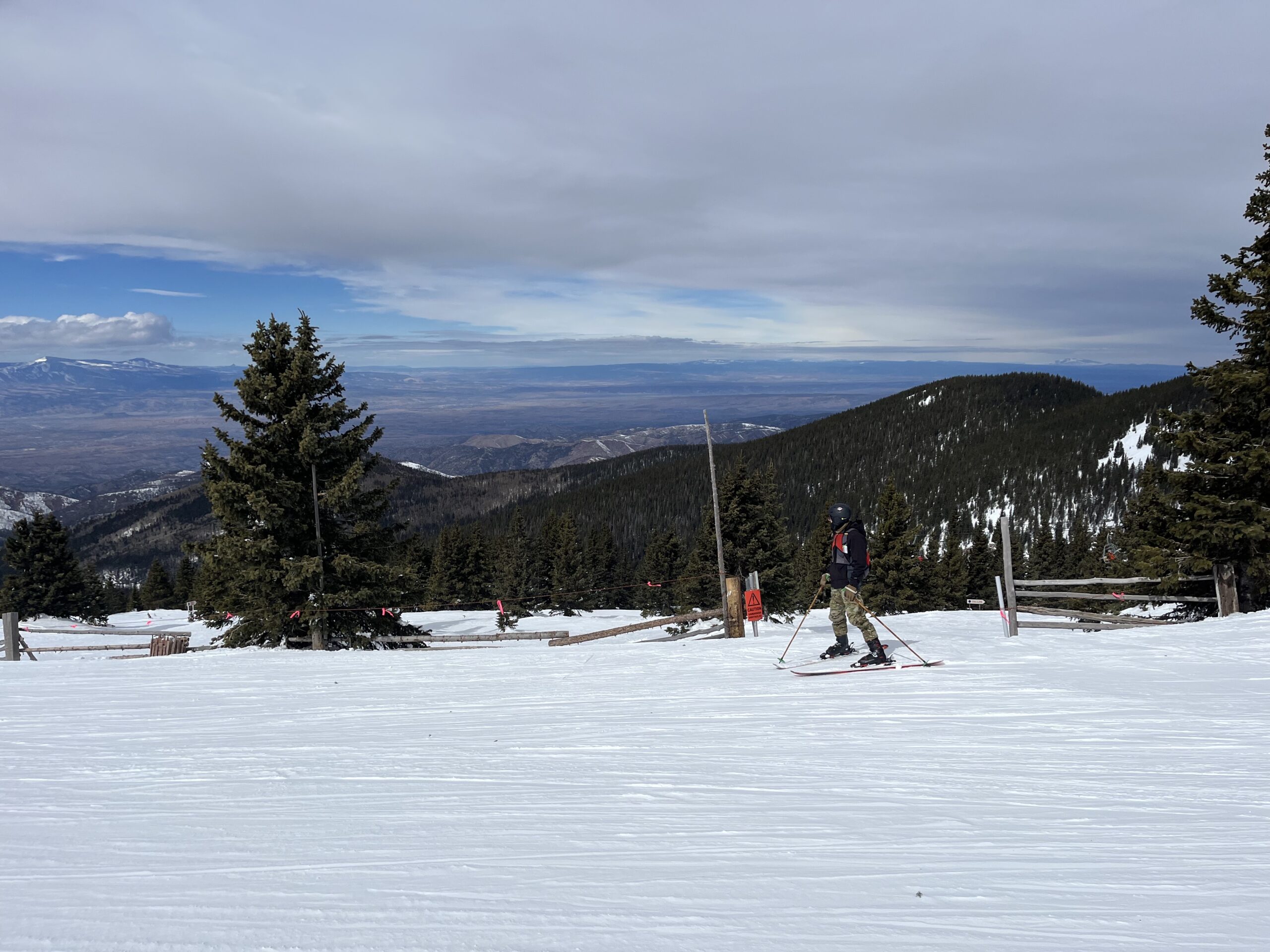
For intermediates, there are many wonderful, well-groomed trails. The wide Gayway, from the top of the Tesuque Peak chair, will present an enjoyable challenge. Before you ski down Gayway, stop, and enjoy the view of the Santa Fe Valley. It is simply incredible. Each time I skied the trail, I’d stop to take it in.

On the Presidents Day weekend, there were hardly any lines after 10 in the morning. For next year, a new quad chairlift will be open which will whisk skiers from the base to the top in about four minutes.

While there, I met many locals in their 60s and 70s who were season pass holders. The mix of skiers and boarders ranges from the very young to folks my age (I’m 78).

For those who want to take lessons, the ski school offers a wide range of classes, including those for seniors taught by instructors who qualify as a senior skier. Ski Santa Fe also has an adaptive skier program. All of three of its season passes – God. Platinum and One Pass – have substantial discounts for skier.

The area also has youth and family programs geared to getting youngsters hooked on our sport. While not designed as such, the ticket prices for seniors make it a perfect excuse to go skiing with your grandkids.

Good news for your legs. Except for Lift 2, all the lifts have footrests and safety bars. The bathrooms at the base lodge are on the same level as the slopes AND there’s an elevator to take you between the floors.

More good news. Santa Fe employs a full-time safety team that works to reign in reckless skiers. 

Totemoffs

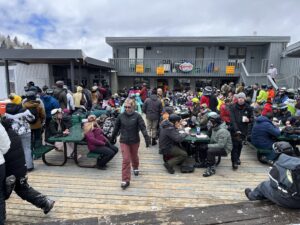
There are three restaurants on the mountain. One is the La Casa food court in the base lodge, which has a wide variety of very good food. The outdoor Terrace Grill on the second floor of the base lodge has an interesting menu. If you want a real treat, try the cheeseburger smothered with green chilis at Totemoff’s Bar and Grill near the midway station on Chair Two.

One of the joys of Ski Santa Fe is that there is no lodging at the area, so you must drive up. This is both a plus and a minus. The plus is that you get to stay in one of the hotels in Santa Fe and enjoy the excellent restaurants around the Santa Fe Plaza. The minus is that you must drive up, park, carry your skis, boots, and poles to the base lodge, or put your boots on at the car before you walk up. There are lockers in the base lodge for which you need to buy tokens at $2 each.

I’ve saved the best news for last and that’s lift ticket prices. So, if you are between the age of 62 – 71, weekdays are $76, and holidays and weekends are $84 unless you are 72 and older. Then, its $16/day any day!

Net, net, I’ll be back!

Ski Santa Fe by the Numbers

 Summit elevation – 12,075 feet
 Base elevation – 10,350 feet
 Vertical drop – 1,725 feet
 Average annual snowfall – 325 inches
 Skiable acres – 660
 Snowmaking coverage – 55%
 Number of trails – 86
 Runs groomed daily – 37
 Terrain breakdown – Beginner 20%, Intermediate 40%, Expert 40%
 Terrain parks – 2
 Lifts – 7 – 1 quad, 2 triples, 2 doubles, two conveyors