rebuild

Recommended Skis for Senior Skiers 2026 (subscriber only)

Credit:Ljupco

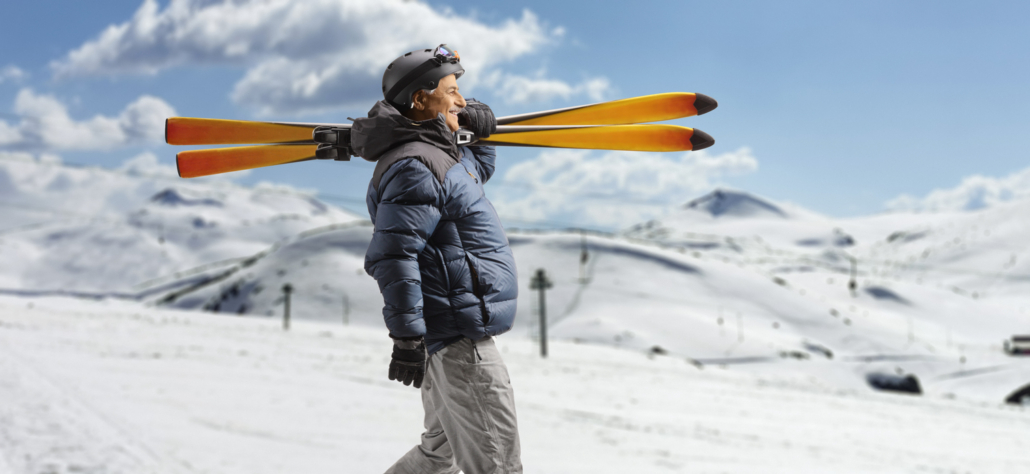
Don’t ski as aggressively as you used to? Looking for a ski that makes the sport a little easier? Realskiers.com, my go-to site for finding the perfect ski, has shared their recommendations of the best skis for older skiers. Their ”Silver Skier” selections are models, in their estimation, either inherently easier to steer with light pressure or possess such a broad performance envelope that their charms are accessible to lower-energy skiers.

Recommended 2026 Skis for Senior Skiers

FRONTSIDE

This is a huge category, if only because it occupies every price point from the cellar to the penthouse. If you’ve been riding an All-Mountain model for a few seasons, you’ll find a narrower Frontside ski easier to maneuver and more terrain agnostic than you’d expect.  Whether your skills are eroding or as sharp as ever, you’ll find a Frontside model takes less effort to steer and holds a more accurate line.

Atomic Redster Q 9.8
Blizzard Anomaly 84
Blizzard Stormbird 82 DTi
Head Supershape e-Titan
Head Supershape e-Rally
Kästle MX84
Rossignol Forza 70o Ti
Salomon Stance 84
Stöckli Laser AX
Völkl Peregrine 82

WOMEN’S FRONTSIDE

One of the oddities of the women’s ski market is that the narrower the model, the more likely it is to use a rich construction that targets the elite skier. The top-of-the-line women’s models in both the Technical and Frontside genres tend to sport more made-for-women features than the typical All-Mountain and Big Mountain women’s models. Point being, the best made-for-women skis aren’t aimed at seniors, but at hard charging, technical skiers.  Mellower models can be found further down the pricing pyramid and in wider categories like All-Mountain East.

Blizzard Black Pearl 84
Nordica Wild Belle DC 84
Salomon Stance W 84

ALL-MOUNTAIN EAST

If you need one ski that can handle whatever conditions you encounter, it should be plucked from this genre. Versatility is their dominant personality trait; quick enough to the edge to navigate choppy bumps, fat enough to float in boot-top powder, narrow enough to bite into eastern boilerplate, mellow enough to turn at slow speeds and stable enough to charge the fall line.

Atomic Maverick 86 C
Blizzard Anomaly 88
Head Kore 94 Ti
Nordica Enforcer 94
Rossignol Arcade 94
Völkl Mantra 88

WOMEN’S ALL-MOUNTAIN EAST

If all you ever ski is groomers, fine, get a Frontside ski. But for those women with the slightest inclination to travel off trail, the all-terrain, in-resort skier belongs on an All-Mountain East model.

Blizzard Black Pearl 88
Head Kore 93 Ti W
Nordica Santa Ana 92

ALL-MOUNTAIN WEST

If your preferred playground lies the big mountains of the American west, you’ll encounter enough mixed conditions to justify the added surface area built into an AMW model. The less you sink on each turn, the less effort required to maintain momentum and the easier it will be to change directions with a sudden swivel, an essential off-trail technique. The top models in the genre are generally Power skis that take some added mojo to bend, which is why you won’t find the Blizzard Anomaly 94, the Stöckli Stormrider 95 or Völkl Mantra M7 on this list.

Blizzard Rustler 9
Dynastar M-Pro 100 Ti
Nordica Enforcer 99

WOMEN’S ALL-MOUNTAIN WEST

Women of modest skiing skills looking for a wider ski to make their off-trail life easier should probably look elsewhere. Women’s AMW models tend to target the talented lass who rips the sidecountry to shreds, rather than the timid who tiptoe into choppy snow. Our two Silver Skier Selections aren’t meant as training wheels for so-so skiers, but as facilitators that open up the sidecountry to those who already have the requisite skill set.

Blizzard Sheeva 9
Head Kore 99 Ti W

BIG MOUNTAIN

Lower skill skiers will be out of their depth here. Sure, they’ll get the benefit of more flotation in deep, uncut pow, but how many perfect runs like that are you going to get? And will the less talented be able to even bend a burly Big Mountain? Sure, some Big Mountain models are softer-flexing than the norm, but the extra width also makes it harder for the less-than-expert skier to rake the ski up to a high edge angle. If a Silver Skier really wants more help in new snow, get a full-on Powder model, forget edge angle and smear your blues away.

Salomon QST 106
Head Kore 112 Ti
Völkl Revolt 101

WOMEN’S BIG MOUNTAIN

A Women’s Big Mountain ski to too wide to serve as an everyday ski for most women, so consider these recommended models to serve as one’s powder ski when conditions merit. The principal “womanizing” feature of their design – if any – is to reduce the amount of metal in their make-up.

Head Kore 104 Ti W
Völkl Blaze 104

NON-FIS RACE

This isn’t the genre for someone trying to conserve energy, but the addiction to the feel of a true race ski doesn’t fade with age. By definition, all Non-FIS Race skis are made to the highest standard. The three GS/SL models I’ve selected here are notable for being readily accessible without world-class conditioning. If you’re good enough to ski a true race ski, you don’t need my advice on how I perceive their particular merits, hence no thumbnail sketch for each model. Suffice it to say, if I were picking for myself, these are the models I’d choose from. They all ski better than whatever else you own. But you need to bring a polished skill set to the party…

Atomic Redster G9 Revoshock S
Atomic Redster S9 Revoshock S
Rossignol Hero Elite LT Ti
Rossignol Hero Elite ST Ti
Völkl Racetiger GS
Völkl Racetiger SL

TECHNICAL

This genre has all but disappeared from the U.S. market, although it remains popular in Europe. Some are combi race models; all are made to arc perfect carves.

Atomic Redster X9 Revoshock S
Head Supershape e-Magnum
Kästle M9 76
Nordica Dobermann Multipista DC
Salomon Addikt 76

If you are thinking of buying near gear this year, a Realskiers subscription isn’t a luxury; it’s a necessity. One receives the best advice from those most qualified to provide it. You can read the full article on Realskiers by clicking here.

Related content Snow Sports Leaders: Jackson Hogen, Publisher of realskiers.com

Ski Strong, Ski Long: A Chiropractor’s Guide to Preventing Injuries on the Slopes

The sensation is universal for skiers. That crisp mountain air, the stunning vista of snow-covered peaks, and the pure joy of a perfect turn. As both a lifelong skier and a chiropractor, my mission is to help my fellow enthusiasts, especially those of us in the 50+ community, enjoy that feeling season after season without being sidelined by injury.

Although expert technique helps, what’s really important is having a well-thought-out strategy for preparing, maintaining, and recovering your body. True longevity in this sport comes from respecting your body’s mechanics and understanding that the best run of the day is often the one you finish healthy and strong.

The foundation of a safe ski season is laid weeks, or even months, before you click into your bindings. Your body must be prepared for the unique demands of skiing, which combines strength, endurance, balance, and sudden, explosive movements.

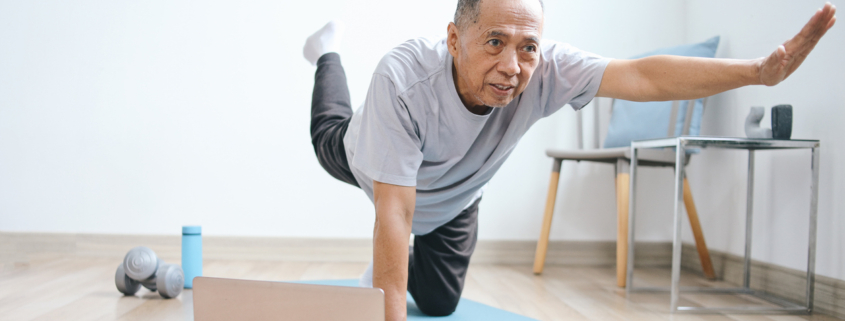
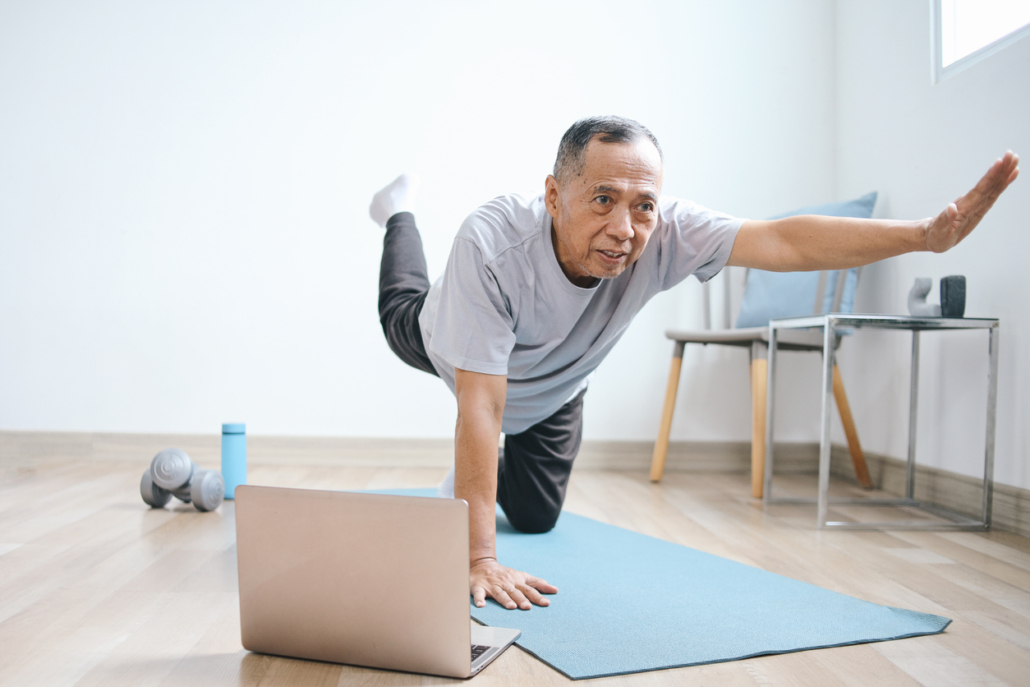
Bird Dog Exercise Credit:Rani Nurlaela Desandi

A pre-season conditioning program is your most powerful tool for injury prevention. Focus on building a resilient foundation with exercises that mimic the movements you’ll be doing on the hill.

Pre-Season Conditioning Checklist

Build a Powerful Lower Body. Your legs are your primary shock absorbers. Incorporate squats and lunges to build quadriceps, hamstring, and glute strength. Don’t forget lateral lunges, since they specifically target the muscles needed for powerful, side-to-side skiing movements.

Forge an Unshakable Core. A strong core is your secret weapon for stability and balance, protecting your lower back from the torsional stresses of skiing. Planks and the bird-dog exercise (alternately extending opposite arm and leg while on all fours) are exceptionally effective for building the deep core stability you need.

Practice Balance.
Simply standing on one leg for 30-60 seconds at a time can dramatically improve your proprioception, that is, your body’s ability to sense its position in space. This is critical for navigating uneven terrain and catching an edge before it becomes a fall.

Getting Started

Even with the best preparation, what you do on ski day itself determines your immediate risk. A cold, stiff body is an injury waiting to happen. Before you even get on the lift, invest 5-10 minutes in a dynamic warm-up.

This means moving while you stretch, not holding static positions.

Leg swings, arm circles, torso twists, and a few body-weight squats will increase blood flow, raise your core temperature, and prime your muscles and nervous system for action. Remember that dehydration happens just as easily in cold weather.

Drink water consistently throughout the day, especially at high altitudes, since dehydration leads to premature muscle fatigue, which significantly increases your risk of injury.

Staying Safe

Now, let’s talk about the most dangerous part of the ski day, the infamous “last run.”

We’ve all been there. Your legs feel heavy, fatigue is setting in, but you’re tempted to squeeze in one more descent. This is when most injuries occur. Your form breaks down, your reaction time slows, and your tired muscles can no longer support your joints effectively.

Learning to listen to your body is a non-negotiable skill.

When you feel that fatigue, when your technique starts to falter, that is your body’s signal to call it a day. There is no glory in a final run that ends in the clinic. The true victory is returning home healthy, ready to ski again tomorrow.

Your responsibility to your body doesn’t end when you step off the mountain. Post-ski recovery is essential for reducing soreness and preparing for your next day of adventure.

After your last run, take a few minutes for gentle, static stretching, focusing on your quads, hamstrings, calves, and glutes. Follow this with a nutritious meal or snack containing protein to help your muscles repair themselves.

If you start to feel specific aches or pains (particularly in the knees, hips, or back), don’t simply ignore them. Applying ice to a sore joint can reduce inflammation, and seeking a professional evaluation from a physical therapist or chiropractor can address a minor issue before it becomes a season-ending problem.

Final thoughts

With a holistic approach that includes intelligent preparation, mindful practice on the hill, and dedicated recovery, you can significantly reduce your risk of injury. This allows you to fully embrace a lifelong joy of skiing.

Reader Submission: 80 and Pushing Ahead

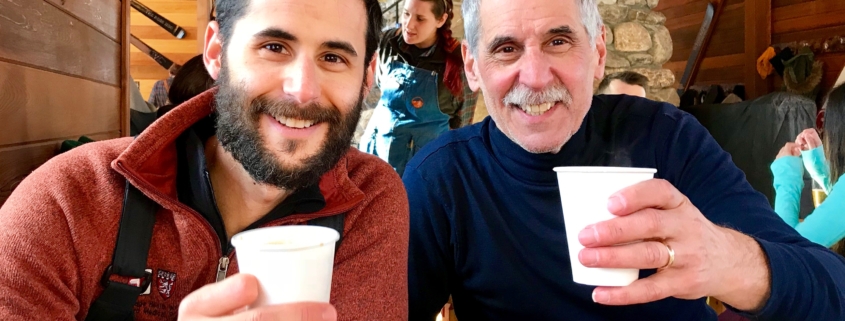
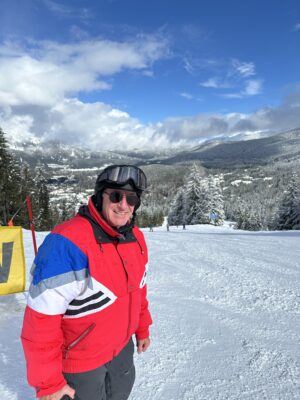
Author Elliot Entis and his son

Once upon a time, perhaps two years ago, a torch was passed. I know that is an overdone, banal expression. But it does resonate. Or maybe it was just another downhill ski trail. My son and I were floating down the trails at Bretton Woods silently carving and slipping when he saw the sign for one more double black diamond. An invitation to exuberance, tinged with chills of danger. For many years it was I, the experienced fearless leader who had rushed ahead, exhorting the children, now growing older and more composed, to follow, to learn, enjoy and repeat. But when I saw the sign, with the narrow gnarled tree branches reaching into the twisting bumps, I hesitated, and told my son, “No, you go ahead”. He was surprised; he gave homage to the past, and I believe with some sadness he honored the giant image of parenthood. “”The great Elliot Entis is afraid?” And he whooshed ahead, leaving me to find a gentler decline.

Elliot Entis
80 and Pushing Ahead

Steppe-ing Up in Kazakhstan – Skiing at Shymbulak

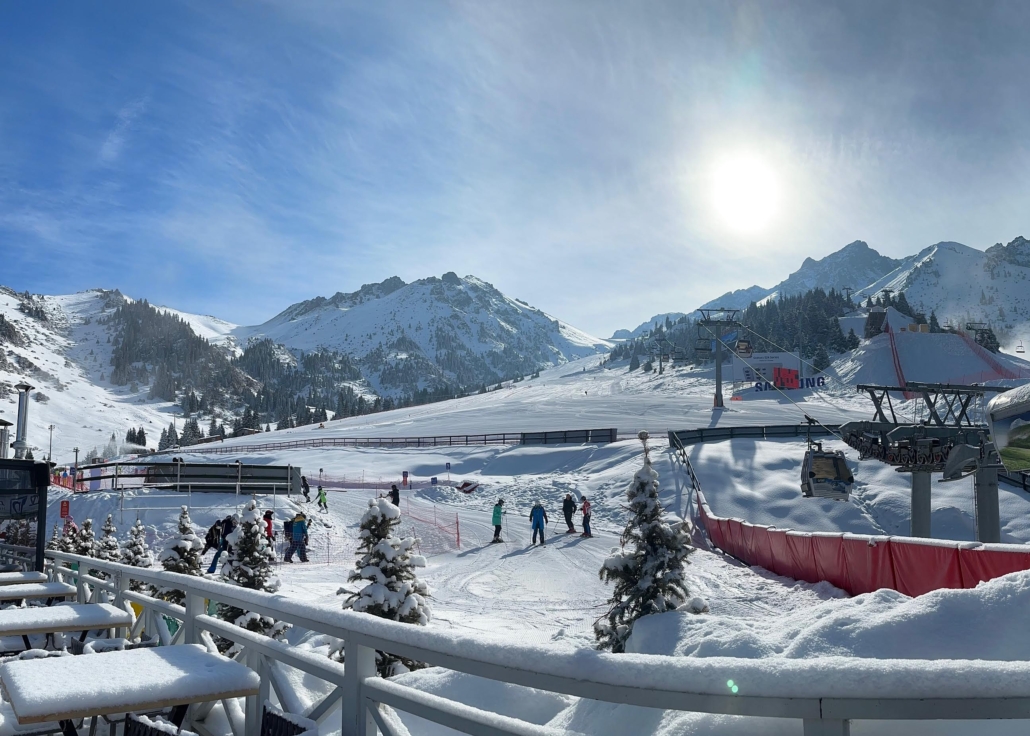
It looks like a typical ski area. Skiers and boarders clamber onto Doppelmayr gondolas and high-speed quads from Leitner and there’s a ski school for learners. I paid 8,000 Tenge ($15) to dress in fox pelts and hold an irritable Golden eagle for a photo op, cafés serve koumis—fermented mare’s milk – the local beer is Karagandinskoye, and a day lift pass is only $35.

Welcome to Shymbulak (SHIM-bu-LAK) Mountain Resort in Kazakhstan, the largest ski area in Central Asia, in a precipitous mountain gorge just 16 miles from Almaty, the country’s largest city. Ask most Americans about Kazakhstan and—if anything at all comes to mind—they’ll mention the satirical Borat films, or stutter something about “steppes.”

But Kazakhstan also has steeps, including the Ile Alatau mountains, portion of a range that stretches for 1,550 miles across Central Asia. Since it was part of the Soviet Union from 1936 to 1991, Shymbulak’s early history is Soviet-tinged. It opened in 1954 and became the Olympic training center for U.S.S.R. skiers.

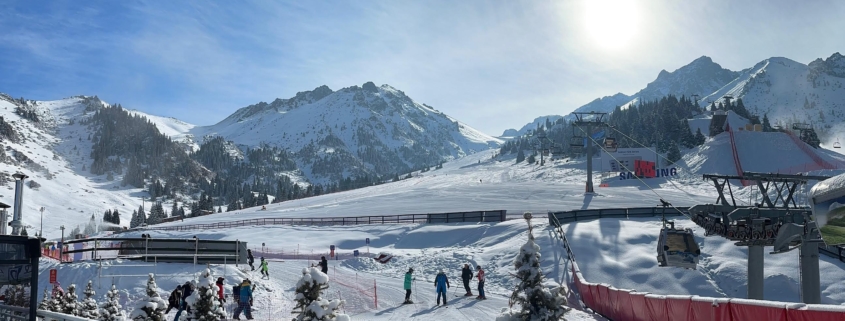
Shymbulak base area credit: Risa Wyatt

Today, skiing is more than a notch-in-your-belt curiosity. It is a World Cup venue: the FIS Freestyle Ski Moguls and Aerials were held here in 2024, and it was a finalist to host the 2022 Winter Olympics.

The resort offers nearly 3,100 feet of vertical and 12 miles of groomed trails. Terrain is a mix of gentle inclines for beginners, wide-open snowfields for intermediates, chutes and moguls for experts. Guides are available for backcountry touring. In addition, it holds the Guinness Record for the world’s highest night-skiing slopes.

Stats are nice, but it’s the scenery that astounds, with razor-sharp peaks that soar above the upper terminal of the gondola, at 10,500 feet and runs are mostly above tree line. On clear days, you can see Almaty below. Other times, foggy inversions sandwich brightness between clouds.  The ski season is December to March, and there are good quality rental shops both in Almaty and at the base area.

Shymbulak’s layout needs explaining. Once you reach Medeu Base Station, you aren’t anywhere yet. It’s a 20-minute gondola ride to the ski area, passing the world’s highest ice rink. The actual base, at 7,400 feet, offers rentals, ski school, and restaurants. Then, ride a two-stage gondola (another 20 minutes) to the summit or head directly to lifts for beginners and terrain parks.

The gondolas make it easy for non-skiers to reach the top. I encountered sightseers (mainly Russians) trudging to overlooks for selfies, creating a bottleneck for down-loading the gondola when the sightseeing tourists hindered the skiers. After missing five cars, I shoved past the chit-chatterers, earning scowls and probably further derailing American/Russian relations.

Speaking of which: You can’t avoid geopolitical reality. One of my travel companions shared a gondola with three Russian draft dodgers avoiding the Ukraine war. Another day, a Kazakh woman overheard me speaking English and came over to discuss her anxiety about a Russian invasion, for its rich oil reserves near its western border with Russia.

Looking ahead, Shymbulak plans an expansion linking it to eight other regional resorts, including Oi Qaragi and Ak-Bulak. New lifts and terrain would double its size, adding nearly 20 miles of trails.

Although Russian is the main language—a Soviet holdover—many locals eagerly try out their English or Google Translate app. Don’t be surprised if they ask, “How old are you?” It allows them to show respect for elders. They giggled when I answered, “70.” Senior skiers are rare here.

 “Meet a guest as God’s messenger,” says an old Kazakh proverb. Traditions were born among nomads living in the harsh steppe, so hospitality to visitors is sacred, and you’ll feel truly welcomed.

 Skiing in Kazakhstan isn’t just about snow. The beauty includes exploring the surrounding area, so add time for Almaty, known for Green Bazaar, a cacophonous market with everything from spices to pig snouts, and the Russian Orthodox church that’s one of the tallest wooden structures in the world.

 When you learn about a new culture, it lives on in you as well.

My Ego as a Senior Skier

The aging process does weird things to the mind. We remember days of yesteryear winding down through moguls on a steep run all day, thinking it was fun. Or floating through knee-deep powder all day from when the lifts open until they close. Today, in my dotage, when confronted with a steep pitch full of knee-high, well-rounded moguls, I go around. Or, after two long runs through knee- or thigh-deep powder, my legs say we’re done for the day. The mind is willing, but the body says, “Hell no.”

A Sunny Day!

Unfortunately, I don’t live near a ski area where I can ski seven days a week. Each year, I work hard to get in less good shape than the previous year. And, what trainers tell me, getting into good skiing shape gets harder with every coming year. The message is that you can’t beat Father Time.

So why ski? Given the image the marketing folks want to portray, if one is not blasting through the trees in deep powder, or bouncing through the moguls, or leaping off rocks, one right after the other, why do I ski?

Because I love it. At 78, my ego no longer needs to be fed by a run through knee- deep moguls or skiing fast down a double diamond. Instead, I enjoy making a round carved turn that controls my speed on any pitch. I now only ski on groomed runs no matter how steep and stay out of trails that look like a hockey rink, bumps and now, even glades unless they are wide open. Nor do I ski in soft, mushy, clumpy snow. So what?

Now I take my time, stopping more often. Each run is precious because it may be my last – not because of death, but because of injury. Like most senior skiers, I am most afraid of being injured by an out-of-control skier who is either stoned, inebriated, skiing
way too fast for the conditions, on a run well beyond his/her ability, or a combination of all the above.

My bones no longer break; they are more likely to shatter. A simple fracture that will heal in a 40-year-old body in a month or two may take major surgery and heal in six or more months if it ever does. So, yes, I am careful where and what I ski and in what
conditions.

I even find myself taking in the vistas around me. There’s not a photograph that does justice to the majesty of snow-covered mountains, whether in Vermont, California, New Mexico, British Columbia, Austria, or New Zealand. There’s nothing like breathing in the cold, crisp air while giving your thighs a breather and admiring the work of Mother Nature.

Double diamond, expert, intermediate, beginner, if it is groomed, I’m in. To me, the degree of difficulty of the trail is irrelevant.

My ego is in doing what I must to keep skiing for as long as Father Time allows. My ego is the simple act of being able to turn a pair of skis and carve a turn in any condition I choose.

My ego is in the fact that I am skiing, not what I am skiing.

Don Burch “New England Ski Season 2022-2023”

Short productions by ski videographer, Don Burch, have been gracing these pages for a several seasons. This one is dedicated to the memory of Jon Weisberg, co-founder and editor of SeniorsSkiing.com. Don is grateful to Jon for the encouragement and support he gave.

Thoughts on Aging and Ageism

“You haven’t aged a bit.” “You can’t teach an old dog new tricks.” “Young at heart.” “So when are you going to retire?” “Still skiing at your age?”

We’ve all heard, read or experienced comments like that, because American culture is grotesquely youth-centric.  The notion is that it is sad to be old, that wrinkles are embarrassing and so on.

There is ageism in the workplace, in the doctor’s office, and in the bedroom, all reinforced by pervasive myths developed throughout our lifetime.

Even The Beatles questioned aging when they sang, “Will you still need me, will you still feed me when I’m 64.”  That was in the 60s, when they – and we – were in our 20s and 30s, suggesting perhaps that there is a question about love and relationships for older people.

The well-regarded Pew Center found recently that accepted “hallmarks of aging” include obvious perceptions about gray hair, having grandchildren and being retired.  More importantly, perhaps, the research revealed a common view about us older people that includes forgetfulness, problems with bladder control and decreased sexual activity.

Before you start claiming that this “ism” is just more “woke,” the stereotype of ageism lies in the assumption that all members of the older people (elders) group are the same – too old for a certain type of car, specific haircut, type of clothing, how to speak, etc.  Not to mention too old to ski, snowboard or X-C.

Despite seeing more grey-haired and otherwise older models in commercials, there is an overwhelming and incessant daily barrage of messages of socially sanctioned prejudice.  That message is – simply – that people who are no longer fashionably young and fashionably slim  find themselves exiled to the margins of society.

Aging is perceived with weakness, forgetfulness and decline. We are afraid of aging, are in denial about aging, and many societal norms keep us blind to the many benefits of aging (and this is not referring to senior discounts offered at the movie theater or on the ski slopes).

There is research that shows that on average, those with positive perceptions about aging live eight years longer than those with negative beliefs about ageing. This is due in part to their motivation to take better care of themselves and/or their engagement with meaningful activities.  Like skiing/riding.

Negative stereotypical beliefs can impact health through psychological and behavioral pathways. They operate unconsciously and increase in power as they become more self-relevant and these beliefs are internalized within American society from childhood throughout a person’s lifespan.

Negative beliefs such as “having a senior moment” have pseudo-scientific legitimacy. Age related frailty and similar age-oriented miss-attributions can influence how we even think about ourselves and if not counteracted by positive beliefs these thoughts can impact how we feel and act.
There are no biological markers for reaching “old age”, despite the prevalence of social security, senior discounts, and retirement age.

“Elderspeak” which is using simplified language, sing-song cadence, and a louder than normal voice is not acceptable as a method for communicating with all older people. Serious mental decline is NOT a normal or inevitable part of ageing.

Aging and memory have much to do with environmental factors and how we approach and think about aging, and the way we tell ourselves how to grow old. The accepted stereotype that the brain inevitably deteriorates as we get older is false.

If you relate to statistics here are a few:

  • 75% of those over 85 years old perform everyday activities (i.e., dressing, cooking, relieving themselves) without personal assistance;
  • 90% of older folk who are not in nursing homes can think (finding their slippers, making their way) just fine;
  • Only 3% of Americans older than 65 are in nursing homes and that rate is down from 5% in the last decade while 9% of those older than 85 are in nursing homes;
  • 3.6% of those aged 65-75 in the US have dementia and those rates have been declining;
  • of 145 medical schools in the US, only five have a geriatric department and all medical schools require pediatric training compared to less than 10% that require geriatric training.

Do you think that elders are bad drivers? Statistics show that as a group we have fewer accidents, we are more likely to use seat belts, follow speed limits, are not intoxicated, don’t text while driving, and drive much less at night. Hmmm.  Sounds like seniors are smarter behind the wheel than their kids or grandkids.

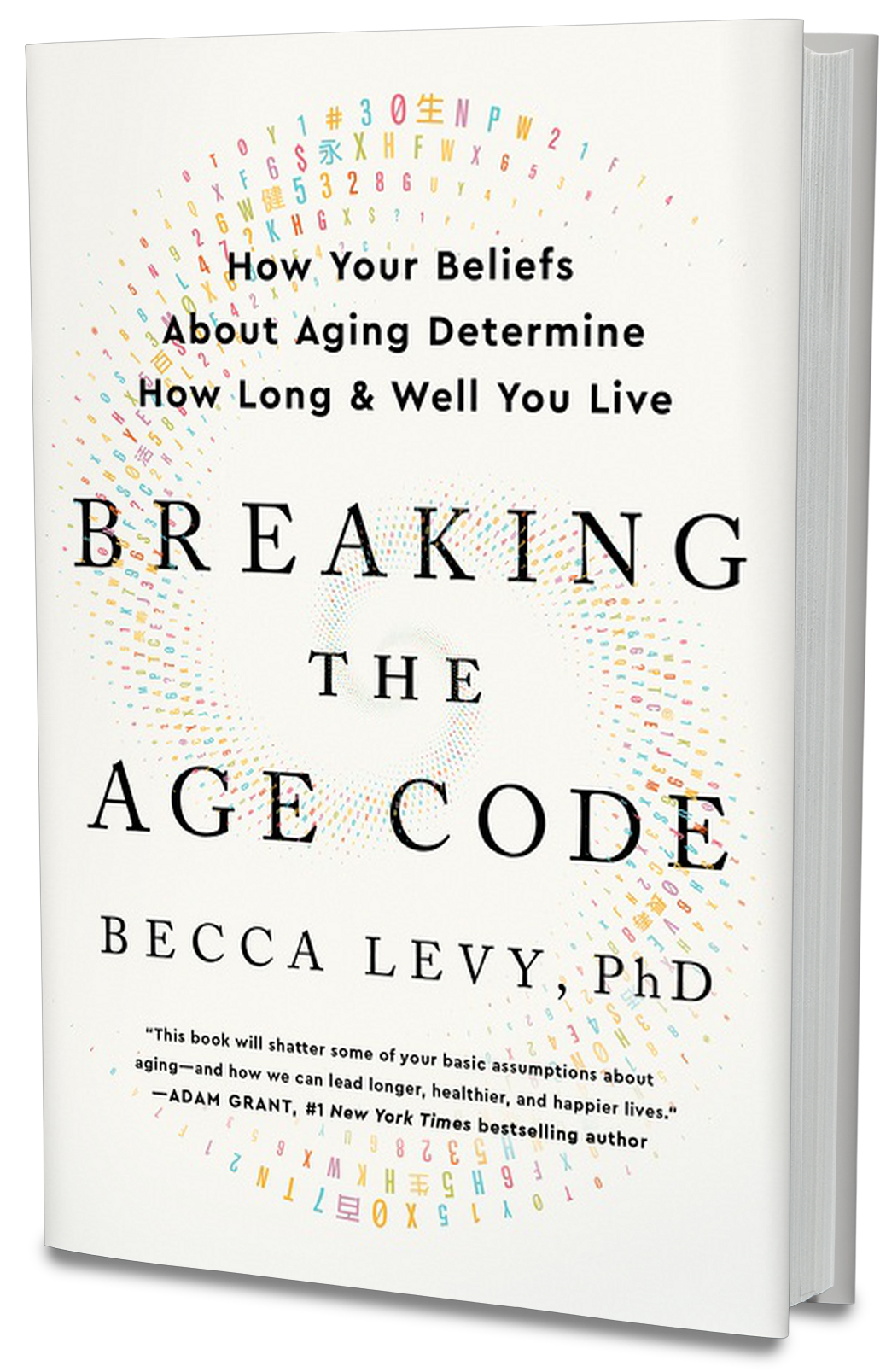
If you want to know more about the slow and subtle shift away from labeling us 50+ folk as doddering idiots, check out these two books –

“Breaking the Age Code” by Dr. Becca Levy (Vermilion, 2022),  and “This Chair Rocks, A Manifesto Against Ageism” by Ashton Applewhite (Celadon Books, 2016).

They cover a litany of age-related topics ranging from sex, workplace issues, legislation to address discrimination, the longevity economy, caregiving, independence and self-reliance, retirement living, loneliness, the value of intergenerational relationships, and so much more.

Just in case you don’t already know the answer to the question of whether you’ll still need me and feed me when I’m 64 – ask me on the chairlift.

Five Things You Should Know When a Skier Crashes

“Stop! Don’t do that. Don’t move him”, I screamed.
My husband had misjudged the slope, crashed, and landed in a heap in the middle of the trail. He was also out cold.

We were skiing with his good buddy Lars when it happened. Lars skied to him and dragged him by his right arm until his body flattened out. Meanwhile, I was screaming at Lars to stop. But he didn’t stop.

By the time I side-stepped up the hill to the scene, Lars said, “I had to straighten him out. He looked so uncomfortable.”

Unconscious skiers are not uncomfortable – they are unconscious, and anybody who moves them before Ski Patrol arrives can make an injury worse.  That’s likely what happened to my husband.

X-rays showed his shoulder was broken. Surgery and hardware repaired the bone, but fragile nerves might have snapped when he was dragged by his arm. We’ll never know.

The bone healed, but the nerve damage was complete. My husband has never again had use of his right arm. It was dead.

If Lars had some basic knowledge about what to do, it might have turned out better.

I talked with Mark Pollish, a career patroller and 40 year veteran of the Alta Ski Patrol, for some guidelines that we recreational skiers should heed in case of an accident.

Do No Harm

First of all, he said, when you come upon an accident, “Do no harm.”

When somebody crashes, “Don’t rush into the situation and become part of the problem. Whether it’s a ski crash or an accident on the highway, think extreme safety. People are quick to want to help, but don’t do anything that might jeopardize their safety or yours.”

The next guideline logically follows “Do no harm.”

Do Not Move the Person

“Do not move the person. That includes do not remove their skis. You don’t know what the injuries might be. There could be spinal injuries and moving the person could make it worse,” he said.

It doesn’t matter whether the skier or snowboarder is awake or unconscious. Don’t move them.

Just last year, I listened to two skiers awarding themselves kudos because they thought they were heroes. They saw someone fall and not budge, so they rolled him around and propped him up because he looked “so uncomfortable” He was unconscious through it all, and he was still unconscious when Ski Patrol arrived. Moving him could have caused serious damage. We’ll never know.

The first two guidelines focus on what you should not do.  These next three are what you should do, Pollish said.

Make an X with your skis.

Take off your own skis and drive the tails into the snow forming an X well above the accident.  Or, if you ride, plant your board upright in the snow. It warns others to stay clear of the area and also marks the location of the incident.

Call the patrol and stay on the phone with them.

Whether you are at your home mountain or visiting a resort across the country, it’s a good idea to have the patrol’s emergency number in your phone so you can reach them quickly, Pollish said.

At some ski areas, the main number is the best way to get connected to the patrol. At others, the patrol might be reached through 911. It varies from resort to resort, so it’s best to find out before you need to call for help.

Then be sure to “stay on the phone with the patrol” Pollish said, and give them “as much information as possible: location, description of the person, and what you know about the.situation.”

Finally, stay with the downed skier until the patrol arrives. You might be able to provide additional information that they need, he said.

Think safety. Ski safely.

Now, are your ready for a pop quiz? What are the 5 things you should know and do when a skier crashes?

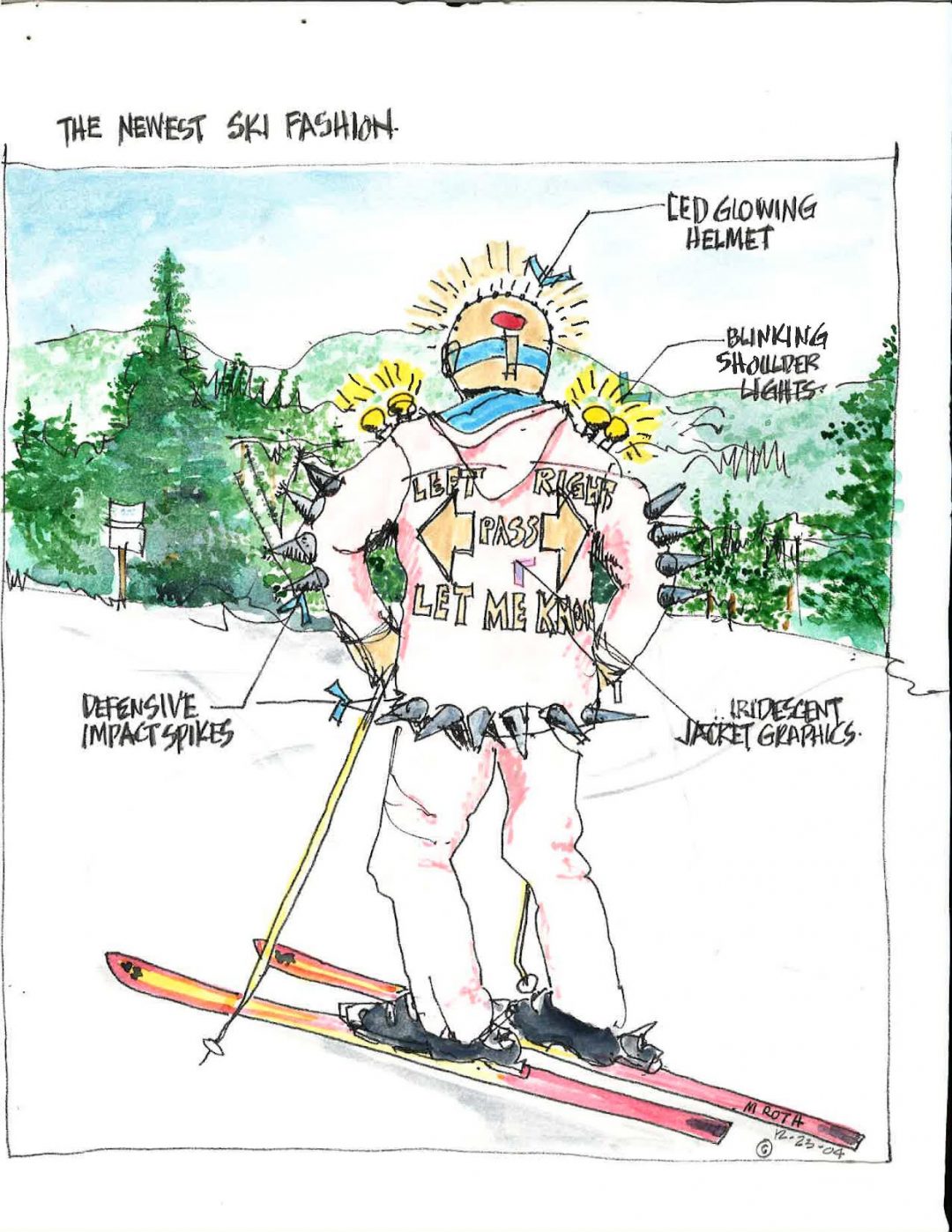
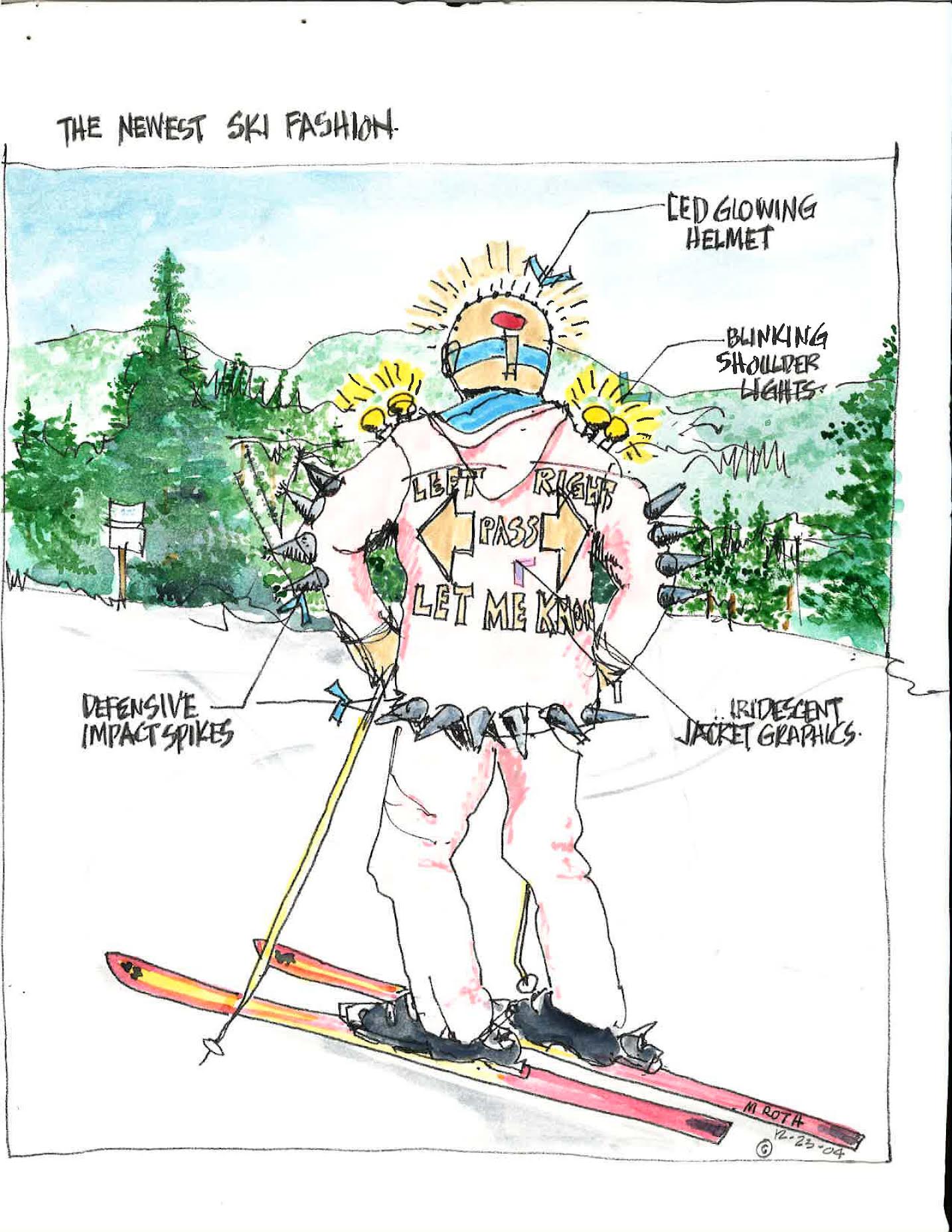
Mike Roth cartoon

Ageing Skiing Concerns – AKA, Skiing on the Edge

As I get older, skiing is still a thrill I look forward to every chance I get to go. My major concern these days is skiing safety and skiing with courtesy, which go hand in hand.  As a senior, I worry about falling (which doesn’t happen very often, I might add), but even more about being “taken out” by a reckless skier or snowboarder.

In my skiing past I have learned courtesy on the slopes, following the rules of skiing that were posted then. Today those rules may be posted here and there, but I fear that people either don’t know how to read today or just don’t care about other people sharing the skiing terrain.

I have seen notifications posted on the monitors at lifts at Stratton and placed in very conspicuous places in the cafeteria at Mount Snow and other resorts, but it doesn’t seem to matter. When was the last time you heard someone coming up behind you making the statement, “on your left” or “on your right”? In the 60’s and 70’s, you heard it all the time. Now never!

I have kept track of this lately and of all the times of my being passed, it was just one or two times out of 100. Not very good odds. I call it out it every time I am going to pass someone, because they do have the right of way.

The other day I saw a truck on the highway with the notification to be careful when passing.

If you note the sketch included in this post, it does the same.

I ski very cautiously. For one, I ski along the edges of a trail. Yes, I do run the risk of falling into the trees, but that’s my decision. The reason for skiing along the edge is two-fold – the snow is always better there since it’s pushed to the edges as the day progresses, and if someone is going to pass me it will be on one side only. That reduces the chances of collision by 50%!  However, I must admit that I have been passed on the tree side at least a couple of times in my life.

In addition to skiing along the edges, I ski totally under control at a pace that is comfortable to me. I also have reduced my choices of trails to cruisers rather than steeps and for the less traveled trails on the mountain rather than the more popular ones.

As we age, it is also a problem to be able to turn our bodies and look behind us as we decide to turn, so I am going to try something new this year. I am putting rear-view mirrors on my poles to see if that will help – or will it even work?

I am always looking for suggestions as to what can be done to improve, even solve the safety situation. We shouldn’t have to just take our chances. I will continue to take my chances because I am not going to give up skiing. I plan to continue skiing untill my body won’t let me anymore. I don’t want someone else to make that decision for me – other than my doctor. And he’s a skier.