Recommended Skis for Senior Skiers 2026 (subscriber only)
Credit:Ljupco

Don’t ski as aggressively as you used to? Looking for a ski that makes the sport a little easier? Realskiers.com, my go-to site for finding the perfect ski, has shared their recommendations of the best skis for older skiers. Their ”Silver Skier” selections are models, in their estimation, either inherently easier to steer with light pressure or possess such a broad performance envelope that their charms are accessible to lower-energy skiers.

Recommended 2026 Skis for Senior Skiers

FRONTSIDE

This is a huge category, if only because it occupies every price point from the cellar to the penthouse. If you’ve been riding an All-Mountain model for a few seasons, you’ll find a narrower Frontside ski easier to maneuver and more terrain agnostic than you’d expect.  Whether your skills are eroding or as sharp as ever, you’ll find a Frontside model takes less effort to steer and holds a more accurate line.

Atomic Redster Q 9.8
Blizzard Anomaly 84
Blizzard Stormbird 82 DTi
Head Supershape e-Titan
Head Supershape e-Rally
Kästle MX84
Rossignol Forza 70o Ti
Salomon Stance 84
Stöckli Laser AX
Völkl Peregrine 82

WOMEN’S FRONTSIDE

One of the oddities of the women’s ski market is that the narrower the model, the more likely it is to use a rich construction that targets the elite skier. The top-of-the-line women’s models in both the Technical and Frontside genres tend to sport more made-for-women features than the typical All-Mountain and Big Mountain women’s models. Point being, the best made-for-women skis aren’t aimed at seniors, but at hard charging, technical skiers.  Mellower models can be found further down the pricing pyramid and in wider categories like All-Mountain East.

Blizzard Black Pearl 84
Nordica Wild Belle DC 84
Salomon Stance W 84

ALL-MOUNTAIN EAST

If you need one ski that can handle whatever conditions you encounter, it should be plucked from this genre. Versatility is their dominant personality trait; quick enough to the edge to navigate choppy bumps, fat enough to float in boot-top powder, narrow enough to bite into eastern boilerplate, mellow enough to turn at slow speeds and stable enough to charge the fall line.

Atomic Maverick 86 C
Blizzard Anomaly 88
Head Kore 94 Ti
Nordica Enforcer 94
Rossignol Arcade 94
Völkl Mantra 88

WOMEN’S ALL-MOUNTAIN EAST

If all you ever ski is groomers, fine, get a Frontside ski. But for those women with the slightest inclination to travel off trail, the all-terrain, in-resort skier belongs on an All-Mountain East model.

Blizzard Black Pearl 88
Head Kore 93 Ti W
Nordica Santa Ana 92

ALL-MOUNTAIN WEST

If your preferred playground lies the big mountains of the American west, you’ll encounter enough mixed conditions to justify the added surface area built into an AMW model. The less you sink on each turn, the less effort required to maintain momentum and the easier it will be to change directions with a sudden swivel, an essential off-trail technique. The top models in the genre are generally Power skis that take some added mojo to bend, which is why you won’t find the Blizzard Anomaly 94, the Stöckli Stormrider 95 or Völkl Mantra M7 on this list.

Blizzard Rustler 9
Dynastar M-Pro 100 Ti
Nordica Enforcer 99

WOMEN’S ALL-MOUNTAIN WEST

Women of modest skiing skills looking for a wider ski to make their off-trail life easier should probably look elsewhere. Women’s AMW models tend to target the talented lass who rips the sidecountry to shreds, rather than the timid who tiptoe into choppy snow. Our two Silver Skier Selections aren’t meant as training wheels for so-so skiers, but as facilitators that open up the sidecountry to those who already have the requisite skill set.

Blizzard Sheeva 9
Head Kore 99 Ti W

BIG MOUNTAIN

Lower skill skiers will be out of their depth here. Sure, they’ll get the benefit of more flotation in deep, uncut pow, but how many perfect runs like that are you going to get? And will the less talented be able to even bend a burly Big Mountain? Sure, some Big Mountain models are softer-flexing than the norm, but the extra width also makes it harder for the less-than-expert skier to rake the ski up to a high edge angle. If a Silver Skier really wants more help in new snow, get a full-on Powder model, forget edge angle and smear your blues away.

Salomon QST 106
Head Kore 112 Ti
Völkl Revolt 101

WOMEN’S BIG MOUNTAIN

A Women’s Big Mountain ski to too wide to serve as an everyday ski for most women, so consider these recommended models to serve as one’s powder ski when conditions merit. The principal “womanizing” feature of their design – if any – is to reduce the amount of metal in their make-up.

Head Kore 104 Ti W
Völkl Blaze 104

NON-FIS RACE

This isn’t the genre for someone trying to conserve energy, but the addiction to the feel of a true race ski doesn’t fade with age. By definition, all Non-FIS Race skis are made to the highest standard. The three GS/SL models I’ve selected here are notable for being readily accessible without world-class conditioning. If you’re good enough to ski a true race ski, you don’t need my advice on how I perceive their particular merits, hence no thumbnail sketch for each model. Suffice it to say, if I were picking for myself, these are the models I’d choose from. They all ski better than whatever else you own. But you need to bring a polished skill set to the party…

Atomic Redster G9 Revoshock S
Atomic Redster S9 Revoshock S
Rossignol Hero Elite LT Ti
Rossignol Hero Elite ST Ti
Völkl Racetiger GS
Völkl Racetiger SL

TECHNICAL

This genre has all but disappeared from the U.S. market, although it remains popular in Europe. Some are combi race models; all are made to arc perfect carves.

Atomic Redster X9 Revoshock S
Head Supershape e-Magnum
Kästle M9 76
Nordica Dobermann Multipista DC
Salomon Addikt 76

If you are thinking of buying near gear this year, a Realskiers subscription isn’t a luxury; it’s a necessity. One receives the best advice from those most qualified to provide it. You can read the full article on Realskiers by clicking here.

Related content Snow Sports Leaders: Jackson Hogen, Publisher of realskiers.com

Is A Custom Ski Right For You?

Credit: Parlor Skis

You have decided it’s time for new skis.

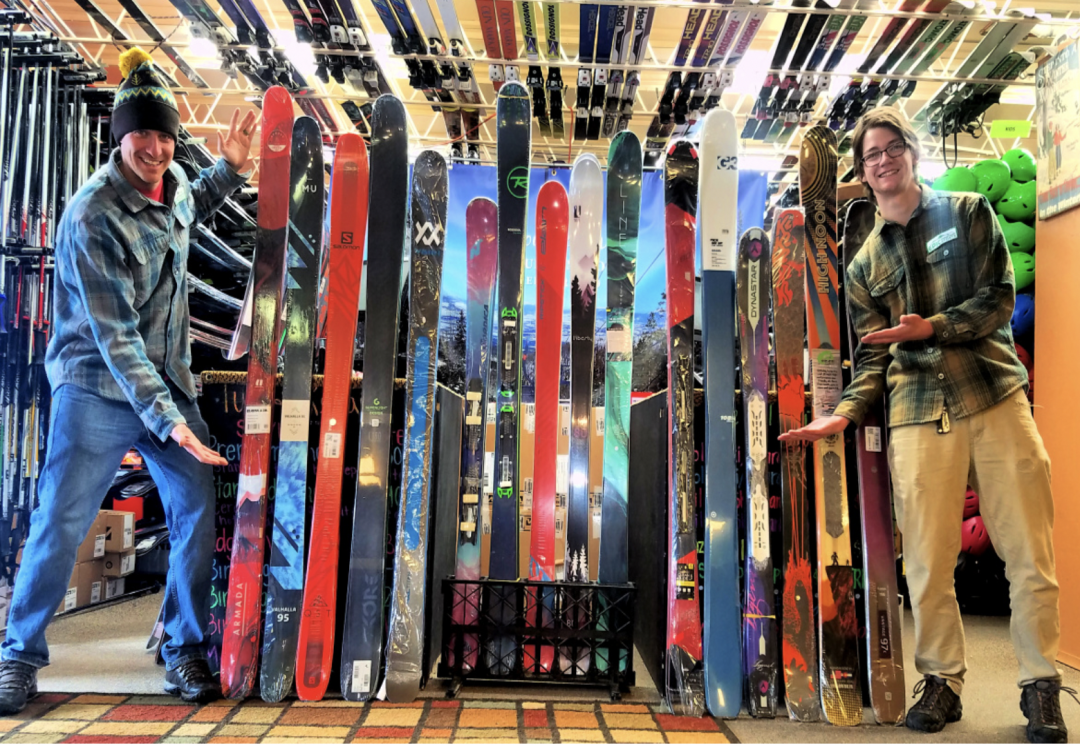
You walk in to your favorite ski shop and there, lined up against the wall, are 100 pair or more; all from brand name companies you recognize. All are high quality.  But which one is best for you?

Since this is a buying decision that likely you make only once in several years, you want to make the right choice. You know the shop by reputation and past purchases. Maybe you know the staff there too. Ideally the rep who greats you is an experienced skier familiar with the areas you frequent and the trails and terrain you like to ski. The equipment match-making proceeds from there.

We’ve all done this dance.  Today, however, there is another track that is gaining popularity: Custom Skis.

Here, you hook up with one of a handful of small companies around the country that construct a pair of skis that are built exclusively for you, the individual skier. The process is interactive. It considers not only the physical characteristics of the skier, but how and where the skis will be used: all mountain, or, powder, or carved turns; on groomers, hard pack, or in the back country; maybe lots of steeps and bumps; in the trees, wide glades, or narrow. Video of the skier showing style and technique may be incorporated too.

Is this for you?

First of all,  realize this is not spring clearance sale shopping. To consider custom skis, start with the idea that you  might spend north of $1,000 more than what you would lay out on a pair off the rack in a specialty shop. Second, understand there is a leap of faith in the process here. While there may be some limited general demo opportunity tor a brand test, you will own the custom made ski before the first time you put down tracks. In the discussion stage, be prepared to be as specific as possible and understand the options if outcome doesn’t work out.

Is it worth the price?

Mark Wallace makes the case that it is. A former D-1 college competitor, he co-founded Parlor Custom Skis 11 years ago. One of a dozen or more small companies across the country that are established producers of custom made skis, his Boston-based firm with 6-10 employees today produces 15-20 of custom made pair a week, each built by hand from scratch with specs developed and materials chosen after interaction with the individual client. It is a process that can  take four to six weeks from initial discussion to product delivery.

And the finished product is not just technical.  The cosmetics are personalized too. Want a picture of your pet staring back at you? It can be there if you want it.

“We build the ski with the client and we know it is unique because we develop the specs and control the production” said Wallace recently.

“On the hill, the skier knows ‘this ski is me’.

But how about the experienced senior skier?  Chances are race results are not important anymore.  Compatibility is.  Are most able to tell the difference between a well chosen brand name model like they have skied for years and a custom made ski?

Bill Nizolek believes at least some can. He  began skiing as a child and today, at age 67, still skis at least 80 days a year. He started skiing on Wagner Custom Skis seven years ago and now is as  brand ambassador for the Telluride CO  based firm.

“The person who benefits most from our product in an educated skier, one who regularly skis more than 25 days a season and who is passionate about quality.”

What about cost?

Says Nizolek: You can’t put a price tag on enjoyment.”

The custom, direct-to-consumer ski business is expanding and sales are nationwide. In addition to Parlor in New England and Wagner in western Colorado, there are established custom ski makers in just about every region, like Meier Skis in Denver, Igneous in Jackson WY, Praxis in Incline Village NV, Shaggy’s Copper Country in  Northern Michigan, Community Skis in Mammoth Lakes CA, ON3P in Portland OR, and WhiteRoom Skis in Northern VT. All have websites. Some offer demo opportunities. Some also offer a small batch ready made ski model and some also build custom snowboards.

Is a custom made ski for you?

Says one veteran ski provider: “If you try it and you feel it, it’s worth it.

How To Select Your Next Pair Of Skis – 2025

Don’t ski as aggressively as you used to? Looking for a ski that makes the sport a little easier? As part of its annual review of new skis, realskiers.com, the go-to site for in-depth ski evaluations, has determined the best skis for older skiers.  Their ”Silver Skier” selections are models, in their estimation, either inherently easier to steer with light pressure or possess such a broad performance envelope that their charms are accessible to lower-energy skiers as long as they’re sized down.
 
We recommend trying before buying. Start by choosing the most suitable ski category for the terrain and snow and working with a quality ski shop, preferably one at or close to the mountain so you can switch out demo equipment throughout the day. 

SeniorSkiers.com subscribers are eligible for a 50% discount off subscriptions to realskiers.com.  This is a limited time offer.  Click here to request your promo code.  I used the  realskiers.com reviews for a recent ski purchase and was delighted with result.  The amount of time I saved narrowing down the options was worth cost of the subscription alone.

Recommended 2025 Skis for Senior Skiers

The Best 2025 Skis for Senior Skiers has selections from Atomic, Blizzard, Fischer, Head, K2, Kastle, Liberty, Nordica, Rossignol, Salomon, Stockli, and Volkl. 16 of the recommended skis are identified as women’s skis, which sometimes are engineered for female size and physique.

The selections fall into four groups, organized by range of ski width, which helps determine the terrain where its performance is optimized.

Specific recommended skis follow:

FRONTSIDE

MEN
Finesse Favorites: Easy Riders
Blizzard Anomaly 84
Salomon Stance 84
Rossignol Experience 82 Basalt
Power Picks: High Speed on High Edges
Head Supershape e-Magnum
Head Supershape e-Titan
Head Supershape e-Rally
Kastle MX84
Stockli Montero AX
Atomic Redster Q9.8 Revoshock S
Rossignol Forza 70o V-Ti
 
WOMEN
Finesse Favorites: Strolling Down Easy Street
Nordica Wild Belle DC 84
Salomon Stance W 84
Power Picks: Carving Queens
Blizzard Black Pearl 84

ALL-MOUNTAIN EAST

MEN

Power Picks: High-Geared & Gifted
Volkl Mantra 88
Kastle MX88
Nordica Enforcer 89
Blizzard Anomaly 94
Fischer The Curv GT 85
Nordica Steadfast 85 DC FTD

Finesse Favorites: The Friendly Fraternity
Head Kore 93
Nordica Enforcer 94
Blizzard Anomaly 88
Head Kore 87
Salomon Stance 90
Salomon QST 92
Atomic Maverick 86 C

WOMEN

Finesse Favorites: The Friendly Fraternity
Nordica Santa Ana 87
Head Kore 85 W
Head e-Total Joy

Power Picks: Pandering to the Proficient
Blizzard Black Pearl 88
Head Kore 91 W
Nordica Santa Ana 92

ALL-MOUNTAIN WEST

MEN

Finesse Favorites: All-Terrain Access for All
Head Kore 99
Blizzard Rustler 9
Kastle ZX100
Salomon Stance 96
Power Picks: All-Condition Chargers
Nordica Enforcer 99
Liberty Radian 100

WOMEN
Finesse Favorites: Smooth Operators
Blizzard Sheeva 9
Head Kore 97 W
Power Picks: Dominate Black Diamonds
Nordica Santa Ana 97

BIG MOUNTAIN

MEN

Finesse Favorites: Kicking Back
Head Kore 111
Nordica Enforcer 104
Blizzard Rustler 11
Salomon QST 106
Head Kore 105
Volkl Blaze 104
Atomic Bent Chetler 120
Salomon Stance 102
Fischer Ranger 102
Fischer Ranger 108
Power Picks: Killing It
None

WOMEN
Finesse Favorites: Easy Access to Off-Trail Adventure
Head Kore 103 W
Völkl Blaze 104 W
Salomon QST Stella 106
Fischer Ranger 102
Power Picks: Ripping the Gnar
None

How To Select Your Next Pair Of Skis – 2024

Regardless of the number of years you’ve been on the slopes, making the correct ski choice can be a challenge.

As part of its annual review of new skis, realskiers.com, the go-to site for in-depth ski evaluations, has determined the best skis for older skiers. Most of the selected “finesse favorites” have relatively soft flex, which helps them engage the snow with minimal exertion. Regardless of one’s physical condition, using skis with these characteristics allows older skiers to turn more easily and to ski longer without tiring.

Those who visit a variety of areas in different regions and who experience different snow conditions, may want to acquire a “quiver” of skis, each of which can be used for different terrain and different conditions. An alternative is to rent equipment when you get to the mountain. For example, Eastern skiers who tote their narrow skis to Alta, would be better served with a pair of wider powder skis.

We recommend trying before buying. Start by choosing the most suitable ski category for the terrain and snow and working with a quality ski shop, preferably one at or close to the mountain so you can switch out demo equipment throughout the day. 

SeniorSkiers.com subscribers are eligible for a 50% discount off subscriptions to realskiers.com.  This is a limited time offer.  Click here to request your promo code.  I used the  realskiers.com reviews for a ski purchase last season and was delighted with result.  The amount of time I saved narrowing down the options was worth cost of the subscription alone.

Recommended 2024 Skis for Senior Skiers

The Best 2024 Skis for Senior Skiers has selections from Atomic, Blizzard, Dynastar, Fischer, Head, K2, Kastle, Nordica, Rossignol, Salomon, and Volkl. 19 of the recommended skis are identified as women’s skis, which sometimes are engineered for female size and physique.

The selections fall into four groups, organized by range of ski width, which helps determine the terrain where its performance is optimized.

Specific recommended skis follow:

FRONTSIDE

MEN

Power Picks:
Kästle MX83
Rossignol Forza 70o V-Ti
K2 Disruption 78 Ti
Finesse Favorites:
Blizzard Brahma 82
Salomon Stance 84
Rossignol Experience 82 Ti
Rossignol Experience 82 Basalt
K2 Disruption 82 Ti


WOMEN

Blizzard Black Pearl 82
Nordica Wild Belle DC 84
Salomon Stance W 84

MEN ALL-MOUNTAIN EAST

Power Picks:
Volkl Kendo 88
Blizzard Brahma 88
Nordica Enforcer 88
Nordica Steadfast 85 DC FTD
Finesse Favorites:
Head Kore 93
Nordica Enforcer 94
Salomon QST 92
Salomon Stance 90
Head Kore 87
Rossignol Experience 86 Basalt
Atomic Maverick 86 C
K2 Mindbender 89Ti

WOMEN

Blizzard Black Pearl 88
Head Kore 91 W
Nordica Santa Ana 93
Head Kore 85 W
Head Total Joy
Nordica Santa Ana 88
K2 Mindbender 89Ti W

ALL-MOUNTAIN WEST

MEN

Power Picks:
Volkl M6 Mantra
Dynastar M-Pro 99
Kastle FX96 Ti
Finesse Favorites:
Head Kore 99
Blizzard Rustler 9
K2 Mindbender 99Ti
Kastle ZX100
Salomon Stance 96

WOMEN

Blizzard Sheeva 9
Dynastar E-Pro 99
Blizzard Black Pearl 97
Head Kore 97 W

BIG MOUNTAIN

MEN

Finesse Favorites: 
Head Kore 111
Salomon QST 106
Blizzard Rustler 11
Nordica Enforcer Free 110
Dynastar M-Free 108
Head Kore 105
Salomon Stance 102
Volkl Blaze 106
Nordica Enforcer Free 104
Fischer Ranger 102/108
Rossignol Sender 104 Ti

WOMEN

Rossignol Rallybird 104 Ti
Fischer Ranger 102

How to Select Your Next Pair of Skis


Regardless of the number of years you’ve been on the slopes, making the correct ski choice can be a challenge.

As part of its annual review of new skis, realskiers.com, the go-to site for in-depth ski evaluations, has determined the best skis for older skiers. Most of the selected skis have relatively soft flex, which helps them engage the snow with minimal exertion. Regardless of one’s physical condition, using skis with these characteristics allows older skiers to turn more easily and to ski longer without tiring.
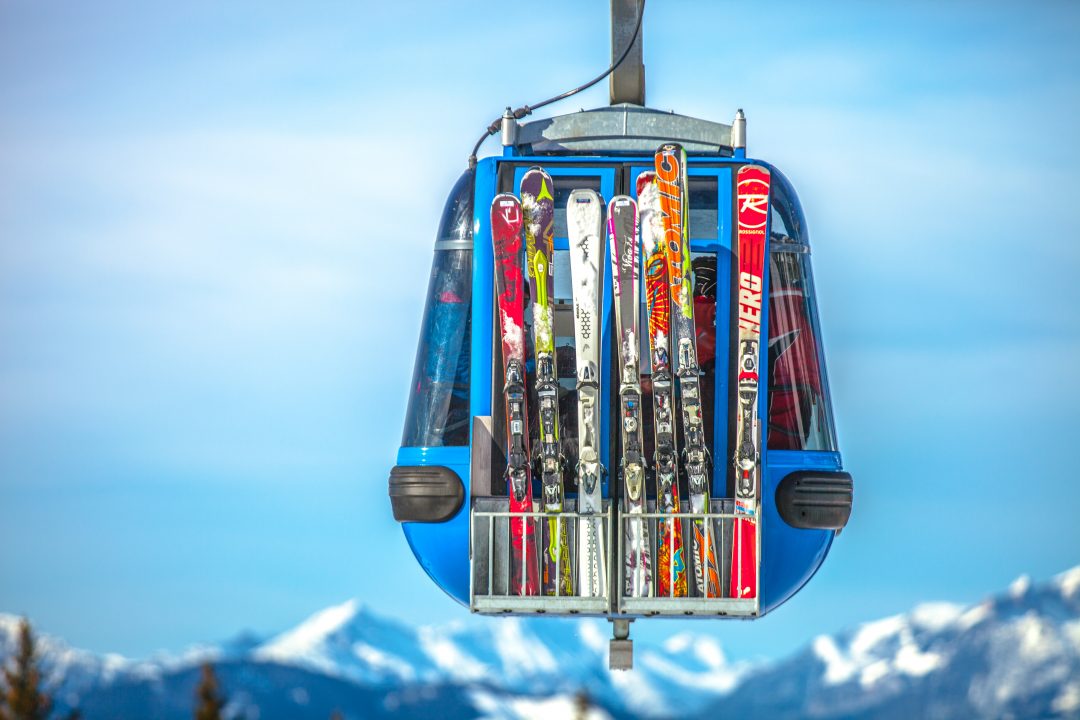
Those who visit a variety of areas in different regions and who experience different snow conditions, may want to acquire a “quiver” of skis, each of which can be used for different terrain and different conditions. An alternative is to rent equipment when you get to the mountain. For example, Eastern skiers who tote their narrow skis to Alta, would be better served with a pair of wider powder skis.

We strongly recommend trying before buying. Start by choosing the most suitable ski category for the terrain and snow and working with a quality ski shop, preferably one at or close to the mountain so you can switch out demo equipment throughout the day. That said, this information also can be useful to those running across previously owned boards at a Swap or Sale.

BTW, SeniorSkiers.com subscribers are eligible for a 50% discount off subscriptions to realskiers.com.  This is a limited time offer.  Click here to request your promo code.


Recommended 2023 Skis for Senior Skiers

The Best 2022 Skis for Senior Skiers has 29 selections from Blizzard, Dynastar, Fischer, Head, K2, Kastle, Nordica, Rossignol, Salomon, Stockli, and Volkl. Ten of the recommended skis are identified as women’s skis, which sometimes are engineered for female size and physique.

The selections fall into four groups, organized by range of ski width, which helps determine the terrain where its performance is optimized.

Specific recommended skis follow:

FRONTSIDE

75MM-84MM
Fischer RC One 82 GT
K2 Disruption 78 TI
Stockli Montero AX

WOMEN’S FRONTSIDE

75MM-84MM
Blizzard Black Pearl 82
Nordica Santa Ana 84

ALL-MOUNTAIN EAST

85MM-94MM
Nordica Enforcer 88

WOMEN’S
ALL-MOUNTAIN EAST

85MM-94MM
Blizzard Black Pearl 88
Head Kore 85 W/91W
Nordica Santa Ana 88/93

ALL-MOUNTAIN WEST

95MM-100MM
Dynastar M-Pro 99
Head Kore 99
Volkl M6 Mantra

WOMEN’S ALL-MOUNTAIN WEST

Blizzard Black Pearl 97
Dynastar E-PRO 99 
Kastle FX96 W
Head Kore 97 W

BIG MOUNTAIN

101MM-113M
Blizzard Rustler 10
Fischer Ranger 102 
Head Kore 111
Nordica Enforcer 104/110 FREE
Rossignol Sender 104 Ti
Salomon QST 106/Stance 102
Volkl Blaze 106

WOMEN’S

Fischer Ranger 102
Rossignol Rallybird 104 Ti
 
ski maintenance

Keep Your Gear In Shape

Originally published in the 2020-21 Masterfit Buyer’s Guide and realskiers.com

ski maintenance

How long your gear remains in tiptop condition depends entirely on how well it’s maintained.

At least once a season, it’s good to get skis tuned by a specialty shop, where tuning machines can reproduce a factory finish on the skis so they perform like new. Here are some tips on how to keep your equipment in optimal condition for better performance on the snow.

If you follow these maintenance tips, a well-made pair of skis can perform acceptably for 200 skier days, and may last longer if there’s no major damage. Even inexpensive package skis have at least 100 days of useful life in them. Heavier and more aggressive skiers will usually wear out their skis—and anything else they own—faster than the lighter and more cautious.

Daily Equipment Care

SKIS: Wipe clean and dry. Check for dings on edges and bases.

BOOTS: Buckle all buckles with just enough tension to keep closed.
Be sure soles are clean and no mud or debris is lodged in tread.

BINDINGS: Wipe clean, particularly at boot/binding interfaces.

Regular Maintenance & at the End of the Season

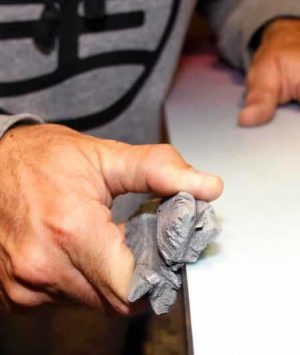
SKIS: Get ski edges tuned by the shop. Or do it yourself: freshen up side edges with a light filing, followed by hand polishing. Fill cuts in bases if necessary. Wax, scrape and buff.

BOOTS: Visually inspect for sole wear and damage to buckles.

BINDINGS: Look for excessive wear, damage or missing parts. Inspect boot/binding interfaces.

Extend the Life of Your Boots

The first part of your boots to wear out will be the soles, but most boots now use replaceable toe and heel pads. The trick is getting a replacement pair while the supplier still stocks them. Or you could just protect them. If you spend a lot of time in parking lots or other hard surfaces, we recommend The first part of your boots to wear out will be the soles, but most boots now use replaceable toe and heel pads. The trick is getting a replacement pair while the supplier still stocks them. Or you could just protect them. If you spend a lot of time in parking lots or other hard surfaces, we recommend Ski Skootys. These are the easiest to use, most versatile sole protectors on the market. As a bonus, they’re also rockered so they make walking in ski boots a lot easier.

Stored Skis

Here’s How to Store Ski Gear and Clothes for the Off-Season

[Editor’s Note: We’ve published Don Burch’s article on storing gear in the past.  It’s an excellent reminder that a little care goes a long way.]

Hopefully your ski equipment has taken good care of you all winter. It’s time for you to return the favor. Some simple steps now can save you the frustration of rusty edges, musty clothing and mouse-invaded boots.

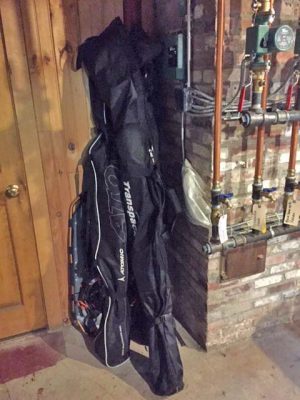
Are your skis still in the bag by the furnace where you left them after your last ski day? 
Credit: Mike Maginn

Skis: At the end of ski season, the bottoms of your skis will be dirty. This will especially be the case if you did a lot of spring skiing. With today’s black bases it may not be that noticeable. Back in the day when a lot of bases were white the grime was obvious. Before having your skis waxed and sharpened, you want to clean the bases with a gentle cleaner. If you wax dirty skis, you’re just going to embed dirt into the wax.

I wet my skis bases with a garden hose, spray on Simple Green, wipe them down with a rag and then thoroughly rinse everything off. While you’re at it, thoroughly rinse off the tops of your skis and bindings. I don’t recommend using cleansers on the tops, as these can interfere with the lubricants in your bindings.

Some people use commercially available ski base cleaners or Dawn dishwashing soap. Cleaning ski bases will dry them out so it’s imperative that you have them waxed afterwards and don’t let them sit all summer without a wax cover.

Racers and others who are demanding about their equipment will clean their bases using the hot scrape method. This involves hot waxing the skis and scraping the wax off before it cools. This process literally pulls the dirt off the ski. The process is repeated until the warm wax scrapes off clean. This method works, but it’s time consuming.

A good edge sharpening and hot wax will ready your skis for next season and prevent the edges from rusting.

Boots: It’s essential that your boots and liners be totally dry before storing them. I use a boot dryer after every day skiing and before storage. If you don’t have one, I highly recommend removing the liners in order to get the boots thoroughly dry. I know getting the liners in and out can be a pain. Warming your boots to make the plastic softer makes it much easier to deal with liners.

Store your boots in a place where mice can’t get them. A friend of mine stored his in a shed and in the Fall found them chewed on and full of things you’d wouldn’t want put your foot into.

Poles: These get the same attention as they did all winter, none.

Parkas and Ski Pants: At the end of the season, I wash my parka and ski pants in the washing machine with Nikwax TX.Direct® Wash-In. This is a product that cleans and restores water repellency and breathability, and I’ve been happy with the results. I’m not an expert on clothes washing so please go online to learn more and read the washing instructions listed on the label inside your garment.

Anyone else have equipment maintenance tips for the off-season?

Devils-Thumb-Ranch-Cross-Country-Skiers-630x420

Buying NEW XC Ski Equipment

For newcomers to cross country (XC) skiing, deciding on the best skis can be intimidating, especially if you don’t want to rely entirely on retail sales people or on-line outlets for advice.

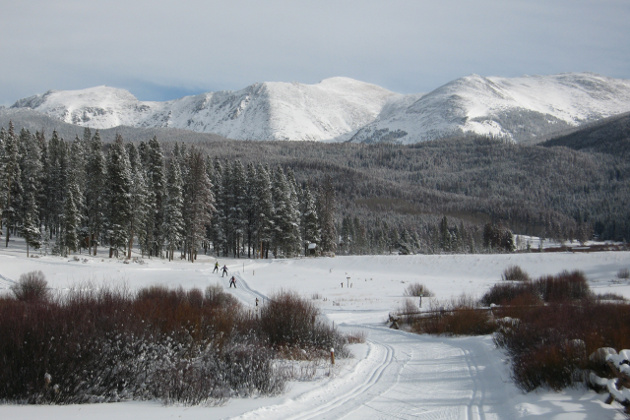
Devil’s Thumb Ranch, Colorado

The following guidance about selecting and using XC gear is general and intended to help you be an informed consumer.

Note that as a rule of thumb, standard XC equipment packages include skis, boots, bindings and poles and are less expensive than purchasing components individually.

Which pair of cross country (XC) skis is right for you?

Average recreational XC skiers should rule out light weight very narrow gear (used by racers) and waxable XC skis and/or wide steel edged XC skis (used by backcountry mountain skiers). Instead, consider looking at a lightweight XC ski with a waxless base. In general, these bases include skins or a pattern milled into the base (e.g. a crown or fish scale pattern) which allow one ski to grip the snow, while the other is pushed off to glide. They also keep the skier from slipping backwards while traveling up a hill. Note that ski length should correlate to skier’s weight.

Ski choice also is a function of where the ski will be used. Places with groomed, packed trails are best experienced using narrower skis. Wider (e.g. 55 millimeters in the shovel) and softer skis provide some stability in places without groomed trails (e.g. many golf courses and city parks).

Many people try to compromise and get wider XC skis to accommodate both groomed trails and ungroomed areas. I recommend choosing one type or the other or purchasing separate skis for each type of skiing.

For many newbies, the biggest obstacle to XC ski control is the incomplete use of the snowplow. Unlike heavier Alpine  equipment which accommodates snow plow turns, with XC skis it’s important to feel the weight on the boot heel against the edged ski and command it to push outward to plow. Without this “feel the heel” and push movement, the skis won’t plow and speed will increase rather than decrease.

New gear makes XC fun for newbies

XC ski boots are an important component of the package. Most boots have similar characteristics such as an ankle cuff, covered easy lacing, dry, warm, comfortable, etc. In general, higher boots with more substantial plastic cuffing provide better control compared to a lowcut soft boot. Stiffness or softness is associated with the torsional rigidity of the boot. Determining whether or not a boot’s sole is stiff is as easy as twisting the sole. Stiffer boots provide more stability.

Now that you know, make the right choices and enjoy your time in the snow!


Cross country skiers

Tips to Buy New XC Ski Gear for This Winter

Cross country skiers

Last winter XC ski gear was in demand like never before and all segments of cross country ski equipment sold out, with few or no options for retailers to reorder. There also was an uptick for backcountry gear and snowshoes.

Retailers are still experiencing demand and supply issues. Coupled with global supply chain challenges, everything from the components that complete a ski binding to the actual cardboard boxes in which products are shipped have been in short supply. Demand and wait times have increased dramatically for these vital pieces, further impacting supply. 

Responding to these factors, retailers placed orders as early as possible and for as much gear as they could get. But some wholesale distributors limited the amount of equipment they planned to make available in the US.

The result? Retailers may not be able to reorder sold out merchandise.

If you want to get new gear this year, here are some tips from Burlington, Vermont retailer Ski Rack:

Start Early

The earlier you begin the process the more likely you’ll get the right winter gear for you. The process begins with your own preliminary research into what you’re looking for and how you want to enjoy the outdoors this winter. Starting early is great! However, keep checking for new arrivals.

Buy Locally

Once you’ve identified the type of XC ski activity you’re interested in (for example, skiing in tracks, on ungroomed trails, in the backcountry, or ski skating) the next step is to head to a local gear shop and talk with the retail experts. They can be a great resource to help with sizing and to discuss various details, including differences between products. Consider custom fitting for all categories, to get the right gear the first time. This way, you’ll save time and avoid having to return something down the line when you find it’s not the right fit. By then, that item may not be in stock anymore.

Flexibility

Another key piece of getting winter gear this year is flexibility. There are lots of options from many brands that will serve you well. Some models may already be sold out for the year, pre-sold, or unavailable for months. It’s advisable to explore all options to see what the best fit may be, even if it’s not your first choice, but ACT FAST! If you find something you want at the store, don’t wait. It could be gone the next day or the next hour.


Older Skier? Here’s a list of the Best Skis for You

When it comes to skis, buying without trying can be confusing. I prefer demo days or demo-ing from shops at or near the mountain. Reading how a ski performs can provide helpful guidance in your selection process but using those skis – especially on familiar terrain – really helps in deciding how to make the best purchase.

That said, we’ve posted the annual list of skis recommended for older skiers. They include models from Atomic, Blizzard, Dynastar, Fischer, Head, K2, Kastle, Nordica, Rossignol, Salomon, Stockli, and Volkl. 

You’ll find the list by clicking here.

Most of the recommended skis have relatively soft flex, allowing the ski’s sidecut to engage with snow with minimal exertion. This ski design component requires less physical effort to turn and, regardless of your physical condition, reduces loss of stamina. 

The recommendations come from data assembled during last Spring’s ski tests conducted by RealSkiers.com, the go-to site for in-depth ski equipment evaluations. The 45 recommended skis are organized by ski width categories, which correspond to types of terrain and snow conditions, factors considered in their design and engineering.

While many consider skis to be unisex, some women prefer skis with weight and flex more suitable to their size and physique. The list identifies 10 women’s skis.

What’s the best way to use the information on the list? First, identify the ski category you want to add to your quiver. Then work with a quality ski shop. And, as mentioned at the start of this article, if possible, demo the selections to compare before making your purchase.

BTW, SeniorsSkiers.com subscribers enjoy a 50% discount off subscriptions to realskiers.com subscriptions. Use Code SS21.

demo skis

Demoing Demo Skis

Guidelines For An Objective Assessment.

Take your pick. The lads at Epic Mountain Sports at Winter Park will help you out. Credit: Epic

One of the great things about ski rental shops today is their willingness to rent top of the line skis. This is a great deal because for $35 – $50/day, you can try skis that will set you back $1,000. For the CPAs, math and economic majors, the break-even at $50/day on a $1,000 pair of skis is 20 days or more if fees are factored into the analysis.

So why demo? Three reasons come to mind. One, eliminate the hassle of checking a pair of skis as baggage. FYI, I can get everything, including my boots into my two carry-ons.

Two, you may want to try one or more pairs before you buy.

And, three, you want to try different brands to see how they ski. Dynastars don’t ski like Rossignols which definitely don’t ski like Heads. Atomics handle differently than Fischers or Volkls or Elans.

Demoing skis can be very informative even if you have no intention of buying new skis. Based on my background as a professional ski tester in the last century, here are five tips learned the hard way to help you compare different skis.

Tips For Comparing Demo Skis.

One. Test on the same trip and if possible, on consecutive days in as close to the same conditions as possible.

Two. For your first run on a new pair of skis, pick a slope that you can handle easily. Testing/demoing is all about the ski giving you information.

Three. For each pair of skis, do the same type of turns on the same slope. I start with a “wedge wedel” which is nothing more than using my knee to crank the skis (which are in a slight wedge) on an edge to see how they react. Next comes a series of round, carved turns that slowly decrease in radius until I am rapidly linking turns back and force across the fall line as if I was running a slalom. From there, I let the skis run on a traverse and then flat down the fall line to what I call GS speeds. Most would call this “really fast.”

Four. The first run on the new skis is the most important. After 1,000 feet of vertical, you’re starting to adapt your technique to the ski’s quirks. The ski is an inanimate object and will not change. By the end of the second run, you’re adjusting to how the ski skis.

Five. If the ski is forcing you to change your technique, get a different pair. The only exception is that if the new ski forces you to learn how to carve a turn. Does the ski “swim or snake” when your knees are pressed forward and the ski is flat on the snow? Or, when on edge, does one or both skis dart or try to “hook” uphill. Or, when you go fast, either on edge or with a flat ski, is the ski making you uncomfortable? If any of the above are true, go find another ski.


FreeSkier

Why I Don’t Read Ski Test Reports

[Please consider supporting SeniorsSkiing.com with a donation. We appreciate your help. Click here.]

Unlike this ski test, the author masks the ski’s identity. Credit: FreeSkier

Seven Ways To Make Ski Tests More Objective.

Way back in the late 20th Century, while running the SKIpp Testing program for SKI Magazine, John Perryman and I learned the most difficult problem to solve and the biggest variable was the ski tester. In conversations with almost every manufacturer, they said the same thing. So the goal of SKIpp (way back in the 1970s before engineering modeling software was available), was objectivity and processes that minimized tester bias. John created a bench test and then tested the ski on the snow so we could compare the results.

Amazingly, we were successful. We were invited as “consultants” by several manufacturers, to compare SKIpp’s results with theirs. Again, SKIpp was very accurate, more so than some manufacturers would admit.

Most ski testers are really good skiers and as such, they unconsciously adapt their technique to the ski, terrain and conditions and the brand’s design philosophy. This makes objective comparisons very difficult. In the SKipp program on-snow methodology, seven steps were incorporated to reduce the human variable.

One, we did blind testing. The tops and tip logos of each ski were covered with shelf paper before numbering each pair. The tester was not allowed to pick up the ski until he/she “tested” the ski to minimize identification.

Two, we skied the same trail every day that gave us about 1,000 feet of vertical and a chair lift that made yo-yoing possible. The ski area spread fertilizer on a long marked off segment to simulate frozen granular and give us a consistent snow surface to reduce the “snow condition variable.”

Three, each skier filled out a test card which graded a list of mandatory maneuvers/turns. At the beginning of the year’s session, we conducted a clinic on the required maneuvers and how the ski should react.

Four, each tester was allowed only two runs on the ski before grading. We wanted first impressions and found that after two runs, most testers adapted to the ski’s idiosyncrasies.

Ski tester range from racers to intermediates. Controlling tester bias is key.

Five, the testers’ skills ranged from certified ski instructors who either had been racers or coaches to intermediate skiers. Our youngest testers were in their mid-20s (we did have a few teenagers one year) to older skiers in their 50s.

Six, the “racing” models were skied down a 20 gate GS course that had been “fertilized” so the surface was rock hard.

Seven, only 10 skis were tested each day. After 10, the testers had a hard time determining the differences.

We let the testers pick which skis they wanted to ski in the afternoon. Again, the choice and why was recorded. Only then did we allow the ski to be identified. Results were tabulated each evening by hand because Excel, laptops, etc. didn’t exist in the 1970s.

Even with all these precautions, most of us could, after a few weeks of on the snow testing, tell one brand from another. To this day, I can tell a Rossignol from a Dynastar from an Atomic from a Head or K2.

So, when I read the current ski reports filled with jargon such as “edge gripping power” or “discover the amazing effect of (name of manufacturer) new Energy Management Circuit,” my reaction is %$^@*&, and I stop reading. Whatever credibility just evaporated. I’ve been there and writing facts about the ski’s performance instead of hype is, well, boring. But, experience tells me that the reports are more believable. So now you know why I don’t read ski test reports and prefer to “on snow test” them myself.


Volkl

The Personal Ski

Does The World Need A Custom Ski Just For You?

[Please consider supporting SeniorsSkiing.com with a donation. We appreciate your help. Click here.]

You can buy a computer built just for you. How about a ski?

Way back in the winter of 2018, long before Covid raised its ugly head, I asked the heads of marketing (none of whom would qualify for a SeniorsSkiing/com subscription) from three manufacturers a simple question: “Has ski material science and engineering reached the point where—with a simple, easy-to-measure parameters, and algorithms— a ski manufacturer can produce a ski tailored to the way an individual, recreational skier skis?”

The answer was yes, they have been making custom skis for World Cup and Olympic Ski racers for decades. But what about us common folks?

Again, the answer was yes. Physical dimensions of the skier and other limits such as artificial joints could be entered by the buyer.

All it takes is translating measurement to manufacturing.

The hardest part would be translating how a skier skis into data that can be used by a computer to then control the manufacturing process. For elite racers, they have zillions of gigabytes of footage “experts” can analyze coupled with on-snow testing.

Unlike ski racers where the variations in their technique are subtle, recreational skiers are all over the map. If you don’t believe me, watch a well-traveled slope. Even the “untrained” eye can see the differences in technique, some good, some, well, not-so-good bordering on awful, or where they are in learning to ski.

All three ski designers hypothesized that with two to three minutes of video of a skier on a a ski whose design parameters were known skiing down a known piece of terrain with measured condition, a custom ski could be done. The individuals all agreed that this approach would eliminate many variables.

From there, they could have internal experts go through their analysis, come up with whatever inputs a computer model needs, and, voilá, out would come the engineering/design specs for the ski.

Cost of manufacture is another story. Credit: Volkl

Now we get to the second issue: Producing the ski. Ski manufacturers make huge investments in equipment that can be used to turn out thousands of skis so they can amortize the investment over each ski produced. In this “personal ski” scenario, the molds and materials can still be used. Workers would have to be re-trained. How and why happens is beyond the scope of this piece, so just accept the fact that custom construction is possible.

Which brings us to cost. The custom ski would cost more than the $1,000 for a top-of-the-line ski. How much more, my informal panel wouldn’t or couldn’t agree on a number, but again, for the sake of dreaming, let’s say $3,000. Whether or not the ski was salable at that price is a different subject, again beyond the scope of this post.

So the obstacle was not cost, nor engineering, nor manufacturing, but identifying and then gathering the needed data that could be translated into ones and zeros. In the end, they all said,  “Why bother?”  The current designs meet the needs of 80—90 percent of recreational skiers. And therein lies the rub and why, at least not yet, everyone can’t have a custom designed ski.


Senior Skier? Here are the Best Skis for You.

This is the time of year when, with input from the Realskiers.com website, we publish SeniorsSkiing.com’s annual listing of the best new skis for older skiers.

Arrival of the pandemic virtually wiped out implementation of the comprehensive women’s test. But Realskiers.com was able to collect sufficient data to pick the best models for senior male skiers. 

The 2021 Best Skis for Senior Skiers listing shows men’s choices only, many of which are suitable for female skiers. It also includes  Men’s and Women’s choices from 2019-20. We did this to help readers interested in new skis as well as to help those of you who may run across previously owned boards at a Swap or Sale. 

Realskiers.com’s member reviews (see end of this article to obtain a discounted realskiers.com subscription) include narratives that go deeper into each ski’s personality. 

All of the selected skis share the characteristics of being designed and engineered to reduce the amount of energy required for turning. Generally, that means softer tip and tail and a bit of sidecut. Those designated as Women’s skis in the 2020 listing may be designed for female size and physique.

The recommended skis are grouped into five categories, each based on the ski’s width, which helps determine the terrain where its performance is optimized. 

SeniorsSkiing.com suggests that when purchasing new skis, older skiers should start by choosing the most suitable category (see following) and working with a quality ski shop where they can demo before purchasing. If you score a pair at a Ski Swap, evaluate if the savings are worth sacrificing the demo. As long as you’re in the right category and find a good length, you won’t be too far off base.

Frontside (“Carving” skis) 

–Encompasses broadest range of skier abilities from entry-level to experienced

–Use on groomed terrain. Wider models are usable off-trail 

  • Ski width: 75MM-84MM

All-Mountain East 

–Work equally well in on-trail and off-trail conditions

–“Re-entry” ski for those who have not skied in a few years 

  • Ski width: 85MM-94MM

All-Mountain West 

–For use in the West by high performance skiers

–Adapted for off-trail use but can be skied on-trail by skilled skiers

  • Ski width: 95MM-100MM      

Big Mountain 

–More maneuverable powder skis

–Inadvisable for regular on-trail use

  • Ski width: 101MM-113MM

Powder 

–Specialty skis for use in Deep Powder only 

  • Ski width: >113MM

To access the complete listing, a) click “COMMUNITY” on the dark blue menu bar at the top of the page, b) then click “SUBSCRIBER-ONLY CONTENT,” c) click on the 2021 Best Skis for Senior Skiers listing.

Detailed reviews are available at Realskiers.com. The site provides free access to equipment reviews and other information. In depth information and personal guidance from the publisher is available to SeniorsSkiing.com subscribers at a discounted annual rate of $9.95. To sign up, visit Realskiers.com. Scroll down to/click on “Subscribe Today!” Then click “Sign Up” in the “Annual Membership” box. Complete the form and enter SS20 in the field under “Coupon Code.” 

Subscribers Only: The Best 2020 Skis for Senior Skiers


Each year, SeniorsSkiing.com collaborates with Realskiers.com to inform its readers about skis that allow older skiers to turn more easily and to ski longer without tiring. Women’s skis – sometimes engineered for female size and physique – are included. 

To find the list on the site, a) click “Community” on the menu bar, b) click “Subscriber Only Content” in the dropdown box, and c) click on “Ski Recomendations for Seniors 2020.”

The skis were identified during Realskiers.com’s annual national ski evaluation process.

Most of the selected skis have relatively soft flex, which helps them engage the snow with minimal exertion. Regardless of one’s physical condition, using skis with these characteristics allows older skiers to turn more easily and to ski longer without tiring. 

The recommended skis are grouped into five categories, each based on the ski’s width, which helps determine the terrain where its performance is optimized. 

SeniorsSkiing.com recommends that when purchasing new skis, older skiers should start by choosing the most suitable category and work with a quality ski shop where they can demo before purchasing.

The characteristics of each of the five categories follow:

Frontside (“Carving” skis) 

  • Encompasses broadest range of skier abilities from entry-level to experienced
  • For use on groomed terrain. Wider models are usable off-trail 
  • Ski width: 75MM-84MM

All-Mountain East 

  • Works equally well on- and off-trail 
  • Good “re-entry” ski for those who haven’t skied in a few years 
  • Ski width: 85MM-94MM

All-Mountain West 

  • For use in the West by high performance skiers
  • Adapted for off-trail use but can be skied on-trail by skilled skiers
  • Ski width: 95MM-100MM      

Big Mountain 

  • A more maneuverable powder ski
  • Inadvisable for regular on-trail use
  • Ski width: 101MM-113MM

Powder 

  • Specialty ski for use in Deep Powder only 
  • Ski width: >113MM

Detailed reviews are available at Realskiers.com. The site provides free access to equipment reviews and other information. In depth information and personal guidance from the publisher is available to SeniorsSkiing.com subscribers at a discounted annual rate of $9.95. To sign up, visit Realskiers.com. Scroll down to/click on “Subscribe Today!” Then click “Sign Up” in the “Annual Membership” box. Complete the form and enter SS20 in the field under “Coupon Code.” 

Now Available: List of Best 2019 Skis For Seniors

We just published the list of 2019 skis identified as the best for older skiers.

The 61 selected skis generally have a softer flex, which helps them engage snow with minimal exertion, allowing older skiers to turn more easily and to ski longer without tiring. Twenty-one women’s models are included.

The skis were selected during the annual national ski evaluation process organized by the renowned ski review site, Realskiers.com.

The recommended skis are grouped into six categories, each based on the ski’s width, which helps determine the terrain where its performance is optimized.

If you’re considering a purchase, we recommend first identifying the most suitable category, then skiing the selections using a demo program. This may be accomplished by working with a quality ski shop.

The categories and their characteristics follow:

  • Frontside (aka “Carving” skis)encompass the broadest range of skier abilities from entry-level to experienced. They are for use on groomed terrain. Wider models are usable off-trail.
  • All-Mountain East are versatile skis that work equally well in on-trail and off-trail conditions. This category is suitable for those who have not skied in a few years.
  • All-Mountain West are good for use in the West by high performance skiers. They are adapted for off-trail use but can be skied on-trail by skilled skiers.
  • Big Mountainare essentially more maneuverable powder skis. They are inadvisable for regular on-trail use.
  • Powder are specialty skis for use in deep powder only.
  • Technical skishave high performance race ski characteristics and are suitable for caving turns on hard-snow.

To access the list click here.

Realskiers.com is a first rate site for any skier interested in learning about equipment and being exposed to the expert perspectives of it’s publisher, Jackson Hogen. SeniorsSkiing.com subscribers can subscribe to Realskiers.com for $9.95, half of it’s normal rate. As a subscriber, you also have direct access to Jackson and his points of view about what equipment might be best for your needs. It’s a fantastic deal. To sign up, visit Realskiers.com. Scroll down to/click on “Subscribe Today!” Then click “Sign Up” in the “Annual Membership” box. Complete the form and enter SS18 in the field under “Coupon Code.”

In Your Quiver

Do You Know What Underfoot Measurement Is Best For Your Kind Of Skiing?

Pat’s ski collection from narrow to wide underfoot dimensions. Credit: Pat McCloskey

One of the hardest questions a seasoned skier has to answer is when someone new to skiing or maybe even a friend says, “So what kind of ski should I be on this year?”  Really a tough question to answer without delving into particulars like, athleticism, age, what kind of snow, what trails do you like, front side, back side?  There are so many choices today based on so many factors.  So let me try to make this as simple as possible for the new skier as well as the veteran.

Most of us veterans are using skis that are significantly shorter than the ones we used to use.  In the old days, skis anywhere from a 185 cm to 210 cm in length were used with little or no side cut resulting in significant vertical and rotational movement to execute a turn.  Today, the skis are much shorter, generally ranging from 152 to 185 cm.  The shape of the skis make it easier to turn—wider at the tip and tail and narrower under foot— which, when placed on edge and pressure is applied, results in an effortless turn.   We don’t have to work those 200 plus cm skis like the old days.  But what about the nuances of width under foot?  Where you want to ski and what kind of snow conditions will determine what width underfoot measurement is good. And that’s measured in millimeters and not centimeters like ski length.

Typically a front side ski to be used on groomers or hard pack will range under 85 mm width under foot, in most cases. Race skis have a slimmer profile but for the most part, anything under 85 mm is considered a “front side” ski and encourages a carved turn on groomed or hard pack snow.  There is a lot of interest these days in these profiles because of the lack of early and late snow due to global warming.  Snowmaking is essential, and when these man-made, groomed, hard pack conditions exist, a frontside ski is optimal.

Conversely, anything over 88 mm under foot  is moving into the all mountain range and can be used for most terrain.  Also, 95 mm and above are a must to include in your quiver if you ski out west and have varying conditions.  When you get over 100 mm, you are getting into the powder or loose snow area. Typically, 107mm and up is considered “big mountain” or powder skis.  These skis can perform on groomed snow but the float is optimal for loose snow or powder in the wider under foot measurements.

But what about rocker, early rise, etc?  We all have seen the guy who has rockered skis (tips and tails with an upturn) making turns on hard pack with minimal contact with the snow underfoot.  We don’t want to be that guy.  Wrong tool for the wrong conditions.  Rockers are used to facilitate the float needed to ski powder or loose snow.  You need surface area to ride the groomers, and rockers are not optimal.  However, the early rise tips can facilitate a turn in powder as well as make entry into a groomed turn better.  Personally, I see the advantage of an early rise ski for most skiing conditions.  Early rise referring to a slight upturn to the tip of the ski.

So, it probably makes sense for most skiers to have a quiver of skis for different conditions.  A new skier should really think about what conditions he or she will ski and get one pair based on those conditions.  A good ski shop can help in the selection. Veterans should have that front side ski, an all-mountain ski, and a loose snow or powder ski.  I have a pair of 107 under foot for loose or powder, but my 88 mm skis under foot are ideal in a lot of conditions. I personally think that measurement (88mm) is the optimal one for most conditions.

Be honest with yourself when you are selecting skis.  Think about your physical condition, where you like to ski, and the snow conditions that are optimal for you.  Skiing should be fun and not be like  work. The new equipment makes that happen if you are careful to select the right tools for the quiver.

The Best 2018 Skis For Senior Skiers

One Might Say You Can Never Have Enough Skis.

My wife disagrees. She skis on a relatively old pair that she loves. They’re relatively soft in shovel and heel. For her, one pair is enough.

Mine is a completely different story; too long to get into at the moment.

Jackson Hogen, publisher of the ski review site realskiers.com, has been testing skis for decades. He works with testers from around the country, gathering their observations and consolidating them into pre-season evaluations of the upcoming season’s crop.

The complete list of the recommended 2018 skis for senior skiers is available free to SeniorsSkiing.com subscribers. Click on COMMUNITY (home page menu bar), then click on SUBSCRIBERS ONLY CONTENT in the drop down box.

(Free short reviews can be found at realskiers.com. The more complete evaluations require a subscription. Details on how SeniorsSkiing.com subscribers can subscribe to realskiers.com for 50% of the normal rate are at the end of this article.)

Recognizing that certain ski characteristics are more suitable for older skiers than others, last year, realskiers.com identified the best ones for older skiers. These skis generally have a soft flex, which allows the sidecut to engage with minimal exertion. When they’re used, the skier doesn’t work as hard. They’re easier to turn. They’re forgiving. You don’t have to be in peak shape to ski better or longer. The entire experience is more enjoyable.

Recommended skis are grouped into six categories, each based on skiing preference, location, and snow conditions. They follow:

Frontside (aka “Carving” skis)

  • These skis encompass the broadest range of skier abilities from entry-level to experienced and are for general use on groomed terrain. Wider models are usable off-trail.

All-Mountain East

  • Skis that are extremely versatile and for general use on groomed terrain. They also work off-trail.
  • This category is suitable for those who have not skied in a few years. 

All-Mountain West

  • These are good for use in the West by high performance skiers and are good both for groomed trails and for powder. 

Big Mountain

  • Skis for use on big mountains with selections for strong and for less strong skiers.

Powder

  • Specialty skis for use in deep powder.

Technical

  • These have high performance race ski characteristics and are suitable for carving turns on hard-snow.

While many consider skis to be unisex, some women prefer skis with weight and flex more suitable to their size and physique. The list also identifies preferred women’s skis.

Jackson advises approaching your next ski purchase by taking these three important steps:

  1. Identify the most suitable category.
  2. Work with a quality ski shop.
  3. If possible, demo selections to compare before purchasing.

To subscribe to realskiers.com: Visit site. Scroll down to/click on “Subscribe Today!” Click “Sign Up” in the “Annual Membership” box. Complete the form and enter SS17 in the field under “Coupon Code.”


Putting XC Skis Away

Nine Steps For Maintaining Your XC Equipment.

[Editor Note: SeniorsSkiing.com thanks Roger Lohr of XCSkiResorts.com and Andy Gerlach of SkiPost.com and StartSkiWax for this article.]

Preparing the base with hot wax.

The winter and snow cover are leaving us, so what do we do with your xc ski equipment?

1) Cleaning: Use wax remover and Fiber wipe, a chamois-like cloth, to clean the kick zone and the glide zone.

2) Use a fine steel or copper brush to clean excess dirt from base.

3) Apply layer of Start Base (Start is a brand of XC ski wax) or Service or soft non-fluoro glider like SG2 to glide zones.

4) While wax is still soft, use scraper with low pressure to “hot wipe” wax and further dirt away.

5) Follow with Fiber wipe and then a fine steel brush again to remove dirt while refreshing base further. Repeat steps 4 and 5 as necessary until no more dirt is seen coming from base.

6) If you suspect your skis have any base damage (i.e. base sealing), consider having the skis stone ground to reveal a fresh base in the spring before summer storage. A fresh base is the most import feature in a skis ability to hold wax and to glide. Ski shops in most every ski town offer great stone grinding services.

7) Once you have a clean and refreshed base, it is time to saturate the base with a summer storage wax. In the glide zones, melt in a thick layer of Start Base (or Service or soft non-fluoro glider like SG2) and let it cool. If all the wax has been absorbed into the base at any point add another layer on to. Let cool leave it on the ski all summer.

8) Skis should be stored in cool, dry place, out of sunlight and not near heating elements nor near a roof or attic where temperature can rise over 130 degrees F. Skis should be stored loosely strapped with no pressure on camber so that there is no risk that heat and pressure can alter any of the skis camber characteristics.

9) Better to do something than nothing. So at the very, very least crayon your softest glide onto your glide zones right now.

If you have questions, contact Andy Gerlach at SkiPost.com.

The Top All-Mountain Skis of All Time: Part II

This article completes the list of “iconic all-mountain” skis published last week.

One reader comment on last week’s list stated that better options are available today. In the interest of clarification, skis listed last week and in this article weren’t necessarily the most innovative or game changing. But, at the time they were introduced, they were the best at handling all conditions.

Völkl Mantra

One could make a strong case that the Völkl Mantra served as the primary prototype for the modern all-mountain ski genre. Like the Snow Ranger preceding it, the Mantra pulled no punches when it came to integrating first class construction into a modern shape. Any ski with decent surface area will work in powder, but it takes a stout ski to subdue crud. The Mantra, in all its incarnations, has been pulverizing crud since its inception.

Kästle MX83

Dimensionally, the MX83 falls just outside the current definition of an all-mountain shape, but temperamentally it’s predisposed to dominate in any condition. Rather than float over fluffy pow, the MX83 rips it out by the roots, tearing through whatever lies in its path. What makes it deliriously well suited to off-trail skiing is its unique ability to flow over irregular terrain as if it were made of mercury.

Atomic Nomad Crimson Ti

The Nomad series focused on Frontside performance, but top of the line Crimson Ti, had the moxie to travel anywhere with aplomb. The only system ski among our dandy dozen, the original Crimson Ti was so stable at speed it inspired the confidence to roam all over the mountain, where it revealed a capacity for decimating crud with the same power it applied to carving up the groom.

Nordica Hell & Back

Many skiers are under the illusion that it takes a slab or two of Titanal to make a strong, powerful ski. Nordica laid that notion to rest when it concocted the Hell & Back, an all-glass construction with the grip of Gorilla glue. A fall-line charger without fear, the Hell & Back had a big brother, the Patron, which set the benchmark for powder performance for several seasons.

 Rossignol Soul 7

Strictly speaking, the Soul 7 was a tad too wide to make our list, but one can’t overlook top-of-the-heap sales success. A follow-up to the already popular S7, the Soul 7 hit the sweet spot on a slew of trends: lightweight construction, tapered tips and tails, and eye-catching cosmetics. But the key to its powder performance lay in an Old School property: rebound of the kind that coined the term, “porpoising,” describing the way the Soul 7’s coiled power lifted the skier up after every turn.

Blizzard Bonafide

I’d skied 1,000’s of models before I first stepped into a pair of Bonafides. All it took was one run and I was in love. As with any true love, all other contenders for my affections faded into the background for the Bonafide demonstrated that it could do anything at any time in any condition. I hear the quibbles that it requires speed and expert technique to extract its charms but dismiss them as hollow carping. As this list makes clear, when has it not been true that better skis reward better skiing?

 Postscript: This highly unscientific exercise isn’t meant to identify the very best skis, nor the most popular and not necessarily the most innovative or influential. The common thread is that they epitomized versatility in their respective eras.

However you feel about these selections, I invite you to chime in on the Realskiers.com Facebook page, home of the discerning diatribe.

Get the Realskiers.com Revelations newsletter in your inbox all season long. Subscribe Today!


The Top All-Mountain Skis of All Time

Excerpted with permission from realskiers.com where the full article was published March 20, 2017.

All-mountain skis — those that purport to do everything reasonably well – started appearing in the mid-90’s. 

Following, listed roughly in order of their debut, are the iconic models that emerged since the term “all-mountain” came into common usage. My picks aren’t necessarily the most innovative or game changing, but they were, for a while, the best at handling any condition the mountain might dish out.

Völkl Snow Ranger

Völkl didn’t invent the fat ski – that distinction goes to Atomic – but they were the first to make an expert powder ski using elite construction. When fat skis were first making a dent in the market, no other model was as powerful and versatile as the original Snow Ranger, which still holds its own as an all-terrain ski today.

Volant Chubb

From today’s perspective, it’s hard to believe that the Chubb, born in the first generation of fat skis, had a 90mm waist. When Shane McConkey began to straight-line steep couloirs on the Chubb, any lingering resistance to fat skis as cheater sticks evaporated. Applying the Chubb’s construction to a water ski’s shape resulted in the Spatula, creating new dimensions in ski design that endure to this day.

K2 Four

K2 wasn’t an early adopter of shaped skis, but once the brand put their marketing prowess into promoting the concept, there was no turning back. A young Bode Miller started to win races on the funky red, white and blue skis, validating the technical capabilities of the deep sidecut. America followed suit, setting the table for K2’s run of dominance in the U.S. market.

Dynastar 4×4

Shaped skis were still by and large a carving club when Dynastar debuted the 4×4 as an unabashed off-road ski, inspiring comparisons to SUV’s for their all-terrain adaptability. Although absurdly narrow by today’s standards (a shade under 68mm underfoot), the first 4×4 would later morph into the 4×4 Big, one of the most popular fat skis of its era.

Salomon X-Scream

Like the 4×4, Salomon’s X-Scream was one of the first shaped skis that wasn’t intended as an on-piste carving tool but as an all-terrain implement. The first X-Scream earned instant acclaim when it rolled out in 2001, spawning a string of successors that made the X-Scream family the most popular in Salomon’s history.

Stöckli Stormrider XL

Stöckli tends to build all-terrain skis with DNA extracted from Super G race models, making their Stormrider series among of the burliest all-mountain skis. The Stormrider XL, sporting a waist of 75mm, was an ancestor of the current crop of Stormriders, which range in width from 83mm to 115mm. The one constant has been a stout, wood and metal lay-up that takes no prisoners as it slashes through any and all snow conditions.

NOTE: This highly unscientific exercise isn’t meant to identify the very best skis, nor the most popular and not necessarily the most innovative or influential. The common thread is that they epitomized versatility in their respective eras.

Six other picks will appear next week.

Subscribe to realskiers.com and receive newsletters, commentary, and expert advice all season long. 

Gear Review: K2 Pinnacle 105

Big-Mountain Lovers Won’t Find A Better Age-Busting Ski.

The K2 Pinnacle 105 has a big-mountain profile: 137-105-121.
Credit: K2 Skis

By age-busting, I mean the K2 Pinnacle 105. makes everything easier — and it made me feel about 20 years younger.

The Pinnacle 105 is on SeniorSkiing.com’s list of best Big Mountain skis for seniors in the West. If you’d like to receive the list, click on this link and subscribe on the form in the right column or the pop-up which will appear on the page. After confirming your subscription, you can access the list of senior ski recommendations in the Subscriber-Only menu under Community.

Stats on the ski

I tested the Pinnacle 105s in wildly different conditions in Washington state: during a huge powder dump at Crystal Mountain and on a crispy-firm groomer day at Stevens Pass. The skis crushed everything they came up against.

I took them everywhere—on steeps, chutes, bumps, at high speed, in funky avalanche debris—even a nasty rain crust. They offer a level of control I’ve never experienced on any other ski, and at the same time they felt lively, quick and fun.

The author after a day of shredding at Stevens Pass. Credit: John Nelson

The Pinnacle 105 (MSRP: $900) is part of K2’s freeride line for men. The profile for the ski is 137-105-121 with a pronounced rocker tip, and K2 promises this is your “go anywhere, do everything ski.” I’m 5 foot 11 inches, 150 pounds and skied the 177 centimeter length.

Even though this is a wide ski, it’s surprisingly light. K2 keeps the weight down with what it calls Konic Technology. Without getting too gear-nerdy, this involves reducing the weight of the ski where you don’t need it to be strong (the middle and extremities) and reinforcing the areas where you do need strength (the edges). The overall effect is to reduce what’s called “swing weight” from edge-to-edge.

I’ll admit I was dubious. I figured they would be great in powder, but I’d give up power and stability on firm snow. How wrong I was.

In powder

I hit perhaps the best day of the year at Crystal Mountain. Overnight, 12 inches had fallen on top of 40 inches the previous two days.

Talk about epic.

My first turns were amazing. The wide profile gave the ski incredible float and control. No need to stay back—I found myself charging all the time with ease, subtly controlling speed with simple edging and weight shifts.

On steeps, it was truly eye-opening. I could fly when I wanted, slow down to negotiate a chute or a drop, then turn on the gas and start flying again.

As slopes became skied out, broken snow was easily blasted away by these powder monsters. It was all too fun and easy.

Firm and fast

During a second day of testing at Stevens Pass, things couldn’t have been different. Rain had fallen several days previous, then frozen into a crust. On top of the rain crust, a little new snow had fallen and been skied off.

It was a groomer day for most skiers, but I took the Pinnacles off-piste into bumps and steeps. I’ll admit I was a bit nervous on my first turn over a crusty bump on a double-black diamond drop, but the 105s dug in with surprising power.

But it wasn’t all about the power — they could also be incredibly quick edge-to-edge. Whether I was carving wide-radius or fast, snappy turns, the overall feeling was of incredible control.

Next, I went for speed. Most of the freeride skis I’ve tried don’t track when you turn up the speed, but the 105s were nothing short of amazing. Arcing at high-speed or making short radius turns felt equally stable.

Bottom line: Who will love this ski?

The Pinnacle 105 excels for advanced skiers who spend most of their time off-piste in the west.

Ready to ride on a firm day at Stevens Pass. Credit: John Nelson

Demo Day: How To Participate And Enjoy

Here Are Some Tips For Taking Part. Don’t Be Shy.

Demo staff are knowledgable, helpful and welcoming to first-timers.
Credit: Val E.

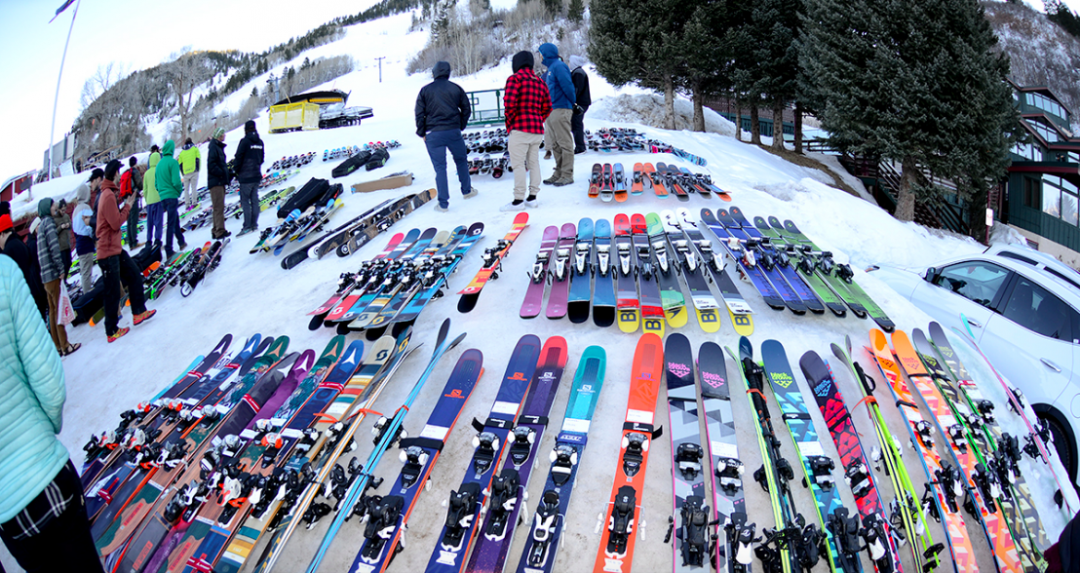
Every season ski shops, ski manufacturers, and ski resorts organize events when anybody could try new ski equipment. Demos range from a local mom-and-pop ski shop get-together to major on-snow events run by SIA (Snowsports Industry America).

Why do you need to take part in it? Technical progress never stops, try new things; you may like them. At least you will have your own opinion. Picking a pair of skis or boots is as personal and as tricky as picking a life partner. Well, kind of.

Never think you are not qualified for a ski demo. The idea is to let “volks” try the “wagen” and to give them a clear reason to buy it later.

Setting bindings based on your experience and size has to be done accurately. Don’t exaggerate your skill level!
Credit: Val E.

  • Check the list of demos at your local resort, or before you go to a ski trip. State ski associations are good resources for finding resort events. (SkiNH, SkiUtah, etc.)
  • Come early, bring your boots, poles, ID, and a credit card. Bring your own skis to “calibrate a zero level” by taking a run or two before the demo.
  • Before starting the demo, you must fill in a form with your weight, height, skier type, age, and gender. Be honest with this info; it is used for adjusting your bindings.  A higher setting than needed may lead to non-release of a binding which is dangerous.
  • Prepare a list of announced brands and potential models to try on. Know before you go so your search can be focused. Have an objective for your try-outs.
  • Read some magazines or blogs about different ski types before you go. Think about types of skis you like and dislike, what you want to demo considering the snow conditions. For example, if you ski mostly in hard pack or ice, don’t spend much time on skis for powder/soft snow.
  • If time permits, talk to the staff working at the demo booths; they are knowledgeable about ski features and benefits.
  • It’s pretty obvious but don’t ruin the edges and bases of the demo skis. These aren’t your rock skis.
  • Unwritten rule is that a skier makes a couple of runs on one pair of demos and returns it. Someone else will be waiting for your demos.
  • Use your smart phone to take photos of ski reviews and demo skis. Record your audio and video comments about them while staying in line or riding a ski lift. A partner can record a video of you going down the hill on different skis to compare. You can share your recorded impressions with your less fortunate friends on Facebook or in real life.

Even if you are not really interested in purchasing a new pair of skis, you learn a lot about gear and the sport, and it’s fun!


schusser_2_skier_491

The Best Skis For Senior Skiers

 Soft Flex. Minimal Exertion. Skis for Six Different Scenarios.

Update Dec 27, 2016:  Subscribers can now download the list of recommended skis by going to the top navigation bar, click on Community, select Subscriber-Only-Content, choose the download and reconfirm your email address.  If you are not a subscriber, consider subscribing. It’s free, lots of interesting articles for seniors who love winter sports.

Ski manufacturers have never designed a ski for senior skiers. With about one million on the slopes, there’s enough of us to justify the investment.

But don’t hold your breath.

schusser_2_skier_491There is a breakthrough this season. For the first time, an in-depth evaluation of the best skis for older skiers is available. This is good news since choosing a new pair of skis, regardless of age and ability, has never been easy, and the abundance of brands and models is always confusing.
The evaluation is the result of collaboration between SeniorsSkiing.com and realskiers.com, the go-to site for in-depth ski equipment evaluations. The free list is available to all SeniorsSkiing.com subscribers. 

Of the many 2017 skis tested, 38 were identified as suitable for senior skiers. Most have relatively soft flex, allowing the sidecut to engage with minimal exertion. The result is ease of turning and forgiveness, which, regardless of physical condition, reduces stamina loss.

In other words, using these skis, it’s easier to ski more runs and have more fun!

Working with testers from around the country, realskiers.com has been reviewing ski equipment for many years. The results are gathered each spring and published in September, where abbreviated reviews are available free and in-depth information comes with a modest, paid annual subscription.

The recommended skis are grouped into six categories, each based on skiing preference, location, and snow conditions. They are:

Frontside (aka “Carving” skis)

  • These skis encompass the broadest range of skier abilities from entry-level to experienced and are for general use on groomed terrain. Wider models are usable off-trail.

 All-Mountain East

  • Skis that are extremely versatile and for general use on groomed terrain. They also work off-trail.
  • This category is suitable for those who have not skied in a few years.

 All-Mountain West

  • These are good for use in the West by high performance skiers and are good both for groomed trails and for powder.

 Big Mountain

  • Skis for use on big mountains with selections for strong and for less strong skiers.

 Powder

  • Specialty skis for use in deep powder.

Technical

  • These have high performance race ski characteristics and are suitable for carving turns on hard-snow.

While many consider skis to be unisex, some women prefer skis with weight and flex more suitable to their size and physique. The list identifies women’s skis, as well.

When selecting skis…

  1. Identify the most suitable category.
  2. Work with a quality ski shop.
  3. If possible, demo selections to compare before purchasing.

To Access the List

SeniorsSkiing.com subscribers were emailed a link to the list. The email was sent on October 14, 2016. Check your inbox or spam folder.

If you have not yet subscribed, click on this link and sign up using the subscription form in the right column or the pop-up which will appear on the page. After confirming your subscription, you will receive and email with a link to the list of senior ski recommendations. And, as a new subscriber, you will have access to discounts and deals on gear and clothing from top brands, and a lot of info relevant to the older snow sports enthusiast!


ON3P Ski Review From A Reader

A Reader Has Discovered A Perfect Ski For Seniors.  Here’s His Story.

Portland-based ON3P are hand made. And you can customize. Credit: ON3P

Portland-based ON3P are hand made. And you can customize.
Credit: ON3P

Editor’s Note:  We received this ski review from Seniorsskiing.com subscriber Tom Levak, an enthusiastic skier who skis in the Portland, OR, area and also hits Mt. Hood every summer.  As far as we know, Tom is not associated with ON3P; this is an example of how our readers can contribute to our editorial content.  This is not an ad or sponsored content. Just an attempt to expose our readers to other readers’ favorites. We love the idea of a “reader-reviewer”.  If you have something to review, let us know at info@seniorsskiing.com, and we’ll get back to you.

Screen Shot 2016-08-30 at 1.04.25 PM

First, my qualifications: I’m a 77-year old Level III+ male skier and Level II snowboarder. Before I moved to ON3P Kartels, most recently, I was on Volant Chubbs, then Salomon Pocket Rockets, then Atomic Bentchetlers. I was on the snow 50-plus days last season and, in the summer, I go up to the Mt. Hood’s Timberline Palmer lift every two weeks or so.

Now then, here’s my opinion about the ON3Ps: it’s the best ski on the market for anyone, but, in particular, senior skiers.

In 2006, Scott Andrus, the ON3P founder, who started skiing at age three in Vail/Beavercreek, was a college sophomore, majoring in biology. That was when he decided that he could build a ski that was better than any on the market, even though he knew nothing about building skis. So, in 2008, he graduated and set up a 220 square foot factory in his garage and got several of his ski friends to help him put it together. He had no money, so he and most of those who helped him spent hundreds of hours sleeping on couches in the garage. Don’t laugh, but it took him ten months just to figure out how to build a ski press. Ultimately, by the end on his first year, he had built 53 different skis, all with their own characteristics and graphics, and by the 2008-09 ski season, he had talked amateur and professional friends to test them all on Mt. Hood. They loved most of them (some of them not so much).

By 2009, he was marketing several skis, and of course he had some problems, such as when Scott USA sued him for naming one of his skis “The Great Scott.” He just changed the name to “Cease and Desist.”

Over the years, Scott’s Portland factory has grown into a super facility, located in a manufacturing strip mall. A couple of months ago, Scott took me for a tour, which was pretty darn impressive, and a hell of a lot of fun (Do you like bidets? One of the bathrooms has one). Each room of his operation is a separate part of the process. And every ski is hand-built by employee friends who love their work—there’s no contracting out.

All of their skis are fiberglass/carbon with FCS certified bamboo cores. Of course, they manufacture all types of skis, but the shop’s all-weather favorite is mine too: The Kartel. ($799.00 with free shipping on domestic orders.) They also custom manufacture to your personal specifications. Because Mt. Hood has every kind of weather and snow, I’ve skied the Kartel on everything, and I can say, unreservedly, that it does everything: It holds tight on the hard stuff, floats in the powder, and turns like a dream. With its twin tips and center balance, I was even able to easily ride them switch (backwards).

I could load up a bunch of photos with this review, but there’s really no point, you can just go to shop.on3pskis.com and take an on-line factory tour. Or you can take a demo tour on the slopes. Check for demo dates for 2016-17 season here. Facebook is ON3P Skis. The factory itself is open 8a.m. to 5p.m., Monday through Friday. If you’d like to take a personal tour, Scott would appreciate it if you would call ahead at 503-206-5909. When you arrive, he’ll be the first person you see, sitting at his desk, working on the design of his next ski.