
What’s New for the 2022/23 Season – Western Edition

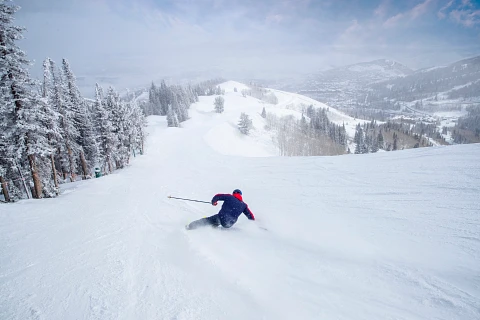
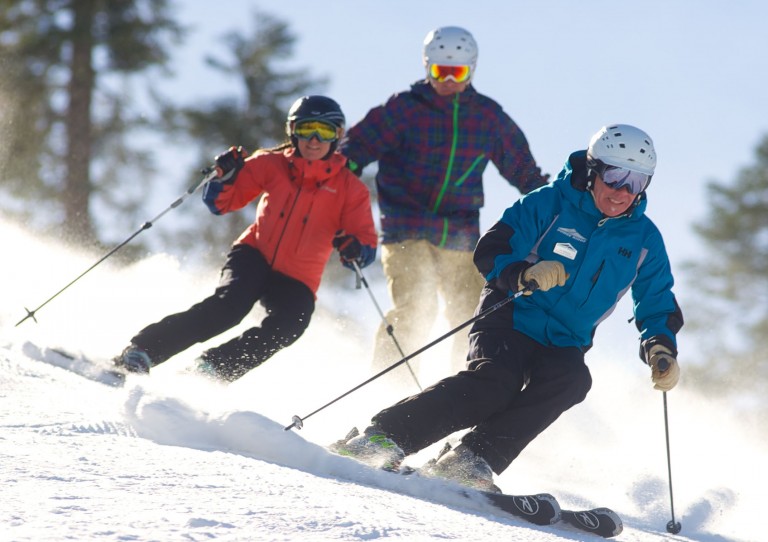
Photo Credit: Praxis Skis

As always, resorts were busy over the summer replacing lifts and improving or adding terrain.

Here’s a quick rundown to whet your appetite of what’s new and noteworthy in several states West of the Mississippi.

In alphabetical order, by state –

 California

Palisades Tahoe – For a second season under its new name, there’s a brand new Base-to-Base gondola. It connects the two valleys and makes the former Squaw Valley and Alpine Meadows resorts one of the largest in North America, with 6,000 acres of terrain.

The new gondola is 2.4 miles long and traverses just over 3,100 vertical feet. The ride takes approximately 16 minutes, including a brief stop at the new KT-22 mid-station.

 Also, the Red Dog chair lift, which starts at the base of Palisades Tahoe, has been relocated to offer convenient direct access from the parking lot, and is now a high-speed detachable six-person chair.

Northstar – This venerable resort celebrates its 50th anniversary this season with the new Comstock Express lift, a high-speed six-person chair that increases capacity by 50%.

Mt. Rose Ski Tahoe – A favorite of locals, Mt. Rose redirected its Lakeview chair lift so it now goes all the way to the top, with expansive views of Lake Tahoe along the way.

Colorado
 
Arapahoe Basin – The old fixed-grip three-seater Lenawee Lift, which dated from 2001, has been replaced with a high-speed six-pack.  This will alleviate one of the last remaining pinch points on what most of us call – simply – A-Basin.
 

Buttermilk –   Known as the beginners and family area of the four mountains of Aspen (Aspen, Aspen Highlands, Snowmass and Buttermilk), this under-rated area gets a sparkling new base area with services including a guest lounge and lockers.

Eldora – This locals fav celebrates its 60th season this season, with upgrades including a $7 Million parking expansion with room for nearly 800 additional spaces.  Eldora also has increased snowmaking and its rental fleet.

Steamboat – Also celebrating its 60th season, “The Boat” is almost done with its $200 Million multi-year transformation of the base area.  New for this season is a beginner area, called Greenhorn Ranch, serviced by the new Wild Blue Gondola, a new beginner lift and two new carpets.

Telluride Ski Resort – The new high-speed detachable quad for Chair 9 cuts the lift time in half, from 15 minutes to 7, and services 2,000 vertical feet of terrain.

Winter Park – The resort is opening what’s called “previously unutilized terrain” in The Cirque Territory. The new terrain is called “Jelly Roll” for its steep pitch and ability to hold powder for days after a storm. Winter Park also is planning to open more terrain in the Chutes area on Mary Jane.

Amtrak Ski Train – The popular train between Denver and Winter Park returns for the season, weekends only, with fares as low as $29 each way.  The official name is Winter Park Express. Reservations often get booked out, so plan ahead.

 Idaho and Montana

Lookout Pass – This area, which spans two states (Idaho and Montana) and two time zones, opens its Eagle Peak Expansion this season, nearly doubling the resort’s skiable terrain. Lookout Pass which is, Idaho’s oldest continuously operating ski area, consistently gets in excess of 400 inches of snow per year, making it a secret stash for consistent powder.

Big Sky Resort – More than 350 new complimentary parking spots have been added across the resort, including one priority area for carpools. Big Sky is a member of both the Ikon Pass and Mountain Collective – these passholders need to make reservations this season to use their days.

Wyoming   

Jackson Hole – After 28 years of service, the fixed-grip four-seat Thunder lift has been replaced by a new high-speed quad.  It’s twice as fast as the lift it replaces, cutting ride time from 7 minutes to under 4. The new Thunder lift still accesses some of Jackson’s top runs, including Laramie Bowl, Thunder Bumps and the Grand.

Grand Targhee – On the other side of the Teton Pass from Jackson Hole, this resort debuts the new Colter Lift on Peaked Mountain this season. It can transport up to 2,000 people per hour, gaining 1,815 vertical feet in just over 5 minutes. It also accesses 30 percent more skiing and riding to what was formerly hike-in.

It is the first major terrain expansion at Grand Targhee since the Sacajawea lift opened in 2001. The resort usually gets more than 500 inches of snowfall each winter.


So where are you going this season?  As always, we welcome your comments.
Stored Skis

Here’s How to Store Ski Gear and Clothes for the Off-Season

[Editor’s Note: We’ve published Don Burch’s article on storing gear in the past.  It’s an excellent reminder that a little care goes a long way.]

Hopefully your ski equipment has taken good care of you all winter. It’s time for you to return the favor. Some simple steps now can save you the frustration of rusty edges, musty clothing and mouse-invaded boots.

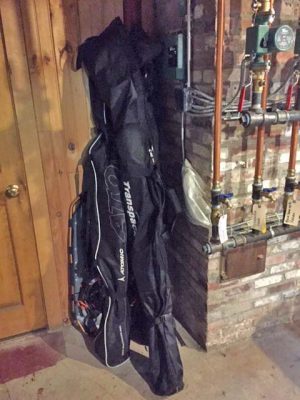
Are your skis still in the bag by the furnace where you left them after your last ski day? 
Credit: Mike Maginn

Skis: At the end of ski season, the bottoms of your skis will be dirty. This will especially be the case if you did a lot of spring skiing. With today’s black bases it may not be that noticeable. Back in the day when a lot of bases were white the grime was obvious. Before having your skis waxed and sharpened, you want to clean the bases with a gentle cleaner. If you wax dirty skis, you’re just going to embed dirt into the wax.

I wet my skis bases with a garden hose, spray on Simple Green, wipe them down with a rag and then thoroughly rinse everything off. While you’re at it, thoroughly rinse off the tops of your skis and bindings. I don’t recommend using cleansers on the tops, as these can interfere with the lubricants in your bindings.

Some people use commercially available ski base cleaners or Dawn dishwashing soap. Cleaning ski bases will dry them out so it’s imperative that you have them waxed afterwards and don’t let them sit all summer without a wax cover.

Racers and others who are demanding about their equipment will clean their bases using the hot scrape method. This involves hot waxing the skis and scraping the wax off before it cools. This process literally pulls the dirt off the ski. The process is repeated until the warm wax scrapes off clean. This method works, but it’s time consuming.

A good edge sharpening and hot wax will ready your skis for next season and prevent the edges from rusting.

Boots: It’s essential that your boots and liners be totally dry before storing them. I use a boot dryer after every day skiing and before storage. If you don’t have one, I highly recommend removing the liners in order to get the boots thoroughly dry. I know getting the liners in and out can be a pain. Warming your boots to make the plastic softer makes it much easier to deal with liners.

Store your boots in a place where mice can’t get them. A friend of mine stored his in a shed and in the Fall found them chewed on and full of things you’d wouldn’t want put your foot into.

Poles: These get the same attention as they did all winter, none.

Parkas and Ski Pants: At the end of the season, I wash my parka and ski pants in the washing machine with Nikwax TX.Direct® Wash-In. This is a product that cleans and restores water repellency and breathability, and I’ve been happy with the results. I’m not an expert on clothes washing so please go online to learn more and read the washing instructions listed on the label inside your garment.

Anyone else have equipment maintenance tips for the off-season?

An Old Pro Shares Thoughts on Staying Safe on the Hill

The way skiers and boarders enter the sport determines their behavior on the hill. Years ago, many were introduced to skiing by their parents; skiers who knew the commonsense safety rules and made sure their children knew them, as well. For decades, those entering the sport through ski school have been exposed to the Skier’s Responsibility Code during lessons, their instructors citing examples in real time:

  • Looking up the hill when entering a trail is pointed out each time an instructor takes his or her class onto a new run.
  • Stopping at the edge of a trail and not obstructing traffic is taught by example as instructors always pull to the side when talking to the class.

Unlike driving there’s no requirement for beginning skiers to pass a test before taking to the trail. They simply show up, usually with a friend who attempts to teach them; a friend who may not know the safety basics himself.

Riding the rope. Harriet’s daughter Alison, 5, in leather boots and wooden skis on Jiminy Peak’s rope tow. Credit: Harriet Wallis

There can be serious consequences. Eight years ago at Cranmore Mountain I was struck and seriously injured by a boarder who was uphill from me. As the uphill rider, it was her responsibility to avoid anyone below. She knowingly entered a populated slow-skiing area without slowing down. Had we been in Colorado, she would have been held liable for my injury.

Over my years patrolling at Sunday River, I always pointed out, “If you’re good enough to overtake another skier, you had better be good enough to avoid them.” Skiers have don’t have rearview mirrors or turn signals.  If one turns into your path, it’s up to you to change your path to avoid her. The responsibility code calls this skiing under control.

Source: The New York Times

Another frequent safety violation is skiing closed trails and out-of-bounds terrain. Trails are closed for a reason, and that reason could be hazardous conditions. Years ago, a skier at Loon Mountain fell on an intermediate cross trail and slid under a rope onto a closed steep and icy run. His companions had to work their way through the trees to reach their injured friend. It even was difficult for patrol to reach the injured skier, who eventually died.  The double lesson here: 1.Stay off closed trails. 2.If terrain and conditions between you and the injured skier are beyond your ability, wait for patrol.

Know how to report an accident. The key is to know where you are on the mountain. You can always go to the bottom of a lift, where the accident will be called in. Most areas have a number to call for ski patrol. Make sure it’s in your cell.

Out of bounds is another issue. There is no grooming, and unless your skills are up to handling all conditions, stick to the groomed runs. These areas are not patrolled and not swept at the end of the day. Never ski these areas alone. Three or more is preferred. If someone is in trouble, one can stay with the injured party while the other goes for help.  If you choose to ski out-of-bounds, think of the sign at the top of Killington: The mountains will be just as cold and lonely tonight as they were 200 years ago.

Deer Valley Resort: Great Skiing; Great Service; Great Food

Your Support Helps!

Help us keep SeniorsSkiing.com free. Please support SeniorsSkiing.com with a donation.

DONATE

Like many of its patrons, Deer Valley is extremely well-groomed. Source: Deer Valley

Deer Valley Resort is just easier. Easier to ski, easier to get to, easier to gear up for the day (free overnight ski and boot check). As a senior skier, I’m totally on board with that.

A few minutes drive or free bus from ski town Park City, UT, the base at Snow Park Lodge (7,200 feet) is the main starting point to these well-manicured slopes and to the reliable, friendly staff in their forest-green uniforms. Some will still carry your skis from the car.

Most of the skiing (snowboarders not allowed) rises above Bald Eagle Mountain (8,400 feet), putting you at Silver Lake Lodge. From here, you have access to skiing at Bald and Flagstaff Mountains with intermediate runs. Quincy Express offers short, fun intermediate trails off Northside Express like Sidewinder, Lost Boulder, and Lucky Star. Use the singles line to lap these more quickly. Veer skiers’ right on top of Bald and ski the double blues and blacks and iconic Stein’s Run overlooking the Jordanelle Reservoir off Sultan Lift.

It’s a feast: 2,000 acres of skiing over six peaks. All have a beginner or intermediate run from the top. When we were there early March, groomed runs numbered 62 out of 103, more than half.

Deer Valley Winterscape. Source: Deer Valley

Grooming status is posted on boards at the top of lifts. For the chutes and trees, do what my daughter and her boyfriend do, use a walkie-talkie. One goes first, and the other radios back, “Don’t come down here.”

After a splendid lunch at Empire Canyon Lodge (fish tacos with grilled Scottish salmon, Deer Valley turkey chili, seasonal salads, Mac and Cheese with raclette – the resort is well known for good dining — hop on Empire Express to Empire Peak (9,570 feet, highest elevation). Here you ski bumps or powder in the steep bowls. Most cruise the intermediate groomers. More options are one lift over at Lady Morgan Express.

Deer Valley is always fun… especially on a powder day. Source: Deer Valley

The mountain ops staff clear the glades for well-spaced tree skiing. This year they thinned out three new low-angle, easily accessible, glades, giving seniors a chance to ski the trees like they used to, no tree hugging. Ask a mountain host stationed at the trail map billboards for their locations.

Deer Valley was crowded on the weekend we were there (parking lot and access road full) and was close to restricting ticket sales. The 12 high-speed chairlifts keep people moving though.

Next season, it will only offer access (seven days) on the Ikon Base Plus Pass, not the Ikon Base Pass, presumably to help keep skier numbers down.

I met several older skiers on the lifts, transplants from the East, skiing on a DV senior season pass grateful, despite a recent price hike, they could freely choose the best conditions.

DV Stats

2,026 acres

Base elevation 6,570 feet; summit 9,570 feet

103 ski runs, 6 bowls, 21 chairlifts

Longest vertical, 1,380 feet off Little Baldy

Average annual snowfall: 300 inches

27 percent beginner, 41 percent intermediate, 32 percent expert terrain

Prices:

Full day senior pass, 65 and older: $134-$187 (to April 17, conditions permitting)

Season Pass (22/23 season) 65 and older: $1,995

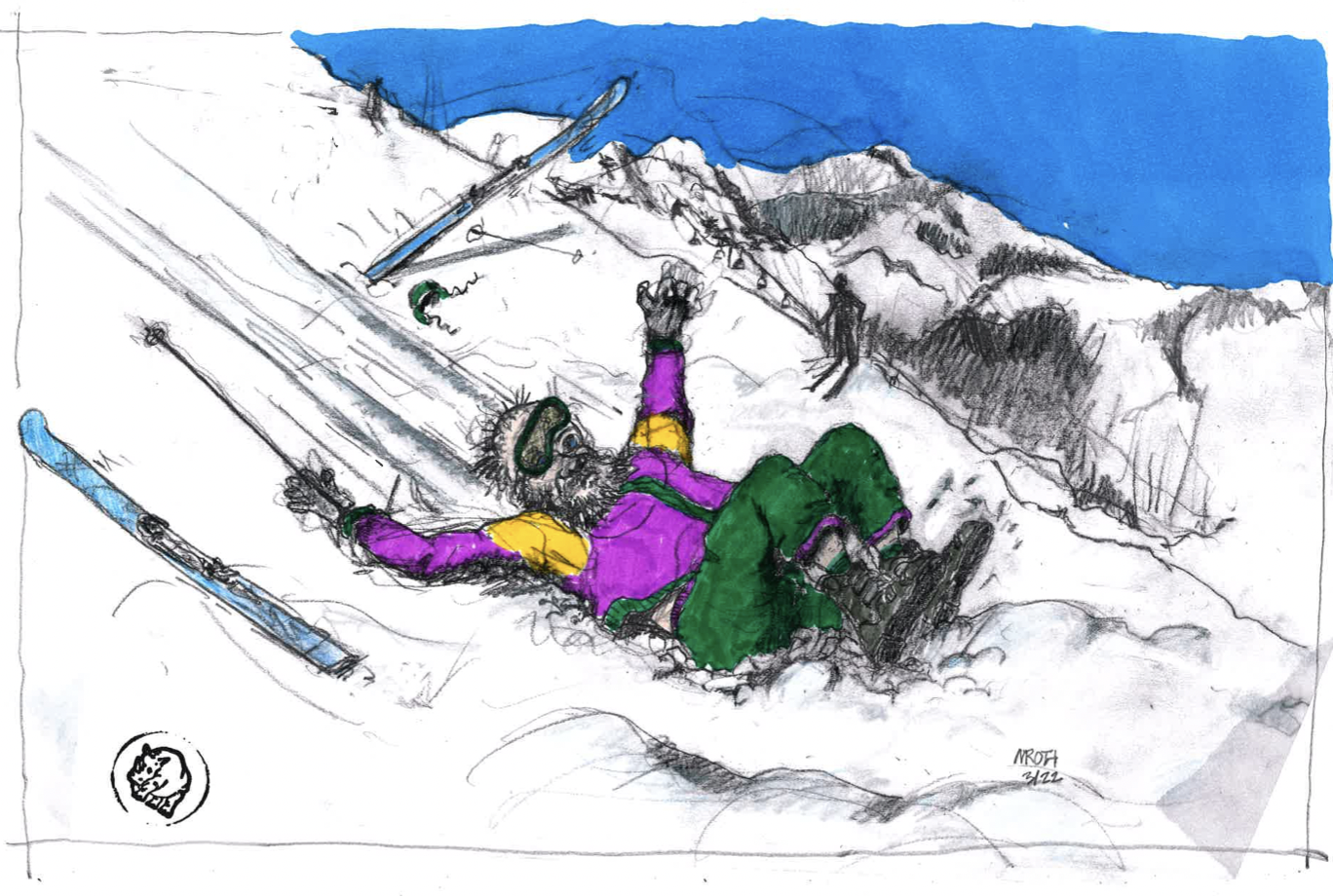
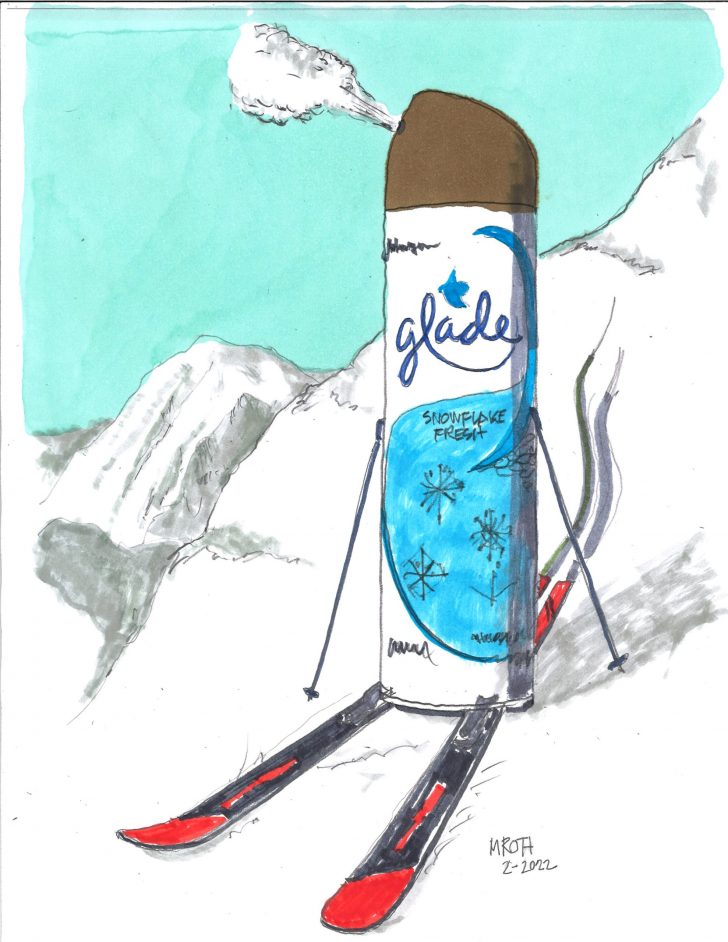
Mike Roth Sliding in Val d"sere

The Slide of My Life

Your Support Helps!

Help us keep SeniorsSkiing.com free. Please support SeniorsSkiing.com with a donation.

DONATE

1988 Val d’Isere / Tignes

After a terrific lunch, my friends and I returned to an off-piste area we had skied that morning. On a traverse across the steep slope, I slipped, lost my skis and couldn’t stop sliding. Digging my heels into the snow launched me into a forward somersault. FINALLY, I came to a stop, only to start sliding again! In all, I slid about 350 yards. Nothing broken but lots of black and blue. It was 1988, and I was much younger. Had it happened in 2022, I’m not sure I’d have survived the slide of my life.

Have a ski story of your own? Send it to jon@seniorsskiing.com. We’ll select the most entertaining to be published, along with an original Mike Roth illustration!

The Skiing Weatherman March 4, 2022

Your Support Helps!

Help us keep SeniorsSkiing.com free. Please support SeniorsSkiing.com with a donation.

DONATE

East stays stormy…snow returns to the West

This past week brought several rounds of fresh snow from Alberta Clipper systems to the northern Lakes and the higher peaks of the Northeast and as this weekend unfolds, new snow will fall over much of the West.  I spent a couple of days at Stowe, where several inches of powder piled up both Tuesday and Wednesday nights.  Conditions were outstanding, and I am happy to report that at least this Vail resort had its act together, as both lift ops and food service were close to normal.

The overall pattern has become very active the past couple of weeks, with a fight between Canadian cold and southeastern warmth causing numerous storms to rapidly cross the middle and eastern parts of the country.  The West is still quiet overall, as following the record December snowfalls have been followed by two very dry months.  But now that we have moved into March, the wavelengths of troughs and ridges tend to slowly shrink(shorten), which makes it possible for both the East and the West to be stormy at the same time. 

The first 4-5 days of this discussion period will see an upper trough dominant in the West, with a milder ridge calling the shots over the east half of the country.  Here is a jet stream forecast for Monday the 7th that illustrates…

With a strong ridge sitting just off the coast of the Pac NW, there will be a good supply of cold delivered into the West.  A storm earlier this week brought moisture to the NW, but it wasn’t cold enough to fend off relatively high snow levels…that will not be an issue this weekend.  The weekend storm will have energy in both the northern and southern branches of the jet stream, so new snow is in the cards from the Oregon Cascades all the way down to New Mexico.  This won’t be a blockbuster, but it will be most welcome, I am sure.

If you take another look at the jet stream map, you will see a broad southwesterly flow aloft from west Texas to the St. Lawrence Valley.  That is roughly the track that a low pressure center will take late this weekend, but a low that follows a couple of days later will track further south, so weekend mixed precip in the Lakes and Northeast will be followed by a round of snow about Tuesday or so. 

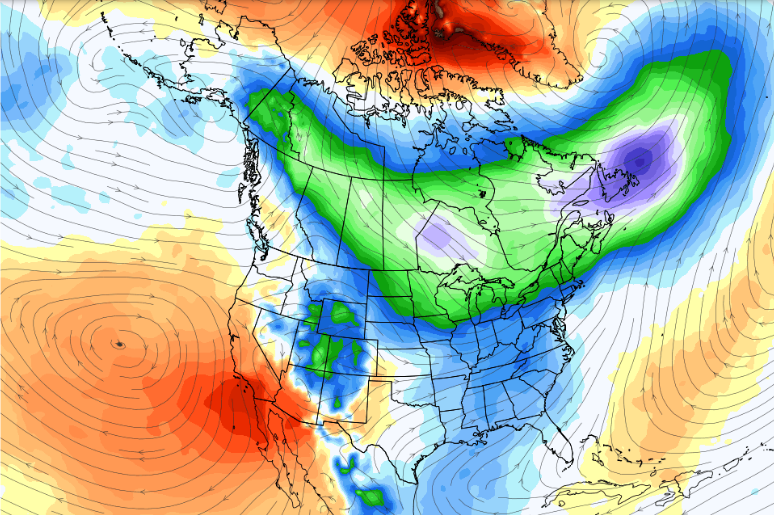
Longer term, the WPO and EPO indices that I discussed in my last installment are both headed for negative territory very soon, signaling a return to an upper trough and colder pattern dominating the eastern half of the country.  Here are Exhibits A and B… 

Exhibit A is the likely jet stream setup on the Ides of March, when a deep, chilly trough will cover the country from the Plains to the east coast.  Exhibit B is a map of the 5,000 foot temperature anomalies at that time…a proxy for surface temps.  It looks colder than normal from the Lakes to the Northeast…the southern Appalachians, too.  Right now, it looks to me that the cold pattern will hang on through the rest of March and on into April…more on that next

Northwest U.S./Western Canada:  After some early weekend snow, much of next week looks quiet, aside from a round of light snow around Wednesday.  Week Two looks active, but snow levels will be elevated.

Sierra:  Southern branch of jet brings moderate snowfall Saturday…hard to get snow into this region thereafter. 
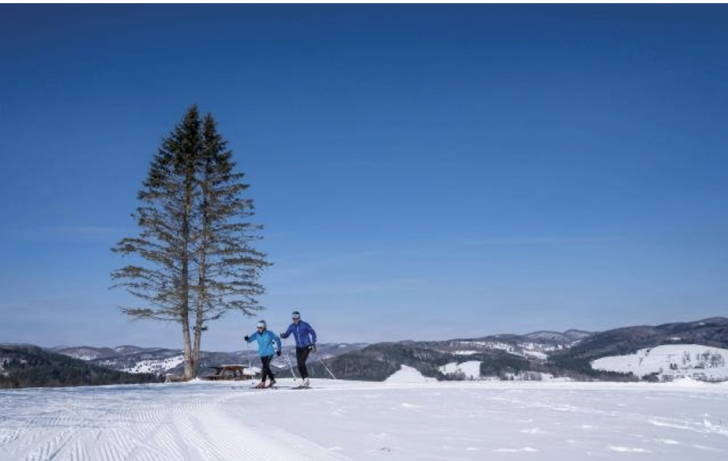
Rockies:  Light snow this weekend in the north.  Higher amounts in UT, CO, and northern NM into next week.  Quiet until the following week after that.

Midwest:  Snow this weekend in far north.  Colder pattern evolves midweek onward next week. 

Mid Atlantic/Southeast:  Warm week has been rough south of the M/D line.  Turn to colder next week should help sustain the season.

Northeast/QB:  Messy system Sunday.  Colder system Tuesday.  Colder again by later next week…prospects for snow improve after that.

Branching Out: Skiing the Trees

Your Support Helps!

Help us keep SeniorsSkiing.com free. Please support SeniorsSkiing.com with a donation.

DONATE

For many of us, skiing through the aging process means no longer going places we once skied without thinking twice. Now, approaching my 80’s, my mantra is never to overstep my capabilities and always watch out for the other guy!

Anticipate turns when skiing the trees!                                             Illustration: Mike Roth


I’ve always loved skiing in the trees and still do on occasions when conditions are right, and I’m feeling up to the task. I enjoy the silence, the natural snow, and the general absence of other skiers. But I’m always on guard avoiding the trees and their branches.

My Favorite Eastern Glades

Some of my memorable tree runs have been in the East, where I do most of my skiing.

Mount Snow’s North Face tree runs are challenging. However, the tree run on the main face to the left of “One More Time“ is a delightful intermediate. Also, at Carinthia, the trees between Mineshaft and Nitro are fun.

Killington offers plenty of tree runs, for skiers of all ages and abilities. A favorite of mine is Squeeze Play, to the right of Ramshead’s Timberline trail. It is easily handled.

My favorite at Gore Mountain is Twister Glade. Like many other gladed runs, it needs a certain amount of natural snow.

Bromley’s Avalanche Glades are fun. The area’s Everglade to the Glade is a bit easier.
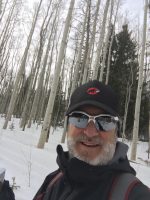
The south face of Okemo is where you’ll find Forrest Bump (cute name), Double Diamond, Outrage, and Loose Spruce. It’s on the latter that a snow snake twisted my leg.

A different take on Glade Skiing.                  Illustration: Mike Roth

Glade Skiing Rules

Here are rules I follow when skiing glades:

  • Never Ski Alone. It’s best to ski with 3 others. If one person is hurt, another can remain, while the third gets ski patrol.
  • Don’t Use Pole Straps. Catching a pole on a branch can damage arm and/or shoulder. The release mechanism on some Leki poles helps avoid the potential problem.
  • Wear Goggles and Helmet. They are essential protection when skiing trees
  • Carry a Loud Whistle. It’s advisable wherever you ski. If you get hurt or lost, a series of loud blasts will attract help.
  • Ski Within Your Ability

And a few pointers for tree-skiing:

  • Anticipate turns: Look to where you want to go between the trees and try to anticipate your next two turns
  • Make smooth rounded turns: In the woods, bumps tend to be soft, with plenty of places to set an edge

We skiers may be getting older, but, with the right attitude and a good dose of caution, we can still enjoy skiing in the trees.

Losing Control on the Green!!!!!!!

Your Support Helps!

Help us keep SeniorsSkiing.com free. Please support SeniorsSkiing.com with a donation.

DONATE

Editor’s note: Virtually all of us have amusing or near-miss skiing stories. Send in your stories and we’ll publish the most interesting…along with an original Mike Roth cartoon depicting the event.

This story is from Carole Gray of the United Kingdom:

Just under twenty years ago we invited our friend Kath on a ski holiday to La Plagne, France. In her late 50s, she had never skied before but loved it from the first. One memorable day, she lost control on a green slope. Gathering more and more speed, Kath was heading straight for a wooden hut at the bottom of the run. Poor Kath was panicking and totally unable to stop. Another friend, who had taught British soldiers to ski and survive in winter conditions, leapt into action. She was on snowblades and managed to intercept Kath just before she collided with the hut. Scary at the time, but we all laughed about it later. Remarkably this didn’t put Kath off. she decided that “at my age I don’t have enough years left to just go skiing once a year.” So she worked as a chalet maid for two seasons  in order to learn to ski as quickly as possible. Now 76, she’s a really good skier and goes 3 or 4 weeks a year.

Have a ski story of your own? Send it to jon@seniorsskiing.com. We’ll select the most entertaining to be published, along with an original Mike Roth illustration!

Can’t We Stop the Fast & Dangerous Skiers/Riders?

Your Support Helps!

Help us keep SeniorsSkiing.com free. Please support SeniorsSkiing.com with a donation.

DONATE

Source: #RideAnotherDay

In the past couple days many of you have read about two skiing tragedies: one affected multiple lives (a 5-yr old girl who was killed by an out-of-control skier), and the family she leaves behind, plus the alleged “killer,” a 40-yr old skier who has been charged by French authorities with manslaughter.   As always would love to hear your thoughts and ideas about this.

The above is horrifying to all of us, and a true example of the most disturbing  trend I’ve noticed over 30+ years: an explosion in reckless skiing and riding.  As a ski instructor I see this ALL the time, and I’m always wary of super fast skiers/riders, particularly when I’m teaching, because then I’ve got real people with me for whom I feel incredible responsibility to keep safe.

Clearly something should be done about this epidemic on our slopes.  But what?

First, I’ve made it a point to start reporting instances of too-fast, or out-of-control skiers/riders. I’ll report occurrences to either “courtesy” patrol or ski patrol, and also ask them “why don’t you position staff on green and blue runs which attract too-fast skiers, and move them off under a threat of getting their ticket pulled”?  If patrollers hear this frequently, they’ll do something – they’re first responders.

On trail signage at Park City Mountain Resort          Photo: Jon Weisberg

Second, whether I’m in a lesson teaching kids/adults, or simply free skiing myself, I take great care to constantly look uphill before starting down, to see whether or not I’ve got clearance for my next 15-30 seconds of turns.  And I’ll always wait the extra time to let fast people go by me.

In a lesson, I’ll make sure to place myself in a constantly turning series of arcs that place me between my students and faster skiers above.  I can still observe them do a skiing task, and yes, it’s risky for me, but I believe the combination of my turning back and forth, along with my students immediately below me, makes that section of trail unappealing to super-fast skiers.

It’s sad ski areas don’t do more to police the trails.  But they don’t need to…by law.  If you read the all-encompassing “waiver of liability” contained on the backs of all day ski tickets, and included as a mandatory item to read and e-sign before you’re allowed to purchase tickets/passes online, ski areas in general have zero liability for bad things that happen on their hills…it’s all part of the inherent risk of skiing.

For me, I’ve got to TELL ski area courtesy patrol, ski patrol or management when I experience a dangerous situation, especially on green/blue terrain where there’s the expectation that skier proficiency is lower; therefore the speed of guests on that terrain should be lower!  If we don’t tell responsible ski area people about dangers we witness, then we shouldn’t expect anyone to take reasonable actions.  It’s up to all of us, because no one wants to hear about an innocent skier or rider being killed by an out-of-control skier – but’s it’s happening.

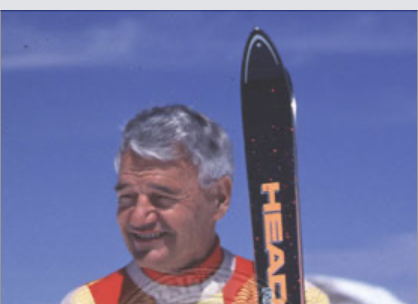
Junior Bounous

Meet 96-Year-Old Ski Legend: Junior Bounous

Ski industry icon Junior Bounous, 96, is a mover and shaker whose passion is to keep people skiing throughout their lives. In a nutshell, he tells seniors: Just “keep moving.”

Junior’s career spans nearly eight decades with a list of accomplishments and awards longer than both my arms: Intermountain cross country and national gelande jumping champion, national race course setter, ski patroller, founding member of Professional Ski Instructors of America, father of today’s American Ski Teaching System, an advisor to ski manufacturers, a ski trail designer for resorts, and the director of skiing in California and Utah including Sundance and Snowbird. In 1996, he was inducted into the National Ski Hall of Fame.

Snowbird’s Pipeline

Junior takes his own “keep moving” advice. To celebrate his 80th birthday he skied Snowbird’s treacherous Pipeline chute, a couloir lined with jagged rocks and with no room for error.

And he keeps on moving. On a bright spring day in 2021, he heli-skied from the 11,489’ Twin Peak summit, the highest point in the Little Cottonwood Canyon range, making him — at 95 years and 244 days — the Guinness World Records’ oldest heli-skier. Getting out of the helicopter was difficult because his knees don’t bend as well as they used to.  “The skiing was the easy part,” he said.

Follow the legend

A role model for seniors, Junior continues to ski for the joy of it.

A few days ago my senior ski friend Beth Tait was skiing at Alta when she saw a yellow helmet. Junior always wears a yellow helmet. As she got closer, she saw it really was Junior. He was talking with skiers around him, and she joined in. Later, Beth followed him, trying to ski as smoothly and fluidly as the 96-year-old.  “Junior is an incredibly athletic skier not to mention his heartwarming personality,” she said.

From barrel staves and manure piles to Alta and Snowbird

Junior was the youngest of six children in an Italian farming family in Provo, Utah. His first ski experience was on the farm at age 8 when he attached barrel staves to his feet and skied down a slope trying to miss the manure piles at the bottom.

Alf Engen (l) and Junior Bounous Source: J.Willard Marriott Digital Library

Fast forward to 1948, when, at age 22, he became one of the first certified instructors in Utah, and he began a long-lasting relationship with his cherished mentor, Alf Engen. For the next 10 years, Bounous was Engen’s primary assistant in Alta’s Alf Engen Ski School known worldwide for teaching students how to ski powder. His skiing and teaching careers kept accelerating.

When Snowbird was on the drawing board, founder Dick Bass recruited Junior to lay out the trails, and when it opened in 1971, he became its Ski School Director inspiring generations of skiers.

Junior’s top tips for Seniors

It’s a bird, it’s a plane, it’s Junior in the air in 1957. Photo credit: Harriet Wallis

Balance and coordination are major factors for senior skiers. “Older people have trouble with their eyes and ears, but you can extend the life of both senses if you practice,” he said.

He advises cross training. “Stay active. Do not confine yourself to just skiing. Play golf, ride a bike, take a walk. Do whatever you enjoy – but do it. It will help you get out of the bathtub, get out of the car, and go up the stairs.”

He also recommends improving balance by skiing slightly different terrain and snow conditions. Don’t get stuck skiing only on bluebird days or just on your favorite trails. “It boils down to just doing it. Stay active in as many ways as possible,” he said.

Take Junior’s advice: Just do it.

However, “Many older people drop out because they no longer have anyone to ski with. They’re physically capable, but they’ve lost the social fun of skiing. Find somebody to ski with,” he said.

Help Us Compile SeniorSkiing.com’s list of senior ski groups

To help seniors find someone to ski with, SeniorsSkiing is starting a list of senior ski groups around the country. If you know of a senior ski group, please use Leave a Reply at the end of this story. Include as much information as possible about the group.

Flat Light

BLINDED BY THE (FLAT) LIGHT: SENIOR SKIERS CAN SEE CLEARLY IN SNOW

A version of this article first appeared in 2015 in Huffington Post.

I was hardly able to move; disoriented on terrain I’d skied for years. Other skiers seemed to be managing fine. But the light was flat, and my eyes could no longer pick up contours in the white on white.

Flat light sucks.                                                       Credit: Jan Brunvand

Flat light,” a version of whiteout, greatly reduces the contrast that helps anyone on snow see where the dips and moguls are.

In extreme conditions, every skier of every age is affected, and the best way to get to where you’re going is to ski near trees, where their dark forms create visual contrast against featureless snow.

But these were not extreme conditions. Skiers and boarders were easily moving around, while I was in a featureless and confusing snowscape.

Credit: Jan Brunvand

Older skiers have older eyes. According to Dr. Jeff Pettey, Assistant Clinical Professor at the University of Utah’s John A. Moran Eye Center, all skiers eventually experience decrease in on snow contrast sensitivity. The most common culprit is cataracts, the cloudiness that forms on the eye’s lenses, causing loss of clarity and decreasing the quality of light focused on the retina. Cataracts can start forming when we’re in our 40s and 50s, though they’re more commonplace in our 60s and 70s.

Less common are processing issues related to diseases such as glaucoma and macular degeneration. They decrease the quality of the signal transmitted to the brain.

For me the eye opener was the other skiers who hardly slowed down while I was straining just to find the trail. I had been treated for age-related macular degeneration. But cataracts? A few weeks earlier, the ophthalmologist told me they were early stage. Those baby cataracts compromised what I could see in the snow!

After a minute or so of discomfort, I donned my goggles and headed down.

Getting Goggles Right

Choice of goggles and goggle lenses can make a big difference helping senior skiers with compromised vision navigate flat light conditions.

Most goggle manufacturers agree that the more light entering the lens the greater the definition and contrast. The trick is to select a lens whose color helps enhance depth perception. Amber, yelloe, rose, green and gold lenses tend to transmit more light. Photochromatic lenses, which change color under varying light conditions, can be effective.

While some industry experts recommend polarized lenses, the glare-reducing technology used in many sunglasses, others advise that in extremely flat light a little glare helps distinguish between ice and snow, making the trail more readable.

No More Fog

Regardless of light quality, fogged lenses get in the way of good vision. Having lived through many seasons of foggy goggles, I’ve explored many approaches to reducing the curse. Wipes, saliva, goggles with built in fans, products and technologies that claim to keep lenses clear under all conditions. Some work better than others, but none do a really good job.

SnowVision Rx goggles integrate prescription with inner lens

The unique SnowVision prescription goggle, virtually eliminates foggy goggles by positioning the presciption lens at a distance from the face where it remains cool, while providing a full range of vision using bi-focal or progressive lens technology.

Gee Whiz!

Some inventors have gone beyond goggle and lens with ideas that would remove the “flat” from flat light. Among them, twin laser beams projecting a contoured grid of the surface in front of the skier. The idea is to navigate, videogame-like, through the contours. Lower tech, but equally out there, is a built in spray gun system that skiers would activate to send a fine blue color onto the snow, forming the contrast needed for better visibility. Similar sprays are used to make race courses easier to read in flat light.

Artist’s concept of Earth and Sun. Credit: NASA

While lasers and sprays remain in the planning stages, Michael Barry, past-president of the National Ski Areas Association has this advice for those of us with aging eyes: Get to the mountain early and ski until early afternoon. This strategy works best for the first half of winter when light tends to flatten as the day progresses.

As the Earth’s axis shifts and daylight lengthens, pop on those rose-colored goggles and enjoy every last run.


Mt. Peg

New To Cross Country? These Nordic Centers are Great Places to Start.

If you’re among the many newcomers to XC skiing, I suggest that you take a lesson. XCSkiResorts.com recommends starting at one of the following locations:

Metropolitan Boston — Weston Ski Track, a county-owned golf course accessible by public transportation. Snowmaking guarantees good cover and lights allow for night skiing. A 75-minute session covers the basics (i.e. motion, turning and negotiating small hills). A package of rental gear, lesson, and trail access starts at $44 for kids and $64 for adults. There are well-priced multiple session packages, too.

New HampshireGreat Glen Trails, Gorham, encourages booking on line because of capacity limits in its 75-minute group lessons. Coaching goes at a pace that is comfortable for the whole group to learn gliding, stopping, and getting up (just about everyone falls on the snow when they begin skiing). The views of Mt. Washington from Great Glen Trails are astounding.

Mt. Peg at Woodstock Nordic Center

VermontTrapp Family Lodge (the Sound of Music family), Stowe, starts newcomers by teaching basic techniques which help beginners get control (e.g. kick and glide motion, using poles, and stopping).  They use soft skis, which make it easier to turn and stop. Woodstock Nordic Center, Woodstock Inn & Resort, offers a 20-minute “Mini Clinic” for first timers ona golf course behind the inn. It includes a lesson, trail pass, one hour equipment rental  for $50.

New YorkLapland Lake Vacation Center in Northville customizes the introduction to XC skiing to the skier’s level of ability. There is terrain with a wide modest downhill and a run-out to make skiers feel more comfortable.

MichiganCross Country Ski Headquarters, Roscommon, offers free lessons on weekend mornings for beginners in classic or skate skiing. Their Winter Trails Day on January 8 provides free access and a lesson with a complimentary hot cocoa and hot dog cookout for only $9.

Minnesota —   Maplelag Resort, Callaway, is a family-oriented operation that goes out of its way to make people comfortable with new adventures like XC skiing or snowshoeing so they’ll want to come back for more. Maplelag is a community-based experience and often, experienced guests provide extra attention to first time skiers.

Breckenridge Nordic Center lodge

ColoradoBreckenridge Nordic Center specializes in working with those who are first timers. The Center gives a 20% discount on group lessons booked on line. All resort staff are ambassadors who freely offer ski tips to all. As soon as the skier steps out the door, staff is available to help skiers put equipment on, review the trail map, talk about body balance, and provide other tips.

CaliforniaTahoe Donner Cross Country has low cost opportunities to help people learn basic ski skills. The $87 member price is for a group lesson package that includes rental gear, trail pass, and a 75-minute lesson or tour with an instructor.

Washington – Located in eastern Washington, Methow Trails has one of the largest trail networks in the U.S. On January 21. It hosts Free Backyard Ski Day with free access to the trails, free rental gear, and free lessons available for beginners.

XC skiing delivers physical, mental, and spiritual well-being. Spending time in a snowy landscape can be magical. Do yourself a favor and give it a try.

skier on stilts

Test Your Skiing Knowledge

skier on stilts

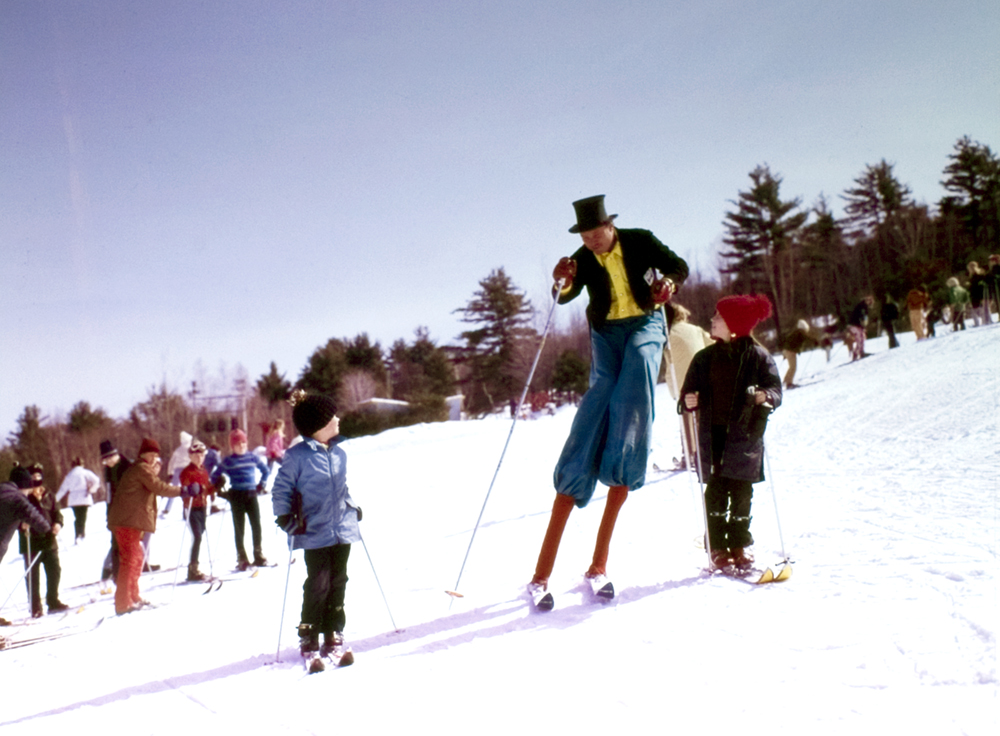
Each issue of SeniorsSkiing.com has a picture to help test your skiing knowledge. The pictures are from collections in a variety of participating ski museums, which we encourage readers to visit.

This big time skier was hardly stilted when it came to skiing or to publicity stunts. He was ski school director of the ski school of a New England area which has since changed names. The New England Ski Museum submitted the image for Test Your Skiing Knowledge.

Be the first to identify both the stilted skier AND the name of the ski area (before its name change) and receive a one-year membership to Outside+ ($79.00 value) with access to this season’s Warren Miller film, Winter Starts Now, plus two annual print subscriptions to your choice of SKI magazine, Outside, Backpacker, BETA MTB & more; access to extended gear reviews and instructional video from SKI from bumps to backcountry courses; Gaia GPS Premium access to thousands of maps and backcountry navigation recommendations; member-only content on all 18 sites in the Outside network, and full access to OutsideTV premium adventure films & series. Only answers sent to jon@seniorsskiing.com will qualify. Please do not submit your answer to Comments.

The correct answer and the name of the winner will appear in the next issue of SeniorsSkiing.com.

The winner of the last Test Your Skiing Knowledge  is Kay Geitner of Centennial, Colorado. She correctly identified the ski jumper as Alan Engen, past diector of  skiing at Alta and currently a member of SeniorSkiing.com’s Advisory Council. Kay taught at her home resort, Copper Mountain, for 28 years. She was the first American woman to graduate with the National Diplome from Ecole National de Ski and Alpinisme in Chamonix France. She represented the Pacific Northwest Ski Association at the US Junior Nationals and for five years represented Washington State at the Western States American Legion Championship in Sun Valley. Kay reports she’s been a SeniorsSkiing.com subscriber since we started in 2014. She wins a free pair of EZFIT Universal Insoles from Masterfit (retail value: $44.95).


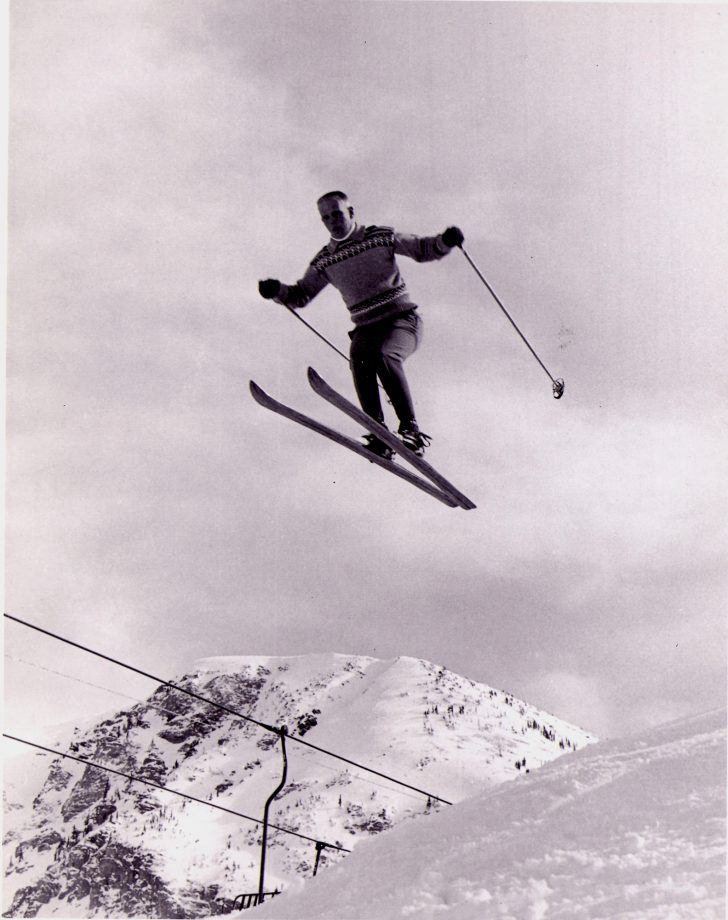
Alan Engen - Gelande at Alta circa 1961-1

Test Your Skiing Knowledge

Each issue of SeniorsSkiing.com has a picture to help test your skiing knowledge. The pictures are from collections in a variety of participating ski museums, which we encourage you to visit and to support.

Who is this Utah living ski legend?

This image was submitted by the Alf Engen Ski Museum, located in Park City, Utah. The museum is dedicated to preserving the rich history of skiing in the Intermountain region. Its extensive collections and interactive exhibits make it an innovative leader among the world’s ski museums.

The jumper in this image is well-known in many ski circles. A member of one of America’s best-known skiing families, he was an active Nordic and Alpine competitor, ski school director of one of Utah’s premier resorts, and the author of a few books on skiing. What is his name? If you know or want to take a guess, send your answer to jon@seniorsskiing.com. The first person to correctly identify this living skiing legend will receive a free pair of EZFIT Universal Insoles from Masterfit (retail value: $44.95).

The correct answer and the name of the winner will appear in the next issue of SeniorsSkiing.com.

The winner of the last Test Your Skiing Knowledge (several others had the correct answer but were not the first to submit it) is Charlie Sanders of Briarcliff Manor, NY. He correctly identified the site in the image as White Sands National Monument in New Mexico. Charlie has impressive ski history credentials. He is the author of “Boys of Winter: The US 10th Mt Division in WWII.”  His article,“Sunshine On My Shoulders: The History of Ski Music, appears in the current issue of Skiing History magazine. Charlie also serves on the boards of the International Skiing History Association and the US Skiing and Snowboarding Hall of Fame. His prize is Arcadia Publishing’s book, Skiing in New Mexico. Several readers sent their answers to “Comments.” When submitting a Test Your Skiing Knowledge response, please email to jon@seniorsskiing.com.

mystery picture

Test Your Skiing Knowledge

mystery picture

Each issue of SeniorsSkiing.com will have a picture to help you test your skiing knowledge. The pictures are from collections in a variety of participating ski museums, which we encourage you to visit and to support. 

This image was submitted by The New England Ski Museum, a non-profit based in New Hampshire with locations at the base of the Cannon Mountain Tramway and in downtown North Conway. In addition to an extensive collection of objects, the museum issues a substantial publication with articles on ski history and content from museum exhibits. More about the museum and its most wonderful shop at www.newenglandskimuseum.org,

The man in the picture is known to each of us but not in the context of skiing. If you can identify him, send me a note (jon@seniorsskiing.com). For the person sending the first correct answer, we’ll purchase a membership in The New England Ski Museum. The correct answer and the name of the winner will appear in the next issue of SeniorsSkiing.com.

Should You Teach Your Munchkins To Ski?

[Editor Note: From time to time, SeniorsSkiing.com re-publishes an article from its archive.  Here’s one from Harriet Wallis about teaching your grandkids to ski from way back in 2014. Comments welcome.]

Five Non-Obvious Tips For Making Learning Fun For All.

Because you love to ski or ride, you probably hope that your grandkids will also share your passion for the snow.  Here are some ideas to get things off to a good start if you plan to teach them yourself.

How about those smiles? Credit: Harriet Wallis

How about those smiles?
Credit: Harriet Wallis

Look for deals. Some resorts offer free or low cost tickets for youngsters. A cheapo ticket can take the financial pressure off you, especially if the day’s weather is iffy, or if your grandkids are in town only for a short, gotta-teach-them-to-ski-right-now visit.

Start on flat ground. “A child will not miraculously assume a balanced stance on the beginner hill,” says Jo Garuccio, a Snowbird, UT, instructor and PSIA trainer and examiner. “Children should have some prerequisite sliding time at the bottom of the slope.

“It’s imperative that the child stand and slide independently on a flat surface before giving the child a downhill experience,” she says. “Initially, the terrain should be flat enough so that the child can go straight, lose momentum and stop.”

My friend Larry Green did just that with his granddaughter. He gave little Yoella her first sliding experience on virtually flat snow. “She loved it, and she egged me to pull her up that slight slope again—and again— and again—so that she could slide down. I even used my old snow skates to make it easy for me to maneuver with her. But I’m exhausted,” he said. “That three-year-old totally wore me out!”

Cool kids. Pediatric journals say that children heat and cool differently than adults.  Their bodies cool off faster than adults because they have proportionately more outer skin surface in relation to their body size.  So even though you have them bundled up—and you might be comfy—when kids say they’re cold, it’s time for a hot cocoa in the lodge.

Edgie-Wedgie keeps ski tips from wandering Credit: Amazon

Edgie-Wedgie keeps ski tips from wandering
Credit: Amazon

Gizmos. The snow sports industry offers a variety of devices such as harnesses, leashes and Edgie Wedgie tip clamps. “But aids are not a substitute for skill,” says Garrucio. “Don’t take your child on to high level terrain with tip clamps or leashes. Stay on easy green or very light blue slopes.”

Stifle your own expectations. Be sure to make it fun for the kids, says Mary Whittke, retired ski school director of Brighton Resort, UT. Even if your grandchild is super coordinated and athletic, put your own expectations aside. Kids don’t instantly morph into Olympic champions just because you love the sport. Give them little tips, but back off from the overkill of teaching, teaching, teaching. Help them have fun on the snow.

There’s a warning that comes with teaching your grandkids to ski or ride. Kids catch on and progress so rapidly that they’ll ski and ride compatibly with you for only 15 minutes of their lives. After that, they leave you behind. But maybe that’s okay.

Would you teach your grandkids to ski or ride?  What’s your advice?

Master’s Clinic: Fabulous Idea For Senior Skiers

The Secret To Breaking Decades-old Bad Habits: Attending A Master’s Clinic At Dodge Ridge.

Jon Mahanna, creator of the Master’s Clinics, has class members follow his every move down the slopes. Credit: Dodge Ridge

Jon Mahanna, creator of the Master’s Clinics, has class members follow his every move down the slopes.
Credit: Dodge Ridge

I hadn’t skied at Dodge Ridge, the closest ski area to the San Francisco Bay Area, in years. But as soon as I arrived at the base area a couple of Thursdays ago for one of its Master’s Clinics, a four-hour-long freeski instructional program designed for intermediate and advanced skiers over 50 years of age, the memories flooded back. It was the first place I had ever put skis to slopes back in the ’50s, unwittingly grabbing on to a rope tow and finding my 12-year-old self being flung into the nearest snowbank. In the ’60s, it was the area my friends and I headed to when classes were over for the day at San Jose State College, taking a hit of blackberry brandy from our bota bags each time we headed down the rudimentarily “groomed” slopes on our brakeless wooden skis with bear-trap bindings and with long leather straps bound around our leather boots.

Now a saner, much older me was back to do things right! My friends and I were going to get this ski season headed in the right direction: by letting a seniors-certified PSIA instructor spend a few hours with us, helping us to break bad habits we’d acquired over the years and showing us how to adapt our skiing styles to today’s more-efficient shaped skis.

We met up with our group of nine other fellow seniors, ranging in age from 58 to 79, at the base promptly at 10 AM and headed up the mountain to do a ski-off for our two instructors: Bryan Jarratt, 61, an Aussie who’s been with the resort for 15 years, and Jenny Matkin, 64, who has deep roots in the region and has been teaching for decades. As we all did our “exhibition” run down the hill, I could instantly tell when my fellow participants had learned to ski. Yep, those two guys standing tall and stately over their skis with their ankles seemingly tied together were from the Arlberg “reverse-shoulder” method days. And that guy making the quick turns probably learned during the “short skis” phase. Our instructors split us into two groups, those itching for some “black diamond, off-piste” skiing and we more-timid ones who still had some cobwebs to dust off our skis before going full-out.

After three-and-a-half hours of skiing with frequent instructional breaks, we learned at least four or five specific things from Jenny that we could take away and work on the rest of the season in order to ski with much more ease and efficiency and not be exhausted after a full day of skiing.

DodgeRidge3A

Dodge Ridge’s Jon Mahanna saw the need to help senior skiers adapt to the new, shaped skis. “Let the skis do the work,” he says. Courtesy of Jon Mahanna

Jon Mahanna, 68, explains the strategy behind the Master’s Clinics best. He, along with Dodge Ridge’s current owners, Frank and Sally Helm, came up with the concept three years ago. Jon had been Dodge Ridge’s ski school director for 15 years in the ’80s and ’90s, and after serving in various capacities at ski areas in Colorado, New Mexico, and back in California, the “retired” Mahanna saw a need for older skiers, Level 5 and higher, to improve their skiing technique, especially with the advent of all the new equipment. Says Mahanna, “I saw that a lot of older skiers, especially those returning to the sport, needed to work on creating a balanced, ‘stacked’ stance so that there’s the least amount of resistance on their skeletal frame and muscle groups. This open, athletic stance gives them better lateral stability and is easier on their knees and backs. Balance is the key to everything.”

The instruction focuses on medium-radius turns on groomed slopes. “The modern equipment out there lets you stand there and go for the ride while you let the skis do the work,” avows Mahanna. “The idea is to have fun and to be able to ski all day, where your knees and muscles don’t give out on you.”

When we all met up at the lodge afterwards for lunch (which is included in the clinic package), the participants, to a person, were Master’s Clinic converts, and most were planning to sign up for more. One of them, Ralph Purdy, 75, happened to be the son of Dodge Ridge founder Earl Purdy, who opened the resort back in 1950. Said Purdy, “This is the first lesson I’ve had in many years. I thought that there’s gotta be something I’m missing. I saw this as a drill, and today I learned about unweighting and keeping my legs apart a little.” Another clinic attendee, Mark Sahines, 58, skied a lot in his 20s and 30s, then kids and work put skiing on a back burner. “I want to get to an advanced level, and my goal is to be skiing at 75 or 80. A lot of the guys older than me in today’s class ski a lot better than I do. Today I learned to do a hockey stop, something I could never do before.” My friends, Jim, 65, and Kathy, 70, Clarke, have a cabin near Dodge and are season ticket holders. They’ll definitely be back for more Master’s Clinics. Kathy called her teacher “one of the best” and appreciated Jenny’s focus on older skiers and the different techniques required with the new equipment. Jim shared that “every year I fret about being ‘ready’ to hit the slopes. Will my legs hold up? Will my funky right knee start giving me problems? Jenny, our wonderful instructor, brought my focus back to the skills and techniques needed to get the most out of my fancy, red shaped skis. By the end of our class, I was able to remember and use several of Jenny’s methods for getting the most out of my skis. In the end, there’s no reason I can’t learn this stuff if I keep a positive attitude, pay attention, and practice, practice, practice.”

To learn more about Dodge Ridge’s Master’s Clinic program or sign up for one of its Thursday or Sunday clinics, click here.  Tell them Rose Marie sent you! And if you love uncrowded slopes, sign up for a Thursday clinic.

[Editor Note:  SeniorsSkiing.com salutes Dodge Ridge and Jon Mahanna for creating a program focused on helping seniors optimize their technique and continuing to enjoy skiing.  If you, our readers, think this is a good idea, please forward a link with this story to your local ski area to show them how easy it is to support seniors skiing.  Or, if you’re in the Bay Area, enroll in Dodge Ridge’s Masters’s Clinic. We hope to see the idea of focused events for seniors—especially mid-week— growing in the ski resort industry.]

SeniorsSkiing Guide: Alta, Skiers’ Paradise

Alta is all about open slopes and big vistas. Here is Big Dipper, a beautiful "blue" level run. Credit: Harriet Wallis

Alta is all about open slopes and big vistas. Here is Big Dipper, a beautiful “blue” level run.
Credit: Harriet Wallis

It’s Vast Open Space And Powder.

Alta is the granddaddy of powder skiing. It averages 500 inches of snow a year which earns it the nickname: Skiers’ Paradise. It has wide, wide open bowls with groomed trails, but everywhere you look slopes are left au natural and full of powder. That’s ample for most senior skiers. But it also has tough, gnarly in-bounds chutes and cols that can only be reached by serious hikes.

As the day begins. Come early and park at the Albion Grill day lodge that’s just steps from your car. The sun pours in making it a cheery gathering place, and it’s the first place where seniors meet. They enjoy conversation as they boot up and fuel up with a hearty breakfast. Introduce yourself, and you’ll have instant ski friends.

Why does Alta have such wide open skiing? Ancient glaciers carved Alta. Fast forward to the days of pioneers and silver miners. They cut down the trees and hauled off the timber to shore up the mines and to build early Salt Lake City. The only thing left was stubble, and hungry sheep overgrazed it right down to the ground. Alta was a wasteland.

The U.S. Forest Service had domain over the vast area but had no clue what to do with it. That’s when it hired iconic ski jumper and legendary ski pioneer Alf Engen to check it out and see if the area had any value. Engen envisioned it as perfect for skiing – and Alta was born

Alta skiers, and especially senior skiers, are avid about the uniquely vast terrain with its wide open slopes. Watch this 95 year old senior ski Alta.

Lunch time. After a few laps on Supreme and Sugarloaf lifts, drop into Alf’s mid-mountain restaurant about 11 a.m. That’s when members of Alta’s Wild Old Bunch gather at the restaurant’s only round table. They’ll be having coffee or lunch and exchanging notes on their morning of skiing. It’s the second place where you can make more senior friends.

Buy a hot beverage at Alf’s and enjoy a free refill. My personal favorite is hot chocolate topped with a mound of whipped cream.

While at Alf’s, go to the farthest corner,  and you’ll find fascinating photos of Alta’s past.

What else can I do?  Alta has extensive rentals and demos, so check out some of the latest gear, especially if it’s a powder day.

On weekends and holidays meet trained naturalists at 1:30 p.m. at the top of the Sunnyside lift and take a tour to learn about the area’s environment, animals, and history. A Tour With a Ranger will not disappoint.

SeniorsSkiing.com's correspondent Harriet Wallis and friend have a cuppa java at the end of the day. Credit: Harriet Wallis

SeniorsSkiing.com’s correspondent Harriet Wallis and friend have a cuppa java at the end of the day.
Credit: Harriet Wallis

Wrap up the day with a specialty brew at Alta Java, an outdoor coffee bar at snow level just beneath the Albion Grill where you started.

I want to stay. Alta is within a national forest, so there are no shopping centers or high rise hotels. There are several lovely slopeside hotels that blend into the landscape and are scarcely noticeable. But book early if you want to stay there because they’re very popular.

Evening activities include fireside history talks and other local events. Alta is eat, sleep, ski. Repeat.

Bare bones facts.

1) Skiers only. Alta does not allow snowboards. 

2) Convenient. Alta is just 45 minutes from Salt Lake City International Airport. If you stay in the city you can take a frequent UTA ski bus to the mountain.

3) Stats. 2,200 acres, 116 named runs, 7 chair lifts, and a surface rope tow that’s a hoot. You can ride both directions across the flat base area. Of course you don’t need to use it because you can ski all around the mountain. But it’s a novelty that you’ll find only at Alta.

4) Eat. Mid-mountain and base area restaurants.

5) Orion and the dippers. Enjoy the stars in the night sky because there are no interfering lights.

6) The Wild Old Bunch. If you missed Alta’s senior skiers at lunch, join them at Sweet Tomatoes, a soup and salad buffet restaurant on Union Park Avenue in Midvale. They gather every Wednesday night year round for dinner and conversation.

Bottom Line:

Alta has a $699 season pass for 65 to 79.  It’s $50 for 80 plus.  During the season, there are no senior discounts, but you can get reduced prices online, especially if you buy four days ahead of your visit.  Weekdays passes can be bought for about $73 online if you plan ahead, otherwise it’s about $89.  Multi-day discounts are also offered, the more days you buy, the lower the per day rate.  See the Alta website for details.

Alta Trail Map

Another view of Big Dipper. Alta is known as "Skier's Paradise". Credit: Harriet Wallis

Another view of Big Dipper. Alta is known as “Skiers’ Paradise”.
Credit: Harriet Wallis

Online Ski Tickets Equal Big Discounts

Buy Before You Go And Save.

Bargains are out there if you look. Credit: SaratogaSkier

Bargains are out there if you look.
Credit: SaratogaSkier

We’ve just discovered GetSkiTickets.com, an online marketplace for advance purchases of discounted lift tickets, lessons, rentals, group lift tickets and season passes. The service is designed for people who know the specific dates they’ll be using the passes.

GetSkiTicks

Here’s a new online way to get discounted ski tickets. Credit: GetSkiTickets.com

Prices tend to be lower when purchased farthest in advance, somewhat like your airline tickets.

Purchasers receive an email confirmation, print out the voucher and present it at the ticket office with a photo ID. The ticket office exchanges ticket(s) for the voucher. Starting this season, the vouchers can be implemented via smart phone and tablet.

The group has 50 US and Canadian resorts participating for 2015-16, some with special rates for seniors.

According to Brandon Quinn, who started the business in 2008 with wife Heather, GetSkiTickets.com doubled in growth last season. While he, understandably, won’t give out sales figures, the reasons for growth are evident: discounted tickets, seeing available pricing options on a single screen, and ease of purchase.

GetSkiTickets.com is easy to navigate and understand. Select your dates, and the cost appears in an oval window with the amount to be saved shown below in red. Participating resorts are listed by state, and each resort shows snowfall for last 48 hours.

Resorts also may offer discounted advance purchase tickets on their own sites, so it’s worth checking that option, as well— similar to what many travellers do when booking air travel and hotels.

Other places to to visit:

GetSkiTickets.com’s larger rival Liftopia.com which also lets skiers buy in advance at 250 ski areas in North America as well as international destinations.  

SkiForFree.com specializes in bargains at California ski resorts.  

SlidingOnTheCheap.com has a wide range of discounts in areas from famous to obscure.

Every skier knows that simply getting to the mountain can be a hassle. Visiting an online discount aggregator can remove some of the aggravation.

Anyone know about other sites that offer discounted ski passes?

Women Only Skis and Boards? Yes, Says Coalition Snow

Coalition Snow Fills Women’s Needs For Quality Equipment.

Coalition Snow has skis and boards for women only. Credit: Coalition Snow

Coalition Snow has skis and boards for women only.
Credit: Coalition Snow

Last spring, we’ve were impressed by Coalition Snow’s CEO Jen Gurecki when she talked with our friend The Ski Diva about her line of ski and boards for women only.  She recognized a niche market, defined a set of unique needs, and she put together products that are based on research. Now her challenge was getting the word out.

Last week, Jen won an entrepreneurial competition at the Nevada Governor’s Business Conference.  Her message was strong and simple:  There are a lot of women out there  (eight million) who spend a lot of money ($1-billion) on snow sports.  But their needs are not being met.  Instead of watered-down versions of men’s equipment, Jen has designed skis and boards “that don’t suck”.  She’s made a lot of progress in promoting her company since last spring; her Kick Starter campaign raised $31,000 in 31 days.

Check out her company’s elevator pitch.  Pretty sharp.  Makes us wonder:  We know there are senior-friendly ski boots and bindings.  Is there a need for senior-only skis and boards?  Your thoughts?

Exercise And Weight Control: Think Again


The Key To Weight Loss Revealed.  And It’s Not Exercise.

We know that senior snow enthusiasts are also cyclists, hikers, kayakers, golfers, sailors, tennis players and more, engaging in lots of non-snow physical activities.  Some of you might be motivated to keep your activity level up by a desire to control your weight.  Gaining weight is an artifact of aging as metabolism slows down.  Curiously, this article by Aaron E. Carroll in a recent New York Times describes exercise as contributing less than we think to weight loss.  In fact, Carroll points to studies that show exercise makes no difference in weight loss.  While exercise does have many, many physical benefits on cardio health, diabetes control, pulmonary disease and the like, the true key to weight control is…eat less.

Here’s the article.  What do you think?

Diet

Adieu Winter 2014-15: Shifting To The Non-Snow Season

SeniorsSkiing.com Will Be Publishing This Summer.

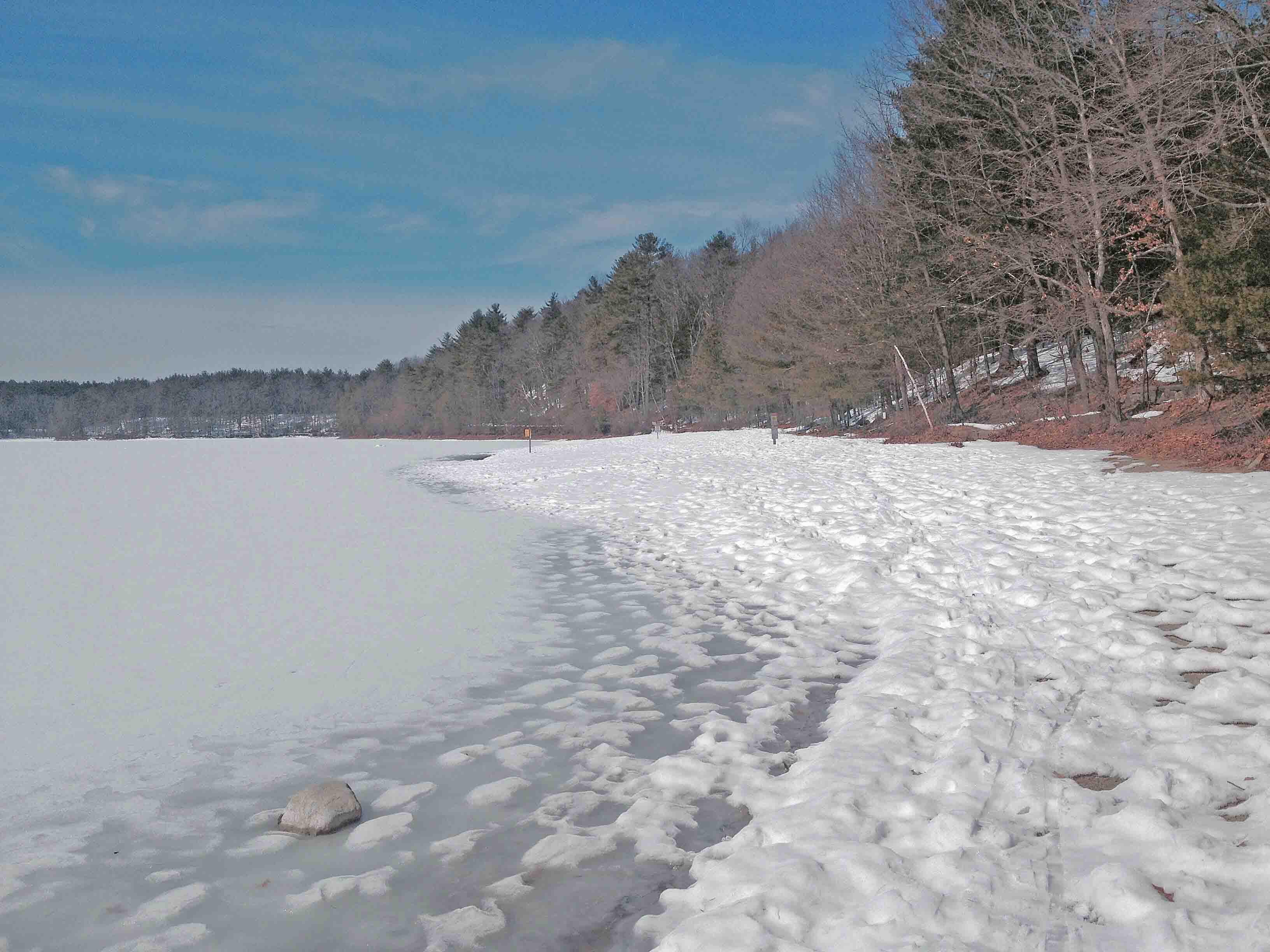
One of our best ski tours of the season came at the beginning of April at Walden Pond.  We go there occasionally throughout the year to reflect on the messages of Henry Thoreau and to take a picture or two of the “pleasant hillside” where he built his tiny cabin.  When we skied in, the trails along the ridges surrounding the pond were chopped up and icy, so we scooted around the snow-covered ice on the edges, thinking that Henry probably walked this way when the snow at Walden got too thick. It’s a short ski, maybe three miles around, but it was a beautiful spring day, we were pretty much the only ones there, and the spirits were a-rising, so to speak.  There’s more to be told about skiing at Walden, and we will have to save that for next season.

Early spring ski tour on a quiet day around Walden Pond.  Priceless. Credit: Mike Maginn

Early spring ski tour on a quiet day around Walden Pond. Priceless.
Credit: Mike Maginn

Based on the responses from Subscriber Survey 2015, we learned that you, our readers, are interested in fitness and product ideas for seniors.  As we move through the summer months, we and our correspondents will be offering both of those topics—as well as whatever pops up—in the spirit of keeping in touch with you, our active and engaged readers.  Please note that we will be starting our online Forum very shortly—another major recommendation from the survey—so you can more readily talk back to us and your fellow snow sport enthusiasts.

Two requests:  Tell your friends about SeniorsSkiing.com. And please watch for our Forum, coming soon.

Let the non-snow season at SeniorsSkiing.com begin!

Serious Stuff: There Is No Such Thing As “Side Country”

And There Is No Such Thing As Being A Little Bit Dead.

Back country warnings are there for a reason. Credit: Harriet Wallis

Back country warnings are there for a reason.
Credit: Harriet Wallis

Yesterday we rode the chairlift with a bozo. Okay. Maybe he wasn’t a bozo. Maybe he was just clueless. All the way up he yapped about his skiing prowess. And near the top he phoned home to give his wife his location. “She worries about me,” he said.

She should worry. He planned to duck under the boundary rope and make some turns in the deep, unspoiled powder beyond.

“Take your avy gear,” we said.

“Don’t need it. It’s in the car. I’m just doing side country,” he said.

Somehow he missed hearing that there is no such thing as side country.

The term “side country” hit the scene a few years ago, and it was quickly squelched by the ski industry’s leading avalanche experts, snow science experts, the U.S. Forest Service, ski area risk managers, mountain patrollers and others. It was likely a marketing brainchild used to promote the newest boots and powder-specific skis and boards.

The term had obvious appeal to intermediate and advanced skiers and riders. They could buy the latest gear and try their skills beyond the rope line thinking it would be okay. They could be a little bit naughty.

But the ski industry took a stance saying you’re either within a resort or else you’re in the unmonitored, ruthless back country. You’re either in bounds or you’re out of bounds. There’s nothing in between. There is no such thing as side country. There is no such thing as “kinda” out of bounds.

“We all must focus on educating skiers and snowboarders that backcountry terrain accessed from a ski lift has the same risks as any other back country or out-of-bounds area,” says the National Ski Area Association.

Later in the day I caught the TV news. A skier died after being caught in an avalanche. The avalanche occurred in the very out of bounds area where a guy— with too much macho and too little knowledge—went to ski. There’s no such thing as side country.

There’s no such thing as being a little bit dead.