Flat Light

BLINDED BY THE (FLAT) LIGHT: SENIOR SKIERS CAN SEE CLEARLY IN SNOW

A version of this article first appeared in 2015 in Huffington Post.

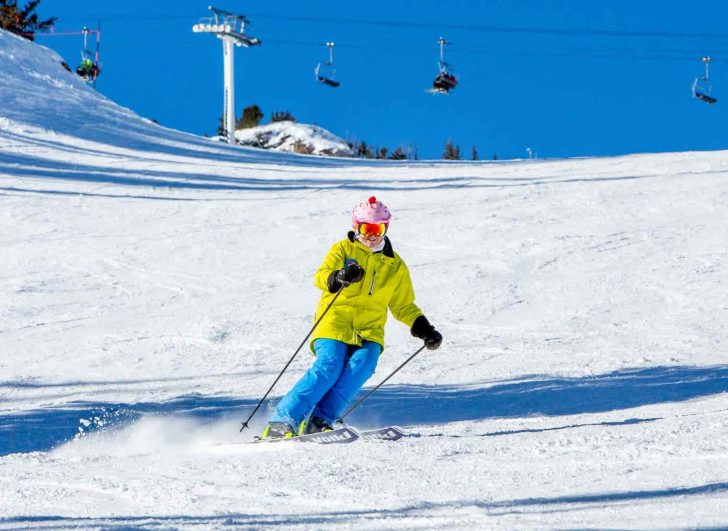
I was hardly able to move; disoriented on terrain I’d skied for years. Other skiers seemed to be managing fine. But the light was flat, and my eyes could no longer pick up contours in the white on white.

Flat light sucks.                                                       Credit: Jan Brunvand

Flat light,” a version of whiteout, greatly reduces the contrast that helps anyone on snow see where the dips and moguls are.

In extreme conditions, every skier of every age is affected, and the best way to get to where you’re going is to ski near trees, where their dark forms create visual contrast against featureless snow.

But these were not extreme conditions. Skiers and boarders were easily moving around, while I was in a featureless and confusing snowscape.

Credit: Jan Brunvand

Older skiers have older eyes. According to Dr. Jeff Pettey, Assistant Clinical Professor at the University of Utah’s John A. Moran Eye Center, all skiers eventually experience decrease in on snow contrast sensitivity. The most common culprit is cataracts, the cloudiness that forms on the eye’s lenses, causing loss of clarity and decreasing the quality of light focused on the retina. Cataracts can start forming when we’re in our 40s and 50s, though they’re more commonplace in our 60s and 70s.

Less common are processing issues related to diseases such as glaucoma and macular degeneration. They decrease the quality of the signal transmitted to the brain.

For me the eye opener was the other skiers who hardly slowed down while I was straining just to find the trail. I had been treated for age-related macular degeneration. But cataracts? A few weeks earlier, the ophthalmologist told me they were early stage. Those baby cataracts compromised what I could see in the snow!

After a minute or so of discomfort, I donned my goggles and headed down.

Getting Goggles Right

Choice of goggles and goggle lenses can make a big difference helping senior skiers with compromised vision navigate flat light conditions.

Most goggle manufacturers agree that the more light entering the lens the greater the definition and contrast. The trick is to select a lens whose color helps enhance depth perception. Amber, yelloe, rose, green and gold lenses tend to transmit more light. Photochromatic lenses, which change color under varying light conditions, can be effective.

While some industry experts recommend polarized lenses, the glare-reducing technology used in many sunglasses, others advise that in extremely flat light a little glare helps distinguish between ice and snow, making the trail more readable.

No More Fog

Regardless of light quality, fogged lenses get in the way of good vision. Having lived through many seasons of foggy goggles, I’ve explored many approaches to reducing the curse. Wipes, saliva, goggles with built in fans, products and technologies that claim to keep lenses clear under all conditions. Some work better than others, but none do a really good job.

SnowVision Rx goggles integrate prescription with inner lens

The unique SnowVision prescription goggle, virtually eliminates foggy goggles by positioning the presciption lens at a distance from the face where it remains cool, while providing a full range of vision using bi-focal or progressive lens technology.

Gee Whiz!

Some inventors have gone beyond goggle and lens with ideas that would remove the “flat” from flat light. Among them, twin laser beams projecting a contoured grid of the surface in front of the skier. The idea is to navigate, videogame-like, through the contours. Lower tech, but equally out there, is a built in spray gun system that skiers would activate to send a fine blue color onto the snow, forming the contrast needed for better visibility. Similar sprays are used to make race courses easier to read in flat light.

Artist’s concept of Earth and Sun. Credit: NASA

While lasers and sprays remain in the planning stages, Michael Barry, past-president of the National Ski Areas Association has this advice for those of us with aging eyes: Get to the mountain early and ski until early afternoon. This strategy works best for the first half of winter when light tends to flatten as the day progresses.

As the Earth’s axis shifts and daylight lengthens, pop on those rose-colored goggles and enjoy every last run.
 

Is A Hip Replacement In Your Future?

Here Are Some Tips From A Two-Hip Skier.

Here’s Harriet. Two new knees, two new hips. When it comes to joint replacement, she knows what she is talking about. Credit: Courtesy of Alta

Your decision to replace any body part is a serious decision. Unlike a purchase from a retail store, you cannot return an implant!

But when your “original equipment” wears out, it’s time to have it replaced. Overall, we’re living longer, we’re living healthier, and we want to enjoy life—and ski.

As background, I have two artificial hips, two artificial knees, and I skied 78 days during this last winter before resorts closed because of the Covid virus. Artificial hips and knees work really well.

Here are some tips if you’re considering new hips.

Choose your surgeon carefully. Your future depends on it. Pay the cost of visits to several surgeons. Those visits will help you choose the right one for you.

1. Ask hip questions

Here’s the list of questions I asked each surgeon. I printed a sheet for each surgeon and I wrote down their answers so I’d remember what each one said. Unexpectedly, their answers were quite different. Print out these question and bring them with you to each visit.

  • Do I need a hip replacement?
  • How many hips do you replace a week?  A year?
  • Do you do the surgery or does someone else do it?
  • Do you do anterior or traditional cut? Why?
  • GPS guided? Robotic? Manual?
  • What kind of anesthesia? Why?
  •  What brand of implant do you use?
  • Metal or ceramic?
  • Glue? What kind? Why?
  • Bone density. What if my bones aren’t good when you get in there?
  • Do you resurface instead of replace? Why?
  • How long in hospital?
  • Will I need help when discharged?
  • What kind of PT do you recommend?
  • Can I ski?
  • Why should I choose you?

2. Do a visual check

Are the surgeon’s shoes clean and polished? How’s the hair? It’s a quick measure of how well the surgeon values him/herself. Neat and clean is a good sign. Think twice if s/he’s scruffy.

3. Find out if he’s/she’s athletic.

A surgeon who is physically active will understand your need to keep your active lifestyle and ski. If she or he’s a golfer, plays tennis, bikes, water skis or is active in some sport, she or he’ll identify with your need to keep your body in motion.

Personal note, funny story:

I met with a noted—but fat—surgeon, and I asked: “Do you ski?”

He replied, “No, but I own a house at the resort!” And he said I should give up skiing. I eliminated him from my pool of possible surgeons.

Get your X-rays on a disc

Be prepared. Take the disc of X-rays with you each time you visit a surgeon so they don’t have to take new X-rays. Surgeons might be in different networks and therefore not have access to your X-rays. Or, even if they’re in the same network, the computer system might be down that day.

Before surgery, plan ahead for PT

Visit some physical therapy studios, ask about their rehab for hip replacement, and decide where you want to work out. Do that homework before surgery.

Personal note: When I came home, I did the prescribed home exercises exactly as I should. But the exercises got easy and I stopped making progress.  I was glad I’d checked out PT studios and switched to one with electronic equipment, gym-type equipment and a heartier workout. Recovery came quickly.

After surgery

Expect to start moving right away. Expect to be walking the day after surgery, and expect to have in-hospital physical therapy.

Personal note: I was in the hospital for a couple days and I progressed quickly. The PT studio stairs became too easy, so the PT therapist took me to the hospital stairwell for greater challenge and practice. On a nice day, we went outside and walked around the entire building.

Shoes and boots

Your new metal hip might like more cushy shoes or a different pitch than you’re used to. Buy your shoes and boots at a store such as REI that lets you wear them, see if you like them, and bring them back if they’re not right.

Personal note: With two metal hips and two metal knees, my body is fussy about what’s on my feet. I now buy all my footwear at REI so I can test drive them for a while in real life, not just in the store.

Look forward to a new hip. Work hard at PT. And I’ll look for you on the slopes.

To read Harriet’s five-part series on knee replacement, click these links.

The Future Is Here

Among the thousands of reasons the abrupt end to the season is a bummer is this: Those of you who were planning to demo the Roam Robotics Elevate will need to wait until we’re back on the hill.

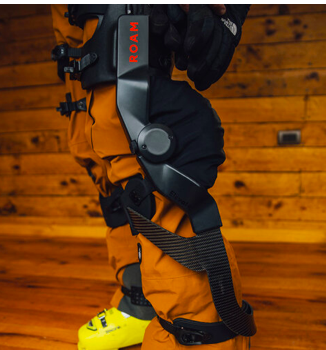
Roam Elevate backpack and control device

Elevate is world’s first computer-assisted knee exoskeleton for skiers.

I had the good fortune to try the device toward the end of February. I met DJ, a company representative, at Deer Valley on a bluebird day and we spent much of the afternoon trying the Elevate on a variety of terrain.

If you missed our earlier article reporting on Rick Hovey’s experience with Elevate, click here. I think that Rick, a PSIA II instructor and a person with a serious knee condition, reports more thoroughly on the many benefits Elevate delivers.

But I wanted to go on record with my positive experience and encourage any skier with knee or other orthopaedic conditions to give Elevate a test run.

DJ helped me get the exoskeleton on my legs; a simple procedure involving a few easy-to-fasten straps. It’s a good-looking product that the company keeps refining. 

Next, I hefted the pack containing computer, battery and air compressor onto my back and attached air hoses and power connections. The initial sense of weight and bulk disappeared quickly. That said, DJ explained that next season’s version will be lighter and sleeker.

We skied to one of the lifts and took a few runs. DJ asked if I could tell the difference. Elevate is supposed to anticipate your moves and send puffs of air to the exoskeleton to relieve pressure on the knees. I told him I didn’t feel a thing.

Then he asked me to turn it off. The control is a device mounted near the shoulder. I did what he said and immediately and dramatically felt the difference. Elevate had been assisting me in such a subtle and effective way that I couldn’t tell until I turned it off. Amazing!

Then we entered a field of moguls. DJ had suggested moguls farther down the hill that weren’t quite as big. I took that as a challenge and went where I shouldn’t have gone. Not that I don’t ski moguls. I do. But that day was the first using new skis (I had the bindings mounted that morning) and I was a bit tired, and…enough with the excuses. I fumbled my way down and felt foolish.

That was me, not the Elevate. By then I was ready to call it a day and we headed back to where we began.

Bottom line is that Roam Elevate is approaching the end of its development stage and will be ready for primetime and purchase next season. If the season were still going, I’d strongly recommend that anyone trying to avoid knee surgery for a while try Elevate. I’d also recommend it to anyone wanting to add more ski days to the week and more ski hours to the day.

Roam Elevate is an entirely new approach to assistive ski devices. Unlike others that wrap around the knee or use springs or pistons, Elevate uses intelligence to inform how it functions in real time. The manufacturer has been using its demo centers at nine major resorts in California, Colorado, Idaho, Montana and Utah to educate future purchasers, to collect more data, and to further refine an already highly developed piece of equipment.

It’s the future. And as all of us realize, especially at this moment, sometimes the path to the future has some bumps. The difference is that the people at Roam know where their path is taking them and they’re using this time to refine and miniaturize an already elegant solution to a common problem for older skiers.

Knee issues? Wish you had greater stamina? The solution is here and getting better. Tune in this fall.

“I Felt Like I Skied One Run, Not Eight”

[Editor Note: SeniorsSkiing.com is asking our readers to contribute to support our online magazine. Yes, we have grown in the number of subscribers and advertisers. But our expenses have also grown. You can help us defray some of these expenses by helping us out with a donation.]

Support SeniorsSkiing.com by clicking here.

______________________________________________________

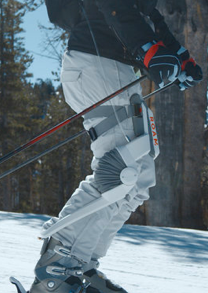
Roam Elevate is a computer-driven exoskeleton that anticipates turns and adjusts knee and quad support to aid the skier’s natural motion. It helps people ski stronger and longer by offloading up to 30% of the user’s body weight from the skier’s quads and by reducing painful knee joint compression.

Elevate can be rented at several Western ski resorts and will be available for sale next season.

To get a better understanding of how Elevate works on the hill, we asked Rick Hovey to give it a test drive.

Rick Hovey and his signature turns.

Rick is 65 and is a longtime resident of Park City. A Level II PSIA instructor, he skis 100+ days a year. Last season, despite a diagnosis of chondromaiacia patella (arthritic knees), he skied one million vertical feet. 

Rick has put off recommended partial knee surgery, opting instead for Physical Therapy. He has given up teaching and reduced his time on the hill.

He tried the Roam Elevate a few weeks ago and submitted this report.

Clay, the Roam Robotics rep, showed me how to use the straps to attach the exoskeletons to my boots and then to my lower and upper legs.  It was simple.  

The product uses a slim backpack that contains a lightweight laptop, battery and compressor. Two connectors per side come out of the pack to attach to each exoskeleton. One connection is an air hose; the other is a connection to the computer.

While walking, the apparatus felt light and unencumbering, even if the exposed carbon fiber and wires made me feel a bit like RoboCop

We clicked into our skis as Clay explained the available settings. The controller is mounted on the shoulder strap and easy to use with gloved hands.  There are levels of assist and speed adjustments to suit your style and desired terrain. The speed adjustment sets how fast the computer tells the compressor to release the assistance pressure. In general, the idea is to quicken the speed adjustment for short radius turns or where unweighting is needed quickly. 

As soon as we pushed off I lost the sense I had an exoskeleton on and that it was assisting the load on my legs. It felt completely natural and improved my sense of stability.

There is a noticeable vibration from the compressor in the pack, which Clay says to think of it as a massage for your back (bonus!). The vibration became less noticeable after one lap.

A few runs later, we played around with different settings. I really liked the high assist and slow speed setting for the easy cruisers with long radius turns. I felt stronger and forgot about protecting my arthritic knee and I experienced more complete turns with less effort. It also gave me the confidence to lay down deeper carves than I would without the device.

We then changed the settings and tried linked, short radius turns on steeper groomers. I was impressed with how well this worked with no encumbrance of the inside ski hanging-up because the pressure was released right when needed. I used this same setting on a long bump run and was equally impressed. 

Roam Elevate backpack and control device

The apparatus always seemed to agree with what I was doing, while enhancing my skiing in a controlled and predictable way. 

I should mention the “chop.” Rough snow was on the edges of the groomed runs, just enough to rattle the bones if going fast… this is where I would normally take the first exit to Smoothsville. The Roam Elevate seemed to absorb the bumpiness; no jarring of the knee joints or loss of control. It was like a good suspension on a mountain bike.

After numerous fun and various runs, Clay and I did a final, fast top-to-bottom cruiser. At the bottom, I told Clay my legs and knees felt like I just skied one run, not eight! 

I would recommend the Roam Elevate to any skier who has knee and/or leg strength issues. And, if it helps you avoid surgery and extends your skiing life, the value could be great.

The Roam website is taking first-come, first-served reservations for a slimmed down, next generation product for $3500 (includes a 30% discount). To learn more, click on the Roam Elevate ad on the home page.

Stem Cell Injection Alternative To Knee Replacement?

[Editor Note: Robert Leaverton presents a positive experience with stem cell therapy for ailing knees. However, there are many caveats in pursuing this route. As Robert indicates in his conclusion, there are some indications that the therapy may have gotten ahead of the science. For a report on the state of stem cell therapy for joint repair, see this NYT article.]

I am a very active 82 year old skier, former runner. My knees were in pain to the point that I had to consider replacement if I wanted to continue skiing. I live and ski in Utah during the ski season. I ski at least six days a week,  seven if the POW is good.

Viable alternative? Research carefully, caveat emptor. Results may vary.

I went to a stem cell seminar in Spring 2018. I listened to the information and decided I should investigate further. I had the exam, some x-rays, and it was determined I was a good candidate for stem cell therapy. The previous ski season was a painful time. I was taking OTC pain meds to be able to ski all day. If my knees touched while I was sleeping, I would wake up. I knew that if I wanted to continue skiing, I would have to do something. I also knew that there was no guarantee SC would work, and I would pay $4,000 for each knee. I did not want to endure general anesthetic, pain, and re-hab. There is high success for total knee replacements, but no absolute guarantee.

I went to Wisconsin Stem Cell Therapy for injections in May 2018. The stem cell injections in each knee were painless. [Editor Note:  Stem cells are extracted from a patient’s own bone marrow and injected into worn or injured joints to promote healing.] I did therapy as suggested, and the results have been way more than I expected. I was being practical, and I would have been happy with 60 or 70 percent improvement. I rate my stem cell therapy as 100 percent success. I waited until I was done skiing for the season to make a final judgment of the SC therapy. After many years of painful skiing, I had a season with NO knee pain.

I have returned from more than two months in Utah. Had great snow and a lot of powder. Wind and visibility made for some difficult conditions (bumps & drifts) that were a real test for the SC therapy. SC therapy has been a huge success for me and will allow me to enjoy skiing for many more years.

Without any hesitation I would recommend stem cell therapy for anyone who suffers from joint pain and wants to continue to be active and enjoy life to the fullest.

Caution: When considering a clinic for stem cell therapy, be sure you investigate the clinic thoroughly. There are some “snake oil salesman” out there.

My Knee Replacement Story

Conditioning Makes A Huge Difference To This Skier’s Post-Op Experience.

A lifetime of abusing my body never really bothered me until it did. Coming down a blue trail five miles long at Park City, UT, one of my all time favorites because of the killer views, suddenly posed a problem.

My knees were killing me. The pain traveled into my hips and the last three miles of the slope seemed to be as long as a trip around the world. It was never going to end. My knees seemed to be grinding into each other.

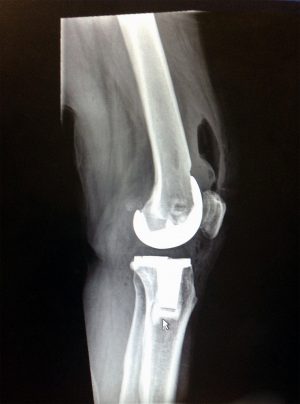
What a new knee looks like when it is all over. Credit: Bob Nesoff

At the base, the skis came off, and I used them as crutches on the way to the lodge. With some help, I made it back to our accommodations and iced my knees. Walking they felt as though the bones were rubbing against each other. Fortunately, this was the last day of the trip, and before the flight home, I called and made an appointment with my orthopedist.

The day after arriving home, he x-rayed my knees and, as I feared, was told my ski season was over. The bones in the joint were actually rubbing against each other and the only realistic course of action was a replacement. The question then became one knee or both at the same time.

The skier’s mind went to work. I’m 80 years old and not getting any younger. The surgery won’t be any easier when I’m 81 and why do one at a time and then have to come back and rehab all over again.

With a recommendation from my doctor, I made an appointment with Dr. Gregg Klein of the Hartzband Center for Hip & Knee Replacement, Paramus, NJ.  Doing due diligence, I looked them up and found out that they arguably do more knees and hips than any other medical facility in the country. That gave me some comfort.

Meeting Dr, Klein for the first time I was pleasantly surprised to learn that he too was a skier and was able to not only answer my questions, but had an understanding of my special desire with regard to skiing.

“Age is not a problem in knee replacement surgery,” Dr. Klein said. As long as the candidate is in relatively good health, there is no adverse problem.

“However,” he said with a smile on his face, “you won’t be doing moguls any more. You’ll be able to ski more comfortably, but stay away from high impact slopes.”

Physical conditioning is one of the most important factors both prior to and following the surgery. Dr. Klein prescribed six weeks of physical therapy, three times weekly, both prior to and following the operation. I added another two days of workout at my home gym. That, I was told later, made the operation and recovery go faster.

Three hours after the surgery I was up, standing and walking. No great distance, but there was far less pain that I anticipated. That, according to the nurses was due to my pre-op workout regimen.

After only two nights in the hospital, I was released and the following week a therapist visited daily for two weeks. He called my recovery “absolutely amazing,” again due to the workout I had done before surgery.

The two weeks at home were followed up by six weeks of outpatient physical therapy three times a week. Here I threatened the life of my therapist when he bent my legs into positions God never intended them to go.

Less than three weeks following surgery, I was walking without a walker. For jaunts outside of the house I used a cane but was able to walk comfortably without one at home. Another couple of weeks and things returned to normal.

There is some debate as to whether holding the prosthesis in place with special cement or using one that adheres to the bone is better for sports such as skiing. The cement holds and heals more quickly. Waiting for the bone to adhere to the replacement will take longer. The opinion appears to be that one is not better than the other.

“If you are a good skier and enjoy the sport,” Dr. Klein commented, “keep on doing it.”

There are a couple of long scars on my knees but they’ll fade with time. I won’t be doing moguls or extreme blacks, but I don’t care. I’m working out on a regular basis and by the time of the first decent snowfall in the fall of 2019, I’ll be waxing my boards and heading for the hills. As a prelude to the ski season, I’m also planning on making a parachute jump this summer. Hey, George H.W. Bush ain’t the only one who can do that kind of stuff.

Sometimes Our Bodies Need Help

There are times when we can benefit from some extra help, especially as we age or develop chronic medical conditions. 

Nick Manley, a remarkable athlete with a degenerative neurological condition, swears by the Ski-Mojo knee bracing system. The product’s shock absorbing springs reduce the load on his knees, allowing him to continue to race and ski for the entire day without tiring. 

I haven’t used it, but I have talked with Nick and at least a dozen other older skiers who tell me that it has made a profound difference in their skiing experiences. Ski-Mojo also helps maintain correct posture while skiing and makes it easier to ski longer.

If you feel you could benefit from some assistance, my strong suggestion is to visit Ski-Mojo’s site.


Now, on a limited basis, there’s another innovative approach to helping your knees. I wrote briefly about it a few months ago, when the company started advertising. The product, being developed by Roam Robotics, is called Elevate. It is a computer-influenced soft exoskeleton that utilizes pneumatics to assist movement in your legs and knees.

It may sound sci-fi, but it’s for real. Starting March 9, the company is making Elevate available on a unique demo basis in three locations: two in Lake Tahoe; one in Park City

Rent the device, and Roam will arrange for one of its trained ski hosts to accompany you for a few runs or for the entire day, based on your preference. If you’re staying within a certain radius of their facilities, the company will deliver the device to you the night before and provide enough orientation so you’ll be good to go the next morning when you meet your ski host on the hill.

If this sounds a little protective, it is. As a product, Elevate is ready for prime time, but the concept is so new that the company wants to provide hands-on education about its use. It also wants to collect information about customers’ experience to improve future versions. All of this is to assure a smooth roll-out when it ramps up production and makes Elevate available more broadly in seasons to come.

The cost for a one-day demo is $109, which includes drop-off and ski host services. If you are in the Tahoe or Park City neighborhoods and want to try an entirely different approach to protecting your knees and getting more out of your ski day, this is your opportunity. To reserve a demo, click here.

Short Swings!

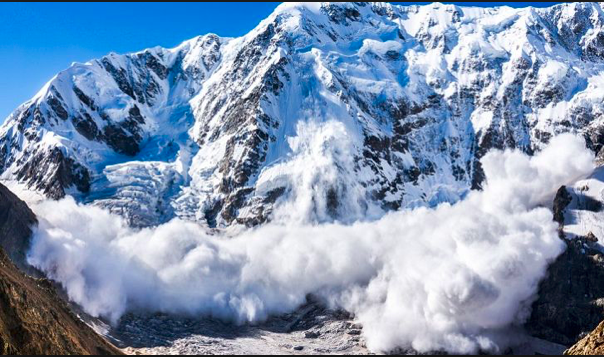
Have you ever been in or near an avalanche? Big Mountain skiers everywhere are accustomed to hearing and feeling the reverberations of bombs and other technologies used to dislodge slides, making the areas safer.

A few years ago, Taos added a chair to improve accessibility to Kachina Peak.  Last week, following inspection by patrol, a slide there killed two. 

At the top of NinetyNineNinety at Park City Mountain Resort (the part of the area formerly known as The Canyons), there’s a gate and signs clearly spelling out avvy risks of going into that part of unpatrolled backcountry. Similar warnings probably exist on Kachina Peak.

Warnings at the top of NinetyNineNinty

Several years ago a friend instructing at The Canyons joined a search party looking for a couple whose car was in the otherwise empty parking lot and who hadn’t picked up their child from daycare. My friend explained the methodical nature of combing the post-avalanche slope where the couple was thought to be buried. It was late in the day, but there was ample light. My friend, a geologist, had been trained to seek anomalies…things that were different from the surroundings. Looking up the slope, he detected something angular, possibly the back corner of a ski. He told the search leader, who advised him and the rest of the party to continue probing the cement-like snow to detect what might be buried below. They found nothing until they reached the angular ski tail jutting from the snow. It led them to the two buried bodies. A tragedy.

Last year, I became friends with a man in his 40s who was rescued from a backcountry avalanche. I don’t remember his full description other than how horrific an experience it was and how, after months of hospitalization and rehabilitation, it altered his life.

The website of the National Avalanche Center, a unit of the National Forest Service, shows 551 US avalanche fatalities since 1998. All but five (on Mt Washington in NH and on Mt Mansfield in Stowe) occurred in the West. Most were in back and side country. 177 skiers died. 68 boarders died. 2 were snow shoers. 196 were snowmobilers. 48 were climbers. Five were ski patrol.

This year, alone, there have been 26 snow-related deaths at European resorts.

Once, skiing a remote in-bounds section of The Canyons, I set off a minor slide. It only made it to the tops of my boots, but it was dense and difficult to get free.

There are older skiers who seek out the adventure and solace of side and back country. I no longer have the lungs to climb, but if conditions are right, I rarely hesitate to take a gate or duck a rope for a promising patch of powder on the other side. But with every year I think a bit longer before I do.

Free Lift Tickets for Furloughed Government Employees

Mad River Glen  (VT), Sugarbush (VT) and Snow King (WY) announced free skiing benefits to furloughed government employees. Sugarbush upped the ante by extending the freebie to immediate family members. The deals will end when the shut-down ends. 

Knee Issues?

Ski-Mojo and Elevate are products for those experiencing knee problems. Both are advertisers. Ski-Mojo is a set of light-weight shock absorber springs that reduce pressure on the knees by 33%. Worn under ski pants, the device reduces pain and fatigue. The people I’ve talked with who use Ski-Mojo, swear  by it. Elevate is a soft, robotic ski exoskeleton that boosts quad strength and reduces muscle fatigue and joint pressure. The product causes loads to pass the knee entirely;  improving knee stability and preventing normal wear and tear. Elevate is available to demo at locations in Lake Tahoe and Park City.  

Saturday is Ski California Safety Day 

Resorts throughout California and Nevada will participate in Ski California Safety Day this Saturday, Jan. 26. Each of the 15 participating resorts will host activities designed to inform guests about skiing and riding safely. Topics range from avalanche and deep snow safety to proper chairlift loading and riding. More at skicalifornia.org.

Will Renovated Snowpine Bring New Vibe to Alta?

That’s the question explored in an article this week in The New York Times Travel Section. The Snowpine Lodge was the funkiest of Alta’s five lodges. I know this from multiple stays at each of them over my 45+ years skiing Alta. Accommodations were less than luxe. Food was okay. Guests – maybe because we were all subjected to the same musty smells and low, head-bumping passageways – always seemed to bond. That was back then. The new Snowpine is said to be super-luxe, Aspen or Vail style…with prices to match. It may raise eyebrows among readers who know and love Alta, or simply raise the bar for the other lodges.

Solitude to Host FIS World Snowboardcross and Skicross Championships

The world’s best snowboardcross and ski cross athletes will compete at Solitude, Feb 1-3 in the 2019 FIS World Championships. It will be the biggest winter event in Utah since the 2002 Olympics.

Mont-Tremblant International Airport

The single strip airport is about 20 miles north of the resort. Porter Airlines and Air Canada flights connect through Toronto. A quick check shows that New Yorkers and Bostonians can get round trip fares are as low as $275. Both airlines include free flights for kids and free lift tickets. Click here for details. 

Breckenridge to Ski to Memorial Day

That’s the plan for this and future seasons, conditions and US Forest Service permitting.

Videos Worth Watching

Teton Gravity Research generally produces interesting ski videos, and this one (4+minutes) is no exception. It focuses on the challenges a young skier faces at the top of a cornice before skiing a beautiful, steep line.

Kings and Queens – The Evolution of Corbet’s Couloir is fun. The 7+ minute video shows a competition of men and women skiing and boarding Jackson Hole’s famed chute.  Please comment if you’ve had the Corbet’s Experience, and we’ll compare notes.

Experience Something New at Whiteface

Mirror Lake Inn ,in Lake Placid, is a lovely place to stay when visiting Whiteface Mountain and other North Country attractions. Starting this season, Andrew Weibrecht, son of the Inn’s owners and an Olympic medalist, is available to ski with Mirror Inn guests at Whiteface. For details, click on the adjacent ad.

Cell Phone Dying on the Mountain?

Try the GearBeast phone holder. The $9.99 – $12.99 device (SeniorsSkiing.com readers receive a 20% discount; enter SENIORS-SKIING at checkout) fits over the neck and under the parka where your body warmth keeps the phone battery from draining. Other benefits? You won’t drop the phone when using it on the lift. And the mini pocket for credit card, ID and a few bills lets you leave bulky wallets in the car or lodge. Click on the company’s ad. 

Dermatologist on Sunscreens and Skiing

Memo to Skiers: Always use a “broad- spectrum” sunscreen with a SPF of at least 30.

Commercial sunscreens are divided into two classes: physical and chemical. Physical sunscreens contain Zinc oxide and titanium oxide. They deflect ultraviolet energy from the skin by scattering ultraviolet light.

All other sunscreen compounds are “chemical,” which act by absorbing ultraviolet light and re-emitting the energy as heat. Most commercially available sunscreens are a combination of two or more active sunscreen compounds.

The best sunscreens have a high sun protection factor (SPF) and are labeled as “broad-spectrum” because they protect against both ultraviolet A (UV-A) and ultraviolet B (UV-B) radiation. UV-B causes sunburn. UV-A penetrates deeper into the skin, causing aging.

Most people don’t apply enough sunscreen. A good rule of thumb is to use a strip of sunscreen about 1/4″ wide from the middle of the tip of the index finger to the crease where the finger meets the palm. That will be about the right amount to apply to the face and neck. If you perspire a lot, use a water-resistant product.

For Nordic skiers, I recommend liberally applying product 15-30 minutes before skiing (it allows the sunscreen to absorb), then re-applying every two hours. For downhill skiers, I recommend reapplying at lunch.

I wear a physical sunscreen combining zinc oxide and titanium dioxide (Vanicream SPF 60). I think it performs better than chemical sunscreens and is less irritating. For more cosmetically aware skiers, I recommend a high SPF chemical sunscreen such as Neutrogena Ultra Sheer Dry-Touch SPF 70 or 85 or 100. Other sunscreens along these lines will probably do the job as long as you apply correctly.

Wearing sunscreen takes a bit of consistent effort, but then again, almost every form of skiing takes some effort. Before your next snow venture, add a finger full of sunscreen to your head and neck. Your skin will appreciate it.

Walk-In Orthopedic Clinic Opens Near Salt Lake City’s Resorts

Nobody wants to get hurt while on vacation, but sometimes it happens.

Did you crash at one of the Wasatch Front resorts, think you were okay, but later decide to get checked? This new after-hours clinic treats what was hurt while skiing during the day.

The University of Utah Health Care Orthopedic Center is one of only a handful of academic medical centers in the nation to open an after hours, walk-in injury clinic, and it’s the first of its kind in the state. It’s very convenient for those skiing at Alta, Brighton, Snowbird, Solitude.

Resorts have their own on-mountain clinics, but often things don’t hurt until after you go back to your hotel. Skiers sometimes twist a knee, pull a hamstring, or get hurt some other way; and when the pain doesn’t go away they realize they really should be checked. The walk-in, after hours clinic fits the need.

The clinic treats fractures, strains, sprains, tendon injury or tendonitis, joint problems, or orthopedic injuries.

On a personal note, three friends recently went to the clinic and were delighted with the attention and care. X-rays showed one friend has a bone crack. Two others were identified with muscle tears. All were treated right there; they’re on their way to swift recoveries.

The clinic offers low wait times and an office visit co-payment that’s less expensive than a trip to the emergency room.

“The concept of acute care ortho clinics is a new one,” said Joy English, M.D. 36, sports medicine physician and clinic director. “People are starting to realize it’s a much better place for them than the ER.”


Senior Skiers: Take Care in the Sun!

Advice From a Dermatologist Nordic Skier.

The sun is by far and away the most common cause of both (1) skin cancer and (2) skin aging.

More than two million cases of skin cancer are diagnosed annually in the USA. Caught early, most skin cancers can be removed, leaving a cosmetically acceptable scar. In more advanced cases, valued anatomic parts such as noses and ears can be partially or completely lost. Unfortunately, ten thousand deaths occur yearly in the US from skin cancers.

Many Nordic skiers, blithely dedicate ourselves to going outside as much as we can whether skiing in the winter or running, biking, and hiking during snowless times. My recommendations to preserve skin health while frolicking out of doors:

  • Exercise early in the morning (before 10) or later in the after- noon (after 4) when the sun is less damaging.
  • Wear clothing that covers or shades the skin (e.g., a broad- brimmed hat is better than a visor).
  • Apply a “broad-spectrum” (protects against UV-A and UV-B) reasonably thickly with an SPF of at least 30. If downhill skiing or hiking all day, consider re-applying at lunch
  • Consult a dermatologist periodically, especially if you’re over 50, have a non-healing sore/bump, or have a changing or new brown or black spot.

Can Alternative Medicine Help You?

A Tragic Accident Turns A Ski Racer Into A Believer And A Healer.

Siri says alternative medicine returned her to real life. Credit: Harriet Wallis

Siri says alternative medicine returned her to real life.
Credit: Harriet Wallis

Siri Wieringa was born into a skiing family. It’s in her genes. By college she was an accomplished ski racer. But a horrific on-course accident tossed her down the hill, flipping her over and over, breaking up one side of her body and terrorizing her brain. When she regained consciousness, life as she knew it was gone.

Doctors fixed her broken bones. But they were baffled about her brain which, even though she wore a helmet, was slammed again and again against her skull. Perhaps she should drop out of college, they said. Perhaps she should just rest.

Cancelling life did not suit Siri.

“I needed Western medicine,” she said. For example, “they Life Flighted me to the hospital.” But rather than letting her just rest and stagnate, her mom sought alternative healing methods.

Siri believes alternative healing returned her to real life. “I was in a fog,” she said. “I had to learn to walk and talk and then learn to ski again.”

She finished college with a masters degree, coaches a freestyle ski team, and is so passionate about alternative healing she has studied several healing arts and is a practicing healer.

I met the vivacious, energetic 26-year-old when I went to Alta to get my season pass. She’s the daughter of Alta’s revered, long-time General Manager Onno Wieringa.

Trauma, illness, emotions and the rigors of every day life can stress the body and cause bottlenecks that derail the body’s energy and its ability to heal itself. The body is a closed eco system designed to nurture itself, Siri said. You just have to give it a chance.

Most alternative healing methods were developed by ancient cultures centuries ago. Several are modern combinations. Some you might recognize, such as: acupuncture, crystals, quantum, cupping, Reiki, Accunect, Tibetan cranial and chiropractic. And there are others—all geared to heal the body, mind and spirit.

Siri is now a Reiki and a Accunect healer. Both methods use a light touch and are non-invasive. The effectiveness cannot be measured by traditional techniques. Non-believers call such healing methods nonsense. Others believe that alternative healing saved their lives. Alternative healing worked for Siri.

Might alternative healing be right for you?

To read more from Harriet go to  https://www.skiutah.com

From The Ski Diva: Keep Tootsies Warm

Advice On How To Manage Cold Feet.

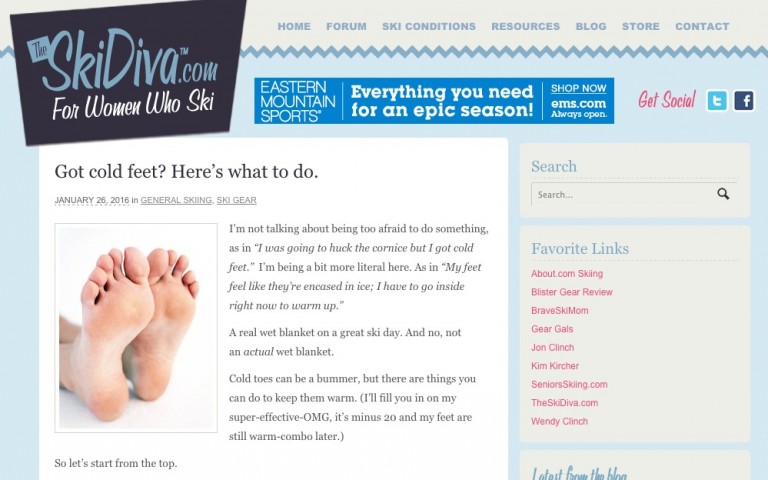
Our friend and fellow online ski magazine, The Ski Diva, has just posted a really helpful article on cold feet management.  This is important folks.  Cold toesies can ruin your day and might even discourage you from enjoying the world of winter outdoors.  Take a moment to check out The Diva’s suggestions, and feel free to add your own in COMMENTS.  Click on the toes to link to her site.

A_SkiDiva


My Fitness Journey Continues: Part Seven

Don't be old-fashioned about getting fit. Rose Marie Cleese finds high-quality sites to check out.

Don’t be old-fashioned about getting fit. Rose Marie Cleese finds high-quality sites to check out.

Wading Through the Web For The Best, Most Reliable Health and Fitness Info.

You can find anything on the internet: the good, the rad…and the untruthful! So how do you know that what you’re reading on any given website is solid, current information? When you’re embarking on a fitness journey and decide to do some internet research, you’ll find a lot of contradictory information. And you can’t just google something and assume that the top five listings that come up are the latest and greatest. Ever heard of SEO? It stands for “search engine optimization” and there’s a whole army of specialists companies can hire who know the ever-changing ins and outs of getting one’s website to or near the top of a google list.

So what’s a web surfer to do? During my ongoing fitness journey that started six months ago, I developed a short list of criteria in deciding which sites could be trusted and would be genuinely useful:

  1. they are well-established and highly respected in their area of expertise,
  2. the contributors are proven experts in their field, and
  3. the sites are up to speed on the latest findings and trends.

Here are my “Top 10”—websites I think you’ll find helpful for getting your fitness journey off on the right foot. (And of course we’d like to hear from you about your favorite tried-and-true senior fitness websites!)

National Institutes Of Health

The U.S government’s National Institutes of Health (NIH) is an excellent place to start for general health information; the link above provides a lot of information about exercise for seniors.

WebMd/Fitness-Health

This site has been around for a long time and is one of the most popular “go to” sites whenever one has a general medical question and wants answers fast. The exercise information you’ll find at the link above is for adults of all ages.

UC Berkeley Wellness Letter

Over the years, I’ve gotten many free samples of newsletters from some of the most-esteemed medical schools in the country. Hands down, the one that provides issue after issue of articles on health, nutrition, fitness, and the day’s hottest health topics that I actually want to read and are relevant to me is the UC-Berkeley Wellness Letter. Its website gives you a taste of what’s in the monthly newsletters, but I highly recommend you subscribe to the actual hard copy newsletter. You won’t be disappointed!

AARP Newsletters

Although this website is geared toward getting visitors to the site to sign up for AARP, there are usually several articles posted that are chock full of good advice for seniors wanting to get or stay fit.

Elder Gym Free Exercises

This site has a wealth of exercises, exercise videos, and lots of other fitness advice specifically for seniors.

National Institute for Fitness and Sport/Balance Training

The National Institute for Fitness and Sport develops wellness programs for companies and individuals, but there are also posts that visitors to the site can access; the article at the link above focuses on developing better balance, a key fitness issue with seniors and especially important in skiing and snowboarding!

American Heart Association/Cardio, Strength Training For Seniors

The American Heart Association’s website has a lot of solid, up-to-the-minute information and advice about being heart-healthy, an essential when embarking on a fitness program. The site has many useful articles, such as the one at the link above.

Nutrition For Seniors

The U.S. government has a site, nutrition.gov, that provides a compendium of articles on the latest news and most reliable information on senior nutrition.

SeniorsSkiing.com

You already know about this great site!!

…and since Thanksgiving and the holidays are just around the corner, what better site to end my list with than my favorite “healthy recipes” site that was started by a freelance photographer who wanted to offer weight watchers the tastiest healthy dishes possible. She more than delivers…happy, healthy eating!

Healthy Recipes From Skinny Taste


Rehab Friend: A Little Assist From Your eBike

An Electric Bike Offers A Friendly Boost To New Knees and Hips

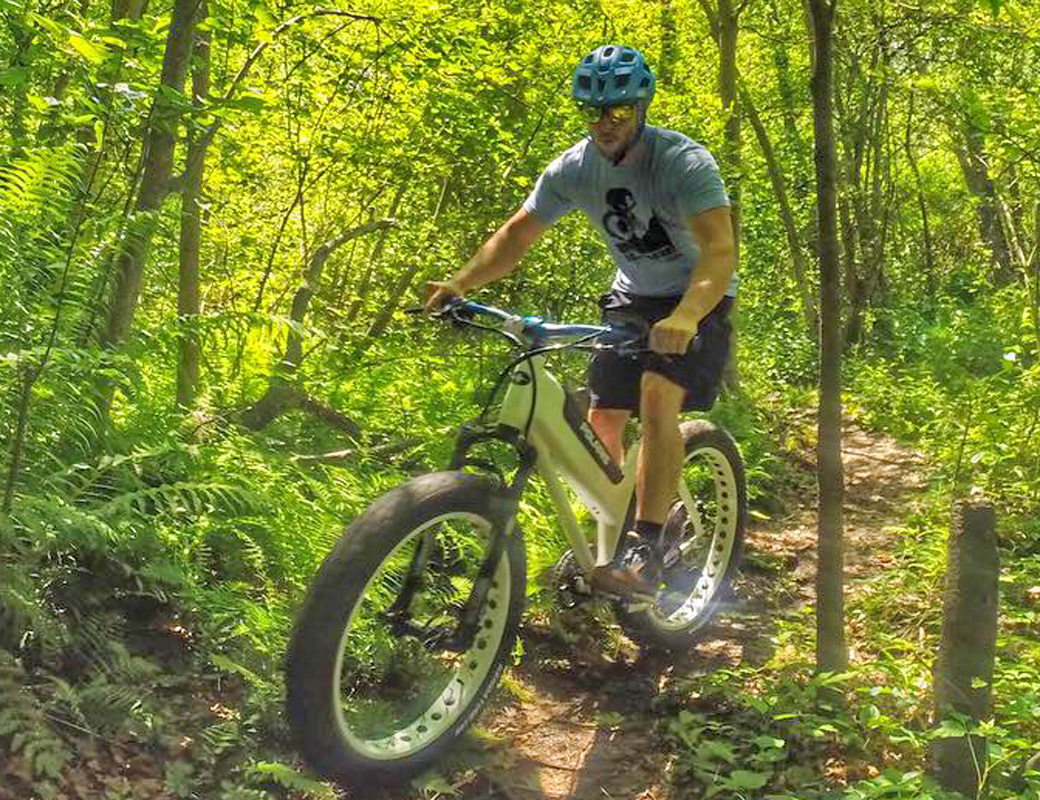
Polaris NordicBike__edited-1 

We all remember “With a Little Help from My Friends” by The Beatles.

My, how things have changed in the 48 years since its release, especially for those boomers who want to come back to the slopes after major surgery on hips and knees and rotator cuffs, among other parts.

Well, here’s some good news:

One of my friends is recovering from hip replacement surgery. His surgeon prescribed riding a bike for exercise, muscle rehabilitation and re- building confidence. How about skiing? Why not!

That’s where an electric bicycle is giving him the confidence to get back on the boards after major surgery. And go uphill at 20+ mph, or faster than your average quad lift!

At the New Hampshire ski area where my friend has spent many a winter, the electric bike with fat tires is ideal for going up the main road from the village to the lodge and beyond. Fat-tire bikes are now common for off-roading. One of the challenges of an electric bicycle design is to configure the entire frame, power and control system and accessories to be as light as possible. Lightness and controllability are among the advantages of the Polaris®eBike.

On unimproved trails and dirt roads, the fat-tire configuration gives my pal stability that helps build his confidence as he builds strength.

Advanced technology now available in electric bicycles is a major factor in getting my pal back on skis. In his case, the Polaris Gear Speed Technology features 8 gear speeds.

As the terrain rises, power kicks in—controllable with paddle shifters like a sports car— and “… a little help. . .” from the electric assist turns into up to fifty miles of riding.

How does he get a fifty mile ride? Polaris technology allows regeneration of the battery by braking and reverse pedaling. Active Trail Mode™ regenerates the bike’s battery during pedaling with automatic incline sensors to deliver power for uphill riding. Operation of this mode extends battery life. A four-hour charge can deliver fifty miles of performance.   Regeneration gives the rider unlimited power—my friend said his bum gave out before the bike needed to be re-charged.

As senior skiers, we’re all adopting new equipment, better outdoor clothing, improved diets and exercise routine.  With a little help from an eBike, we can take advantage of bike riding for fun and exercise.

Adult Stem Cell Therapy For Skiers

Is This Trendy Therapy Right For What Hurts?

Just a week ago, a skier friend underwent stem cell therapy for his painful knee. Ever since, he’s been sending me emails extolling the wonders of this cutting edge technology. We’re all skiers and our knees take a beating over time, so when he began singing praises about adult stem cell therapy, I took notice and became curious. Then I did some superficial homework on adult stem cell therapy. There’s good news and bad news.

Not exotic fruit, fellas.  It's a blossoming stem cell that can be used in healing senior skier joint ailments.;

Not exotic fruit, fellas. It’s a blossoming stem cell that can be used in healing senior skier joint ailments.

The good news is that adult stem cell therapy has been going on for a long time with great success for many health conditions.

However, at this time it can’t cure everything, and I learned that some conditions can be aggravated by it. Patients must pay for the procedures out of their own pockets as insurance does not seem to cover it. And sometimes it takes more than one procedure to solve or make a dent in the health problem.

Stem cell therapy is trendy and clinics are apparently springing up like mushrooms after a rainstorm. The sites I checked have flashy websites with lots of glowing testimonials. But before you jump on the bandwagon of hope, find out if the bandwagon is going where you want to go or whether it might be a pricey ride to nowhere.

So here’s the bottom line: Is adult stem cell therapy the alternative, cutting edge miracle cure for what hurts — or might it be one size fits all hype? Look before you leap. Then decide.

If you’re interested in adult stem cell therapy, the International Society for Stem Cell Research website is a place to start.

Editor’s Note: SeniorsSkiing.com Correspondent Harriet Wallis has two artificial knees, loves life and skis four days a week. She wrote the 5-part series on knee replacement for SeniorsSkiing.

Huff Post: Skiing With Senior Eyes

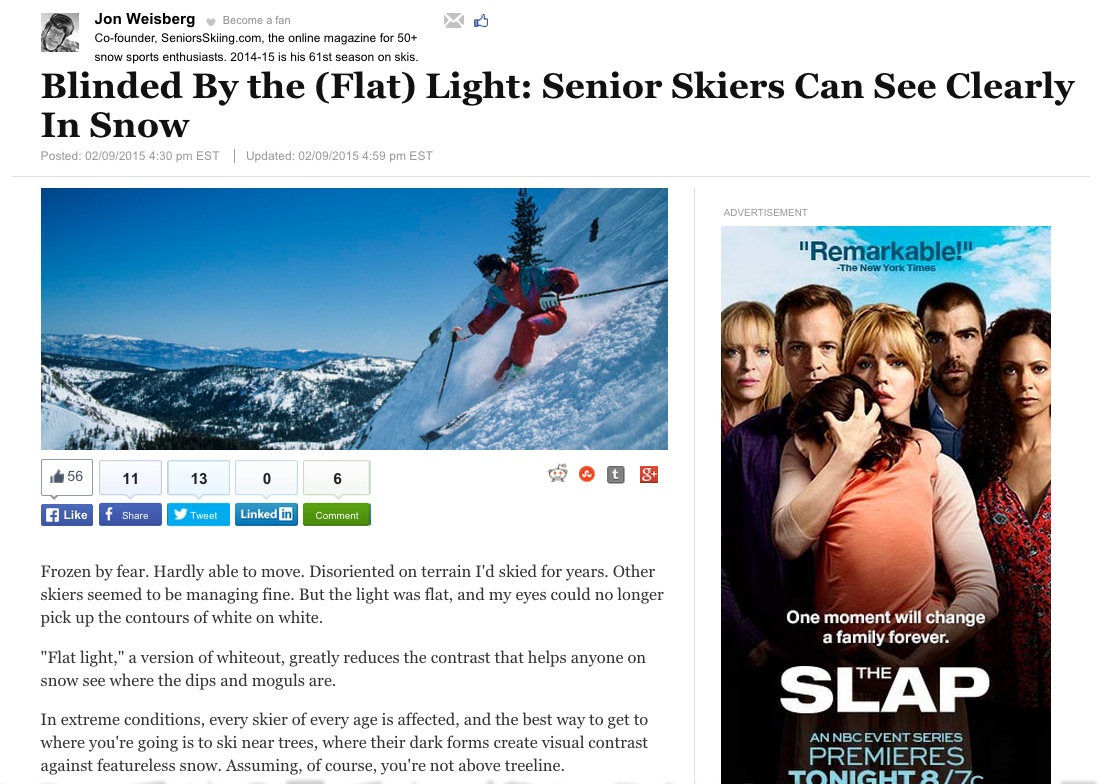
Huffington Post Features SeniorsSkiing.com’s co-founder Jon Weisberg On Light, Goggles and Lenses

We’ve all been there.  Flat light conditions, slow down, stop.  Take your goggles off and put them on.  Peer down the slope.  Proceed slowly, cautiously down, perhaps calling it a day. In his latest Huff Post Post-50 article, SeniorsSkiing.com’s co-founder Jon Weisberg explores the impact of aging eyes on seeing and skiing.

BlindedByLight

Knee Replacement—What Do I Do Now? Part 5

If you want to get back to skiing, learn to love your physical therapy.

It took my expert knee replacement surgeon one hour to cut, saw, hammer and install each new knee. It took me a year to rehab them. I was astounded by how long it took.

Correspondent Harriet Wallis works it. The key to recovery is following through with your  physical therapy regimen. Credit: Harriet Wallis

Laurie O’Connor, friend of correspondent Harriet Wallis, works it. The key to recovery is following through with your physical therapy regimen.
Credit: Harriet Wallis

I was in good physical condition before surgery, and I had the mind set that I would bounce right back. I’m strong. I’m tough. I thought that a set of new knees would be something like taking my car in for an oil change. Drive in with old oil. Drive out with new oil and keep on rolling. I was incredibly wrong. The analogy didn’t work. Healing and rehab take time

The good news is: The body is a healing machine.

The bad news is: Lots of people slack off their physical therapy exercises as soon as they can get into the car and do their grocery shopping. They lose their motivation and unfortunately they don’t get full benefit of their new knees. They probably aren’t skiers. We skiers are motivated to get back to the sport we love.

Eight months after surgery I was back on the slopes – starting on the opening day of the season. I skied 93 days that year. EEEhaw! (During the winter before knee replacement, all I could do was skid down a bunny slope.)

Friends asked: “How long did it take to get used to artificial knees?

My response: “About six turns.” My new knees worked wonderfully.

Skiing is good exercise, but it’s not focused physical therapy. Continuing the prescribed exercises was vital. Now, two years later, I still do certain exercises. I believe that maintaining artificial knees is an ongoing process.

My new knees do have some minor disadvantages. I cannot squat with my butt down to my heels. Artificial knees aren’t designed to bend that far. Therefore I sit on a low stool while weeding the garden. And swimming laps confounded me because it took more strokes to get across the pool. I think that’s because metal is heavier than bone, so my legs are lower in the water. I had to find a new balance point for swimming.

The bottom line is this: When the surgeon is done, your work is just beginning. Do your rehab exercises with gusto – and I’ll see you on the slopes.

Note: This is a five-part series in which SeniorsSkiing.com’s correspondent Harriet Wallis describes her knee replacement journey with tips to guide you if you’re anticipating knee replacement. Part 1: Inspired by a ski patroller with artificial knees. Part 2: Research 101 – why and how to do it. Part 3: Interviewing surgeons and questions to ask. Part 4: How I found the right doctor for me. This is Part 5, the final segment of the series.


Knee Replacement—How I Chose My Surgeon: Part 4

How To Identify An Athletically-Empathic Surgeon.

I’m lucky to live in Salt Lake City. There are 10 ski resorts nearby, and there are opportunities for an active lifestyle year-round. Because of that, there are many top surgeons here who put athletes back together when they get injured or need replacement parts.

Correspondent Harriet Wallis chose Dr. Beck for many reasons. Credit: Harriet Wallis

Correspondent Harriet Wallis chose Dr. Beck from Salt Lake City for many reasons that made sense to her.
Credit: Harriet Wallis

But when I needed to have my knees replaced, I wanted to choose the right doctor for me. My list of questions helped me differentiate between the five surgeons I interviewed. Here’s the essence of just three of my questions and how the doctors’ answers focused my decision.

Do my knees need to be replaced? When?

            Doctor X: Yes, they need replaced — when you’re ready.

Doctor Beck: When the quality of your life is gone, and you can’t do the things you want to do, it’s time. Do it while you’re still active enough to get the best outcome and get back to the things you want to do.

What’s your surgery technique?

            Doctor Y said: I do the surgery this way. I do it this way all the time. I never vary from doing it this way.

Doctor Beck said: This is what I plan to do. But when I get into your knee I might find something that doesn’t show up on the x-rays and I’ll have to take care of it — but “I don’t want to hurt you any more than I have to.”

Can I ski?

            Doctor Z said: I wouldn’t ski anymore.

Doctor Beck said: “You’re darn tootin’ you can ski!” Pick good snow days, take some breaks, and you probably should stay out of the moguls.

For many reasons, this was the right surgeon for me.

         Good luck finding the right surgeon for you.

Editor’s Note: This is a 5-part series in which SeniorsSkiing’s correspondent Harriet Wallis describes her knee replacement journey with tips to guide you if you’re anticipating knee replacement. Part 1: Inspired by a ski patroller with artificial knees. Part 2: Research 101 – why and how to do it.  Part 3: Interviewing the docs.  Upcoming Part 5: Rehab and why to love it.

Knee Replacement—Interviewing The Docs: Part 3

Practical tips to help you evaluate surgeons

Inspired by a Brighton, Utah, ski patroller with two artificial knees, I buckled down and researched the knee replacement process. I soon felt like I had a PhD on the subject. I’m glad I did the homework. It charted my course.

Make a list. From my research, I generated 20 questions to ask potential surgeons. [Editor Note: You can download Harriet’s Knee Replacement Questions here.] I typed the list, printed five copies, and took a sheet with me to each of the five knee surgeons I interviewed. The list allowed me to ask the same questions, and I had space to write down

Harriet waits to interview a surgeon amidst clear evidence of sport-orientation. Credit: Harriet Wallis

Harriet waits to interview a surgeon amidst clear evidence of sports orientation.
Credit: Harriet Wallis

their answers. In addition, I could evaluate their answers later without forgetting what each one said.

I literally interviewed them while they examined my knees. It might sound ludicrous to interview five doctors, but why not? They’re my knees.

And their answers were amazingly different.

The visits were worth it. I evaluated the surgeon’s differences and choose the right one for me.

Use your radar. When you go to an appointment, look around the waiting room. Does anyone there look athletic? Or does everyone look fat, old and sedentary? It could be a clue for you.

Check the doc’s girth. Does an obese doctor understand an active life style? Will a fat doc comprehend how you want to use your new knees and that you want to ski?

Consider the alternatives. I bet you know at least one person with a replacement body part: a hip, knee or shoulder. But replacement might not be right for you. Be open to doctors’ recommendations to try another solution first.

I’ve heard many people say: “My knee really hurts. I want to have it replaced.” Replacement is not a magic bullet. And it is a major and irreversible action. You need to be sure that replacement is the right solution.

Editor’s Note: This is a 5 part series in which SeniorsSkiing’s correspondent Harriet Wallis describes her knee replacement journey with tips to guide you if you’re anticipating knee replacement. Part 1: Inspired by a ski patroller with artificial knees. Part 2: Research 101 – why and how to do it.  Upcoming Part 4: How I found the right doctor for me. Part 5: Rehab and why to love it.

Who Are You? The Ski Patrol Wants To Know

Carrying Identification Can Help The Ski Patrol Help You.

HIghly trained ski patrollers will be looking for your id. Credit: Deer Valley

Highly trained ski patrollers will be looking for your id.
Credit: Deer Valley

Accidents happen. And when they do, the ski patrol will likely be your savior. But the patrol needs your help. Here’s what you should have with you every time you ski or ride–just in case.

Carry identification. If you’re injured and can’t speak for yourself, the patrol will have to figure out who you are. Chris Erkkila, assistant ski patrol manager at Deer Valley resort in Utah, said: “We’re trained to look for ID and medical necklaces and bracelets.”

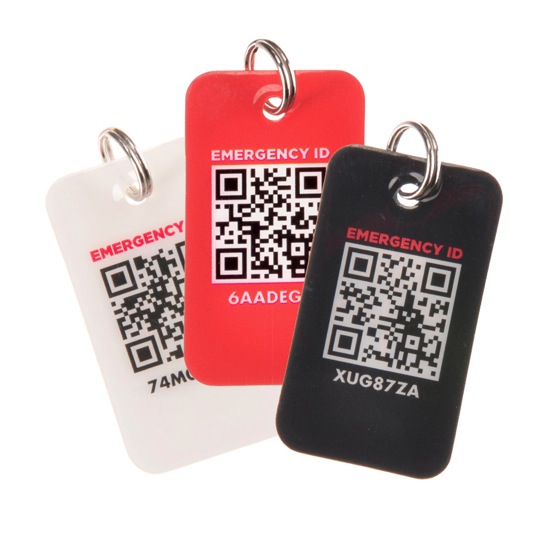
Emergency ID tags from Ecosperformance can be worn as bracelets, plastic tags or as stickers that can be applied to a helmet or even stuck on a phone.

EID Tags contain important profile information in case of emergency. Credit: Ecosperformance

EID Tags contain important profile information in case of emergency.
Credit: Ecosperformance

EIDs store identification, emergency contact and important medical information. When the QR code on the EID is scanned by a Ski Patroller’s smartphone, a skier’s Emergency Profile appears. A seven-digit EID number that can be entered into Ecosperformance website is a backup.

Other times patrollers have to be Sherlock Holmes to find even the most basic information about you—your name. They’ll look for a season pass that carries your name or look for your driver’s license. Sometimes they have to search your cell phone for information. “Often skiers don’t know each other very well, but a ski companion can tell us that the phone is in his injured friend’s right pocket,'” he said.

Carry a list of medications. “Seniors typically take more medications than others,” he said. Based on your condition, it might be vital for the patrol to know what prescriptions you’re taking. Same goes for allergies to medications

“Be sure to carry this information every time you go skiing,” Erkkila said. “Very basic things help us the most.”

And one more thing.

If you’re part of an accident, stay and identify yourself. And then there’s another aspect of accidents, he said. Sometimes there’s a collision between several skiers. Erkkila pointed out that the local city’s ordinance requires you to stay on the scene and identify yourself.  And, “We’re trying to educate the public about this,” he said. For those of us who are veteran skiers, staying on the scene after a collision seems to be common sense courtesy. But it’s also an official part of some resort areas’ regulations.

Knee Replacement Isn’t For Sissies: Part 2

Tips to Kick Start Your Research

A Brighton, Utah, ski patroller with two artificial knees assured me there’s definitely life – and skiing – after knee replacement. Her unbounded success motivated me to launch into research. I’m glad I did my homework. What I learned affected the direction I took, the outcome and ultimately my success. Here are some tips to help you get started.

Metal Knee Model: Is there one in your future? Credit:  Harriet Wallis

Metal Knee Model: Is there one in your future?
Credit: Harriet Wallis

Don’t be duped. Learn about the whole knee replacement process. Don’t be duped by a well-meaning friend who says: “I’d go to Doctor Smith. He’s such a nice man.”

That would be as stupid as buying a car because your friend says: “I’d buy a Honda. It’s such a nice car.”

Do your own research

Get on the phone. Call athletes you even vaguely know who might have some insights on artificial body parts, surgery, and rehab. I called several ski instructors, an operating room nurse, and a 75-year-old mogul skier. I picked their brains .

I also plopped down at the table with ski patrollers while they ate breakfast in the lodge. My question to all of them: What should I learn about?         

They’ll all have different angles, so write their answers down or they’ll become scrambled mush in your head.

Knees, glues and cadavers. With clues you gather from the athletes about what’s important, get on the internet. Do not start on the internet. There’s so much information you’ll get overwhelmed and quit.

Read up on bone-to-metal adhesives, quad-sparing technique, risks, new knee limitations and more. Be sure to separate information from marketing hype. If you have the stomach for it, I recommend that you watch a YouTube video of a knee replacement on a cadaver.  Warning: it’s not for the faint of heart.

Find the top docs. Use the internet to review potential surgeons. They’ll all have illustrious credentials, so do some creative screening. Call each one’s office and ask what his/her specialty is. The phone-answerer should be well informed. Listen carefully. If you get mixed vibes or uncertainty as to whether this is truly a knee replacement guru, it should be a red flag.

Get the inside track. Physical therapists work with patients after surgery. They have refined knowledge about which surgeons give the best outcomes. But they might be reluctant to blurt out a doctor’s name. You’ll probably have to phrase it subtly: “Do you think Doctor A’s outcome is better than Doctor B’s?”

Good luck with your research. Check back for the next installment: Questions for surgeons and how to interview them.

 Note: This is a five- part series in which I describe my knee replacement journey with tips to guide you if you’re anticipating knee replacement. Part 1: Inspired by a ski patroller with artificial knees. This is Part 2. Upcoming will be Part 3: Interviewing surgeons and questions to ask. Part 4: How I found the right doctor for me. Part 5: Rehab and why to love it.

Ski Patroller Nancy Pitstick

Is There Life After Knee Replacement? Part I

Inspiration Is The First Step.

There’s a saying: If you can’t run with the big dogs, stay on the porch. I had to stay on the porch. My knees had quit, and I spent ski days mostly on the deck of the ski lodge while everybody else went skiing. I slathered on the sunscreen, drank hot chocolate and chatted with visitors. But I was bored. I wasn’t skiing.

Skiing wasn’t fun any more. I’d tried physical therapy, injections and finally an expensive custom made brace with pads, straps and a happy butterfly design all over it. Nothing helped. My knees balked at skiing. Even though I could bicycle, walk through the grocery store and climb stairs, my knees refused to ski. They reduced me to doing out of control wedge turns on easy slopes. I believed that my ski life was over. I was caught between non-skiing knees and the panicked feeling that I’d have learn to knit.

Ski Patroller Nancy Pitstick's comment started Harriet's journey Credit: Harriet Wallis

Ski Patroller Nancy Pitstick’s comment started Harriet’s journey
Credit: Harriet Wallis

Then Brighton Ski Patroller Nancy Pitstick entered my life. It was New Year’s Day. The sun was shining. The snow was perfect. But 20 minutes after the lifts opened, I was done for the day. One careening snowplow run was all I could do. I hung up my skis and headed for the deck.

“Happy New Year,” a voice said. “How’s your day going?”

I ignored the cheerful patroller.

“Guess you didn’t hear me,” she said. “How’s your day?”

She wouldn’t let me off the hook, so I poured out my knee frustration to her.

She listened carefully. Then she told me that she’d had both knees replaced. Right there in front of me was a healthy, active, vivacious patroller who was skiing and patrolling with two artificial knees. She assured me there can be life after knee replacement.

In true patroller style, she rescued me—not from a crash on the slopes but from my fear. And she inspired me to find a solution so I could return to the sport I love. It was New Year’s Day, and it began a fresh start on life.

Ed. Note:  In upcoming issues, Harriet will describe what she learned on her knee replacement journey, offering helpful advice and insights.  Look for articles on how to do your research homework, unusual tips to help you choose a doctor, questions to ask when interviewing doctors and more.

Senior Skier’s Skin Game: Five Protective Tips

SkinCareElephant_FAIL

While a great mid-winter day on the slopes may nourish the soul, it can do the opposite for aging skin. It’s common knowledge that our skin changes with age. It becomes thinner, loses fat, loses sweat and oil glands, and generally takes longer to heal than it did in younger days. Fortunately, with a little extra effort, skin can be kept healthy skiing into your golden years. Here are five keys to maintaining healthy, aging skin:VanillaMint

1. First and foremost, prevent skin cancer. Even on cloudy days, skiing at high altitude on sun-reflective snow can expose the skin to harmful ultraviolet rays. Skin cancers like basal cell and squamous cell carcinomas can take residence on areas of the face exposed to sun. That’s why choosing the proper sunscreen is key. Since both UVB and UVA rays are linked to skin cancer, it’s important to use a “broad spectrum” sunblock of at least SPF 30. Click here for natural products-based sun screen.

2. Be mindful of your meds. Antibiotics like tetracycline and sulfonamides make the skin more photosensitive, as do thiazide diuretics used for hypertension. If you take these meds, think of reapplying your sunblock more frequently or aim for an even higher SPF.

KissMyFace3. Don’t forget your lips! Not only is the skin on the lips thinner than on the rest of the body, your kissers contain very little melanin, a pigment that helps protect against the sun. People use lip balm to combat dryness, but if it doesn’t contain SPF , its glossiness can attract the sun’s rays even more! Choose a lip balm with a high SPF. Here’s a natural product-based balm to check out. It’s called Kiss Your Face Lip Balm.

4. Stay well hydrated. Seniors tend to have dry skin in general and spending most of the day outdoors in the cold, dry air can make this problem worse. One way to combat dryness is to stay well hydrated. Aim for drinking half your body weight in ounces of water, and replenish an additional 8 ounces for every “vice” drink (caffeine or alcohol) consumed. Not sure you’re drinking enough water throughout the day? Check your pee! Unless you’re on certain medications or supplements that would change the hue of your urine, aim for a light yellow to beige color. Anything darker than that is a cue to reach for the water bottle.YesToCarrots_edited-1

5. Cool it during apres ski. After a day on the hill, nothing feels better than a hot shower, jacuzzi or bath. While great for sore muscles and relaxation, it may not be so good for dry skin. Hot water strips the skin of moisture. Keep your time in the bath to a minimum or lower the water temperature. And be mindful of soaps and body washes; chemicals like sodium lauryl sulfate can strip the skin of its natural protective oils and trigger irritation. Aim for sulfate-free cream cleansers that contain skin-nourishing ingredients, like oatmeal or shea butter. After your bath or shower, moisturize with an alcohol-free lotion. Like sulfates, alcohol can strip away the protective barrier on the skin and cause flakiness and irritation. Two ideas for moisturizers: Yes To Carrots Body Butter and Vanilla Mint Body Wash. Sounds yummy.

Skincare is probably the last thing on your mind when exploring the hill. By incorporating these healthy habits into ski days, common skin issues are less likely to arise, and your focus can stay where it belongs: Down the mountain!