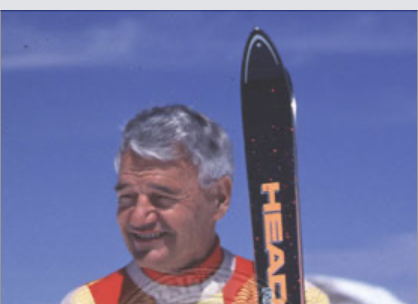
Junior Bounous

Meet 96-Year-Old Ski Legend: Junior Bounous

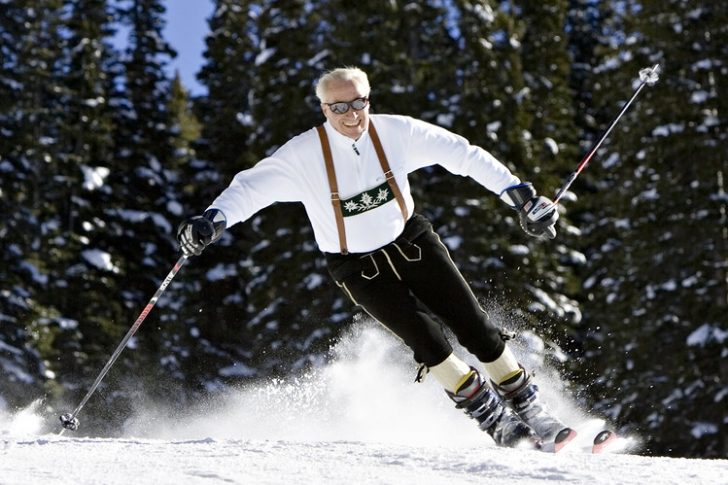
Ski industry icon Junior Bounous, 96, is a mover and shaker whose passion is to keep people skiing throughout their lives. In a nutshell, he tells seniors: Just “keep moving.”

Junior’s career spans nearly eight decades with a list of accomplishments and awards longer than both my arms: Intermountain cross country and national gelande jumping champion, national race course setter, ski patroller, founding member of Professional Ski Instructors of America, father of today’s American Ski Teaching System, an advisor to ski manufacturers, a ski trail designer for resorts, and the director of skiing in California and Utah including Sundance and Snowbird. In 1996, he was inducted into the National Ski Hall of Fame.

Snowbird’s Pipeline

Junior takes his own “keep moving” advice. To celebrate his 80th birthday he skied Snowbird’s treacherous Pipeline chute, a couloir lined with jagged rocks and with no room for error.

And he keeps on moving. On a bright spring day in 2021, he heli-skied from the 11,489’ Twin Peak summit, the highest point in the Little Cottonwood Canyon range, making him — at 95 years and 244 days — the Guinness World Records’ oldest heli-skier. Getting out of the helicopter was difficult because his knees don’t bend as well as they used to.  “The skiing was the easy part,” he said.

Follow the legend

A role model for seniors, Junior continues to ski for the joy of it.

A few days ago my senior ski friend Beth Tait was skiing at Alta when she saw a yellow helmet. Junior always wears a yellow helmet. As she got closer, she saw it really was Junior. He was talking with skiers around him, and she joined in. Later, Beth followed him, trying to ski as smoothly and fluidly as the 96-year-old.  “Junior is an incredibly athletic skier not to mention his heartwarming personality,” she said.

From barrel staves and manure piles to Alta and Snowbird

Junior was the youngest of six children in an Italian farming family in Provo, Utah. His first ski experience was on the farm at age 8 when he attached barrel staves to his feet and skied down a slope trying to miss the manure piles at the bottom.

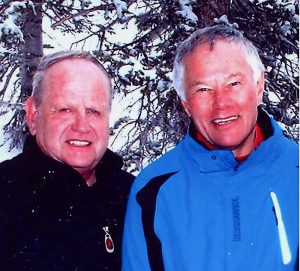
Alf Engen (l) and Junior Bounous Source: J.Willard Marriott Digital Library

Fast forward to 1948, when, at age 22, he became one of the first certified instructors in Utah, and he began a long-lasting relationship with his cherished mentor, Alf Engen. For the next 10 years, Bounous was Engen’s primary assistant in Alta’s Alf Engen Ski School known worldwide for teaching students how to ski powder. His skiing and teaching careers kept accelerating.

When Snowbird was on the drawing board, founder Dick Bass recruited Junior to lay out the trails, and when it opened in 1971, he became its Ski School Director inspiring generations of skiers.

Junior’s top tips for Seniors

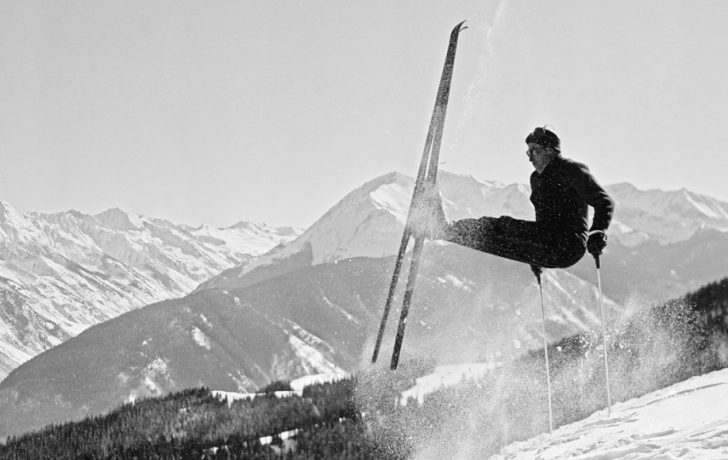
It’s a bird, it’s a plane, it’s Junior in the air in 1957. Photo credit: Harriet Wallis

Balance and coordination are major factors for senior skiers. “Older people have trouble with their eyes and ears, but you can extend the life of both senses if you practice,” he said.

He advises cross training. “Stay active. Do not confine yourself to just skiing. Play golf, ride a bike, take a walk. Do whatever you enjoy – but do it. It will help you get out of the bathtub, get out of the car, and go up the stairs.”

He also recommends improving balance by skiing slightly different terrain and snow conditions. Don’t get stuck skiing only on bluebird days or just on your favorite trails. “It boils down to just doing it. Stay active in as many ways as possible,” he said.

Take Junior’s advice: Just do it.

However, “Many older people drop out because they no longer have anyone to ski with. They’re physically capable, but they’ve lost the social fun of skiing. Find somebody to ski with,” he said.

Help Us Compile SeniorSkiing.com’s list of senior ski groups

To help seniors find someone to ski with, SeniorsSkiing is starting a list of senior ski groups around the country. If you know of a senior ski group, please use Leave a Reply at the end of this story. Include as much information as possible about the group.

A Day With Kathy Brennan, New CEO, PSIA-East

Kathy Brennan, new CEO, PSIA-East, at Seven Springs, PA

I recently skied with Kathy Brennan, the new CEO of PSIA -E (Professional Ski Instructors of America- Eastern Division).  Kathy has an impressive background in the snow sports industry and is currently on staff at Waterville Valley, New Hampshire. She has been touring areas in her division which extends from Maine to North Carolina.

An accomplished skier and excellent teacher, Kathy did something at the beginning of our session suggesting how she‘ll function in her new role:  She asked everyone for feedback on how to make PSIA better, any suggestions or comments on the organization and, in short, what she could do to improve the organization’s mission of being an education platform.

She received numerous comments and suggestions. I asked what PSIA was doing to retain older instructors. She said we never stop learning even after seniors are long past their certification exams.

She also explained that she’s dedicated to assuring that PSIA partners effectively with areas, suppliers, patrol, race programs, and the industry, in general. Educational programs can be utilized by any member, especially seniors who want to stay in the game and improve their skiing and teaching abilities. In her words, PSIA has changed from a “pin chasing” entity to an organization dedicated to providing programs for skiers and boarders of all ages. She’s meeting with area management to educate them on the value of the organization and how its current direction will lead to better instructor education, better lesson quality, and greater customer satisfaction. This approach also will help areas retain good quality certified instructors.

Our conversations were held on chairlifts. On the snow, she gave us – skiers, tele-skiers, and snowboarders – a clinic. Her emphasis, common to the three approaches: balance,rotary movement, edging, and pressure control.

I’m retired from ski teaching but maintain my membership in PSIA with the goal of learning something new every year.

Kathy’s goal is to unite the entities in the ski industry and to make them aware of the value of what PSIA brings to the table. From my time with her at Seven Springs, I’m confident she’ll have great success.

Celebrate Winter: Anecdotes and Insights from a Cross-Country Skier’s Experience

Over the past 50+ years, John “Morty” Morton has cross-country skied around the world, been an international-caliber racer and coach, and, as far as I’m concerned (this is homage from a friendly competitor), is the premier Nordic ski trail designer in North America.

Morty has seen dramatic evolutions in the sport – from wood skis to synthetic, wool to spandex, the introduction of skate technique, grooming snowmobiles replaced by snowcats, narrow trails sometimes giving way to highways, etc. Over these years, he served in Vietnam, taught high school English, and has served as broadcast journalist and newspaper columnist.

Now he’s written Celebrate Winter, a book filled with anecdotes and insights based on his intriguing life. It’s his third book, preceded by Don’t Look Back (1992), where he shared his story and training program, and A Medal of Honor: An Insider Unveils the Agony and the Ecstasy of the Olympic Dream (1998), a novel about biathlon.

John Morton, age 76.

Celebrate Winter is a compilation of memories, from John’s days as a kid in New Hampshire to skiing for Middlebury College in Vermont; competing and coaching internationally in biathlon; coaching at Dartmouth College in New Hampshire; designing multi-use trails for the past 30+ years; to (most recently) skiing with his young granddaughter in a backpack while she calls out for more downhills!

Biathlon is a theme tying many of the roughly 70 stories together, as are observations on the human condition (ego, anger, generosity, laughter, inspiration). He covers the role TV plays in popularizing biathalon; Coca Cola at feeding stations; weather and altitude as they can affect racing; Olympic politics; doping; saunas; holding the Olympic torch for a moment at the Calgary Winter Olympics; and a constant sense of the magnetism of cross-country skiing, its beauty, diversity, and comraderie.

As trail designer, Morty has worked with schools and colleges, lodges and real estate projects, alpine resorts and pure cross-country areas, communities and private land owners, ski clubs and non-profits. Unlike some other designers, he’s well aware of the fact that really tough trails are only suited for elite athletes, whereas the great majority of us are recreational skiers (and the bread-and-butter for most Nordic ski areas).

If having your own professionally planned and built trail system sounds intriguing (cross country skiing, hiking, running, biking, snowshoeing, equestrian…), John Morton (https://www.mortontrails.com/) is still going strong in his mid-70s.

I recently purchased several copies of Celebrate Winter to give as gifts. Many of the anecdotes are just a few pages long, making for a delightful – no, mesmerizing – read.


psia-podcast

PSIA Podcast: Not Just for Pros


The Fall Line with Chaos and Company is a podcast hosted by PSIA Alpine Education staff members, Dave Capron and Angelo Ross. Now in Season 2, the podcast is usually about an hour long and features conversations with ski industry leaders with something to say.  You don’t have to be a ski instructor to reap the podcast’s benefits. Angelo happens to be a friend with whom I’ve skied for a long time.

A recent one features PSIA Alpine Team Coach Michael Rogan. His knowledge of skiing is extensive.  When asked about his thoughts on the World Cup, Michael says that watching the races with a discerning eye can be informing, even for amateurs.  The winners have good connection to the snow, a keen sense of where the fall line is, and when the turn should happen. He goes on to say that any turn after the fall line or outside of the fall line with poor connection to the snow will lead to “the wrong side of the clock.”

He mentions that  Penn State was contracted to develop a standardized certification process for ski instruction that hopefully will eliminate the variance of expectations that exists between divisions of PSIA.  In other words, no matter where a candidate would take an exam to be certified in ski instruction, the same protocol would be followed, thus eliminating  nuanced legacy behavior among examiners in PSIA that sometimes can lead to biases impacting how candidates succeed.

Click on the image above to listen to The Fall Line with Chaos and Company. Or click here to connect with the entire catalog of podcasts.

It’s interesting dialog that will ready you for the season and, in general, make you better informed.

The Man Who Paints Mountains

James Niehues Creates Hand Painted Maps Of Ski Resorts And Now There’s A Book.

James Niehues in his studio, creating maps by hand. Credit: LA Times

If you’ve ever taken a second look at the resort trail maps you casually pick up and put in your parka pocket, you are most likely looking at a painting by James Niehues. James has created trail map art of over 200 resorts around the globe since 1988.  Instead of resorting to computer-created images, he paints by hand and the results are remarkably detailed and beautiful. How does he do it?

James combines the technology of cartography with the art of water colors to create the maps. He flies over an area, takes aerial photographs, studies topographic maps, then creates a simple sketch of the mountain scene. From there, he projects the image on a painting surface, filling in the details starting from the sky down to the base. 

Niehues’ trail map of Vail. Complex, broad, beautiful.

One of the biggest challenges is to show the back trails or bowls of mountain on the same map as the front side. Sounds like Picasso, right? He says it’s a puzzle he has to piece together.

James has been creating resort maps for three decades, taking over the role from Colorado’s Bill Brown, the only resort map artist at the time. Now in his mid-70s, James has anthologized his collection of over 200 maps into a coffee-table book, The Man Behind The Maps, available from Amazon for about $100.

He’s retiring from his one-man profession, passing the mantle to a younger protege. Clearly, his maps create a mood that you don’t get from computer graphics, and that’s the whole point.  Both approaches show you the way down, but James’ maps are create a “feeling” of mountains and the outdoors.

Here’s  a short video that tells James’ story. 


Ski Champion Jim Gaddis: When Life Got Tough, He Surged Ahead

Advice Jim Followed: When You Come To A Fork In The Road, Take It.

Ski buddies Alan Engen (l) and Jim Gaddis at Alta c. 2001. Credit: Alan Engen Collection

From the time Jim was a youngster, his single goal was to be an Olympic ski racer. He lived for that. He trained for that. But when he was shut out of the Olympics, it didn’t stop him. He generated ways to help others in the sport he loves.

His accomplishments include being an elite Intermountain ski racer, an inspiring coach, a great salesman, an imaginative program starter, a premier fundraiser — and he’s still moving on. Just try to keep up with him.

Yankee baseball legend Yogi Berra had a saying for it: “When you come to a fork in the road, take it.” Every time Jim came to a fork, he took action, reinvented himself, and moved forward. It’s a lesson we all can learn.

From Sears Skis To Winning National Racer

As a youngster Jim sledded on a golf course and saw someone using strange equipment: skis. He asked for skis for Christmas, and his parents bought him a complete set: skis, strap bindings and boots from the Sears catalog for $5.

He practiced at Alta and Brighton when his older brothers could give him a ride there. And he strived to ski like his good friend and acclaimed ski champion Alan Engen, son of famed Alf Engen.

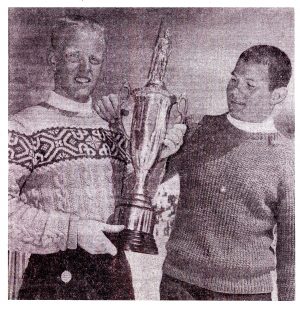
Alan Engen (l) and Jim Gaddis hold the Intermountain Ski Association Alpine Combined trophy. Each won the championship 3 times. c. 1959. Credit: Alan Engen Collection

Early on, he entered his first race on his $5 skis. It was a slalom-type course on the steep face of Collins at Alta. “I don’t know how many times I fell, but I made it down in about 4 minutes,” he said. The winning time was 40 seconds! Defeat spurred him on.

His skills and determination grew, and he entered — and won — national races. He won the National Giant Slalom Championship. And three times he won the NCAA Alpine Championship and three times the famed Snow Cup. But three was not his lucky number. His dreams were derailed when he broke his legs not once, but three times in race accidents, Still nothing stopped him.

Finally he was on target for the 1964 Olympics, and he qualified for it. But his dream was crushed. He was shut out of the elite team that included Jimmie Heuga, Buddy Warner, Billy Marolt and Billy Kidd, with Bob Beattie as the coach.

“It was very hard to deal with,” he said. “It was my whole life’s ambition to be an Olympic racer — and maybe win.” At that point, he didn’t even have a job because he was totally focused on being an Olympic racer.

It was a fork in the road. He took action, reinvented himself and surged ahead.

Metamorphosis

Using his degree in banking and finance, he became a stock broker. But his passion was skiing, so he created the Gaddis Training Organization to coach elite and youth racers. The program grew to 110 racers with seven coaches, and he ran it for 12 years. It became Park City Mountain Resort’s ski team.

His Olympic dream had a legacy. But he didn’t stop there.

Another fork

Jim discovered he had a natural ability to promote and sell. When the University of Utah had trouble raising funds to expand its stadium, Jim took the challenge and quickly sold 40 seats.

From that beginning, his fund raising expertise expanded. His accomplishments read like a Who’s Who of skiing.

Energetic and active Jim Gaddis today. Credit: Harriet Wallis

He spearheaded fundraising for many ski organizations, and founded and chaired others including: the Youth Winter Sports Alliance which gets kids involved in winter sports; the National Ability Center, teaching skiing to handicapped; the Stein Eriksen Opportunity Endowment, which raised $2 million in two years to help local athletes with equipment and travel expenses; and the U.S. Ski and Snowboard Foundation Ski Ball, raising funds for the U.S. Ski and Snowboard teams.

He also chaired the Jimmie Huega Express, which raised $1 million annually for the Huega Multiple Sclerosis center; was instrumental in fund raising for construction of the Alf Engen Ski Museum, which preserves the Intermountain history of skiing; and helped found and raise funds for the Utah Ski Archives, the country’s largest ski research repository of historic material. The Archives collection currently contains 500,000 images, 250 manuscripts and 6,000 audio,video and films, and it’s open to the public.

Just recently, Jim once again raised funds for his Alma Mater. He chaired the University of Utah’s campaign that raised $2.5 million and built a dedicated training facility for the University’s winning ski team.

His Olympic dream lives on in unique ways. He really is a gold medal champion.

Jim’s life demonstrates his philosophy: “Always do a good job. Do it right, and do it honestly. Don’t let anything stop you.”

Today, energetic and active, he takes time from initiating programs and raising funds to ski with a group of friends at Deer Valley and Park City Mountain Resort.

To read more from Harriet click here for her stories on SkiUtah.

Klaus Obermeyer Turns 99

Klaus Obermeyer, the legendary skier and innovator, whose eponymous ski clothing brand is found almost everywhere, recently has his 99th birthday. The following interview with Klaus appeared in SeniorsSkiing.com, January 27, 2017:

“It’s Easier To Ski Than To Walk.”

Klaus Obermeyer is a skiing legend and innovator. The 97 year old founded Sport Obermeyer Ltdbased on insights about ski wear while working in the late 40’s as an instructor in Aspen. One of his many innovations was the down ski parka, stitched together from a goose down comforter. Other product innovations include high-altitude suntan lotion, turtlenecks, nylon wind-shirts, and mirrored sunglasses. In 1961, the first Sport Obermeyer factory warehouse opened in Aspen, and innovations continued with “soft-shell” jackets, double lens goggles, pre-shaped gloves, the first waterproof, breathable fabrics, a built-in ski boot canting system and fashion-conscious, technically responsible skiwear.

Klaus Obermeyer

What are the most significant changes you have observed in the world of skiing?

Skis have gotten shorter and wider. Their advantage is that you can float at lower speeds in deep snow. They make it easier for everyone to ski deep snow. They also allow those who climb mountains to use a lot more of the mountain with or without the lifts.

 During your time, which well-known skiers have had the most impact on ski fashion?

Maria Bogner probably.

Please comment on the role of form and function in ski apparel?
For ski apparel to function well, for example, ski parkas, they need:

  • – To be waterproof and breathable;
  • – To have stretch material in places where stretch is needed;
  • – Be lightweight;
  • – Look terrific

For many years, you have been a role model for older skiers. Do you think equipment and apparel manufacturers would benefit from using older models and showing older people in their advertising and marketing?

The older models are slowly dying out and the young ones are tomorrow’s old ones. I think age makes no difference as far as technical performance of clothing.

What advice would you give older skiers who are still healthy but thinking about hanging up their boards in favor of other activities?

I think one should never give up skiing as it keeps the legs in good shape and even improves your walking after you’re over 80.

What advice would you give ski area operators to encourage older skiers to remain in the sport? 

Have parking places for older skiers so you don’t have to walk so far in those awful ski boots.

Of all people past and present with whom would you like to ride the lift?

With the best looking girl!

Please add any comments not covered above.

Skiing and boarding are sports that are absolutely unique and wonderful. The make you appreciate the incredible beauty of being outdoors in the mountains and give you tremendous choices of how fast to go, where to put your turns, and where to jump to get a zero G feeling. In the end it’s easier to ski than to walk.

Klaus in his earlier days

SnowSports Leader: Alan K. Engen

When Alan Engen was born, Dr. Wherritt put wooden tongue depressors—like miniature skis—on the bottom of his little feet and handed the newborn to his legendary father, Alf Engen.

“I think I can safely say that I came pretty close to being born on skis,” says Alan. He learned to ski when he was two.

Thus began a lifetime of ski achievements. He competed at nine, earned a place on the United States Ski Team in the 1960s, and won the United States Ski Association Intermountain Masters Alpine title six times. He served Alta for 50 years as an instructor, the ski school director, and then the Director of Skiing.

Alf Engen and Alan Engen jumping at Alta, circa 1949.

Alan and Alf—both world class ski jumpers —put on jumping exhibitions to demonstrate “Summer Snow,” a cornstarch-like substance. Father and son schlepped the product to the Los Angeles Fair Grounds for exhibitions on a 130 foot jump. In the grand finale the twosome jumped through a flaming hoop. After the demo, they shoveled the “snow” into gunny sacks and hauled it away.

Alan has dedicated more than six decades to skiing (click here to watch a video about Alan’s career) and is a member of the U.S. National Ski and Snowboard Hall of Fame. The Engens are the only family to have four Hall of Fame members: his father, Alf; two uncles, Sverre and Corey; and Alan.

Importantly for the entire skiing community, Alan is an accomplished scholar, author, and historian. His dream to showcase hundreds of Alf’s ski trophies and memorabilia in a small museum grew instead into the $10.5 million Alf Engen Ski Museum at Olympic Park in Park City, Utah. It was funded entirely by private donations (including Utah’s famed Quinney and Eccles families).

Alan with wife, Barbara.

Alan also is an active contributor to SeniorsSkiing.com where he serves on the online publication’s Advisory Council.

His advice to senior skiers: Use new boots, bindings and skis because the technology will help you enjoy skiing more.

This article is adapted from the original which first appeared in SkiUtah.com.

Coveted Honors Awarded At Ski History Gala

Rossignol’s Top Executive And The University Of Utah Ski Team Earned Top Honors.

Top honoree Ron Steele oversaw the company’s sales and distribution of Rossignol, Dynastar, Lange, Look and Kerma brands while he was president of Rossignol.
Credit: Harriet Wallis

The country’s largest ski history and research organization, Ski Archives, held its annual gala and fundraiser to help support its mission. In addition, the event honors individuals and organizations that set a high mark for their influence on the ski industry.

This year, Ron Steele, philanthropist and Rossignol’s executive vice president earned the Joseph Quinney Award. The award recognizes him for his ski industry commitment, vision, and business leadership.

Steele left his home state of Washington to become a champion ski jumper for the University of Utah, and he went on to compete on the U.S. Olympic ski team in Sappporo, Japan. Along the way he was an alpine technician for Rossignol and he rose through the ranks to become its president and now executive vice president. He also serves on ski industry boards.

“I got a great life after coming to Utah,” he quipped.

The award Steele earned, the Joseph Quinney Award, is named for the late ski visionary and founder of Alta.

The University of Utah’s ski team won the NCAA Championship, and the ski team members have high GPAs.
Credit: Harriet Wallis

The other top award, the J. Willard Marriott Library History-Maker Award, went to the University of Utah Ski Team. In 2017, the team won its 11th overall title and its first national NCAA Ski Championship title.

During the winter while the team was out skiing, the unique $2.8 million ski team building, the Spencer F. Eccles Ski Team building, was rising out of the ground on the campus. It’s believed the building is the first-of-its-kind facility on a U.S. college campus.

It’s named after Spencer F. Eccles, a former U of U All-American ski team member, and it was funded by private donations. The donation program was headed by another skier well known in the industry, U of U All-American skier Jim Gaddis. The evening’s award winner Ron Steele was a major donor and played a major role in fund raising for that structure.

The Ski Archives collection is open to the public, and it’s located in the University of Utah campus library in Salt Lake City.

To read more from Harriet click here for her stories on SkiUtah.


Snow Sport Leaders: Herman Dupre, An Original Maker Of Snow

Son Of Immigrant Parents, Herman Dupre Found A Way To Give The Sport Snow.

Innovator, pioneer, snowmaker, Herman Dupre is a legend in snowsports.

Aside from building the Seven Springs ski area in western Pennsylvania into a major mountain resort, Herman Dupre’s claim to fame is that he is a pioneer in snowmaking.  He always tinkered with how to utilize high pressure air and water to help Mother Nature spread some snow on our local area which is hampered by cyclical warm weather/cold weather events.  When you ski in the mid-Atlantic, you need some help to keep the slopes open.  Snowmaking was the answer, and Herman was at the forefront.

Dupre holds 34 U.S. patents for the HKD snowmaking system. He is the chief engineer for Snow Economics, Inc. and his system is now sold worldwide. His new Backyard Blizzard home system based on the HKD concept became available in the winter of 2000. Without the benefit of his work, many winter resorts throughout the world would not have the snowmaking capability they utilize today.

In 1973, he applied for and received his first of many patents, and in 1990, he introduced the standard tower snow gun that was the first of many low energy products that he and his son in law, Charles Santry and his daughter Anni would bring to the ski area management market.

If you look at their website, you will find all the technical detail of their tower guns, and their new fan jet technology with their recent acquisition of a Canadian company which has increased their R&D capabilities as well as their engineering expertise.

Click on the video below to hear Herman tell his story.

Johannes Von Trapp

Johannes Von Trapp: Climbing Every Mountain

Scion Of The Famous Family Is The Inventor Of The Modern X-C Center.

Johannes Von Trapp makes X-C skiing acccessible and fun for guests at the family lodge.
Credit: Roger Lohr

[Editor Note: This article first appeared in XCSkiResorts.com.  Our thanks to publisher Roger Lohr for allowing us to reproduce it here.]

If there was an American Cross Country Ski Hall of Fame, Johannes von Trapp would be one of the surefire inductees. The famous story of the von Trapp family is well known; their escape from Austria in the beginning of World War II, and the Broadway and Hollywood songs such as Edelweiss, My Favorite Things, and Do Re Mi. In November of 2014, Johannes von Trapp spoke at a luncheon of Nordic ski area operators and one could tell they looked at him as their living history. He grew up with nine siblings as the last born in the original von Trapp family and he is also known as the proprietor who opened Trapp Family Lodge, the first commercial Nordic ski area in 1968.

In 1938 just before World War II, the Baron and Baroness von Trapp left all their possessions and estate near Salzburg, Austria. With nine children and one on the way, they fled Austria and were granted asylum in the US. That child on the way was Johannes, who was born in 1939 and now is the president of the modern day Trapp Family Lodge in Stowe, VT.

Arriving in the US with only four dollars, the family settled in Philadelphia and, through their music, turned a family hobby into a profession as the Trapp Family Singers. In 1942, they bought a small farmhouse in Stowe, Vermont because the landscape reminded them of home. They rented out rooms at their farmhouse to skiers and ran the Trapp Family Music Camp.

Johannes commented that they were too poor to pay to use the ski lifts in Stowe, so they skied up and down in the woods around the farm. He attended Dartmouth College and upon returning to Stowe, he later operated the lodge. He started the ski area out of his barn, renting cross country skis, and giving ski lessons to become the first commercial cross country ski resort in the world. He had hired his first staff person, Per Sorlie, an ex-navy man from Norway, who had great enthusiasm for cross country skiing and who had a brother who wholesaled cross country ski equipment from Norway.

They would pack the trail in the early morning, rented and sold Nordic skis, and taught ski lessons. Johannes stated that he grossed $8,000 that first year in the cross country ski business, and he doubled the revenue in the following year. The original concept was a way to attract guests to fill the rooms at lodge.

He always thought that the business would involve backcountry skiing as the key element and today he still hopes that backcountry will grow and become a more noticeable part of the Nordic ski scene. He commented about the “violent contrast” in product development that has become “plastic, nylon, and form fitting,” citing the Americanization of Nordic skiing. But he does admit that the new equipment and clothing have great virtues, and he has come full circle embracing the high tech that has been incorporated into the sport and business.

Johannes reminisced about the first snow machine he bought for $50 to pack the trails. They built many different weighted boxes with skis on the bottom to drag behind a snowmobile and set tracks on the trails.

In the early 1970s, the lodge included a riding stable but the horses impacted the trails too much so horseback riding was discontinued. Johannes cited a recent survey taken by UVM students at Trapp Family Lodge that revealed the skiers mostly cared about the track quality. But he still believes in the psychic benefits of being outdoors and loves how the sport has taken off.

The lodge occupancy has increased over the years.  Acquiring the nearby land (Trapp Family owns 90% of the trail property) was important to maintain the trails. The lodge history included the fire in 1980 and rebuilding in 1983. In 2000, Trapp added 24,000 square feet of meeting space and accommodations to the lodge and four years later the first villas adjacent to the lodge were completed and sold.

Johannes’ son Sam became vice president of the operation in 2007 adding mountain bike trails in the summer and snowmaking in the winter. In 2008, Trapp Family Lodge celebrated its 40th anniversary and was covered in the NY Times, on ABC World News, and the lodge created its first television advertisement. In 2010, Trapp Lager beer was introduced on the property and a new facility was opened in 2015 in Massachusetts to greatly expand the brewery operation.

Johannes von Trapp is one of the American cross country skiing forefathers, who will be recognized for his vision of cross country skiing and his connection to a world famous family story.

SnowSports Leaders: Melanie Mills, CEO, Colorado Ski Country

Last Season, Colorado Accounted For Nearly 25% Of All Skier Visits In The US, More Than Any Other State.

The Rocky Mountain High state has iconic areas like Aspen, Steamboat, and Telluride. But it also has a well-developed trade and marketing organization, Colorado Ski Country USA, currently headed by Melanie Mills. The group’s scope is widespread, covering public policy, domestic and international marketing, and communications for the 22 ski areas it represents.

Melanie Mills, CEO, Colorado Ski Country USA

Mills, who has been President and CEO of Colorado Ski Country USA for 9 years, has worked in the ski industry for more than twenty. She arrived in Colorado in 1990, after meeting her future husband in the lift line. In her role as CEO, Mills works closely with CSCUSA’s member resorts, its board, and other associations and state tourism and economic entities.

Great skiing can be found in many states. Why does Colorado consistently get more skier visits than the others?

Many people associate Colorado with skiing and vice-versa.  The state gets great snow, and great snow contributes to the number of skiers who choose to visit. Our areas offer something for every type of skier or boarder, as well as a broad range of on and off-mountain recreational, dining, and entertainment experiences. Member resorts also are family friendly. These are what keep our annual visits so high.

What is the economic impact skiing has on Colorado’s economy? Is it trending up or down?

The ski industry is a huge part of Colorado’s economy. It’s deeply ingrained in the state’s brand. Our most recent economic impact study showed Colorado’s ski industry contributing $4.8 billion annually and supporting 46,000 year round jobs. Last year was the third year in row we set a record for the number of skier visits.

What is Colorado doing to preserve its many skiing assets during this time of global climate change?  

 Colorado Ski Country ski areas and the ski industry generally have and continue to lead when it comes to mitigating our impact on the environment and fighting climate change. Many of our resorts participate in the National Ski Areas Association’s Climate Challenge and advocate for policy measures to address climate change. We also work with a wide variety of industries, non-profits and advocacy groups on public policy to reduce greenhouse gas emissions and reduce the threat of climate change to our industry. A page on our website is devoted to sustainability, and includes ways for people to get engaged and find other organizations we work with on these issues.

Does Colorado appeal specifically to the older vacation skier? If so, how?

Seniors are an important segment of our market. Visiting seniors will find skiing contemporaries enjoy discounted tickets, including lessons and mountain tours with other seniors.

This year, we welcomed the return of the Winter Park Express, which is a train running Saturdays, Sundays and Holiday Mondays during season from Denver’s Union Station to the base of Winter Park Resort. It’s a scenic two-hour ride through 28 tunnels. It’s the only place in the US where you can travel, car-free, to the area without setting foot in a car. We also have a train that runs from Union Station to Glenwood Springs, a short trip from Sunlight ski area, which offers some incredible hot springs as well.

 What would you recommend to older skiers planning a two week ski tour of the state?

Colorado is home to many great ski towns with a range of  skiing and other recreational and cultural offerings. They could stay in one place the entire time, get to know the mountain and explore the town and surrounding area, or they could ski multiple areas for a day or two while travelling our beautiful state, something to consider for those who may want to rest between ski days. Options are available at www.coloradoski.com. We also have a travel page with information about different airports and transportation options for the state.


Snow Sport Leaders: Dave Scott

“I Don’t Believe In Slowing Down.”

[Editor Note: Dave Scott spent most of his adult life working in multiple facets of the ski and sport industry both in the United States and in Europe. In 2009, David Scott was honored as a Sport Builder by the Colorado Ski and Snowboard Hall of Fame. Beginning his ski-racing career in Pennsylvania, David first came to Colorado to ski for the University of Colorado. During the 1960’s David served on numerous race committees on the East Coast including Junior Alpine Committee, USSA National Alpine Committee and the USSA Coaches Association. In 1971, David returned to Colorado as the Director of Racing for AMF/HEAD in Boulder. This marked a different direction for David’s involvement in skiing working on the import and retail side of the industry. Importing European brands like Blizzard Skis, Koflach Boots, and LaCroix Skis, David introduced many of these companies to American audiences.]

Dave Scott, racer, entrepreneur, ski industry builder.

When did you start, where, why.  How did you get into ski racing?

I started skiing in Pennsylvania in 1948 at age six.  My first experience was at Split Rock Lodge and soon followed by skiing at Big Boulder.  My father and I started skiing at the same time.  We both found the challenge of skiing something that was very addictive.  Our first trip skiing outside Pennsylvania was in 1952 to North Conway, NH and two weeks later we followed that with a trip to Stowe.  After that we were really hooked.  My father was a competitive person and when I expressed an interest in ski racing, he supported me.  I think that my first competition was in 1953 and I had modest success locally.  In 1955, I went to Proctor Academy, NH, because of their reputation for having a good ski team.  After that I competed throughout New England and in Colorado.  I was a good racer, but not good enough to be completive for the US Ski Team.

Why has skiing/outdoor winter sports kept your interest over the years? 

It is a great family sport that can be done together by many different generations.  I regularly ski with my grandchildren and my daughters.  When you are skiing, all of your worries and concerns go away.  Skiing requires all of your physical skills as well as concentration.  There is no time to be concerned about you daily problems.  I enjoy being outdoors in the fresh air.  I like the feeling of the wind in my face and I enjoy the challenge of trying to make better carved turns on each run.

What concerns do you have about skis and related equipment these days? 

There certainly have been a lot of changes with the equipment.  When I started there were non-release bindings and skis without steel edges.  Of course the boots were leather and much softer than what we use today.  The new wider skis with much more side-cut have made skiing easier to learn and enjoy deep powder skiing.  That’s good for the sport, but it means that good powder days don’t last very long.  All of the new equipment, skis, boots and bindings create a lot of new leverage on the body.  We certainly have more knee injuries than 40 years go, but the ankle injuries and broken ankles are almost nonexistent.

Dave has the same smile!

What advice do you have for seniors who are  thinking about “slowing down” their skiing experience? 

I do not believe in slowing down.   Stay in the best shape you can and continue to challenge yourself.  Prior to last year I had not skied more than five days in any of the previous five years.  I was skiing slower and becoming concerned about being hit.  Last year with the help of some friends I stepped it up.  I skied 20 plus days.  I felt stronger and I started skiing faster again.  I went from being concerned about being hit by skiers and snowboarders to taking charge.  My fear of being hit was reduced to almost nothing.  I rediscovered the love of the challenge of trying to make better and better turns on steep hills.  I continue to challenge my grandchildren and we have a lot of fun together on the slopes.  I don’t have any alternatives.  You either continue skiing and trying to improve or perhaps it is time to stop!

What changes have you seen in the Ski Hall of Fame over the years?  What are you most proud of in being involved with that organization? 

The various ski hall of fames help tell the story of skiing.  It is an important way to honor the competitors and the sport builders.  I was always someone that believed that the HOF was for the very top racers, but I have come to realize that without the sport builders we would not have what we have today.  I feel that it is important to help newer skiers understand what it took to make all the equipment and great resorts possible.  I would not have happened without the determination and risk taking that the pioneers brought to the sport.

Snow Sports Leaders: Klaus Obermeyer

“It’s Easier To Ski Than To Walk.”

Klaus Obermeyer is a skiing legend and innovator. The 97 year old founded Sport Obermeyer Ltd based on insights about ski wear while working in the late 40’s as an instructor in Aspen. One of his many innovations was the down ski parka, stitched together from a goose down comforter. Other product innovations include high-altitude suntan lotion, turtlenecks, nylon wind-shirts, and mirrored sunglasses. In 1961, the first Sport Obermeyer factory warehouse opened in Aspen, and innovations continued with “soft-shell” jackets, double lens goggles, pre-shaped gloves, the first waterproof, breathable fabrics, a built-in ski boot canting system and fashion-conscious, technically responsible skiwear.

Klaus Obermeyer

What are the most significant changes you have observed in the world of skiing?

Skis have gotten shorter and wider. Their advantage is that you can float at lower speeds in deep snow. They make it easier for everyone to ski deep snow. They also allow those who climb mountains to use a lot more of the mountain with or without the lifts.

 During your time, which well-known skiers have had the most impact on ski fashion?

Maria Bogner probably.

Please comment on the role of form and function in ski apparel?

For ski apparel to function well, for example, ski parkas, they need:

  • – To be waterproof and breathable;
  • – To have stretch material in places where stretch is needed;
  • – Be lightweight;
  • – Look terrific

For many years, you have been a role model for older skiers. Do you think equipment and apparel manufacturers would benefit from using older models and showing older people in their advertising and marketing?

The older models are slowly dying out and the young ones are tomorrow’s old ones. I think age makes no difference as far as technical performance of clothing.

What advice would you give older skiers who are still healthy but thinking about hanging up their boards in favor of other activities?

I think one should never give up skiing as it keeps the legs in good shape and even improves your walking after you’re over 80.

What advice would you give ski area operators to encourage older skiers to remain in the sport? 

Have parking places for older skiers so you don’t have to walk so far in those awful ski boots.

Of all people past and present with whom would you like to ride the lift?

With the best looking girl!

Please add any comments not covered above.

Skiing and boarding are sports that are absolutely unique and wonderful. The make you appreciate the incredible beauty of being outdoors in the mountains and give you tremendous choices of how fast to go, where to put your turns, and where to jump to get a zero G feeling. In the end it’s easier to ski than to walk.

Klaus in his earlier days

Snow Sports Leaders: Steve Cohen, CEO, MasterFit Enterprises

[Editor Note: Steve Cohen, CEO and co-founder of Masterfit Enterprises, oversees the Masterfit University Training Centers, the America’s Best Bootfitters organization of top ski bootfitting shops, and Masterfit’s insole and bootfitting products lines. He created the annual national on-hill boot testing program in 1988 while serving as executive editor of Ski Magazine. He is a senior contributor and co-authors all the boot content for Ski and Skiing magazines and their websites, and for the America’s Best Bootfitters website (www.bootfitters.com).]

Steve Cohen, CEO, MasterFit

Experienced skiers advise that ski boots rank most important. Why is that?

Boots are both the suspension and steering link between the body and the ski. If your boots don’t fit comfortably and efficiently transmit power between foot and ski, you’ll never ski to the best of your ability.

What’s more important for comfort and performance: boot liners or boot insoles?

Both are important. But the liners that come with most quality ski boots are pretty good and bootfitters are great at making comfort and fit modifications to them.

The insole is a critical fit, stance and performance component. But the dirty little secret of the ski boot world is that the insoles that come in most ski boots, even the most expensive ones, aren’t very durable or supportive. In fact, boot companies expect skiers to upgrade their insoles so they see it as a place to shave cost.

Think of your boot insole as the foundation for the entire boot. If you aren’t standing on a stable, well-balanced platform, all the joints above that are so crucial to executing a ski turn—ankles, knees and hips—will be out of kilter. That can lead to pain and make it difficult to execute turns.

Explain the importance of Masterfit University and seeking out a shop with an “America’s Best Bootfitter” designation when getting boots fitted.

Would you rather go to an auto mechanic with professional training or one who figured stuff out by trial and error? Masterfit University is where ski retailers send their personnel to be trained in the science and art of bootfitting by the world’s elite bootfitters.

The shops that earn the America’s Best Bootfitters mark of distinction are the best of the best. They have elite skills, knowledge and a complement of specialized tools to provide the best in boot sales and service.

Do you recommend custom insoles for ski boots, or are off-the-shelf models sufficient?

Depends on how often you ski and your aspirations. What we call drop-ins or cut-to-fit models definitely provide better fit, stability and comfort than stock insoles. They’re great for skiers on a budget and those who ski infrequently or at a casual pace. But if you have a complex foot problem, stance issue, ski frequently, or aspire to ski at an advanced level, custom insoles should be inside your boots.

How frequently should skiers replace their boots?

That’s a function of how often they ski. Full-time instructors and others who ski daily will replace their boots every year or two.

For recreational skiers, figure 150-175 days of use or 7-8 years. Whichever comes first. The boot’s shell is subject to incredible stresses in every turn. The plastic eventually loses resiliency and strength and can even crack or explode. The padding in the liner also compacts and loses its resiliency. Components like buckles start breaking. I like to have a transition season where I phase out a boot and break in a new one.

If you frequently walk on hard surfaces with boots, all the guidelines above can be tossed out. Once your soles start wearing thin or losing their shape, it can affect how your binding releases. That’s serious stuff. Your binding may not hold you in when it should or it might not release when it should. Both are dangerous situations. Your boot/binding interface should be inspected and tested periodically by a certified shop.

What should older skiers be looking for when they’re shopping for a pair of boots?

A good bootfitter to guide them. Older feet have more problems and need someone with experience and skills to help in the selection and make modifications and accommodations. Older skiers might also want to consider a softer boot than they used in the past as well as one designed for easy entry/exit and easy to close and open buckles.

Masterfit organizes the annual event where the coming season’s boots are evaluated. The results appear in Ski, Skiing, and at the America’s Best Bootfitters website and inform ski shop sales personnel around the country. How is this information relevant for older skiers?

We have a lot of exceptionally-experienced skiers who are 50+ testing boots for us. Their experiences and feedback gives older skiers a reference point from which to start a boot search.


Snow Sports Leaders: Jackson Hogen, Publisher of realskiers.com

Jackson Hogen’s career encompasses many roles in the world of skiing: from freestyle competitor, instructor and extreme camp coach to ski designer, product manager, and marketing director. He has been testing skis and boots for decades. His list of best 2016-17 skis for older skiers is available free to SeniorsSkiing.com subscribers.

Jackson Hogan of realskiers.com

Jackson Hogan of realskiers.com offers in-depth reviews of ski equipment.

Your realskier.com bio indicates you’re a skiing everyman. You’ve taught, tested, written, and coached and created the site for in-depth equipment reviews. Are there other Yale grads who have devoted themselves so fully to the sport?

I believe there is an erstwhile K2 rep who is a Yale grad, Brent Mohr. As far as I know, he “only” served as a sales rep. I can’t think of anyone else with my range of background from Yale (or anywhere else).

What are your views on the role of big corporate destination entities vs independently-owned ski areas?

Corporate ownership of ski areas has helped to accelerate the flight of the middle class from the sport. I’m not a fan. No skier I’ve ever met asked for the homogenization of the ski experience. When run by families, ski areas tried to serve the public at large. As run by mega-corporations, they serve their stockholders and richest customers. The same reason why insurance-run health care in this country is an abject failure.

What more should the ski industry be doing to preserve winters?

Other than support initiatives to mitigate the effects of climate change, there’s not much they can do. They don’t mine or burn coal, and they tend to be very conscientious about water use. We should be cautious using the term, “ski industry.” There is no “ski industry,” just individual companies striving to serve their stockholders.

You are now in your 60s. What advice do you have for older skiers who want to continue in the sport as long as they can?

Don’t retreat into a shell of “I can’t do XYZ.” You certainly can’t if you start out by thinking you can’t. Like a lot of older skiers, I’m a hot mess of prior injuries, but one has to put such thoughts aside and just ski. I realize this sounds vain at best, but I’m still one of the better skiers on the hill no matter what hill I’m on. Take two Aleve, go ski as hard as you can and stop whining about your age. Here’s what you lose: explosive power. Big deal. You can ski very well without it.

We all know that the ski industry directs dollars and attention to the younger part of the market. Should executives be directing some of their budgets to older skiers, and, if so, why?

For starters, no one controls more assets in the U.S. than the population over 55. Seniors have money and are willing to spend it for a good return on investment, like a great ski experience. The focus on youth backfires in many significant ways, most importantly in diminishing on-slope safety for all. Also, catering to the youth market entails assigning a good chunk of the mountain to terrain parks (absurd on most big mountains, which ARE terrain parks) which works out fine on mountains like Mammoth that can accommodate the needed space and remove it from the basic traffic pattern. At other areas they can be at once obtrusive and largely unoccupied.

I don’t think I’m revealing any secrets when I observe that seniors are influenced by their past. They came of age when skiing was more accessible and less expensive. While they can’t continue to live in that world, they are still grounded in it. Point being, they’re committed to the sport, not just peripherally associated with it, as is often the case with America’s youth.

Any other closing nuggets of wisdom?

If you’re skiing in boots that hurt, stop. If you struggle to put your boots on, stop. If your skis seem to make every run a battle, stop.

Don’t stop skiing, for heaven’s sake, but stop putting up with the handicaps that come with lousy boot fits, cold boots and poorly maintained equipment. Yes, it will cost something to address these issues, but wouldn’t it be worth a few shillings to ski free from pain and in better control?

Snow Sports Leaders: Reese Brown, X-C Ski Area Association Exec

New Ideas For X-C Skiing With New Director.

New CCSAA Exec Director Reese Brown brings energy. Credit: Roger Kohl

New CCSAA Exec Director Reese Brown brings energy.
Credit: Roger Lohr

Reese Brown is taking over the reins at the Cross Country Ski Areas Association (CCSAA) as Executive Director after a long run by former leader, Chris Frado. CCSAA is a nonprofit organization founded in 1977 with about 350 ski area members in North America and is dedicated to promoting growth and improving the quality of the cross country (XC) ski area operations.

The XC ski area members of CCSAA include businesses including resorts and inns, and public facilities such as parks and club-run trail systems that offer skiers groomed trail XC skiing, instruction, ski clinics, lessons and programs, and so much more. The organization coordinates conferences and member services such as a website directory, snow conditions reporting, and educational support.

As the new executive director, Reese Brown is charged by the organization board of directors with reinvigorating the group and increasing the value of membership with tangible benefits. Additionally, Reese serves as the Nordic Director of Snowsports Industries America, the trade association of product suppliers recently moved to Park City, UT.  He is involved with a US Ski Team committee and runs the Winter Trails introductory program. He’s a personal interlocking directorate for cross country skiing.

XCSkiResorts.com asked Brown about his perspectives on CCSAA and XC skiing on a number of issues. He wants to help XC ski areas raise their game, and he intends to increase the educational benefits for ski area members.

Regarding older skiers, who represent 12.4% of the XC ski population, he said, “cross country skiing and snowshoeing are the perfect forms of recreation for seniors because they are low impact activities that can be done into the later ages. With cross country skiing and snowshoeing, seniors can go at their own pace, get some exercise, join with like-minded people, and just enjoy the scenery.” He points out that senior skiers and snowshoers can socialize with friends or a group of people at the Nordic ski areas on midweek days when there are no crowds. Many cross-country ski areas coordinate specific senior programs with a short outing on the trails, a snack, coffee or hot chocolate and some company to enjoy it with on the same day each week.

After decades under the same CCSAA leadership, the new executive director and CCSAA’s rejuvenated working board is taking ownership of the organization’s efforts to revamp. For example, at the CCSAA spring conference Brown and some Board members orchestrated educational programs on grooming, snowmaking, and website effectiveness. These programs were parlayed with one-on-one sessions that were tailored to attending individual ski areas. These tailored sessions were scalable to the different ski areas so a small area could apply specific information at a lower level of commitment be it for a snowmaking investment or enhancing a website.

Brown is working on educational programs such as effective snow condition reporting, dealing with fat bikes on the trails, making rental equipment inventories more productive, and financing. “We intend to up the level of cross country ski providers’ games, which will benefit the skiers.”

When meeting with XCSkiResorts.com, the energetic Reese Brown reported that he had recently met with a company to work on an Internet-based ski trail ticket program.  Then, he was on his way to a snow gun company in the area to discuss biathlon ideas. This level of adrenaline at the association can only help the cross country ski areas and in turn provide better service to cross country skiers.

Snow Sports Leaders: Bernie Weichsel, BEWI Ski And Snowboard Expos

"Bernie Weichsel speaks at the Jerry Awards at the Ishpeming 100 Film Festival during Skiing History Week in Steamboat Springs."

Bernie has been in the ski biz for over 45 years.

Bernie Weichsel is the country’s major producer of ski shows and expos. He founded BEWI Productions, Inc. in 1979 and has successfully marketed snow sports to audiences in the US and internationally. He assists with fundraising for the U.S. Ski Team and other non-profit organizations. Bernie also is a valued member of the SeniorsSkiing.com Advisory Council.

How did you start skiing and become a major player in ski promotion?

Skiing is my first love. I was lucky, my parents, both refugees from Germany, passed on their love of skiing and the Mountains  at any early age. We lived in Manhattan, and I got started at Belleayre Mountain, in the Catskills, when I was four. Due to my mom I got introduced to Trailside Ski Camp, at Killington, during High School – Brooklyn Technical, where I had organized the school’s first Ski Club – where I washed dishes in exchange for lodging and transportation from N.Y.C. Around the same time, I took on the duties of promoting the New York Ski Show that the owner of Trailside – Mike Cohen – had committed to do (in exchange for Trailside’s booth). That action, in turn, led me to get to know Harry Leonard, the creator of ski shows. Harry loved the “stunts” we did to promote his how – like the time I got a group of friends to stencil “Go Go Ski Show” on Manhattan sidewalks. Wasn’t popular with the police, but Harry loved it!

I ended up working for Harry for six years. The shows were in the Fall. It gave me time to “ski bum” – pursuing each winter a different “vocation” (ski guide, rep, etc.), which I did with enthusiasm from Aspen to Innsbruck.

In 1974 I got involved with the International Freestyle Skiers Association (IFSA) tour which was sponsored by Chevrolet & Skiing Magazine. It was the first organized professional Freestyle Skiing competitive circuit with events at five resorts nationwide. Huge crowds would show up to watch the stars of “Hot Dog” Skiing – like Wayne Wong and John Clendenin compete in mogul skiing and aerial acrobatics on skis. It really was the beginning of Freestyle, which is now a major Olympic event.

My ski expo experience led me to create and produce other large scale gatherings promoting sports and travel and music. The longest lasting was the New York City Winter Festival, held annual – weather permitting – in Central Park, from 1979 thru 1996!

I founded BEWI Productions, Inc. in 1979 and soon after purchased the Boston Ski Show from Harry. Audiences had declined, but we figured out how to bring them back.

The number of skiers in the US has been stagnant for 20 years. Why?

The good news is that it hasn’t really changed much. Estimates of how many people ski or snowboard vary between 8 and 22 million; the number is probably around 12 million. As to why it hasn’t grown, there are several reasons, I believe.

Snow sports are not really a sport with teams like baseball. It’s recreation, and it’s a physical activity. That makes it intimidating to many people.

I also believe our society’s perception of winter, and cold weather,— always loudly promoted negatively—pushes people away. It’s a fact of life today but most people just don’t like winter and cold weather. We’re actually taught to “beware it’s going to be cold and snowy,” starting with our parents and the news media, especially television weathermen. It’s something the industry doesn’t talk enough about, but I think it’s a big reason people don’t engage in snow sports.

Then you throw in the economy, having to travel on winter roads to resorts, the perception that skiing is an elitist sport and add in competing family activities, you find the number of people willing to commit to snow sports is small. But, once you get started, chances are you’re going to stick with it.

What role do older skiers have in sustaining the ski industry?

Seniors have a huge role. Chances are they bring their families into the sport. They are more social, skiing in groups and, most important for ski resorts, skiing mid-week. They dine at mountain resorts with friends and family. And manufacturers are making more products for seniors. In a way, they keep the whole industry going. With cheap season passes for seniors, it’s easy to remain active. On the other hand, I notice that when one spouse or another decides to quit, they other one will, too. So, the challenge is to keep them going.

Why do you think older skiers don’t get more attention from the ski industry?

It’s really a strategic business decision to focus on the younger market and youth culture. The industry is over-focused on flashy, free-style, extreme-skiing videos and the like. Maybe it’s because most marketers are young. Frankly, I don’t think marketers know how to approach the senior market. After all, seniors can be counted on to buy season passes, so that segment is almost a “given”.

You were involved with Y.E.S. to get inner city kids on the slopes, and the New England Ski Museum honored you with its “Spirit of Skiing Award.” What are your proudest accomplishments in the world of skiing?

Couple of things. I try to ski my age every year. I’ve done that most years. I slipped a little last year, only 57 days and I’m 68, but I’m going to be trying for 70 days when I’m 70. I’m proud of being able to do that.

I am proud of starting Ski USA, an overseas marketing venture. When I started promoting skiing in Europe in 1981, only a small number of people were coming here to ski in North America. Now, 10-20% of Vail’s business comes from international skiers, and Nationwide the figure is close to 10%. And on a personal level Ski USA opened up doors around the world to friends in so many countries!

I am also proud of the BEWI shows, especially our expos in Boston and Denver, and being able to run them successfully for so many years. And the US Ski & Snowboard Ski Hall of Fame, where I served as chairman for six years. So many things.

What else would you like to add?

I feel very lucky to be involved with snow sports, a healthy, fun-filled activity that I can do with my friends. It’s a life-long sport, and I’ve formed life-long friendships because of it.

One big worry of mine, though, is climate change. That’s something the industry has to be thinking very seriously about right now. After all, it’s happening now.

Earl_1

Snow Sports Leaders: Earl Saline, National Ski Areas Association (NSAA)

Editor’s Note: With this article, SeniorsSkiing.com begins a project of publishing interviews with snow sports leaders. We want our readers to learn more about the people who are influential in snow sports development and their views of the role of older participants in skiing, boarding and snow shoeing.

Earl Saline, Director of Education Programming for the National Ski Areas Association (NSAA)

Earl Saline, Director of Education Programming for the National Ski Areas Association (NSAA)

Earl Saline, Director of Education Programming for the National Ski Areas Association (NSAA), has spent most of his 47 years on snow and around the snow industry. At NSAA he develops education programming for ski areas and their employees, including safety campaigns directed at patrons. Earl has taught at ski areas in the US and in New Zealand, at times managing ski schools with 700+ instructors. Before joining NSAA, he was Education Manager for the Professional Ski Instructors – American Association of Snowboard Instructors (PSIA-AASI) where he oversaw education and credentialing for 32,000+ members.

How did your early career lead to your NSAA position?

For years, I’ve worked with instructors and trainers across the US teaching skiing and boarding. My wife and I even went to New Zealand where I taught, trained, and examined snowboard instructors. In 2009 I took a position with PSIA-AASI focusing on education and credentialing programs. Ski area management was an important stakeholder in these programs, which led me to NSAA in 2014.

What issues face the ski area members of NSAA? 

The big one is attracting and retaining customers. This involves three critical phases, which we identify as “trial,” “conversion,” and “retention.” Areas work hard to bring new skiers and riders to the sport and to their facilities. If they like the experience, they’re more likely to return, improving their skills and enjoying the sport. That’s the conversion phase. As they identify as skiers and riders, our hope is that they return year after year. We define that as ‘retention.’ Ideally, these converted skiers and riders then share their newfound passion with friends and family.

Our member areas compete year-round with their guests’ work and family obligations and with other recreational and non-recreational pursuits. Many activities don’t require the same time commitment as being on the hill. That’s why we work with areas to keep skiing top of mind when people think about where and how they want to spend their winter.

What is your/NSAA’s thinking about the role of the 50+ snow sports enthusiast in the overall skier population?

Research shows that the majority of new participants are introduced to skiing and riding through family and friends. Grandparents have tremendous influence on getting the rest of their family into skiing, especially when they own property at or near a resort. Many areas are embracing 50+ skiers because they may influence their peers, sometimes bringing new people to the sport. Areas like Crystal Mountain, Michigan are leading the charge with programs specifically aimed at experienced and at new 50+ skiers.

Please comment on other macro-issues impacting the industry.

NSAA Logo 24 x 29_v2Time poverty is one of the greatest issues facing increased participation. Many Americans lead busy lives, even after retirement. Family and other activities compete for attention, time, and financial resources.

Reliable snow is another. Areas have invested heavily in snowmaking. Snowmaking technology helped Eastern areas survive last season.

Areas also are investing in the beginners’ experience. Snow-shaping in beginner areas and equipment designed specifically for beginners is making it easier to learn to ski and ride. And new lifts make the beginner’s experience more enjoyable. Last season, areas in the East, put extra effort into keeping beginner areas open. This was critical to get newcomers into the “trial” phase and increasing their likelihood of conversion.

Qualified, trained instruction is crucial for first timers and for more experienced skiers wanting to stay fresh on snow.

These and other advances and improvements make skiing and riding accessible and better than ever. They are among the most enjoyable ways to spend wintertime with family and friends.