
Resort Review: Crested Butte, CO

Skis, Dogs, Bikes. It Must Be Crested Butte.

Crested Butte Nordic has rentals for $20 a day. Credit: CB Nordic

It sometimes feels like not much of the American West remains unspoiled, but the town of Crested Butte, CO, comes mighty close. It’s a ski town that used to be a mining community (gold and silver, then coal). Somehow it’s kept the serenity (population is pretty steady at around 1,700) and retained its Victorian architectural integrity.

Meanwhile, the mountains around town haven’t changed at all. They’re beautiful; inspiring; stunning! So is the Nordic skiing, from groomed trails all around town to famous telemarking at nearby Crested Butte Mountain Resort. (Now there you’ll see a lot of change—it’s morphed from a mid-sized area to a significant alpine ski destination. Still, it’s a great complement to XC for folks who like to split their time downhilling or snowboarding.)

Where?

Crested Butte is located in southwestern Colorado, about 30 miles north of the jet airport at Gunnison. It’s a genuine contender for the “Best Kept XC Secret and Remote from Everywhere” award. (Denver is about a four-hour drive, including a sometimes character-building trip over 11,312’ Monarch Pass, especially interesting in snow and wind.)

It’s a place you visit because you want to be there, not because you’re wandering the neighborhood. And you should want to visit, because it’s gorgeous (the Elk Mountains are spectacular), friendly, and kinda charmingly quirky.

The Skiing

The Crested Butte Nordic Council (https://cbnordic.org/) grooms 50 km of trail, usually starting in mid-November and running into early April. Winters can see up to 25 feet of genuine powder.

Trails are rated about 40% Easier, 40% More Difficult, and the rest Most Difficult. That beginner-intermediate emphasis is especially welcome to visitors, since elevation (up to 9,500’) is literally breathtaking. Give yourself a couple of days to get used to the altitude, and then stay a week (or two).

The skiing is very convenient, since you can hop on the trails at several points on the edge of town, plus there’s a free shuttle. Along with skiing, there’s snowshoeing and 10 km of groomed fat bike trails.

First place to visit is the Nordic Center. It’s your primary source for rentals, instruction, and information, with a pleasant lounge upstairs and ice skating next door. You can ski from the Center to The Bench (there’s some uphill) and tootle around on mostly intermediate trails, with good forest protection.

My favorite trails are around Magic Meadows, combining wonderful terrain and mind-boggling views. There’s also a ski-in yurt where you can book dinner or Sunday brunch.

For variety, the Nordic Center also offers guided trips. Another intriguing option is touring up to the old mining town of Gothic and overnighting (heat, electricity, and running water – BYOB, food, and bedding).

XC Idiosyncrasies

CB’s Alley Loop marathon starts in the middle of time. Credit: Xavier Fane/CB Nordic

Did I mention quirky? There’s the 42 km Alley Loop marathon (“best costume party of the year”) each February, which winds its way through town (a bunch of streets are closed to traffic during the event) – lots of fun, but serious enough to be an American Birkebeiner qualifying race.

A Taste of Town

One of the things I like best about Crested Butte is that everything is walking distance from everywhere else, and virtually any place you go is architecturally and historically captivating. Along the way, you’re going to see dogs and fat-tire bikes, whatever the weather.

There are a lot of dining options, but a local favorite is Sherpa’s Café (https://www.sherpascafe.com/), with Nepalese, Indian, and Tibetan cuisine, also serving beer and wine. Prices are surprisingly low for a resort town.

I’d recommend staying at Elk Mountain Lodge (www.elkmountainlodge.net). An easy walk from the Nordic Center, it’s run by skiers for skiers and has pleasant rooms, fine breakfasts, and great staff. Rooms for two run from around $170/night.

Elk Mountain Lodge in Winter.


 

Dressing For Nordic

What To Wear: Ditch The Parka.

Often on the cross country (XC) ski trails the clothes that many of the uninitiated wear are malfunctioning…that is, they are dressed for downhill skiing wearing insulated ski jackets and pants, alpine ski gloves or mittens, and ski goggles. XC skiing is a form of recreation that involves moving and thus lighter clothing is appropriate. Recreational XC ski garb is versatile, functional, and fashionable, which is different than either the outfits for downhill skiing or the suction suits worn by the XC ski racers seen at the Olympics.

New parkas from Daehlie. More athletic, breathable.

Currently, the most popular cross country ski apparel is from companies such as Craft, Daehlie, Sporthill, Swix, and others, but what is important is that the products fill a function that includes comfortably allowing movement, protection from the outdoor elements, and transporting perspiration out to keep skiers dry. Of course, skiers need to heed the weather by wearing layers (base layer underwear, pants and tops, and outerwear) and when its colder, more layers or thicker layers are necessary.

XC Ski Jacket and Pants

A jacket for XC skiing provides a layer to keep warm and also a way to cool off and transport perspiration away. These jackets have a mesh liner and material that is comfortable when you have to zip up the collar on a very cold day. The hood on the jacket is useful if it suddenly gets cold out on the trail. The high-hip fit keeps you warm and the zippered side pockets can be closed to avoid losing pocketed items. In some jackets the pockets have a mesh liner that allows for the skier’s heat to escape when working hard. The jacket arms might have extended cuffs, which are a nice touch to keep snow out of your gloves. The inside chest pocket has a zipper and a hole for a phone and earbuds for the times that you may want musical accompaniment on solo trail outings.The pants for XC skiing may be light overpants with zippers along the entire length of the legs and at the ankle there is an elastic area that may be closed with a zipper. This pant ankle set-up is a most significant aspect of the pants because it tightly fits around the boot and keeps snow out of the shoe top to avoid getting wet socks while skiing. To prevent losing a set of keys, zippered side pockets (on pants or jackets) allow a way to lock away your valuables. The base layer also known as long underwear is intended to provide a dry layer next to the skin, but if there is lined material in the pants it may be enough to stay warm with or without a base layer underneath.

Other Aspects of the XC Ski Outfit

Base layers in various thicknesses can correlate to warm and cold days. Moving perspiration away from the body is very important and lightweight underwear on those nice winter or spring days are the way to stay dry, but on the coldest days use a heavier or thicker base layer pants and a top that may have a turtleneck. For your head, a light hat or headband is the way to go. Light Lycra neckies are good for your face but when it is very cold (below 15 degrees Fahrenheit) try a heavier neck gaiter like you’d wear when alpine skiing.Socks and gloves are an entirely other matter that could be covered in a separate article. In short, parameters for selecting socks include the sock material for perspiration, thickness, spacious comfort for your toes, and height of the sock on your leg. Socks for downhill skiers are intended to accommodate the higher alpine ski boots and this may be too high on the leg. Expect to pay as much as $25 for a pair of quality socks these days.Different pairs of gloves will allow adjusting to the temperature ranging from heavier insulated mittens or two-fingered gloves for the really cold days to lightweight gloves needed for the springtime. One of the glove features to consider is the patch of soft material found on the outside part of the thumb, which is useful for nose wiping.For eyewear opt for sunglasses rather than goggles. Sunglasses allow the air to flow while goggles tend to fog up when you get hot. Oversized glasses that have interchangeable lenses for sun or flat light are great for XC skiing.  

Editor Note: This article was originally published in XCSkiResorts.com.


Take Advantage Of An XC Demo Day

Try Before You Buy.

Many XC ski areas conduct demo days to give skiers an opportunity to test drive the newest XC ski equipment. It’s a day when product suppliers’ branded tents and flags are flapping in the wind and company reps stand guard armed with knowledge of their wares.

 You might participate in a demo because you have outdated gear (national statistics say that XC skis are 17 years old on average) and want to test new and different equipment to replace your old clunkers. Or you might just want to experience the advantages of the new gear. There are many reasonably priced skis but a pair of XC skis can be as high as $500 for premium models, so it makes great sense to try some different skis, ski categories, and brands to find something that best fits you.

 Depending on how organized the demo is, you might need a credit card and/or identification for security but remember to also bring an open mind. The rep will ask you about your skiing ability and interests. If you’re an intermediate skier who gets out on the trails four times a winter it is very different from a skier who hits the trails every weekend and can fly on skate skis. Give the rep an accurate description of your skiing prowess and interests so he or she can make a recommendation for you.

 If you need a new set up and want to use a product demo to help make the decision about what to buy, do some homework before going to the demo. Talk with a knowledgeable ski shop employee who XC skis. Be wary of the alpine ski shop that limits its XC ski products to a dark or dusty back corner of the store. Find a reputable XC ski shop that sells multiple models among a few different brands of XC skis. Check out some company brand websites or other general XC ski-oriented websites.

When at the demo, get the right size skis for your weight and ski on them for about 15 minutes. Find some uphill and downhill trails to see how the skis perform. Do the skis hold going uphill or do you have to fight to prevent backsliding? Are some skis easier to turn than others? Does the glide seem to extend or do the skis slow down quickly? If you don’t know what to look for while testing, ask the rep for some tips.

 It is recommended to stay in the same category of skis when testing, so if you’re trying a recreational waxless ski from one brand, test a similar ski and price point from a different brand before switching to a different kind of skis. Skis perform differently depending on flex, width, and construction – some skis glide better and some are more stable, turn easier, and are slower.

 Of course, there are two different XC ski boot/bindings available and if you don’t use the same system on the different skis that you’re testing, you’ll have to change boots to ski the other boot/binding system.

 Rossignol rep Will Masson commented about the advantage of demoing with the NIS binding, “The NIS system allows you to move the binding on the ski to 7 different positions so you can fine tune your grip and glide position on the skis. The binding starts out at the balance point position and moves forward 1.5 cm and back 1.5 cm to customize your weight distribution on a particular ski. This can only be achieved when using the NIS system.

 There is a graph that shows the benefits of moving the binding forward and back on the plate for skating and classic. A customer might be right between a 176 cm and a 186 cm ski on the recommended weight chart. That customer can be put on the longer ski to enhance the glide, and then the binding would be moved forward to maximize their grip on that longer ski. Advantages are like fine tuning a driver in golf, or a handlebar stem height on a bike, or strings in a tennis racquet. With other Nordic binding systems once you mount the binding you are stuck in that position!”

XC ski boots are a very important aspect of XC skiing comfort and it makes great sense to ski on some different brands. Do you want your boots to feel like a comfortable sneaker or do you desire the substantial support of a stiff sole? Is the toe box area of the boot creasing in a comfortable spot when you’re skiing? Do your heels rise when you lift your foot? Is the boot too tight or too loose? Should you get custom insoles for your boots to make your feet feel more comfortable?

 Have you tried XC ski poles recently? Ski poles have different grip straps that are easier to use and you may find that they are more comfortable and effective than traditional ski pole straps. Sunglasses are a great item to test. Do they fog up when you get sweaty? Do they feel so tight that you might get a headache? Are interchangeable lenses available for times of low light or bright sun?

 Dedicate part of your ski day to the demo and try more than a few skis, poles, and boots. It should be fun and then you can make informed decisions when you purchase your next set of XC ski equipment and you’ll feel great that you bought the perfect gear. To find a demo day contact a XC ski area or Nordic ski retailer near you to see when they will conduct their next demo day. SIA Photo of SIA Nordic Demo at Devil’s Thumb Ranch Resort & Spa.

Editor Note: This article was originally published in XCSkiResorts.com.

Snowshoe hiking

Learning To Love Snowshoes

Not XC’s Poor Cousin Anymore.

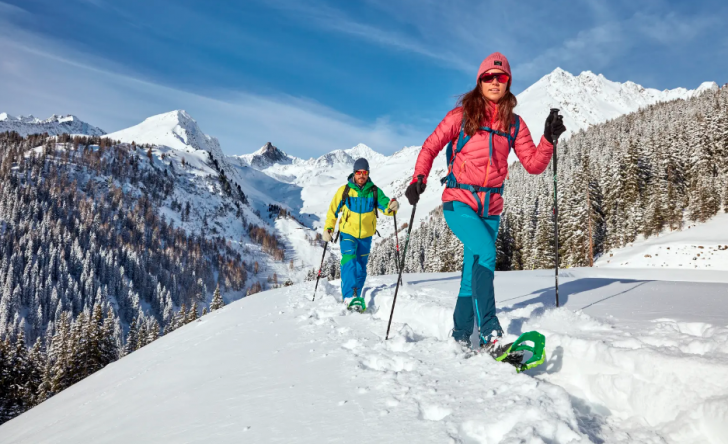
Snowshoe hiking gets you out on the snow and sunshine.

Back in 1971, when I transferred winter affections from downhill to Nordic skiing (due to a spectacular fall in Austria, that racked up one knee and stripped off my nifty French-made Fusalp ski suit– but that’s another story), I tried snowshoeing too. After all, cross-country skis and snowshoes were both made of wood and quite beautiful; they’re both ways to travel over snow rather than wade through it; they’re both very low-impact sports…

But cross-country evolved into my lifelong true love, while snowshoeing became merely the affably boring cousin you contact every few years. Too much work; bindings were crappy (now you’re in, now you’re not – and your fingers are gonna freeze putting the damn things back on); ‘shoes didn’t slide like skis, except sideways downhill on crust; wood frames cracked; rodents enjoyed chewing the rawhide webbing in summer storage…

Modern snowshoes confirm the theory of evolution. They’re clearly descendants of the woodies but fill new niches in design, materials, flotation, fun…

We moved ‘way beyond Sergeant Preston and his gigantic snowshoes.

I found this out one January about a dozen years ago, designing XC trails near Big Sky resort in Montana. (Sadly, I hadn’t visited that cousin in almost 30 years.) The snow was too deep, buried underbrush and deadfall too catchy, to use Nordic skis; so since slogging through waist-deep powder on foot was out of the question, what to do? Happily, intuition had suggested bringing my new aluminum snowshoes along, to test the frozen waters; and they behaved magnificently, though I dumped a couple of times trying to back up, sinking the tails of the ‘shoes. (My style of absorbing knowledge always seems to be “education through error.”)

So what’s new about this next generation – or two – of snowshoes? It may seem minor at first, but bindings have improved incredibly – they’re easy to use, stay on, sturdy, and they don’t stretch so they slide off your boots. The ‘shoes themselves are durable and have no food value, since they’re generally made with aluminum frames and synthetic decking that’s durable and gives great flotation – that combination also allows light weight, so less effort. The addition of bottom metal cleats gives you much better grip on crust and even side-hills (though it’s still smart to avoid those when possible).

Let’s, what else? Modern models definitely aren’t as pretty, but it’s a trade of aesthetics for dependability, longevity, convenience, and ease of movement.

Snowshoes are usually not as pricey as Alpine (or even Nordic) gear, but it’s still smart to rent before you buy to see if you like the sport. You can use hiking or snow boots with today’s adjustable bindings, or even sneakers with neoprene booties. A pair of gaiters will help keep out the snow and make sure your feet stay warm and dry.

There’s a new kind of ‘shoe that came on the market recently from a Colorado company (www.crescentmoonsnowshoes.com). They’re made of foam (foam!), but from my destructive testing are not just light but also sturdy, incredibly maneuverable (I backed up in them, did a 180 degree jump-turn for no good reason – no falls!), have great bindings, and are setting the snowshoe industry on its butt.

There are a thousand more subtleties to fun snowshoeing – using poles, running vs. walking, clothing, etiquette, blah blah. They’re relatively unimportant. Snowshoeing has become easy, and easy on your bones and joints. And even if you don’t glide, just repeat too yourself, “600+ calories per hour!” enjoy the burn, and head for the dessert tray after your outing.

New Gear For XC: Skin Skis

An Old Idea Updated With High Tech.

Author Roger Lohr on Fischer Twin Skin Skis

The cross country ski waxless “skin” bases, use inserted mohair strips on the ski bottom, which are extremely effective for all temperatures and snow conditions. It is high performance waxless base technology for the classic skier, who prefers to use a waxless ski. The ski strips are like small climbing skins and they are resistant to icing because they have a Teflon-like coating. There are conditions where a de-icer should be applied to the skins. There are anti-icing solvents that do not degrade the glue (which holds the skin to the ski) but it is best to get an anti-icer made by a ski manufacturer to avoid damage to the skin and the glue.

Specific cross country ski models that have a flex that are created in conjunction with the skin material, which rides above the snow in the glide phase, are easy to press down for excellent grip during the kick phase.

At Fischer, there are skin skis up and down the product line. The Twin Skin skis have two separate skin strips arranged in offset positions and with variable base-depth integration result in smooth and balanced gliding. These mohair skins ensure you can rely on the kick action, especially in hard or icy conditions and thanks to the unique Teflon coating of the skins, moisture absorption and subsequent icing is completely minimized.

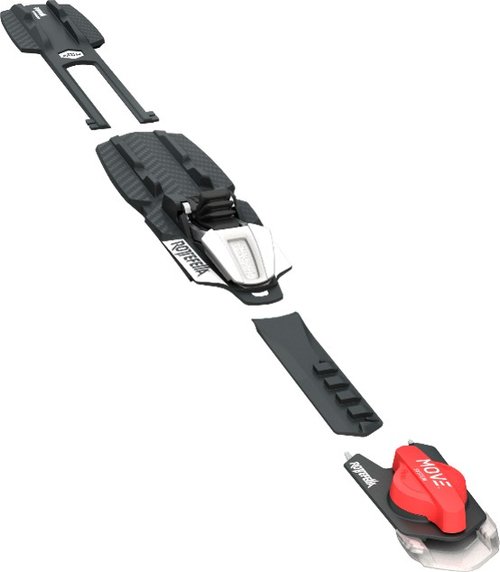
Rottefella Move binding allows easy adjustment on the trail

Technique, temperature and snow composition all have an influence on ski performance but with all TURNAMIC® binding models, which provides tool free adjustment skiers can better match their individual needs. Sliding the system forward provides more grip, while sliding it back will noticeably improve glide. With the optimized setup of the boot-binding-plate-ski components, TURNAMIC® gives you dynamic skiing performance like never before. FLOWFLEX® technology enables the ski to flex freely. I own a pair of Twin Skin skis and I’ve found that these skis glide better than other skis that I’ve owned in the past. At the same time, the skis have not lost the ability to climb up hills.

The TURNAMIC® binding has a user-friendly entry mechanism providing individual adjustment possible in seconds and tool-free. The bindings quickly slide onto the plate without the use of tools. When it’s time to ski, the Turn Lock mechanism can be operated even with a gloved hand, making entry and exit easier than ever before. The Rottefella Move binding when it arrives in the USA, will provide even easier dial-oriented adjustments.The Fischer Twin Skin Superlite EF provides a lightweight all-around ski featuring Efficient Forward, which gives the skier an easier, more forgiving kick action and smooth gliding. The lightweight fitness sport skis come in traditional length to glide easily on the trail.

Rossignol R-Skin Ultra

The Rossignol R-Skin Ultra features a replaceable mohair insert, and the waxless R-SKIN base structures offer an easy, consistent kick and maximum glide with no additional prep work necessary. The Rossignol ski is built with a Nomex Honeycomb construction for an accessible mohair skin classic ski for fitness-oriented skiers. The R-Skin Ultra not only offers a bit more width than a traditional race-oriented classic ski giving a more stable platform, but it also has the same high quality base as Rossignol’s top end race skis, and a great new graphic. Compatible with the Turnamic® binding system, the new Integrated Fixation Plate (IFP) allows the most natural ski flex for unparalleled snow feel, precision, and glide. Replaceable mohair inserts reportedly provide 100-150 days on the snow before they might be replaced.

 With the Atomic Pro C2 Skintec, prepping and handling couldn’t be easier thanks to its Skintec technology. There’s no need for kick-waxing – instead mohair grip zones produce excellent kick and glide in all snow conditions and temperatures. And you can replace the grip zone after heavy wear. Atomic has added a high-quality base, race grinding, a sportive sidecut and a flexible tip for an easy slide-in and glide. This year they’ve also given the series a facelift with a cool new design for the track.

 A suggestion is to find a cross country ski area or ski retailer that has a demo fleet of skin type skis from any product company and give them a try. Play with the binding settings on the ski binding to see the effect from adjustments on grip and glide. Expect the ski to perform better than you have ever experienced.

Editor Note: This article first appeared in XCSkiResorts.com

Keeping Your Ski (And Other) Pants On

OK, That Sounds Salacious But It’s Not.

Who knew a belt could be so important? Credit: Jeltbelt.com

I kind of collect belts, from the 50-year-old hand-stitched inches-wide leather style with ornate Mexican silver buckle; to a contemporary pseudo-leather critter with multiple off-set holes; to a futuristic version (my favorite!) that grips, flatters, goes through airport security without setting off alarms, comes in colors – and keeps my pants up in all circumstances thus-far encountered. Now, that’s versatile!

Back in July, 2017, after moving to Montana (still gotta get the dog, battered pickup, and rifle rack to feel like a native), I started exercising and leafing through local magazines, simultaneously. The exercise dropped my shorts a size; the editorial introduced me to the Jelt Belt (https://jeltbelt.com/), an ingenious product that’s fun, socially and environmentally responsible, yet totally practical – so many positive qualities that it gives renewed faith in the entrepreneurial mindset. And it fits my new almost-size-34s as well as the previous 36s.

I’ve always liked leather belts. They’re handsome, can slide reasonably easily through loops, even smell rich when they’re new – and you can commission designer buckles. But it can be tough to punch extra holes as time goes by and waistlines expand or contract; and if you don’t have belt loops, they’re slick enough to slide up and down, with consequent droopy pants.

With fabric belts, you can often pierce the material with the buckle prong, but again they’re often on the thick and wide side. Like leather, they generally have metal buckles, so you may need to remove the belt (and put it on again) while going through airport security – not fun if you’re literally running to make a flight.

Enter the all-synthetic Jelt Belt: tough, adjustable, stretchy, with a grippy inner-surface gel. Endearing from an environmental perspective, they’re made of yarn from recycled plastic water bottles; while part of sales goes to organizations supporting veterans wounded in combat, environmental causes, and kids. New belt lines are being manufactured in Montana rather than China.

Jelt Belts are slender rather than thick or wide (4 sizes plus an adjustable version), but they hold very snugly. You can order for adult jean sizes 22-40. They come in different colors (I’m partial to the River Turquoise and Denim Navy Blue; kids get fun shades too).

Maybe more importantly than aesthetics, buckles in four sizes are quick-release. I’ve even learned to release and re-buckle one-handed (let your imagination run wild, but so far they’ve been very mundane uses). Buckles are low profile – flat, actually – so there’s no bulge under your shirt or sweater. Skiing, golf, running, walking, climbing, socializing, they seem right for every occasion.

Okay, you want to know about the name. The belt was founded by Jennifer Perry, thus it’s Jen’s Belt, which evolved into “Jelt Belt.”

Why a belt for skiing? Whether you take a fall or are skiing in a storm, the Jelt keeps snow out of your pants. (I once entirely lost my pants sliding downhill after a fall, face first, on my belly – wouldn’t have happened with a Jelt Belt.)

I plan to become a collector of the Jelt Belt subset of belts, perhaps display them in chronological order of acquisition. And the price? Figure from $32 for adult belts, less for kids’.

The Meccas Of Cross-Country Skiing

What Are The Vails and Aspens of XC?

Ask the general public to name an alpine skiing “Mecca” — described as a location where people, who share a common interest, yearn to go — even those who don’t ski can come up with at least Aspen or Vail, if not Killington and Sun Valley. But mention the Gunflint Trail or the Methow Valley to cross country (xc) skiers and more often than not, you’ll elicit a blank stare. Yet these are just two of several xc skiing destination resorts that devout xc skiers revere. In fact, each of the following five regions is definitely an “xc skiing Mecca” — each one, a destination that all traveling xc skiers have put on their “must visit” list.

Comprising the small, picturesque towns of Conway, Sugar Hill, Bartlett and Jackson in the heart of New Hampshire’s White Mountains, the Mount Washington Valley has a half-dozen xc ski areas, all at the base of the most majestic mountain in the eastern U.S., the 6,288-foot Mt. Washington. Here, the spectacular scenery is enhanced by hundreds of inns, lodges and restaurants, plus unsurpassed outlet shopping. Ski past mountain streams, a white steepled church, or over a wooden covered bridge on the network of 150 kilometers (km) of trails that glide past numerous inns and stores and through the woods in Jackson Village.
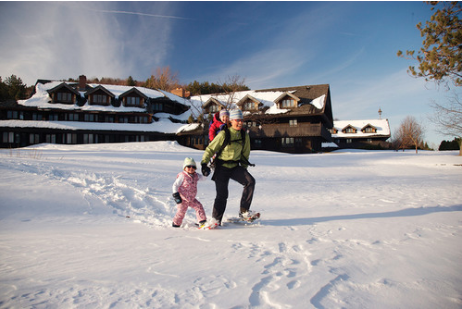
Up in Pinkham Notch, Great Glen Trails Outdoor Center features 40 km of trails for cross country or snowshoeing and the more adventurous can take a snowcoach up the Mt. Washington Toll Road to unparalleled views and then make the choice to ski, snowshoe or ride the coach down. On the other side of Mt. Washington, Bretton Woods Nordic Center has its Mountain Road Trail, a 7-km downhill thrill that might be the most fun to be had on xc skis in all of New England. Franconia Inn is tucked away but is known for great cuisine in the evening and more than 50 km of trails. The region also has dog sledding, snowmobiling, zip lines, and 7 alpine ski areas to round out the snow sports offerings.

The Hills are Alive

Trapp Family Lodge. Looking for Edelweiss.

The “Sound of Music” is more than 50 years old and another production by the Von Trapp family, America’s first xc ski center at the Trapp Family Lodge in Stowe, Vermont is just two years younger. Nestled beside Mt. Mansfield, Vermont’s highest peak, the lodge is among the most famous and diverse xc ski trail networks in the country. Three Stowe xc ski areas interconnect to provide roughly 150 kilometers of groomed trails, and there’s a link to backcountry ski 14 km to Bolton Valley Nordic Center via the Catamount Trail. Plus, with the variety of trails for snowshoeing around Stowe, it’s no surprise that the quintessential New England village is the original home of Tubbs Snowshoes, the largest snowshoe manufacturer in the world. Stowe’s Recreation Path, which runs 5.3 miles along the river (and over 11 wooden bridges) and Route 108 is perfect for an easy snowshoe jaunt. Don’t miss the Vermont Ski Museum in downtown Stowe or the Ben & Jerry’s Ice Cream headquarters (most popular attraction in the state) in nearby Waterbury, Vt.

Scandinavians settled by the thousands in Minnesota so it stands to reason that their national sport, cross country skiing, would abound in the state. The trails in northeastern Minnesota near Grand Marais offers more than 200 kilometers of groomed trails in the Laurentian Highlands adjacent to the Boundary Waters Canoe Area Wilderness. Here, xc skiers enjoy moose yards, overlook ridges, old trapper trails and railroad beds. The Gunflint attractions include extensive stands of white birch, spruce, and aspen and spectacular cliffs.

Of course, in the land of 10,000 lakes there’s a multitude of frozen lakes and there is also a great chance that visitors in northern Minnesota will see the oscillating luminary curtains in the evening sky known as the Northern Lights. Perfect for those wanting to get away from it all, this area is less populated than other xc Meccas and the region is sprinkled with many isolated lodges, bed and breakfast inns, lakefront cabins, and yurts (large circular heated tents with hard floors, bunk beds and room for 6-8 people). And count on hearing the distant howls of timber wolves.

Northwest Delights

More than 70 years as a winter sports destination, the Sun Valley/Ketchum, Idaho, area was developed by railroad mogul, W. Averell Harriman to attract train travelers. Known for its alpine skiing, the area features more than 160 kilometers of trails and now it touts itself as “Nordic Town USA.” The Sun Valley Resort includes the Sun Valley alpine ski area, a Nordic ski area on the golf course, and a selection of accommodations. The North Valley Trails run from the Galena Lodge back to town along the river. Expect to see colorful performance striders and skaters alongside snowshoers out walking the dog on this popular avenue.

For superb backcountry skiing amidst forests of pine and aspen, head to the Sawtooth Mountains and its high mountain reaches laced with granite spires and inviting cirques. Here xc skiers can enjoy trekking and guide services, even overnight accommodations in backcountry huts and Mongolian-style yurts.

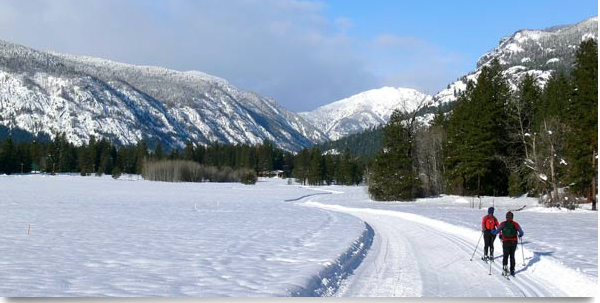
Methow Trails on a bluebird day.

The Methow Valley in northwest Washington on the eastern slope of the North Cascade Mountains is one of the best kept secrets among xc skiers. A network of 200 kilometers of groomed trails for classic and skate skiing combines at Methow Trails with lodges like Sun Mountain Lodge and warming huts along the trails, which are surrounded by more than a million acres of national wilderness and forest lands.

Snowfall here is not only plentiful, it is also dry thanks to the moisture traveling across 100 miles of mountains from the Pacific Ocean to get to Methow. And after the snow arrives, a crystal blue sky almost always follows revealing the incredible scenic mountain panoramas. Located only 2,000 feet above sea level, this 40-mile-long xc skiing valley requires no altitude acclimation.

Cross-Country Ski HQ in Michigan

Many other North American regions could make the list of xc skiing Meccas, including Michigan’s Grayling region and the statewide GoMichigan, California’s Lake Tahoe, Colorado, Lake Placid in New York, and Canada’s Quebec and British Columbia areas. Start your own list of “must visit” xc ski destinations, and use XCSkiResorts.com to explore the many choices and then make some reservations to explore different regions in your next winter adventure.


The Skinny On Recreational Nordic Ski Gear

Move Up To New High Tech Equipment.

As a part of the cross country ski industry for more than three decades, I had to qualify my response when SeniorsSkiing asked me about new cross country (XC) ski equipment. There was an unknown research source in the 1990’s that proclaimed, in general, owners of XC ski equipment had their gear for about 17 years. With a view of the meager statistics of annual XC ski sales, the age of the average XC skier’s equipment is now probably a couple of decades older than 17 years.

The key element is to know how you intend to use your equipment – classic or skate skiing on groomed trails; skiing on ungroomed park trails; backcountry in deep snow; serious mountain excursions; or if you are hoping to find equipment to deliver some type of hybrid performance in a variety of uses. XC skis provide varied width, flex, waxless base designs, and edges, all designed to perform optimally in different XC skiing situations and conditions. The recreational skier may be one that wants to get out in nature a few times per winter or a serious fitness-oriented person who is into skate skiing after work three times per week.

Ski magazines and websites deliver gear reviews with a focus on what’s new for the XC ski expert or racer. It is thought that the technology used in these products geared to advanced skiers will “trickle down” to be incorporated and become beneficial to recreational skiers in the future…well, the challenge is to provide a view specifically for recreational interests and to look at select products that offer a great experience XC skiing.

At the outset, it is uncertain why a recreational skier would want to wax their skis these days. If you possess an encyclopedia of knowledge on the matter of snow texture, humidity and temperature, there could still be changing conditions that will make your decision on the proper wax a big mistake. They’ve simplified waxing and at the same time have also have increased the options – but, recreational skiers are mostly on waxless skis. Of course there are many different types of bases that provide the grip when needed to go up the hill but also allow the best glide on the flats and down hills. Enough said to acknowledge that the most significant aspect of ski fitting has to do with the weight of the skier, and the length and stiffness of the ski and the different waxless bases are subservient to these qualifications. The other issue is the width of the ski where a narrower ski is faster and usually does not control as well as a wider ski, but again the stiffness of the ski is relevant. If you are skiing in groomed tracks, the narrow lightweight waxless ski can provide excellent glides and it can still grip when needed, if the match is done well for skier weight, and ski stiffness and length. On another matter, many people glide and may provide better stopping capability, but depending on the skier, even edges may be of no consequence when in an emergency situation.

XC Skin Skis

Author Roger Lohr on Fischer Twin Skin Skis

The cross country ski waxless “skin” bases, use inserted mohair strips on the ski bottom, which are extremely effective for all temperatures and snow conditions. It is high performance waxless base technology for the classic skier, who prefers to use a waxless ski. The ski strips are like small climbing skins which are embedded in the base and they are resistant to icing because they have a Teflon-like coating. I’ve found that there are certain conditions where the performance of the skin skis are less than desirable such as when there are dirt and leaves on the trail.

XC Ski Bindings

Today people want the convenience of stepping down and snapping into the ski binding. One new concept is the adjustable binding. Technique, temperature and snow composition all have an influence on ski performance but the TURNAMIC® binding models provide tool-free adjustment for skiers to match their individual needs. Sliding the system forward provides more grip, while sliding it back will noticeably improve glide. With the optimized setup of the boot-binding-plate-ski components, TURNAMIC® gives you dynamic skiing performance like never before.

A suggestion is to find a cross country ski area or ski retailer that has a demo fleet of skin type skis from any product company and give them a try. Play with the binding settings on the ski binding to see the effect from adjustments on grip and glide. Expect the ski to perform better than you have ever experienced.

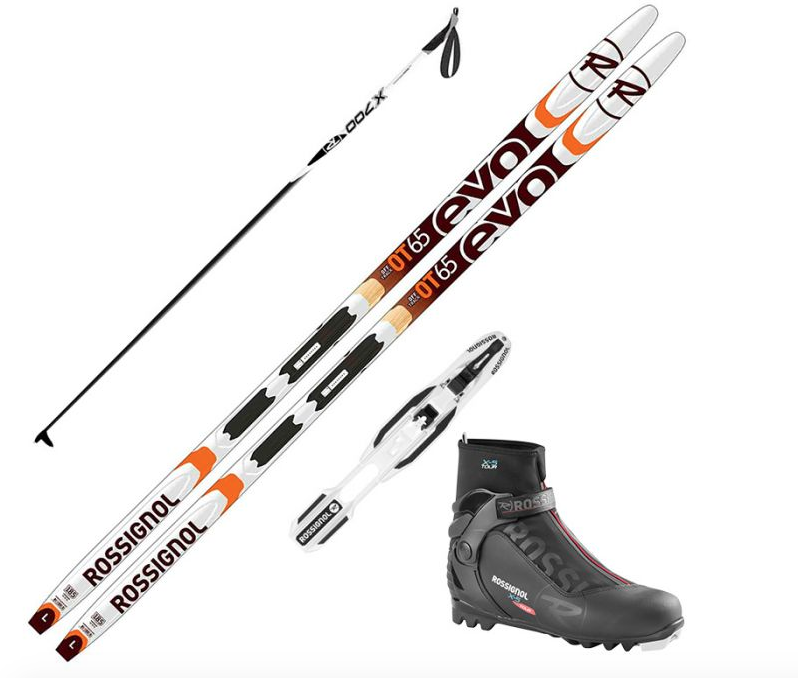
Of course you want some brand information and that is mostly beyond the scope of this content but with the Rossignol EVO skis, it’s easy for skiers to choose their model from the line of skis determined by the level of use or performance to suit the skier’s needs. The ski width would be based on where they’ll be skied and how much floatation is desired

The Spider 62 Crown is Fischer Nordic’s popular versatile ski for a variety of uses including machine-groomed tracks at the ski area, in man-made tracks, or on unmaintained terrain. This ski will not glide well compared to the lighter, narrower, stiffer line of XC skis. The Spider is available in three sizes, has a steel edge for control, and a base pattern that holds going uphill.

XC Ski Boots

Modern XC boots from the big brands.

The biggest change in XC skiing is that the ski boots are built for support, comfort, and warmth. XC boots should be easy to get on, well insulated, lightweight, stiff soled, keep you dry and most of all, feel like bedroom slippers. The plastic cuffs and straps around the shin will provide more support, but some higher-cut boots just keep the snow out and do not provide support. Molded footbeds are recommended (acquire them separately) and make sure that the fitting occurs with the socks that will be worn when skiing. Be aware of whether the XC ski boot is specifically for skating, backcountry, or general use. Make sure that the boot matches the binding. Salomon and Rottefella bindings need boots that go complement them; BC models have wider connections to a wider boot, etc.

It is recommended that XC ski equipment is tried prior to purchase and you can do that at an XC ski area or a demo held at an XC ski area. Again, it is likely that most of the demo gear is set up for advanced skiers rather than recreational. The XC ski area rental operations may very well have different recreational rental products for you to try. When in the retail store be mindful that retail salespeople should be cognizant of your needs (where you’ll mostly ski, how much performance you desire from glide or control, etc.) and that the products that you purchase fit your specific needs.

The issue of price is basic – you get what you pay for. If you save substantial money, you’ll likely be foregoing quality, performance, or fit. Expect a discount if you purchase a package of XC skis, bindings, boots and poles.

Happy hunting for the right gear.

This article first appeared in XCSkiResorts.com

Tips On Starting Nordic Skiing

It’s Different, It’s Fun, It’s Accessible.

So you’ve decided to try cross country skiing, You can call it cross country skiing, Nordic skiing, XC skiing, or ski touring – when trying cross country skiing the first few times it may be a totally new experience for you and it may take time for you to become confident. Experienced cross country skiers might call you a first timer, beginner, novice skier, and even a “never-ever” but as with any recreational activity, if you do it a few times, it will become easier and more familiar. Cross country skiing can take a while to master, but it is outdoor fun even on the first time on skis.

Downhill Skiing Is Not The Same As Cross Country Skiing

Most people believe that if you are an alpine skier and have mastered the lift-served form of snowsports, that you can easily master cross country skiing. But alpine ski equipment is much heavier than cross country ski gear – the big plastic ski boots and wide skis provide substantially more support compared to cross country ski equipment. Snowplowing on cross country skis takes more technique to roll your ankles and hold/push the ski edge of the skis against the snow while you are moving. Even though both sports are on skis and on the snow, there are many differences between downhill skiing and cross country skiing.

Wobbly Feeling

Putting on the comfortable cross country ski boots, stepping on the bindings and attaching to the narrow skis, you may feel a bit wobbly at first. You’ll be gliding down the smallest incline and you may feel unsure, but bend your knees and try to relax. Don’t lean backwards – bend your knees and feel your weight on your heels and you’ll have more control.

You Will Fall Down

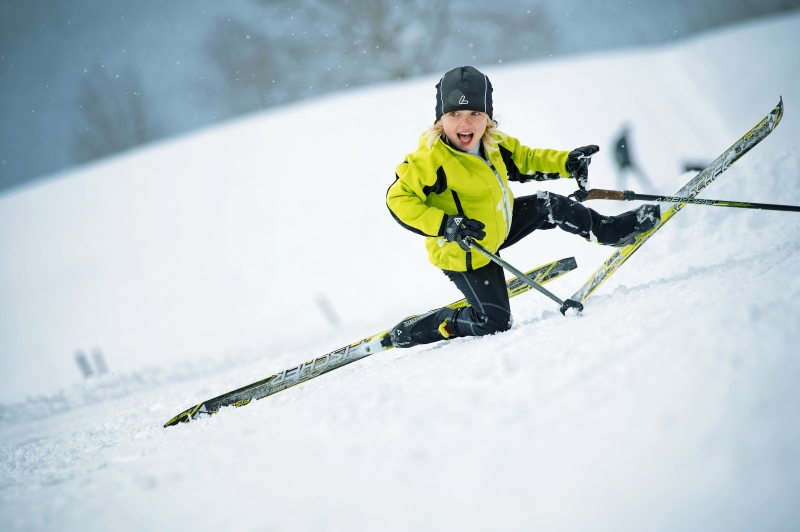
Accept that you will likely fall while cross country skiing. Everyone falls while cross country skiing sooner or later and the snow provides a soft landing. Getting up after a fall is sometimes complicated to orchestrate, but take your time to untangle and get to your knees. Once on your knees it should be easy to stand up.

Groomed Trails

Many people dream about cross country skiing as an adventure in the forest and down hills in the wild. The truth is that this form of recreation is much easier on groomed trails…that is, trails that have been packed and tracked by a machine. On groomed trails, it is easier to glide, easier to go up hills, and easier to control the speed going downhill with a snowplow technique. Cross country ski areas provide trail grooming and charge a fee to use the trails. The trail grooming, signage, maps, lodge facilities, and other services are definitely worth the fee. Most cross country ski areas do not allow dogs to use the trails, but some areas offer dog-friendly trails.

To find a cross country ski area, use the Internet or websites such as www.XCSkiResorts.com or the Cross Country Ski Areas Association (www.xcski.org). These areas often require a reservation to get a lesson, as they do not always have instructors on site, so visit an area’s website in advance to get their information.

Be Prepared

The typical safety concerns are prevalent with cross country skiing. Go out with someone else, take water and food, and have some additional clothing (dry gloves, hat, neck gaiter, etc.) in case it gets colder or snows. These concerns can arise if you take a wrong turn where you end up on a longer trail that you expected.

Hills

If the terrain that you are skiing on is perfectly flat, you should not have much problem on cross country skis but when there are hills, you’ll encounter the sport’s ups and downs. The first time going down a hill could be a bit frightening but as in any sport, with practice you will become more accustomed to the feeling…hopefully. It is best to get tips or a complete lesson. The various cross country ski techniques are taught by experienced or certified instructors at cross country ski areas. Most likely you have friends who try their best to provide insight on ways to master the skis. The former idea (with a certified ski instructor) is the better choice.

Get Out There

Cross country skiing provides one of the greatest full body workouts available as it uses all parts of the body’s muscle groups. You may not feel exhaustion while you are out on the trails, but your body is working hard and using unfamiliar muscles, so take it easy. It’s best to go on a short outing at first and build up the distance or time on the skis over multiple outings.

Getting information about equipment and the different forms of cross country skiing (on track, off track, skating, backcountry, etc.) can be found on the Internet and/or at a cross country ski area. It makes sense to rent your equipment the first couple of times to see if you like cross country skiing. Most ski areas have rental gear for first timers (skis are softer and wider) and for more athletic people (skis are narrower and more lively). The narrower skis will glide better and go faster, while the wider skis will allow more control but feel like they drag a bit on the flat terrain.

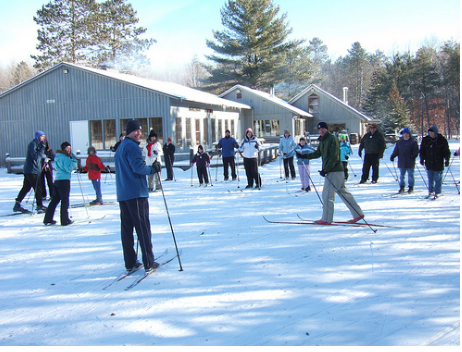
When you get ready to purchase equipment, talk with professionals at a cross country ski area or retail shop to make a decision about what to purchase, which will depend on your interests (on track, off track, control, performance, etc.). Once you become a cross country skier, you’ll look forward to when it snows and it will become a magical experience to enjoy every winter. Top photos, Fischer Skis, Bottom photo, Great Glen, NH

Editor Note: This article first appeared in XCSkiResorts.com