Skiing Weatherman: Ch-Ch-Ch-Changes

For the title of this piece I chose a line from David Bowie’s classic song. The jet stream pattern that ultimately determines the snowfall haves and the have-nots is undergoing change and, ultimately, it will be dramatic.

As a lifelong skier and weather nerd, my step gets a little lighter and I tend to have a song in my mind when the weather pattern is soon to become more favorable for cold and snow.  I’m an Easterner and guilty of a provincial bias. So far, the East is at the short end of the weather stick. Other regions (i.e. Southwest, Wasatch, and Tahoe) also are struggling to attract snow. But much of the East remains significantly below typical trail counts for early January, largely due to the massive Christmas rainstorm.  

In my last report, filed a week before Christmas, it looked like the holiday storm could be a major snow producer.  Alas, there wasn’t enough cold air available to make that happen, and that has been the case much of the time since.  Pacific air has been flowing across the country, leading to heavy snow in the Pacific Northwest, with lighter, but still significant amounts across the northern Rockies.  Further downstream, plenty of disturbances have tracked through the Midwest and East, but without cold air from Canada, those disturbances have produced mixed precip events. 

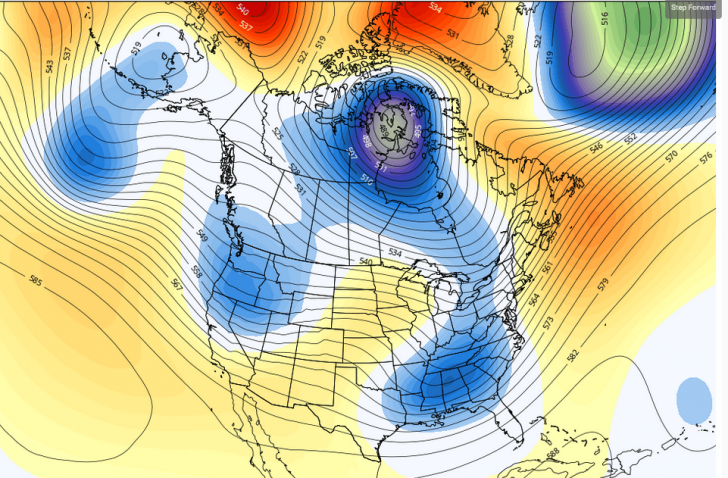
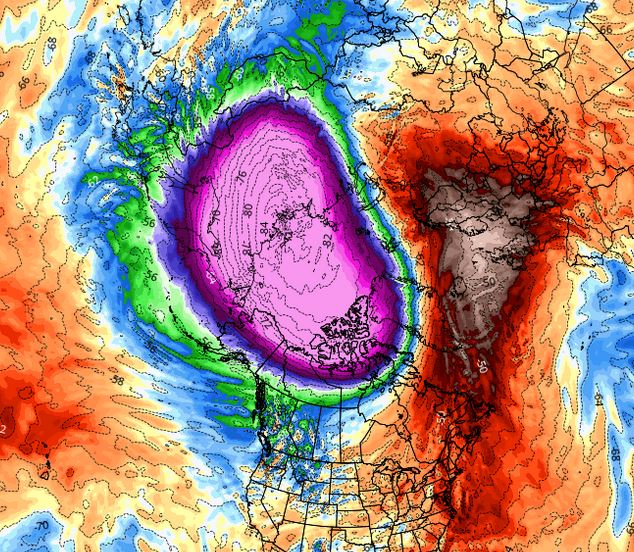
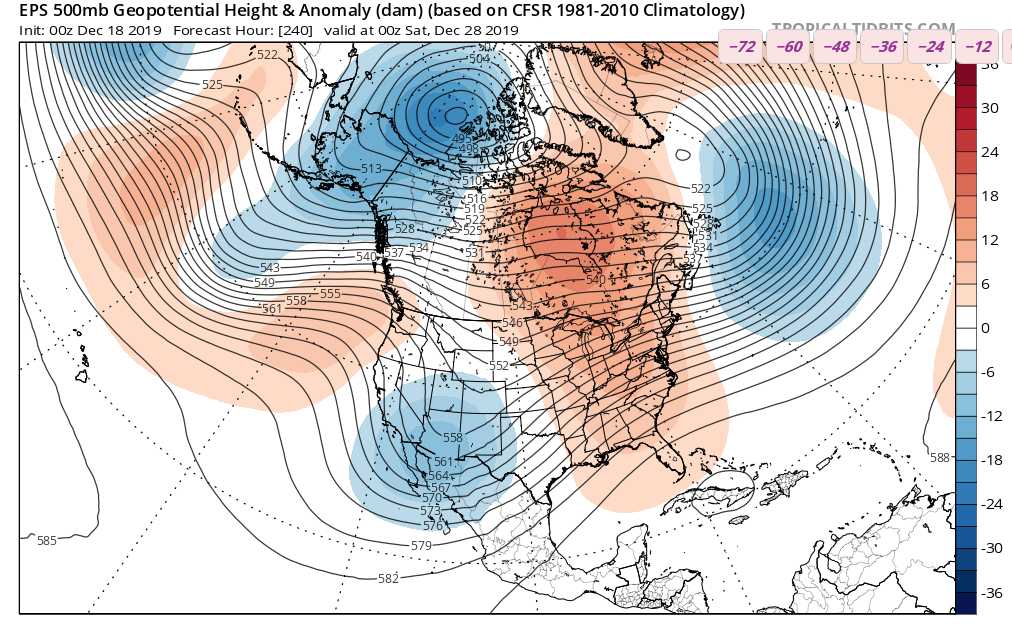
So, what is going to change?  It’s the jet stream, the hand that moves the pieces on the weather chess board.  Here is picture of the current set up… 

The red blob over northeastern Canada is a blocking ridge slowly migrating west.  It will end up over far northwestern Canada by mid-month, where it will tap a growing supply of cold air.  The blue area over the Southeast is a trough that is delivering a late week snowfall to the southern Appalachians.  That storm is suppressed by the ridge to the north and until it the ridge moves northwestward, it will be tough for any storm to turn the corner into the Northeast.  But I do think that will happen within the next week, and likely several times in the following weeks.  Also of note, if you look over the eastern Pacific and follow the lines from west to east, you can see that the prime source of air masses is the Pacific, not the Arctic.  

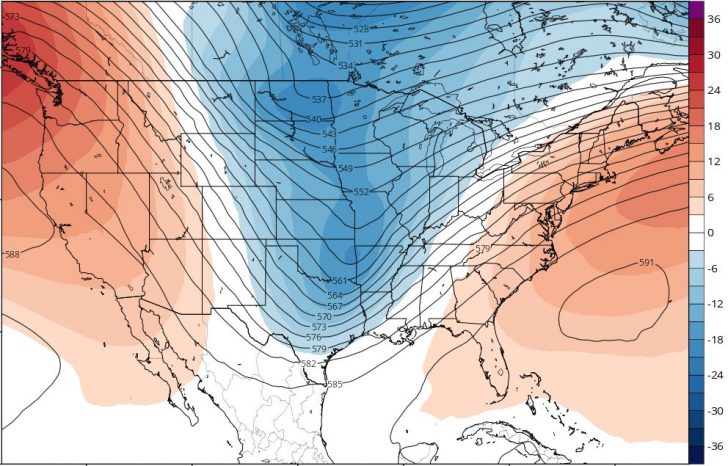
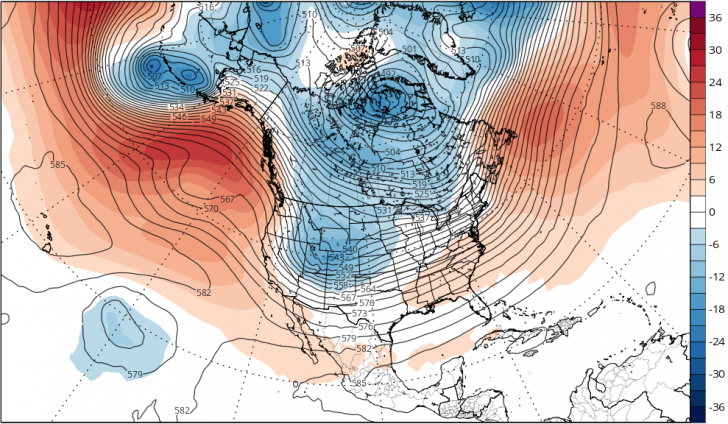
Now take a look at a jet stream forecast for the 18th, one that I agree with.


The changes are substantial.  The ridge is stretched out across the far northern latitudes, with an extension over the northeast Pacific.  The clockwise circulation around the ridge will help access cold in the Yukon.  A deep trough over eastern North America is poised to receive the cold and spawn surface storms.  

Better times are ahead for skiers and boarders east of the Mississippi.  At the same time, rather quiet weather will develop out West.  This pattern, once established, will persist into February.                  

Regional details…         

Northwest U.S./Western Canada:  Occasional Pacific systems will bring snow next week…slowing down after,  as western ridge builds.  

Sierra:  Storm track to the north for the foreseeable future.  

Rockies:  Moderate snow events across the north in the next week…weaker systems fight through the ridge after that.  Central and southern Rockies pick up occasional light snowfalls.       

Midwest:  Cold starts pushing late next week, Alberta Clippers and lake effect snows will become frequent events for the second half of the month…and beyond.

Mid Atlantic/Southeast:   Fresh snow in NC mountains late this week.  Entire region in line for mountain snows and great snowmaking as the cold air deepens after mid-month.     

Northeast/QB:  Cold, but with suppressed storm track through next week.  Extended cold, snowy pattern develops thereafter.    

Skiing Weatherman: The Beat Goes On

The Busy Pattern Continues.

Last week’s installment headlined a progressive pattern that has been sending ridges and troughs west to east across the continent at a dizzying pace.  That pattern produced some meaningful snow in the West earlier this week and then unloaded a blockbuster on the mid-Atlantic and much of the Northeast midweek, jumpstarting the season at dozens of resorts in the East as a result.  The heavy snow did not extend to far northern New England, but snowmaking temps have been in place all this week so trail counts are on the rise.

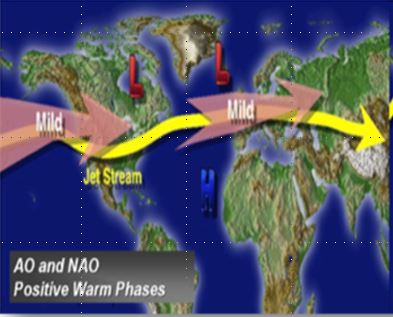
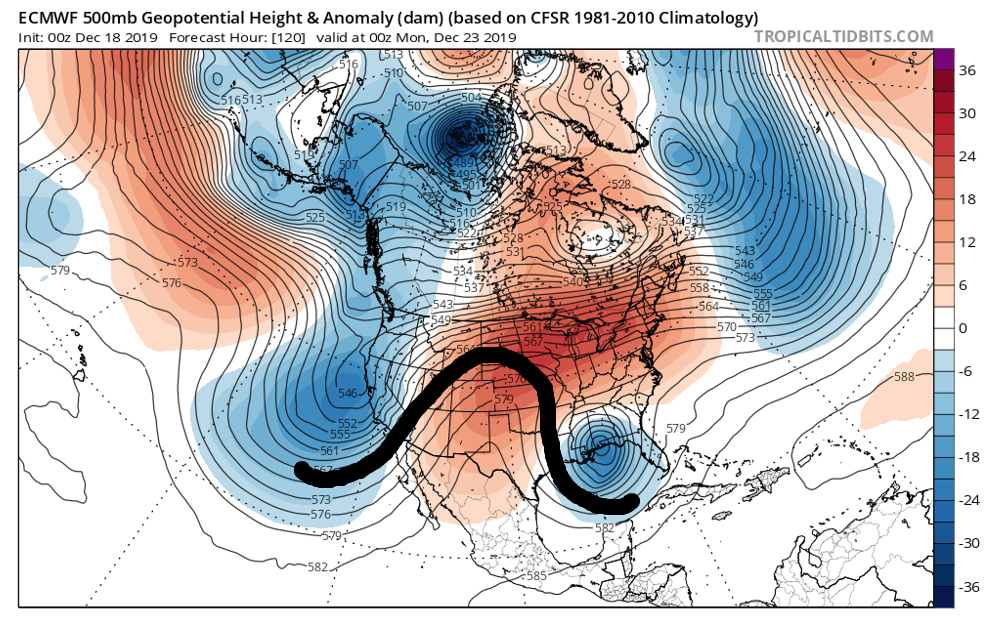
For the foreseeable future, the fast moving pattern will continue with a tendency for upper level troughs to spend more time in the East then they did earlier in the season.  Why the change?  It has a lot to do with the phase of the NAO, or North Atlantic Oscillation.  When the NAO is negative, we typically see an upper level ridge over Greenland and the waters to the south.  In that position, it tends to slow down troughs as they move into eastern North America, giving them a chance to strengthen, spawn surface lows near the coast, and tap more in the way of cold air from Canada.  That scenario unfolded this week during the current Nor’easter, and another storm could be in the cards again around Christmas Day.  Here is a jet stream forecast for Christmas night that illustrates a classic negative NAO.

Christmas Day Jet Stream snapshot.

Prior to the arrival of the trough you see in the East, it will bring some snow to the upper Midwest on Christmas Eve, but in that position, a milder southwesterly flow will be in place further east.  We could see one storm cut up through the Lakes, with a second storm then forming along the coast as the trough (and its cold air) tracks eastward.  That could result in a rain to snow sequence playing out in the East on Christmas Day.  Cold air will flow then into the Midwest and East early in the holiday week as the NAO will remain negative.

In the West, most of the action will continue to be focused in WA, OR, and BC, where shorter wavelength troughs keep rolling in from the Pacific Ocean.  This weekend will bring a juicy system that originates further south, so it will lead to higher snow levels in the Cascades—as high as six-seven thousand feet.  Snow levels will drop later Sunday into midweek, however, with fresh snow continuing through that period.  Further inland, lighter snows will be common for the first half of next week in ID, MT, and WY.  South of there, fresh snow will be scarce next week due to the presence of a flat ridge that doesn’t want to give way to systems from the north.  Now, if you take a look at the jet stream map again, you will notice a large blue blob just off the west coast around Christmas Day.  That trough will likely move toward the coast and perhaps bodily move inland early in the holiday week.  That could turn into a very productive storm across a wide swath of the West.  So, COVID restrictions aside, the holiday period is starting to shape up. Better late than never.

Regional Details

Northwest U.S./Western Canada:  Plenty of snow in the next week, but with bouncing snow levels in the Cascades.  A snowy, colder trough arrives just after Christmas.

Sierra:  A quiet week leading up to Christmas. Prospects for snow improve after that.     

Rockies:  Light to moderate snows across the north leading up to the holiday keep surfaces soft and boost trail counts.  Central and southern resorts waiting for the post-Christmas trough.       

Midwest:  Light snow early next week, more significant snow looking good for Christmas Eve.  Good snowmaking temps much of the time.

Mid Atlantic/Southeast:   Nice weekend on the slopes after fresh midweek snow.  Milder next week.  Colder after Christmas.    

Northeast/QB:  Quiet until Christmas storm that brings rain to snow.  Wintry pattern during holiday week.     

Skiing Weatherman: Parade Of Storms Coming

Progressive Storm Threats Gets Underway

Although it’s likely that the holiday period will be a Covid-induced quiet one across the country, it is now crunch time for opening terrain that will create adequate social distancing to fend off further operating restrictions.

The past week brought about a pattern change that delivered snow to many resorts that had seen very little. Of late, storms have moved into the West, across the continent, and through the East and that trend will continue. Canada has been milder than normal for many weeks, but cold air is now building and becoming available for the storms further south so the potential for more snow in more spots is on the rise. In addition, I am a little less concerned about a holiday eastern warmup than I was last week.

In weather geek language, we are in a “progressive” pattern, meaning jet stream ridges and troughs are moving along from west to east without locking in for an extended stay. That produces changeable weather, but with more cold air becoming available from Canada, we are now talking more about snow and less about rain. There are still forecast challenges with respect to storm tracks, but overall, things are looking up.

In the near term, storms will move southeastward from the Gulf of Alaska and dump on the coastal ranges of British Columbia, Washington, and Oregon. Much of the moisture will get wrung out before the systems reach the northern Rockies, but there will be “topdressing” snow further inland most mornings through next week. The central and northern Sierra will pick up snow later this weekend and early next week with the prospects not as good further south due to the systems tracking too far to the east. Northern Utah and Colorado will cash in on the passage of these quick hitting systems next week but a lack of deep moisture will keep amounts light. The southern Rockies will see little new snow in the next week.

Over the eastern half of the country, disturbances will approach in both the northern and southern branches of the jet stream. Cold air will still be a little scarce in the short term, so the track of any storm will determine where it snows. But the potential is clearly there, as this jet stream forecast for Monday, December 14 clearly illustrates.

On this map we see a trough over the South, with an extension northward to Canada, a combination that could easily produce snow from the mid-Atlantic resorts up through New England. Notice also the trough along the Pacific Northwest coast and the next in line south of the Aleutians. The deeper trough over northern Canada acts as the center of the wheel, with the other features effectively rotating around it. The orange over Greenland plays an important role for the East in this pattern. That’s an upper level ridge that makes it easier for eastern troughs to strengthen as they approach the Atlantic. Indications are that the ridge will remain in the same general area until late month, so storm threats will be fairly frequent. Each trough that passes by will deliver a chunk of colder air from Canada, so the snowmakers will have ample opportunities as we approach the holidays.

Regional Details

Northwest U.S./Western Canada: Frequent storms from the Gulf of Alaska bring heavy snows every two-three days. Snow levels bounce a bit in Oregon Cascades.

Sierra: Periodic light snows from Tahoe northward until further notice. Minimal snow in southern Sierra.

Rockies: Northern resorts get frequent light to moderate snows.   Occasional light snows Wasatch and central resorts. Limited snow prospects further south.

Midwest: Clipper system brings light snow Tuesday and delivers good snowmaking temps and modest lake effect snows.

Mid Atlantic/Southeast:  Colder weather arrives Monday. Potential snowfall Tuesday. Good snowmaking week.

Northeast/QB: Mixed precip Sunday. Mountain snow showers Monday. Good snowmaking week with additional storm threats.

Skiing Weatherman: Here Comes The Snow!

The Weather Worm Is Turning, Especially In The East.

If the optimist in all of us considers November 1 the start of the winter sports season, then the first month of this season was a dud in the eastern half of the country. Cold air masses were infrequent visitors, and natural snow was even harder to find.

A persistent jet stream pattern brought early snow to the West while the East was stuck in mid-autumn weather much of the month. A western trough/eastern ridge couplet was common and kept any early winter weather bottled up over the West, especially in the Northwest, closer to the source of cold air. The ridge kept it unseasonably mild in the Midwest and East, with only passing chunks of cold air that supported brief snowmaking windows.

Well, the weather worm has turned, and it is now the eastern half of the country where an upper trough is promoting cold and snow while the West sits under a strong, quiet, ridge. Now, the air across Canada is milder than normal pretty much from coast to coast, but as it flows into the lower 48, it is just cold enough to lead to snowfall. Much of Ohio as well as western New York and far western Pennsylvania got tagged with a moderate snowfall early this week. Another storm will be on the weather maps this weekend.  Because the axis of the upper trough that supports it will be further east than it was several days ago, the track of the surface storm will also be displaced eastward to the coast where it can tap deep moisture as it tracks toward southeastern New England.

Here is a look at how the jet stream will look early Saturday.

The axis is just east of the Appalachians and a surface storm that forms along the mid-Atlantic coast will be ushered up toward southeastern New England, a nice track for snow for the mountains of the Northeast. Cold air will be limited with this storm so elevation will play a big role in the battle of snow vs. rain.

If all the pieces come together, this storm has the potential to produce moderate to heavy amounts from the Catskills and Adirondacks through the mountains of western and northern New England. In addition, sufficiently cold air will move in behind the storm to allow productive snowmaking in the Upper Midwest and Northeast early next week. Full disclosure: If the northern and southern branches of the jet don’t work together to form the system you see on the map, then the storm will be a dud. But I am an optimist; first turns look plausible next week!!!

Looking further down the road, it looks like the eastern trough will dominate for about two weeks and additional opportunities for snow will develop. After that, the pattern is likely to revert to the western ridge/eastern trough combo, which is more favored in La Nina winters like this one.

Here are the regional details:

Northwest U.S./Western Canada: A storm will try to dent the ridge late this weekend/early next week and lead to high elevation snow from Washington into B.C. Better pattern evolves mid-month.

Sierra: Dry for at least the next week; pattern change mid-month is next good chance at snow.

Rockies: The upper ridge keeps it dry for the next week. This region will also be waiting for the western ridge to break down.

Midwest: Seasonably cold for the next week and likely longer. Decent snowmaking temps most nights. Alberta Clipper systems will bring light snow every few days.

Northeast/QB: Favorable pattern for snow and snowmaking temps for next 12-14 days. Potential for significant mountain snow this weekend. Pattern change to milder

Skiing Weatherman: Fast Movers

In last week’s first installment of my weekly discussion, the Pac Northwest and northern Rockies were enjoying a parade of early season snow events while skiers and riders in the Midwest and East had to be content with tuning gear and digesting the state-by-state Covid restrictions rolling out recently.

The storms have continued to hit the same general areas that were hit in the West recently, and dozens of resorts with scheduled openings between this weekend and early December could probably open now on plenty of terrain with the snow they have picked up already. By the way, those same regions are in line for more snow in the next week!

In the Midwest and East, a fast moving trough passed through earlier this week, and the air was cold enough for snowmakers from the upper Midwest into the Northeast to get started building bases. In a transient jet stream pattern like the one we are in right now, where troughs and ridges keep marching around the northern hemisphere, making snow in these areas is a gamble.

Resorts would love to open in time for Thanksgiving, but at this time of year, seldom is there enough cold air around to keep it cold enough for snowmaking for more than a couple of days. Only if a blocking pattern develops, when an upper level ridge parks near Greenland, which then allows a cold trough to come to a halt over eastern North America, do we see appreciable early season snow or extended snowmaking windows. Blocking is not in place, so cold shots will only come along every three or four days. Luckily, when it does turn milder, the short days and low sun angle will help limit the melting of the snow that falls or is made.

A modest cool shot will produce a minor amount of snow and enable a minor shot of snowmaking across the northern Great Lakes, Adirondacks, and northern New England later this weekend. The snow will be confined to higher elevations in the East. The next shot at cold and perhaps snow will come just prior to Thanksgiving Day, when another trough will move through the Midwest and Northeast. Right now it looks promising for snow in the northern Lakes, but in the Northeast, the best we can hope for is backside snow after rain on the front end of that event. So for now, any skiing/riding over Thanksgiving in the East looks very limited, prospects in the upper Midwest look a little better. Your best bet? In the Pac NW and northern Rockies. Here is a snowfall forecast for the next ten days that says it all.

Here are the regional details…

Northwest U.S./Western Canada: Strong troughs from the Gulf of Alaska continue to pinwheel into this region, leading to snow events every few days. Cascades and coastal ranges of B.C. will be the big winners.     

Sierra: After a productive storm midweek, this region will be south of the action for the next week as the northern branch of the jet stream dominates.

Rockies: Northern Rockies pick up a couple of additional rounds of snow early to midweek. Resort opening prospects in ID, MT, and WY look positive near-term.

Midwest: Northern resorts in MN, WI, and MI will have nighttime snowmaking opportunities through this weekend, along with some natural snow. Fast moving trough will bring light to perhaps moderate snow Tuesday/Wednesday of next week. Some limited Thanksgiving weekend skiing/riding is possible.

Northeast/QB: After two nights of snowmaking this week, another nighttime opportunity will be present Saturday and Monday nights. Two messy events could “net” higher elevation snow late weekend and Wednesday into Thursday. Lower elevation resorts on hold, waiting for cold.

Skiing Weatherman: Haves and Have Nots

So It Begins, Unevenly.

As is often the case at the start of the ski season, the weather pattern is designating “haves” and “have nots” in terms of sufficiently cold air for snowmaking and natural snow.  Consistent with first year La Ninas, as this season will be, November has brought winter weather to the West while the eastern half of the country has been basking in Indian Summer warmth for the most part.   The jet stream has been set up in a western trough/eastern ridge configuration since the start of the month, allowing cold air to spill out of Canada into the Rockies, Cascades, and northern Sierra.  In addition to supporting a good amount of snowmaking, the western trough has also be productive in terms of natural snow and that has allowed a small number of resorts to kick off the season.  From Banff Norquay and Lake Louise in the north to Wolf Creek in southern Colorado, turns are now being made.  Wolf Creek, a legendary snow magnet, has all but six of their 133 runs skiable already.  Don’t believe me?  Check out their web cams!

In the short run, the western trough will remain in place, and additional snow will fall into this weekend in the B.C. coastal ranges, the Cascades, northern Rockies, and the peaks of NoCal.  Yet another system will move in from the Pacific late in the weekend, but that one will lift more northeastward, leading to more snow in the Northwest, but also a rise in snow levels.  Early next week, a ridge will pop up in the west, while a trough dives through the Great Lakes and into the Northeast. The air will be cold enough for at least a couple of nights of snowmaking across the northern Lakes as well as northern New York and New England.  It will be a gamble to make the snow, because the cold is not ready to settle into the eastern half of the country.  By next weekend, the jet stream will flatten out across the country, allowing mild Pacific air to move from west to east.  This jet stream forecast for next Saturday illustrates.

Although the flow looks pretty flat and dull, a look at the temperature anomalies at 5,000 feet, a forecasting proxy for surface temps. There will be some modestly cold air along the Canadian border, so there is potential for some additional snowmaking late next week in the Lakes and Northeast.  Here’s that map. 

It’s still early, so we’ll take potential where we can find it!          

Here are the regional details…         

Northwest U.S./Western Canada:  Two additional early season snowfall are coming, the first late this week, with a storm right on its heels about 48 hours later. The second storm will have higher snow levels.  

Cascades and Sierra:  The same two systems will bring snow to the Cascades with the snow extending down to the northern mountains of California.  

Rockies: Northern Rockies pick up two additional snowfalls by early next week.  First system reaches Wasatch, second stays further north.  Central and southern Rockies miss most of the action…some light snow will reach Colorado late this week, though. 

Midwest:  Resorts in far northern MN and MI will be able to make snow late this weekend/early next week and again late next week.  The early week cold will trigger some lake effect snow in the Upper Peninsula.        

Northeast/QB:  Northern New York and New England will have a couple of snowmaking nights early next week and again late in the week.  Longer term, CONSISTENT cold is not happening until a major pattern change, not likely until very late in the month at the earliest.

Patience.

Skiing Weatherman: Winter Weigh-In Time

What Does A La Nina Winter Mean For Snow Sports?

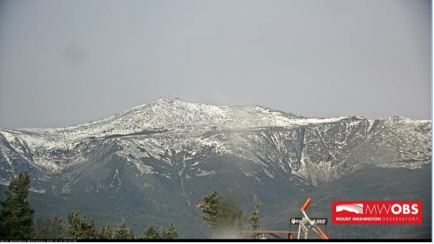
View of Mt Washington from Wildcat, Oct 18

After seeing a web cam shot of snow-covered Mt. Washington, NH this past weekend, I quickly contracted a case of “calendar shock”, realizing that it was time to submit some ideas on where I think this winter is headed, weatherwise.  Co-Publisher Mike Maginn wrote a nice piece on La Nina earlier this month and indeed, this will be a La Nina winter.  La Nina is the cold water cousin of El Nino, with the waters of the equatorial Pacific Ocean running below normal now and likely to remain that way through much of the upcoming winter.  What does that mean in terms of sensible weather downstream over the U.S. and Canada?  Well, there are different flavors of La Nina, based largely on how cool, relative to normal, those tropical waters are.  This looks to be a weak to moderate La Nina, and in general, the storm tracks during a La Nina winter look like this:

You will notice that most of the storm tracks are over the northern half of the country, closer to the source of cold air that makes those systems productive in terms of snow.  La Ninas are not as friendly as El Ninos to skiers and riders over the southwestern quadrant of the country, thus, the lack of an established tendency.   Well before the first turns of any season, friends and clients often ask me for guidance on where to head in the West for a winter trip.  During a La Nina, I steer them north of I-70, where the busier storm tracks lead to more snow and more consistent conditions.  There are exceptions, but the resort snowfall data that Mike included in his article supports that idea. 

As far as La Nina winters over the Midwest and East are concerned, we often see a battle between a cold jet stream level trough over the center of the continent and a warm southeastern ridge.  A preview of that set up will develop during the last week of this month.  Take a look at this forecast for the jet stream valid on 10/28.

During winter, large dips in the middle of the country will act as a receptacle for cold air moving southward out of Canada.  As troughs interact with warmer air along the Gulf and in the Southeast, storms often take shape and then move northeastward along the western slopes of the Appalachians, as you can see on the storm track map above.  These storms bring snow to resorts in the Great Lakes, both from the low pressure center, and from backlash lake effect snow once the low move up into Canada.  The storm track that you see east of the Appalachians comes from systems that redevelop east of the mountains as the upper trough moves toward the coast.  These are known as “secondary” low pressure centers, formed as the upper level support translates over the mountains and taps into energy from the waters of the Atlantic.  These secondary storms represent the best opportunities for meaningful snowfall at the resorts of the mid-Atlantic and Northeast during a La Nina.

There are other factors that are correlated with subtle but potentially significant changes in these storm tracks, one of which is the solar cycle, and I will discuss those factors in the coming weeks.  For now, though, I am most bullish on the prospects for the West, north of I-7o and the upper Midwest.  I am guardedly optimistic about the Northeast, where temperatures should work out slightly milder than normal but with above normal snowfall via some sizable storms.  The anticipated southeastern ridge will likely pose some problems for the Mid-Atlantic and especially for the Southeast.           

Skiing Weatherman: More Snow Coming. No Kidding.

Late Season Snow Opens Nordic Opportunities.

As the coronavirus situation has continued to unfold and expand, the curtain has all but come down on the alpine season across North America. Nevertheless, lovers of the great outdoors continue to find ways to ingest their fair share of fresh air by a variety of different means, including cross country skiing aficionados. At last count, 17 Nordic centers around the country remain open.  For those of you who will continue to rack up the kilometers as we move through early spring, here’s this week’s weather outlook.

This season now has all the earmarks of ending up with bookends in terms of jet stream patterns. You may recall that November got us off to a quick start as the jet stream aligned itself in a fashion favorable for the delivery of early season cold to the lower 48 states. Here in the East, as the calendar turned from October to November, the folks at Killington were very nervous about the prospect for the Women’s World Cup event scheduled for late that month. However, when the Women’s White Circus showed up three weeks later, the reversal of weather fortunes made for another hugely successful weekend of racing.

And then came the rest of the winter. As I discussed a couple of weeks ago, the Midwest and East got locked into a highly unfavorable jet steam setup that, unfortunately, made it very difficult for cold air masses to stick around for a while. Well, that appears to be about to change, which should help to extend the Nordic season.

In a nutshell, an upper level trough is going to set up shop over the eastern half of North America later next week. At the same time, a blocking ridge will be in place over Greenland. It was the LACK of a blocking ridge in that position that allowed cold air masses to slide right off the continent when they did manage to make a push into the Midwest and East. Cold air is not as abundant as it was one or two months ago, but there is enough available to flow into a trough and lead to late season snow. That scenario is on the table around April 3-5 in the Northeast. Here is a look at the expected pattern on the morning of the April 3:

A deep trough centered over eastern New York will provide the focus for the cold air. The trough may want to progress eastward into the north Atlantic, but the ridge that extends from Labrador to Greenland will resist and force the trough to only slowly move toward the ocean. It is important to also know that near the center of circulation of troughs, the air is rising and cooling to a greater extent than at points further away from the center. This further suggests that eastern New York and northern New England could very well pick up a substantial late season snowfall next weekend. That’s great news for Nordic touring centers from the Adirondacks to the mountains of Maine. As long as the ridge remains over Greenland, the colder air will stick around, just like in November.

Here Are The Regional Details.

Northwest U.S./western Canada: A season of abundant snowfall shows no signs of quitting. The hits will keep on coming in this part of the world for the next couple of weeks at least.

Sierra: While the amounts won’t be as prodigious as further north, the proximity of a trough not far offshore should produce several meaningful snowfalls in the next two weeks.

Northern Rockies: The storms that continue to bury the coastal ranges will move inland and keep this part of the U.S. and adjacent Canada in the crosshairs for solid snowfalls for the foreseeable future.

Central and southern Rockies: In the absence of an El Nino, it is tough to grind much snow out of the southern branch of the jet stream late in the season. Northern stream systems will graze these areas from time to time and provide several lighter snowfalls.

Midwest: Other than across the Upper Peninsula of Michigan, snowfall is a long shot the rest of the way in the middle of the country.

Northeast/Quebec: Next weekend looks like the best opportunity for late snow. Based on what has happened the past few weeks, northern Maine and adjacent Quebec won’t see bare ground for many weeks to come.

Thanks for reading. Enjoy your sliding and your summer.

Skiing Weatherman: There’s Snow In The West, Only Maybe East

For Those Still Venturing Out On Snow Shoes, Skinny Skis, Or Skins.

On a typical office day in the winter, I often scan web cams from resorts, living vicariously on those days when I can’t be on the snow myself. Now that the coronavirus pandemic has ground the winter sports season to a virtual halt, I still check out the cams, but recently I have felt more of a sense of sadness rather than excitement or anticipation of my next trip to the mountains. The absence of skiers and the stationary lifts is striking, and where fresh snow has fallen and remains untouched, the scenes are downright bizarre. Although the alpine resort options are very limited, there are many of you who still want to get your fresh air on skins, skinny skis, or snowshoes, or perhaps with your grandchildren on a sledding hill, and it is for you that I present this week’s weather discussion.

The winter pattern has shown a great reluctance to change from a dominant western trough/southeastern ridge configuration, which has led to abundant western snows and a struggle for snow lovers in the Midwest and East. For the past two weeks, there have been signs of change in the Pacific that correlate to colder than normal weather spreading into the eastern half of the country and that change makes sense based on the change of seasons. You see, as we head toward spring, the distance between jet stream features shortens as the available supply of cold air in the hemisphere starts its seasonal decrease. If you think of that cold air as one large puddle in the heart of winter, it becomes smaller puddles as the overall supply dwindles. Each winter trough requires a cold pool aloft to exist, but with less cold air around, those features tend to be smaller than a month or two ago. So, rather than have two large features covering the continent, there is room for three, or even four from the eastern Pacific to the East coast. It is possible to have a western trough AND an eastern trough with shorter wavelengths. This jet stream forecast for next Tuesday illustrates that setup.

Not only is there a deep trough off the West coast, which will deliver another significant snowfall to the Sierra, Cascades, and northern Rockies, but there is a departing trough over the Northeast. In addition, the ripple in the flow over the Plains is another package of energy that could turn into a deeper eastern trough and potential snow producer by late next week because it could become stronger as it moves into the East.

Looking further down the road into early April, there are conflicting signs as to whether or not the jet stream flow will tap any appreciable amount of cold air to sustain what is left of the season. The transitional months are easily the most difficult time to forecast. Judging the battle between the retreating cold and advancing spring warmth is a handful, and there are signs that the pattern will revert to one that is milder than normal over the East while the West continues in more of a wintry setup. I still think that the shorter wavelengths will deliver cold shots and late opportunities for snow to the Midwest and East, at least up until Easter weekend.

Here Are The Regional Details.

Northwest U.S./western Canada: Quiet weekend with systems from Alaska moving into the region next week, leading to a snowy period overall.

Sierra: Dry weekend with snows returning to region next week as an upper trough slides down the coast. Only issue is that if trough hugs the coast, snow levels will rise.

Northern Rockies: Sunny weekend. Coastal Pacific system will bring snow to the region by Tuesday and Wednesday…another system arrives next weekend.

Central and southern Rockies: Southern branch of jet stream has brought this area snow over the past two weeks, but it will be rather quiet for the next week. Nothing more than a little light snow at times.

Midwest: Late week snow will refresh surfaces across the north. Nice weather for the weekend. Next opportunity for snow late next week.

Northeast/Quebec: Chilly, dry weekend. No major storms next week, but an early week southern system could bring late snow to the northern mid-Atlantic areas. Overnight lows help preserve snow most nights.

Skiing Weatherman: Out Like A Lion

March Won’t Be Ending Spring-like.

Although I had good intentions, I must confess that I did not get on the snow in the past week.  65 degree temperatures here in Rhode Island early this week didn’t help to inspire, for sure.  Much of the East has had a frustrating season, due to a lack of cold and snow, but the evolving pattern over the next several weeks is not going to please those ready to turn their backs on winter.  The pattern is going to change to one that delivers cold and snow into the country, first into the West but also to the East, where the colder pattern will persist for a longer spell than we have seen since early winter.  That is great news if you have plans to ski or ride Easter weekend!

In the short term, a massive high pressure center is going to deliver a seasonably cold weekend to the resorts in the Great Lakes and East.  In the West, the best news is that the Tahoe area is going to receive heavy snow during the second half of this weekend into early next week.  After a largely snow-free February, some lighter snow has fallen the past two weekends in the central Sierra but this event will deliver the load that the resorts really need.  Amounts will range from 1 to 2.5 feet with this storm.  Snow is headed for the northern Rockies this weekend, too, as this surface map from Sunday morning illustrates. 


Next week will turn milder again in the East, but not to the extent that we saw earlier this week.  The coastal system that impacts the Sierra this weekend will continue to rotate southeastward during the first half of next week, bringing snows to the southern Rockies.  While the upper level trough that produces that snow favors the West, an upper ridge over the East will keep it mild and deflect a storm up through the Great Lakes late in the week, and that track will be unfavorable for snow in the East.

Help is on the way to the East, though, in a classic case of “better late than never”.  Changes are underway in the Pacific in terms of the location of ridges and troughs, and we will soon see a configuration that has been rare this winter.  An upper ridge will set up shop over Alaska, with a trough south of that spot.   Here is forecast for the 22nd that illustrates the position of that ridge.

In addition to the strong ridge sitting over Alaska, notice the trough extending down from the southern flank of the polar vortex all the way to southern California…that will continue to benefit parts of the West.  With a clockwise flow around the ridge and a counterclockwise flow around the trough, you can see how the air will be directed from the Yukon into the northern Plains and then eastward through the Great Lakes.  As the trough presses eastward, it will spread the cold air into the East for the final week of the month and likely beyond.  The season will roll along in the West, while in the East, don’t despair, a solid shot of cold and snow will set things up for some nice Easter sliding.

Here Are The Regional Details    

Northwest U.S./western Canada:  Light to moderate snow this weekend followed by several dry days next week.  Light snows return Thursday, followed by a more substantial weekend storm.       

Sierra:  Good sized storm this weekend, the biggest since January.  Next weekend looks promising, too.  Longer term, eastern Pacific trough development will bring additional snows into April.             

Northern Rockies:  Moderate to heavy snow this weekend, light snows continue early in the week.  Next shot at snow later next weekend.  

Central and southern Rockies: Light to moderate snow this weekend, another shot at significant snow Tuesday as southern branch systems moves toward Four Corners.      

Midwest:  Nice weekend on the slopes.  Light precip early next week, snow across north, rain south.  Developing colder pattern will help sustain the season late month/early April.               

Northeast/Quebec:  Seasonably cold, dry weekend.  Milder next week, not so much for northern New York and New England.  Pattern change will make Easter viable for skiing, riding.     

The Skiing Weatherman: Snow West, Maybe East

Editor Note: SeniorsSkiing.com is asking our readers to contribute to support our online magazine. Yes, we have grown in the number of subscribers and advertisers. But our expenses have also grown. You can help us defray some of these expenses by helping us out with a donation.]

Support SeniorsSkiing.com by clicking here.

______________________________________________________

The Pattern Persists.

In the past two weeks I have enjoyed many days on the snow, and a couple of them turned out feeling like reunions with old girlfriends. First came an afternoon at West Mountain in Glens Falls, NY, where new owners and $6 million in investments have turned a sleepy hill into a dynamic mountain that embraces racing for all ages. Got my skis tuned there, and the result was phenomenal!

Then I caught Wildcat, NH on a packed powder bluebird day. The long winding cruisers loaded with natural mini-features brought back memories of cutting high school in Rhode Island for twofer days on Wednesdays. The views of Mt. Washington across the street are beyond stunning. Wildcat summit view is the best in the East, IMO.

So, where are we going with the weather the next couple of weeks? The pattern has been rather persistent for weeks on end now, with abundant snow piling up over much of the West, the exception is the central and southern Sierra, where storms of significance have been rare this winter. In the Midwest and East, “persistent” has had a different meaning with mild and cold air masses taking turns marching through every four to six days. Storm tracks have favored a “cutter” type, where the primary low center moves through the eastern Great Lakes toward the St. Lawrence River Valley. A coastal secondary storm has formed with many of the cutters, but usually quite late—south of Long Island or Cape Cod—which has helped boost snowfall totals in New Hampshire and Maine as the low center heads for the Maritimes. However, at resorts further west, in VT, NY, and PA, the cutter has been more influential and most have produced a “variety pack” in terms of precip types.

There are a number of indices that help me put together longer range forecasts, such as the SOI (Southern Oscillation Index), MJO (Madden Julian Oscillation), AO (Arctic Oscillation) and NAO (North Atlantic Oscillation). For the most part, these indices have sent mixed signals in what has turned out to be a tough winter for forecasting over the eastern half of the country. The West has been much easier: ”Snow and more snow”.

One index that has performed admirably has been the EPO (Eastern Pacific Oscillation). When it is positive, we tend to see a trough over Alaska, which helps drive moisture into the NW, which accounts for the bountiful snow, but that Pacific air is mild when it reaches the lower elevations further east. When the EPO is negative, an upper ridge pokes northward to Alaska and helps tap colder air from the Arctic regions. This forecast of the EPO telegraphs the changeable nature of the temps going forward.

Following the green line, the neutral look to start with accounts for the chill of this weekend, with the rise next week foretelling a milder spell, followed by a drop and colder weather thereafter, a sequence that mimics what we have experienced for quite a while.

The decade of the 10’s was the most active on record in terms of sizable coastal snowstorms in the East, but the first winter of the new decade has pitched a shutout to this point. That said, there are signs that the forces might conspire to bring the Northeast a late season dump during the colder dip in the EPO. Here is a look at the European forecast for the 7th of March. A man can dream can’t he?

Here Are The Regional Details

Northwest U.S./western Canada: Onshore flow from the Pacific will keep the snow coming, broken periodically by a short wavelength ridge passing through. Many powder days coming through mid-March.

Sierra: Some much needed snow is coming to this region early in the week of the 2nd. Another shot comes along about a week later.

Northern Rockies: I don’t see a whopper on the horizon, but a moderate snowfall will come along every few days in the next two weeks

Central and southern Rockies: Light to moderate snow event 3rd-5th followed by upper level ridging and bluebird skies late next week.

Midwest: Lake effect snow early in snowbelt areas. Clipper systems bring additional snow during EPO dip.

Northeast/Quebec: Back and forth temperature ride continues into mid-March. Snowfall highly storm track/elevation dependent. Some signs of coastal storm around March 6-7 starting to show up.

Skiing Weatherman: Sun Spot Cycle Means Jet Stream Changes

[Editor Note: SeniorsSkiing.com is asking our readers to contribute to support our online magazine. Yes, we have grown in the number of subscribers and advertisers. But our expenses have also grown. You can help us defray some of these expenses by helping us out with a donation.]

Support SeniorsSkiing.com by clicking here.

______________________________________________________

The Potential Exists For “Significant” Snow Events In The Midwest and East For The Remainder Of The Winter.

In real estate, location is everything.  In skiing, TIMING is everything, and last weekend I lucked out during my three days in Stowe.  The first day, a foot of what turned out to be a 19 inch storm fell, and the skiing the following two days was wonderful.  Now, if you end up at Stowe on a weekend powder day and don’t get there before 9 a.m., you will have a traffic/parking problem…consider yourself warned.

That storm dumped on the East along a swath from western New York to the mountains of Maine, including nearby Quebec.  Once again, there wasn’t enough cold air to bring snow to the northern mid-Atlantic as the battle between modest Canadian cold and the mild air associated with a southeastern U.S. ridge continued.  That same clash of air masses will carry on through much of this month, with the upper Midwest and interior Northeast in line for frequent refreshing of surface snow.

In the West, the replacement of an Alaskan upper ridge with a trough will keep the hits coming to the mountains of B.C., WA, OR and the northern Rockies, but not for long.  Another system will spin southeastward from Alaska during the holiday weekend and it will reach the northern and central Rockies by early next week, but this shot of the jet stream on President’s Day shows a ridge poking northward into Alaska.  

That feature will allow storms (with less moisture) to continue moving through western Canada into the western U.S., but the ridge will nudge the storm track eastward, which will limit the snow in the U.S. coastal ranges.  The region of the West that could use fresh snow is the central and southern Sierra, but this jet stream change will make that a tough task for the next week, at least. 

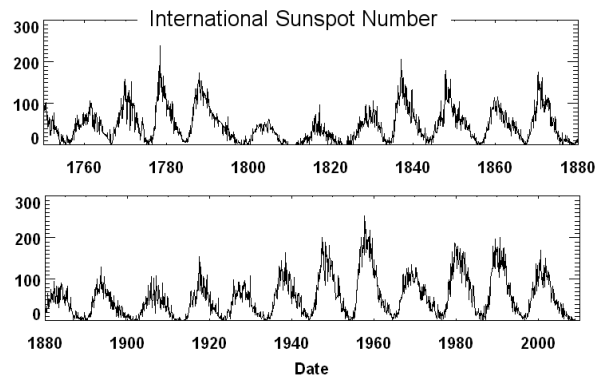
Looking further down the road, it appears the pattern will become more changeable.  For the most part, jet stream features have been quite persistent this winter.  There have been pattern changes, but once they set up they have tended to linger longer than usual for winter, but that is quite common at the time of solar minimum.  The following chart shows you the 11 year sunspot cycle for the past 250 years and clearly shows that sunspots are scarce right now.      

Fighting the persistence associated with solar minimum is the tendency for the wavelengths between jet stream troughs and ridges to shorten during the latter stages of winter, due to the gradual shrinking of cold pools that support the troughs that lead to snow and colder weather.  So, even as a trough visits Alaska from time to time going forward, which will help shoot milder Pacific air into the pattern over the lower 48, the potential exists for significant snow events in the Midwest and East due to shorter wavelength troughs taking shape at times.  That includes those areas, generally south of I-80, where snow has been hard to come by this season.  North of I-90 in the east, the snows should keep on coming.  If you time it right, you should have a good number of powder days to choose from well into March.      

Here Are The Regional Details:      

Northwest U.S./western Canada:  Holiday weekend into early next week will be snowy, but as ridging pushes northward and toward the coast, the storm track will ease to the east.  Snows will back off for the first time in a while later next week.      

Sierra:  Offshore ridge will continue to make it difficult for storms to reach the Tahoe region.  A southern branch storm will deliver fresh snow to the southern Sierra and Southwest late next week.     

Northern Rockies:  Another Alaskan low will bring moderate to heavy snow late this weekend.  Only lighter snows will fall beyond that event for the following week. 

Central and southern Rockies:  Moderate to locally heavy snow late Sunday through Tuesday, with ridging leading to only spotty light snow later in the week.  Southern Rockies in line for snow late in the week, too. 

Midwest:  A couple of Clipper systems bring light to moderate snow to the north early next week and again late in the week.  Temps comfortable for February.             

Northeast/Quebec:  Clipper system brings light snow Sunday.  Stronger storm follows Tuesday, with snow favored north of I-90, mixed/rain to south.   Parade of storms continues for a while. 


Skiing Weatherman: A Battle For The Second Half

[Editor Note: SeniorsSkiing.com is asking our readers to contribute to support our online magazine. Yes, we have grown in the number of subscribers and advertisers. But our expenses have also grown. You can help us defray some of these expenses by helping us out with a donation.]

Support SeniorsSkiing.com by clicking here.

______________________________________________________

Post-Ground Hog Day Winter Looks Like A Struggle Between Air Masses. The Winner Determines the Outcome Of The Season.

Over the past week, the Northwest and northern Rockies have been the overall winners in the snowfall lottery, continuing a trend that has been in place much of this winter. Over the eastern half of the country, it has been a struggle to pile up snowfalls. More often than not, storms have produced a mix of precip types because of an unfavorable storm track or simply just a lack of available cold air. This discussion is going to focus on the Midwest and East, because a battle for the outcome of the season in those regions is getting underway. What I mean by that is cold air is trying to push southward out of Canada but milder air associated with an upper ridge over the Southeast just won’t go away. While the next couple of weeks look snowy, there are signs that the ridge may push back and cause the storm track to shift northward late this month.

The day this is posted, a juicy storm is delivering heavy snow to a swath of the Northeast from upstate New York to western Maine. Further south, snow is also falling on the heels of another round of mixed precip. The dramatic thermal gradient between the contrasting air masses is responsible for the storm and if we look at the outlook for temperatures at 5,000 feet for Friday (2/7), you can see the essence of the fight.

The border between blue and green is the 32 degree line, which approximates where the rain/snow line is likely to be. The line has cut across the East, and at times the Midwest, in most storms this season, causing a wide variety of precip types and changeable conditions.

Last week I wrote about the cold that was finally asserting itself again, and it will be available for storms through at least mid-month, so I am confident that more snow will fall north of I-80 or so. Beyond that, I have some concerns about the staying power of any cold, based on whether or not the EPO, or Eastern Pacific Oscillation, will stay negative, where it is now. A negative EPO, where an upper ridge is found over Alaska with an upper trough underneath it and off the west coast, correlates with colder than normal temps over the eastern half of the country. That helps turn more water vapor into snowflakes rather than those less desirable forms of precipitation. There are signs that the EPO will trend positive later this month, with a trough returning to Alaska. That would inject milder Pacific air into the pattern which would squeeze the rain/snow line further north once again. Here is a forecast for the EPO going forward.

It is not forecast to go strongly positive, but still enough to potentially limit the push of the cold air from southern Canada. I will have more in my next post, but in the meantime, enjoy the snowy pattern unfolding from the Lakes to the Northeast.

Here Are The Regional Details

Northwest U.S./western Canada: Disturbances will slide down the coast along the eastern flank of the ridge over Alaska and deliver moderate to locally heavy snowfall every two or three days through the next week. The parade will continue into Week Two.

Sierra: Ridge offshore is “too close for comfort” in Week One as most storms are deflected to the east. Week Two looks more promising for fresh snow.

Northern Rockies:  Systems cutting southeast into the region will maintain enough moisture and power to keep the snows coming every few days Week One into Week Two/

Central and southern Rockies: The storms that hit the NW/N Rockies will produce a snowy Week One in the central Rockies. Light to moderate snows further south in NM/AZ. Week Two looks better.

Midwest: Two snowfalls north of I-80 in Week One will refresh the slopes nicely. Alberta Clippers will bring additional snow in Week Two. Packed powder to rule in most of this region.

Northeast/QB: Early storm sets things up for a nice weekend from central NY through Adirondacks, northern Greens/Whites and western Maine.  Same areas hit again later next week. Mixed precip south of these areas.

senior ski1

Skiing Weatherman: Mid-Winter Preview

Herb Is Bullish On The Second Half Of This Season.

The past week has been another relatively quiet one over the eastern half of the country in terms of fresh snowfall while the Pacific Northwest and British Columbia have again been targeted with substantial new inches. The lack of snow over the Midwest and East has surprised me to a degree because even though deep cold air has been lacking at times, the jet stream pattern of a ridge over Canada with a trough cutting underneath it in the U.S. that set up shop about ten days ago is one that typically produces storms and snow. As the old weather adage goes “the weather doesn’t happen at the 500 millibar (jet stream) level. Sometimes you can get the pattern right but get the weather wrong”. Last week this first weekend in February looked very promising for snow along the length of the Appalachians, but the northern and southern branches of the jet will remain separate and not phase, which would be necessary for a substantial snowfall. The northern branch feature will slide from the Lakes into the Northeast, producing light snows, but it looks like another case of the big one getting away.

In the Northwest, the onslaught of storms will continue into at least the middle of next week. Initially, snow levels will bounce up to 7-8 thousand feet this weekend before crashing for the second half of the weekend to as low as 1,000 feet in places. The changes in snow level will not be as dramatic next week as colder air from western Canada gets involved in the pattern with time. In the northern Rockies, some light to perhaps moderate snow will fall this weekend as the Pacific system moves further inland.  Elsewhere in the West, the central and southern Rockies and Sierra will be dry for the next several days before some early week lighter snow moves in.

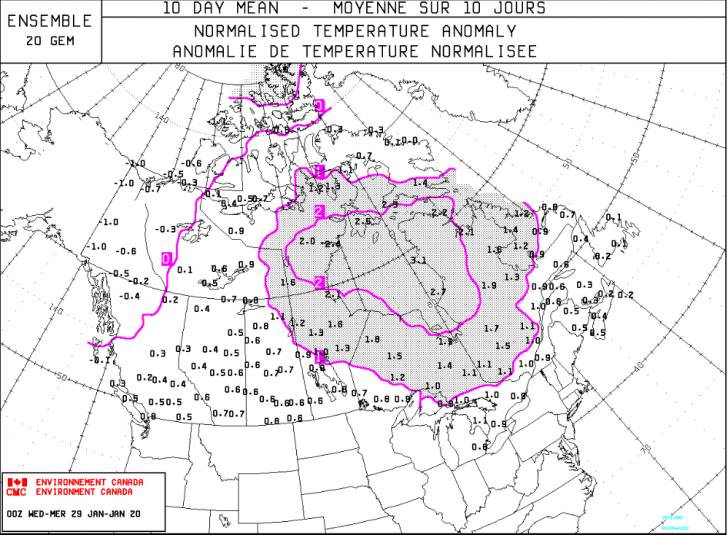
The cold air that will flow into the Northwest is an indication that the refrigerator in northwestern North America has been working.  If we look at the expected standard deviations of temperatures over Canada for the next ten days, the positive values have dropped quite a bit recently and negative anomalies are building in the Yukon. Here is a look at that map:

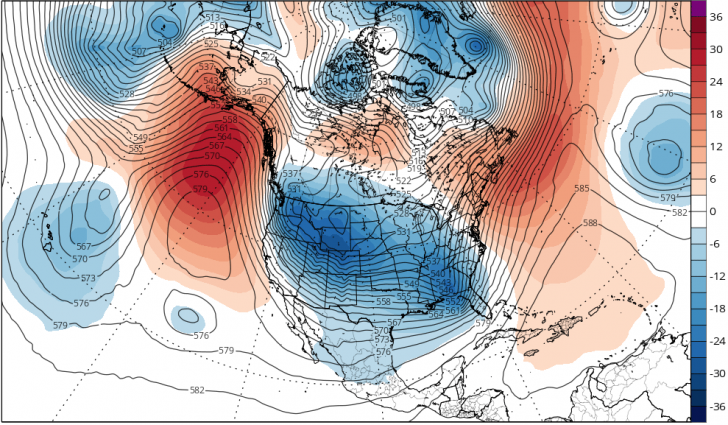
Last week I talked about an expected change in the jet stream set up that could deliver some of that cold air, and it looks like it is going to happen. Here is a jet stream forecast for 2/8 that I agree with:

A ridge is forecast to extend northward to Alaska, where a trough sat a week ago. The trough spread mild Pacific air into the pattern but having a ridge in that spot will help deliver air from the newly-minted cold in NW Canada. The multitude of troughs over the lower 48 at this time suggests a snowy pattern for many areas, much of the West, the upper Midwest, and the length of the Appalachians. That might be asking a lot, but once that cold air gets tapped, the pattern is going to get busy, and I believe snowy. I am sticking with my analog years, and I remain bullish on the second half of this season, even in areas where snow clouds have been rather stingy thus far.

Here Are The Regional Details.    

Northwest U.S./Western Canada: Highest elevations, above 8,000 feet or so, get tagged every few days until further notice. Snow levels will jump up then crash this weekend in WA and OR Cascades, then stay rather low next week.

Sierra: Light snow far north. Tahoe gets light snow Sunday while southern Sierra watch storms go by to the north for a while as ridge offshore plays defense and deflects Alaskan storms.

Northern Rockies: Light to locally moderate snows Sunday as “leftovers” move inland from WA and OR. Arctic air leads to colder weather on the slopes next week. Another light to moderate snow later in the week.

Central and Southern Rockies: Light snow early next week as weakening Pacific storm limps into the region. Another round at the end of the week.

Midwest: Light snow Saturday northern Lakes. Clipper system produces light to moderate snow Thursday of next week. Arctic invasion on the horizon should produce good snowfall Week Two.

Northeast/QB: Weekend ocean storm misses but northern disturbance brings light snow to upstate NY and northern New England/southern QB. Milder early next week with fresh snow by midweek as cold returns. Pattern change bullish for February and beyond.

Skiing Weatherman: Winter Is Delivering

Looks Like A Promising Couple Of Weeks.

It has been a terrific week of skiing and riding in most of the U.S. and Canada and I have been lucky enough to squeeze in a couple of days. Loon Mountain on Tuesday was wonderful; miles and miles of packed powder and views of the White Mountains that are hard to beat. Packed powder, sunshine, and light winds at Stratton on Thursday added up to another awesome day.

The pattern looks very promising for the next couple of weeks, but it is not without its challenges. The primary challenge arises from a jet stream development over the northeastern Pacific that quite honestly, I had not anticipated. With a sizable pool of warmer than normal water over that part of the Pacific, I expected an upper level ridge to be a persistent feature that would extend northward to Alaska. Instead, a trough is parked over Alaska and the counter clockwise circulation around it cuts off cold air from the high latitudes and pumps milder Pacific air into the southern Canada/U.S. pattern instead. Temps will be above normal over Canada for the next ten days or so as flat ridging dominates there. Does that mean that it can’t snow over the northern tier of states? Not at all, because we are at the climatologically coldest time of year. However, each storm will be a nail-biter for snow vs. rain in the Midwest, northern mid-Atlantic, and Northeast. Here is a forecast map for the jet stream across the continent for later Saturday, Jan 25, that illustrates the issues.

The trough off the west coast that stretches northward to Alaska is tapping relatively mild air and sending it into the Northwest and mountains of B.C. There is a ton of moisture available, but snow levels will be an issue in WA and OR this weekend…not so further north in B.C. The moisture will flow east and the northern and central Rockies will benefit with moderate amounts of new snow later this weekend.


The red shades that you see across Canada indicate the extent of the ridge that will play a major role in this weekend’s event in the Northeast. Although it is mild relative to normal over the eastern half of Canada, that air is still cold enough to support snow. Also, upper ridges support surface high pressure centers that can deliver low level cold air into the path of a storm. Just such a high will be present over Quebec this weekend and it will help produce snow in the Adirondacks, Greens, Whites, and into the mountains of Maine. Further south it will turn into more of an elevation-dependent tossup. The upper ridge will help suppress the trough you see over eastern Ohio and it will track east…favorable for the snow to the north. The upper ridge will also keep the surface low from racing out to sea, so the snow will be a 48-60 hour event. Here is a snowfall forecast map through Monday night…it is great to see that significant snow will reach southward to West Virginia resorts…they are running a little lean right now.

Longer term it looks like the same general pattern will remain in place for the next 10-14 days, with another eastern storm in the cards late next week. After that, the western ridge should poke north far enough to deliver a fresh shot of cold to the lower 48.

Here Are The Regional Details

Northwest U.S./Western Canada: B.C. will see very heavy snow this weekend. WA and OR Cascades pick up heavy “cement” as snow levels start high and slowly drop. Same general setup holds through next week.

Sierra: Snow—perhaps a foot—Saturday night/Sunday Tahoe regio. Snow levels dropping through the event. Lighter snows southern Sierra. Some light snow next week; main storm track to north.

Northern Rockies: Moderate snow will develop later this weekend from Pacific trough. Wasatch, Tetons and points north looking snowy next week.

Central and southern Rockies: Dry weekend. Light snow early next week central, just snow showers south.

Midwest: Light snow north this weekend, mixed precip WI and lower MI. Another shot at snow later next week.

Northeast/QB: Long duration light to moderate snow event this weekend, north of I-90. Elevation snow between I-80 and I-90. Snow south to WV along Appalachian spine. Another storm late next week.

Skiing Weatherman: For The East, Enter Winter

A Comeback For The East And Midwest, More Pow For The West.

I spent the first two days of this week with fellow members of the North American Snowsports Journalists Association at Windham Mountain,  NY, where the crew did an outstanding job of providing a fun surface in the wake of a mid-season meltdown last Sunday. One of the presentations was by Masterfit University, an outfit that boasts having the best boot fitters in the world. It was a fascinating seminar, and after spending a couple of hours one on one with Windham’s Masterfit representative, I came away convinced that if you want to maximize your skiing, you absolutely should find a Masterfit shop in your area.

While this week started on an unseasonably mild note in the East, the skies kept unloading in parts of the West. A persistent series of low pressure centers loaded with Pacific moisture has utterly buried resorts in Washington, Oregon, northern Idaho, the Tetons, and northern Wasatch in the past week with anywhere from three to six feet of new snow. Lookout Pass in Idaho checked in with a 101 inch storm total! Lighter snows fell elsewhere in the West, and if you are heading in that direction, you can’t make a bad choice right now.

In the Midwest and East, a major pattern change is getting underway, one that delivered some fresh snow in the mountains of the Northeast late this week, with another round coming this weekend. For the first time in weeks, once the low pressure center moves through the Great Lakes and East, a bonafide cold air mass will follow in its wake, leading to great snowmaking conditions and productive lake effect snow in favored snowbelt areas, especially the upper peninsula of Michigan.

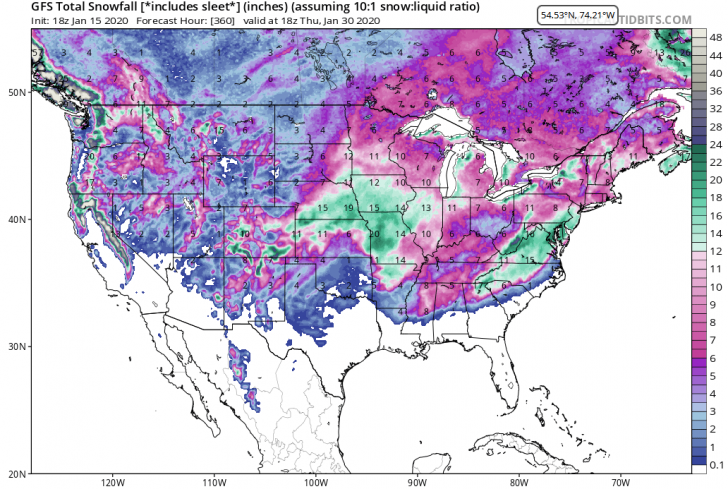
Over the next 10 to 14 days, temperatures will be stepping down over the eastern half of the country as an upper level trough becomes the dominant jet stream feature. At the same time, an upper level ridge will be found more of the time in the Northwest, so the “snow hose” that has been pointed at that region lately will back off quite a bit. The southern Sierra and southern Rockies could see periodic snows as disturbances in the southern branch of the jet move through that part of the country. If a southern branch disturbance manages to phase with energy in the eastern trough, we could see a major storm in the East before too long. The pieces will all be there soon and hopefully they will come together. For your viewing pleasure, here is a forecast map of snowfall for the next 15 days. Don’t focus on one specific spot as much as take note of the breadth of the area, particularly over the eastern half of the country, where significant snow is forecast. The pattern is rounding into shape for meaningful snow events, but the devil will be in the details.

There is reason to believe that once the colder pattern gets established in the Midwest and East, it will remain in control much of the time going forward. My analog years suggest it, as does this jet stream map for two weeks from now:


The broad trough that you see for late this month looks cold and stormy to me.

Here AreThe Regional Details

Northwest U.S./Western Canada: Another rather snowy week coming up, but the recent amazing rate of snowfall will start to back down as an upper ridge takes up residence.

Cascades and Sierra:  Snowy (Cascades) into the middle of next week, although snow levels will be a little high late this weekend before settling back down. Lighter snows Tahoe area. Snowfalls back off late this month as ridging develops.

Rockies: Dry weekend into midweek when a new trough will bring some light snow. Longer term, central and southern Rockies favored for snow thanks to disturbances in the southern branch of the jet stream

Midwest: Arctic air dominates for the foreseeable future. Each frontal passage sets off lake effect snow. Great spell of snowmaking temps underway and conditionS.  Trail counts will be improving.

Northeast/QB: Moderate snow event this weekend (north of I-80) starts the comeback. Great snowmaking temps for several days in the wake of the storm. Another sizeable snow threat next weekend. Conditions and trail counts will be getting better each day until further notice.


The Skiing Weatherman: Changeable East, Snowy West and Mid-West

The West Continues To Luck Out, Cold Coming East By Month End.

Despite a wildly changeable run of weather in the East recently, I managed to get two days of wonderful winter turns in early this week. It snowed on Monday at Sugarbush as I skied packed powder with my son. Wednesday at Killington surfaces were just about perfect packed powder early on and then an arctic cold front arrived. It brought fresh snow: three inches in 30 minutes! An absolute whiteout that gave me a chance to focus on my toes with each turn, a method I was taught decades ago to deal with low visibility. It still works!

Changeable weather will continue to rule short term in the East while much of the West continues snowy, but that imbalance will be changing in the near future. The past couple of weeks, the jet stream maps across the continent have featured a trough centered over the West and a ridge over the East. The trough has produced tons of snow, particularly in the Northwest and coastal ranges of British Columbia.

As this week comes to a close, another storm will cut southeast from the Gulf of Alaska and dump on B.C. as well as the WA and OR Cascades. Lighter snows will reach down to Tahoe as well as the northern and central Rockies. Over the eastern half of the country, a low will cut northeastward through the Great Lakes and into Ontario and Quebec.  That’s great news for the resorts of Michigan, where significant snow will result. Further east, the northern track forced by the strength of the southeast ridge means another mild, wet event this weekend before colder air returns Monday. The “cutter” track is consistent with the current warm state of the MJO, as discussed last week.

Changes are coming, though, and by the final week of the month, the changes will be dramatic across the country. A pool of very cold air has been building in central and western Canada and due to the density of that air mass, it will start to spread southward and eastward. Here is a look at a forecast for the 5,000 foot temperature anomalies for ten days from now that I agree with.

The 5,000 foot level is a forecasting proxy for surface temps, and you can see that a large mass of colder than normal air will cover much of the eastern half of the country by 19th or so. Meanwhile, the West will turn a little warmer than normal, but not until after some of the arctic air descends through the Rockies later next week. At the jet stream level, the setup will flip, and we will find a trough in the East and a flat ridge out west.  Here is a reasonable jet stream forecast for the same time.

Now, any change in air masses and jet stream features of this magnitude will come with a stormy transition, so there is reason for optimism for eastern snow, at least north of the Mason Dixon line, from late next week onward. Once the new pattern settles in, I expect it to dominate through the bulk of rest of the winter, due to the anticipated influence of the warm water pool in the northeast Pacific Ocean.

Here are the regional details.

Northwest U.S./Western Canada: Another heavy snowfall is coming this weekend, light snow in AB.

Periodic lighter snows will continue next week as arctic air presses southward.

Cascades and Sierra: Snowy weekend with heavy amounts in OR, tapering down further south in CA.

Lighter snow continues next week as it turns windy and colder.

Rockies: Northern Rockies catch light snow this weekend but as several upper level short wavelength disturbances move through the first half of next week, persistent light to moderate snow will provide daily “refills”. Each successive trough will draw arctic air further south, reaching the Tetons by mid-week. Light snow in central Rockies first half of next week.

Midwest: Messy weekend storm lower Lakes, snowy in northern Lakes, narrow ice storm in the middle.

Some light snow northern Lakes from a Clipper or two next week.

Northeast/QB: Another cutter brings wet and icy weather to the northern mountains of NY/New England this weekend, snow up in Quebec. Renewed snowmaking and light Clipper snow next week, with bigger storm threat late. Pattern will look much better a week from now.


Skiing Weatherman: Global Pattern Bringing Warmth Then Cold Mid-Month

Happy New Year To All Of My Fellow Senior Sliders!

In the two weeks since my last post, the western slopes of the U.S. and Canada have been the unquestioned winners in terms of fresh snow. Just prior to Christmas, the trail counts from British Columbia south to the Sangre de Cristos of New Mexico were on the lean side, but a persistent parade of moist troughs started marching ashore from the Pacific. Those systems produced an overall snowy pattern that jacked up those trail counts dramatically. There are a few resorts here and there that got slighted by Mother Nature, but by and large, it is hard to make a bad choice out west.

While troughs produced the goods on one side of the country, flat ridging at the jet stream level have made fresh snow rather scarce in the Midwest and East. Fresh shots of cold air have been more of a glancing blow, but resorts in the northern Great Lakes eastward through the mountains of northern New York and New England have maintained their trail counts for the most part through the holiday period.

So, where are we headed from here? Well, a pattern that can best be described as changeable will unfold during the first half of January. As such, I think that there will be opportunities for resorts all across the country to enjoy some fresh snow. I still believe that we will eventually see a western ridge/eastern trough couplet become more favored, but there are too many conflicting signals coming from the Pacific for the jet stream to settle into that set up just yet.

The factor that seems to have the most impact on our weather right now is the MJO, or Madden Julian Oscillation. The MJO is all about convection that forms in the Indian Ocean and tracks eastward into the southwest Pacific. Madden and Julian divided the track into eight sectors and noticed that there were significant correlations with weather over North America, with a lag of 7-10 days, depending on where the thunderstorms were clustered.   Right now, the convection is fired up north/northwest of Australia, as you can see in this infrared satellite picture.

If you follow the green line in the chart below—each black dot is one day—you will see the MJO making a move into octants 4 and 5 in about a week. [Editor Note: octants 4 and 5 represent continental North and South America.]

Using the temperature correlation maps below, you can clearly see that octants 4 and 5 are warm over much of the country, and I believe a warmup will occur mid-month before the pattern turns colder again.

Before any warmth reaches the East, though, Midwest and Eastern resorts—north of the Mason Dixon line—will pick up fresh snow at least a couple of times. The first event will be this weekend as a storm cuts southeastward to the mid-Atlantic coast before turning up toward New England, with an Alberta Clipper sliding through the East a couple of days later. Big winners in the snow derby the next week or so in the West will be the Cascades, northern Rockies, and the resorts of B.C.

Here are the regional details.

Northwest U.S./Western Canada: Healthy storm nails B.C. this weekend, with another system arriving later next week.

Cascades and Sierra:  Light to moderate snow in the Cascades this weekend. Northern system late next week looks productive in WA/OR, but the Sierra will only receive lighter amounts.

Rockies: Late this weekend/early next week the Rockies will pick up light to moderate snow (north) and generally light amounts south of I-70. The Tetons and Wasatch are in line for moderate to heavy snow late next week.

Midwest: Early week Clipper system will deliver light to locally moderate snow, with the best snowmaking temps in a while following. That cold air will also support lake effect snow in northern parts of the lower peninsula of MI.

Northeast/QB: A system this weekend will turn into a moderate to locally heavy snow producer from WV northeast into New England and southern QB. A Clipper system will follow in the middle of next week with the potential for additional light to moderate snow.


Skiing Weatherman: All Is Calm

Except The West Coast.

Last week I discussed the role of upper level troughs as they relate to our insatiable appetite for fresh snow, both natural and machine made. Most of the time, troughs are indeed our friends but that doesn’t necessarily mean that upper level ridges are the enemy. The influence of ridge is just like the old cliche about real estate: location, location, location. Troughs often look like the letter “U” on a map while ridges tend to take on the shape of the Greek letter Omega. I have used a jet stream forecast map for Sunday the 22nd to illustrate this common configuration.

Now, in order to take on the Omega shape, you can see that the two ends of the line are wrapped around adjacent troughs, and that is where the location piece comes into the equation. You see, ridges are areas where overall, the air is sinking. Sinking air limits cloud cover and precip, and it also warms up as it sinks, consistent with the laws of physics. So, if you find your favorite resort under a ridge, your odds of seeing snow are greatly reduced. But, if that same ridge is off to the west of the resort by several hundred miles or more, the clockwise flow around the ridge will work together with the counterclockwise flow around a downstream trough to the east to tap cold air from the north. At that point, the ridge becomes your ally. As I have expressed in earlier posts, I am confident that a western ridge/eastern trough couplet is going to be the favored setup as we head through this winter, but in the shorter run, the ridge is going to spread out and cover much of the eastern two thirds of the country as we head through the holidays. Overall, Pacific systems will bring seasonable cold and some snow to the west while it is milder than normal east of the Mississippi.

Here Are The Regional Details.      

Northwest U.S./Western Canada: A very juicy storm will be in progress into this weekend. Whistler finally gets tagged. Cascades get healthier trail counts. Pattern more benign next week.

Cascades and Sierra:  The same storm will nail the Cascades. Snow levels will be rising through the storm, so only count on “all snow” above 6K feet. Amounts will be 2-3 feet WA and OR. CA Sierra pick up moderate snow Sunday. The pattern will turn quieter through most of Christmas Week.  

Rockies: The coastal storm will slow coming inland due to the spreading of the upper ridge further east, so any snow that makes it out of the Cascades will be spotty and light late this weekend/early next week. No big storms next week by the looks.

Midwest: Late week lake effect will help set up this weekend. Milder temps develop into next week, which limits snowmaking windows. The good news is, it looks rather dry, under the ridge, Christmas week.   Colder air returns after the 29th or so.

Northeast: Late week shot of Arctic air will allow snowmakers to get busy 24/7 in most spots. It will turn milder next week and snowmaking will be feasible in the mountains. The lower elevation areas should have some windows, too. With the ridge axis fairly far to the west next week, some colder air will filter into the region at times. No significant snow events appear to be in the cards through the end of next week.  

Overall, after a major “Cascade Cement” storm in the NW at the outset, the holiday period looks rather dull from a forecaster’s perspective. Some lighter snow will fall in the west…the milder temps will keep it comfortable on the slopes for skiers and riders in the Midwest and East.       

Skiing Weatherman: How A Trough Works

And Regional Forecasts From West To East.

Had my first day on snow last Thursday at Jiminy Peak in the Berkshires. It was a wonderful day on nearly perfect snow: chalky packed powder with some windblown pillows of powder along the edge of several trails.

Today, I thought I would tell you about the jet stream feature to look for when you are hungry for snow or cold weather.

For the most part, troughs are your friends. On a map they look like the letter “U” and act as receptacles for cold air delivered from Canada. They also provide the upper level support for surface low pressure centers to form and deliver fresh snow. There are two “branches” of the jet stream that flow across the continent in the winter, northern and southern. Northern troughs tap into the cold from Canada, and southern troughs enhance the injection of moisture into surface lows. When the two branches combine, or “phase”, we often see our strongest storms. In the West, single branch systems can be pre-loaded with moisture as they roll ashore from the Pacific, so phasing isn’t as necessary to generate a major snowfall. The next opportunity for a significant snowfall in the East will come next Tuesday, when some phasing looks possible. This jet stream map for Tuesday night illustrates the attempt at phasing:


Notice that the southern branch feature is lagging behind the northern one. If it catches up to the longitude of the northern branch system, the storm will be more intense.

Here is the surface map that goes along with that trough at that time:

The High to the north, in Quebec, will feed the system with cold air and should suppress the track to the south far enough to keep most of the NE in moderate snow.

Next week I will discuss the role of upper level ridges in winter weather.

Here is the outlook for the next 1-2 weeks, by region.

Northwest U.S./Western Canada: Light to moderate snow has fallen in BC in the past week with heavier snow in Alberta helping to boost skiable acreage. With the eastern Pacific ridge temporarily replaced by a trough for much of the next couple of weeks, new snow should be significant.

Cascades and Sierra:  A much needed juicy storm hit the Sierra last weekend and open terrain percentages took a major jump. Late this week, the Cascades are cashing in, and totals will be two-four feet when the storm winds down over the weekend. Tahoe will pick up five-10 inches. Cascades will also be hit by a moderate storm early next week. Additional troughs will arrive every few days up until the holiday.

Rockies: The northern branch storm that nails the NW will bring heavy snow to ID, MT, WY, northern UT and northern CO over the weekend. One-two foot totals look likely. Like the coastal ranges, the northern half of the Rockies can expect additional helpful systems in the next 10-14 days. The southern Rockies will see lighter snow this weekend, but will have to wait for a southern system for help…later next week at the earliest.

Midwest: Lake effect snow has helped this week, especially in northern Lower Michigan, but it looks as though the air that flows over the Lakes in the next week will not be as cold, so amounts will be modest. An Alberta Clipper or two next week could help the northern Lakes, in addition to pretty solid snowmaking temps.

Northeast: Early week rain was followed by outstanding snowmaking temps this week but another wet storm will move through Saturday, due to a track that hugs the coast too closely…some backside snow will occur across northern New York and New England on Sunday. Prospects are better for a meaningful snow event on Tuesday/Wednesday of next week. Cold air will not be abundant, so there will be an elevation component to the storm. The snow should provide a shot in the arm to resorts roughly north of I-80. Longer term will be a high wire act leading up to Christmas, as the progressive pattern will make it difficult for cold air to get locked in enough to ensure snow vs. rain. There will be enough cold intervals for helpful snowmaking, however.

Overall, the weather in the Western half of the country looks good while the pattern will be rather chaotic with an enhanced degree of variability over the Eastern half for the next 10-14 days.