

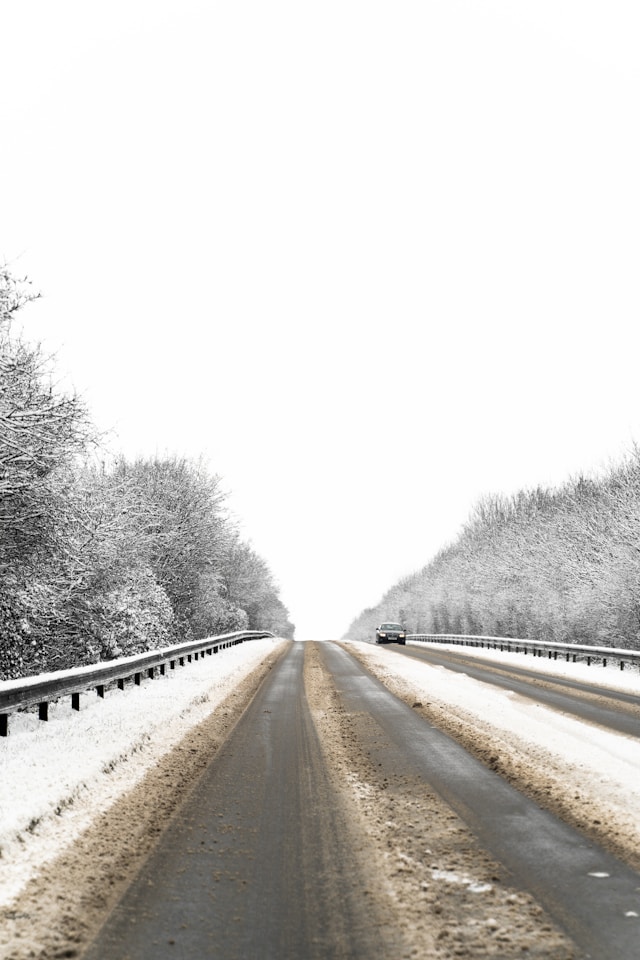
Snow Going: Safety Tips for Winter Driving
Photo by Krzysztof Hepner on Unsplash
If you were driving in the massive winter storms which ravaged much of US in January, you already know about the stress and dangers of driving in snow, ice, black ice and low visibility or blizzard and white-out conditions. If not, these rules of the road in winter will help prevent spin-outs and accidents driving on snow, ice and other foul weather conditions, including white-outs.
More or Less
More – Winter driving requires more space between you and the vehicle ahead, more attention to changeable road conditions, more attention to the speedometer, and more time to get to your destination safely.
Less – Winter driving also requires less speed on icy or slick roadways, less dependence on such safety features as lane departure warnings, even cruise control.
Kitty litter is less expensive and more available than packaged rock salt to help get you out of a wheel-spinning nightmare.
It’s Essential
Do not drive unless absolutely necessary.
Leave roads clear for snowplows and emergency responders to do their jobs, including saving the lives of those injured in storm-related driving accidents.
If road conditions are not in good shape, consider postponing non-essential travel until roads are cleared.
If you must drive, be prepared in case you become delayed while traveling, especially if it’s a long trip. That means making sure your gas tank is full or your EV or fully charged – also your phone – along with snacks, water, a blanket, emergency flares and a working flashlight.
Consider leaving early or later to avoid being on the road during the worst of the storm.
Even if you have GPS, familiarize yourself with directions and maps before you go, and let others know your route and anticipated arrival time.
Winter driving is stressful, so take breaks. Stop to stretch, get something to eat, check your phone, and change drivers if you feel drowsy.
Smart Stuff
Don’t think you or your vehicle can outsmart the basic laws of physics.
The bigger your vehicle and the faster you are traveling, the more distance you will need to stop.
Expect to need as much as ten times more distance to stop in bad weather, even with such high-tech safety features as automatic braking (ABS).
If your vehicle is not equipped with adaptive cruise control, which brakes automatically when you get too close to the vehicle ahead, don’t use cruise control at all. You’ll have better control manually.
Easy Does It
Everything takes longer on icy and snowy roads, so accelerate and brake gently to maintain traction and prevent skidding out of control.
Today’s ABS brakes require that you jam on the brake pedal as hard and fast as you can, and keep your foot down firmly, to activate the system.
The grinding noise tells you tells you the ABS is working. Let it keep grinding – do not let go thinking you have broken something.
Release the brake when you need to steer, since the vehicle can do only one thing at a time. You are not good at multi-tasking, and neither is your vehicle.
Watch the Thermometer
Temperatures right around freezing are especially dangerous, because wet snow and ice are more slippery than the frozen solid variety.
Most dangerous of all is so-called black ice, which is a thin veneer of ice on an otherwise dry road. It is not visible, which makes it so dangerous – no different than hitting a patch of ice on the slopes.
The safest snow to drive on is the kind that crunches under the wheels. That tells you the snow is firm enough to provide traction in starts and stops.
Avoid Changing Lanes
You are more likely to lose control trying to drive over that build-up of snow or slush between lanes than if you stay where you are, says the AAA.
Tires, Windshields and Frozen Locks
Make sure tires are properly inflated, and never mix radial tires with other types of tires.
Rotate tires according to manufacturer’s instructions.
You’ll be using a lot of cleaner to keep the windshield clear of road salt and grime.
Never use plain water, unless you want a coat of ice that’s all but impossible to defrost.
Also, never use water on a frozen lock. Instead, use a quick blast with a hair dryer, a quick squirt of 10 W 40, or a commercial lock de-icer.
Steering Out of a Skid
Forget that confusing old rule about “steer into the skid”. It’s much easier than that – just look where you want to go and steer to get there.
Smoothly and slowly, please, since quick and jerky steering can worsen the skid.
Both ABS and traction control require a firm grip on the steering wheel, advises Edmunds.com. Not white knuckle, just firm.
It’s important to remember not to brake and steer at the same time, because you are asking the car to do too many things at once.
Brake first, and when you feel ABS kick in, then steer – gently.
Traction control holds back spinning wheels and allows the engine’s power to switch to the wheels that have a better grip.
ABS reduces what automotive engineers call “pedal travel” and provides a more constant braking feel, so ABS requires firm, constant pressure – no pumping as on conventional brakes.
In fact, you need to jam on the brakes as fast as you can and as hard as you can – and keep your foot there – to engage ABS.
Don’t be scared off by the grinding noise – that means ABS is working.
Drive safe this winter – and see you on the slopes.

- Tips and Tactics for Spring Skiing - March 19, 2026
- Short Swings: Timely Tidbits of Snowy News - March 5, 2026
- Indy Pass Adds 16 Resorts for Next Season - March 5, 2026


I have been driving snow for over 60 years . Yes, tires are expensive, but they are the most important part of any car or SUV. Buy the best REAL SNOW tires and make sure there is plenty of tread. DO not buy all-weather tires as they do not compare to the traction you get from full winter snow tires. Also slow down and leave plenty of room between you and the next vehicle.
Have a small snow shovel or a regular sized snow shovel (if that’s all you have) to dig out your car.
Turn off your radio or entertainment and listen to the road surface and car for slippage, etc.
Practice snow driving in a vacant parking lot to learn how to control skids and assess your vehicle dynamics and handling. If you really want to master snow driving, go to Bridgestone winter driving school in Steamboat Springs. CO.
A lot of great tips here.
I keep a big wool blanket in the car in case I am unlucky. (Once in 56 years of driving.)
Hi there,
Lots of good tips in your article which was a nice review for me. As a retired auto shop owner I just wanted to clarify one point that you made. When you stated: (Release the brake when you need to steer, since the vehicle can do only one thing at a time. You are not good at multi-tasking, and neither is your vehicle.) This is only true with older vehicles not equipped with ABS (anitlock brake system). With modern vehicles you never release the brake. The ABS will always allow you to steer the car.