Tag Archive for: cross-country

XC Skiing In The Spring Is The BEST!

Even In Mid-April You Can XC Ski; You Just Have To Find The Snow.

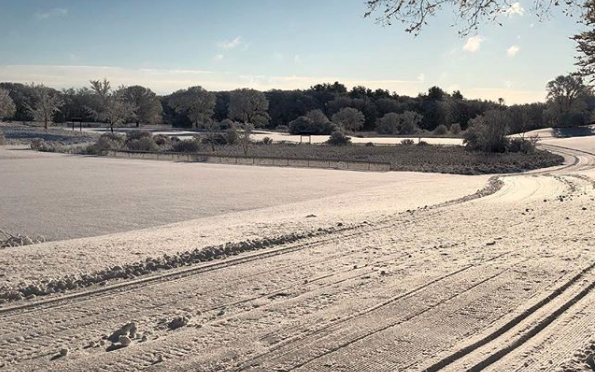
Spring cross country skiing can be found in high country and xc resorts. Credit: Mike Maginn

As the cross country (XC) ski season winds down, most XC ski areas close because of lack of skiers rather than lack of snow on the trails. The sun comes out, the temperature rises, and the XC skiers quit. Why? Are we infected with winter fatigue? Is the lure of spring time recreation too strong to ignore?

XCSkiResorts.com spoke with some ski area operators around the nation to get their take on spring skiing. Many areas host springtime season pass holder parties and offer big discounts for purchasers of season passes for next year. Lapland Lake in Northville, NY, commented that their trails are compacted on a daily basis so the snow does not disappear like in the city or open areas in suburbia. Lapland’s Kathy Zahray encourages skiers and snowshoers to “get out and enjoy this weather and these great spring conditions!”

Zahray admits that “the reality is that in the spring it costs more for grooming and staffing than the amount of income earned from the diminishing number of skiing patrons, however this is one of the most fun times of the year to enjoy the outdoors. The milder temperatures and discounted rates are terrific for everyone, and it is fun to ski in shorts and t-shirts.” Lapland Lake is offering special lodging prices through March.

Carters XC Ski Centers  in Bethel and Orford, ME, have been very busy this spring renting cabins and selling equipment. Carter’s hosted the Burger, Beer & Bike Festival for their patrons to try fat bikes and enjoy the area.

In Minnesota at Maplelag Resort, proprietor Jay Richards concurs “that people want to get on the snow early but get tired of winter and ready for warm spring days.” He feels that “skiers in the Midwest are conditioned to colder and drier snow compared to skiers in other regions who are more accustomed to a wider variety of snow conditions.”

At Cross Country Ski Headquarters in Roscommon, MI, they run spring events on machine-made snow such as the Hawaiian Barbecue where they have locally raised pork hocks, along with island style veggies and of course fresh grilled pineapple. Proprietor Lynne Frye invites everyone to celebrate all that is great about spring: long, sunny days of great cross country skiing in MI!

Skier Brenda Winkler, who is a regular at Izaak Walton Inn said, “There is nothing like skiing on Piston Bully groomed trails at Izaak Walton Inn. I skied yesterday and then enjoyed the best Buffalo burger in the restaurant. Izaak Walton Inn has had great grooming all season and there is a lot of winter left at the Inn!”

The Breckenridge Nordic Center  in CO has skiers who are enjoying the patio and lounging around with a glass of beer or wine. They’ve held some well-attended fundraising events this spring and expect to remain open through April 22. Owner Josh Dayton said “We’re having really warm days but our snow holds up very well.”

The folks at Methow Trails in Winthrop, WA, stated, “This season has been another fantastic snow year!   We have no shortage of snow but people stop skiing in the spring which is really too bad because we often find the best skiing of the season comes in the spring. The trails are well packed, and the days are lighter and warmer making it much more comfortable to ski. We’re seeing that in the Methow right now there’s some of the best ski conditions we’ve had all year!


Cross-Country: Lessons Are The Best Way To Out-Think Your Feet

To Make The Switch To Cross-Country, Please Start With A Lesson And These Tips.

In the early 1970s, in a visionary but totally wrong-headed move, the fledgling Nordic ski industry declared that, “If you can walk, you can cross-country ski.”

It would have been a lot more helpful to say, “If you can walk, you can learn to cross-country ski. And it takes only one lesson from a professional to learn how to glide.”

Those were times when an alpine resort manager pigeonholed skinny skiers as, “Guys who head into the woods Friday night, and come out Sunday without having changed either their underwear or their $5 bill.” We were on the defensive—and dang, it’s tough to fight clever stereotypes!

Those were also the days that New Englander John Frado, who designed a lot of the best trails in North America, coined the hilarious phrase that’s the title of this article. And boy, was he right, because you’re going to become a better skier, use less energy, go further faster, and have more fun sooner if you start the sport with instruction. (And by that I mean ideally not just a single lesson, but one, followed by practice, then another lesson. And so on.)

Cross-country can be filled with grace—not just the dynamism, self-discipline, and athleticism you see at the Olympics, but true beauty. Or it can be an awkward downer.

So here are half-a-dozen tips to make skiing euphoric, quickly.

Credit: Ski Museum Of Maine

First, please do something the Nordic business has never been able to and come up with more endearing descriptions than “lesson,” “instruction,” “teaching,” and “ski school.” Who wants to go back to studies when you’re out to have winter fun?

Next, don’t even think of learning from a loved one—instead, learn from a ski professional. There’s always an uncomfortable level of stress and self-consciousness if your instructor is also a relative, or your sweetie. Too distracting; and incidentally, your kids or grandkids are likely to absorb everything depressingly faster than us oldies. But once you can glide, that’s the moment you discover that cross-country is incredibly social, skiing side by side with friends and family.

Third, learn to ski at a cross-country area or club with machinegroomed trails, where the compressed tracks will guide your skis. (More on this in a future article—promise!) A good resource on places to go is www.xcski.org and  www.xcskiresorts.com.

Fourth, your ski pro needs to explain, early-on, how and why to hold your poles properly (my cliché: reach for the sky along the shaft, then shake hands through the grip). Grabbing the poles tightly means you’ll be upright, stiff, walking rather than gliding, and a lot more fall-prone.

Fifth, if you’re renting equipment, check to see if your instructor uses the same skis you do. It kinda levels the playing field.

And finally, think about a second lesson—or a private lesson—that concentrates on the whole range of descent techniques on these narrow skis that don’t have metal edges or heels held down, while you’re using footwear akin to sneakers. Wedge turns, step and skate turns, parallels, telemarking, traversing with kick turns, side stepping—they’ll all get you down that hill.

And as I found even in my prideful youth, sometimes you just have to take your skis off and walk down. It’s all legit!

Cross-Country: Tracks vs Touring

Groomed XC Trails Are Becoming More Prevalent; Does That Ruin The Aesthetics Of The Sport?

The “natural” experience, just like it was meant to be…Or…

For the past 50 years or so, there’s been a generally amicable debate whether cross-country skiing on machine-groomed trails is preferable to making your own way over the fields and through the woods. The argument has a lot of angles, including “Free vs. Fee” and “Pristine, Silent, and Serene vs. Speedy, Social, Service-based, and Secure”.

…Groomed trails at Appleton Farms, Ipswich, MA, easier and less tiring.
Credit: NS Nordic Assn

Clearly, you don’t have to choose one over the other – they’re both delights (and the world’s best exercise), in somewhat different ways. The thing is, as my increasingly complaining bones and joints frequently announce, groomed trails for classic and skate techniques have more and more going for them.

One huge differentiator is that if you want to take up the sport, you’ll be smart to start with one or two lessons from a professional instructor at a cross-country ski area, learning and practicing efficient movement. Undesirable options are learning by yourself off-track (I know someone who tried to do that while consulting a printed manual – results weren’t pretty) or getting often-incoherent suggestions from a friend while floundering in unpacked snow (‘nuff said).

Whether you’re a long-time practitioner or a newcomer, groomed trails make things easier, faster. For classic style, you’re riding on a consistent, packed surface, with your skis guided forward in compressed tracks. (It takes some effort to get lost that way too; whereas I’ve been known to ski in circles in fresh snow, totally convinced I was moving in linear fashion.) Gotta love it, especially if you have balance or vision issues, as I do.

Almost as important, your pole tips are digging into packed snow and no further; while breaking your own trail, the entire basket may sink, throwing off your balance and helping you to get up close and personal to the snowpack. And as many of us have discovered, getting up in deep snow is challenging.

Skate skiers need a packed surface even more than diagonal striders. Two or three inches of fresh snow even on a groomed trail are enough to grab an edge. It’s nearly impossible to skate in ungroomed snow except for spring crust-cruising (not the same as skiing on ice – you can set your edges), which is a joy – crust lets you go almost anywhere, speedily zipping along. Euphoria!

One of the delights of cross-country is that you can evolve from a groomed trail skier to a tourer, if you wish. You’ve developed good classic technique in the tracks; you know how to make your legs do the work and your arms help out – now you can apply those skills in a quieter setting, with shorter strides but still good balance.

Cross-country areas have services – anything from plowed parking to lodges with food and drink, heated bathrooms (also heaven on a brisk day!), rental, retail, even overnight accommodations. Also, groomed trails may have signs, maps, possibly ski patrol, probably snowshoeing – and if you’re wild for something different, increasingly there’s fat biking available.

If you’re taken by the charms of overnight tours, there may be Forest Service cabins in your area (bring your own food, clothing, sleeping bag…). (Editor Note: See Steve Hines’ article on skiing to the AMC Little Lyford Pond Camp in Maine.) And finally, for true adventure, there’s snow camping (bring your own stove, too). Touring with a pack in fresh snow is truly character-building (been there, done that, I happily leave it to today’s kids).


Little Lyford Pond Camps: Companionship, Adventure and Hospitality in the Maine woods

Long-Time Friends Take To The Maine Woods On An XC Adventure.

Steve Hines (R) and his pals venture into the AMC’s wilderness camps every year.
Credit: R. Boucher

A fresh three-inch snowfall covered the winter parking lot as we arrived for our annual winter ski trip. We felt a quiet confidence as we loaded gear into the gear shed for transport to the Appalachian Mountain Club’s (AMC) Little Lyford Pond Camps (LLPC). The camp is on the outskirts of Greenville, Maine. At about 9:30 that morning, we put on skis and shouldered day packs for the 6.8 mile trip from the parking lot to the camp. The four of us—ages 63 to 70—are all experienced outdoorsmen.

Head of the Hedge Hog Gate Trail into the LLPC. Credit: R. Boucher

Trips like this were not new to my group of friends. But, what makes people our age want to continue to take adventures like this? Hadn’t we all earned our rest? Shouldn’t we be shopping for “over 55” living arrangements? Perhaps the answers would be revealed during the week.

AMC owns three camps which are on land the club purchased near the Katahdin Iron Works region in north central Maine. The camps had been fishing and hunting camps for “sports” from Portland, Boston and New York, typically wealthier men looking for a respite from their harried lives in large cities. LLPC opened in 1873 during the so-called gilded age in America. These were the days of JP Morgan, the Rockefellers and the Carnegies. Now, the three camps: LLPC, Gorman Chairback, and Medawisla are all updated and modernized for 21st century adventurers.

LLPC was our destination this time, and the only way to get there is to ride a snowmobile or ski in on either Hedgehog Gate XC ski trail or the KI Road (logging road) to Upper Valley Road to the camps. Either way, the conventional wisdom is that intermediate skiers have the best time but beginners beware. Two of us decided on the trail and two on the roads thereby observing the “never ski alone” rule.

LLPC at twilight. The AMC maintains three wilderness camps in Maine. Credit R. Boucher

A few hours later, we four were reunited at the lodge at LLPC having lunch and telling stories. The staff at the camp were all on the job less than six months but were eager to please. In a short time, they’d become veteran innkeepers. Food at LLPC ranges from good to excellent, and we all found plenty to eat. The camp staff also accommodates special needs like vegetarians and gluten free. Trail lunches are provided as part of your stay.

The trail system around LLPC is extensive also ranging from comfortable “kick and glide” trails to challenging, ungroomed trails like Gulf Hagas.

Cross Country skiing isn’t the only winter sport enjoyed in the area around LLPC. Snowshoeing is also popular too. And the Lodge has snowshoes to loan.

While we had many conversations around our wood stove over the course of our stay, there were no clear answers to the existential questions listed at the beginning of this article. We did agree, however, that we all look forward to our next winter adventure.

Snowshoeing around the pond at LLPC. Credit: R. Boucher