

Tag Archive for: Historic Ski Areas

Historic Blandford Ski Area Poised To Bite The Dust

This Wonderful Family Area Is Simply Out Of Money.

[Editor Note: According to the Westfield News, Springfield Ski Club’s members will be meeting on July 18 to approve the sale of assets to the owners of Ski Butternut. If two thirds of the total membership do not specifically vote yes, the ski area will close.]

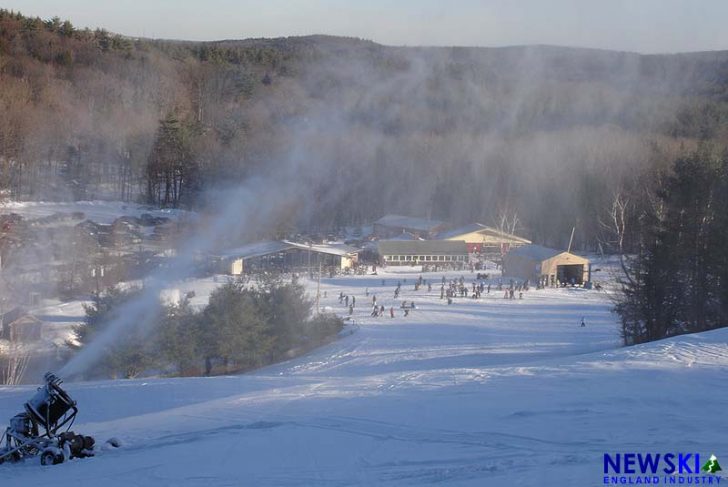
Volunteers kept Blandford going and gave the small area a community feel.
Credit: New England Ski Industry

The website says: “May 28, 2017 – Ski Blandford Financially Insolvent. Could Be Sold or Closed.” The Board of Directors and the skiers are on the brink of making a gut wrenching decision soon about their ski area that’s been going for 81 years.
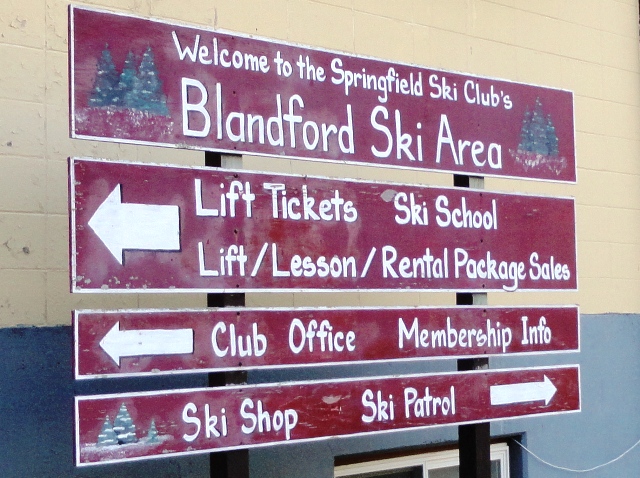
Harriet visited Blandford on a recent visit, finding a welcoming sign at the base lodge.
Credit: Harriet Wallis

As background, recreational skiing spiked after WWII when 10th Mountain Division veterans returned and inspired city folk to take up skiing.

But before that, in the 20s and 30s, hardy skiers skinned up mountains, built primitive lifts and were already into downhill skiing.

And so it was for the Springfield Ski Club. In 1936 it got permission to build a ski slope on a hilly farm in southern Massachusetts. It installed a 1,000 foot long rope tow and used a nearby schoolhouse as a warming hut. A few years later the club bought the land and named it Blandford Ski Area.

Today, about 60 ski areas that started before WWII are still in operation, according to data collected by New England Ski Museum Director Jeff Leich.

But it hasn’t been easy for this small, family-oriented ski area. Modernization from rope tows to chairlifts was costly. Updating to snowmaking was a necessity. But then, interstate highways whisked skiers past Blandford to bigger, destination resorts.

But Blandford—with its 450 feet of elevation, three chairlifts, snowmaking and night skiing—held on while other small ski areas in southern Massachusetts closed. Skiers simply love Blandford.

And they put in countless hours of volunteer work to keep the area ship shape. Work parties painted the picnic tables. And they walked up the slopes picking up stones pushed up by frost and tossed them into the woods so in winter they could ski on a minimal snow base.

During the 1960s and 70s, membership was capped at 5,000, and there was a waiting list to join. My family of four were all novice skiers, and we jumped at the opportunity to join when an opening occurred..

From that humble beginning at the small ski area, we all grew to love the sport. And we progressed to become instructors and ski patrol.

Blandford got us started in the right way. It inspired us with skiing. And it offered family values and great camaraderie with other families.

However, membership slowly dwindled over the years and dropped to just 1,426 in the 2014-15 season. Fickle weather and the economics of operation began to out weigh the camaraderie and the inspiration,

Blandford, like other small ski areas, is a grass roots feeder area that launches skiers into the sport. It’s sad that we might lose this icon of the ski industry. For a closer look, click here for the Ski Blanford site.

To read more from Harriet click here for her stories on SkiUtah.

Small areas like Blandford are where families grow up loving skiing.
Credit: Ski Blandford


SeniorsSkiing Guide: Saving Laurel Mountain From Obscurity

Western PA Pioneer Area Comes Back To Full Operation.

Fun Fact: Legendary Hannes Schneider designed the trails at Laurel at around the same time he created Cranmore.
Credit: Laurel Mountain

There has been a lot written about the lost ski areas.  For one reason or another, ski areas sometimes are unable to meet the financial or operational requirements and end up closing the lifts.  They fall into disrepair and end up on a list of lost ski areas forever.  But, there is an exception whose light is burning bright this winter.  Laurel Mountain in the Laurel  Highlands of Western  Pennsylvania will once again be spinning the lifts thanks to a grant from the State of Pennsylvania and the financial and operational input of the major ski area in the region—Seven Springs Mountain Resort.

Laurel’s origins date back to 1939 when Pittsburgh financier Richard King Mellon began to plan a ski area for the enjoyment of the members of the  prestigious Rolling Rock Club.  In alliance with Harvey Gibson who was chairman of Manufacturer’s Trust Company and owner of Cranmore Mountain in New Hampshire, they began building the ski area on the western flank of the Laurel Ridge near Ligonier, Pa.  The design of the mountain was created by the world famous Hannes Schneider who was the inventor of the Arlberg method of ski teaching which is the basis of modern alpine technique.  Schneider was brought to the U.S. by Harvey Gibson and the legendary Austrian ski instructor hiked the Laurel Ridge and designed the trails and the signature Wildcat run which is the steepest run in Pennsylvania.

Soon after World War II, the private resort was opened to the public.  “Ski tow” tickets were $1.25 per day to ride the surface lifts.  Private lessons were $5.00 per hour with instructors trained by the famous mountaineer  Ralph “Doc” DesRoches, a veteran of the 10th Mountain Division and eventual major patron of the US Ski Team. Laurel grew with the post war boom and in 1947, a new lodge was built at the mountain summit. Laurel was soon the home of the Pennsylvania State Ski Championship founded by Edna and Max Dercum of Penn State University where Max was a professor of forestry.

In 1955, a new lift, perhaps the only one of its kind—a Constam T-bar— became the first top to bottom lift eliminating the need for three rope tows to get to the summit.  In 1956, Laurel was among the first ski resorts to install large scale snowmaking.  In 1963, R.K. Mellon and his sister Sarah Scaife gave the ski area to the State of Pennsylvania which began a new era with Poma lifts replacing rope tows and lights for night skiing.  The first chairlift at Laurel was installed in 1968.  After a number of years of state ownership and mounting competition from Seven Springs and Hidden Valley, Laurel fell to financial troubles and had many years of start/stop operation.  In 2004, Seven Springs entered into an agreement to run Laurel Mountain, but, with many improvements deemed necessary, the resort was once again closed.

Seven Springs eventually purchased the assets of Laurel Mountain and soon began to chart a course for operation once again with SE Group as the primary consultant.  With revitalized snowmaking by HKD, reconstruction of the lodge in 2015-2016, and official groundbreaking for a new quad chairlift, the plan for opening for the 2016-2017 ski season was finally a reality.

Laurel is a gem to the local community. The 1000+ members of the web-based group Friends of Laurel Mountain had a lot of influence in the progress of the construction. It is with great pride that the residents of Ligonier and the ski community in general in Western Pennsylvania welcome the historic Laurel Mountain back to the list of operating ski areas in the U.S

Location:

US 30 East, just outside of historic Ligonier, Pa.  Approximately a one and a half-hour drive east of Pittsburgh.

Trail Map: Click here.

Hours of Operation and Ticket Prices:

Sunday –Wednesday- 9:00 AM to 4:00 PM  Tickets $38.00

Thursday-Sunday- 9:00 AM to 9:00 PM – Tickets $53.00

Holidays- $58.00

Preferred Lodging:

Ligonier Country Inn

Call for reservations: 800-916-4339

Dining:

There are many dining establishments in the town of Ligonier including the Ligonier Tavern, my favorite,  just off the town square.