


Tag Archive for: snowshoeing for seniors

Snowshoe hiking

Learning To Love Snowshoes

Not XC’s Poor Cousin Anymore.

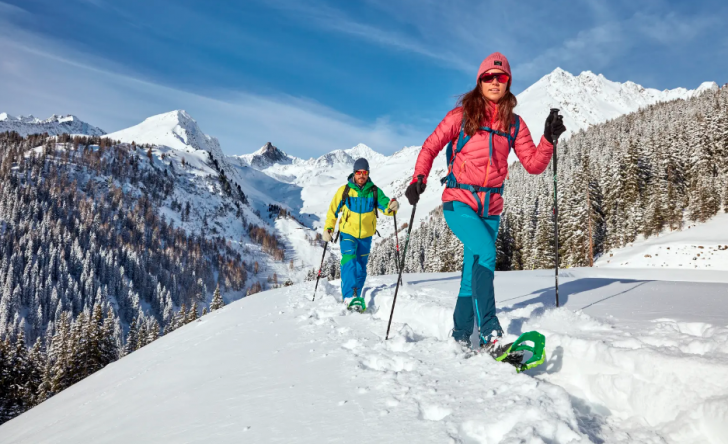
Snowshoe hiking gets you out on the snow and sunshine.

Back in 1971, when I transferred winter affections from downhill to Nordic skiing (due to a spectacular fall in Austria, that racked up one knee and stripped off my nifty French-made Fusalp ski suit– but that’s another story), I tried snowshoeing too. After all, cross-country skis and snowshoes were both made of wood and quite beautiful; they’re both ways to travel over snow rather than wade through it; they’re both very low-impact sports…

But cross-country evolved into my lifelong true love, while snowshoeing became merely the affably boring cousin you contact every few years. Too much work; bindings were crappy (now you’re in, now you’re not – and your fingers are gonna freeze putting the damn things back on); ‘shoes didn’t slide like skis, except sideways downhill on crust; wood frames cracked; rodents enjoyed chewing the rawhide webbing in summer storage…

Modern snowshoes confirm the theory of evolution. They’re clearly descendants of the woodies but fill new niches in design, materials, flotation, fun…

We moved ‘way beyond Sergeant Preston and his gigantic snowshoes.

I found this out one January about a dozen years ago, designing XC trails near Big Sky resort in Montana. (Sadly, I hadn’t visited that cousin in almost 30 years.) The snow was too deep, buried underbrush and deadfall too catchy, to use Nordic skis; so since slogging through waist-deep powder on foot was out of the question, what to do? Happily, intuition had suggested bringing my new aluminum snowshoes along, to test the frozen waters; and they behaved magnificently, though I dumped a couple of times trying to back up, sinking the tails of the ‘shoes. (My style of absorbing knowledge always seems to be “education through error.”)

So what’s new about this next generation – or two – of snowshoes? It may seem minor at first, but bindings have improved incredibly – they’re easy to use, stay on, sturdy, and they don’t stretch so they slide off your boots. The ‘shoes themselves are durable and have no food value, since they’re generally made with aluminum frames and synthetic decking that’s durable and gives great flotation – that combination also allows light weight, so less effort. The addition of bottom metal cleats gives you much better grip on crust and even side-hills (though it’s still smart to avoid those when possible).

Let’s, what else? Modern models definitely aren’t as pretty, but it’s a trade of aesthetics for dependability, longevity, convenience, and ease of movement.

Snowshoes are usually not as pricey as Alpine (or even Nordic) gear, but it’s still smart to rent before you buy to see if you like the sport. You can use hiking or snow boots with today’s adjustable bindings, or even sneakers with neoprene booties. A pair of gaiters will help keep out the snow and make sure your feet stay warm and dry.

There’s a new kind of ‘shoe that came on the market recently from a Colorado company (www.crescentmoonsnowshoes.com). They’re made of foam (foam!), but from my destructive testing are not just light but also sturdy, incredibly maneuverable (I backed up in them, did a 180 degree jump-turn for no good reason – no falls!), have great bindings, and are setting the snowshoe industry on its butt.

There are a thousand more subtleties to fun snowshoeing – using poles, running vs. walking, clothing, etiquette, blah blah. They’re relatively unimportant. Snowshoeing has become easy, and easy on your bones and joints. And even if you don’t glide, just repeat too yourself, “600+ calories per hour!” enjoy the burn, and head for the dessert tray after your outing.


The Get Started Basics Of Snowshoeing

Here’s Another Way To Enjoy Winter That Seniors Can Easily Get Into

Snowshoeing, once a practical means of winter travel, is now a winter recreational activity. It provides many folks  an outdoor winter alternative to skiing or X-C. In fact, most ski areas now offer snowshoeing as an option.

If you like walking, you will enjoy getting out on snowshoes. Some tips and a little technique will increase your enjoyment of this growing sport.

Male (L) and female (R) snowshoes accommodate different sized people. Credit: Connie Phillips

Male (L) and female (R) snowshoes accommodate different sized people.
Credit: Connie Phillips

Dress: Use three layers to keep warm in cold, snowy weather. Wool socks will help keep your feet warm. Mittens are warmer than gloves.

Layer 1: Wicks away perspiration. The base layer, next to your skin, should be wool or synthetic. The most common synthetic is polypropylene.

Layer 2: Insulates you from the cold. Again, wool is very dependable. But the various types of synthetics (aka “fleece”) provide enough warmth. Personally, I’ve never been cold when snowshoeing because of the activity level (exertion) involved.

Layer 3: Protects you from wind, rain and snow and should be waterproof and breathable.

Preparation: Many new enthusiasts are surprised to find that snowshoeing is a very aerobic activity. Exercises like walking, running, cycling and/or swimming are good preparation. Start before winter arrives.  Remember to know your own capabilities before heading out; take your first outing slow and easy.

Equipment:  Snowshoes are your main piece of equipment. The longer and wider a snowshoe, the less you will sink into the snow. Most snowshoe dealers will ask you for your body weight plus your pack weight. Let your dealer help you select the right snowshoe and remember this acronym FACT.

F – Flotation: make sure the length supports both you and your pack weight.

Note toe lift technique when walking on the flat. Credit: Connie Phillips

Note toe lift technique when walking on the flat.
Credit: Connie Phillips

A – Articulation: the snowshoe front should tip up when you raise your foot using a hinge at the forefoot position (See  photo).

C – Comfort: the right snowshoe should not make you spread your legs too wide apart and should keep your hips in a near normal position. Also, the bindings should be easy to use. Most snowshoe brands now make “gender specific” snowshoes. (See photo)

T – Traction: spikes or “crampons” on the bottom of the snowshoe help with traction going up and down hills.

Boots are important too. Most snowshoers will need insulated boots. Boots that lace up (rather than zip up or pull on) are best. Many snowshoe boots have a lip or spur a few inches above the heel which help keep the snowshoe binding strap in place.

Poles are another useful piece of equipment. Many snowshoers prefer the telescoping trekking poles. Large baskets on the end of your poles prevent sinking too far into the snow and help with balance. Gaiters, those nylon tubes that extend from the boot to just below the knee, help keep snow out of your boots.

Technique: A little technique goes a long way. When moving on flat terrain or going uphill, walk by moving your back foot forward with your toe dropped. On the downhill, walk heel to toe like normal.

Start your snowshoeing on broken out trails and not in deep snow. As you gain strength and experience, head into deep snow. Start off by going for time and then go for distance.

hinesHeadshot_1


Steve Hines is a sales associate at REI, Inc. (Steve’ does not necessarily reflect REI’s views). He has been a wilderness guide, a Wilderness First Responder and a volunteer trip leader for the Appalachian Mountain Club.