Tag Archive for: Tai Chi

Do You Recognize Asymmetry in Your Body?

Are You Right-Handed or Left-Handed?
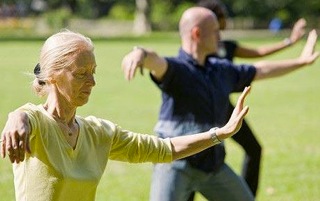
TaiChi is continuous, slow motion of gentle stretching and breathing practiced by thousands around the world. Credit: Tommy Kirschoff

TaiChi is continuous, slow motion of gentle stretching and breathing practiced by thousands around the world.
Credit: Tommy Kirchoff

[SeniorsSkiing.com welcomes back Tommy Kirchhoff, a long-time ski instructor and a certified Tai Chi master. He has been teaching senior exercises for 12 years. Tai Chi is an ancient martial art that has evolved to slow-moving poses that is practiced all over the world.]

Does one knee hurt more than the other? Are there visible differences in the size and shape of your calf muscles? How about more aches in one shoulder than the other?

When you stand, do you know which foot you typically stand on? When you sit, can you tell which of your butt cheeks takes more of your body weight?

From the time we are born our bodies develop and then degrade asymmetrically. Each of us takes a longer step with one foot than the other. We tend to favor one arm and one leg; and by the time we reach middle age we begin to have asymmetric problems.
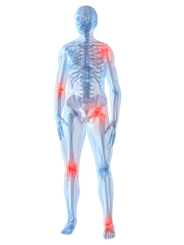
Body Asymmetry can lead to chronic soreness. Tai Chi can help re-balance.

Body Asymmetry can lead to chronic soreness. Tai Chi can help re-balance.

One hip or one knee destroys itself. This leads to surgery, and more asymmetry. Eventually the problems make the body sedentary, which leads to problems of the internal organs and the blood.

But asymmetry can be remedied. Not with strength, as doctors and physical therapists all seem to believe. Strength does not solve the problem of joint stiffness.

First, recognize the strengths and weaknesses of your body parts. Take inventory. Think about the differences. Let the left side teach the right side and vice-versa. Then start practicing Tai Chi. You can start anytime, but for older skiers, there’s no time like now to prepare yourself for next season.

The slow “perfect” and balanced movements of Tai Chi allow you mobilize and stretch your ankles and knees and hips in a safe and methodical way.

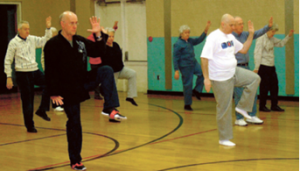
When you see a photo of someone practicing Tai Chi, you have to always remember that Tai Chi has no static postures. Continuous movement is a principle. So is relaxation.

When you relax and move in a specific way you can work through your stiffness and begin to correct the asymmetry in your body.

Our school has many thousands of students worldwide who enjoy the endless benefits Tai Chi has to offer.

If you want to give the movements a try, this is my Standing Energy Practice video on YouTube:
 

This Week in SeniorsSkiing.com (Apr. 29)

Tai Chi for Aches and Pains. Storing Your Skis. Cycling Crater Lake NP. Ski History Week in Aspen. Abstract Art on Skis. New Sticker.

Ready for something different? Ethereal visual images from Nicole Vuignier.

Ready for something different? Ethereal visual images from Nicole Vuignier.

How about those wet dumps this past week? Hope you got out to play. The season is definitely winding down. Time to transition into non-snow activities. Be sure to use your ProMotive site privilege to gain deep discounts on all kinds of outdoors clothing and gear. It’s one of the many benefits of subscribing to SeniorsSkiing.com.

Long before hot tubs and saunas, people of all ages were overcoming soreness and pain by practicing Tai Chi. As explained by longtime racer and Tai Chi practitioner Tommy Kirchhoff, this ancient Chinese procedure stretches the body, promotes self-healing, and is easy to do. Check out the short instructional video.

Be sure to read SkiDiva‘s account of putting your skis to bed until next season. If you want them to wake from their beauty sleep and ready to perform, follow the advice.

Oregon’s Crater Lake is a thing of beauty. So is John Nelson’s account of cycling its perimeter last fall. He’ll get you thinking about booking your own trip to this National Park classic, and he provides all the details to get it organized.

Like many readers, Jan Brunvand is a fan of skiing history. He reports on the recent annual gathering of the International Skiing History Association in Aspen.

Finally, art takes on many forms. Click on the video of skiers painting the slopes in abstraction. It’s a treat.

Our new SeniorsSkiing.com stickers just arrived. Send us a self-addressed, postage paid envelope, and we’ll send you a few. The address: SeniorsSkiing, Box 416, Hamilton, MA 01936.

Continue to visit SeniorsSkiing.com during the off-season. You’ll be rewarded with more great content about the active outdoor lifestyle. Next week we’ll feature a report on beautiful (but unknown) SilverStar in British Columbia, a new installment in the Cycling series, and a piece on the basics of fly fishing.

Stay healthy and stay active. There are more seniors everyday, and we aren’t going away.

Tender Exercise Relieves Ski Day Stiffness

Simple Tai Chi for Senior Skiers.

[Editor Note: SeniorsSkiing.com welcomes Tommy Kirchhoff, a long-time ski instructor and a certified Tai Chi master. He has been teaching senior exercises for 12 years. Tai Chi is an ancient martial art that has evolved to slow-moving poses that is practiced all over the world.]

Credit: Telegraph UK

Credit: Telegraph UK

I learned something valuable recently: my health and my body are one in the same.

I have been a professional skier for almost 30 years and have skied more deep powder days than most people can imagine. By senior year at university, I had skied over 10,000 hours. By the end of last year, I must have skied 35,000 hours or more. But this winter I’ve only skied about 20 days.

Not because I didn’t want to. I wasn’t injured or sick, and there was no impediment other than my will to stay healthy. I know that skiing can be rough on the body. For me, the day after skiing comes with aches and stiffness. Then it takes several days to repair the damage and return to a higher state of health. But I can always fix it.

Maybe it was Christmas. My two sons came to visit, and we skied six or seven days straight. I put them on a plane back home, and I fell ill—sudden sinus infection, a backache that screamed for the chiropractor, and overall lethargy.

And so began the repair.

Tai Chi is my body’s auto mechanic. I’ve been practicing it for almost 13 years. The gentle movements alleviate stiffness and bring order to physical chaos.

Here’s why:

  • Gentle stretching—Tai Chi is full-body stretching, but nothing extreme. Being upright and on your feet allows all the joints to separate ever so softly and minutely.
  • Continuous movement—When you see photos of Tai Chi it looks like static postures, similar to yoga; but continuous movement is a principle of Tai Chi, and a true mode of self-healing.
  • Tongue position—Okay, this sounds strange, but when you press your tongue up into your hard palate, the body’s reaction is to relax. Less stress means more health.
  • Deep breathing—Your body craves oxygen, and the slow, controlled, and deep breathing of Tai Chi feeds your cells ample oxygen for reparation.

If you want to experience the healing magic of Tai Chi without any classes or experience, go online to investigate ChiGong (often spelled QiGong, but pronounced “chee-gong”). ChiGong is the mother of Tai Chi. It is more like simple, repetitive calisthenics than the choreographed dance of Tai Chi, but it includes all the same healing principles.