
ICYMI February 2023

There’s so much happening at ski/snowboard/XC resorts this season, so we are alerting you to these special events to put on your calendar in February. The list includes world-class racing and a mountaintop art exhibit.

ICYMI (in case you missed it):

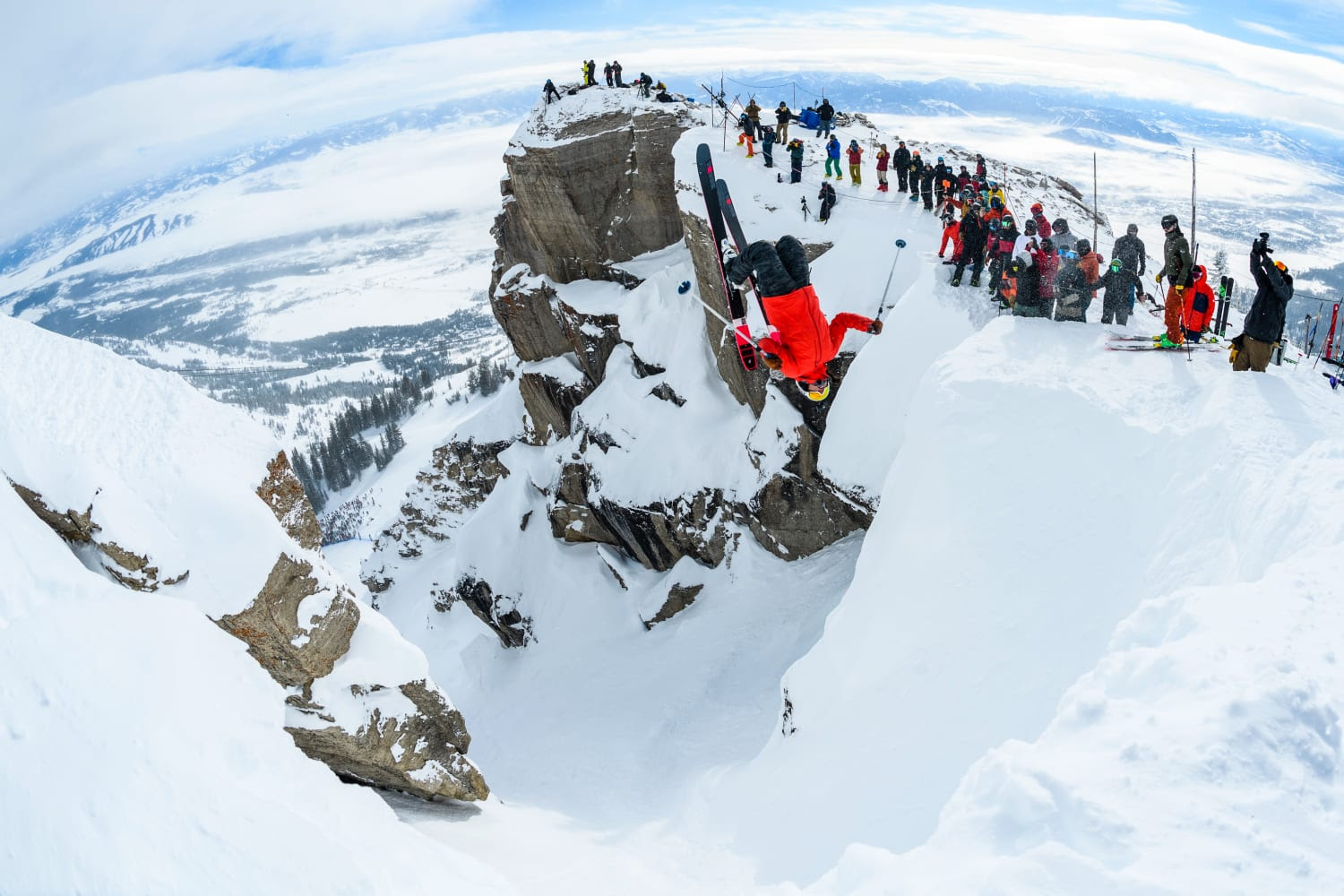
JH Kings and Queens of Corbets Veronica Paulson first womans backflip

Kings and Queens of Corbet’s Competition at Jackson Hole

This impressive competition debuted in 2018, featuring equal prize money in an athlete-judged event with adrenalin-charged moves such as double backflips, nose butters and other high-flying tricks. huge methods.

Now in its 6th year, the famous Kings and Queens of Corbet’s competition returns February 4 – 11, amid some of the best snow conditions in decades at JHMR. The resort has reported more than 260 inches of snowfall this season to date, and the Kings and Queens competition is part of a full slate of Royal Week events planned for visitors during the week including athlete appearances, autograph signings, daily apres and exclusive parties.

“There is nothing more mind-blowing than watching athletes send 60-foot tricks that will change what you thought was possible. And the best way to experience all of it is in person at the base of Corbet’s Couloir in Tensleep Bowl,” says Jess McMillan, Director of Events and Partnership at Jackson Hole Mountain Resort.

This year’s roster of athletes confirmed to appear at Kings and Queens of Corbet’s includes skier and two-time king Karl Fostvedt (2018, 2021) and 2020 champion Parkin Costain, reigning queen Piper Kunst and 2020 women’s champion Veronica Paulsen.  For more information, visit www.jacksonhole.com.

Also see our recent article on where to ski and what to do in Jackson Hole. https://seniorsskiing.com/seniorsskiing-guide-jackson-hole-not-for-experts-only/

Ullr Nights Celebration at Snowmass

Celebrate the Norse god of winter and embrace the cold under the stars with Ullr Nights, a winter party at Elk Camp on Snowmass. Ride the gondola up, have dinner inside from 5:30-7:30pm, then head out for tubing, laps on the Breathtaker  Alpine Coaster, snowbiking and s’mores and hot coca next to a roaring bonfire.

Ullr Nights are February 15 and 24 and March 17 and 24.  Reservations arerecommended.  Tickets are $67 for unlimited tubing and coaster rides or $12 general admission to the bonfire.  Both include the gondola ride to and from Elk Camp.

https://www.aspensnowmass.com/visit/activities/winter/ullr-nights

World Pro Ski Tour at Bear Valley

The World Pro Ski Tour (WPST) returns to this California resort Feb. 10-12, with two men’s and two women’s races on the same course and with equal prize money.

Bear Valley has a rich history with WPST, hosting such renowned skiers as 3x Olympic Gold Medalist Jean Claude Killy and World Champion and Olympic Silver Medalist Billy Kidd.  This year, returning champions include Tour Champions Rob Cone and Tuva Norbye, along with a field of international pro racers. There has been skiing at Bear Valley since 1855.

Race dates and times are as follows:

Feb. 10th – 10am – Qualifiers.

Feb. 11th and 12th – 11am – Men’s & Women’s Giant Slalom Races & 3:30pm Tito’s Après Party

Find more information at www.WorldProSkiTour.com.  Watch live at www.FloLive.tv

Art at the Summit in Courchevel

The 14th annual Art at the Summit show features huge bronze sculptures by the award-winning artist Lorenzo Quinn, the son of Academy Award-winning actor Anthony Quinn. The works are on display all season, gracing the summits, the heart of the multi-summit resort, and at the Galerie Bartoux Courchevel, which is sponsoring the exhibit.

Lorenzo Quinn’s monumental sculptures have been exhibited at the Pyramids of Giza in Egypt, the canals of Venice and the parks of London. This is his first exhibit in the Alps. The sculptures are described as gravity-defying, poetic and true odes to love, including Quinn’s love of the outdoors.

Ikon Celebrates an Icon

When she wins, you win.

Mikaela Shiffrin,World champion alpine skier and Ikon Pass ambassador, just reset the world record for the most all-time World Cup wins for any female skier in history with 83 gold medals, and there are still several more races left in the season for her to add to the total.

To celebrate her milestone, Ikon Pass is giving away three ski packages for the 23/24 ski season at one of ten Ikon Pass destinations –

  • Mammoth Mountain and Palisades Tahoe in California
  • Solitude Mountain Resort and Snowbird in Utah
  • Sun Valley Resort in Utah
  • Revelstoke Mountain Resort and SkiBig3 in Canada
  • Killington Resort inVermont.

Each prize package includes –

  • Three nights lodging and rentals
  • Ikon Pass jacket and bag
  • 2023/2024 Ikon Pass
  • Mikaela Shiffrin Oakley goggles
  • Full adidas Terrex ski kit including jacket and bibs
  • Signed item from Mikaela
  • Message from Mikaela

Here’s how to enter to win:

  • Visit https://bit.ly/IkonMikaela
  • Complete at least 83% of Mikaela’s trivia correctly
  • Enter your name and email address
  • Winner will be drawn by the end of the 2023 World Cup season.

And, in the meantime, practice your own race skills and dream of joining the U.S. Ski and Snowboard team by visiting a NASTAR course for FREE through the end of the current winter season. Just present a valid lift ticket or pass – either an Ikon Pass or a resort specific pass.

Did we miss anything on your calendar?  Please add to the comments section.


The Skiing Weatherman January 27, 2023

In this installment I am going to hit three topics for the price of one.  First, I had a day on the snow last week that I don’t think I will ever forget.  I was in Salt Lake City for a trade show and snuck away to Park City for a day.  It is the first time I have been there since Park City Mountain Resort was combined with The Canyons.  The resulting seven mile WIDE network of trails, slopes and tree skiing is hard to fathom, but so was the amount of snow.  I haven’t seen that much snow on a mountain since I was (happily) stuck in four day storm in Austria more than 35 years ago.  Practically every turn made off the groomers last week was high shin to waist deep…just remarkable stuff.  And a hats off to Jonathan, the manager at Canyon Mountain Sports, who guided me to the fattest ski that I had ever used…and they worked like a charm!

Second, I need to sound off on something that has bugged me for some time.  Many of you know that I have been a snow condition reporter for almost 40 years now.  Along the way, I ran into some rather nefarious forms of snow reporting, where the “new snow” numbers didn’t match very well with Mother Nature’s output.  Well, the inaccuracies and obfuscation reached a new low this morning as I checked out the results of an overnight storm that started with a thump of snow across most of the Northeast but ended with a variety of precip types, including some rain, all the way to far northern New England.  I wanted to sneak in a late week day trip and was checking out “who got what” overnight.  I consulted the largest web site for snow conditions in the world (and to quote Billy Crystal’s Fernando from SNL…”and you know who you are”…) and what I found was in simple terms, a mess.

One column of the reports is dedicated to “Snowfall” and maybe that’s part of the problem as it should say “NEW Snowfall”.  You see, just about the entire region got 2 to as much as 9 inches of snow…before the other stuff came out of the sky.  I wanted to use the reports to determine the northern extent of where the garbage cut down on the snow total and then make a decision on a destination for the next day.  Unfortunately, the snowfall listed in the report ranged from 1 to 20 inches because the resorts listed snowfall for the past 1,2,3,4,5,6,or 7 days…there was absolutely no uniformity to the reports!!!  And I am not even taking into account that two other storms in the prior seven days also had other forms of precip.  Between the fact that there is no accounting for any sleet, freezing rain, or plain rain…as though it never happens…and the resorts seem to use any time frame they want, it makes it next to impossible to make an informed decision based on the reporting system as it is presented.  And I haven’t even included the practice of reporting one snowfall total for vertical drops of 1 to 3 thousand feet…funny, they always use the higher number from the summit.  Anyway, Caveat Emptor…we deserve better.

On to #3…the weather…and I will be briefer than usual.  The pattern has been changing to a colder one over the Northeast, but it has been slow…slower than I thought it would be a few weeks ago.  But, it IS changing.  This next week will see the temps trend down, but in terms of snowfall, there will only be weak systems racing from west to east, producing only snow showers with light accumulations in the mountains.  The week of the 6th will be colder than normal, and this frame of the jet stream shows part of the reason why…


This jet stream forecast for Sunday the 5th shows a direct feed of air from the northwest corner of the continent.  Counterclockwise flow around the trough over northeastern Canada is going to combine with clockwise circulation around the ridge building northward toward the Yukon, where the air is arriving from Siberia.  Here is a forecast for the temperature anomalies at 5,000 feet at that same time stamp…these temps act as a proxy for surface temps…

You can easily see the glide path from the Yukon to the Northeast on this slide.  Now, there is some risk of an extreme cold outbreak during the first half of February, but at a minimum, we shouldn’t have to worry about rain vs. snow too much early next month.  Longer term, I am bullish on the second half of the season and I will delve into that topic next time.  I know Festivus was last month, but thank you for the space for the Airing of Grievances…

Still Searching for Stein’s Studebaker

It’s a known fact that the great, late skier Stein Eriksen bought a new Studebaker in April 1953 from the dealership owned by Everett Kircher, founder of Michigan’s Boyne Mountain ski resort, where Stein was working at the time. The unknown is which model he owned, and what happened to Stein’s Studebaker.

I’m interested because my wife Judy and I own a restored 1953 Studebaker Starlight Coupe that her dad bought the same year.  It’s also is sometimes called a Commander Starlight, and was Studebaker’s main model that year.

Correspondent Jan Brunvand with his 1953 Studebaker Starlight coupe. In the background, early snow on the Wasatch mountains. Credit: Jan Brunvand

The classic Raymond Loewy design was variously described at the time as a “sports car,” “a sports coupe,” and “a graceful 1953” model. Stein once told me—in a brief encounter on a chair lift at Deer Valley—that it “looked like an Italian sports car” and that he sold it in Oslo.

That’s as far as I got until recently when I learned a bit more about Stein’s Studebaker. The somewhat melancholy occasion was a memorial service in Frisco, CO, for my brother Tor Arne Brunvand who passed away last spring. Tor was in the hospitality business in Summit County for many years before moving east, ending his career owning a hotel in Waterville Valley, NH.

Among the locals who showed up in Frisco this past October to remember Tor was another great Norwegian/American skier, Trygve Berge. He had been a colleague of Stein’s as an instructor in the early and mid 1950s, then became co-founder of Breckenridge ski resort. At  age 90, he is still skiing gracefully – as gracefully as Stein did.

Trygve, Tor, Jan

I had met Trygve a couple of times when he came to ski with Stein in Utah. Here’s a photo of us taken in January 2007 at Deer Valley. This was before I became interested in Stein’s Studebaker, so the subject never came up.

Meeting Trygve again in Frisco, I pulled up a photo of our Studebaker on my iPhone and asked him if Stein’s car had looked something like that. “Yes,” he said, “but Stein’s car was yellow.”

Perfect, since Studebaker did offer both the Starlight coupe (my car) and the Starliner hardtop version in yellow. I could just picture Stein with his blond hair waving in the breeze driving this beauty.

Our own Studebaker is dark green, shaped like the red one with the roof pillar in this brochure.

Just as the program started, Trygve added, “Stein loved to drive that car with the top down.”

Uh oh. Studebaker did not make a convertible version of this 1953 car. I double-checked in the literature and online.

So what’s going on here? In later years some people did customize ’53s as ragtops, but it’s unlikely a car dealer would  have done it, or that Stein would have waited around for the job.

More likely, I think, is that Trgyve’s statement is what psychologists call a “false memory.”

With the windows down and the wind blowing freely through the cabin, it would be easy to extrapolate a memory from so many years ago as an image of Stein tooling around town with the top down, even though the actual top of his car was likely solid metal and not  removable.

At least that’s what I will continue to believe until (and if) I learn anything more about Stein’s Studebaker.

Skiing Cervinia, the Italian Side of the Matterhorn

Stanley and son in Cervinia

Snow was falling when we arrived in the small Italian town of Cervinia, for 3 1/2 days of skiing to celebrate my 80th birthday.  Arriving from Israel, my two daughters, son and I drove the 180 km. (112 miles) from the Milan airport to Cervinia on an overcast December afternoon.

Cervinia is the Italian side of the Matterhorn. I first skied here in the Fall of 1966, on my way home after two years in the Peace Corps, where I served in the tiny landlocked country of Malawi, in Southern Africa.  Since then, a lot has changed in Cervinia. In Malawi, too, I’m sure.

Since that first visit, Cervinia has more than doubled in size, hotels have all been up-graded several times, the main street is now a pedestrian mall, and alternative lifts have been added to eliminate the need to climb more than 100 steps to reach the cable car that Mussolini built in 1936.  It’s now possible to ski from Val Tournache, which is below Cervinia, all the way to the areas in Zermatt on the Swiss side, via what is possibly the largest inter-connected ski area in the world.

What hasn’t changed is the snow.  It’s still deliciously welcoming and smooth, like gliding on white chocolate.  It’s why I call Cervinia Mt. Toblerone.

Mt. Toblerone

The town itself is at 2,050 meters (6,725 feet).  Lifts take you up to 3,480 meters (11,417 feet) meters to Plateau Rosa on the Italian side and up to 3,883 meters (just under 13,000 feet) to the Klein Matterhorn station on the Swiss side.  From there, you can ski the only International World Cup downhill course while enjoying endless breath-taking views of the Matterhorn.

The course is a joy to cruise; wide enough for easy GS turns and not that steep, with some interesting terrain near the end. From there you can ski back down to the village or stay up and tackle some red runs (in Europe, red is the equivalent of black runs in the USA) above the town.

If you’re not up for checking out the downhill course, from Plateau Rosa you can ski down the Zermatt side and enjoy cheese fondue for lunch, and then take the scenic 30-minute Gornegrat cog railway train back to the top, to connect with the cable car back to the Italian side. There’s a sign at the top with arrows – Italy this way, Switzerland that way – to guide you to the proper trail home.

The lifts in Cervinia are modern detachables with wind shields, various versions of gondolas, and a new cable car with room for 125 skiers that takes you up to the Plateau Rosa in 7 minutes from the Laghi Cima Bianchi mid-station.  We encountered only one old-fashioned non-detachable chairlift.

No matter where you ski in the resort, the view is dominated by the great massif of the nearly pyramidical snow-covered Matterhorn. As you move around, the profile of the mountainchanges and the light beams down from different angles while the clouds come and go.

Calzone in Cervinia

The town of Cervinia is very accessible.  The main street is lined with relatively small hotels, fancy shops, and restaurants. Local folks are a font of helpful information about how to navigate the area.  We stayed at the Hotel DaCompagnoni in the center of town and nearly a ski-in ski-out.

And the food, very Italian and very good whether it’s pizza, pasta, fish or a big steak, is all at reasonable prices, and far less expensive than the Zermatt side.  And not just in town – there are several mid-mountain restaurants with equally memorable meals.

We had three and a half great days skiing and being together in Cervinia. I can’t wait to return again.

Guided Snowshoe Tour with a Naturalist

Purity Spring Resort in Madison, NH has partnered with Tin Mountain Conservation Center (TMCC) to bring snowshoe guided naturalist tour programs at the NH Audubon “Gertrude Keith Hoyt & Edward Eaton Hoyt, Jr. Wildlife Sanctuary” and trails located at the resort. These guided tours, led by naturalist and TMCC Outreach Coordinator Heather McKendry, will be offered to guests staying at the resort and others may participate, too. The partnership will also give resort guests free access to TMCC’s programs on their trails and facilities.
Purity Spring’s Marketing Director Thomas Prindle explained, “As a Supporting Partner of the Tin Mountain Conservation Center, Purity Spring Resort aligns many opportunities to enjoy outdoor recreation with their efforts to foster a greater awareness and understanding of the natural environment. In addition to being able to offer custom guided tours of the NH Audubon Hoyt Wildlife Sanctuary right here at the resort, we provide our guests additional access to the Tin Mountain Conservation Center and the ability to participate in the programs they offer throughout the year.”

For nature and history aficionados, there are six snowshoe tour dates this season that start at 11 AM (remaining dates include Saturdays on February 4 and March 4, and Wednesday, February 22).

The sanctuary has 135 acres and 2.4 miles (3.8 kilometers) of trails which is part of the 1,400 acres originally purchased and homesteaded by Edward Hoyt Sr. in the area with family roots dating back to the 1800s. Purity Lake was dammed in the late 1700s by European settlers who also built a mill in East Madison. The homestead succumbed to fire in 1914 and there was a girls camp that was run between 1934 and 1977. The sanctuary land was bequeathed to NH Audubon in 1991.

The naturalist tours feature geological and sanctuary features associated with glacial deposits in the last ice age. The white pine are the dominant tree species with northern hardwoods and diverse wildlife in the sanctuary include winter finches, bobcat, fox, coyote and more. There are a number of short looped trails in the sanctuary that can be snowshoed or cross country skied in the winter.

The guided snowshoe tour is available in a package with Purity Spring accommodations including overnight lodging, breakfast in the Traditions Café and the tour. For the lodging package check with Purity Spring Resort to make a reservation and there are some snowshoe rentals available (www.purityspring.com or 603-367-8896). The cost for the public to participate is $15 per person.

Purity Spring Resort is associated with King Pine Ski Area in Madison, NH with 45 skiable acres, six ski lifts, 17 trails, and a 350-foot vertical. The family-friendly ski area is in a valley in the White Mountains National Forest and it has the longest running recreational and instructional ski camp in the country (since 1939). King Pine has been making memories for family vacations for generations. The resort specialty is for families who want to discover destinations that will engage parents and kids together, and it is celebrating its 60th anniversary this year.

Five Things You Should Know When a Skier Crashes

“Stop! Don’t do that. Don’t move him”, I screamed.

My husband had misjudged the slope, crashed, and landed in a heap in the middle of the trail. He was also out cold.

We were skiing with his good buddy Lars when it happened. Lars skied to him and dragged him by his right arm until his body flattened out. Meanwhile, I was screaming at Lars to stop. But he didn’t stop.

By the time I side-stepped up the hill to the scene, Lars said, “I had to straighten him out. He looked so uncomfortable.”

Unconscious skiers are not uncomfortable – they are unconscious, and anybody who moves them before Ski Patrol arrives can make an injury worse.  That’s likely what happened to my husband.

X-rays showed his shoulder was broken. Surgery and hardware repaired the bone, but fragile nerves might have snapped when he was dragged by his arm. We’ll never know.

The bone healed, but the nerve damage was complete. My husband has never again had use of his right arm. It was dead.

If Lars had some basic knowledge about what to do, it might have turned out better.

I talked with Mark Pollish, a career patroller and 40 year veteran of the Alta Ski Patrol, for some guidelines that we recreational skiers should heed in case of an accident.

Do No Harm

First of all, he said, when you come upon an accident, “Do no harm.”

When somebody crashes, “Don’t rush into the situation and become part of the problem. Whether it’s a ski crash or an accident on the highway, think extreme safety. People are quick to want to help, but don’t do anything that might jeopardize their safety or yours.”

The next guideline logically follows “Do no harm.”

Do Not Move the Person

“Do not move the person. That includes do not remove their skis. You don’t know what the injuries might be. There could be spinal injuries and moving the person could make it worse,” he said.

It doesn’t matter whether the skier or snowboarder is awake or unconscious. Don’t move them.

Just last year, I listened to two skiers awarding themselves kudos because they thought they were heroes. They saw someone fall and not budge, so they rolled him around and propped him up because he looked “so uncomfortable” He was unconscious through it all, and he was still unconscious when Ski Patrol arrived. Moving him could have caused serious damage. We’ll never know.

The first two guidelines focus on what you should not do.  These next three are what you should do, Pollish said.

Make an X with your skis.

Take off your own skis and drive the tails into the snow forming an X well above the accident.  Or, if you ride, plant your board upright in the snow. It warns others to stay clear of the area and also marks the location of the incident.

Call the patrol and stay on the phone with them.

Whether you are at your home mountain or visiting a resort across the country, it’s a good idea to have the patrol’s emergency number in your phone so you can reach them quickly, Pollish said.

At some ski areas, the main number is the best way to get connected to the patrol. At others, the patrol might be reached through 911. It varies from resort to resort, so it’s best to find out before you need to call for help.

Then be sure to “stay on the phone with the patrol” Pollish said, and give them “as much information as possible: location, description of the person, and what you know about the.situation.”

Finally, stay with the downed skier until the patrol arrives. You might be able to provide additional information that they need, he said.

Think safety. Ski safely.

Now, are your ready for a pop quiz? What are the 5 things you should know and do when a skier crashes?

Cross Country Skiers: Do You Prefer Classic Skiing or Skate Skiing?

Cross Country Skiing at the Frisco Nordic Center, Frisco, Colorado by Todd Powell

Prospective cross country skiers often make a decision opting for either classic skiing or skate skiing. These two forms of cross country skiing are very different regarding where they can happen, what type of gear is used, the techniques employed, how fast the skiing is, and how much energy is necessary on an outing.

For a first time or inexperienced cross country skier, classic skiing may be the best choice because it is easier to learn and less physically demanding. As the classic skier advances (and gets left in the dust by good skate skiers) it may be less difficult to master skate skiing. In general, the skate skier should be more physically fit while classic skiers can ski at a casual pace if they so choose.

Cross Country Ski Terrain

Whether classic or skating, cross country skiing on groomed trails (already packed and perhaps tracked, too) is easier than skiing on ungroomed terrain such as the golf course, existing ungroomed trails, or across the snow-covered landscape. The snow on a groomed trail is machine-maintained by a ski area operator or ski club groomer to be consistent and packed so the skier can use their gear and techniques to slide efficiently. While it may look like cross country skiers are simply walking on skis, the diagonal stride technique combined with the ski characteristics are intended to grip and glide when weight is applied on a single ski. But skiing on a golf course that is covered with snow and does not have maintained trails can be at times deep, wet, frozen or breakable ice, or other conditions that are difficult to ski.

Skate skiing requires packed terrain on a trail or hard packed area like a snow covered iced-over lake in the springtime. Additionally, skaters should have some flexibility and be somewhat physically fit. A skate skier moves from side-to-side in a V-shaped technique. Going up hills on the trail will require a skate skier to have good timing and some strength to maintain sliding momentum on the skis.

A cross country ski area trail will often have a tracked section along the right side of the trail for classic skiers and a wider flat lane that may be about 10-12 feet in width for skaters to deploy their V-technique. The tracks seem like parallel rails compressed in the snow and they make classic ski gliding easier by keeping the skis going in a straight line. Sometimes the snow is the right condition to allow “crust cruising” or skating across the terrain without a specified trail.

Galena skiers

Cross Country Ski Gear

Classic skiing uses longer skis, often with a waxless base which provides the ski grip. The long skis distribute the skier’s weight allowing glide when the skis are equally weighted and grip when all the skier’s weight is applied to one ski. When a skier switches their weight from one ski to the other, the first ski needs to hold (not slide) while you spring off of it on to the other ski. In the olden days that grip was provided by a wax that was applied to the base in correlation to the air and snow temperature but today ski bases have patterns (for example, mini teeth or skin-type material) that allows the ski to hold on the snow to provide that grip. Ski racers still use an array of wax or other compounds to get optimal grip and glide.

Skate skis are shorter and they rely on skier weight shifting and momentum, rather than employing a base grip. Skaters use longer ski poles (length reaching from the ground to between the skier’s bottom and bridge of the nose) providing more of a push forward in the V-technique movement and allows the skier to shift their weight from ski to ski while gliding in an angular direction (like a speed ice skater). The skate skier’s boot upper is higher up the leg with a plastic cuff and this provides more support to push off the ski for the weight shift. The skater’s weight must be shifted mostly to the sliding ski which is moving in an angle away from the center of the trail. The complete weight shift is one of the biggest challenges for the beginning skater as many of them tend to keep their weight in the center of the position rather than committing out over the sliding ski. The centered weight position minimizes the glide for the skate skier.

The classic ski boot enhances forward skiing with the skis parallel and are generally less stiff than skate ski boots. The ski boot stiffness is in the sole and can be felt by twisting the boot, thus the skating boot sole is much stiffer than the classic ski boot sole. 

The classic skier’s ski pole length should be as high as the arm pit or shoulder. When used correctly, the classic skier’s poles can enhance forward momentum by comfortably swinging their arms to have some push off behind. This enhanced forward momentum associated with the ski poles is an even more important element of skate skiing.

Bindings on XC skis are built to provide support and a strong connection between boot and the ski. For example, the binding for skating is manufactured to withstand the pressure of the side to side application.

Other Factors

Equipment-wise, owners of a smaller car should know that the space in their vehicle will accommodate the skate skiing gear better than the longer classic skis. Additionally, the skater’s gear is generally more expensive compared to classic ski equipment. All ski equipment is available in a range of cost and like anything else, you get what you pay for. 

It is important to be aware of the different types of equipment within any of the XC ski categories. For example, classic skis can be narrow, stiff and fast producing much more glide but perhaps less control, while a backcountry ski would preferably be softer and wider to float in the deeper snow. Classic skis may be versatile to be applicable on tracked trails and also for ungroomed snow conditions. For most skiers, skate skis are too short and narrow so it is difficult on anything but packed snow. With such issues in mind, skiers have to be careful when buying new or used equipment to be certain that their acquisition will fit their intended needs.

Another smart suggestion is to rent equipment and get a lesson at the outset. An instructor will provide technique tips for either classic or skate skiing and the initial outing may make the choice obvious for a first timer or beginner. Experienced skiers may seek out a “try before you buy” demo available at some ski areas to actually test different pairs of skis and boots.

Regardless of whether classic or skate skiing is the preference, cross country skiing is the greatest winter on-snow activity combining fitness and wellness with the natural outdoor winter environment while moving under your own power.

The Skiing Weatherman January 13, 2023

Happy New Year to one and all!  I hope you got some packed powder turns in during the holiday week because dry surfaces have been hard to come by during the first half of this month.  The January thaw typically comes along in the late 10’s/20’s of this month, which you can actually see in the historical data as a modest bump in observed temperatures.  This year the thaw came very early, which was unusual but not unprecedented.  An upper ridge was dominant over the East during the first week of the month, which led to a cessation in snowmaking operations as well as a pause in opportunities for meaningful natural snow.  A pattern change of sorts got underway last weekend, and mountain crews took advantage of colder temps this week to rehab terrain as we head into the MLK weekend.  A messy storm is taking an unfavorable track as we close out this week, but it will be turning colder over the weekend, so if you are skiing or riding during the holiday, you can plan on sliding through some snowmaking plumes on open terrain.

While the East has been running lean in the fresh snow department, you no doubt have been hearing about the parade of storms that have been plastering the West with fresh snow…especially the coastal ranges that get first dibs on the incoming moisture.  Those moisture laden upper troughs have been working their way out onto the Plains and then fighting with the upper ridge that has been over the East much of this month.  Most of the troughs have been deflected to the northeast, running through the Great Lakes and into Canada, and that is a track that draws moisture and mild air northward, bringing rain or mixed precip along the full length of the Appalachians.  Occasionally, one of the troughs fights its way straight east, weakening and dislodging the ridge in its path.  This scenario is what played out last weekend, leading to a colder week.   That cold air has helped to produce some snow on the front end of the system moving through the East late this week, but the track is inland, as illustrated by this slide from Friday a.m.

A low center over Albany allows milder air to reach all the way into southern Quebec, so much of the front-end snow has been washed away.  The backside of the low will bring some snow to northern New York and northern New England, and the air mass for the weekend will be seasonably cold, allowing a resumption of snowmaking.  Next week will turn somewhat milder again, but there are strong signs that a major pattern change will get underway later next week.  It won’t be a “light switch” to a cold and snowy regime, but in the transition, there is the potential for a significant snowfall on the 20th/21st that would benefit area primarily north of I-90.  South of there it will likely be a mixed precip event, with a nice shot of snowmaking temps following the passage of the low center.  Here is a look at a surface map for next Friday afternoon…

Once again, the low center will cross central New England, but there will be enough cold air around to the north of the low for a healthy snowfall.

Longer term, there are changes in the southwest Pacific and eastern Indian Ocean with respect to where thunderstorms are clustered that point to a colder than normal regime developing during the final week of January and continuing right on into February.  This season has been uneven at best and a downright dud in some parts of the East, but that thunderstorm correlation (also known as the MJO, or Madden Julian Oscillation) is an excellent winter forecast tool and I am leaning on it heavily.  Right now, I am very bullish on the second half of the season here in the East.  Here is a look at the 5,000 foot temp anomalies for the 27th, showing that the coldest air poised to dominate the East by month’s end.

For the most part, conditions are epically outstanding out west, but pummeling of storms will end in about ten days, with the northern Rockies becoming the typically La Nina favored region for continued snows…the southern Rockies resorts could still use some snow.  The northern Great Lakes are looking good, but the thaw has impacted the rest of the Midwest.   The central and southern Appalachians need some snow as they are anxiously awaiting the pattern change that I believe is on the horizon.


Seniors Enjoy Steep Discounts at Most Idaho Ski Areas

Collectively, Idaho’s ski areas boast 29,000 feet of vertical spanning more than 21,000 acres, short lift lines, and extremely affordable passes. Plus, most offer skiing seniors significant discounts on lift tickets (and season passes).

Here’s a comprehensive list of the deals available to seniors looking to ski Idaho:

  • Bald Mountain Ski Area (Pierce) — Seniors ages 70 and older ski for free.

    At Bald Mountain, a small nonprofit ski area near Pierce in North Central Idaho, seniors ages 70 and older ski for free while full-day adult lift tickets go for only $25. Nestled amongst the vast Clearwater Mountains along the Gold Rush Historic Byway, Bald Mountain offers 21 runs that span 140 acres of skiable terrain with 845 feet of vertical. It is operated by the Clearwater Ski Club on land leased from PotlatchDeltic Corp., a forest products company based in Spokane, Wash. (Photo courtesy of Idaho Tourism)

  • Bogus Basin Mountain Recreation Area (Boise) — Seniors ages 70 and older enjoy discounts on lift tickets, with a full day costing $57 vs. $76 for adults 18-69, late arrivals (1 p.m. to close) costing $49 vs. $69, and twilight passes (3 p.m. to close) costing $32 vs. $39. There are no discounts on night passes (6 p.m. to close). Seniors also can purchase discounted Nordic passes, with full-day passes costing $17 vs. $24 for adults 13-69 and half-day passes costing $12 vs. $17. There are no senior discounts on winter tubing or the Glad Runner mountain coaster.
  • Brundage Mountain Resort (McCall) — Seniors ages 70 and older enjoy discounts on lift tickets, with a full day costing $62 during the regular season and $64 on holidays vs. $86 and $94, respectively, for adults ages 18-69. Likewise, seniors receive discounts on late-arrival tickets, which cost $48 during the regular season and $50 on holidays vs. $72 and $76, respectively, for adults. Seniors also enjoy discounts on multiday tickets. Buy full-day tickets online two days ahead of time and enjoy additional discounts. Brundage does not offer discounts for seniors booking snowtubing at the McCall Activity Barn, snowcat adventures, or snowmobile tours.

    Brundage Mountain Resort in Southwest Idaho near McCall about two hours north of Boise is home to what SKI Magazine has claimed is “the best powder in North America.” Its base area is blessed with more than 320 inches of snow annually, creating a consistently satisfying mix of bluebird and powder days throughout winter. It is also home to some of the best senior lift ticket discounts in the Gem State. (Photo courtesy of Ski Idaho)

  • Cottonwood Butte Ski Area (Cottonwood) — The mountain doesn’t offer seniors discounts, but full-day adult lift tickets only cost $20.
  • Grand Targhee Resort (Alta, WY) — Seniors ages 65 and older enjoy discounts on lift tickets, with a full day costing $90 during the regular season and $103 on holidays vs. $120 and$135, respectively, for adults ages 13-64. Buy your alpine ski tickets online and save up to 6 percent on most dates. Seniors also can purchase discounted Nordic passes, with day passes costing $15 vs. $20 for adults. Grand Targhee does not offer discounts for seniors booking snowshoe tours. Those wishing to fatbike its winter sports trail system must purchase a full-day alpine lift ticket or Nordic trail ticket.
  • Kelly Canyon Resort (Ririe) — Seniors ages 70 and older enjoy the same lift ticket pricing as juniors ages 6-12, with a full day costing $59 vs. $79 for adults ages 13-69. Likewise, half-day and night-skiing lift tickets cost seniors $39 vs. $59 for adults.
  • Little Ski Hill (McCall) — The mountain doesn’t offer seniors discounts, but full-day adult lift tickets only cost $25.
  • Lookout Pass Ski & Recreation Area (Mullan) — Seniors ages 80 and older ski for free. Seniors ages 62-79 enjoy discounts on lift tickets, with full-day passes costing $45 midweek, $52 on weekends, and $54 on holidays vs. $55, $66, and $73, respectively, for adults ages 18-61. Buy them online well before 8 a.m. the day before your visit and save another $3 per ticket. Additionally, if you show your photo I.D. or birth certificate at the ticket window on your birthday you’ll receive a free lift ticket on your birthday.

    Show your photo I.D. or birth certificate at the ticket window of Lookout Pass Ski & Recreation Area on your birthday and you’ll receive a free lift ticket for that day. Plus, seniors ages 80 and older ski for free and 62- to 79-year-olds enjoy sweet discounts on lift tickets. Near the historic town of Wallace and straddling the Idaho-Montana border and the Mountain and Pacific time zones, Lookout Pass is debuting its Eagle Peak expansion this winter, nearly doubling its footprint and adding another 500 feet of vertical. (Photo courtesy of Lookout Pass Ski & Recreation Area)

  • Lost Trail Ski Area (Sula, MT) — “Golden agers” 60 to 69 years old and seniors ages 70 and older enjoy discounts on lift tickets, with a full day costing $50 and $29, respectively, vs. $58 for adults ages 13-59. Likewise, golden agers and seniors only pay $45 and $26 for half-day passes, respectively, vs. $53 for adults.
  • Magic Mountain Ski Resort (Kimberly) — The mountain doesn’t offer seniors discounts, but full-day adult lift tickets only cost $40.
  • Pebble Creek Ski Area (Inkom) — Seniors ages 66 and older enjoy discounts on lift tickets, with a full day costing $50 and a half day costing $42 vs. $62 and $49, respectively, for adults ages 18-65. Pebble Creek does not offer seniors discounts on lift tickets that only allow riding on the Aspen beginner lift, which costs $25 for guests ages 6 and older.
  • Pomerelle Mountain Resort (Albion) — Seniors ages 70 and older enjoy discounts on lift tickets, with a full day costing $27 online and $37 at the ticket window vs. $50 and $60, respectively, for adults ages 13-69. Pomerelle does not offer seniors discounts on half-day and night tickets.
  • Rotarun Ski Area (Hailey) — The mountain doesn’t offer seniors discounts, but adult lift tickets only cost $15. Plus, Rotarun offers free public night skiing 6-9 p.m. Wednesdays.
  • Schweitzer (Sandpoint) — Seniors ages 65 and older enjoy discounts on lift tickets, with a full day costing $97 their first visit and $92 to reload their RFID card for subsequent dates vs. $110 and $100, respectively for adults ages 18-64. Schweitzer does not offer seniors discounts on afternoon and twilight lift tickets or Nordic trail passes. Book a stay in any Schweitzer-managed property and receive discounted lift tickets.
  • Silver Mountain Resort (Kellogg) — Seniors 65 and older enjoy discounts on lift tickets, with a full day costing $60 midweek (Monday-Friday), $64 on weekends, and $70 on holidays vs. $65, $71, and $75, respectively, for adults ages 18-64. Likewise, senior half-day tickets cost $55 midweek and on weekends and $60 on holidays vs. $57 and $65, respectively, for adults. Seniors also enjoy discounted scenic gondola rides (the resort is home to the world’s longest single-stage gondola that serves a ski area), which cost them $17.95 vs. $21.95 for adults. Silver Mountain does not offer seniors discounts on snowtubing or passes to Silver Rapids, Idaho’s largest indoor waterpark, which is adjacent to the resort’s Morning Star Lodge in the gondola village.
  • Snowhaven Ski & Tubing Area (Grangeville) — Seniors ages 62 and older enjoy discounts on lift tickets, with a full day costing $22 vs. $24 for a regular adult ticket and half-day passes costing $17 vs. $22 for a regular adult ticket. There are no senior discounts on snowtubing.
  • Soldier Mountain (Fairfield) — Seniors ages 70 and older enjoy discounts on lift tickets, with a full day costing $39 online and $54 at the ticket window vs. $59 and $74, respectively, for adults ages 18-69. Half-day tickets cost $24 online and $39 at the ticket window vs. $44 and $59, respectively, for adults. Soldier Mountain does not offer seniors discounts for its snowcat adventures.

    Seniors save 27 percent off regular adult prices when purchasing their Soldier Mountain lift tickets onsite at the ticket window, and up to one-third when they buy them online. It is one of only 10 ski areas in the U.S. you can rent out for the day. For $6,000 you can privately book the mountain during nonoperational days (Mondays-Wednesdays) for corporate retreats or personal events. So if you and 99 friends got together, you could have the entire mountain to yourself for the day for only $60 apiece. (Photo courtesy of Ski Idaho)

  • Sun Valley Resort (Sun Valley) — Seniors ages 65 and older enjoy discounts on lift tickets, with a full day ranging from $86-145 depending on the date vs. $104-225 for adults ages 13-64.

    Boasting 3,400 ft. of vertical, Sun Valley Resort’s senior discounts are nearly as steep, reaching upwards of 35 percent. For the third consecutive year, SKI Magazine named it the top ski resort in North America in its 2022 Annual Resort Guide. Sun Valley ranked no. 1 in the West for overall satisfaction, lifts, dining, and local flavor, and also ranked highly in the grooming, guest services, lodging, après, nightlife, and family friendly categories. (Photo courtesy of Sun Valley Resort)

  • Tamarack Resort (Donnelly) — Seniors ages 70 and older enjoy discounts on lift tickets. When pre-purchased in advance online, a full-day pass costs seniors $40 midweek and weekends and $60 on holidays vs. $55, $75, and $90, respectively, for adults ages 18-69. When purchased at the ticket window, seniors pay $60 for a half day, $75 for a full day, and $95 on holidays vs. $80, $115, and $135, respectively, for adults.

Please visit skiidaho.us for more details.

These Prescription Goggles Offer Fog-Free and Full-Range Vision

Are you a senior skier or rider who has struggled to find a suitable solution for prescription eyewear on the slopes? Are you still looking for a solution to seeing the trees or reading the trail map while skiing without having to worry about lens fogging up?

Traditional Over-the-glasses (OTG) goggles can be prone to fogging, requiring frequent wiping and gear adjustment. Prescription goggles with lens inserts offer clear vision straight ahead. Still, many users complain that they have limited visibility around the edges, requiring them to turn their heads to see frequently. To improve the viewing experience for senior skiers and riders, There are better ways for senior skiers and riders to enjoy the view entirely.

SnowVision has developed a unique lens technology that addresses some of the common issues with traditional over-the-glasses (OTG) goggles and prescription goggles with lens inserts. Jerke van den Bogaert, Jan Van Roy and Wim Van Roy, an aerospace engineer, founded the company. Wim Van Roy also designed the vents to prevent fogging. By integrating the prescription lens into the inner lens of the goggle, they create an insulating layer of air that prevents misting and fogging.

Additionally, the prescription lens inserts are curved, like the goggle lens, instead of flat, like your regular glasses providing a wider field of view and improved visibility even around the edges of the goggles. They have the widest optical range on the market (+9 to -9) and can have prisms and progressive/multifocal lenses installed. All these make Snowvision goggles an excellent option for senior skiers and riders who want to enjoy a clear and unobstructed view while on the slopes.

Plus, the lenses are photochromatic, so you don’t have to worry about carrying and changing goggles or lenses to match the weather, which can vary from bluebird to overcast, flat light, and back again in a couple of runs. The goggles adjust automatically within 30-60 seconds, about the same time it takes to unfold or refold a paper trail map.

SnowVision prescription lenses are available as unifocal, progressives, or bifocals to meet the diverse needs of skiers and riders. It’s also important to note that it may take some time for your eyes to adjust to the prescription lenses, just as they would with regular glasses. It’s always a good idea to consult your ophthalmologist to determine the best lens type and prescription for your needs and activities. The SnowVision website is also helpful for finding the right lens for your needs and preferences.

High-quality vendors in Germany, Italy, and Japan manufacture the goggle’s components. The modern design, robust look, and performance reflect the quality of SnowVision goggles.

Prices start at around $100 for the no-fog, photochromatic goggles without a prescription and around $250 for the unifocal options. Each pair is custom-made based on your prescription. If you have not seen your eye doctor recently, this may be an excellent opportunity to update your prescription and try out these high-quality, custom-made RX goggles from SnowVision.

skijoring Banff Lake Louise Tourism

Things to Do in Banff/Lake Louise Besides Skiing

Skijoring Banff Lake Louise Tourism

If you aren’t too tired after a day or more on the slopes of Lake Louise, Sunshine and Mt. Norquay, there are plenty of options, including ice skating and horse-drawn sleigh rides. Events at SkiBig3 and in the towns of Banff and Lake Louise are back and better than before the so-called “pandemic pause”.

Here’s what to put on your calendar between now and spring.

Snow Days in Banff

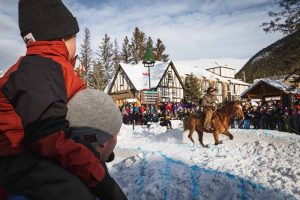
Every January, Banff and Lake Louise come alive with the annual Snow Days Winter Festival. The streets of downtown Banff transform into larger-than-life winter galleries with giant snow sculptures, and onlookers line Banff Avenue to watch skijoring, as skiers are pulled through the snow by horses.  And more events, including just for kids.

  • Jan. 18 – 29, 2023

Mt. Norquay’s Stay & Apres Series

End your day on the mountain by going straight from the chair to cheers with the new Stay & Après Tasting Sessions, from 4 to 5 p.m. at Lone Pine Restaurant at Mt. Norquay on five days this season. This informative and delicious series of après ski tasting experiences is free with a valid lift ticket or season pass.

Kick your boots up, relax, sip on amazing drinks, and learn from an expert from Black Stallion wines (March 4), Park Distillery (Jan. 20 and Feb. 24), Hendo (Feb. 25) and Banff Ave. Brew Co. (March 10). There are only 20 spots available for each session, which is open to adults aged 18 and over. Sign up now or day of in the Cascade Lodge.

  • Jan.  20; Feb. 24, 25; March 4, 10 

Demo Days at Lake Louise Ski Resort

Try out the latest and greatest skis and snowboards from your favorite brands for free at Demo Days at Lake Louise Ski Resort. Visit a tent in the base area with a valid lift ticket or pass (along with an ID and credit card) and choose the gear (first come, first served) you’d like to try for a few laps. A rep will set up the gear to fit your own boots.

  • Feb. 17, and March 18, 2023

Cardboard Sled Derby

Race down the Norquay Tube Park for your chance to win great prizes, and even greater bragging rights. The catch? You’ll be racing in a self-made sled built from only the following items: tape, string, garbage bags, glue, and cardboard. Prizes are awarded for the fastest sled, best crash, and best overall.  Or just watch.

  • Feb 3, 2023, 6:30pm to 10pm

Norquay’s Lifts of Love

Feb. 11, 2023

High-speed quad dating returns to Mt. Norquay this February. Lifts of Love is a fresh take on speed dating, promising you’ll meet somebody new on every chair. The $45 entry fee includes a lift pass, an Apres Ski Mixer including food and drink specials and a live DJ, in The Lone Pine, beginning at 9 p.m.

  • Feb. 11, 2023

Nightrise at the Banff Gondola

At Nightrise, Sulphur Mountain’s summit is transformed after dark through four digital art installations inspired by the area’s First Nations history. Vibrant lighting, multimedia effects, video projections and music bring the mountaintop to life in new and unexpected ways. The installation was created by visionary Montreal-based multimedia studio Moment Factory in partnership with the Stoney Nakoda Nation.

Reservations recommended, whether you opt for just the digital light experience or add drinks or dinner at the Northern Lights Alpine Kitchen.

  • Dec. 2, 2022 – April 9, 2023

Slush Cup

Banff Sunshine plays host to its three-day #slushtival each May, promising true spring skiing and snowboarding, music, dancing and entertainment.

The Slush Cup is a neon, nutty, nail-biting pond skimming event, now in its 95th (ish) year, and celebrated traditionally on the last day of the ski season (Banff/Lake Louise is North America’s longest non-glacial ski season. Laugh as the brave attempt to travel across an ice-cold pond on skis or a snowboard while wearing crazy costumes. Also, check out the Slushshine Rail Jam and the Water Gate Banked Slalom.

  • May 21-23, 2023

What’s your favorite run at Lake Louise?  Sunshine?  Norquay?

See you on the slopes!