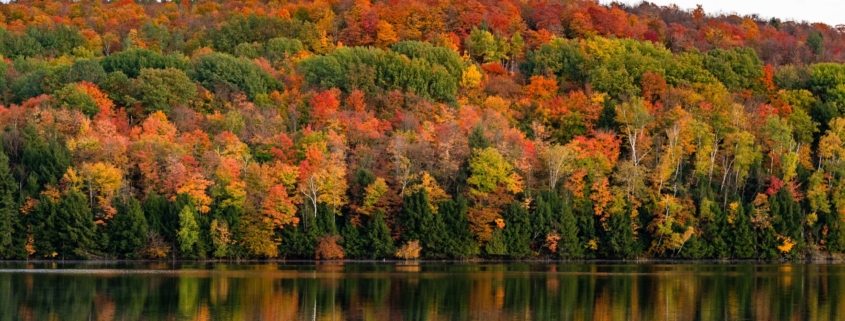

What’s New in Vermont for the 2025/26 Season
Photo by Peter James Eisenhaure on Unsplash

SeniorsSkiing is now a proud partner of Ski Vermont, the association representing the state’s downhill and XC areas, which have been busy all summer adding and upgrading new trails, lifts, snowmaking and guest amenities.  That’s a great quartet, and it describes what skiers, snowboarders and X-C will find in Vermont this new season  

Here are the details, in alphabetical order, the only fair way.

Bromley

Bromley has replaced signage across the mountain, added new high-efficiency snow guns on Corkscrew and Lower Boulevard and the base lodge a fresh new coat of paint. Arena Snowparks is slated to return from Canada this season to craft an incredible terrain park.  There’s also a revamped First Timer Lesson Package to encourage newbies, and rental shop has been revamped to eliminate the staircase.

Burke

Burke made headlines in 2025 after being unleashed from receivership with new owners, Bear Den Partners. The small group, led by skiers, snowboarders, bikers and mountain sports enthusiasts, comes to the role with more than 100 years of collective experience recreating on Burke Mountain.  SeniorsSkiing wishes them great success operating this family-friendly gem.

The resort’s snowmaking system has been reconfigured for increased energy efficiency, including the addition of 150 new HKD and SMI snow guns. That more than doubles snowmaking capacity and should allow Burke to open earlier than in the past several years.

This season the Jbar will be operational with totally rebuilt line equipment and a new gearbox. Located in Burke’s dedicated learning hill, the Jbar provides the learning area a dedicated lift for those starting their skiing or riding journey. Burke’s two high speed quads and the Jbar were overhauled to operate more efficiently. 

This season will also mark the first official season as a member of the Indy Pass. For passholders, that means two free days at Burke, and a great way to celebrate skiing/riding at other independent resorts in North America.

Jay Peak

The centerpiece of improvements is a $500,000 snowmaking investment, which include 49 new energy-efficient HKD Low E air-water snowmaking guns (32 on Queen’s Highway and 17 on Perry Merrill), the first step in a 10-year upgrade plan. The upgrade will improve the connection between the Tramside and Stateside areas, making it easier to navigate the mountain.

Jay now operates the largest fully automated air-water snowmaking system in Vermont, New Hampshire, and Maine, and is partnering with Efficiency Vermont to retrofit older snowmaking guns with updated nozzles that cut energy demand while improving snow consistency.  There’s more energy news at the Ice Haus Arena, which now be resurfaced with a new electric Zamboni, reducing emissions while maintaining the ice for skaters and hockey players.

Killington

Killington Resort continues its multi-year transformation, investing $38 million (an increase from the initial $30 million) in upgrades across the resort. That includes an additional $22 million in for its second year of independent ownership, bringing the two-year total for capital investment to $60 million to upgrade aging lifts, among other improvements.

The cranky old Superstar Express Quad, which has been in operation since the 1987 season, is being replaced with a high-speed, six-person Doppelmayr detachable lift. It features a diesel generator which can operate at full capacity in the event of power supply issues. The new lift also is expected to be more wind resistant thanks to its heavier chairs.

The second-generation Skyeship Gondola cabins have been replaced with 116 brand-new cabins. They will be housed in the newly upgraded Northbrook Gondola barn, which will be heated,  ensuring they are free of ice and in good condition each morning.

The Learn-to-Carpet surface lift on Snowshed is being replaced with an extended version of the Progression Carpet II, which is being relocated from Ramshead, offering beginners an enclosed ride, shielded from the elements, making access to signature learning terrain more comfortable. The Ledgewood Yurt, one of the resort’s most unique slopeside dining experiences, has been rebuilt with a new roof, wood siding and an expanded kitchen area.

Mad River Glen

The legendary skiing-only destination has painted its lifts and will continue offering the area’s unique winter Naturalist hikes. Known for its reverence for natural snow, it maintains a fleet of groomers and other vehicles—all of which will be maintained using the new hydraulic lift installed this summer.

Magic Mountain

The new, larger Abracadabra beginner area will work in tandem with the current Nelson Family Learning Area’s 100’ conveyor lift to bring a more graduated learning experience before novice skiers advance to the mid-mountain chairlift. The new advanced beginner area will also allow night skiing to be open for more levels, on Fridays, Saturdays, and Holidays, with instructor-led ski and ride lessons available.  Previously, this was the location of the Terrain Park, which moves to the lower skiers left side of Hocus Pocus (underneath Black Quad).

There’s also improved snowmaking from Black Line down to Show Off. This will allow for a more consistent snowpack on the lower mountain, on groomed terrain, and on high-traffic beginner and intermediate trails.

Middlebury Snowbowl

The Bailey Falls lift returns after a two-year hiatus. While the lift serves runs reliant on natural snow, the aspens that border it serve as a natural windbreak, making the lift more resistant to wind holds.  There’s also improved snowmaking, including Allen West up to the summit.

This season, the area upgrades to a new RFID and a modern point-of-sale system. That means you can purchase tickets online, reload passes, reserve rentals, and book lessons in advance. The long-awaited upgrade includes the ability to offer combo passes that work at both the Snowbowl and Rikert Outdoor Center. Fans of alpine and XC will be able to purchase one pass for both areas at a 10% savings. 

Mount Snow

This popular resort has been giving generations of skiers and riders their first taste of sliding on snow for more than 70 years. More than 900 high-output, low energy snow guns are capable of 83% snowmaking coverage via the world’s most powerful snowmaking system. Using state-of-the-art technology, providing reliable and premium coverage even when natural snowfall is light.

Okemo

This is the 70th season for Okemo, with multiple celebrations scheduled throughout the season, including a special birthday bash on Saturday, Jan. 31.

Pico

Flexing its independent-ownership muscles alongside sister mountain Killington Resort, Pico enters the season with updated snowmaking as part of the over 1000 new low-energy snow guns installed across the two ski areas over the last year. That improves snowmaking efficiency, which saw upgrades that tripled its snowmaking capacity coming into the 2023-24 season.

There also are plans to replace the Bonanza Double, which has been in operation since 1965, with a new magic carpet surface lift.

Saskadena Six

This past summer the nearly 50-year-old Chair Two double lift was disassembled and removed after a top engineering team determined that it could not be restored. While a new lift may be built in the future, for this season, access to the Chair Two side, including the Milky Way terrain park, continues via Duane’s Drop and The Gully trails.  There are plans to auction the old chairs for a community fund-raising event.

This is the area’s 90th season (1936-2026), with plans for special events all winter.  As the longest running snow sports school in the country, Saskadena Six remains committed to consistently providing enjoyable recreation, a safe environment, and memorable experiences for all.

Smugglers Notch

This season includes snowmaking upgrades and a new snowcat for more efficient operations and enhanced snow quality across all three mountains, Madonna, Sterling and Morse, and a new digital baseline of the mountain’s natural terrain snowmakers can see real-time measurements of snow depths on the mountain. The improved precision allows them to know exactly how much snow is needed in a given space, improving water and energy efficiency while helping cover terrain faster than before.

Guests can continue to enjoy the Nordic Center and Activities introduced last season, including the popular Scavenger Hunt, Adventure Dinner, Moonlit Mile, and biathlon experiences.

Stowe

This season marks the 90th anniversary of Stowe’s iconic Ski and Ride school, and the 30th year of Stowe Parks, with special events throughout the season. Also, Midway Lodge has been upgraded, including a new Tower 5 bar.

Stratton

This summer American Express was upgraded with modernized components, allow for a more reliable lift experience with smoother overall operations. There’s also an additional 200ft of 30-foot wind fence adjacent to the summit gondola to help decrease wind-related holds and delays. Snowmaking has been improved on Way Home and in the Main Base Area, including on Sun Bowl Super Trail

To better accommodate housing needs of its employees, Stratton purchased four properties in Manchester, VT, about 20 minutes away from the resort, and upgraded them with new roofs, electrical systems, heating, interior and exterior paint, appliances and furnishings.

Trapp Family Lodge & Resort

Summer projects included widening trails like Parizo and Slaton Pasture Trail, as well as improving drainage in several places. The Outdoor Center team continues to add fun events like Sunday Fundays that are full of guest speakers, a Poker Ski, treats on trails, and other fun non-competitive events for skiers of all ages.

Woodstock Inn & Resort Nordic Center

This season it becomes one of just seven Nordic ski areas in the state with ability to make snow. The purchase of an HDK fan gun will produce snow to keep skiers, snowshoers, and fat-tire bikers on the trails this winter. The addition follows last season’s temporary rental of a snow gun when periods of the season lacked natural snow. The new equipment snow to keep 5m of core trails in the over 45km network covered, regardless of natural snowfall, and extend the season.

For more information about one or more of these Vermont destinations, check the Ski Vermont website https://skivermont.com/whats-new
Tribute to Harriet Wallis

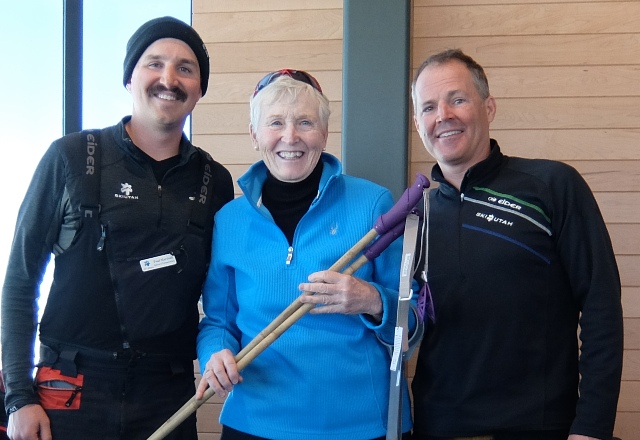
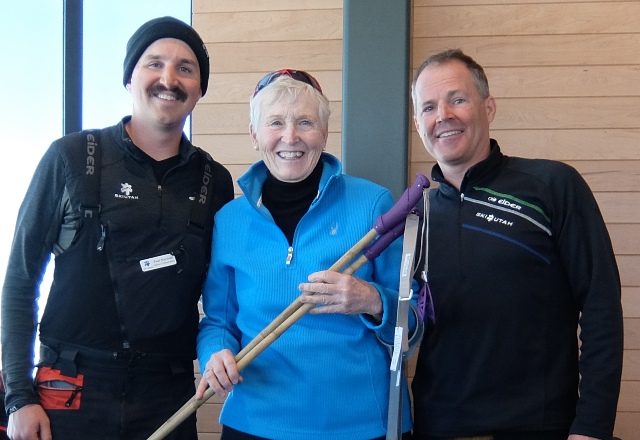
“A fighter, a writer, an avid skier and an optimist—nothing stops Harriet.” Harriet Wallis (center) was twice awarded Ski Utah Journalist Of Year. Shown with Ski Utah Communications Director Paul Marshall (left) and Ski Utah Director Nathan Rafferty. Credit: Pam Weisberg

It is with great sadness that we learned of the recent passing of one of our most popular contributors, Harriet Wallis. She was a longtime ski writer, editor and photographer. In 2016, Harriet earned Ski Utah’s top award – Journalist of the Year – for outstanding and consistent ski stories and photos about skiing in Utah.  She had 64 stories and 71 photos published that year in a variety of publications, including SeniorsSkiing.com. It’s the second time she earned the award.

Earlier this year, Harriet was featured in a local newspaper article aptly titled “A fighter, a writer, an avid skier and an optimist—nothing stops Harriet.”  Her indomitable spirit was a great inspiration to family and friends. Below are 3 lessons she shared with family and friends in one of her annual Christmas letters.

Adapt
They said I’d never be the same after chemo. They were right.There are lots of things I can’t do as I did in the past. I have 2 choices: Quit – or tackle challenges. Quitters never win. So accept reality, make changes & find new ways to do things.

Be positive
The best way to go forward is to quit looking in the rear view mirror. Don’t talk about pain or difficulties.
That gives credibility to the negative – and the negative will eat you alive. Look forward – only forward.

Be super good to the machine
The body is a healing machine if you give it a chance. Eat extra healthy. Fill the tank daily with water. Lube the moving parts (exercise) & pump fresh air through the system.

Harriet always managed to convey her enthusiasm and cheer in every article. Look for her previous articles to be reposted throughout this season.  She will be missed. 

Mountain Collective Expands Resorts and Perks for 2025/26 Season

Mountain Collective Pass

Can’t decide between an Ikon Pass or an Epic Pass? Then you should look into the Mountain Collective pass, which gives skiers and riders two days each at 27 top resorts around the world and half-off additional days and no blackout dates, for half the price of the Big Two.  At just $669 it’s a deal, even a steal.

This year’s new addition is Whiteface, in New York’s Adirondaks, and benefits extend to sister areas Gore Mountain and Belleayre.

In the last two seasons, Mountain Collective has added Sunday River, Maine; Bromont, Quebec; and Megève, France, while Arapahoe Basin, Colo. to join the Ikon Pass.  Other participating resorts include Sugarloaf, Maine; Alta, Utah; Sun Valley, Idaho; Revelstoke, British Columbia; and Niseko United, Japan.  Here’s what’s new at the Mountan Collective collection of mountains, in alphabetical order, the only fair way –

Aspen Snowmass, Colorado

Snowmass has upgraded the Elk Camp chair from a 4-seater to a high-speed 6-seater, along with replacing the Cirque platter lift with a T-Bar, to allow for easier access to some of the best high alpine terrain in North America.

Big Sky Resort, Montana

The new Explorer Gondola finally opens from base to summit; the lower stage opened a few seasons back, linking this season with the upper section. This unlocks the 11,166 ft summit of Lone Mountain for the first time in history.  Explorer now also connects with the Big Sky Tram.

Bromont Resort, QC, Canada

The opening of the Residence Inn by Marriott, allowing groups a ski-in/ski-out experience. Outdoor heated pool and spa, cozy fireplaces, and a vibrant resto-bar, the hotel offers the full experience.

Grand Targhee Resort, Wyoming

This destination on the other side of the Teton Pass from Jackson Hole will be the host for the FIS Western Regional Ski Finals, one of the largest ski races in the region, and the first for the resort.

Le Massif De Charlievoix, QC, Canada   

The new Bertha is a luxury chalet for group stays. It offers direct access to the slopes and breathtaking views of the Saint Lawrence River, less than 90 minutes north of Quebec.

Niseko United Resort, Japan

The King #3 Lift has been upgraded from a 4-seater to a 6-seater. Allowing for shorter wait times and more of a party with friends and family on your way up the mountain.

Panorama Mountain Resort, BC, Canada

Coming in February 2026, Corona Beach, this venue will be the hub of mountain festivals, featuring outdoor BBQs, culinary delights, refreshing beverages, and live entertainment every weekend.

Revelstoke Mountain Resort, BC, Canada

The new Karl Hotel is a luxury hotel that will include 154 rooms over 7,300 sq ft for the Chop Steakhouse, impeccable fitness and spa facilities, and it will be the home of the Selkirk Tangiers Heli Skiing.

Snowbasin Resort,  Utah

The resort is introducing two things this season, both sure to be popular.  One is free parking, because nothing is better than getting to the lots with no reservation and no need to pay for parking.  The other is RFID lift access, so no more taking your pass out or a pocket for hand-held scanning.

Snowbird Resort, Utah

The Nest is a brand new mid-mountain restaurant opening in December, with floor-to-ceiling Swiss glass windows that offer panoramic views throughout.

Sugarloaf Mountain, Maine

After the expansion of terrain last year, there is the development of Snowcross, a brand new slopeside neighborhood.

Sunday River Resort,  Maine

A brand new booster pumphouse that will double the snowmaking capacity on Barker and Locke peaks.

Sugar Bowl Resort, California

There a new two-tiered outdoor deck, with firepits and expanded seating in the village, including The Terrace, a self-service restaurant using QR code ordering

Sun Peaks Resort, BC, Canada

More than $5.5 million snowmaking enhancements include new snow guns in new locations and automation of the system, all designed to  improve the mountain experience.  

Sun Valley Resort, Idaho

This venerable and historic resort celebrates its 90th winter season with 90 acres of newly gladded terrain. This is a part of an expansion of the Bald Mountain Forest Stewardship project.

Whiteface Mountain, New York

This is the newest mountain to join the Mountain Collective pass, starting with the 2025/26 season, expanding the pass’s Northeast footprint. Whiteface, operated by the New York State Olympic Regional Development Authority (ORDA), is the first New York resort in the coalition. It boasts the greatest vertical drop in the East.

The partnership extends Mountain Collective benefits to ORDA’s SKI3 full season pass holders, who will receive 50 percent off lift tickets at all Mountain Collective resorts. The full season SKI3 pass provides unlimited access to Whiteface, Gore and Belleayre Mountains.

Reader Submission: 80 and Pushing Ahead

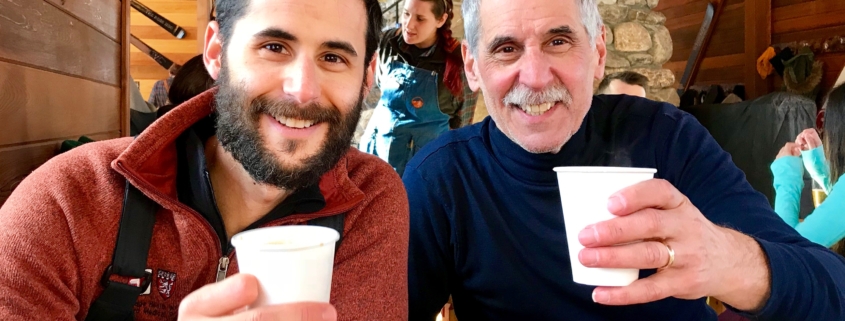
Author Elliot Entis and his son

Once upon a time, perhaps two years ago, a torch was passed. I know that is an overdone, banal expression. But it does resonate. Or maybe it was just another downhill ski trail. My son and I were floating down the trails at Bretton Woods silently carving and slipping when he saw the sign for one more double black diamond. An invitation to exuberance, tinged with chills of danger. For many years it was I, the experienced fearless leader who had rushed ahead, exhorting the children, now growing older and more composed, to follow, to learn, enjoy and repeat. But when I saw the sign, with the narrow gnarled tree branches reaching into the twisting bumps, I hesitated, and told my son, “No, you go ahead”. He was surprised; he gave homage to the past, and I believe with some sadness he honored the giant image of parenthood. “”The great Elliot Entis is afraid?” And he whooshed ahead, leaving me to find a gentler decline.

Elliot Entis
80 and Pushing Ahead

Nordic Walk for a Fitness Option

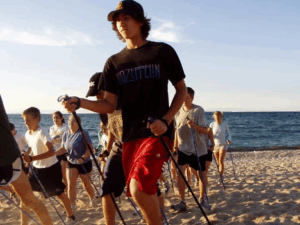
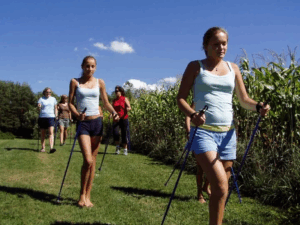
Over 17 million Europeans are walking with special Nordic Ski Walking Poles (ALL ages and ALL fitness levels) as a fitness activity that turbocharges the typical walking campaign. For those who are unfamiliar, Nordic walking is a fitness recreation that combines walking with specially designed poles to engage the upper body muscles. It can be practiced for exercise and wellness on neighborhood and city sidewalks, mountain trails, city parks, sandy beaches and on hiking trails.

Nordic Walking burns up to 40% more calories than regular walking. Using the Perfect Length Poles automatically improves walking posture. Walking with the Perfect Length Poles tricks us into standing taller and helps to radically reduce the stress to the shins, knees, hips, and back. Nordic Walking is ideal for athletes, kids, adults of all ages, and even those with balance issues.

Pete Edwards of SKIWALKING.COM LLC has been coaching runners and skiers of all ages and fitness levels for over 40 years. Edwards is a former ski school director, ski coach, running coach and the owner/founder/coach of his company headquartered in Empire, Michigan. He has also introduced Nordic Walking to thousands of Americans through Nordic Walking clinics, radio interviews, newspaper interviews, and TV interviews. Hosting Nordic Walking clinics is extremely enjoyable for Edwards, and he especially likes hosting Nordic Walking clinics for MS, Parkinson’s, and Diabetes support groups, plus Wounded Warrior Programs.

Nordic walking can help individuals with bad/new knees, bad/new hips, back problems, balance, and other issues. A SkiWalking.com customer asked if it would help improve her balance problems stemming from an inner ear issue. By using the correct length poles, she was able to navigate even the roughest terrain with balance and security provided by the poles.

Nordic Walking has a winning combination of improved posture, unique 4-Wheel-Drive type action, and shock absorbing benefits. Nordic Walking Poles can help individuals with balance issues, knee issues, hip issues, back issues (including those with rods in their back), weight issues, multiple sclerosis (MS), Parkinson’s (PD), amyotrophic lateral sclerosis (ALS), diabetes, neuropathy, arthritis, bursitis, scoliosis, lumbar stenosis, fibromyalgia, post-polio, osteoporosis, stroke recovery, cancer recovery, and other limitations to walking. Nordic Walking is getting thousands of Americans off the couch, outside, walking safely, and helping to effectively launch much-needed walking campaigns.

The perfect length poles can actually trick us into walking with a super straight back and better walking posture which is biomechanically a good thing. This improved walking posture, when combined with the unique 4-Wheel-Drive type action of walking with poles, radically reduces the stress to the shins, knees, hips, and back. Nordic Walking is low impact and yet provides a highly effective workout burning more calories and working more muscle groups than regular walking.

Edwards reviews details about Nordic walking from advantages of metal pole tips in the snow and rubber pole tips for walking on pavement to appropriate sizes of pole straps which enable walkers to keeping relaxed fingers so as to avoid gripping the pole too tightly. He suggests walking with a normal stride and gait while planting the poles at an angle.

According to Edwards, one-piece poles are safer, lighter, and much more durable than adjustable/telescoping/collapsible poles and he states, “We recommend quality one-piece poles that won’t collapse unexpectedly.” Using the correct length poles can radically improve balance, stability and gait and there are 32 different lengths of one-piece poles ensure a perfect fit.

Trekking (hiking with poles) and Nordic walking are two different activities that use very different poles and techniques. It may sound silly, but perhaps “walking is not just walking.” The pole angle, weight, grip, and straps are different between the aforementioned modes of walking. The Nordic walking pole is designed to allow your hands to relax in order to target the larger wrapping muscles of the back. But using poles of any kind automatically stimulates your spine and all of the muscles around it, even with inefficient technique. When walking, the key postural muscles of the core and upper body are engaged.

I’ve (Roger of XCSkiResorts.com) been a Nordic Walker for many years and found the claimed attributes regarding posture and exercise to be true. I’ve always been in search of a way to decrease the amount of time spent exercising, so I was sold when I heard that using the poles increases caloric burning by as much as 40 percent. Being a cross country skier, it is easy to quickly master Nordic walking. After a summer of Nordic walking, I noticed a marked improvement in my cross country ski poling in terms of strength and timing. It also seemed that I increased the amount of forward momentum that was attributable to poling and I was able to pole stronger and longer when skiing.

For more information such as how to get started Nordic Walking and how to buy poles – contact Pete Edwards, the owner/founder at the website: WWW.SKIWALKING.COM

If uncertain about Nordic Walking for your health level, check with your doctor. For additional specific information and exercise plans for Nordic walkers, see the Human Kinetics book entitled “Nordic Walking for Total Fitness” by Suzanne Nottingham and Alexandra Jurasin which has got it all covered. “Nordic Walking for Total Fitness” is available in hard cover, ebook or PDF versions from Human Kinetics at www.humankinetics.com or a paperback version at $7.98 from Amazon.

Photos from Pete Edwards, SKIWALKING.COM


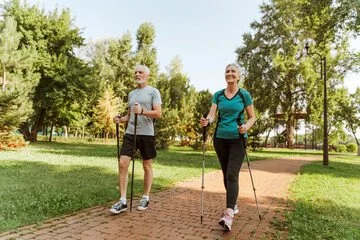
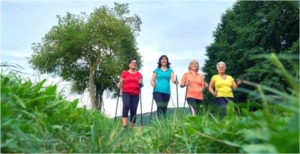
Nordic walking for all ages


Nordic walking on a brick path


Nordic walking on the beach


Nordic walking barefooted

More on Safety, My Favorite Subject

On trail signage at Park City Mountain Resort Photo: Jon Weisberg

As I sat around this summer counting the days until ski season begins again, I started thinking of my most favorite subject. SAFETY!

While I was out on the bike path for my run (more like walk!) someone approached on their bicycle, and as they were getting closer to my back side they announced, “on your right”.  That was a good sign, much appreciated and just good common sense, and I started thinking about other instances outside of ski season when such politeness is expected, even required.

When one plays golf to pass the time between ski seasons, someone will shout FOUR if they think a ball might have a possibility of hitting you.  It’s a warning, to protect everybody’s safety.

A couple incidents while driving my car also got me thinking. When we drive, we use – or should use – directional signals when preparing to turn.  Agan, it’s for everybody’s safety.  When someone is a reckless driver, there is a chance they can get a ticket, get in an accident, even lose their license.

Driving on the Garden State Parkway in New Jersey recently, a pickup truck sped past me on the inside lane at 80+  mph and suddenly cut in from of me with no directional signal.  So I flashed my lights, in case this driver was trying to run me off the road.  He hit his brakes and tried to edge me off with a few birds flipped at me.

That was extreme and only happened twice in my life of 82 years, both times young and crazy drivers.

Luckily, there are few such these incidents – including on the slopes when a reckless skier or boarder cuts you off and you yell and get the bird.

Recently also, two motorcycle drivers sped by me on the inside at an extreme speed weaving in and out of traffic to a point that I expected to see them somewhere off the road in an accident. Such young drivers on crotch rockets are the basic statistics of motorcycle accidents and deaths – although they won’t stop me from riding my motorcycle or downhilling on my skis.

Driving is dangerous and lethal at high speed and is a weapon of sorts, so you must pass a skill test to get a license, and insurance to own, even rent, a car.

What else requires a license?  Boating.  You need to take a safely course before you can operate a boat, of course all reason disappearing when one drinks, but that never happens when out boating! Now the waters are patrolled by the local jurisdiction frequently.

Hunting – the same goes, with safety courses required before getting a license.  Also scuba diving. Because recklessness can cause injury and/or death.

So, let’s talk about what we could do to improve our chances on the slopes, which appear to be the most under regulated situations.  Possible introduction to skiing should be a safety course.  It should be requried when newbies rent ski equipment.

There must be other ways to get the message out. An article here on SeniorsSking about “Ride Another Day” aka “Snow Angel” promotes safety education to know to give the skier in front of you the right of way.  In my opinion of all the safety rules that is the most important because it deals with the other person and not just yourself. Technically the other skier is a weapon, and you are the target and with limited protection it can and has been lethal.

I have had many instances when someone passed me too close, but when I caught up to them and said something, I was yelled for getting in their way, instead of apologizing for nearly causing an accident.

Recklessness is a common issue on the slopes, whether that’s caused by alcohol, cannabis, or a simple lack of education and courtesy.

The big question is what and how can we do something about it?

Shipping vs. Schleppng Your Gear

Photo by Lala Azizli on Unsplash

If you recall wooden skis that broke in half if you land too hard on a bump, leather boots and cable bindings, then you know how long I have been skiing – and schlepping – my gear around the globe.

While I stay in decent shape, I’ve reached the point when schlepping skis, boots and rolling duffle a few blocks to a bus, trying to get them into a taxi, or asking someone to drive me to the airport is something to be avoided. Ditto waiting for my stuff at the baggage carousel and then schlepping it to the taxi line or van pickup is just too much for me now, as a senior passing eighty.  

Since sherpas are not always available, I now ship my “stuff”. It’s the price of convenience. Shipping is pricey, but it’s worth it to me.

There are several methods – and costs – depending on destination. Sometimes I spend as much time planning the shipping as I would waiting at the baggage carousel.

Commercial courier services such as DHL, USPS and FedEx ship skis, boot bags and suitcases, pricing each one separately by size, weight and other factors including distance.

There are also intermediary companies – middlemen – that specialize in sports equipment and will ship skis, golf clubs, bikes, surfboards and luggage wherever you want. They often use the larger, commercial couriers, who apparently have made volume arrangements with them for lower prices. They will hold your hand and assist, and handle all the large carrier interactions. How much and how well differs from company to company.

The cost of shipping is its biggest negative, and depends on such variables as where you are shipping from and to, weight and size of what being shipped, packaging and the number of days between pickup to delivery. I’m guessing they also add in the remoteness o pick-up and delivery locations. 

There also is usually a small additional charge for pickup from your location vs you bringing it to a carrier drop-off point, whether that is Manhattan or Mammoth, and additional fees for oversized skis or luggage.

Here’s a hypothetical round-trip shipment from my home in NYC to Big Sky and back, as I’ve done for real on trips with the 70+ Ski Club, with a general package that a skier like me) might ship for comparison: skis/poles at 25 lbs and a suitcase/duffle/roller bag of some kind at 65 lbs (oversized because I ship my boots in the duffle). I would ship on Monday and want it all delivered by Friday, with a return trip for pick-up Monday and delivered home by Friday.

Based mostly on my use of each company’s online calculators and reasonable assumptions, here’s a price comparison. Shipping is pricey, no question. 

FedEx             $615.00
DHL                $904.00           For Luggage alone
USPS               $718.00           (Luggage is most of this)
Lugless           $815.00
Shipgo             $520.00
EasyShip         (Does not ship to Big Sky)
ShipSkis          $560.00
SendMyBag    $683.00

Seriously, you could rent for that price – but you won’t have your own skis, which you obviously love and trust enough to pay the shipping price.  Also, you won’t have them to use during the shipping periods, which can be an issue if you plan on skiing elsewhere while your gear is traveling without you.

Sometimes I use a carrier-middleman, other times I ship direct.  It depends on the location, but I always ship out on Thursday or Friday, for Sunday delivery.

Bad weather can slow down carrier deliveries, just as they slow down flights. One time FedEx was two days late, because of undrivable weather conditions; trucks simply could not get through. I kept calling them and they always responded, but weather is weather.

The point is, whether you fly to Big Sky, Cortina d’Ampezzo or Portillo, or any other destination, domestic or international, all you need to take on the plane (or cruise ship, for that matter) is a backpack or other carry-on, and/or your beloved boots you don’t trust to check or ship.

 Shipping avoids schlepping anything heavy to the airport or train station, checking your baggage or equipment, picking it up from the carousel to a car or bus or train, dealing with risk of bodily harm due to heavy lifting or moving stuff around, and certainly not hanging around an airport to find your lost luggage.

The carrier-middlemen rarely lose items, and their Customer Support is consistently better than that of the larger carriers.

 Shipping allows my arms, back, patience and temper remain unstressed and calm for the trips. Again, it can get pricey, especially on faster delivery times, but nothing like a hospital bill for compressed discs. If you’re anything like me, it is 9worth the price for my back, arms, hands and patience.

Boomers on Groomers – a lifestyle brand

We are excited to introduce one of our newest advertisers, Boomers on Groomers – a lifestyle brand created and designed by Boomers, for Boomers to celebrate a lifelong passion for skiing. This unique company was born from the shared experiences of two longtime TV cameramen on a ski trip to Steamboat Springs.

Steve, a former Warren Miller cameraman and contributor to about 5 of Warren’s iconic ski films, and Bruce, who spent forty- six years working in the industry are the driving forces behind Boomers on Groomers. Their friends suggested, “Why not celebrate skiers our age?” Inspired by this idea, Steve and Bruce set out to create a brand that reflects the spirit and style of seasoned skiers.

At first, the duo faced a significant obstacle. Steve openly admitted, “I really don’t know anything about designing a website or selling stuff online”. Fortunately, Steve’s millennial daughter, Allison, stepped in to help. Together, they built the Boomers on Groomers website and crafted the logo featured on their shirts and hats. Thanks to Allison’s assistance, the boomersongroomers.com site was launched and thriving.

Reflecting on the journey, Bruce remarked that without Allison’s involvement, “Steve and I would still be sitting on that couch in Steamboat Springs saying, “wouldn’t it be nice if we started a website to make available shirts and hats with a cool logo?” Today, Boomers on Groomers offers apparel designed for experienced skiers who appreciate both powder days and perfectly groomed runs. Their hats and shirts combine timeless comfort with a subtle recognition of ski hill skills.

Steve and Bruce embody the Boomer generation of skiers, passionate about carving long turns and pushing their limits. They believe their gear is an excellent way to showcase your slope style with pride. Whether you’re gliding down a blue run or enjoying après-ski at the base, these hats and shirts send a clear message: “Still got it.”

Keep the adventure going by grabbing your own Boomers on Groomers apparel. When you purchase a hat or shirt and send in a photo, Boomers on Groomers will feature your picture on their gallery page, celebrating your love of skiing and community spirit.

Boomers On Groomers founders from left to right: Steve, Allison and Bruce.

AI is Already Bringing Changes to Ski Resorts

Photo by Igor Omilaev on Unsplash

You may not see it, but AI is already playing a significant role in your skiing experience.

Thanks to the folks at Ski Area Management, I recently attended a Zoom meeting with over 40 resort marcomm and IT specialists. They were discussing how to custom build chatbots, defined as a program designed to simulate conversations with humans, for customer service applications. Ski resorts are utilizing AI to optimize operations, engage customers, and increase profitability.

Let’s investigate how AI is transforming ski resorts today. Here are some applications with real-world examples.

Dynamic Pricing & Revenue Optimization

Aspen Snowmass is using AI-driven pricing models that employ AI-based pricing algorithms to adjust lift ticket costs. Ski resorts maximize revenue by adjusting lift ticket prices in real time based on demand, weather conditions, and booking trends. This maximizes revenue while rewarding skiers who book early with lower prices.

The Benefits

  • Maximizes revenue without deterring customers.
  • Encourages early bookings for better planning.
  • Adjusts for weather conditions to optimize attendance.

Personalized Guest Experiences

Vail Resorts’ EpicMix App uses AI to analyze a guest’s data, such as runs and achievements, and provides personalized recommendations for ideal trails, food stops, and après-ski options tailored to their experience level. Resorts also use AI-driven mobile apps to send real-time alerts about upcoming events and exclusive deals. How does it work? AI tracks skier activity by using RFID lift passes and mobile apps. Data analysis provides customized recommendations based on skiing skill level, past trails used, and in-resort spending habits.

The Benefits

  • Enhances guest satisfaction by offering relevant recommendations.
  • Increases in-resort spending through targeted offers.
  • Improves skier safety by guiding them to suitable terrain.

AI-Powered Snow Forecasting & Management

Alterra Mountain Company uses AI-powered weather forecasting tools to help optimize snow production efficiency, to reduce unnecessary snow production, and to reduce the environmental impact. AI collects real-time weather data and predicts natural snowfall amounts. Resorts use this data to determine where artificial snow is needed, optimizing water and energy use. Smart snow guns adjust automatically based on conditions which helps reduce costs.

The Benefits

  • Reduces environmental impact and energy costs.
  • Ensures better snow conditions throughout the season.
  • Enhances sustainability efforts for eco-conscious travelers.

Ski Lift Efficiency & Crowd Management

Jackson Hole Mountain Resort is using AI-driven cameras and sensors to automatically optimize ski lift operations by analyzing lift line congestion. Resorts adjust lift speeds and open additional lifts based on real-time demand and crowd patterns thereby reducing wait times. Foot traffic around the resort is also monitored to improve operations.

The Benefits

  • Reduced wait times and improved skier experience.
  • Optimizes lift operations, reducing operational costs.
  • Improves overall traffic flow across the resort.

Chatbots & Automated Customer Service

At Whistler Blackcomb, AI-powered chatbots handle customer inquiries about lift tickets, weather, resort services, lift conditions, snowfall reports, booking changes, FAQs, and real-time resort updates. Machine learning enables the chatbot to improve responses based on past interactions. Available 24/7, the need for human staff for common inquiries is reduced.

The Benefits

  • Improved customer service efficiency.
  • Provides instant responses to common questions.
  • Frees up human staff to handle more complex issues.

Computer Vision Provides Safety & Security

In Zermatt, AI-powered surveillance cameras and computer vision help identify accidents, monitor skier behavior, and prevent unauthorized lift access, fraud or lost pass misuse. Skier safety is enhanced by detecting accidents. AI-powered cameras scan ski runs to detect unusual movements that could indicate an accident. When an accident is detected the system sends an automated alert to the ski patrol in real-time.

The Benefits

  • Speeds up ski patrol response time for injuries.
  • Improves skier safety by monitoring risky behavior.
  • Prevents ticket fraud and lift misuse.

Enhanced Marketing & Customer Engagement

Park City Mountain Resort is using AI to analyze guest preferences and past behavior to send targeted promotions and offers. They use AI-driven email marketing to suggest the best ski packages based on user preferences. This helps ski resorts boost revenue through targeted marketing campaigns based on customer behavior. They can even use previous visitor data to predict which guests are likely to return and send personalized emails and promotions for ski packages. AI also up- sells, offering deals on lodging, lessons, rentals, and dining.

The Benefits

  • Increases revenue with targeted promotions.
  • Encourages repeat visits.
  • Provides relevant offers instead of generic ads.

A Brave New World

The AI revolution in the ski industry is in its nascent state yet it’s already optimizing revenue, enhancing guest experiences, improving safety, and increasing sustainability. From personalized recommendations to smart snowmaking and lift management, these innovations are making ski resorts more efficient and customer friendly. Given how AI is likely to accelerate and permeate our lives forever more, I wonder how this new power will transform skiing in the future.

Will the Drought in the Northeast Curtail Snowmaking This Fall/Winter?

It all begins with water availability. Resorts draw water for snowmaking from reservoirs, ponds, rivers, streams, or groundwater. In drought years, those sources may not be “fully charged” ahead of the snowmaking season. In Vermont, resorts have expressed concern that their ponds haven’t recharged fully, and if dry conditions persist, their ability to sustain snowmaking over the season will be strained. Sugarbush Resort has noted its pond levels are currently lower than normal, and its usual source (the Mad River) is too low to allow withdrawal. They have “enough water to cover a few trails … enough for opening day,” but worry about sustaining broader coverage. Further complicating the issue, many resorts are bound by legal and regulatory limits on withdrawals, or environmental regulations that prevent them from drawing water when streamflow drops below thresholds (to protect aquatic ecosystems).

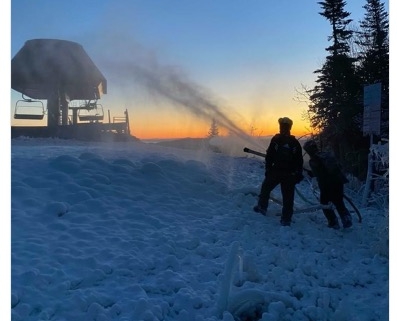
The sun comes up on Alex Phillips of the Sugarbush snowmaking team.

Even with water in hand, making snow requires sufficiently cold, dry conditions. Snowmakers use a crucial measurement that combines the ambient air temperature and humidity called “Wet Bulb”. A lower wet bulb reading means that snow can be produced more efficiently, even at temperatures slightly above freezing.

Advances in snowmaking technology — more efficient guns, better automation, lower-pressure systems — let resorts achieve more snow per unit of water (or per unit of energy) than older systems. In drought years, that becomes more critical. Some resorts are already investing in snow guns with lower water demands to adapt to drier conditions.

Current drought conditions may affect the early season (November/early December). In a “normal” year, resorts might push snow guns aggressively or respond to brief cold snaps. In a drought year, they may have to ration water usage, being more selective about when and where to make snow. The timing of reservoir refill (from late summer and fall rains) is going to be critical. If those refill cycles are weak, reservoir levels may start the snowmaking season below “full” capacity, constraining how early (or how much) water it can divert from streams. Resorts may be able to cover a few critical trails (e.g. base zones, beginner runs) when cold weather arrives but fully covering or “blanketing” entire ski areas early might be tougher if reservoir water is low. They may choose to reserve water for prime cold periods rather than using it broadly on marginal nights.

In the heart of winter, snowmaking is used to maintain and augment snow surfaces (filling thin spots, optimizing coverage). Drought constraints might force a resort to scale back “top-up” snowmaking (the process of supplementing natural snowfall with machine-made snow to ensure optimal surfaces) in less critical zones. If some reservoirs or ponds are drawn down too far, they may not be able to sustain high-volume snowmaking over prolonged cold periods. Resorts might have to scale back snowmaking, maintain minimal coverage, or stop making snow until conditions improve. They may incur extra costs (energy, pumping, infrastructure) or push investments in more efficient snowmaking technology to stretch available water. If reservoir draw is aggressive early, there might not be enough buffer left late in the season if cold spells reappear — meaning a resort could run into resource constraints before season’s end.

The undisputed king of snowmaking in the Northeast is and has long been Killington, VT. Killington is one of the more capable and well-resourced ski areas in the Northeast, if not the country, with substantial snowmaking infrastructure. But it also has regulatory and physical constraints (reservoir levels, permit limits, environmental flow constraints, refill limits, etc.). To provide some perspective on just how colossal their water needs are, and without getting too far into the weeds, here are some facts from publicly available sources:

  1. Killington claims that under ideal conditions, its snowmaking system can deliver 9 million gallons of water per day (on average, that’s 30,000 households per day!) to more than 250 snow guns covering ≈ 45 acres with 12 inches of man-made snow.
  2. Killington has been actively investing in snowmaking upgrades. They plan to deploy 1,000 new high-efficiency snow guns for the 2025/26 season (across Killington & Pico) to reduce water and energy use.
  3. Killington owns and operates infrastructure (including water rights) in its capital planning.
  4. There are historical precedent and regulatory context: for example, Killington has permits concerning the use of its Woodward Reservoir for snowmaking withdrawals.  They may not begin before November 1 each year.
  5. Killington also has upstream influence: it has acquired the ability to pipe water from Killington’s sources to Pico (another Vermont ski area nearby under its ownership) via an interconnect system.

These constraints mean that even if water exists somewhere in the system, Killington cannot necessarily always draw it at full capacity — especially in low-flow/drought conditions. Of course, major, well-resourced resorts like Killington are more likely to navigate the drought with less disruption. Those with large, deep reservoirs or multiple water sources (streams, groundwater) have a buffer. Resorts whose water rights or permits allow more flexible withdrawals will have more leeway. Areas already using state-of-the-art, water-efficient systems will be at an advantage. Resorts at higher elevations, or in colder microclimates, may have longer viable windows for snowmaking and rely somewhat less on aggressive snowmaking.

The quality of snow surfaces in the Northeast this season, and the ability of resorts to open extensive terrain early, will hinge on the amount of rain received this fall and sustained cold weather. Even with adequate rainfall, resorts will still have to deal with an increasingly prevalent and destructive freeze thaw cycles and temps too high to make snow.

It’s shaping up to be a challenging season for resorts in the Northeast. Before you do your snow dance this season, you may want to do your rain dance.