As a certified ski instructor I’m required to take a biennial clinic in which we upgrade our teaching and skiing skills.
The Professional Ski Instructors of America, or PSIA, offers a broad menu of topics to focus on. Having just turned 71, the “Senior Skills” clinic at Vermont’s Sugarbush resort naturally caught my eye. I was hoping to pick up some tips to combat fatigue and get ideas for my own adult students at New York’s Windham Mountain Club where I teach part-time.
But I wondered. What special skills or techniques exist for senior skiers? Aside from, hopefully, a greater degree of common sense and a more acute awareness of one’s limits, what can seniors do on the slopes to soften those inevitable aches, pains and tired muscles that emerge toward the end of a ski day?
As it turns out, there’s no silver bullet for senior skiing proficiency, but there are adjustments one can make in technique, as pointed out by our course conductor, Killington trainer Keith Hopkins.
He started out the two-day clinic by reminding us of the basics, that there are three moves or skills involved in turning a ski.
Those are pressure, or the amount of force being exerted on a ski; edging or the act of tipping the ski or skis on edge and rotation or steering of the skis by applying a twisting motion that starts with the feet.
Many skiers, Hopkins pointed out, especially older ones who grew up before shaped skis were on the scene, tend to start their turns with pressure. That can be by upweighting or the up movement at the start of a turn.
Instead, Hopkins had us try starting our turns by tipping our skis on edge earlier, that is before the pressure and steering starts.
There’s a lot of physics and technical detail involved here, but the bottom line is that can help us extend our outside leg sooner and with less effort. And it lets the ski, which is designed to turn, do more of the work.
Most of the participants in the clinic were like me in their 60s and 70s who started skiing back in the day when we were on longer often stiffer skis. While shaped skis have now been around for decades, old habits, especially those connected to muscle memory, can die hard. This move toward engaging our edges sooner was a good reminder of how to best use modern ski design.
There were other moves as well. Along with edging, Hopkins had us working to extend our outside leg earlier in our turns. By keeping one’s legs extended a bit longer, there’s more time for the blood to carry fresh oxygen to the muscles. That can combat the inevitable “burn” one gets during a long or non-stop ski run. Those are just a few of things that senior skier can think about to minimize fatigue and maximize fun.
In February I was fortunate to be at Big Sky Resort in southwestern Montana with the 70+ Ski Club. For the last decade or so Big Sky had been working its way up my short list of resorts to knock off. After several years of less than desirable conditions in the East (yes, not this year) I was looking forward to quiet surfaces. You know, the kind where you make turns and you don’t even hear your edges.
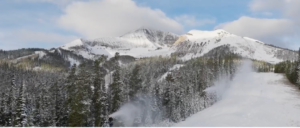
I’m pleased to say I found what I was looking for on the slopes of Big Sky. While the base depth was less than average it didn’t matter. The coverage was of no concern and the surface was packed powder nearly everywhere we went.
I had heard Big Sky is pioneering a sustainability initiative that converts treated wastewater into artificial snow but now I was riding on it. Believe me, you would never know.
As climate change, population growth, and increased tourism place greater pressure on mountain water supplies, the resort and surrounding community have adopted an innovative water-reuse strategy that turns what was once a waste product into a valuable resource for winter recreation.
The initiative also reflects a broader shift in how mountain communities approach water management. The Big Sky project grew out of a community planning effort known as the Big Sky Sustainable Water Solutions Forum, which brought together local stakeholders to address long-term water supply and wastewater challenges. Rather than treating wastewater solely as something to dispose of, the community began exploring ways to reuse it beneficially. Snowmaking emerged as one of the most promising solutions because it returns water to the mountain environment where it naturally belongs.
As you know, ski resorts traditionally rely on surface water from rivers, lakes, or reservoirs to power their snowmaking systems. Snowmaking often requires millions of gallons of water and a lot of energy, particularly in the early part of the ski season when natural snowfall may be limited. Resorts in the western United States increasingly face competition for these water resources, especially in drought-prone regions where maintaining stream flows for ecosystems and downstream communities is a priority. In response, Big Sky and its partners have developed a program that reuses highly treated municipal wastewater for snowmaking, dramatically reducing the need to draw fresh water from rivers or aquifers.
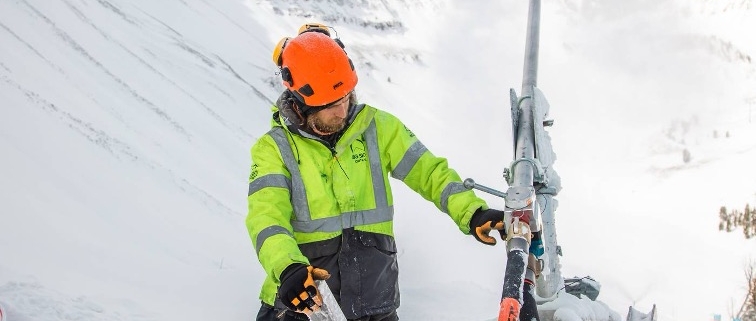
The recycled water used at Big Sky comes from the community’s modern Water Resource Recovery Facility, a treatment plant that processes wastewater generated by homes, hotels, restaurants, and businesses throughout the Big Sky area. At this facility, wastewater undergoes several advanced treatment stages designed to remove solids, nutrients, pathogens, and contaminants. By the time it leaves the plant, the water has reached the highest reclaimed-water classification recognized by the Montana Department of Environmental Quality (MT DEQ) and is disinfected and sterilized to eliminate bacteria and viruses. Continuous testing and monitoring ensure that the water meets strict environmental and public health standards before it can be reused.
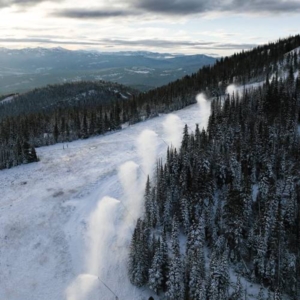
Photo courtesy of Big Sky Resort.
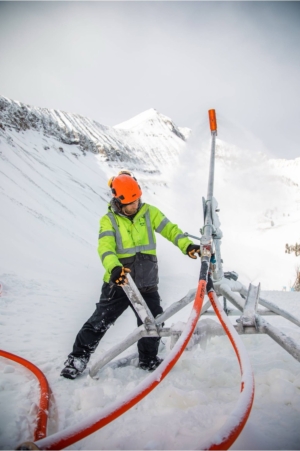
Once treated, the reclaimed water is pumped to snowmaking equipment on the slopes. Snow guns spray the water into cold mountain air, where it freezes into fine crystals that accumulate on ski runs. At Big Sky, this recycled water is primarily used to create an early-season base layer of snow on terrain across Spirit Mountain, Andesite Mountain, and the Spanish Peaks base area. Establishing this base layer is crucial for opening trails earlier in the season and protecting the ground beneath later snowfall.
The snowmaking project will be implemented in phases. During the first phase, the resort expects to use up to 23 million gallons of recycled water each year. In the second phase, the program could expand to approximately 44 million gallons annually, representing a significant portion of the resort’s snowmaking supply. Instead of being discharged into rivers after treatment, this water is reused as snow and later returned to the natural water cycle through melting and infiltration.
An important environmental benefit of this approach is that it reduces pressure on the nearby Gallatin River watershed. Traditionally, many ski resorts withdraw fresh water from rivers or groundwater sources for snowmaking. By recycling wastewater instead, Big Sky avoids taking additional water from these natural systems during the winter when flows can already be low. Conservation organizations such as Trout Unlimited and the Gallatin River Task Force have supported the project, noting that it conserves fresh water and protects river ecosystems.
Another advantage is the process effectively treats the water multiple times. The wastewater first receives advanced treatment at the recovery facility. It is then atomized through snowmaking equipment, which further exposes the water to cold air and ultraviolet sunlight. Finally, when the snow melts in spring, the water passes through soils and natural filtration systems as it percolates into the ground. This multi-stage process can improve overall water quality while returning water to the aquifer and streams later in the season.
Reclaimed water is recycled water that has undergone advanced treatment at a facility, such as the new state-of-the-art Big Sky Water Resource Recovery Facility. Photo courtesy of Big Sky Resort.
The timing of snowmaking also plays a role in water management. Snowmaking with reclaimed water generally occurs between early November and mid-January, when temperatures are low enough for efficient snow production. As the artificial snowpack melts during late spring and early summer, it gradually releases water back into the environment. This delayed release can help maintain stream flows during drier months, benefiting aquatic ecosystems and downstream users.
Although the concept of using reclaimed water for snowmaking may sound unusual, it is not entirely new. More than a dozen ski areas across several U.S. states—as well as resorts in Canada, Switzerland, and Australia—already use recycled water for similar purposes. What makes the Big Sky project notable is that it’s one of the first ski areas open to the public in Montana to adopt the practice, potentially setting a precedent for other resorts in the region (the Yellowstone Club, a private resort, was the first).
As climate change continues to affect snowfall patterns and water availability in the Rocky Mountains, innovations like wastewater snowmaking may become increasingly common. By transforming a local waste stream into a reliable snowmaking resource, Big Sky Resort demonstrates how ski areas can adapt to environmental pressures while reducing their impact on fragile mountain watersheds. The project illustrates a growing recognition that sustainable recreation in the future will depend on creative approaches to managing water—one of the most critical resources in alpine environments.
https://seniorsskiing.com/wp-content/uploads/2026/03/Big-Sky-Snowmaker.jpg1136756David Schissler/wp-content/uploads/2014/04/Seniors-Skiing-since2013-Logo@2x-300x68.pngDavid Schissler2026-03-19 12:48:202026-03-21 12:52:54Recycled Water, Real Snow: Big Sky’s Path to a Greener Ski Season
The days are longer, the sun is brighter, the temperatures are warmer and the snow is softer. Ah, yes, spring skiing is special, when you can shed layers enjoy such end-of-season silliness as pond skimming contests and leisurely sun-soaked apres.
Spring skiing also needs some special attention, both to the condition of the snow and the condition of your equipment. Here is some sensible advice from a trio of ski and snowboard instructors at Whistler Blackcomb –
Understand spring conditions:
Nights are still cold on the mountain, so the snow can be firm in the mornings. Wait for the sun to soften the snow if you’re looking for that spring slush. Spring powder conditions can be slower and harder to ride through, depending on how deep it is. This can require making bigger, straighter turns.
Debate beauty sleep vs early bird:
Spring skiing means relaxed mornings and softer snow in the afternoons, but prime conditions for laps are in the morning.
Adjust your body language:
Make sure your weight is evenly distributed along the downhill ski (or along the inside edge of the snowboard) at the end of the turn. If there is too much weight, too far forward, the back of the downhill ski (or snowboard), can slide out. Skiers should make sure you don’t have your weight forward at the end of the turn. Instead, what is needed is pressure on all parts of the foot from the toe to the arch, to the heel. This allows the edge to dig in. Tighten your downhill ankle by rolling inwards to put the ski on more of an edge, and tighten your muscles so you have more control.
In powder and deeper slush, push your feet a bit forward through the end of the turn. In deeper snow, it is common for a skier’s feet to slow down due to the increased friction of the snow. The wetter the snow is, the more likely it is for this to happen. This can result in a skier being thrown forward. To counter this, skiers can push their feet forward through the end of the turn.
It is important to also push their hands forward as well, otherwise, you will be leaning too far back. This puts extra pressure on the quads. When skiing, we always want our shoulders over our knees. Snowboarders can also accomplish this feeling by pushing the front of the board forward if they feel that their board is being slowed down by the deeper, wetter snow.
Get a wax:
You’ll definitely want your skis or board to be waxed to avoid getting stuck in slush. A good sign that your equipment is running out of wax (besides not gliding properly anymore) is a white cloudy effect on the edges of the base near the metal – this is where the snow is causing friction burn against the p-tex base.
Tree runs and spring conditions don’t mix:
As the snow melts, obstacles can emerge in forested areas that are hazardous to skiers and riders and damaging to your gear. Tree wells are also a hazard, so stay away from the trunks of trees, especially if they have low-hanging branches. And always ski with a buddy.
Dress properly:
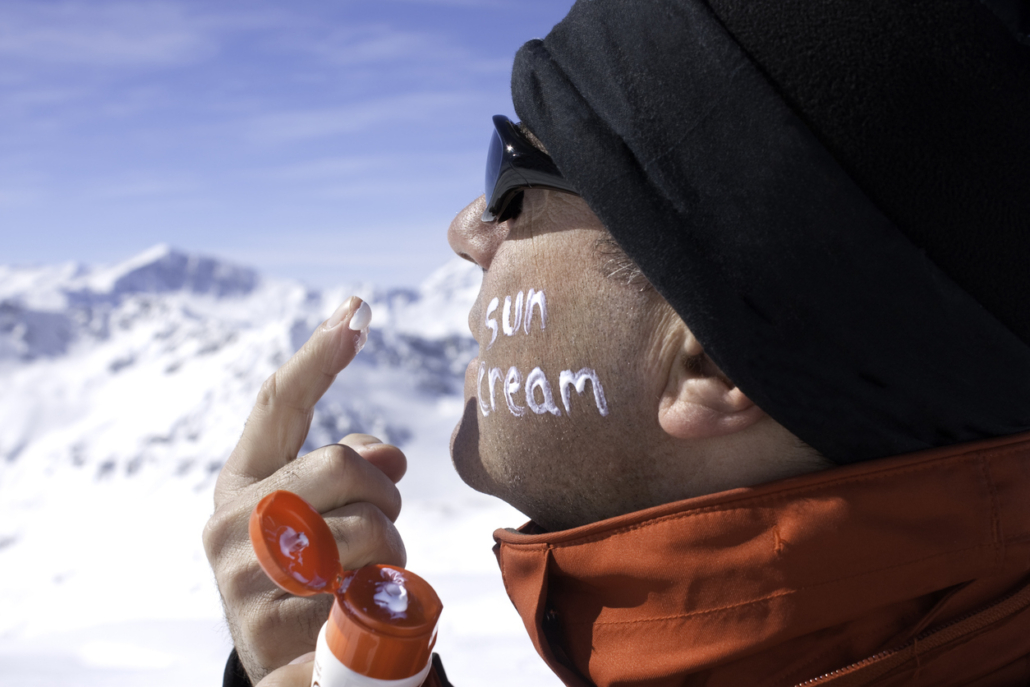
Layer with breathable, quick-drying fabrics, wear sun protection, and pack a small backpack with essentials like water, sunscreen, and extra layers for changing conditions. The jury is still out on whether goggle tans are considered cool, but there’s no doubt that if you want to avoid a nasty burn, sunscreen is a must. With high altitudes and UV rays reflecting off the snow, it’s easy to get sun damage. And don’t forget the lip balm with SPF.
Have fun and be safe. See you on the spring slopes!
https://seniorsskiing.com/wp-content/uploads/2025/03/michal-janek-zqKkyVui_i4-unsplash-scaled.jpg17072560Evelyn Kanter/wp-content/uploads/2014/04/Seniors-Skiing-since2013-Logo@2x-300x68.pngEvelyn Kanter2026-03-19 12:46:322026-03-17 12:47:44Tips and Tactics for Spring Skiing
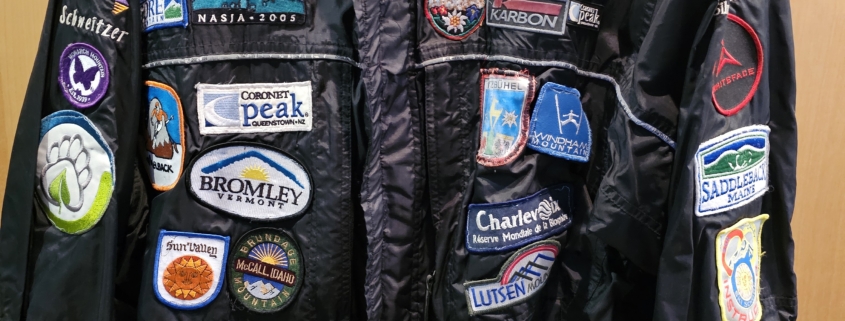
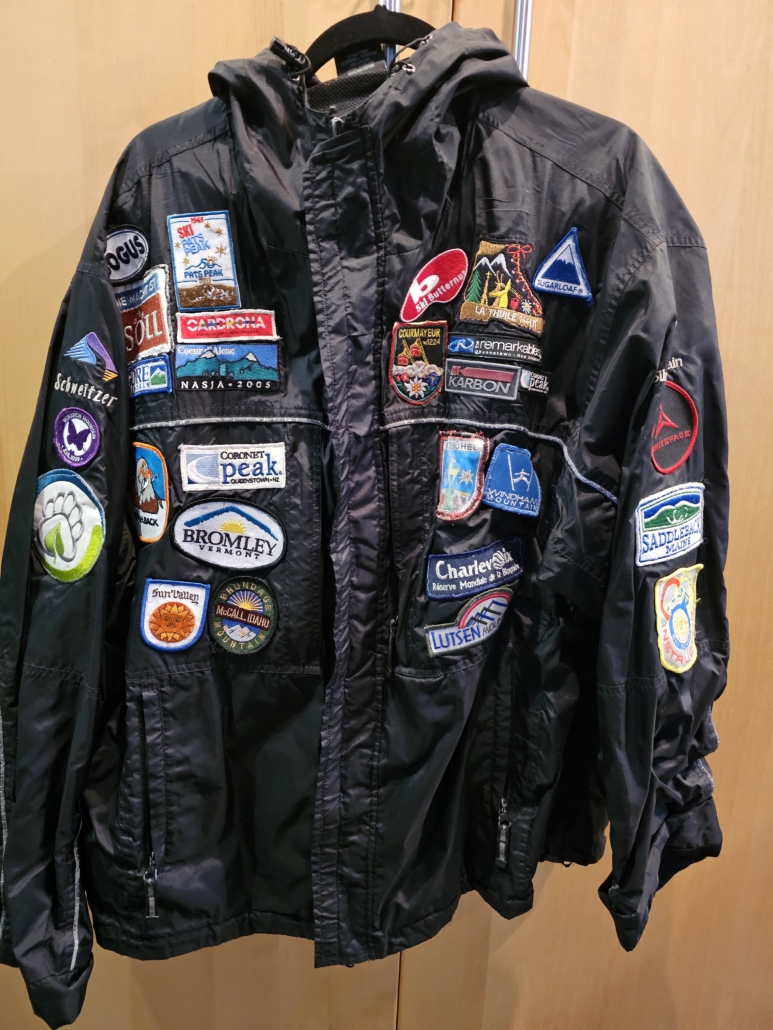
Two years ago, when I signed up as a member of the 70 plus ski club, I received my 80 plus patches.I had collected patches from ski areas for years and have a coat that adorns all or most of my patches.I have tried to buy one at every new ski area I visit.
So, I placed this patch on my current ski coat with a big Velcro backing so I can switch the patch to the ski coat I am going to wear that day.Ever since I put that patch on my shoulder, I would get comments, “Great to see you can still be out here”, “Really! Your 80?”, “Keep on going!” and always resulting in a great conversation on a lift or in the lodge.
I am so thankful that my body still allows me to participate in numerous sports, racquetball, pickleball, kayaking, riding my bike, motorcycling and golf (my least favorite but there to fill up the down time between ski seasons).
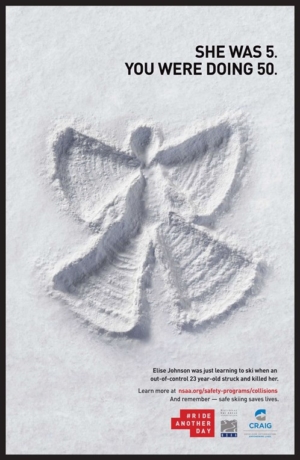
Now as you know, I am always concerned about our skiing safety, so I am working on an idea (more on that below). I first saw a poster for the Snow Angels foundation at Palisades Ski Area a few years back. Snow Angels has devoted its efforts to educating skiers about the after effect of skiing too fast, being out of control, and not being courteous.When I saw that first poster it had a big impact on me and continues to this day. Co-founders Chauncy and Kelli Johnson have snowboarded and skied most of their lives. They brought this passion into their marriage and subsequently with their children. On Christmas Eve, 2010 a snowboarder riding at approximately 50 mph collided with Kelli and daughter Elise (5 years old). The collision resulted in the death of Elise and the snowboarder. Kelli sustained life altering injuries including a severe Traumatic Brain Injury and other injuries that she lives with to this day.
This now relates to the patch. I have spoken with the organization’s staff and discussed having a Snow Angels patch which I could wear. Snow Angels will be making a patch to wear, and I think everyone should wear on their shoulder.I hope the patch resembles their poster with the snow angel. I am not sure yet as to how they will be distributed, but I imagine they will be available shortly and maybe for a small donation to the not-for-profit to help promote skiing safety.
This along with my ski guardian flag warning systems, which appear to have worked well last year while getting some great response on the slopes. I think fewer people have passed close by me. It certainly seems to me there have been fewer close calls than before using them. Ski Guardian has teamed up with Snow Angels and have a flag that will go on their poles extensions which will also help the cause.
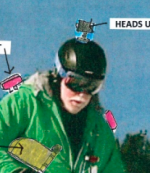
Now about that idea. Going along with my safety schtick, I am working on a red-light system to go onto the back of my helmet. This might be over the top but as in my earlier drawings for skier safety I included lights on my jacket. Let’s see how this works this year!!!
Hope everyone has a safe and fun ski season this year.
https://seniorsskiing.com/wp-content/uploads/2026/02/20251126_072236-scaled.jpg25601920Mike Roth/wp-content/uploads/2014/04/Seniors-Skiing-since2013-Logo@2x-300x68.pngMike Roth2026-03-19 12:43:302026-03-19 13:17:42My 80 Plus Patch and Its Potential
Scott and Marc at the top of the T-Bar on Whistler. Seventh Heaven in the background.
Whistler is really a combination of two large areas – Blackcomb, Whistler, and a small village called Creekside. Each has a gondola that will take skiers up the mountain. Getting off any of the gondolas, it is an easy ski down to
Blackcomb has a vertical drop of 5,280 feet, and Whistler Mountain has only 5,020! In practical terms, if, at so2me time in the day, you are at the top of the Blackcomb Gondola at 5,784 feet and decide to ski to the bottom, be aware that Whistler Village is only 3,660 vertical feet away!!!
Blackcomb Peak tops out at 8,000 feet, but as a practical matter, unless the Showcase T-Bar is open, the top of Blackcomb’s skiable terrain is 7,449 feet. Over on the Whistler side, the quad Peak Express will take you to the top of Whistler Mountain, 7,160 feet above sea level and the intermediate Peak to Creek will take you down to the Creekside Gondola, 5,020 vertical feet below.
Skiing the mountains. Whenever my brother and I ski at Whistler, we joke about the trail markings. At most ski areas in the world, what Whistler marks as an intermediate would have diamond or double diamond ratings.
For example, the intermediate runs Ridge Runner and Rock ‘n Roll off the quad Chrystal Ridge Express are narrow for a Western area. They are full of twists and turns, changes in camber, and steep pitches that lead you to a waterfall!
The good news is that most, but not all, of the beginner and intermediate runs are well-groomed. The expert runs like the Dave Murray Downhill may be groomed, but you can expect lots of moguls on those that are not.
How and where to ski the two mountains is an article unto itself. Suffice it to say, Whistler has enough terrain and long, thigh burning trails to keep skiers of all levels entertained for months. And, BTW, all the chairs except the triple Magic Chair have footrests.
Paper trail maps are available. At Whistler, they are appropriately called Mountain Atlas!
Food and bathrooms. There are restaurants and bathrooms all over the mountain. Glacier Creek has the most variety of food, but the food court is upstairs. The bathrooms are on the floor you enter.
Rendezvous and Roundhouse are often crowded from 11:30ish to 1 p.m. Bathrooms on the entry floor. One of my favorites is Chic Pea, which makes cinnamon buns to die for and has no stairs to climb.
The huts – Raven’s Nest, Crystal, and Horstman – all have limited menus, but again, no stairs. For those of you who like to be served lunch on the mountain, there’s Steeps and Cristine’s.
Food prices are comparable to most U.S. resorts, and show your Epic Pass and you get a 20% discount. The Canadian dollar was worth about US$.73, which makes it even cheaper.
Bottom line is that the best recommendation for a destination resort is how often a skier returns. I ski at Whistler every year. ‘Nuff said.
https://seniorsskiing.com/wp-content/uploads/2026/03/Marc_Whistler-scaled.jpeg25601920Marc Liebman/wp-content/uploads/2014/04/Seniors-Skiing-since2013-Logo@2x-300x68.pngMarc Liebman2026-03-19 12:28:532026-03-17 12:30:00Musings from Whistler
Publishers Note: It is with great sadness that we learned of the recent passing of one of our most popular contributors, Harriet Wallis. This is one of her many articles we are republishing this season.
The Breakfast of Champions Kept Champion Ski Jumper Alf Engen From Competing.
Wheaties Ad 1936, Courtesy of Alan Engen
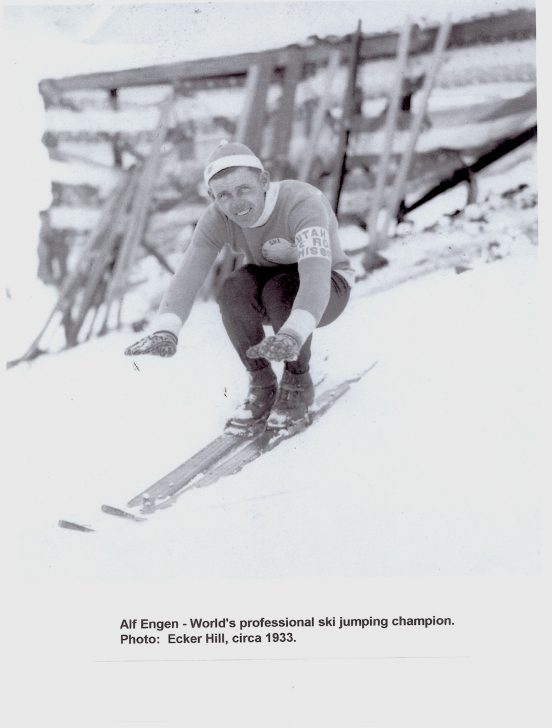
Legendary extreme athlete Alf Engen, known as the greatest all-around skier ever, was a champion soccer player, skier and ski jumper. During the 1930s, he set ski jumping world records. He helped design and establish more than 30 ski areas in the western United States. And he’s fondly remembered for pioneering deep powder skiing techniques and for his ski school at Alta.
But world champion Alf Engen was banned from competing in the 1936 Olympics because of a Wheaties breakfast cereal box.
It was just the fourth time that countries faced off against each other in wintertime Olympics. Competition included just four sports: bobsleigh, ice hockey, skating, and skiing. Twenty eight countries sent their best athletes to the IV Olympic Winter Games.
As background, Engen came from Norway to the United States in the 1920s, and he played professional soccer. By the 1930s, he was acclaimed for his ski jumping feats, he joined a ski jumping team, and he soon won 16 national ski jumping titles. And his jumps set world records. He also won national titles in all four ski disciplines: ski jumping, cross country, downhill, and slalom skiing.
Alf circa 1933, Courtesy of Alan Engen
Also in the 1930s, radio was the mass media communication method of the era. There was no television. People used their imaginations to create pictures from the words they heard.
But another form of mass media was taking hold: cereal boxes. Until then, breakfast cereal had to be cooked, but when food manufacturers invented cereal that could be eaten right from the box, they faced a marketing dilemma. How could they convince families to switch from cooked cereal to this newfangled ready-to-eat cereal? A cereal box sitting on the breakfast table with pictures of all-star athletes would be the marketing device. And unlike radio, the images were right there on the box.
Four athletes appeared on the Wheaties box—Bob Kessler, basketball star; Mike Karakas, champion hockey player with the Chicago Blackhawks; women’s speed skating champion Kit Klein; and famed skier Alf Engen.
Meanwhile, Engen became an American citizen. In 1935, at the U. S. Olympic Ski Jumping Finals held at classic Ecker Hill, he out-jumped everyone. He was immediately named as a member of the U.S. Winter Olympic Ski Jumping Team which would compete in the 1936 Winter Games in Garmisch-Partenkirchen, Germany.
But just before he was scheduled to leave, Avery Brundage, president of the International Olympic Committee and a zealous supporter of amateurism, ousted Engen from the team because his picture had appeared on the Wheaties box. He declared that Engen’s image on the cereal box made him a professional, not an amateur athlete.
“Engen said he didn’t remember getting any money from the cereal company, ‘Just a lot of Wheaties. I think I gave everyone in Salt Lake City free Wheaties.'”
Alf with trophies, courtesy of Alan Engen
Ironically, shortly after the Olympics, Engen jumped against—and he beat—both the gold and silver medalists from the Olympic Games, Norwegian gold medalist Birger Ruud and Swedish silver medalist Sven Eriksson.
The remarkable skiing Engen family is the only family to have four family member in the U.S. Ski and Snowboard Hall of Fame: Alf, his two brothers Sverre and Corey, and his son Alan.
Alan lives on in his father’s tradition. He’s a champion skier and athlete as well as an accomplished scholar, author, and historian. He carries on the Engen tradition of serving the skiing community.
Alan dreamed of displaying hundreds of Alf’s ski trophies and memorabilia for the public. The dream grew into the $10.5 million Alf Engen Ski Museum at the Olympic Park in Park City, Utah. Visitors can also learn about avalanches, sit in a real bobsled, try their knack at interactive ski jumping, and more. The museum was funded entirely by private donations, including donations from Utah’s famed and philanthropic Quinney and Eccles families. Visit and enjoy the museum when you’re in Utah.
Alf in flight, circa 1936, courtesy Alan Engen
https://seniorsskiing.com/wp-content/uploads/2018/01/5-Alf-circa-1933-e1515684616833.jpg728552Harriet Wallis/wp-content/uploads/2014/04/Seniors-Skiing-since2013-Logo@2x-300x68.pngHarriet Wallis2026-03-19 12:20:362026-03-17 12:35:26How Wheaties Affected The 1936 Olympics
At Alpine Haven Resort, everyone knew when Edith “Edi” Farnsworth had arrived. Usually, it was the jacket that gave her away—something puffy and reflective, as if it had been stolen from a ski patrolman in the 1980s and then dunked in a melted box of crayons. Other times it was the helmet, a shiny metallic green number that looked more like it should be worn by a freestyle skier like Wayne Wong. But more often, it was the sound of her voice drifting through the frosty air as she spoke to her skis like old friends. “All right, Micky and Lindsey,” she said one crisp morning, tightening her boots with the stubborn precision of someone who had learned the ritual late in life. “Let’s try to behave today. And by behave, I mean let’s try to not break anything.”
Edi was seventy-two but carried herself with the mischievous energy of someone much younger. She hummed 70s rock songs as a kind of “pre-slope meditation,” which she insisted improved her balance and scared away bad weather. Teenagers adored her because she challenged them to races she had no business winning—and often did. Beginners adored her because she handed out unexpected hand warmers or pocket snacks from her ever present backpack that she got from a retired ski racer friend and offered advice like, “Lean forward, dear. Gravity is trying to help you, not kill you.”
What most people didn’t know—at least not until they warmed up to her unusual sense of humor—was that Edi hadn’t started skiing until she was over fifty. Before that, she’d worked three decades at a desk job processing medical invoices. “One day I realized my body was more adventurous than my life,” she liked to say. “So, I retired and let it choose a passion.” And it turned out that was skiing.
That morning, the air smelled faintly of pine and distant woodsmoke. A light dusting of new snow gave the mountain a softness that promised good runs and maybe a few surprises. Edi touched her lucky left glove—mended with duct tape in three places—and started toward her favorite lift.
A young family was ahead of her, moving like an unruly mob. The mother looked exhausted; the father wore that wide-eyed expression of someone who had realized too late that skiing required actual structure and a small level of basic skill. Their little girl, bundled up like a burrito, stared solemnly at Edi’s helmet decal. It’s an owl,” Edi explained, bending down. “A very wise owl. He helps me make good choices on the slopes.” The girl blinked. “Does he talk?” “Only when the snow is listening.”
They all laughed and just like that the tension melted. Edi boarded the lift feeling the anticipation. She glanced down at the trees drifting below her, remembering the story she had told the little girl’s mother—a story the locals still whispered occasionally but that Edi rarely spoke of unless someone asked directly.
It had been twelve years earlier on a February morning not unlike this one. She’d been skiing alone, enjoying the reckless freedom of someone who had only recently learned how thrilling it felt to fly solo. A wrong turn, or what she had thought was a wrong turn, had taken her far off the groomed trails. The snow had deepened, the air grown quiet. Then she’d seen him—a young snowboarder half-buried near a fallen log, pale with cold, barely conscious. He had been missing overnight. She still remembered the jolt of terror, then the clarity that followed. She talked to him the entire time—her instinct, as always—telling him silly stories and encouraging him to keep breathing as she bundled him in spare layers from her backpack. She fed him a pocket treat and used knots she’d learned from an old mountaineering book to brace his injured leg. She then poured hot chocolate from her thermos into a cup and placed it into his cold trembling hands.
The ski patrol later remarked that her quick decisions—and her eccentric but useful habit of bringing far more supplies than necessary—had kept him alive long enough for rescuers to save him. They called her a hero. She had called it “just following the snow where it took me.”
The lift bumped gently as she reached the top. Edi slid off smoothly, inhaling the crisp air like a promise. She paused to take in the view: endless slopes, sun catching on ice crystals, pines dusted with new snow. This, she thought, is why I keep skiing. At any age, the mountain has something new to teach you.
She pushed off and began her descent, carving beautiful turns down the fall line. Her legs moved with practiced confidence; her body felt light, the world simple. A pair of teenagers zipped by, shouting her name. “Race you later!” she hollered, knowing full well she would. Midway down, she stopped near a family of beginners struggling with their poles. She quickly adjusted their stances and sent them off with a cheerful reminder about using chairlifts carefully, keeping aware of other skiers and minding the responsibility code.
By midday, the sun shimmered at the peak, and Edi paused again, resting on her poles. She imagined the little girl, who liked her owl decal and the parents who would now smile at their child’s new skills. And she imagined the man she had rescued years ago—now a father himself, who sent her a holiday card every year. She tapped her skis lightly. “All right, Micky and Lindsey. One more run. Let’s see what story the mountain has to tell us today.” and with that, Edi Farnsworth—lover of retro gear, rescuer of lost hikers, unofficial queen of Alpine Haven Resort—glided back onto the snow, leaving behind a trail as quirky and wonderful as she was.
https://seniorsskiing.com/wp-content/uploads/2026/03/landscape.jpg9341122Ann Schissler/wp-content/uploads/2014/04/Seniors-Skiing-since2013-Logo@2x-300x68.pngAnn Schissler2026-03-19 12:16:452026-03-19 19:52:28Slopes of Serendipity
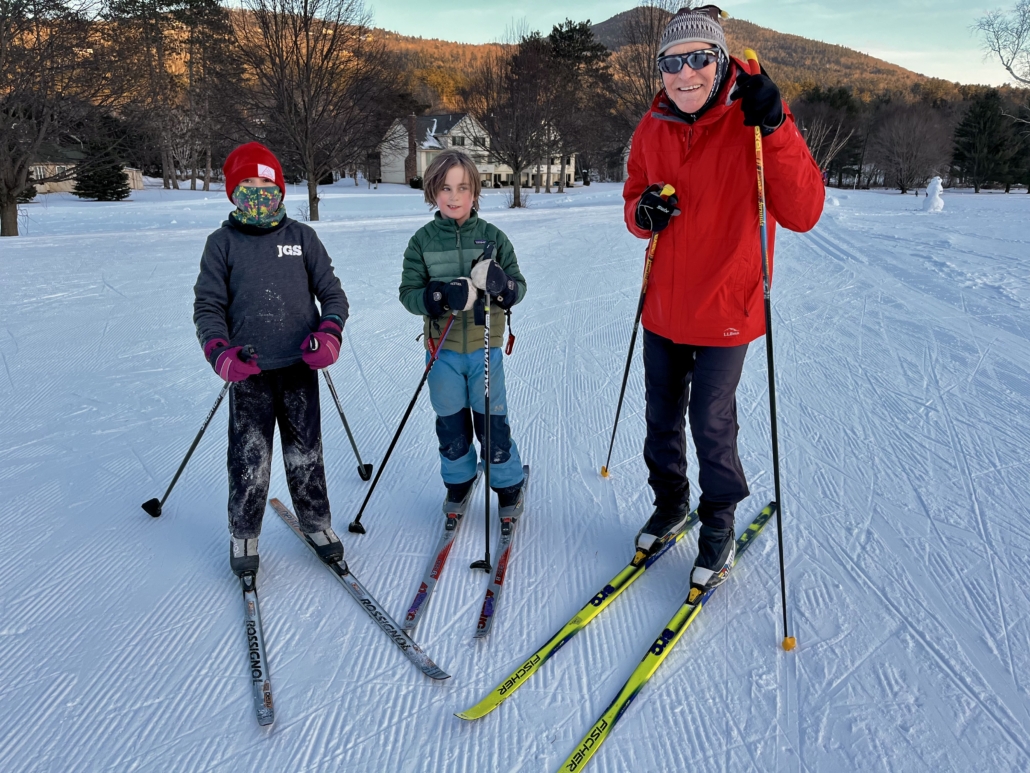
Peter Theriault with another generation at Jackson Ski Touring.
We’ve all seen the classic posters: “Old skiers never die; they just go downhill” or “You don’t stop skiing when you get old—you get old when you stop skiing.”
And anyone who is out on the slopes regularly will notice that there seem to be a lot of active, over age 70 seniors who can identify with those posters and they’re out participating regularly at the many ski areas around the country. I see them everywhere here in Mt. Washington Valley, New Hampshire.
Take Peter Theriault, 76, of Jackson, N.H., for instance. He started teaching skiing at Wildcat in 1970. Yes, 1970! And he taught there every year until just this past season. But he still goes downhill skiing as Vail Resorts, which owns both Wildcat and Attitash in Mt. Washington Valley, gave him a lifetime pass for his years of service.
And, on top of that, he continues to teach cross country skiing to both local school children and adults at the Jackson Ski Touring Foundation (JSTF). “I’ve been involved in the Jackson elementary school after-school program since 1975. What’s that? Fifty years!” he said recently. “In fact, I’m now teaching some grandchildren of my first students–Jeff and Sally Maynard’s daughters were in my classes, and their children are in the program now.”
Add that Theriault also teaches adult cross-country lessons on weekends at JSTF and on Fridays he teaches downhill skiing to school children via the Eastern Slope Ski Club program at another local area, Black Mountain.
While all that might exhaust someone half his age, Theriault says it keeps him young. “I get a little winded – huffing and puffing keeping up with the kids,” he noted. “They have boundless energy back like I used to have.”
More older skiers?
Yes, the average age of skiers is increasing. Melody Nester, assistant director of Ski New Hampshire, noted, “Nationally, the median age of snow sports participants indicates a gradual aging trend. According to a demographic study conducted by the National Ski Areas Association, the national median in the 2023/24 season was 37 years of age, compared to 35 years of age in the previous year.”
But it’s not just the aging Baby Boomers who are skiing into their seventies. The trend started decades ago. There’s even a 70 Plus Ski Club that was first formed in 1976 by Lloyd Lambert, a retired sportswriter and radio and TV announcer who covered skiing during his career.
When he turned 70 back in the 1980s, Lambert was dismayed to find his contemporaries had to pay full fare for a lift ticket, which he thought was wrong because not many people over 70 could spend a whole day on the slopes so they never got their money’s worth. As a result of the efforts of Lambert and the 70 Plus Club, the older skier now enjoys free skiing or reduced rates at almost any ski area in the country. Plus, the 70+ Ski Club hosts trips for members to top areas in the U.S. and Canada, plus to resorts in the Alps and even to Argentina. Find more information at www.70plusskiclub.org.
Keep on keeping on
Tyler Palmer is still carving up Cranmore.
Olympian (Sapporo, Japan, 1972) Tyler Palmer, 74, is still out skiing at Cranmore in North Conway, N.H. It’s the same mountain where he started skiing at age two. “My best days as a kid were Monday afternoons, just skiing with the other kids and former Austrian ski racer Edi Mall. I realize now what a total privilege it was to have Edi Mall, Herbert Schneider [son of famed ski meister Hannes Schneider], and other Austrians teaching us,” Palmer said, adding that because of Cranmore’s St. Anton and Hannes Scheider connection, he was recognized throughout his skiing days in Europe.
Now he acknowledges that while he’s still into skiing, he’s just a little slower. “First off over 70, it’s hard to get into your boots, it’s hard to get your jacket on, and it’s hard to get out of your boots. It’s just hard to get in and out of all the stuff that you have to,” Palmer said. “But, when you get up there and you’re skiing, none of that stuff makes a difference. I really enjoy it, even if my body doesn’t.”
“I still ski, but not racing,” said Danielle Dion, another local over-70 skier who noted that her parents skied into their 80s. “I decided I’d rather ski at my own pace.”
“Seventy is the new 60,” added Dion with a smile.
https://seniorsskiing.com/wp-content/uploads/2025/11/Palmer3-scaled.jpg19202560Karen Cummings/wp-content/uploads/2014/04/Seniors-Skiing-since2013-Logo@2x-300x68.pngKaren Cummings2026-03-05 20:04:242026-03-05 20:04:24Still Skiing After All These Years
It had been more than thirty years since I last skied. Thirty years. That’s a long time for skis to gather dust, memories to fade, and fears to creep in. But when my husband and I planned our winter getaway to Park City, Utah, I knew it was time to dust off my ski gear—or rather, letDeer Valleyprovide new rentals for both of us—and rediscover what I loved so much about gliding down snow-covered slopes. What followed was nothing short of magical: a perfect bluebird day, exceptional instruction, snowy wonderlands, and a renewed passion for skiing—all without breaking a hip.
First Day Nerves and Private Lessons
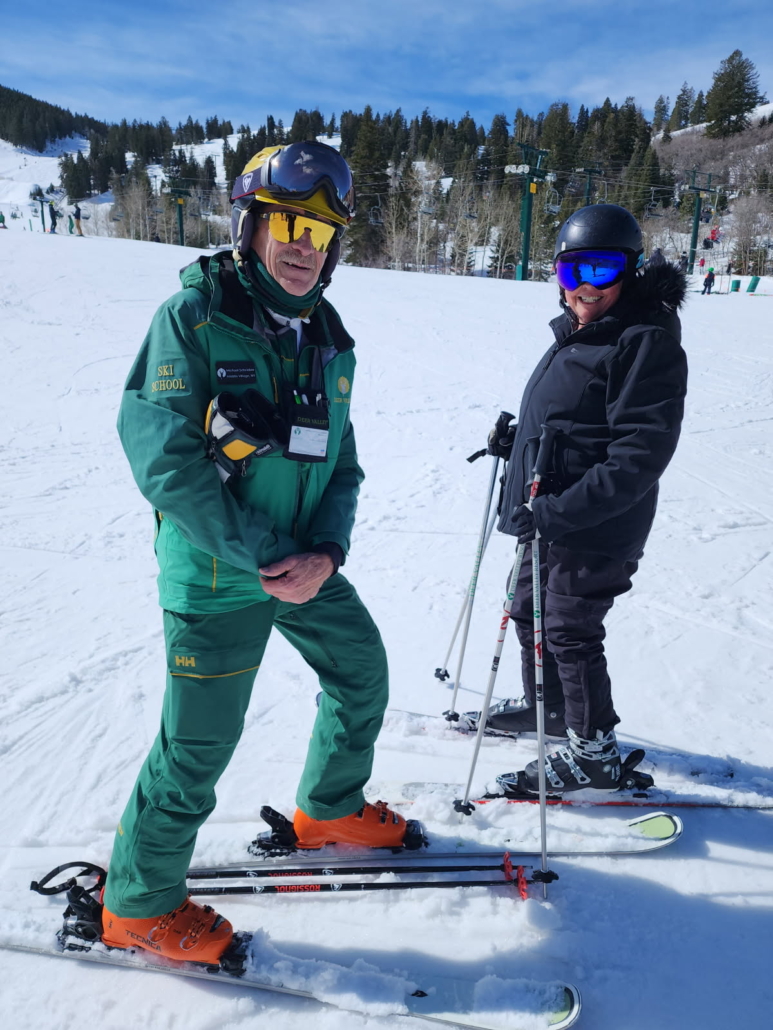
We started our adventure with a private, half-day ski lesson, tailored for two “returning skiers” who might also be considered slightly over-cautious.Deer Valleyis famous for its exceptional ski school, and our 70-year-old instructor , Michael, immediately made us feel at ease. I have to admit, the first thing I noticed—and feared—was my balance. Thirty years is a long gap, and I wondered if my muscles remembered anything at all.
To make matters even more exciting (or terrifying), this was the first time I ever wore a ski helmet. As I adjusted the snug strap, I felt a tiny thrill of both safety and novelty. And then there were the skis.Deer Valleyprovided rentals, and for me, that meant the first experience on short, easier-turning skis. Suddenly, the idea of making turns didn’t feel impossible. I started to remember, slowly but surely, why I had fallen in love with skiing in the first place: the sheer freedom, the crisp mountain air filling my lungs, and the exhilaration of moving with the snow beneath me.
Michael guided us patiently, focusing on posture, turning, and controlling our speed. I kept reminding myself: relax, breathe, enjoy, don’t fall. And the lesson worked. By mid-morning, I was turning with confidence, feeling the skis beneath me, and laughing with joy—glad I hadn’t broken a hip in the process. My husband, too, found his rhythm, and together we carved gentle arcs down beautifully groomed trails, soaking in the panoramic mountain views.
Me and ski instructor Michael
The weather was perfection itself: a deep, crisp blue sky stretching endlessly above snow-covered peaks. Sunlight sparkled on the powdery trails, glinting off icy branches and casting shadows across the slopes. I remembered exactly why I had loved skiing in my youth. The sensation of moving freely, of controlling my path while gliding over glistening snow, felt like coming home after decades away.
Skiing after three decades was both nostalgic and exhilarating. The short skis, the helmet, and the private lesson all contributed to a safe, confidence-building reintroduction. More than anything, I was reminded of why skiing had captured my heart in the first place: the joy of movement, the beauty of winter landscapes, and the sense of freedom it brings.
By the time we left, I felt rejuvenated, joyful, and grateful. Skiing had given me a renewed sense of adventure, reminding me that it’s never too late to embrace old passions, try new things, and make memories that last a lifetime. Thirty years away, and I left knowing one thing: I will be back.
Susan Sims publishes FIDO Friendly, the Travel Lifestyle Magazine for you and your dog. Along with her husband Greg and dog Honey, she travels across America sniffing out properties for purpose of review. She started skiing in high school in 1968.
https://seniorsskiing.com/wp-content/uploads/2026/03/Me-and-ski-instructor-Michael.jpeg16001200Guest Contributor/wp-content/uploads/2014/04/Seniors-Skiing-since2013-Logo@2x-300x68.pngGuest Contributor2026-03-05 20:03:242026-03-05 20:05:34Rediscovering My Ski Groove at Deer Valley
For the last seven seasons, I have been part of an all-guys trip to Powder Mountain for a week of old friends camaraderie and skiing. But as the days approached our Feb. 2026 departure, half of our group of twelve backed out because of concern there was no snow in Utah, and also in Colorado.
Conditions were bad enough that Vail Resorts actually was giving refunds to pass holders.
For weeks prior to leaving, I heard from my ski buddy “woe is me, there is no snow! It is going to cost me so much money that I am going to lose.” This is his modus operandi. He has a negative approach towards everything that is happening or is going to happen.
If he is watching his sports team (the Giants or the Yankees) it is always woe is me, they are going to lose through the entire game. He lamented every day, checking weather and ski reports for Powder Mountain giving himself an upset stomach. As others backed out, he worried even more.
Honestly, of every ski trip I have gone on, many in April with marginal spring conditions and others where there were questionable conditions, I have never had one bad enough to quit, even though as you drive up and see grass or rocks and dirt. Always, when we arrived it was always great skiing.
So off we went to Salt Lake City and up to Eden, where we had rented a large 10-bedroom house for all six of us, minus the other six that backed out.
A couple of guys got there early and went up to the mountain to check it out, and returned with a horrible report of so little snow, blah, blah, blah. But we were committed since some of us bought season tickets (which used to be free for 75+, but that’s another story). The season tickets came with eight half-price buddy tickets, which we spread around the to the other guys who were coming.
Time to get to the mountain, usually we are the first ones there, but with the report of lack of snow we took our time, arriving at the Timberline Lodge at 9.30. The parking lot had about 30 cars.
First run down was on fresh groomed snow. Second run down to the Hidden Lake Quad also was freshly groomed snow, as was third run to Hidden Lake. As the day progressed, we still found groomed trails and no bare spots. But off trail they needed the snow because the boulders and trees needed to have cover. Even so, there were people in the trees.
You must remember that Powder Mountain had 9,000 acres of skiable terrain before the new ownership reduced it to about 5,000 due by separating homeowners having their own trails and lifts, and what’s left for us pass-paying non-owners. Even so, 5,000 acres is plenty for anyone to ski.
Since I don’t ski much off-Piste anymore, I had nothing to worry about. Just perfectly groomed conditions all day long. All that worry by the other guys wasn’t worth all the sleepless nights of losing the money due to lousy conditions. Their sleepless nights – not mine.
Along with the fantastic conditions there was no one on the mountain. Even though I had my Ski Guardian safety flag, I hardly used them in the outward position. Because if there were 50 people in the 11 days I skied pass me, maybe ten were close and of those, just four announced on your right or left. That was a record.
The lift line on the Hidden Lake detachable lift was anywhere from nothing to maybe one minute, even on the weekend. Of course, pass holders weekends in February made the crowds even less. That may also have been due to the report that there was limited snow in Utah.
Even though there was a cost to skiing for the senior skier, our peace of mind of being safer was worth every penny that I spent for that season pass. In addition, the mountain has many improvements with new lifts planned, although maybe not for my skiable future, since the expert steep terrain it will access is not necessarily for me. But I was very happy with what we had to ski on, and so were all the guys on the trip.
Too bad for the naysayers, who were out their tickets that they pre-bought and the house cost. They lost out on some of the best skiing this season.
https://seniorsskiing.com/wp-content/uploads/2026/03/AISelect_20260302_110629_Gallery.jpg18611440Mike Roth/wp-content/uploads/2014/04/Seniors-Skiing-since2013-Logo@2x-300x68.pngMike Roth2026-03-05 20:02:402026-03-12 22:32:06Optimism vs. Pessimism: Update on Skiing Private-Public Powder Mountain
Editors note: A version of this article appeared in the March-April 2025 issue of Skiing History magazine.
As governor of a southern state, Lamar Alexander was nobody’s guess to help spread cross-country skiing into the Southeast in the 1980s.
Granted, southern governors in the 1970s and ‘80s (and since) have promoted downhill skiing, but Alexander took it a step further, striding off into the natural snow of Nordic. In the process, he helped popularize what is still today one of the region’s best Nordic ski sites.
A big part of that story is Roan Mountain, among the East’s highest peaks at 6,285 feet. Just a few feet shorter than Mount Washington, New Hampshire, “the Roan” towers on the Tennessee and North Carolina border more than 4,000 feet above foothills. That orographic lift delivers 130-plus inches of annual snowfall, making Roan the epitome of the surprisingly snowy Southern Appalachians. The mountain’s renowned summer rhododendron bloom is a highlight of the Appalachian Trail.
Gov Alexander
Discovering the “Southern Heights”
By the late-’70s, ski resorts in North Carolina were attracting crowds and locals started exploring peaks loftier than the downhill mountains. More annual snow falls on some of those summits than sifts down on Buffalo, New York. Roan is one of them.
In the early 1980s, that inspired local Nordic skiers based in Boone to form High South Nordic Guides, rent skis and guide ski trips. They established the southernmost Nordic ski school in the East, training with what was then EPSTI (the Eastern Professional Ski Touring Instructors), and later, Nordic PSIA (the Professional Ski Instructors of America).
Ultimately the Guides—Steve Owen, Jeep Barrett, Ken Johnson, and others—were spending so much time at Roan an idea emerged: Why not propose a base of operations below the mountain at Tennessee’s Roan Mountain State Resort Park? Heck, why not create a cross country ski resort at the park?
Newly elected Governor Lamar Alexander had just dedicated the park in summer 1980, complete with modern cabins.
Formality would be needed for the state to get involved. The park was intended to bring tourism to Appalachian East Tennessee, but prominent locals were key in urging the governor to create a Nordic program.
The Crowds Arrive
By 1982, a Nordic concession at the park was approved. Enthusiastic crowds arrived, attractingattention in regional newspapers, then national magazines. Between the Guide’s rental inventory of 400 pairs of skis, and hundreds more at other shops near Boone and Banner Elk, Roan became a Nordic hotspot.
A free-for-all ensued. A blizzard of media coverage attracted a horde of winter users, creating a dangerous gauntlet on the snow-choked summit road where pedestrians (mostly skiers) found themselves dodging careening cars, four-wheelers, even snowmobiles.
The Guides Get Help
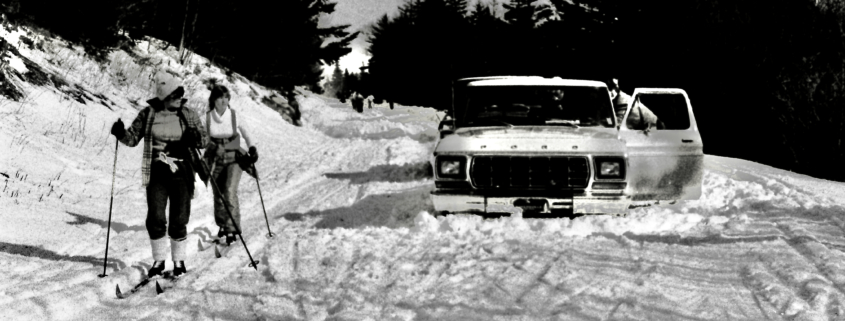
Luckily, as an official state park concession, the Guides’ savvy principals partnered with the US Forest Service to manage winter recreation. The agency defused a dangerous situation by gating the road to keep vehicles out and prioritize foot traffic. With mortised vehicles banned, the snowy road across Roan’s crest, and miles of adjacent trails, again offered “Nordic Nirvana’ to skiers.
The Guides were permitted to use a few USFS maintenance and visitor contact structures for safety purposes like distributing summit ski maps, caching rescue gear, offering advice, and even emergency shelter when needed.
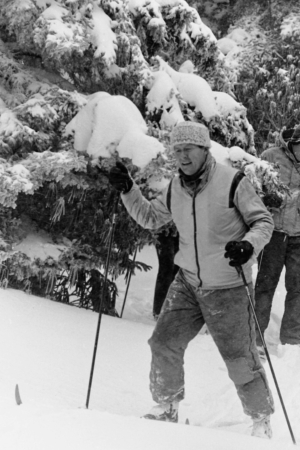
People stepped up to help. Herb Roberts, the regional supervisor of Tennessee State Parks, and superintendent of a nearby Revolutionary War park, often volunteered to lead ski tours on Roan in free time from his own park.
Roberts’ nearby park, Sycamore Shoals, not far away in Elizabethton, Tennessee, preserves the mustering ground of the “Overmountain Men,” a patriot militia that in 1780 marched across the Roan Highlands in “shoe mouth deep” September snow to win a pivotal victory against Tories at Kings Mountain, SC. The group’s lofty encampment near Roan, at nearly 5,000 feet, a site now popular with skiers, is likely the highest elevation military movement of the Revolution.
Touring the Governor
Publicity about Roan Mountain’s ski scene surged when Steve Owen got a call asking the Guides to lead Governor Lamar Alexander, his wife Honey, and a few officials, over the summits of Roan Mountain … and teach them to ski on the way. Owen knew he was in for a challenge.
Alexander credits local judge Ed Williams with the invitation. “Ed loved to ski and thought that if Honey and I came to ski, and the state park encouraged cross-country skiing, that would spark tourism.”
“I’ll never forget that epic blizzard,” says Owen. The state trooper driving the four-wheel drive SUV “did an amazing job driving through the waves of drifting snow.”
Despite the wild ride in bad weather, Alexander never thought the group was in danger, but as a politician, he may have had second thoughts. A few years earlier President Carter made news breaking his collarbone cross-country skiing on Camp David’s tame terrain, much less tackling the Appalachian Trail in a blizzard.
Change of Plans
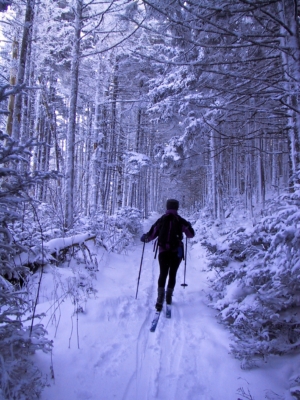
Owen had “to choose Plan B for the tour,” he says. Instead of skiing a gradual gated road to higher trails, the Guides’ were forced into the sheltered north facing spruce forest to ski up the expert-rated, deeply-drifted, and still very popular Appalachian Trail. The wide, wonderfully skiable, albeit uphill trail, is actually an historic road grade that once ferried guests to a late 1800s summit hotel. Skied in the other directions, heading downhill, it’s one of the South’s classic telemark runs. Part way up, Owen’s group sheltered briefly in the now nearly century-old CCC-built cabin, the Roan High Knob AT shelter.
Recalling the tour, Alexander says he kept telling telling his wife Honey, “This is hard to believe!” It was the couple’s first time on Nordic skis, and “there was five feet of snow up there,” Alexander says. “I didn’t know we could even ski in snow that deep.”
At one point, lead guide Owen was breaking trail and Alexander said, “Hey that looks like fun, you mind if I try?” Owen let him, admitting, “I thought that was pretty cool.”
Lamar and Honey had tried downhill skiing years earlier and found that “hard for a beginner.” But “skiing cross country was easier,” Alexander said, “as long as you had a teacher and guide and were in decent shape.”
The Alexander’s were in shape, and to this day, High South Nordic Guides can take pride in bringing high profile beginners safely through a real challenge. “Talk about demonstrating the value of professional instruction,” Owen says, “which was, after all, the main mission of our entire enterprise.”
The Alexanders found the experience “beautiful and exciting.” Owen recalls, “They all just seemed to be up for an adventure, and boy, we had one.”
More Publicity
Literally as Alexander was “skiing the Roan” on Friday January 23, 1983, Tennessee Senator Howard Baker, Republican leader of the Senate and Nixon-era Watergate figure, was announcing he’d leave office the following year.
The media was swarming with speculation that Alexander would run for the seat. Owen knew local reporters “were determined to find out if the governor was at Roan. Our job was to keep it top-secret!”
Alexander’s ski trip leaked. A reporter showed up and found him “ruddy-faced and relaxed” after his ski tour. The next day, the story went national. Some papers ran the news with a photo of the governor and first lady “braving a raging blizzard and howling winds” skiing the Appalachian Trail. It was a media moment made in PR heaven for the governor, and Tennessee State Parks, the South’s increasingly famous Nordic ski site.
Alexander won an unprecedented second term as Tennessee’s governor and later served as senator from 2003 to 2021.
Skiing Winds Down
By the early 1990s, Alexander had moved on and the Guides were ready to do the same. “Our run was coming to an end with the state park,” says Owen. “Our personal energies were flagging after a great decade.”
Before giving up the concession, the Guides considered installing snowmaking at the state park, now a feature of teaching terrain at some Nordic resorts. The proposal got bogged down, so “the effort just sort of evaporated, went quietly, and we did too,” says Owen.
Roan Mountain remains a nationally significant destination for the South’s cross country crowd. The role Tennessee’s “Nordic Governor” and local enthusiasts played in that process is another example that it’s skiing’s true believers who help spread snow sports, in the South or anywhere else.
https://seniorsskiing.com/wp-content/uploads/2026/03/RoanRdProb3-scaled.jpeg17072560Randy Johnson/wp-content/uploads/2014/04/Seniors-Skiing-since2013-Logo@2x-300x68.pngRandy Johnson2026-03-05 20:02:012026-03-05 20:02:01The Tennessee Governor Who helped Popularize one of the South’s Best Nordic Ski Spots
There’s always something happening in snow country. This is the March edition of timely tidbits to know, to help you plan the rest of this season and important news for next season, too.
Epic Pass 2026/27 Offers New Discounts
In a major step to get more young people on the slopes and shape the future of skiing and snowboarding, Vail Resorts is reducing the cost of passes for skiers and riders ages 13 to 30. They can now purchase next season’s 2026/27 Epic Pass and Epic Local Pass now for 20% less than regular pricing, for up to $220 in savings. Next season’s Epic Pass is on sale now at $869 and Epic Local Pass at $649.
All Passes for next season are on sale now at the lowest price of the year – and will increase around Memorial Day and again around Labor Day.
Ikon Pass 2026/27 Offers New Perks
It goes on sale March 12, with new expanded access to Colorado resorts; the addition of Tamarack in Idaho, Lutsen Mountain in Minnesota, Snowriver Mountain Resort in Michigan and Granite Peak in Wisconsin, all with no blackout dates. Ikon also is cutting down on plastic pollution by us re-use this year’s pass for another season. There also are new discounts for passes for children and those aged 23-28.
New passholders also get immediate and unlimited spring skiing at around one dozen mountains in the Rockies and Sierras. Prices are $1,349 for the full Ikon Pass and $924 for the Ikon Base Pass; additional prices are on the Ikon Pass website.
Another Family-Owned Resort is Sold
Pomerelle, an old-fashioned, low-key, family-owned resort in Southern Idaho, has been sold by the Anderson family, which has operated it for decades. But fear not – it’s unlikely to change much, if at all, since the new owners are mountain manager Zach Alexander and his wife, Crystal. He is the grandson of longtime and recently retired director of snowsports instruction Barry Whiting, so it’s pretty much like keeping it in the family.
I’ve skied here. It’s a great mountain with long groomers along with some challenging steeps and trees. And lift ticket price are around half the price of nearby Sun Valley.
Spring Skiing in the Poconos
Thanks to the recent massive snowstorm in the Northeast along with enhanced snowmaking techniques,Camelback Resort is extending winter well into spring, with daily skiing and riding through Sunday, April 12, followed by weekend operations through the first weekend of May – conditions and weather permitting. That mean the resort’s longest ski season ever, surpassing the
previous record of April 9, 2009, and marks a significant moment for Pennsylvania winter sports. With a deep late-season snowpack and sustained cold-weather, Camelback is boasting spring skiing conditions typically reserved for northern New England – and just 90 minutes from Times Square.
Remember Your SPF
The return of Daylight Saving Time on the second Sunday of March, when our clocks and watches “spring forward”, means days are longer – and brighter. No more skiing or riding in flat light at 2pm and wishing you were wearing your low-light goggles. Brighter sunlight until the lifts close also means applying sunscreen more often. Don’t forget the tip of your nose!
LIVE! FROM LAKE PLACID NEW YORK! The 2042 WINTER OLYMPIC GAMES!
Likely to happen? Probably not!
Impossible? Not necessarily!
In the world of Winter sports, no event is as large or magnificent as the Winter Olympics. First held in 1924, the recent Games featured more than 2,800 athletes from 90 countries competing in 116 medal events, over a two week period in one country.
In four years, the host will be the French Alps – a region, not a city, a town, or a village. In 2034, the games will be back in the US, based in Salt Lake City where they were held in 2002. They were last in North America in 2010 where they were based in Vancouver, Canada. Since then they were held in Russia, Korea, China, and most recently, Milan/Cortina Italy. .
So where does Lake Placid stand in the array of possible future host sites?
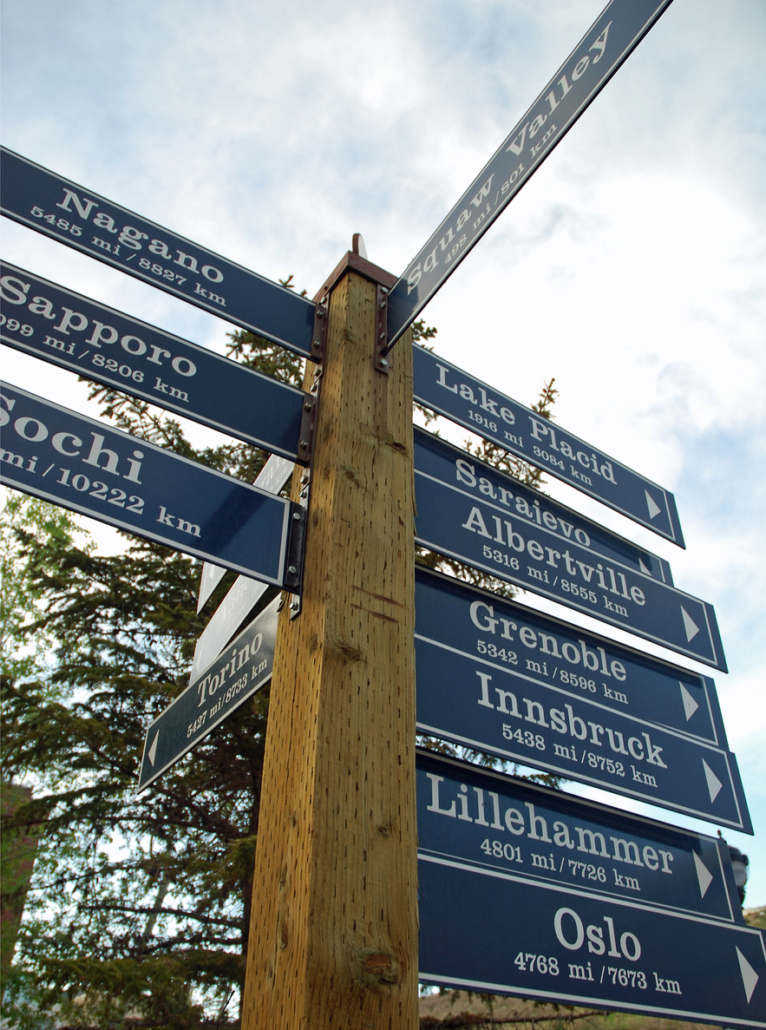
Well for starters, there are plenty of people who would like to see it happen. It is not just nostalgia in the small village of 2,800 in Northern New York that is one of only four places ( St. Moritz Switzerland, Innsbruck Austria and most recently Cortina are the other three) that have hosted twice before – in 1932 and 1980. Today, Lake Placid, with major on-going support from New York State, continues to regularly host major winter sports competitions at first rate facilities including rare international venues for bobsled, luge, skeleton, ski jumping, speed skating and biathlon. Maintaining those current facilities is a far easier reach than building them from scratch and recent history suggests that the state is willing to allocate funds tor that purpose.
And there is an organization in place; the Lake Placid Olympic Regional Development Authority that since 1982 has been charged by New York State to organize and coordinate international sports events. Like in Salt Lake, having an experienced organization in place is a major leg up in planning and carrying out the games.
But comparing Lake Placid to Salt Lake City is a long stretch. In addition to a much larger population base and big city accommodations and existing infrastructure like its modern, large international airport, Salt Lake is capable of handling major global events right now.
Lake Placid? Not so much. The nearest significant airport is more than an hour away, and being a small village is a charm residents want to retain. Right now, highway access is mainly on winding two lane NY Route 73 that runs 32 miles through the Adirondack Mountains from the nearest interstate.
So what is all the talk about hosting another winter Games?
At one point, there was talk of a cross border Olympics with New York and the Candian Province of Quebec sharing host honors. But Montreal, two hours away, has lingering fallout from hosting the 1976 summer games and with the difficulties of cross border sponsorship, that idea never gained much traction.
But in the US? Entirely within New York State?
For more than 10 years, it has been a topic of discussion. In most cases “Lake Placid” serves as a euphemism for what has been called the I-87 games, a Winter Olympics that would stretch from New York City to the Adirondack Mountains, a distance of about, 260 miles, connected mostly by interstate highways.
The idea has merit. First of all facilities for the games already exist. The various figure skating competitions would be a natural in New York City. There are several options for skiing’s technical races , curling, and snowboarding competitions in both the Catskills and Southern Adirondacks between New York City and Lake Placid, and tested venues for Winter Olympic sports already exist in the region. The hockey competition could be hosted in several locations but the finals would be in Lake Placid, of course.
This would not be the retro small village Games that many associate fondly with past Olympics. In 1980, the greatest distance between sports venues in Lake Placid was 14 miles. But this kind of cozy arrangements hasn’t been the case at Winter Games for many years now. Most recently, Milan/ Cortina competition sites were more than 300 miles apart. In the two games before that in Korea and in China, main venues were some 150 miles apart. In the French Alps in 2030, home base in Nice on the Mediterranean and other proposed competition venues in the mountains are as much as 200 miles away.
While the ideal has always been for many nations to have the opportunity to host the Winter Games, the cost associated with the Olympics today is such that many potential candidates take a look and bow out. Lake Placid wants in and, certainly as the most recent Winter Games demonstrates, it is already a part of the conversation.
With the 2034 already set for Salt Lake City, it is unlikely that the International Olympic Committee would award back to back Games to the same country. If that remains true, the next possible opportunity to host in the USA would be 2042.
And why not?
Do you believe in miracles?
https://seniorsskiing.com/wp-content/uploads/2026/03/lakeplacid.jpg1187883Phil Johnson/wp-content/uploads/2014/04/Seniors-Skiing-since2013-Logo@2x-300x68.pngPhil Johnson2026-03-05 19:59:272026-03-05 19:59:27Another Miracle: How Lake Placid Could Again Host The Winter Olympics
Indy Pass continues to grow, which is a good thing, because it offers bargain rates and other perks to smaller, independent areas at less than half of other multi-destination season passes. It’s also different than Ikon, Epic and Mountain Collective because sales are capped, meaning that if you snooze, you lose the chance to get one.
For next season, Indy Pass has added more than a dozen downhill and XC resorts in the United States, Europe and Scandanavia, for an annual pass fee of $369 for new adult passholders; $20 less for renewals. An annual pass for just XC is just $99.
For that price you get two days at each area – there are 300+ areas on the Indy Pass.
Additional days are discounted, and there are no blackout dates.
New Resorts for the 2026/27 Season
Including Les 7 Laux, France; Bergbahnen Hohsaas AG, Switzerland; Valmorel, France; Stöten i Sälen, Sweden; Levi, Finland; Murray Ski Ridge, BC; Pebble Creek Ski Area, ID; Thrill Hills, ND; Stranda Ski Resort, Norway; Bethel Village Trails XC, NH; Franconia Inn & Outdoor Center XC, NH; Great Glen Trails Outdoor Center XC, NH; Northern Maine Community Trails XC, ME; Steamboat Ski Touring Center XC CO; Haymaker Nordic Center XC, CO; and The Loppet XC, MN.
Year-Round Skiing
Indy’s expansion into South America, Scandinavia, and Europe allows year-round ski opportunities for passholders, when conditions permit.
The current 2025/26 Indy Pass provides ski access through the summer season until August at Corralco, Chile, while the 2026/27 Indy Pass begins in September with skiing in Austria at Pitztaler Gletscherbahn and Kaunertaler Gletscher.
Indy Pass promises to add additional resorts over the off-season and expects major additions before the 2026/27 season.
https://seniorsskiing.com/wp-content/uploads/2020/01/Screen-Shot-2020-01-01-at-11.44.24-AM.png332618Evelyn Kanter/wp-content/uploads/2014/04/Seniors-Skiing-since2013-Logo@2x-300x68.pngEvelyn Kanter2026-03-05 19:58:132026-03-05 19:58:13Indy Pass Adds 16 Resorts for Next Season



 This now relates to the patch. I have spoken with the organization’s staff and discussed having a Snow Angels patch which I could wear. Snow Angels will be making a patch to wear, and I think everyone should wear on their shoulder.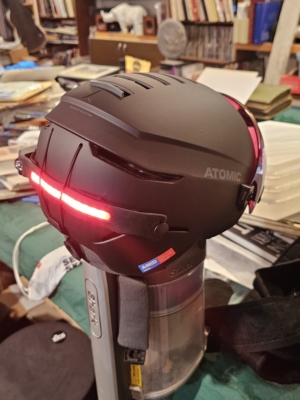






 The Guides Get Help