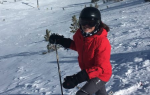
My Biggest Fear on the Slopes

On trail signage at Park City Mountain Resort Photo: Jon Weisberg

Several years ago, SeniorsSkiing surveyed its readers about their biggest fear on the slopes. The overwhelming answer was being hit by an out-of-control skier. It is my greatest fear as well.

Whether he/she may be drunk, stoned or skiing too fast for the conditions, or on a run well above his/her ability, or whatever the cause doesn’t matter. It is reckless and doing puts everyone on the trail in danger.

Think about it. A 150 lbs. person traveling at 20 miles an hour packs a wallop. The force of impact is equal to the object’s kinetic energy divided by the distance. Kinetic energy is the object’s mass (150 lb. person) times the speed (20 mph) squared divided by two, or in this case 30,000 Joules or roughly 22,133 lbs. of force. 

The unknown is how far the person has traveled at this speed because he/she is traveling downhill and possibly accelerating. Even if the out-of-control person has only traveled a few feet, getting hit by another person with 22,133 lbs. of oomph may cause serious injuries.

Unfortunately, ski areas do not adequately police their slopes for out-of-control skiers. Their view is that when you step into your bindings, you assume the risk of injury to yourself and to others. 

Most of what ski areas do to counter reckless skiers do is reactionary and defensive in the form of snow fences and warning signs. Stationing employees around the mountain who have the authority to take a lift ticket or season pass is something ski areas are loathe to do. 

To further protect is ski areas against lawsuits, Colorado passed a law several years ago that made it much harder to sue a ski area if you are injured. And, if you are injured by someone who slams into you, you must sue the individual who hurt you. The ski area defense is “We weren’t involved.”

So, what does a senior skier do? Here’s my list of eight:

1. Ski with your head on a swivel.

2. When you stop, either stop on the side or by a ski slow or trails merge sign.

3.  Wait until groups pass and there’s a gap.

4. Ski midweek and avoid weekends and holiday.

5. Don’t ski at the most popular areas. There are many ski areas where a long lift line are the two people who just arrived at the bottom of the lift a few seconds before you did.

6. Pick trails that aren’t crowded.

7. Ski along the edges. All those who ski in New England a lot will tell you that’s where the best snow is!

8. Get to know the mountain before you put on your skis, i.e., study the trail map to know where you want to ski BEFORE you step into your bindings.
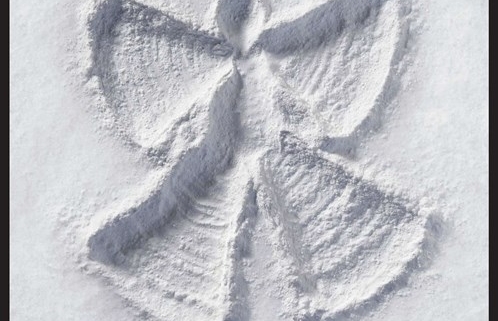

Preventing On-Mountain Collisions: The Snow Angel Safety Message

“We want to have a positive impact on this industry after a tragic event in our lives,” says Chauncey Johnson, who founded the Snow Angel Foundation with wife Kelli, to educate skiers and snowboarders to be safe on the slopes, by being more aware of those around them – and slowing down.

In 2010, their daughter Elise was killed by a snowboarder zooming down the trail at a high speed.  “She was five, he was doing 50,” he told a group at the recent Snowbound Expo in Boston. Kelli also was seriously hurt, with a traumatic brain injury that required her to learn to walk, speak and ski again. 

The snowboarder was 23-years-old, older than the stereotype of the out-of-control, don’t-care-about-anybody-else teenaged boarder.  He also was killed, in what was one of the worst on-mountain accidents in history that wasn’t an avalanche – although this created an avalanche of sorrow, and then action, for the Johnsons.

There wasn’t a dry eye in the house as he told the story. I stopped breathing as he told it. I was remembering about putting my own kids on skis at that age, and protecting them from the speedsters, even on the green runs we were skiing, including yelling at the speeders to slow down.  Haven’t we all done that!

The accident was on a small, local mountain in Wyoming, close to where they live, but it could have been anywhere.  Clearly, they want to prevent collisions from happening again anywhere.  Honoring the memory of Elise means working full-time to educate young skiers, even Ski Patrollers, about preventing accidents. 

 That’s the reason behind the Snow Angel Foundation – which uses a snow angel for its logo.

www.snowangelfoundation.org

 The Johnsons work with resorts, schools in resort areas and online to promote what he describes as a triangle of safety –

  • Speed – keep it relative to others on the same trail
  • Space – keep a safe distance from others
  • Self – be aware of your limits, including tiredness

The Johnson’s first effort was “Ride Another Day”, a simple theme we can all relate to.  They work with the NSAA, the National Ski Areas Association, to promote the safety message, which continues to be incorporated into their current work under Snow Angel Foundation.

They are now partnering with Killington, which is adding Snow Angel safety signage at lift access, on chair towers even in the lodge.  

They also work with patrollers at various resorts. Ski Patrol used to clip a lift ticket when somebody went down a roped-off closed run, or went 50mph in a 10-30 zone.  Now, they can disengage the electronic ticket.   Johnson wants patrollers to have a positive – not confrontational talk – before it’s reactivated.  Or not, if the misbehaving speeder doesn’t get the message.

He encourages all of us to take an active role in on-mountain safety, by talking to too-fast skiers and boarders.  Johnson suggests starting the conversation by saying something like, “My friends Chauncy and Kelli,” and then tell the story and its lesson.

Simply, we all have a role in on-mountain safety.  Chauncey and Kelli Johnson are leading the way, along with Killington, and we at SeniorsSkiing hope more resorts sign up with the program.

 See you on the slopes!

IS RESORT SKIING GETTING MORE DANGEROUS?

Your Support Helps!

Help us keep SeniorsSkiing.com free. Please support SeniorsSkiing.com with a donation.

DONATE

Editor’s Note: TheSkiDiva.com is an online community of women skiers without the male orientation. The forum’s founder, Wendy Clinch, recently posted this report, comprised, in part, of comments by forum participants.

Source: #RideAnotherDay

In the past few weeks, there have been at least 10 deaths at North American ski resorts. While one death is way too many, The National Ski Areas Association says ski fatalities are pretty rare: as low as one for every one million visitors to a ski resort. (It’s also noted that more men are victims of skiing accident deaths than women).

Despite this, many participants on TheSkiDiva forum believe that resort skiing has become increasingly dangerous.

This season, stories of near misses, collisions, and risky behavior are all too common. And while I don’t have the data, it seems like the situation is getting increasingly worse.

What’s the cause? Some say the slopes are more crowded because of multi-resort passes and the ability of high-speed chairs to get more people on the hill. Some believe the problem is caused by ski movies and social media glorifying risky, extreme behavior, treating it as though it’s part of the norm. Others believe skiers and riders are distracted by music, texting, and selfies. And some feel that equipment has evolved to the point where people are skiing beyond their abilities.

HERE ARE A FEW EDITED COMMENTS POSTED BY FORUM MEMBERS: 

  • I’ve been quitting earlier these days because I’m concerned that someone will hit me. It’s not fun when the slopes are crowded with hotshots or folks who are skiing beyond their abilities. We avoid weekends when we can.
  • As someone who only skis weekends, it seems the mountains are more crowded, and people aren’t being mindful of those around them. I’ve noticed many near collisions and had a few incidents where someone got way too close while trying to pass me. In two cases they whizzed right over the tips of my skis causing me to lose my balance.
  • Cheap season passes have resulted in dangerous slopes on busy days, primarily Saturdays. Way too many people I know have been hit by others. The way the terrain parks are laid out where I ski adds greatly to the kamikaze attitude, ineptitude, and general disregard for anyone else on the mountain. I am sad to say that all I hear are excuses. I’m pretty over it. The perspective definitely changes when you have a child out there.
  • I quit skiing at our local bump because of crowds and out of control skiers. It’s been a zoo. I was working with a friend on the long beginner run when an out of control kid scared the sh*t out of her, causing her to fall and break her wrist. I was done after that; it could have been me.
  • I was hit hard enough to be knocked out of my bindings. Ski patrol did notpull the person’s pass even though he had been straight lining down the mountain while I stood stopped in plain view with other skiers at the bottom

There’s no question that ski safety is an important issue that needs to be addressed. Here are a feww suggestions from forum members about what can be done: 

  • Limit ticket sales:Crowded slopes are more dangerous slopes. Require skiers to go online and reserve their spots at least 24 hours in advance. This might help reduce overcrowding.
  • Require everyone who buys a pass to go through interactive safety presentation. Make it mandatory for those under 18; give everyone else an incentive (e.g. $10. off or special lift access for completing training.
  • Hold people accountable. Don’t tolerate unsafe behavior.This requires policing from resort personnel. Mammoth patrollers take photos of violators’ passes. Guests with a second speeding offense are required to screen the “Ride Another Day” video and take a quiz before their pass is reactivated.
  • Better regulate/police alcohol and marijuana use.Many on the forum believe that the mix of skiing or riding with alcohol and/or weed, particularly among minors, results in alarming behavior. No one should be allowed to ski or ride under the influence.
  • See something, say something.Let resort personnel know when you see unsafe behavior, and make it clear that this is something you will not tolerate. The more we make our feelings known about this, the better.

WHAT CAN YOU DO TO IMPROVE YOUR OWN SAFETY?

  • Wear a helmet. This can reduce can reduce the risk of sustaining a head injury by as much as 29 to 56%.
  • Make sure your bindings have the proper DIN setting for your size and ability.
  • Always look uphill before taking off, and always be aware of your surroundings.
  • Give the downhill skier the right of way.
  • Always ski in control.
  • Don’t ski alone in the trees or backcountry.
  • Avoid tree wells.

Stay safe out there, everyone.