Tag Archive for: Casey Earle

Report From Chile: The COVID Season

What We Can Learn From The Ski Season In Chile During The Pandemic

Only four ski areas opened in Chile this year, due to the pandemic, all in the last third of the normal season (late August). The country was in the midst of a severe drought when the entire metropolitan region of Santiago shut down in May. An “atmospheric river” arrived late June, and over a period of 10 days it snowed more than it had in a decade. All one could do was look longingly at the webcams and pray the snow would last until restrictions were lifted. In June, the ski area association presented a protocol for opening to the government. At the same time, Chile had one of the worlds highest infection and death rates from the virus, so nobody really believed there would even be a ski season.

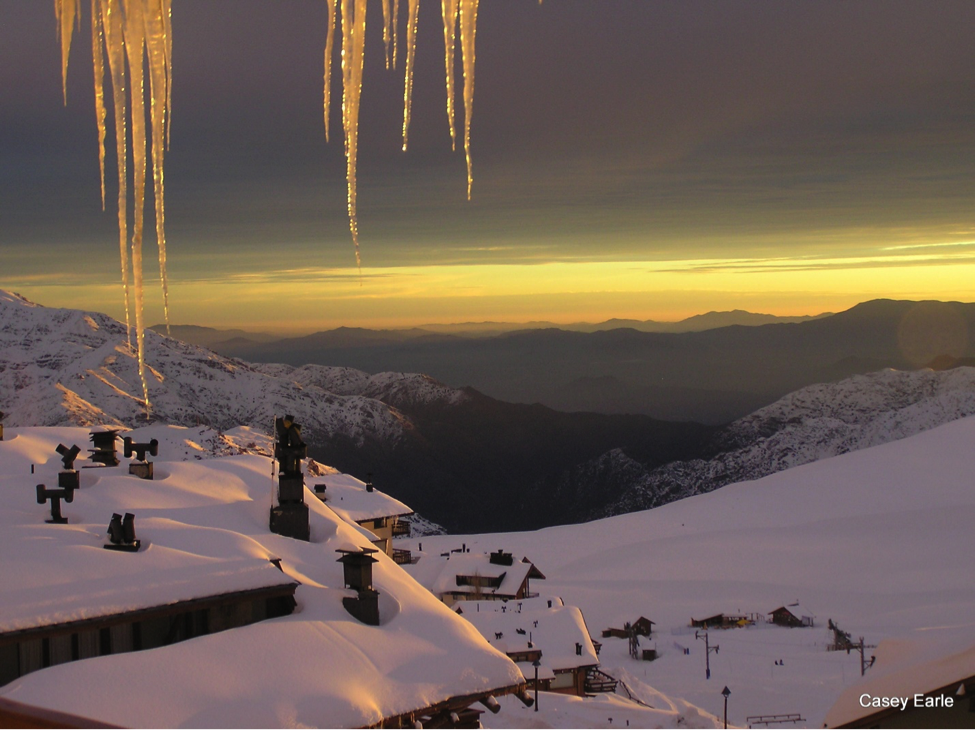
La Parva on July 5.  Looking via webcam, not skiing. Credit: Casey Earle
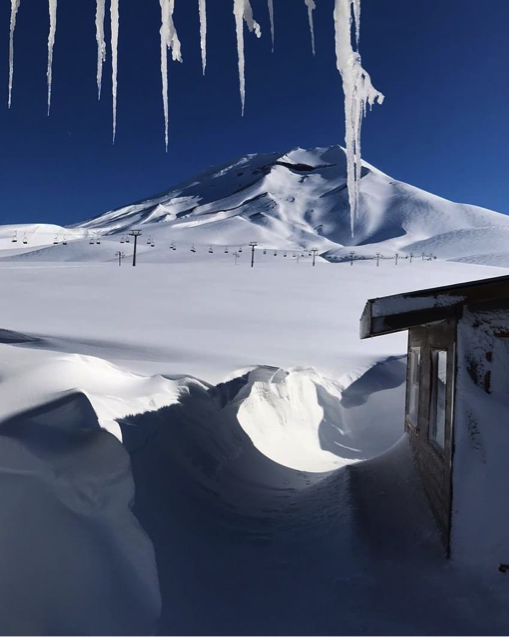
Corralco mid-July. Snow but not open to skiing. Credit: Casey Earle

The quarantine lasted to late July in some of the districts of Santiago and the first ski areas were opened on August 18, specifically El Colorado and La Parva. At the end of August Corralco and Las Araucarias, in southern Chile, opened. Rules were strict and at times confusing. Masks, properly worn, were required, as were gloves, online sales only, two skiers per quad, and no restaurants. The number of tickets sold was limited to the equivalent of an uncrowded day. At times a lift attendant would berate skiers for not spacing enough in the few line-ups that occurred and take your temperature on your wrist.

The police were controlling access to the mountain road and were strict about not letting anyone by that was not from a district that had advanced to the correct stage. This produced line-ups and long waits, which I avoided by going up at 6:30am. Use of second residences was not allowed, weekends were quarantined (closed ski areas), and a curfew was (and still is) in effect.
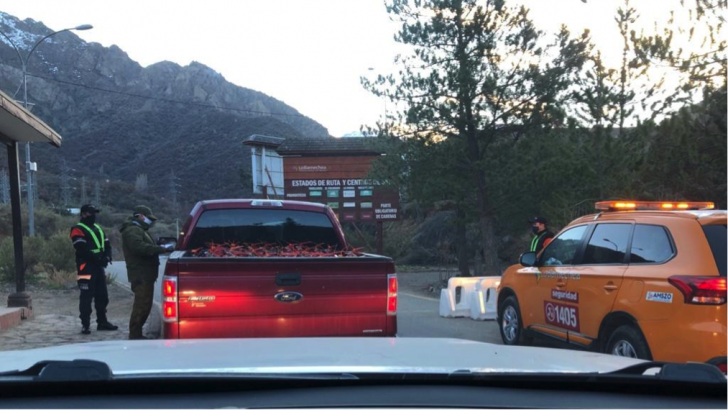
In order to ski, one had to fill out a fill out a health declaration online, and sometimes show it at the bottom.

With only 20cm having fallen since early July, the conditions for the August 18 opening was a bit disappointing. But a final 20 cm fell on August 26, and what a day it was.
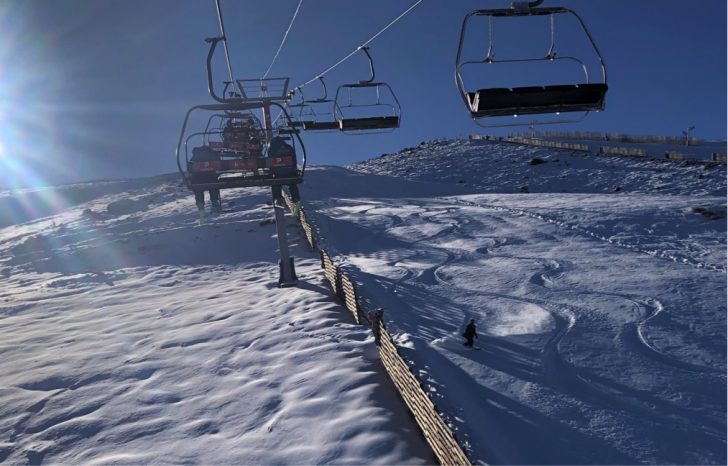
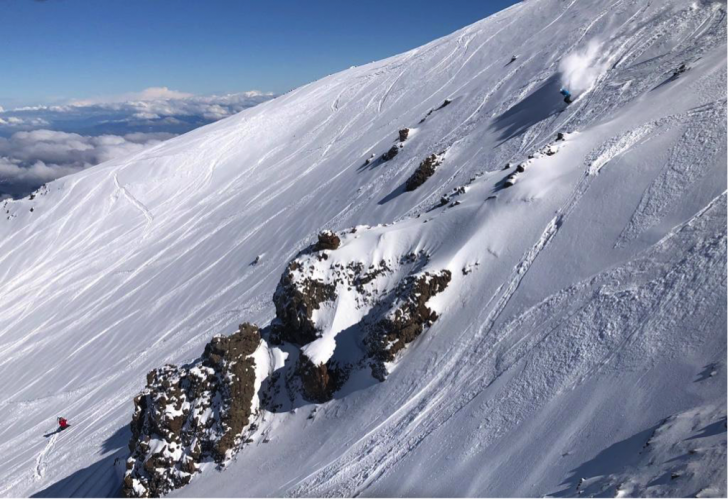
Fortunately, the run maintenance was superb, and we skied the groomers through to mid September, when the lack of new snow was taking its toll and the heat was turned up. La Parva closed on September 25.
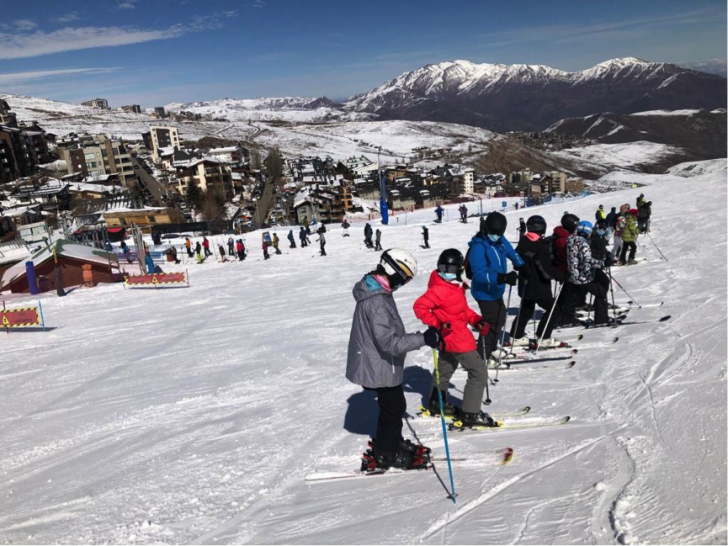
Lift line trying not to block the run.Credit: Casey Earle

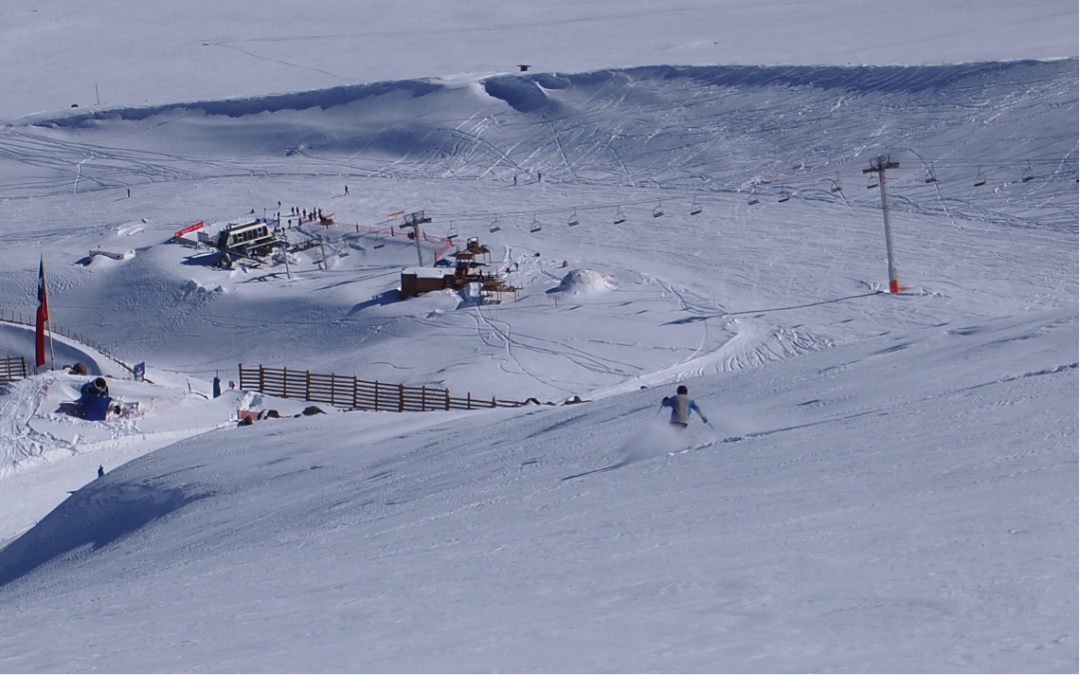
Most days there were so few people that one could ride and empty lift and ski an empty run.
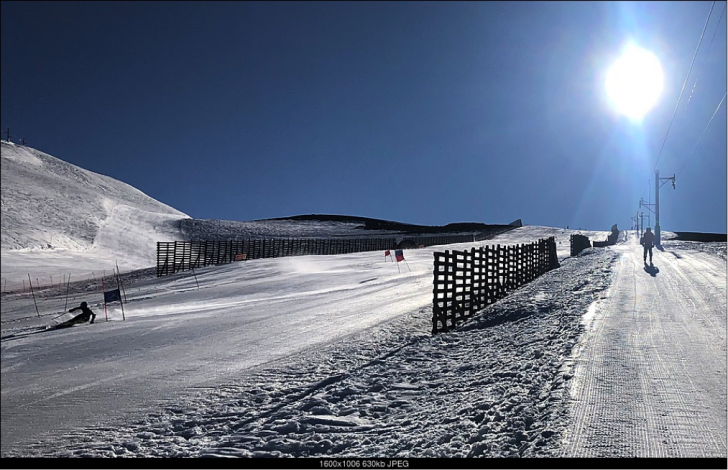
Few people. Credit: Casey Earle

In early October we set out to Villarrica to ski the volcanos of the south, but promptly went into quarantine and had to sit out the remainder of the season. Corralco was open until October 18.

That we could ski at all was a miracle. I must say, however, that skiing, properly regulated, is probably one of the most socially distanced sports around, but much depends on the individuals respect for the rules.
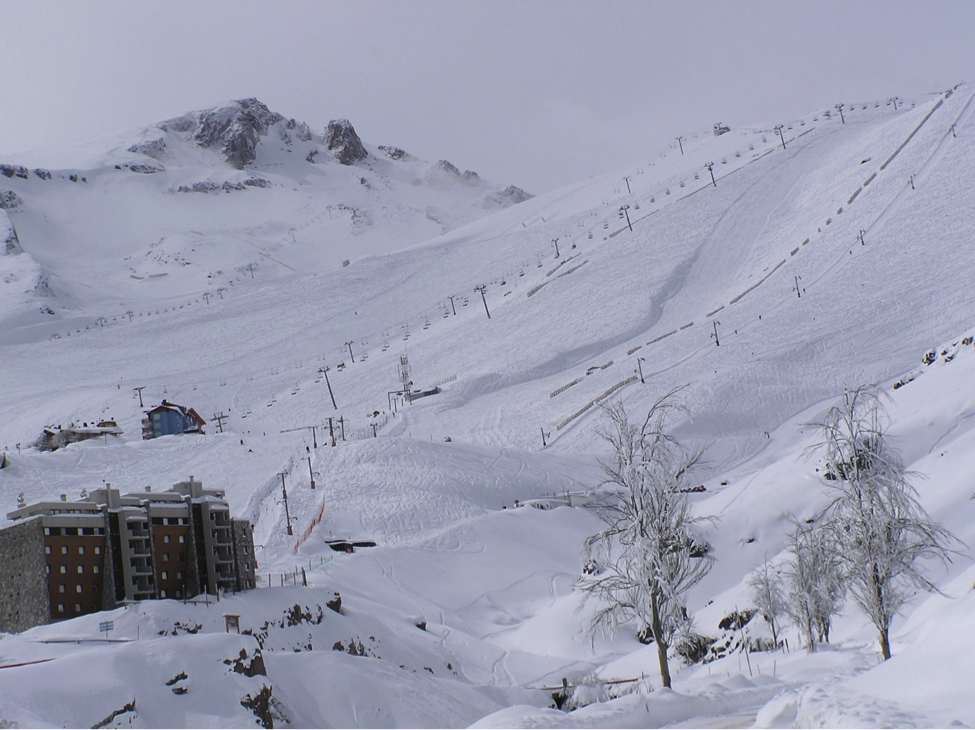
SeniorsSkiing Guide: La Parva, Chile

La Parva Is A GS Cruiser’s Heaven.

As a first installment on the Three Valleys of ski fame in Chile, I’ll write about La Parva. One hour and a half from the Santiago airport, La Parva is perched up at 8,700 ft on the front side of the Andes, and overlooks the city. The road up involves 40 switchbacks and a vertical rise of 7,000ft.  I do not recommend tackling it during a storm!

The furthest north of the three ski areas, the village rests at the base of the La Parva peak (13,000ft), which itself is a sub-peak of the El Plomo Massif (18,000ft). Stretching for a width of three miles across several watershed— all connected with skiable cat tracks— the area faces mostly west, with the north sides of the valleys collecting the most snow. While this western orientation exposes it to the sun and north wind, often leaving bare ridge lines, it also means snow accumulates in those multiple bowls where the snow is blown, and the sun hardly shines.

On a good year such as this, even the north faces are skiable.

As a bonus, the sunsets over Santiago are wildly beautiful.

To get you up the hill, there are four chairlifts, each serving different terrain, and seven good surface lifts (platters, thank god). In windy weather, the platters are safest, as you can bail out wherever you want. But, with 80% of the days being sunny, and often with no wind, the weather is generally not an issue. Grooming is excellent with no mogul bashing required, ever, but add in 70% of the runs being intermediate level, and this is a GS cruisers heaven. The entire vertical rise of 3,000 ft can be skied in one go, so get the long boards out boys!

The village itself is like a classy suburb of Santiago with no hotels, but several restaurants. Most of the 2,000 or so beds are ski in-out apartments, and the family-oriented atmosphere is manifest in the hoards of little racers out at 9 am sharp every weekend. Racing is the name of the game in La Parva, and while often fun to watch, it does take up some of the best runs, especially when the international teams arrive in August. Fortunately, there is a lot of room in the ski area, especially when the off-piste is in good shape.

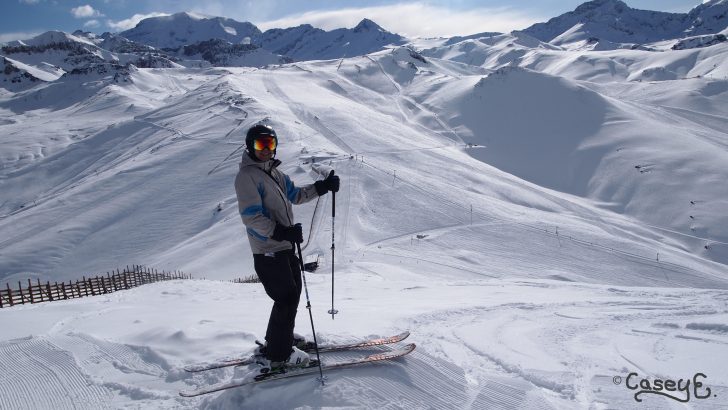
Casey finds a lonely route down to the Las Aguilas chair, and the small restaurant at its base.

For lodging, there many private apartments, and a few houses on Airbnb or Booking.com. The village has three restaurants, a bar/disco, and a small grocery store. On the hill, aside from the three restaurants mentioned (all accessible on skis) there are two mid-station restaurants, and a small, occasional, open-air one at 11,400 ft. Careful with the pisco sours, it is a long way down…

For La Parva Trail Map, click here

For La Parva Webcams, click here

Check out the La Parva website here.

This Week In SeniorsSkiing.com (Nov. 23)

Free (Or Almost Free) Skiing Directory, Skis For Seniors Recommendations, Chile Wrap, Trail Name Series, Ski History Gala, Skiing In Skirts.

Here’s one Tom who made it past Thursday, glad to be trotting on the snow. Credit: SnoCountry

Happy Thanksgiving On The Snow!  For the first time in recent memory, there are plenty of lifts spinning in New England areas and in Colorado and other places in the West. The recent East Coast Nor’easter brought a snow covering and this week’s persistent precipitation has raised the snow level up to the top of boots in many areas.  Fingers crossed this is a harbinger of a long, cold season.  By the way, that is counter to the official El Nino-fused forecast for warm and wet here in the North East.

Last week, we published an update to our listing of resorts where the US and Canada where seniors can ski for free or almost free. We believe this is the only listing of its kind in the ski world.  You can access this list by clicking on the third menu box from the left under the blue ribbon at the top of the page.

We also published our list of ski recommendations for seniors which we compiled with the help Realskier.com, a long-time and respected reviewer of and commentator on skis and ski design. You can find this listing on the second menu from the left, next to the free (or almost ski list) list.

You may be asked to re-enter your name and email address to access these resources. There is no charge for any of these assets. We’re presenting them to the SeniorsSkiing.com community of readers to give you more specifically tailored resources for senior.

This Week

Casey Earle reports on the ski season in Chile, sharing some good news-bad news. Despite a shortage of snow, there were some great days and he took advantage of them.  If you haven’t even seen pictures of South American skiing, his article is a good introduction.  We’ve also included a link to more comments on Casey’s Ski Chile page on Teton Gravity Research.

We continue Don Burch’s trail name series with a swing through Michigan’s many resorts. Also Harriet Wallis reports on the University of Utah’s Ski Archives Gala where awards were handed out to Olympic visionary Harold Peterson and the US Forest Service and the Utah Avalanche Center, a team which has played a major role in controlling errant snow flows in the state.

Finally, our Mystery Glimpse looks at a pair of young ladies skiing in skirts more than a hundred years ago. We report on what the significance of that big brass bell was from last week’s puzzle.

Thanks for reading SeniorsSkiing.com.  Tell your friends, and remember, there are more of us everyday and we aren’t going away.

Chile skiing. Credit: Casey Earle


Chile 2018 Ski Season Wrap Up

Finding Good Days In A Disappointing Snow Season In The Southern Hemisphere.

The 2018 season started on time in June, after a serious drought, but sputtered out before it ever really got going. The Chilean Central Zone ended with a 54 percent precipitation deficit, despite ENSO-neutral conditions. For a ski area in Chile not to get to the Sept 18 National holidays is shameful. Which is not to say there were no good days, just that they were few and far between.

Being relatively free to select those good days, I can share a couple of snaps that are deceivingly good.

The Las Vegas lift out of the La Parva village on a cold day in July. Helps to know where the rocks aren’t.

La Parva. Credit: Casey Earle

The conditions were not sufficiently good to ski other Central Zone ski areas, where I am not so intimately familiar with their thin base rock gardens.  So in September we headed 560 miles to the south where Mother Nature was more accommodating.

The Hotel Puyehue. Credit: Casey Earle

Our first lodging was the venerable and grandiose “Termas Puyehue Wellness & SPA Resort”, formerly the Gran Hotel Puyehue, founded in 1907. Back then, guests arrived by steam boat across the Lago Puyehue to enjoy its charming hot springs. The hotel is very well located at the entrance to the Parque Nacional Puyehue, established in 1941, and the lovely Antillanca ski area, tucked up in a volcanic cirque 18 km away. This is reached at the end of a good dirt road that winds through temperate rainforest and lagoons. The snowpack was 6-10 feet, from the mid station up, as it had rained hard at the base.

Here it can rain six feet a year, so when that falls as snow, it adds up, and 10-15 ft bases are not uncommon.

I seized an unusually brilliant sunny day and headed up. Nary a rock to be seen, and superb spring snow.

Heading down back off the crater towards the ski area, with the Puyehue Lake in the distance.

La Parva. Credit: Casey Earle

After the traditional September 18 mega-BBQ at a friend’s place in Puerto Varas, on the Llanquihue Lake, we drove back north 200 miles to Corralco ski area, on the Lonquimay Volcano.

This time we chose a cozy cabin in Malalcahuello, a nearby up-and-coming mountain town nestled in a group of volcanos. Monkey puzzle trees greet you as you wind up through the forest to the barren eastern bowl of the volcano.

Again, no rocks here, even at the end of September.

Credit: Casey Earle

While the American ski team trained on the far right side of the ski area, those venturing into the bowl to the south got fresh tracks

Corralco closed at the end of October, by far the latest closing for any ski area in Chile this year.

If you liked this 2018 summary, and want to drill down to the nearly daily detail of how it panned out, try reading a bit of my 276-entry collaborative thread on the Teton Gravity Research website. Click here for my Ski Chile comments.

Ski Chile: An Introduction For Neophytes

Chase The Snow To Summer’s Skiing Headquarters In The Southern Hemisphere.

Come May, you have probably set your skis into hibernation and begun patiently waiting for the snow to fly next fall. But you really don´t have to wait!  Southern America’s greatest mountain range starts getting snowed on in May, and by June the ski areas are normally in full swing.

In Chile the resorts are sprinkled just east of the Pan Am highway along the 700 mile stretch from Santiago south, at roughly the equivalent latitude of central California. With an 80 year tradition of skiing, you will find a whole new world of winter adventure, lasting into October on good years.

Santiago and the Andean foothills, after a rare low altitude snowfall. Credit: Casey Earle

Visitors will be happy to know that within a two hour drive of the airport in the capital, Santiago, there are four good ski areas, and upwards of 70 percent of winter days are sunny. Closest are the Three Valleys, which hang above Santiago on the western slopes of the Andes. At night, you can see the snocats grooming trails from this metropolis of seven million!

The La Parva, Valle Nevado, and El Colorado ski areas are interconnected, and it is possible to enjoy a total of 40 lifts and dozens of groomed runs, with multiple options for lodging and dining. Skiing here starts at 8,000 to 9,000 feet, reaching up to 12,000 feet, and is entirely above the treeline. The sunsets are extraordinary.

Casey looks out from El Colorado ski area towards the upper Valle Nevado and La Parva lifts. The 18,000 foot El Plomo mountain looms in the background. Credit: Casey Earle.

Two hours north of Santiago is the world-renowned Portillo hotel and ski area, smack in the middle of some of the highest mountains in the Western Hemisphere. The hotel sits looking north over the mysterious and beautiful Laguna del Inca lake and boasts a long tradition of great service and entertainment. Here you can rub shoulders with racers and ski fanatics from all around the globe.

Portillo and the Plateau chairlift (spot it!), with the Laguna del Inca. Credit: Casey Earle.

Further south, the ski area infrastructure and access may leave a bit to be desired, but I love it nonetheless. All of the ski areas are situated on volcanoes which have varying levels of activity. They are also surrounded by gorgeous temperate rainforests, lakes, rivers, and hot springs. The main ski areas are Nevados de Chillan, Corralco, Villarrica, and Antillanca. The first three have adjacent towns within a 30 minute drive with plenty of lodging and other touristic services. All but Villarrica have a good hotel at the ski area base.

Villarrica ski area, note the smoking volcano. Credit: Casey Earle.

My recommendation for potential visitors is to contact one of the tour companies operating in Chile, or book directly with one of the on-hill hotels such as Portillo. You will have one of the best and most unusual ski trips of your life. Most of the tour operators

Las Araucarias ski area, west side Volcan Llaima. Credit: Casey Earle

in Chile are mainly for younger, adventurous skiers, such as Casa Tours or Powder Quest. However, for the +50 crowd, I can recommend DreamSki Adventures which offers group guided resort based tours in Chile and Argentina for the 45-70+ skier. Their guides are seasoned ski instructors trained in the CSIA (Canadian Ski Instructor Alliance) and offer a high degree of customer service on and off the snow.

Come on down!

For the latest in conditions in Chile from Casey Earle, click here.

Here are the resorts mentioned.