Low Key Skiing at Monetier les Bains, France

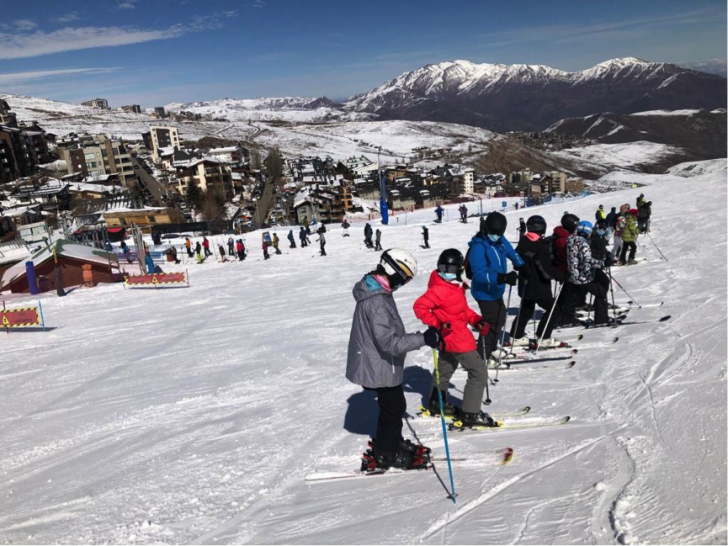
On the recommendation of a dear French friend who lives in Grenoble, we booked two weeks at Monetier les Bains in the Serre Chevalier Valley, between Grenoble and Turin in Italy.  It is less well-known and less crowded than such mega-resorts as Chamonix and Val d’Isere, which also makes them more low key.

The Serre Chevalier Valley ski resorts are spread over four small towns boasting 250 kms (200 miles) of pistes over 1,000 acres.

Monetierles Bains is the smallest of these towns and most authentically French. It’s well known in France for its aquatic spa center featuring geothermal spring water, which comes out of the ground at 110 degrees Fahrenheit and is cooled down to 97 degrees in a variety of settings including an outdoor pool.

After skiing, or on a day with poor weather, it’s a real treat to relax and enjoy the gentle feeling of the naturally heated water.

The town itself is one main street with a variety of shops selling local French delicacies, ski shops, and a few restaurants. While there are a few hotels, most  accommodations are apartment rentals, which can be booked through the local tourist office.

January is their low season, and February is the busiest month. There is a shuttle that runs every twenty minutes between the town center and the ski lifts, but it’s less than a ten minute walk.

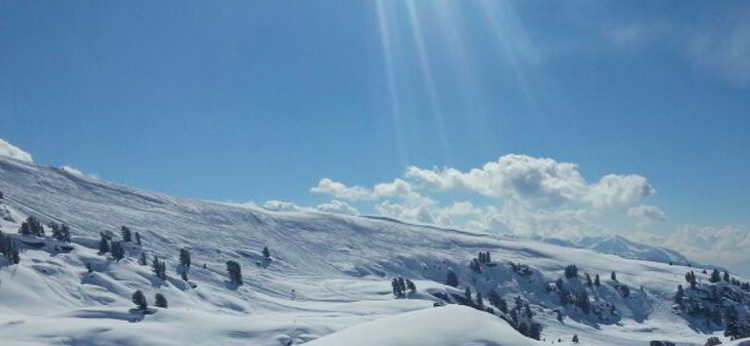
It snowed the first few days we were there in January 2023, so it took me two or three days to find the pistes that were best for me. The lifts run from the village at 1,550 meters up to 2,850, with the mid-station at 2,176 meters, from where there are several tree-lined pistes down to the village.

Normally, I prefer to ski on open slopes above the tree line, but here I found that I preferred the variety of the pistes going back to the village. On snowy days I skied in the new snow until it got skied out, and on the sunny days I enjoyed the long runs on the groomed trails with hardly another skier in sight.

I never encountered a lift line, and if I had younger legs I could have skied more and more. The area serves mostly local folks and, on the weekends, families from Grenoble and its surrounding regions come to ski and enjoy the outdoors.

The base lodge was large enough to accommodate everyone and we never had to wait for a table. The food was tasty and reasonably priced. Since we were there for two weeks the waiters remembered us and were quick to bring us our favorite beer during our mid-day breaks. On the mountain, there are several quaint mountain restaurants with more limited menus at higher prices.

Monetier les Bains is a low-key ski area: in low season no crowds, no stress, everything easy and, of course, a free ski pass for seniors 75+.

People were friendly and everyone spoke good English, except for our landlord… my wife’s French saved the day.

LeMassif

What’s New for the 2022/2023 Season – Quebec Edition

LeMassif

Fall and cooler weather are giving antsy legs to all skiers, snowboarders, as well as all other winter lovers.

Here’s what’s new this season, north of the border in the province of Quebec, by region, including several important resort anniversaries.

Bas-Saint-Laurent

Parc du Mont-Saint-Mathieu has expanded its snow park, and snowmaking improvements will allow both earlier and later season access to an area with multiple glades.

Eastern Townships

At Mont-Orford, the new electronic RFID ticketing system will simplify the customer experience, and improvements to the snowmaking system will ensure a longer ski season, just like at Mont Sutton and Owl’s Head.

Centre-du-Québec

At Gleason, there’s been a transformation to LED lights for night skiing and improvement of the snowmaking system.

Quebec and Charlevoix

Mont Grand-Fonds celebrates its 50th anniversary this year, adding a new magic carpet and improvements to the snowmaking system. There will be special anniversary events throughout the year.

This is the first full season for Club Med Quebec which opened in December 2021 with all-inclusive food and drink, and an instructor-level on-snow touring guide.

Chaudière-Appalaches

Massif du Sud also has implemented a new RFID system on the mountain.

Côte-Nord

This season is the grand reopening of Gallix Ski Resort, which was partially closed last season due to a major chairlift breakdown.

Gaspésie

Petit Chamonix celebrates its 60th anniversary this season.  Val d’Irène has added two new double-black runs.

Laurentians

Belle Neige celebrates its 60th anniversary this season with new lift, La Fenster, as well as improvements to the snowmaking system. At Vallée Bleue, the new Le Muskeg Bar is sure to be the scene for great après-ski.

Les Sommets has upgraded the snowmaking system for Sommet Saint-Sauveur, Versant Avila, Sommet Gabriel and Sommet Morin Heights, and to the learning zone at Sommet Olympia. Sommet Gabriel skiers will be able to sit in the new La Laurentienne chairlift.

Mont Blanc has added a new main lift boarding mat, new service center and improvements to the Pioneer Bar.

Tremblant introduces a new app with live weather and ski conditions, ski and village interactive maps, run history and challenges, and more. Details here.  Hymne des Trembles is a new multi-phase project that will connect the Versant Soleil to the Versant Sud areas, supporting the eventual expansion of skiable terrain.

Montérégie
Mont Rigaud will offer a different experience to the users of the magic carpet since it will now be covered with a dome. The mountain’s lighting is now all in LED. Also, improvement was made to the snowmaking system. At Ski Saint-Bruno there’s a new terrace and a ski café for après-ski enthusiasts.

Outaouais

Camp Fortune has expanded the main lodge and made improvements to the snowmaking system which will extend the ski season.

Saguenay-Lac-Saint-Jean

Mont Fortin introduces a new magic carpet ski or snowboard beginners. Valinouët is launching a new website.

Thanks to the Quebec Ski Areas Association for this information.

Founded in 1979, the ASSQ is a non-profit organization grouping together Quebec’s ski areas. Its mission is to promote and defend the interests of the ski areas, to foster the development of the next generation, and to support the industry to offer skiers and snowboarders memorable experiences.

Skiing and snowboarding are practiced by about 1.4 million Quebecers.

What’s your favorite place to ski in Quebec?

TMT HIVER_ 86

XC in Mont Tremblant Canada

XC at the Domaine Saint-Bernard

Mont Tremblant is a major alpine ski resort just north of Montreal, part of the vast Alterra Mountain Company menu of ski areas, which includes Steamboat, Winter Park, Mammoth Mountain, Deer Valley, Stratton, Sugarbush. Therefore it’s part of the Ikon Pass system. 

 Though it’s well-known to Eastern Canadians, cross country skiing around Mont Tremblant isn’t quite the clichéd “hidden gem” for Nordic skiers in the U.S., but it’s certainly not a byword.  And that’s mildly ridiculous for so many reasons, ranging from extensive, superb terrain and good grooming to opportunity to mix your sports to the fantastic dollar differential between the U.S. and Canada.

Mont Tremblant is a year-round resort in Quebec’s spectacular Laurentian mountains, roughly 1.5 hours northwest of Montreal’s airport, which is served by multiple airlines from American hubs.

For XC visitors interested in history, this is Jackrabbit Johannsen country (so is Lake Placid, incidentally). Famous in Canada but not so much in the U.S., Jackrabbit was a fascinating guy who is justifiably credited with introducing skiing to eastern North America. Still skiing at the age of 102, he died in 1987.  And check out the Canadian Ski Museum while you’re at Mont-Tremblant.

XC in the Mont Tremblant Region

The best pre-trip resource on Mont-Tremblant-region XC skiing – including extremely useful trail maps – is https://www.tremblant.ca/things-to-do/activities/cross-country-skiing

 A typical XC season runs from early December through March; average snowfall is around 135 inches per winter.

 A quick summary: Lots of trails (many of them short), lots of lovely kilometers (100+), many of them with multiple uses – some classic technique only, some classic and skating, exclusively snowshoeing, a number with XC and fat biking or snowshoeing and fat biking or walking.  Overall, there’s a nice mix of “boulevards” and winding narrower routes, many trails passing by many lakes. While most skiing is suited to beginners and intermediates, there’s some challenging stuff too. It’s guaranteed that you won’t get bored. 

There are two trail networks with some parking for easy access. The northern system emanating from the resort (Secteur Tremblant) is smaller, has generally easy trails and several access points, as well as road crossings.  It also connects to the famous P’tit Train du Nord trail (the roadbed was formerly a Canadian Pacific railroad line) via la Villageoise-de-Mont-Tremblant trail; and the system based around the Domaine St.-Bernard, these days a large nature (ecotourism) and recreation complex. The two are connected by the ski-over Pont Jackrabbit over the Devil’s River (Rivière du Diable). 

Secteur Domaine Saint-Bernard has much more extensive skiing, with a day lodge, more diverse terrain (snowshoeing and walking paths too), outstanding viewpoints, and a number of convenient parking points as well as several warming huts. Some trails are groomed for both classic and skating, plus some ungroomed routes. 

There’s also equipment rental as well as the only XC ski school in the region (CANSI-trained instructors), offering both private and group instruction. 

In sum, there’s meadow, forest, mountain views, intriguing rock outcroppings, even riverside skiing… and birds that will feed from your hand.

Accessible by car nearby are another 40-or-so km of groomed trails, along with rustic wood-heated shelters, at Parc National du Mont-Tremblant. Difficulty runs from easy to difficult, with multiple loops. There’s a trail fee, which you can purchase online. 

Other Stuff

Purpose-built Mont Tremblant Village is a European-style village, reminiscent of Whistler Village in BC. You can visit spas or a casino, and enjoy a wide variety of fine dining and local cuisine, Mexican, Lebanese, pizza. Les Moulins Lafayette is one of a Québécois bakery chain… delectable! Plus, the old Mont Tremblant village is a few minutes away with more traditional shops and restaurants. 

As to winter recreation locally, there’s also ice skating on lakes and rinks, hiking and walking, fat biking and now e-fat biking, ice climbing, ice fishing, sledding, sleigh rides, dog sledding, snowmobiling, paintball. And if you also ski alpine, there’s more than 2,000’ of vertical drop on 102 trails. 

 If you’re a cross country skier and part of a group or family, consider staying at Domaine-St.-Bernard’s Farmhouse or Pavillon de Chasse (fully equipped kitchen and full bathrooms but bring your own bedding).

 If you’re splitting your time between XC and alpine and have a little Jackrabbit nostalgia but like more comfort, consider the comfortable Le Johannsen – right in the pedestrian village but not immediately accessing the XC trails. 

 Along with pervasive – and charming – French-Canadian culture, what more could you ask for?

A Down-Under Skier Reminisces About His 2019-20 Canadian Road Trip

I was inspired by (SeniorsSkiing.com contributor) Yvette Cardozo and her excellent missives re skiing Canada and the world. Her unique turn of phrase will inspire some to write, but mostly will move others to keep skiing when they can. Those three words, ‘when they can’ are important. COVID has jolted us to the here and now, prompting many to get vaccinated. To those with a needle phobia, I would suggest that a death phobia trumps needle phobia anytime.

Which leads me to think back to the 2021-20 season and this Aussie’s Canadian skiing road trip with three good senior skiing mates brimming with optimistic youthful exuberance.

We set out to tour the snow resorts of central British Columbia…just as reports of the mysterious virus were beginning.

Source: Lake Louise Ski Resort. Image by Philip Forsey

First we skied Nakiska, a family, friendly resort, steep in places and well-resourced with lifts in all the right places (season pass for those 75+ is less than $100).  Then we drove to Sunshine and Lake Louise (season pass for 80+ is $20), two of the planet’s most scenic places. In Lake Louise, large ice sculptures adorned the area between the Lake Louise Chateau Fairmont Hotel and the lake. They’re magnificent (hotel and sculptures)!

Skiers are among the many ice sculptures. Source: Lake Louise Tourism

Next, we drove the mighty Trans Canada No.1 to Golden to ski legendary Kicking Horse Mountain Resort (season pass for 75+ is less than $100). It features views that take your breath away and fall lines steep and deep enough to keep it that way. If you go, don’t fail to lunch at Eagle Eye Restaurant for great views and food. If wallet permits, you can arrange for a helicopter to transport you to the super deluxe Eagle Eye Suites, each assigned with a personal butler and the highest accomodations in Canada.

A few days later, we plunged into the unpopulated wilderness of the Western side of the massive Canadian Rockies. Our large rented SUV delivered us to Panorama  (season pass for 75+ is $39) our next ski in-ski out accommodation. The resort has plenty of back country double blacks.

Fernie is big!

Following Panorama we drove to Fernie (season pass for 75+ is less than $100), where out friend Pat shared with us his years of skiing advice and his knowledge of Fernie’s more famous watering holes. Fernie is a destination which receives prodigious dumps of dry powder all season. If visiting, be sure to partake of a lager or three, upstairs in the Griz Hotel.

Navigating the pass at Crows Nest, on the border of BC, we were soon back in Alberta on our way to Castle Mountain Ski Resort (season pass for 75+ is $19), a great hill driven by ski enthusiasts; not accountants. My kind of place. Unfortunately, a flu virus prevented me from experiencing what my friends Ray and Allen pegged to be one of the best places skied of the entire trip.

Ski buddies at the start of their journey. Source: Dave Chambers

On this journey, we were mostly constrained to groomed runs because of a lack of fresh snow. Whenever you go, I recommend driving. It’s the best way to indulge in the culture and to experience the human kindness displayed by the Canadian people.


Tukino ski field

Tukino Skifield, Mt Ruapehu, Aotearoa/New Zealand

Tukino Skifield (www.tukino.org) is a Club-operated field (“skifield” is the down-under term for ski slope) on the eastern slopes of Mt Ruapehu (9175 ft/2797 m), a live volcano and the highest mountain on the North Island of New Zealand. It is located within Tongariro National Park, a World Heritage Area, encompassing two other large volcanic cones (Ngauruhoe and Tongariro) plus numerous smaller ones.

The first known and documented skiing on Mt Ruapehu was in July 1913, soon after which the Ruapehu Ski Club was formed, making it one of the oldest outside Europe.

The field is on scoria ash with many boulders, so skiing is rarely possible before the end of June. The core season is usually August-September and the annual snowfall averages about 70”. Tukino, like other nearby skifields, has a mix of green, blue and black terrain.

Tukino’s fixed lift served vertical is 1115’. A portable tow and cat can extend it to almost 2000’, conditions permitting. Neighboring Whakapapa, New Zealand’s largest ski area, has a 2300’ vertical.

Skiing at Tukino is open to the public, but Club members (annual adult membership: $70) enjoy substantial discounts for accommodations and lift-passes. Most maintenance and skifield work is done by volunteers, with a small core of alpine-qualified staff. There are three fully-equipped lodges, each taking up to 32 guests; these are operated by their respective Club owners.

Tukino and the access road are operated and maintained by a coalition of local ski clubs. The upper part of the road requires 4WD.

The Tukino field has two fixed “nutcracker” rope-tows (so-called because the device attached to your tow-belt, used for clamping onto the tow-rope, resembles the traditional implement for opening walnuts etc!) plus a portable rope-tow. Conditions permitting, cat skiing also is available.

Skiing Tukino is a bit old-fashioned and takes some effort (and 4WD) to get there. Staying over requires a sleeping bag and pitching in with meals, cleaning, etc. Accommodation prices at each of the three clubs are reasonable and include meals. The entire area is off-grid, so getting online is possible but challenging. But who needs Internet when conversation and games with other club members and guests make the experience memorable.

Visit club websites for more information on each of the three options: Aorangi Ski Club (www.aorangi.org); Desert Alpine Club (www.desertalpine.club), Tukino Alpine Sports Club (http://tukinoalpinesportsclub.org.nz ).

Tukino ski field

Photo courtesy of tukino.org

Look Ahead: Report From Australia

The Virus Is Contained, Resorts Anticipate Regular Openings.

Mt Hotham in mid-season. This year, the resort awaits eager visitors after closing in 2020.

We, the skiing public here in Oz, are quietly excited about the prospect of finally skiing again after a year off. While we wait for government decisions and confirm opening dates at Mt Hotham, Falls Creek and Mt Buller here in Victoria and similarly for the resorts in NSW at Perisher and Thredbo. There is a very good indication that with virus levels in Australia at zero the official opening date of Friday June 11 will happen. The ski resorts are all hiring this year.

Opening, that is, except for only a couple of people in quarantine.  There are no cases in the general community. Yes, you read that correctly. Through management (and I use the term loosely), Australia, with a little diligence, has reduced Corvid to literally just a few cases. So, our various state governments figured out, finally, that hotels and strict quarantine for returning travelers has stemmed the transmission.

Contrast this with 2020, and the disaster that unfolded then for the ski industry. By July 9, 2020, it was confirmed that two popular Victorian ski resorts had closed effective immediately due to the corvid virus in the state. They made the difficult decision to suspend operations at Mt Hotham and Falls Creek, “effective Thursday July 9 through to at least August 19,” Vail Resorts, the US company which owns the ski fields, stated. NSW followed quickly with the same decision.

Perisher in NSW is the largest ski resort in the Southern Hemisphere, opening in mid-June

We were in a bad space last year after devastating wildfires in January and February and yet the announcement about the then coming season was all rosy. “Mt Hotham welcomes the State Government’s announcement that the 2020 snow season can commence with a delayed start in late June, just in time for the Victorian school holidays.” said an official. Further adding, “Mt Hotham has experienced some fantastic early snowfalls, so we’ve been eagerly awaiting news on whether the winter 2020 season would proceed,” said Amber Gardner, CEO, Mt Hotham Alpine Resort Management Board. “We are excited about the Premier’s announcement yesterday and look forward to celebrating the season opening with our mountain community at the end of June.”

The excitement continued. Queen’s Birthday Long Weekend traditionally marks the start of the snow season in Australia, but last year it was to be a low-key affair, as Mt Hotham continued to plan for scaling-up in June in accordance with Victorian public health guidelines. The usual explainer of carrying snow chains, resort entry fees, etc. was also confirmed. During this period, the ski field would be closed to downhill skiing and snowboarding. But the resort’s cross-country trails will be open in alignment with recreational trails around Victoria, albeit under a reduced grooming regime and with limited Ski Patrol support. A limited intra-village transport service would also be available. And yes, Mt Hotham board spokesman said staff had been inundated with calls. “Please keep in mind that our staff may not be in a position to immediately answer your questions,” he said.

Here’s an interesting fact about the extent of the snow area in Australia in winter, a fact I find hard to comprehend: Australia has more snow than Switzerland. And, according to the Australian Ski Areas Association (ASAA), ski resort visits in Victoria had a $1,076 million impact on gross state product in 2018. So, you can understand how devastating another closure will have on this industry in 2021. A spokesman stated that, “People in the mountains and surrounds in Victoria continue to progress programmed summer projects ready to greet their first guests this the coming 2021 Winter.”

We wait. I am quietly confident that an opening will happen. We are seeing larger groups allowed with some isolating for crowds at sporting events still. But with vaccinations ramping up across all the states, confidence may be restored. Could I be sliding down a snow-covered slope at my favorite ski hill soon? Since skiing in Canada last year in January and February, I am yet to put on the planks. A La Nina has visited us in the Pacific and unusually large rain events have occurred across the Eastern States. But we are long in the knowledge that rain alone will not increase the snow levels. It maybe cold and wet, but I will be happy enough to just be amongst the snow guns again, real snow or not.

Mt.Hotham before the virus closed her down. Credit: Dave Chambers

Look Ahead: Despite Challenges, Chilean Resorts Are Preparing

Areas’ Marketing Campaigns Are In Full Swing, But Will The Weather Cooperate?

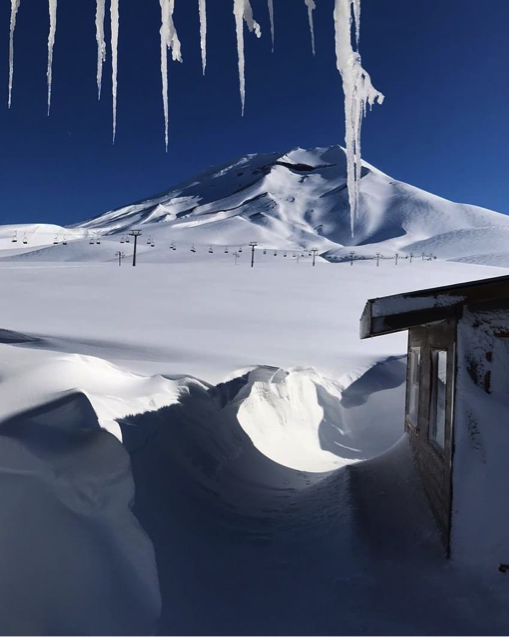
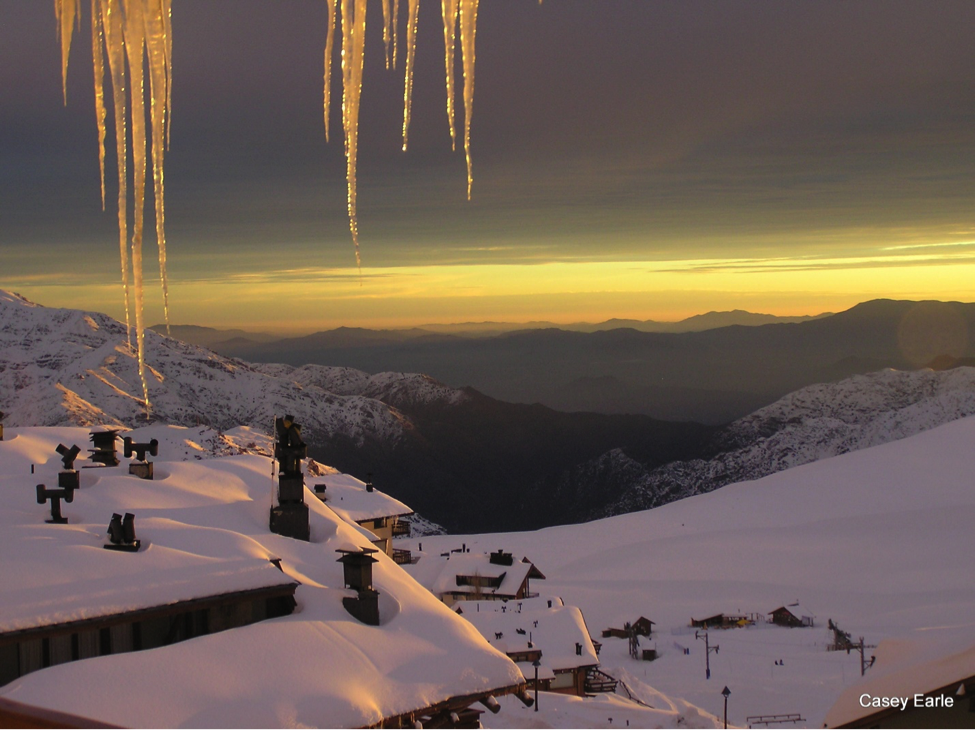
La Parva, Chile, sunset through the icicles. Credit: Casey Earle

For 2020, the ski season revolved around the multiple ills Chile has been suffering, including the ongoing drought that affected the skiing. This year would seem to be a continuation of those ills, including social and political unrest, economic suffering, and plague. In spite of all that, last year a few ski areas opened late in August, and the skiing was quite good. These were La Parva, El Colorado, and Corralco. Backcountry access was difficult due to covid restrictions.

Up until a few weeks ago, some optimism was brewing. Chile’s vaccination program had taken off strongly, Santiago had avoided a second wave, the elections for the constituents of the constitutional assembly were on for April 11, and rain had come to the central zone in January. Now, it would seem the Brazilian variant is ravaging the country, 90 percent of the inhabitants are in quarantine, hospitals are overflowing, and the elections are being postponed for a month. Riots flare up periodically, and the slow burn insurgency in Araucanía continues. Hard to be optimistic in this environment, but I will try.

Marketing announcing discounts for this season at La Parva. Credit: Casey Earle

The ski areas are certainly running their marketing campaigns like this season will actually happen with a semblance of normalcy.

La Parva touts their continuing commitment to opening the ski area, as they have done with their bike park during the summer.

Other areas are chomping at the bit to get the season going too, like Antillanca.

The dark spot is Valle Nevado, which is in arrears on a wide variety of debts, and recently initiated a chapter 11-type restructure of their obligations through to 2026, with large additional short term injections to keep the lifts turning. They cite the drought and covid as contributing factors to their woes.

In the weather department, the Chilean weather service just published their predictions for the fall (April, May, June).  Click here for details.

In summary, with rising subsurface temps in the central Pacific, the Niña has ended, and a neutral period begun (“La Nada”), but rainfall deficits are still expected. These will be most intense in the central zone, with the far south receiving excess rainfall. A El Niño event could occur late in 2021, if the warmer waters surge through to the southeastern Pacific, but that is highly unpredictable.

What really matters though is what sort of rainfall will happen from June on when most of the snow falls. I would not dare a prediction as drought has been the norm and is most likely to continue, but one (or god permitting, two) atmospheric rivers could change everything, as happened in late June 2020 under lockdown.

If you are thinking about a trip down this winter, it is probably unwise to plan just yet. That said, if the vaccination effort goes well, and those pesky variants calm down, possibilities for August are not out of the question.

Crossing our fingers!

Riding the Roca Jack “Va et Vient” with the US Ski Team. several seasons ago. Credit: Casey Earle

Ski Club Work Weekend In Oz

Before The Snow Flies, Members Gather For Work Party And Find A Reason To Talk Skiing.

Heiner’s Bakery’s curry pies are in demand in Myrtleford on the road to Mt. Hotham, Victoria, Australia.

My road trip from Melbourne in my Skoda AWD has been a pleasant morning drive. With two and half hours peeling away quickly, the freeways were unusually devoid of cars today on this Friday in March. My mate Terry phones to ask me, “Is it Heiner’s Bakery, just off the main street, where they sell those fantastic curry pies?” “Yes. Remember you always get the last one available,”

We meet at Heiner’s Bakery, where the stars have aligned; they have baked more curry pies, maybe sensing our visit. Arriving in Myrtleford, the large alpine service town on the edge of the two main Victorian snowfields, is an occasion. The large trees in the wide streets are yet untouched by autumn’s cold fingers. Summer is only a week or two passed. La Nina in the Pacific has blown moisture laden winds across our state; the rain makes for benign and balmy heat levels. The previous year, devastating wildfires lit up the whole state. Every paddock and forest seemed to be on fire. It’s a stark memory still, but not this year. It’s been a year of growth and recovery in the forest and the mountains. The fields in these alpine valleys are green and nearby mountains creep up with eucalyptus trees to their summits. Summits that in a few short months will be snow covered.

Our ski club requires us to work a weekend each year. My friend Terry, an electrician, offers his services to the work party. He has missed the easy banter and mateship above the snow line since retirement. Retirement is an itch that is uncomfortable at times for him, he is someone used to being busy. He is offered work credits towards accommodation at the ski lodge. He is happy to work for no reward; it is his nature to help out.

Early snow at Gravbot Ski Club welcomes work party in Mt. Hotham. Credit: Dave Chambers

We arrive at Gravbrot Ski Lodge, Mt. Hotham, and bump in to Dave, a fellow member, here for the work party. he is somewhat surprisingly dressed in lycra and bike shoes.

“Dave, that is interesting dress for a work weekend.” I say. “Don’t you own work boots.”

Dave replies, “I have just ridden down and back from Omeo, this afternoon.”

Now to be kind to Dave, his best days and youth are well behind him.  I am very impressed. These are what we call mountains in Australia, and, while they aren’t as lofty as Aspen, they are mountains that rise to over 6,000 ft.  Dave has not only ridden down but has returned back up to the top in the thin mountain air. This fitness becomes more useful when we have to remove forty bags of cement that someone stored under the lodge five years ago. Advice to anyone contemplating this, don’t. The cool moist mountain air and cement are easy bedfellows. And the product of this union is a very large heavy brick.

We light the fire to warm the frigid air. A warming glow will greet the next couple of work party participants. Our gum trees are the scourge of summer when the temperature rises above 100F. Wild fires are all too common place now in Australia. The sap in eucalyptus trees explodes at extreme heat levels fueling the wild fire fronts. But now more benign the dry branches gathered from the base of Snowgums around the ski lodge make great fire starters. A warm glow fills the lodge quickly as we remove the corks from some very fine Cabernet Sauvignon. A cheese platter offers some aged gouda and vintage cheddar to accompany the fine red wine from Black Cat Winery, in the Yarra Valley, Victoria. Others amble in over the following two hours. A busy weekend is planned, says the Works Leader, and we need volunteers to remove forty bags of cement to the truck for disposal.

“Hey, Dave did you bring work gloves,” I call out.

Terry and I contemplate and recall stories about life above the snow line and experiences over a couple of decades of skiing Australia and the world. We make some new friends. We chat into the night, all of us hoping that 2021, this year, we will get a start to the ski season now just a few months away.

March brings autumn in Australia and an early snow in the mountains. Credit: Dave Chambers

Sapporo Ice Festival

Question For You: Ski In Japan?

If You’ve Been, Tell Us So We Can Have A Vicarious Vacation.

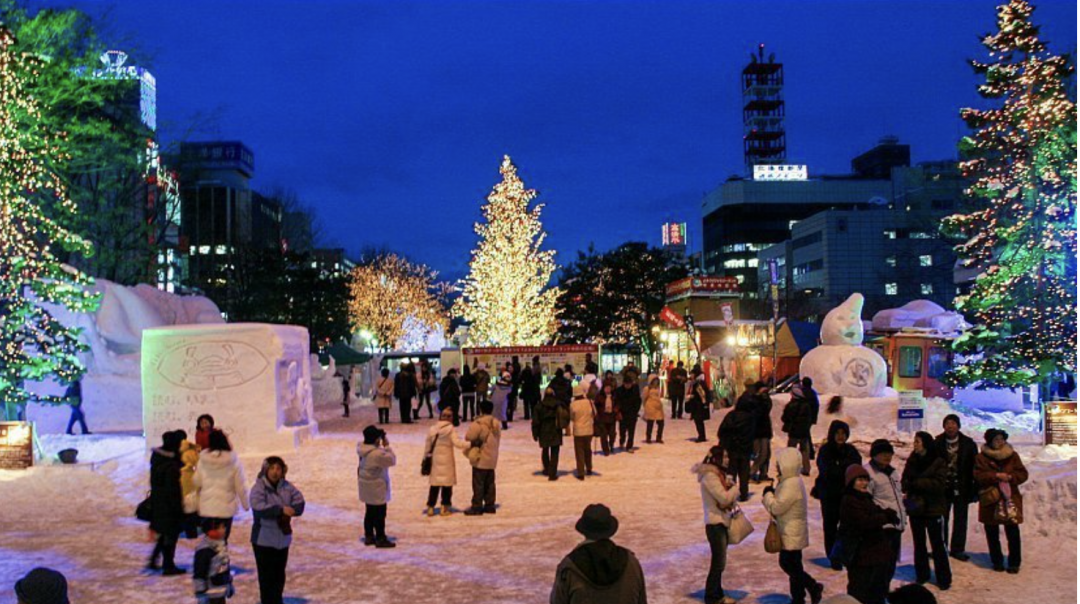
Sapporo Ice Festival: Snow is in abundance in northern Japan.

We have an interesting article this week from Dave Chambers, the “Traveling Australian.” He takes us to Appi Kogen, a resort in the north of Honshu, the big island of Japan. He spent a week skiing powder in the back end of the resort in perfect conditions he had never seen anywhere in his travels.

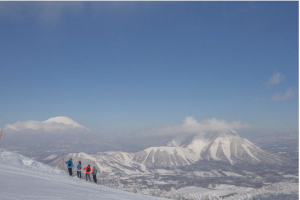
Rusutsu, Hokkaido, Japan

His article stimulated this week’s Question For You. After all, by North American standards, Japan is an exotic ski destination. The ryokans (inns), the onsens (hot springs baths), the food, the culture, all represent a distinctly different experience than a vacation in Canada, the US, or even Europe.

Many years ago, we spent a winter in northern Japan and experienced monster snowfalls and cold, cold temperatures. We visited the Sapporo Ice Festival and were amazed how the city had adapted to serious winter conditions: above ground train tracks were covered, streets were swept from snow by seawater hydrants, and ice and snow were celebrated.

Question For You: Have you skied Japan? What was it like? How was the snow? The resorts you visited? What did you love? What was not so great? Would you go back or was once enough? Please let us know.

The rest of us will have a brief, imaginary, vicarious vacation based on the comments from those who have been there.

Please reply in Leave A Comment below.

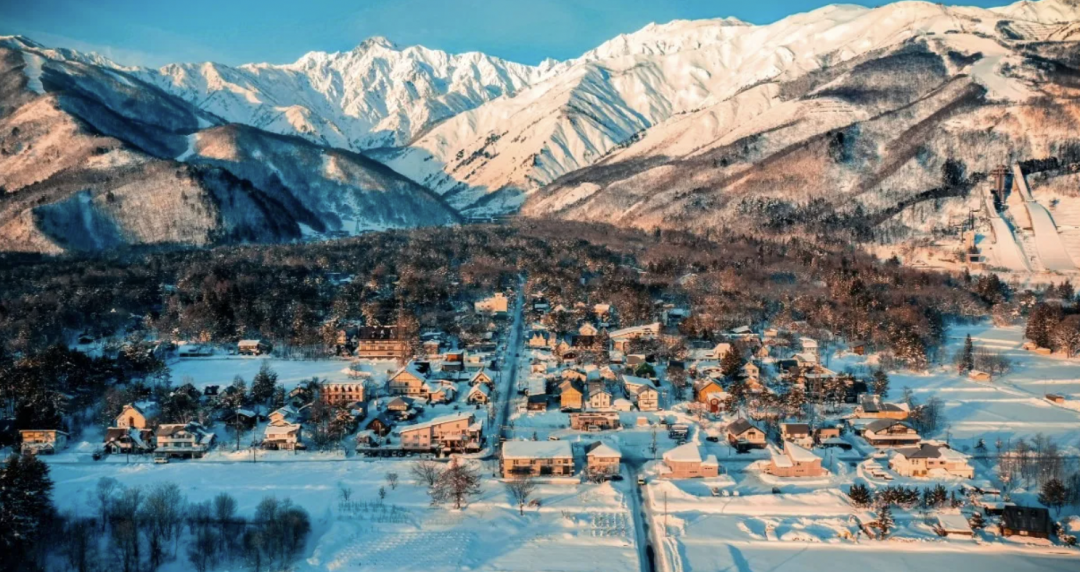
Popular Hakuba Valley. Japan has very snowy winters every year.


Ski Japan: Happy Appi Kogen

Untracked Deep Powder For A Week.

Appi Kogen is a self-contained resort in northern Honshu.

Casting aside the duvet and, with a flourish, we spread the curtains wide to greet a new day, a new location, a place of considerable legend.

Here the tall Japanese Black Pines punctuate the landscape between the tall buildings of our hotel in this place almost three quarters of the way up the island of Honshu.

Appi Kogen is one of Japan’s best ski resorts. The resort’s tagline: “Be Happy in Appi”, of course.

We have arrived by road to Appi Kogen, almost taking a whole day to do so. This road trip was tedious, attributed to a slow traffic jam and, paradoxically, the most exciting bus trip we could ever conceive.  Our bus driver, growing weary and ever more frustrated by the constant traffic jam, decided a different route was needed. The existence of a little used forest track was discovered—a forest track at times covered in deep virgin powder snow.

Our driver revealed quite a level of skill when required to navigate slippery and often poorly delineated tracks through the forest. Our driver and his co-driver were engaged in constant discussion as to how to proceed when fast acceleration was required. It was best alpine driving we are ever likely to witness. Although I well remember being in a taxi going up a hill from St. Anton to Lech in Austria where our driver exclaimed in strong language his scorn for the slippery steep slope and the driver of a Mercedes that halted his progress. Then, sliding backwards down a considerable slope completely at ease with his dilemma, he just reversed to a lower slope where he could gain some traction and move forward back up the steep narrow slope.

Back to Japan. Our trip, a long, long ten-hour drive by bus, one we hired  at Lodge Scolé at Zao Onsen Ski Resort to take us to Appi Kogen. Zao was a place of big tree runs and Snow Monsters. Traveling plans were adjusted for what we thought would be just a four-hour trip up the main island of Honshu.

A huge snowstorm of cold air from across the Sea of Japan unloaded across the north.  Our movement down the road now so slow at one point we left the bus to obey a nature call at a rest stop. We visited said rest stop and purchased takeaway lunch before returning to find the bus only 80 meters further down the road.

Appi Kogen is not far from the East Coast where those winter winds suck up the moisture from Sea of Japan and dump when they hit the land mass around Appi. Indeed this is often the case along the whole coastline particularly in the North where we are now.

It is another skiing day, a day not quite like we have experienced before above the snow line. Although I recall a day in Lech where we skied in snow so deep the only reveal of me deep in this fine dry powder is the top of my ski helmet.

Appi Kogen is very similar to this as is much of Japan in winter where it will often snow down to the beach and cover the sand.

Light fog at the top of the gondola leads to fields of deep powder.

After a couple of runs down medium steep slopes on the front side, we decide to venture as far out as we can to the most outer edge of the ski resort. We are at the topmost point on a black run now with powder so deep and almost un-skied, the day still early. We set an easy pace to get some rhythm in to our legs and balance in the fine powder. The visibility is ok but a little foggy. Japan is like this in winter because the cold is only -2 C (28 F) or at most -8 C (18 F), this knowledge gathered over many previous visits.

As we proceed down the slope, it is obvious the area has not been skied today or even possibly this last week. The slope is lined with trees mostly beech, so definition of the journey down is easy in the slight fog. As we near the end of this trail, the skiing gets flatter and, after 900 meters, we arrive at the gondola. It will surprise you to discover we skied all day down that one slope in fresh powder. Would you be further surprised to learn we skied that same slope for a whole week with no change to the perfect powder? Well, it amazed us to discover that many Japanese don’t like ungroomed snow. When you learn to ski in Australia. the quality of snow is mostly hard pack ice. There, the day temperature around -1C  (30 F) to 1C (34 F) and then freezing overnight: result, ice. So we are very lucky in Oz if we ever experience powder. At Appi Kogen, we have never experienced such perfect conditions for skiing for one whole week .

Be adventurous if you dare. Take a trip soon you will find the country very rewarding in so many ways.

Appi K: 70 percent of runs are intermediate or “easy”.

For a more extensive report in Appi Kogen, click here.

First Timers Tips For Skiing Europe

The Straight Story On The Continental Skiing Scene For Seniors.

I have coached in pretty well all of the European skiing countries. SeniorsSkiing asked me could I recommend resorts to suit mature American skiers, especially first time visitors to the Continent. Here goes.

The range of possibilities is vast. France plasters its slopes with lifts, Italy takes a more environmental view and installs fewer but longer lifts up valleys, offering equally long descents. Gressoney St Jean in the Aosta region (about an hour from Turin) is a classic example, it also links to Champoluc and Alagna.

Other Examples

Waidring: 10 lifts, 16 trails, intermediate-beginner, gemutlichkeit.

A friend went to Waidring in Austria every year for ten years. Great people, great snow, warm welcomes. They have a tradition called gemutlichkeit – geniality or friendliness. It is tiny – 10 lifts,16 trails all told, half of them intermediate, half of them beginner.

Val Thorens: 163 lifts, 373 miles of trails, ski to Courchevel

Compare that to Val Thorens-Meribel-Courchevel – 163 lifts, 373 miles of trails, 192,000 feet of vertical descent. Start in Val Thorens, ski to Courchevel, and you may not have time to get back. Hugely popular with Brits (far too popular for me, I hate lift queues)

What’s On Offer?

Different resorts in every country target different types of skiers – though they hope to get everybody.

Take the Chamonix Valley for instance, steeped in mountaineering history. Each of its resorts offers a spread of challenge but with a bias.

The lowest resort, Les Houches: charming, easier, all trails are in wooded areas, amply supplied with atmospheric mountain restaurants.

Almost an hour’s ski bus ride from Les Houches – is Le Tour. Almost treeless, big sweeping terrain, as well as plenty of intermediate trails it offers some easily accessible off-piste.

In between you have Le Brevent – high, steep, not easy; or Argentiere, home of the “hard men”, some of the blues would classify red (black) in other places.

When conditions permit, from Chamonix centre a telecabine takes you to the 22 km Vallee Blanche in the high mountains, and you only need to be intermediate, but you’ll need a professional guide: don’t try it on your own.

So How To Choose?

The internet is full of “the three best French ski resorts”; or “the ten best Austrian ones”; it’s endless.

What we need is a selection process. How does this seem:

Kitzbuehel: €€€€€

  • How pricey is it? There are big differences. If you select Kitzbuhel (fashionable) everything is more expensive than Kirchberg which is just a few miles up the road and accesses the same trails. Some resorts are designed around high net worth folk seeking luxury.
  • What duration is the connection time between your airport and the resort. It can be up to four hours or as little as only one. Does it matter to you?
  • Many European resorts are inter-connected, ask them what standard of skiing do they mostly offer. They’ll tell you they have everything, but insist on knowing what they mostly offer.
  • Within the connected areas ask them the approximate skiing times to get from one resort to another, and back: it can seriously affect your day – and how tiring it might be.
  • Ask them if skiing guides available who can show you early in your visit the general shape of the place. Many of the chalet owners and hotels offer this service – not teaching, just showing you around.
  • When are the school holidays? In France they go on for weeks. Lift queues can be horrendous. Outside of them, you can often just walk on. And remember, in some European countries lift queue etiquette and politeness is conspicuous by its absence; France is one of them.
  • Consider less popular countries that don’t have inter-connected valleys – Slovenia (home of Elan skis) has some nice small resorts; Bulgaria has more than you might think and inexpensive.

Kirchburg: €€ and just down the road from Kitzbuehel

My personal favorite? Baqueira in the Spanish Pyrenees. Two hour connection from Toulouse airport. Nicest folk you’ll ever meet (I go to the Hotel Tuc Blanc, and I’m not paid to say so). Watch out for school holidays though, it’s just across the border from France, but the Catalans queue politely.

Baqueira, the author’s favorite.

One Last Tip.

Never do “the last run down”! Everyone wants to get one more “last run” in. They do it on the return to the valley.

Don’t. They’re all tired; they’re skiing at their worst; there are crowds of them; the trails down lower are worn out or slushy. If you want “one last run” stay higher (the areas they’ve just left!) have better snow, fewer people, quieter mountains, and go down to the valley on the lift.

Hotel Tuc Blanc, author’s fav hotel in Baqueria.


Les Deux Alpes: Top-To-Bottom

One Heck Of A Long Run.

Amazing vistas on a long, long at Les Deux Alpes

We’re getting hooked on these top-to-bottom videos.  For one thing, they are showing us ski resorts we have not visited. That alone is interesting in a vicarious vacation kind of way.  For us New England-oriented skiers, this video of the French Alps resort of Les Deux Alpes opens up a whole new world of skiing. Open piste, fantastic views, webs of lifts coming and going. Truly different from the narrow, twisty, pine and hemlock lined ice tracks we have become used to. So interesting. Although, one wonders where one should go if and when the fog and clouds descend.

For another thing, we are seeing, in this case, a run that goes from an altitude of 3600 meters to 1600 meters, roughly a mile of vertical. And it takes 13 minutes without a stop.  Tell that to your quads.

We hope you enjoy these “vacations”. You can read a view of Les Deux Alpes (or L2A, as it is called) here from SeniorsSkiing.com’s collection of resort reviews.

Thanks to Alexandru Comsa for posting this video. (Note: this video is 13 minutes long. You may have an ad pop-up at the 1o-minute mark. Just click “Skip Ad” to get back to the run.”

Obsessing Over Gelati In Milano

After Your Ski Trip, Do This, Especially When In Italy.

Duomo di Milano where we indulged in our initial Gelati. Credit: Medium.com

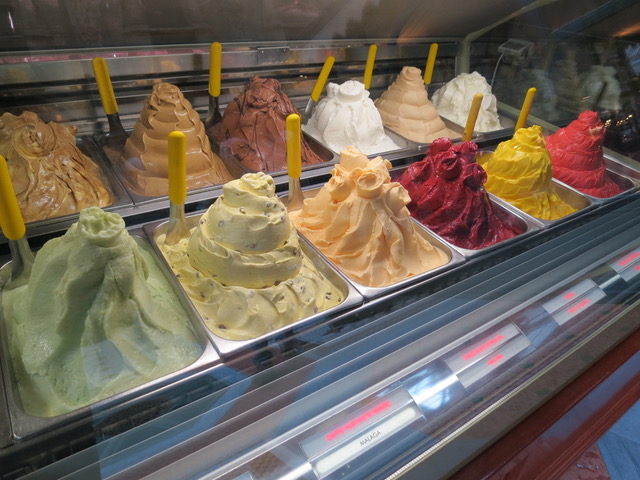
It is the 8th March 2013, the day is cool but sunny. It is still winter here in Milano, Italy. Food and Italians go together like toast and marmalade on Isle of Wight. The clever people that they are they gathered the recipe from Marco Polo and created ice cream. Gelati to the Italians, and not simply ice cream as we know it.

We have skied some legendary powder. Morzine, Avoriaz, Courmayeur, and the slopes of high Switzerland. Now all behind us. The mishap that was Marg’s on the slopes of Morzine Ski Resort where her hip parted company with her femur. It’s done and sorted. She by now languishing in a hospital back in Australia. Ahead of her months and months of exercises by physical therapists. Our remaining group of skiing tourists head to downtown Milano for some creature comforts and good European hot chocolate and to search for that legendary Gelati.

Forget your bucket list, it’s so yesterday; just visit Italy. Don’t dally, this place is cool. Built by people that know a thing or two about how to construct a medieval village. It has everything you never realized you needed. But now know where your life experiences can be fulfilled.

In Italy, they have Gelati; it’s everywhere. In Italy, it helps to be passionate and quite obsessive about food. You fit the culture better. The medieval diet is a thing. The food here makes your heart sing. I am a man of simple taste, I like a Lou Reed riff, Italian Gelati, fresh snow, Uva di Troia, blue sky, powder snow, porcini mushrooms, wasabi pear paste, Nutella Pizza, Italian hot chocolate, and cats. Italy has nine out of the above, that’s plenty to make a trip of a lifetime.

Tack it on to the end or start of your next skiing trip.

Anyhow, Gelati is our focus. We decided, as you do in Italy, to search for that Zen moment. Or nirvana when food passes your lips and mere seconds later you are taken to another place.

Gelati in the presence of Il Duomo di Milano. Perfect. Credit: Dave Chambers.

Day One Milano. We sit in the hugely dominating presence of the massive cathedral that almost blankets the whole square. The Duomo di Milano, 600 years and still standing, all 135 gargoyles of it. Seated at an open-air restaurant, we eat yet another excellent pasta. Porcini mushrooms grow wild in the forest here. Collected from the forest and scattered with a slip of black truffle across a fresh house made pasta. Simple yet sublime. Accompanied by a very good Montepulciano.

The conversation turns to Gelati, and, I kid you not, within twenty quick paces we find a purveyor of fine Gelati . We ordered enough scoops to satisfy a platoon.  All your typical flavors. Our excitement was rewarded with explosions of flavor.

Could it get better than this. We didn’t think so.

Day Two. Now down to just two of us, the other tourists having skipped and flown home. We are just getting a feel for Italian lifestyle. Our concentration heightened now we are tuned in to the local food scene. Feeling switched on. We trawl through the piazzas. We circle and wander the streets looking for shops that mysteriously stay hidden for almost two hours looking for snow wear retail stuff. My mate has a tired ski jacket in need of replacement. Suddenly we blunder upon the old bohemian quarter, exclusive and designer expensive. The luxury within these narrowed walkways is revealed. By chance or divine intervention, our next serve of designer Gelati is nigh. Imagine Mango, so smooth, the deepest orange in color and very glossy with smooth mouthfeel. This mango Gelati has the most intense sweet flavor and equal first place to yesterday’s I decide. Sacrilegious, I know, but folded within a wispy thin, crepe.

Simply the best: cioccolata italiana milano.

Last day. We lunch under the brooding gargoyles of the Duomo di Milano, now grey with mist and rain.  Within our shallow bowl, pasta. The waitress recommends a very fine local red wine. I ask her about Gelati. “Oh yes,” she says encouragingly, “You should visit Cioccolata Italiana,” further adding, “It is the best in Milano.” We are excited. I demand four flavors.  It’s a bucket but a small one. Of flavors chosen, I can’t remember because my tastebuds had hard wired to my brain. Endorphins now in overdrive. The Cioccolata Italiana Chocolate conjured angels. Those angels started dancing on my tongue, the intensity of chocolate, the smoothness as it melted around your taste buds, all balanced with a not too sweet finish, a deep dark chocolate that lingered long after the first taste. The heavens had opened just then for a tiny glimpse of ice cream nirvana. This is not just any Gelati, this is alchemy for the tastebuds and simple the best Gelati I have ever experienced. The ancient Romans may have brought you the amphitheatre, sewers, and concrete, but I am thanking them for their wonderful Gelati and the Medicis for Marco Polo.

Chocolate, please. Credit: Dave Chambers


Vicarious Ski Run In The Swiss Alps: Fun Or Foolish?

Here’s A Top-To-Bottom Video Of A Run At Nax.

[Please consider supporting SeniorsSkiing.com with a donation. We appreciate your help. Click here.]

This is a Go-Pro video we found on YouTube.  It’s shot at Nax ski resort in Switzerland, a charming ski village in Valais, overlooking Val de Herens. It’s an intermediate-type area with moderate runs, one of the many small-ish areas found throughout Europe.

The video is eight and a half minutes long. From the top of the lift to the bottom.

What do you think? Is the skier making any turns here? Does this look like a safe run? What do you think of the terrain? The snow conditions?  Do you come away from this video with a good feeling?

Please leave comments below in Leave A Reply.

Marg’s Morzine Mishap

Poor Marg. She Becomes A Poster Person For Travel Insurance.

[Please consider supporting SeniorsSkiing.com with a donation. We appreciate your help. Click here.]

When I think back over the last two decades, our group of skiing fanatics have been largely injury free. We are a large group of friends comprised of both Australian and British skiers. But there was Morzine.

The Apartment is in the heart of Morzine.

Today our first day skiing, we vacate our Appartment Telepherique in Morzine, France. Our accommodation here in 2013 is a luxury condo with huge post card views over snow covered mountains. Our group of six skiers alight from the Telepherique Tramway. The day is a glorious blue with wisps of low thin cloud dispersed amongst the pines. As the sun rises this mist burns away as we exit the Tramway. The snow is firm pack with a centimetre or two of fresh on top.

Suddenly our day goes pear shaped within 100 metres of the tramway on a gentle slope.

Yes, there was an accident and when I say words like hip and femur, it sounds like it could be serious. It is. Our skiing friend Marg in fact has had a slight altercation with some hard packed powder. Not more than a couple of minutes from the door of the Tramway exit. She has rearranged the bones in her upper leg or hip or thereabouts. And this on her very first day skiing of our trip here in Morzine, Avoriaz, Portes du Soleil, France. In fact, her very first run right off the Tramway.

Marg is transferred to helo. First run of 30-day ski vacation in the Alps. Credit: Dave Chambers

We have hired a rental car and are now underway to a hospital on the shore of Lake Geneva (which in fact is called Lake Leman) in a town called Thonon. We have decided that our very good skiing friend Marg,who  has been at the mercy of the staff for a couple of days now at Hopitaux Du Lemans, Thonon Les Bains, France, needs some cheer and mirth in the hopitaux as they call it.

No more skiing for the entire trip for poor Marg. An otherwise for us, normal ski trip, covering three countries, France, Italy, and Switzerland. Skiing for a touch over 30 days at Morzine, Les Gets, Avoriaz, Champery, Courmayer, Monte Bianco, Valle Blanche, La Thuile, La Rosiere, Champoluc, Alagna, Gressoney La Trinite, Frachey and Gressoney Saint Jean. Skiing all without Marg.

Insurance is expensive when traveling, that’s for sure. But one day that policy and your insurance representative will be among your best friends. Poor Marg required attention by five ski rescue persons and a helicopter, no less. Experts all, they very carefully bundled her up, administered some drugs and whisked her away to said hospital. Never has a girl had so much male attention. She later reflected on enjoying this and some of the best drugs for her rehabilitation.

We joke about this in her private room and generally try to cheer her up. Also there is considerable discussion as to the right angle or such of the pins and what pins are where and, well a girl can never have too much jewelry, but in this case it is medical grade stainless steel. “It’s just such a shame you can’t show it off and jiggle it around,” says Marg.

The result of all this activity, unfortunately, has demanded her complete repatriation back to Oz and her vigorous removal from Morzine by that new best friend: the Insurance Company!

But seriously we are sad to see her go, and a large portion of our day is now vacant without Marg. She is now a guest of said insurance company and a very exclusive guest she is. Having an invoice that now includes a lift by helicopter and a First Class flight all the way back to Australia for her and her new best friend, her nurse. Sometimes insurance companies are your friend indeed.


Revelstoke Ramblings

A Traveling Australian Discovers Charm, Interesting Characters In British Columbia.

Read more

Report From Chile: The COVID Season

What We Can Learn From The Ski Season In Chile During The Pandemic

Only four ski areas opened in Chile this year, due to the pandemic, all in the last third of the normal season (late August). The country was in the midst of a severe drought when the entire metropolitan region of Santiago shut down in May. An “atmospheric river” arrived late June, and over a period of 10 days it snowed more than it had in a decade. All one could do was look longingly at the webcams and pray the snow would last until restrictions were lifted. In June, the ski area association presented a protocol for opening to the government. At the same time, Chile had one of the worlds highest infection and death rates from the virus, so nobody really believed there would even be a ski season.

La Parva on July 5.  Looking via webcam, not skiing. Credit: Casey Earle

Corralco mid-July. Snow but not open to skiing. Credit: Casey Earle

The quarantine lasted to late July in some of the districts of Santiago and the first ski areas were opened on August 18, specifically El Colorado and La Parva. At the end of August Corralco and Las Araucarias, in southern Chile, opened. Rules were strict and at times confusing. Masks, properly worn, were required, as were gloves, online sales only, two skiers per quad, and no restaurants. The number of tickets sold was limited to the equivalent of an uncrowded day. At times a lift attendant would berate skiers for not spacing enough in the few line-ups that occurred and take your temperature on your wrist.

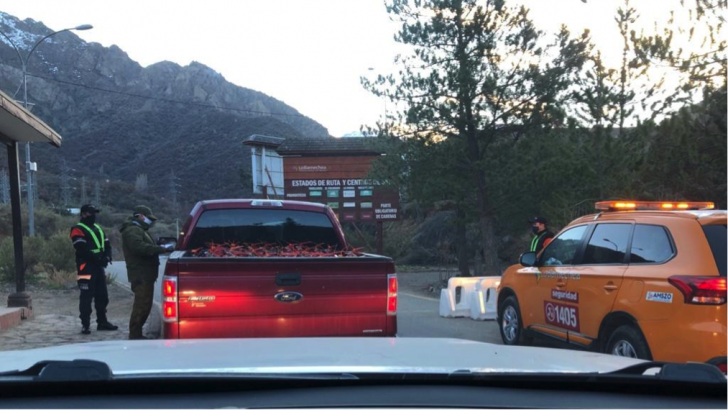
The police were controlling access to the mountain road and were strict about not letting anyone by that was not from a district that had advanced to the correct stage. This produced line-ups and long waits, which I avoided by going up at 6:30am. Use of second residences was not allowed, weekends were quarantined (closed ski areas), and a curfew was (and still is) in effect.

In order to ski, one had to fill out a fill out a health declaration online, and sometimes show it at the bottom.

With only 20cm having fallen since early July, the conditions for the August 18 opening was a bit disappointing. But a final 20 cm fell on August 26, and what a day it was.

Fortunately, the run maintenance was superb, and we skied the groomers through to mid September, when the lack of new snow was taking its toll and the heat was turned up. La Parva closed on September 25.

Lift line trying not to block the run.Credit: Casey Earle

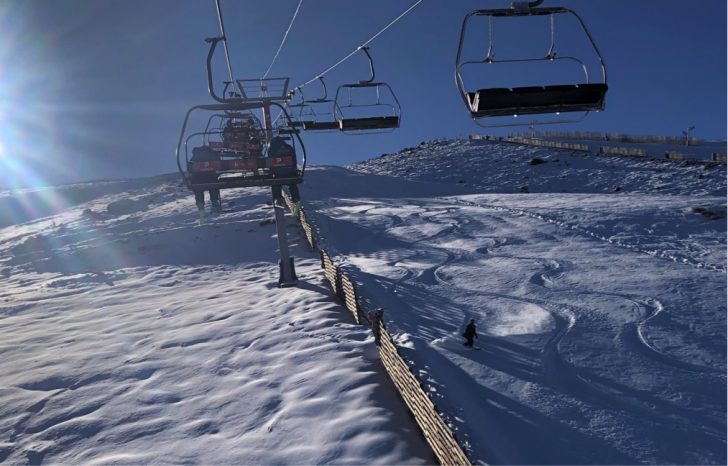
Most days there were so few people that one could ride and empty lift and ski an empty run.

Few people. Credit: Casey Earle

In early October we set out to Villarrica to ski the volcanos of the south, but promptly went into quarantine and had to sit out the remainder of the season. Corralco was open until October 18.

That we could ski at all was a miracle. I must say, however, that skiing, properly regulated, is probably one of the most socially distanced sports around, but much depends on the individuals respect for the rules.

Pandemic Skiing In Australia

Impossible Or Just Tricky?

Resort skiing in Australia is in the Australian Alps straddling the border between our most populous states, New South Wales and Victoria, with capitals in Sydney and Melbourne.

The season officially opens in early June and closes early October.

Thredbo Supertrail mid-August. Credit: John Harris

NSW’s biggest resorts—Perisher (acquired by Vail Resorts in 2015) and Thredbo (Mountain Collective and Ikon links)—lie in Kosciuszko National Park in the Snowy Mountains. They cater mainly to Sydney’s five million people a six hour drive away.

Victoria has three resorts. Mt Hotham and Falls Creek were also recently acquired by Vail Resorts. Mt Buller is the other. They cater to 5.6 million folk, most of whom live in Melbourne.

This year’s opening was delayed for several weeks in NSW. The National Park closed for the long opening weekend amid all the concerns and regulations surrounding the pandemic back then. Tricky!

June saw a rush on sales of backcountry equipment amid fears the resorts wouldn’t open at all. Gear was in short supply with importation restrictions. Tricky!

Perisher’s restrictions. Credit: John Harris

In early July, just when seasoned skiers expect skiing conditions to be okay, a second wave of coronavirus hit Melbourne, and Victoria went to lockdown. Victoria’s ski resorts closed and remained  closed for the season. State borders shut then so snow sports became limited to NSW and Canberra and impossible for residents from all other states. Nearly 17 million Australians had no access to the resorts this year. Impossible for them!

Perisher and Thredbo in New South Wales opened later in June.

Perisher offered Epic Australia season passes but for the first few weeks everyone including pass holders had to prebook days online to ski . One staffie I spoke to only managed to find three days available during this time due to the limited tickets. The website crashed often with the traffic. He checked every morning, hoping more tickets would come online. Thredbo was similar. Tricky!

My favourite lunch spot at Perisher only available to hotel guests in 2020. Credit: John Harris

Skiers who had booked resort accommodation had no guarantee of getting lift tickets. Communication with Perisher was only possible online. Emailed inquiries yielded an automatic reply promising a reply within days. Tricky!

There were no group ski lessons and no assistance by staff getting on chairlifts. Some restaurants were restricted to hotel guests. It was suggested that skiers bring food and drink in case venues were full. Tricky!

Despite the restrictions, the skiers came. Sydney had a few covid cases and locals were worried they’d bring it down. A trace of virus was detected in Perisher’s sewage and face masks became mandatory in the resort, inside and out. They still are. Tricky!

Thredbo is linked to Mountain Collective and Ikon groups and is an all year resort. Its restrictions were similar to Perisher. This year the resort did not offer season passes, saying they usually had a large proportion of skiers with season passes, and it wouldn’t have been workable. 70 years plus day passes were just $A25 but available days hard to find. Masks were not worn outside. Tricky!

Thredbo closed a week after this picture was taken. Credit: John Harris

Thredbo’s Supertrail closed a week after I took the photo above due to snow melt. As runs became fewer, Thredbo credited the accounts of people who had pre-purchased tickets with a proportion of the cost. The resort closed prematurely two weeks ago.(Editor Note: mid-September). Commendable!

Perisher plans to stay open till the end of the school holidays on October 9. Its rules are unchanged. I have been very impressed with how professionally both resorts have handled difficult and changing circumstances and how co-operative the public has been. Hopefully, your North American winter will run smoothly with fewer changes needed and good powder.

 I visited Perisher on Sunday to see how things were going. Here’s what I found.

Demand remains high at Perisher with a full car park. Credit: John Harris

Most patrons were wearing face covering and happy laughter was everywhere.

Masks were everywhere in the Perisher lodge. Credit: John Harris

Okay, this senior’s tally wasn’t too impressive in the pandemic, one day at Perisher so far, one at Thredbo. But what a wonderful sport. Age hardly matters. You get pulled up the hill, and gravity takes you down. People of widely different ages can relate to each other and be friends. And so much laughter.

2020 skiing down under was tricky but for many of us not impossible.

Ski Canada And Covid

Ski resorts are still trying to figure out what the next season will look like.

We heard from a few Canadian ski area representatives and whatever finally happens, next year your favorite resort won’t look like what you remember from the past.

 Many resorts opened for a revised summer season that several called “a great dress rehearsal” for next winter.

Downtown Banff. Bike rental on Banff Ave. which was closed to traffic this summer for social distancing. Credit: SkiBig3

It involved limits to daily lift ticket totals, spaced tables in restaurants (and a lot of outdoor eating), social distancing in lift lines and yes, restrictions on lifts themselves.

 But the final details for winter, everyone said, are still being determined.

Not so, though, for Air Canada.

Tony Celio of Air Canada had a very specific list:

  • Touch-free checkins, mandatory masks on board, hand sanitizing stations throughout the airports, health questions and temperature checks (top temp is 99.5).
  • In the boarding area, no lining up to board. Everyone stays seated until their group number is called, then boarding is back to front, window to isle.
  • On board, free packs containing hand sanitizer, wipes, mask, gloves, bottle of water, snack and headset are given to each passenger. Crews wear masks and gloves. Everything is sanitized between flights with hospital grade disinfectant and HEPA filters are being used for the cabin air.

Air Canada has this video on its website:

As for resorts, they are not expecting massive crowds since they assume their international visitor counts will be down.

Tamara Melanson of SilverStar said hotel guests have been naturally spaced out because there is a mandatory 24 hour gap between check out and the next check in so rooms can be deep cleaned.

But specifics for winter, she and others admitted, are all still being worked out, though Melanson could speak to what they’re doing about lift lines and lifts now.

Interestingly, this is the busiest year they’ve ever had for cyclists going up the mountain but still, they are limiting tickets to keep people socially spread and keeping people in a single stretched out line to board.

In summer, they have only the six-pack lift and gondola open. And for now, it’s one person (or group of friends) to a gondola and a max of two strangers to a lift. She figures seating on the resort’s quads and the six pack in winter will be similar.

Andre Quenneville, general manager of Mt. Norquay added that some resorts are experimenting with spraying lifts with disinfectant.

Jen Kyles of SkiCan which represents resorts across Canada said,  “People will need more patience.” For instance, they will need to make prior reservations for rentals which will then have timed entries to keep folks spaced. Many resorts, she said, are thinking of shifting dining into their conference facilities where the rooms are larger. And buffets will be gone.

Top of lift, Norquay, this summer. Credit: Mt. Norquay

Resorts like Mt. Norquay and Panorama Mountain Resort, not exactly known for crushing crowds, don’t expect to have problems with spacing on-slope.

Meanwhile this summer, Banff has closed its main downtown corridor to provide more space for people on foot. Restaurants have 50 percent occupancy indoors but also have spaced dining on the street. And while masks are encouraged, they are not required, though that may change.

Quenneville of Norquay said he feels confident his resort will be open for winter and expects the US-Canada border will be open by then. And Steve Paccagnan, CEO of Panorama, referring to shuttles from the Calgary airport, said they would be offering private travel for those who want it along with buses with “safe practices,” meaning spacing people out.

In the end, everyone agrees, it will be a lot of trial and error.

Apres Ski: Artisanal Cocktails At Silver Star

Smoky Cocktail Better Than A Beer And Chips?

Bar Supervisor Tom Falland creating his signature Smoked Old Fashioned drink at the Den Bar and Bistro in Silver Star Mountain, BC. Credit: Yvette Cardozo

The food and beverage manager over at the Den calls it classic cocktails “with a twist.”

And, indeed, these are not your usual Old Fashioneds or mojitos in the Den & Bar Bistro at Silver Star Mountain in British Columbia, Canada.

Downstairs in the basement, below Coffee+ cafe, along Silver Star’s main street, the Den is doing its own thing with alcohol.

Manager Mark Lehmann has turned his bar supervisor, Tom Falland, loose.

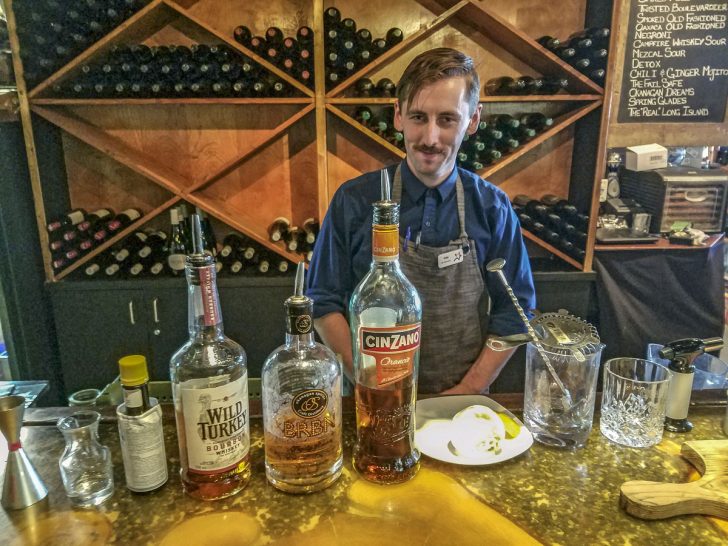
What resulted, among others, was the Smoked Old Fashioned. Yes, it’s a show. Yes, it’s delish. 

“Sometimes less is more,” Lehmann said. “I think gone are the days of sweet hyper-colored drinks, saturated with artificial flavors and so much sugar. In the Den, we have taken to infusing our own tinctures and flavorings using all natural ingredients to develop a unique taste and profile. We have also found in doing so we are using some older style spirits that have been collecting dust for an age. Aperitifs are heavily used in our lineup, as are spirits like Campari, Aperol and gin.”

So, of course, I wanted to watch Tom make his Smoked Old Fashioned.

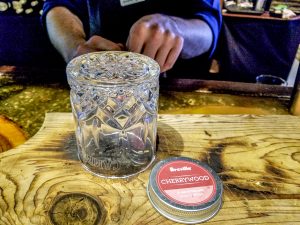
Infusing the glass with wood chip smoke while making the Smoked Old Fashioned. Credit: Yvette Cardozo

Originally, they used a smoker, trapping smoke in a huge beaker, then pouring it into the drink. But the smoker is now broken, so Tom torches wood chips.  Honestly, a better show.

First, he lined up his ingredients along the bar: a couple of bourbons, vermouth, bitters, a ball of ice in a glass, orange rind, cherry wood chips, and a beaker with a strainer.

Then, he torched the wood chips on a cutting board, and, when the smoke got going, set an upside down glass over the smoke. This lets the smoke flavor adhere to the sides of the glass.

Next he mixed the alcohols, bitters and sugar syrup. All this was shaken with ice cubes. He put the ice ball into the smoke infused glass, then poured the alcohol mix (minus the cubes) over the ice ball in the glass, finally adding a slice of orange rind. The ice ball, rather than cubes, keeps the drink cold without melting and diluting it, he explained.

 The result is a smooth taste that rolls gently around your tongue. There’s a hint of whiskey, a hint of orange, and the barest hint of smoke.

Ok, if this isn’t smoky enough, Tom has his Campfire Sour. It’s made with two bourbons and a single malt Scotch whiskey Laphroaig, then topped with frothed egg whites, a slice of dehydrated lemon and two charred cinnamon sticks. All this is to make it look like a campfire. The cinnamon plays the charred logs.

Be warned, though, Laphroaig is a very special taste. It’s a single malt whisky from Scotland infused with enough peat smoke flavor to bring tears to your eyes. I once hiked a multi-day coastal trail in Canada and after a week, everything I owned including my skin smelled of campfire smoke. This drink is that campfire smoke on steroids.

My favorite drink at the Den, honestly, was Tom’s Chili & Ginger Mojito. This is more than your usual by-the-pool mojito. It has the lime taste, to be sure, but there’s also ginger and, to wake you up, red chillies. A mojito with a kick. Perfect after a day of skiing and before you tuck into the Den’s BBQ ribs. 

Enjoying drinks at Den Bar and Bistro, Silver Star, BC. Credit: Den Bar and Bistro.


Can You Do This?

Another Caption Contest.

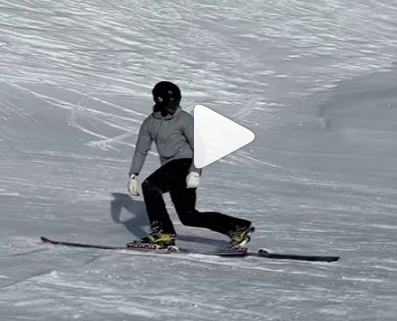
This is Tobi Heinle, ski guide, Voekyl-Marker-Dalbello pro athlete, doing his thing on Zugspitze Mountain, Garmisch-Partenkirchen. More on Tobi, click here.

Click on arrow to see video. And try to caption it. Write your entry below.

[Editor Note: Thanks to Snowbrains.com for originally posting this.]

https://www.instagram.com/p/B5Vri8QFra2/?utm_source=ig_web_button_share_sheet

Canadian Cuisine? Sun Peaks, BC, Has Poutine Plus

Poutine Is A Huge Comfort Food. Add That To A Mighty Bloody Mary And You Have Dinner At A Cozy BC Resort.

Yes, poutine is one of those things that requires an excuse to eat.

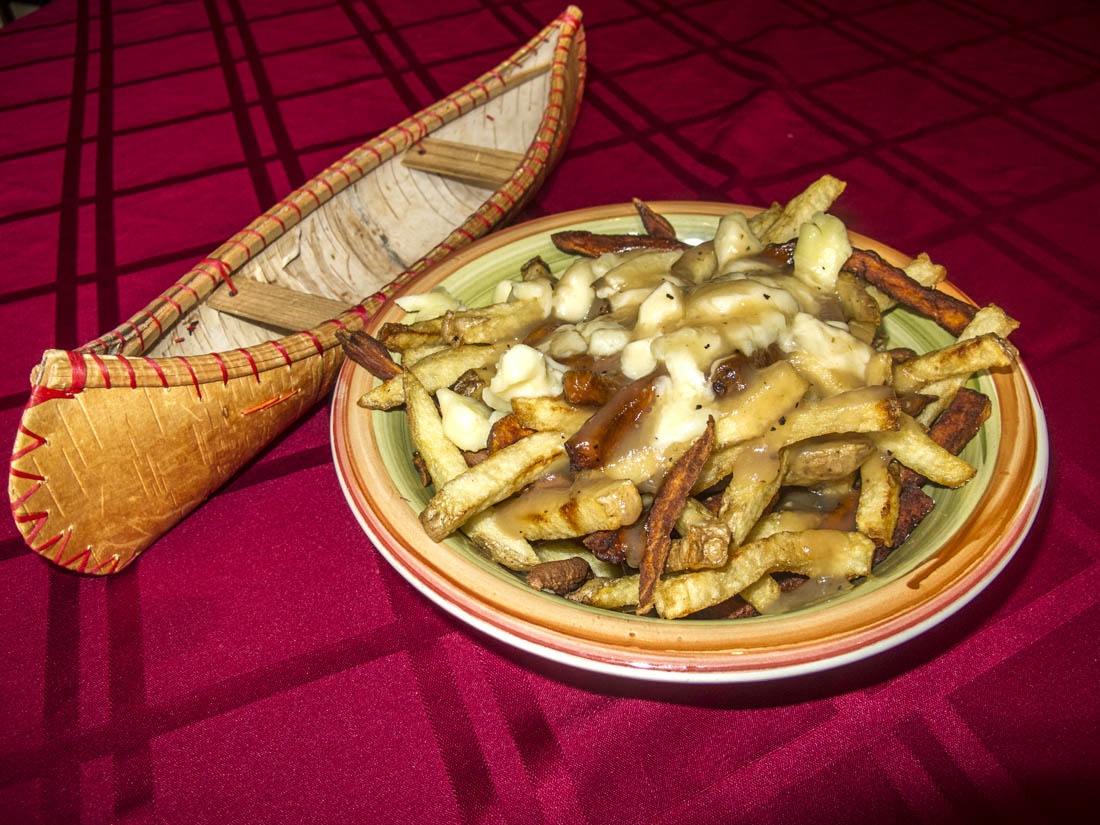
Poutine, a Frency Canadian comfort food dish. French fries are covered in tasty gravy and cheese curds. Next to the dish is a model of an historic birch bark canoe. Served in the Voyageur Bistro at Sun Peaks Resort, BC, Canada

We’re talking the massively popular comfort food that is Canada’s answer to Mac and Cheese. There isn’t an easy way to rationalize a dish that includes french fries, gravy, and cheese curds.

Unless, maybe, you’ve been skiing all day.

Bear in mind, poutine comes from Quebec, a scarf-culture place that has yet to embrace the idea of full face covering against the cold, a place where minus 30 degree temperatures in winter are a way of life. You NEED fuel in those conditions. Or anyplace else with that kind of weather.

So, enter Voyageur Bistro at Sun Peaks Resort in British Columbia, Canada. It’s a tiny cafe with hardly a dozen tables but if  you’re looking to bolster your inner heat lamp when it’s freezing outside, you can hardly do better.

A former river rafting guide, owner Kevin Tessier started adding authentic Voyageur cuisine to his tours. It was all based on what folks ate during fur trading days (bison, berries, cedar plank salmon, lots of maple syrup). His meals were wildly popular, and this whole concept found a home in his restaurant, which he co-owns with his wife Diane Larsen.

There’s Elk Wellington, Bison Burgers and, in the past, a Mac and Cheese that included Tenderloin Steak.

As for poutine, one often-cited tale is that of Fernand Lachance, from Warwick, Quebec, which claims poutine was invented there in 1957. Lachance is said to have exclaimed, ” Ça va faire une maudite poutine” (“It will make a damn mess” in French slang), hence the name. The sauce was allegedly added later to keep the fries warm longer. Over time, the dish’s popularity spread across the province and later throughout Canada.

Well, of course, then, I had to try Kevin and Diane’s poutine, which is made with real (they stressed that point) locally made cheese curds and fries, topped with their own special gravy which includes drippings from beef, pork and turkey. The secret ingredient is apple cider vinaigrette.

The final extra yummy product—mind you, I had skied 25,000 vertical feet that day and was truly READY—was a mouth wateringly hearty dish, rich with a hint of sweet from vinaigrette and interspersed with chewy, tangy cheese.

I was forking my way through when a local sat down on the bar stool next to me.

“Caesar,” he said, ordering from Diane, the bar keep.

 I started to pay attention when the drink took its final form and immediately ordered one for myself.

Canada’s classic Caesar drink. This is an upscale version made with salmon infused vodka, the usual tabasco, and Worcestershire sauces and Clamato juice.Cheese curds, salmon and pickled vegetables are included. Served in the Voyageur Bistro at Sun Peaks Resort, BC, Canada

A Caesar is basically a bloody Mary with an attitude but Voyageur’s Caesar is something very special: first into a tall glass rimmed with celery salt, the barman put the ice, then two shots of smoked salmon-infused vodka (“We don’t skimp,” Diane added about the vodka they make themselves), followed by squirts of tabasco sauce, Worcestershire sauce, a touch of horseradish and finally Clamato juice. This is topped with a skewer of assorted pickled or roasted vegetables, a chunk of First Nations-caught sockeye salmon, sometimes a chunk of cheese curd and maybe bison or elk sausage.

Yes, this was dinner.

Non-Snow Activities: Senior Divin’

Something Else That’s Cool For Seniors.

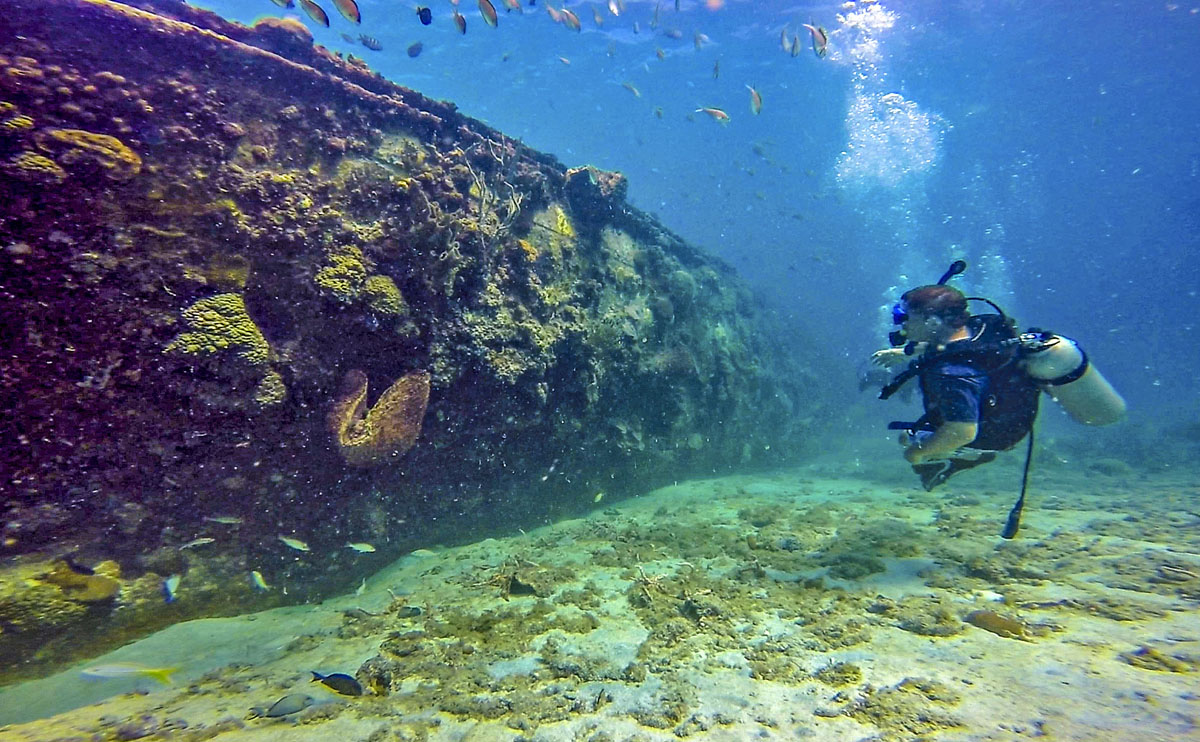
Coral and sponge life growing on the side of the Ellion in Carlisle Bay. Credit: Kiera Bloom.

Are you ever too old to dive? What concessions might you make?

I’ve been diving since I was in college, back in the 60s. On the concession front, these days I am happy to cavern dive. My days of dragging reels and half a dozen lights into the bowels of a cave are behind me, as are dry suits. I’m glad I did Antarctica when I had a chance. And if some cute, buff dive guide wants to carry my gear—have at it, I say. Gladly.

I like warm water. I realized along the way that shallow (say 60 feet or so) dives not only give you more time but usually have better life to see.

So, when I went recently to Barbados, I talked to a couple of dive operators about “elder” divers.

“You find those divers, the older ones, are the most competent,” said Troy Barthelmy, Aqua Center manager for Sandals on Barbados

Looking out from inside the Bajan Queen wreck with fish and diver in view. Credit: Andrew Western.

His oldest divers are in their 80s. Most of them, he added, are physically fit and, “more than anyone else, they know their limits.”

“They don’t require much attention beyond maybe needing help up the ladder. Removing the weight belt, tank, and fins in the water also helps.”

Physical fitness is important, he added. Basically, if you can’t do a couple of flights of stairs without becoming breathless, there may be a problem.

But these days, there are also concerns about safety and liability.

All of the dive shops on Barbados I contacted had some sort of medical form for divers to fill out. They are not all identical but do appear to hit more or less the same long list of possible medical issues.

They range from the expected—do you smoke, history of heart disease or diabetes, to the surprising—hay fever, frequent colds, prone to sea sickness. 

Hawksbill turtle chews on sponge algae atop the Eillon, one of six shipwrecks in Carlisle Bay. Credit: David Noyes.

Sandals Resort, a high-end Barbados beach vacation spot, makes sure guests who plan to dive get this form well before their trip. And if they answer yes to ANY of the questions, they need a certificate from a doctor saying they are OK to dive. Should they say yes and arrive without the certification, the dive shop will call a local doctor; the fee is $160 US. 

Many dive shops use a standard medical form that can be found on the PADI website. The form is required for all divers, not just those who are older.

For people who are anxious, Troy says the diver can do a test dive in the pool to get more comfortable with the Sandals gear.

Peter Grannum of Dive West Side Scuba echoed what Troy said, adding that he finds older divers prefer more shallow dives. 

Which brings us to Carlisle Bay, one of the finest novice/easy dives I’ve experienced.

Carlisle Bay, a protected marine park, is a crescent shaped bay on Barbados’ sheltered west side. 

There are six boat wrecks all practically within sight of each other and some with tops as shallow as 11 feet, with much of the diving at the 30 and 40 foot level. 

Local women of Barbados in colonial dress. Credit: Yvette Cardozo

Each wreck has history. The Bajan Queen, a former party boat, was sunk here to become an artificial reef in 2002. Now schools of grunts, squirrelfish, and jacks swim beneath the hull. At the Ellion, a hawksbill turtle calmly chewed on sponge algae on the stern. This boat was used by drug smugglers, who were caught, and went to prison. 

The Berwind, a French tug during WWI, was deliberately sunk by its crew, which didn’t want to go home. It’s the oldest wreck in the bay. Cornwallis was a Canadian freighter sunk in WWII by a German U-boat and moved to the bay in 2000. Plus the Ce-Trek sunk in 1986. And a barge, sunk in 2000.

It’s possible to do most of these bits and pieces on a single dive or two and a couple of the wrecks can be penetrated. My only regret is we didn’t do both dives on this site. 

Barbados Info

Barbados is in the Lesser Antilles, south of the usual hurricane tracks,

Barbados is 75 – 85 degrees year round. June through October is the rainy season and also hurricane season in the Caribbean. And while Barbados usually escapes major storms, gateway cities such as Miami may be affected. For Barbados Information, Click Here

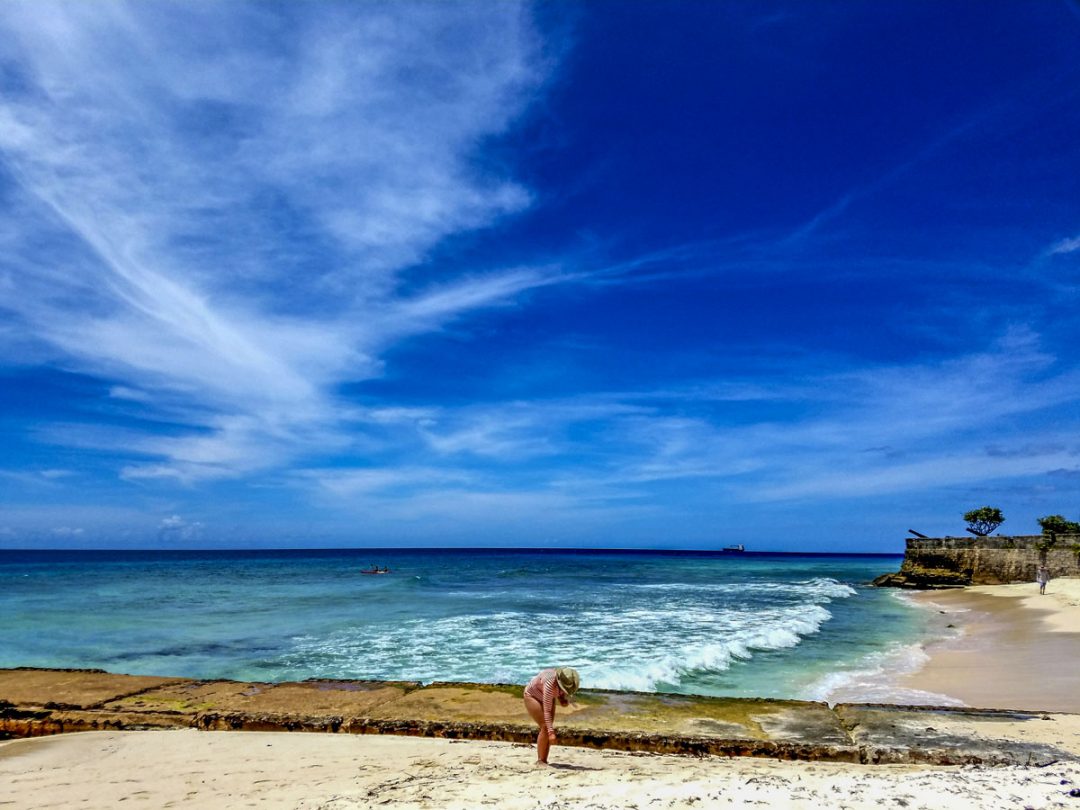
Looking for shells, early morning on the beach at the Hilton Barbados in the Lesser Antilles, Caribbean. The garrison with canon can be seen in the background. Credit: Yvette Cardozo

My DIY Dolomite Ski Adventure


With 450+ lifts, the Dolomiti in northern Italy is the largest ski region on the planet. This UNESCO World Heritage site is beautiful, historically and culturally interesting and overall, outstanding.

DOLOMITI SUPERSKI represents the area’s twelve regions, some quite famous (A portion of the 2026 Winter Olympics will be held in Cortina d’Ampezzo), others individually unique. Best of all they can be accessed using a single RFID pass, which includes use of an expansive network of regional buses. Seniors (those born before November 30, 1954) get discounts on already low ticket pricesClick here for 2019-2020 ticket prices.

Climate Change now requires illogical and calculated guesses when planning long ski trips from ‘down-under’.  Mine began mid-February with 2 flights, a bus, a train, another train, and finally the local bus from Bolzano to the Val Gardena region – a tiring 27-hour journey.

My goal was to ski the famed Sellaronda ski circuit covering four Dolomite passes around the Sella massif. I would be there for three weeks, and during that time, I chose to change lodging only three times. It was a good plan created with the help of the local tourist office and one that easily can be followed by others. 

I started in the northern Dolomites. St. Cristina and Selva are ideal base locations offering plenty of lodging and dining options and providing easy access to skiing throughout Val Gardena. My first lodging was Garni Cir, a small BnB in St. Cristina. The next morning I caught a bus to the base area where I purchased my Dolomiti Superski Pass and took the Saslong gondola. The majority of slopes in the St. Cristina–Selva area are steepish and perfectly groomed; more relaxing intermediate slopes are on the Alpe Di Siusi slopes above Ortisei. 

My ski week in Val Gardena included first tracks on the World Cup slopes above St. Cristina and Selva, plunging down the steep skiers’ left off the Plan De Gralba cable car, and non-stop skiing the Saslong’s slick and bumpy pitch late one afternoon.

After 6 perfect days it was time to move from Val Gardena to the Val Di Fassa region. 

I took a local bus back to Bolzano, where I checked my luggage at the train station and visited the museum housing Oetzi, the world’s oldest “wet” mummy. This is a must-see for anyone visiting the region.

Reconstruction: Alfons & Adrie Kennis © South Tyrol Museum Archaeology/Ochsenreiter

After a stroll through this lovely small city, I caught the regional bus to Campitello, where I checked into the Tobia Hotel-Restaurant-Bar on the village piazza. Campitello is a rustic village with easy access to the slopes above Canazei-Alba and the off-piste steeps around Arabba. On route, I met two university students coincidentally staying at the same place. Both, I soon discovered, were excellent skiers and fun companions.

The next several days, we skied Canazei, Alba, Arabba, Marmolada and the Pozza di Fassa region. It was exhilarating and exhausting!

My next stop, a bus ride from Campitello, was San Martino Di Castrozza. On the way we crossed the beautiful Passo Rolle Pass before descending steep switchbacks into the town. I honestly think San Marino Di Castrozza is one of the world’s most beautiful mountain resorts. Surrounded by seriously steep peaks, it is a gateway to several ski areas. On this, the last leg of my Dolomiti journey, I stayed at Albergo BnB, a pretty place within walking distance of the new Ces gondola.

The mountains above San Martino Di Castrozza. Credit Murray Sandman

When I was there the snow was hard and fast, especially off the Tognola peaks and the Coston and Direttissima chairs. Many off-piste slopes are tree-covered and look like they’d be fantastic on a powder day.

It was the end of my three-week do-it-yourself Dolomite ski experience. Accessing my online DOLOMITI SUPERSKI Performance Check, I saw that in 15 days I skied 65,143 downhill meters over 357 kilometres of trials using 130 different lifts. On top of this let me say that the food was fantastic and the skies bright, bright blue. Another great ski trip!

SeniorsSkiing Guide: La Parva, Chile

La Parva Is A GS Cruiser’s Heaven.

As a first installment on the Three Valleys of ski fame in Chile, I’ll write about La Parva. One hour and a half from the Santiago airport, La Parva is perched up at 8,700 ft on the front side of the Andes, and overlooks the city. The road up involves 40 switchbacks and a vertical rise of 7,000ft.  I do not recommend tackling it during a storm!

The furthest north of the three ski areas, the village rests at the base of the La Parva peak (13,000ft), which itself is a sub-peak of the El Plomo Massif (18,000ft). Stretching for a width of three miles across several watershed— all connected with skiable cat tracks— the area faces mostly west, with the north sides of the valleys collecting the most snow. While this western orientation exposes it to the sun and north wind, often leaving bare ridge lines, it also means snow accumulates in those multiple bowls where the snow is blown, and the sun hardly shines.

On a good year such as this, even the north faces are skiable.

As a bonus, the sunsets over Santiago are wildly beautiful.

To get you up the hill, there are four chairlifts, each serving different terrain, and seven good surface lifts (platters, thank god). In windy weather, the platters are safest, as you can bail out wherever you want. But, with 80% of the days being sunny, and often with no wind, the weather is generally not an issue. Grooming is excellent with no mogul bashing required, ever, but add in 70% of the runs being intermediate level, and this is a GS cruisers heaven. The entire vertical rise of 3,000 ft can be skied in one go, so get the long boards out boys!

The village itself is like a classy suburb of Santiago with no hotels, but several restaurants. Most of the 2,000 or so beds are ski in-out apartments, and the family-oriented atmosphere is manifest in the hoards of little racers out at 9 am sharp every weekend. Racing is the name of the game in La Parva, and while often fun to watch, it does take up some of the best runs, especially when the international teams arrive in August. Fortunately, there is a lot of room in the ski area, especially when the off-piste is in good shape.

Casey finds a lonely route down to the Las Aguilas chair, and the small restaurant at its base.

For lodging, there many private apartments, and a few houses on Airbnb or Booking.com. The village has three restaurants, a bar/disco, and a small grocery store. On the hill, aside from the three restaurants mentioned (all accessible on skis) there are two mid-station restaurants, and a small, occasional, open-air one at 11,400 ft. Careful with the pisco sours, it is a long way down…

For La Parva Trail Map, click here

For La Parva Webcams, click here

Check out the La Parva website here.