Tag Archive for: senior cycling

This Week In SeniorsSkiing.com (June 22)

Southern Hemisphere Special, Safe and Sane Cycling For Seniors, Zany Videos, El Nino Coming.

Yes folks, it’s the start of the ski season in far away places below the Equator. Here’s a picture of downtown Santiago, Chile, which received a highly unusual coating of snow for the first time in years.

If there’s snow in the city, there’s more in the mountains. Credit: anis_velasco/instagram

And in New Zealand, The Remarkables, those beautiful, mystic mountains from Lord of the Rings fame near Queenstown, are open for the season.  Check out the video of opening day at the bottom of this article. Nearby Coronet Peak has been open for a couple of weeks.  Here’s what the early season skiing looks like down there.
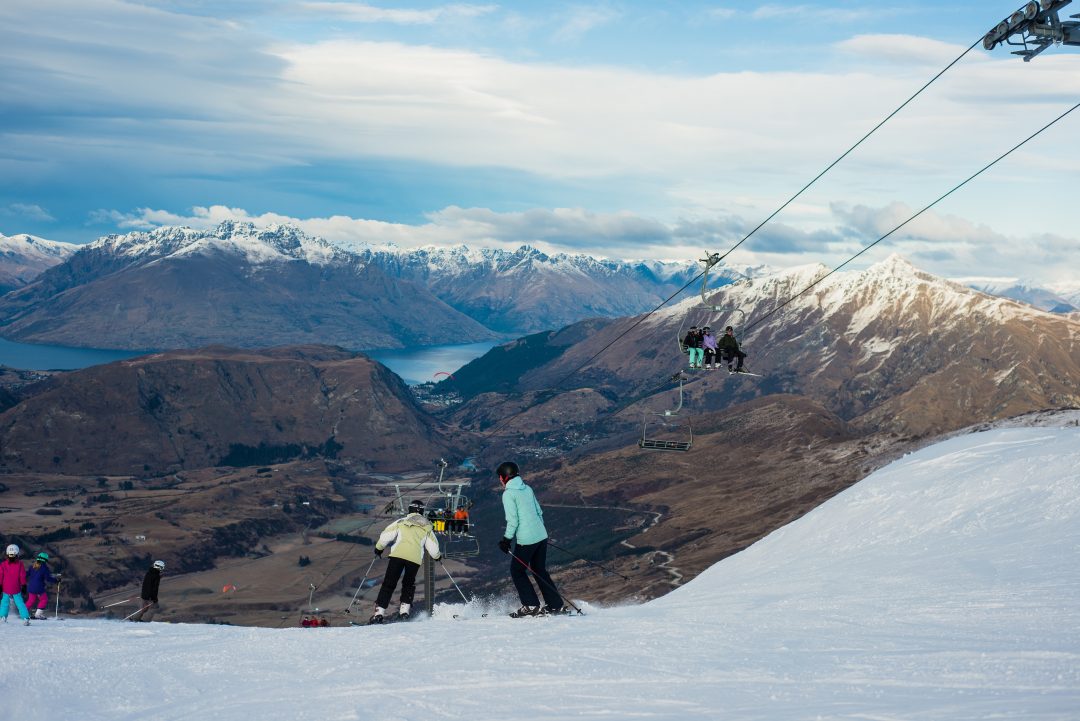
First turns of the season at Coronet Peak, Queenstown, New Zealand.

Skiing Chile

If you’ve ever wondered what it might be like to follow the snow during the summer and weren’t quite sure how to do it, we have a new series that might get you started.

Portillo Plateau, Chile. Amazing skiing starting now. Credit: Casey Earle

In celebration of the beginning of the snow season in the Southern Hemisphere, we have an orientation to skiing in Chile by a new SeniorsSkiing.com correspondent Casey Earle, an American ex-pat who lives and skis down there.  His first article describes the different resorts what line the magnificent Andes mountains. You will hear more about skiing in Chile in the coming months.

Biking With Young Hammerheads

Veteran cyclist, skier, and SeniorsSkiing.com correspondent Pat McCloskey offers some advice for seniors who ride with a gang of younger riders.  He has strategies for going around the loop safely and saving face at the same time. It pays to recognized the limitations that senior status brings, especially on a mountain bike.

Have You Seen These Videos?

Here’s Opening Day at The Remarkables, Queenstown, New Zealand. Click below for the festivities.

And, Check Out What Happens To A Show Off When His Ski Flipping Trick Doesn’t Work. Click the picture below.

Finally, mountain biking down Corbet’s Couloir? First time ever, but you can be sure it isn’t the last.  Thanks Teton Gravity Research. Click on picture to view.

And Looking Ahead. El Nino Is Knocking.

Weather worriers are looking at an emerging El Nino pattern forming in the eastern Pacific. El Nino comes around when the surface water temperature increases ever so slightly in the ocean west of the Peru and Ecuador. Since everything in the weather world is connected, that water temperature change impacts the atmospheric wind patterns which impacts the everyone’s weather.  From the Weather Channel Explainer:

“If El Niño conditions are present during the winter, the jet stream pattern over the U.S. shifts and can result in a wetter-than-average winter across the southern tier of the U.S., including portions of California.

“During an El Niño winter temperatures are also typically cooler-than-average from the southern Plains into the Southeast and warmer-than-average from eastern Alaska into western and central Canada and into the Pacific Northwest, northern Plains and Midwest.

“The strength of the El Niño plays an important role in impacts across the U.S., including in the tropical Atlantic. At this point, it is too early to know when an El Niño pattern may develop and how strong it might be.”

Happy First Day Of Summer.

Onwards.  Have you bought your season ticket yet? Time to pay attention to whatever deals are left.

And tell your snow loving buddies about SeniorsSkiing.com.  Remember, there are more of us everyday, and we aren’t going away.


Cycling Efficiency For Seniors

Bottom Line: Knoweth Thy Limits, Wise One.

Ride with younger guys? Then ride wise and slow down. Credit: Pat McCloskey

As I  was pounding the rocks of  Laurel Mountain on the mountain bike with  a group of younger riders here in Pennsylvania’s beautiful Laurel Highlands, I was thinking strategy.  At 63 years old, I am still in pretty good shape but the older I get, I start thinking about the old adage “age and treachery will beat youth and skill”.  Not really applicable in most cases but at least I can try – right?  So the first thing I think of is: don’t push the anaerobic limit to be the first up the hills and over the rocks.  Let the young guns deal with that and I will just keep them in sight.

I have learned to ride within myself and only exert myself enough to keep a visual on the group, especially with a longer three hour + ride.  A more scientific approach is the below which is done with a heart rate monitor:

  • Zone 1: 60 to 70 %; very comfortable effort; use this for warmup and cool down
  • Zone 2: 70 to 80 %; comfortable enough to hold a conversation; most training is done here
  • Zone 3: 81 to 93%; “comfortably hard” effort; you may be able to say short, broken sentences.
  • Zone 4: 94 to 100%; hard effort; the pace is sustainable, but conversation is a few words at a time.

Author Pat McCloskey ponders whether to go around a big section to get back to the parking lot.

Basically the zones are dictated by two theories.  The original theory is dictated by the target maximum heart rate of 220 minus your age. Then you can calculate with a heart rate monitor which zone you can ride in.  This calculation is not quite accurate because it does account for conditioning.  A better way to use the zones is to calculate what is called Heart Rate Reserve which is your max heart rate minus your resting heart rate. Find out what your real max heart rate is by exerting yourself in Zone 4 with a monitor and then in the morning at rest, calculate your true resting heart rate.  This allows for conditioning and the zones can be used according to that calculation on a heart rate monitor.  All in all, I use a monitor on rides to tell me when I am exerting myself above my perceived rate of exertion which will lead to fatigue on a long ride if I am not careful. Use the monitor and slow down accordingly.  As long as I keep the group in sight and can be in the Zone 2 area, I am a happy rider.

Another strategy is not to ride every section but take a breather and bypass a section and/or coast to the next meeting area.  Sometimes that means taking a fire road instead of a technical trail..  I like to challenge myself and take the technical sections but I know if I take them all, I will not be able to keep up or complete the ride.  Ride to ride another day is my motto, and I am not out to prove anything.

Lastly, know your limits and know when you are finished.  You don’t want to get hurt and if you are too fatigued, it can happen easily on a mountain bike.  Sometimes you have to cut out and take the fire road back to the parking area for a head start on the post ride beer.  Hey, you had a good ride, with younger, stronger riders, but for a guy who is older, this is the way to stay involved without compromising your ride or theirs.

Riding season is upon us, and there is no reason not to challenge yourself within limits.  Go for it.  Have fun but as Harry Callaghan once said, “ A man has to know his limitations.”

Cross or divert? Use your noggin and your heart rate monitor to decide. Credit: Par McCloskey