Incidents & Accidents: 8
[Editor Note: SeniorsSkiing.com is asking our readers to contribute to support our online magazine. Yes, we have grown in the number of subscribers and advertisers. But our expenses have also grown. You can help us defray some of these expenses by helping us out with a donation.]
Support SeniorsSkiing.com by clicking here.
______________________________________________________
It Might Be Wise To Skip That Last Run.
 Who: Arlene Condon Maginn
Where: Bretton Woods, NH
What Happened: On the third day of our ski week, Bretton Woods had a two-for-one ticket day. The crowd, still very modest, was noticeably bigger than earlier in the week.
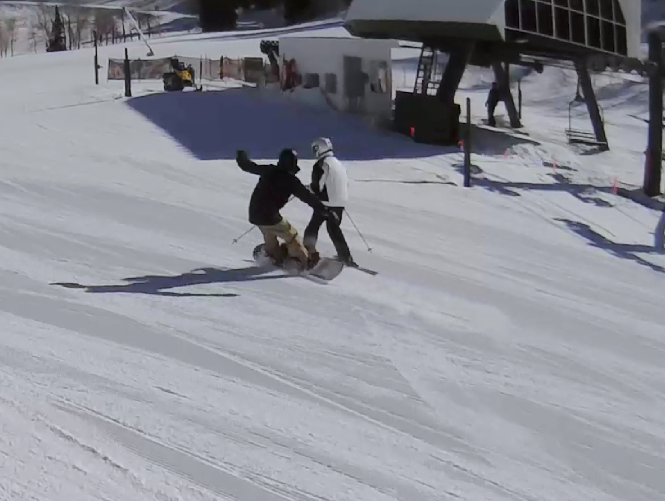
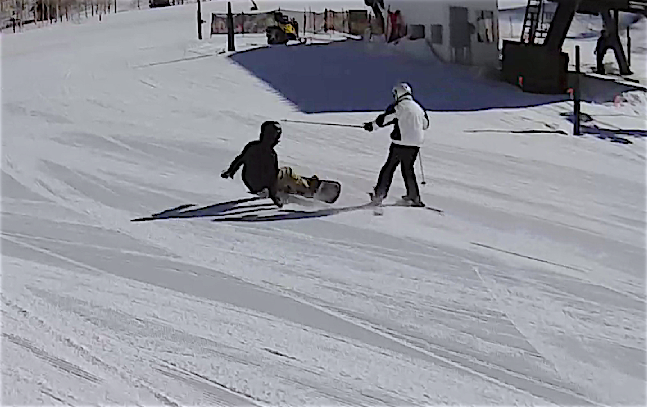
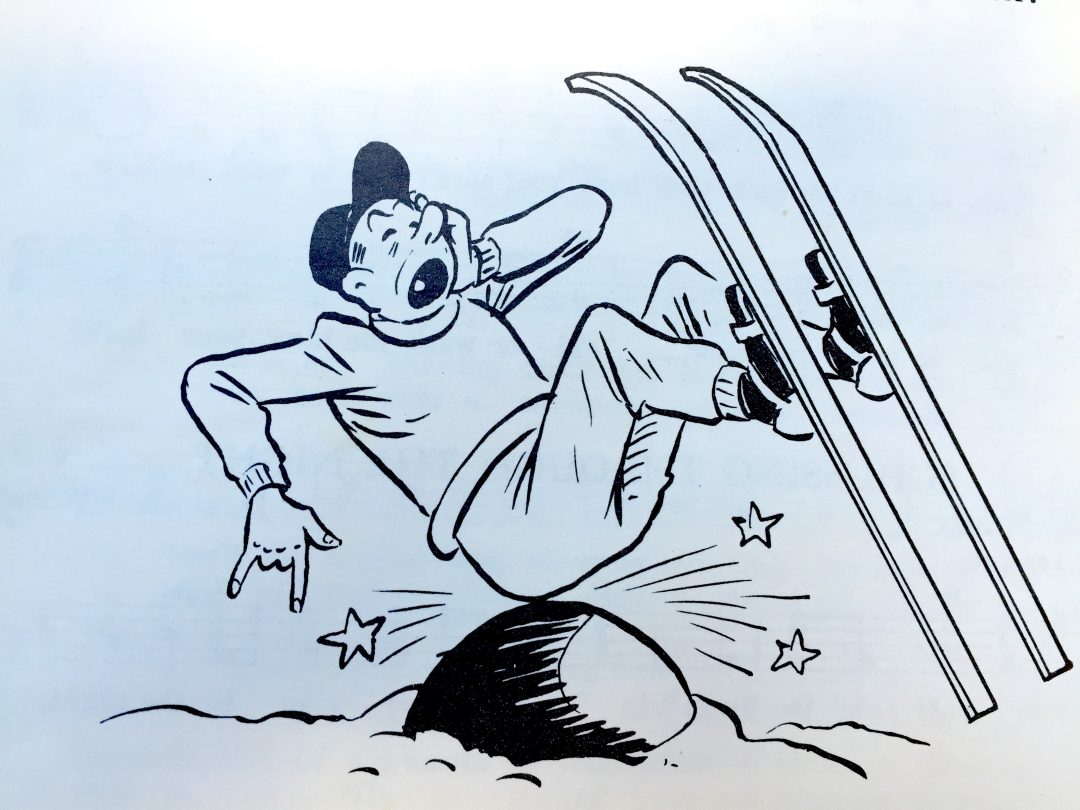
John and I were skiing the last run of the day around 3 pm. John followed me down from the top, and, at the very bottom run out, he zoomed past me. At least three trails led into the base area, marked by a big “Slow” sign. No one was slowing in the slightest. Suddenly, a boarder crossed directly in front of me and went right over the back of John’s skis, not 15 feet away. John launched into the air without his skis and landed head first in a snow bank off the trail. The boarder also fell and lost his board.
Both John and the boarder stood up and shook themselves off. John said he saw stars and was thankful he was wearing a helmet. The boarder also said he was okay and was very apologetic to have caused the mishap.
I am a nurse with a recent head injury, so I was very careful to ask John several times about any symptoms, like blurred vision and headache. The boarder stayed with us while John put his skis back on. We went down the 50 or so yards to the base. We were done for the day and headed back to the lodge.
Lesson Learned:
1. We should have asked for identification from the boarder, just for future reference. And we should have reported the incident to the resort. Later, in the lodge, we learned from an employee that there is a formal process for reporting accidents. Since we never exchanged information with the boarder, reporting didn’t seem that useful.
2. The last run of the day can often be problematic. We had fatigued muscles, slowing down our response time. John should have curbed his enthusiasm and his speed at the bottom of his last run.
3. Skiing in crowded areas—merging trails, near the base, or where there are lessons—requires more diligence and focus on what’s going on. Clearly this is where the risk for collisions is highest.
4. As a senior—especially someone who is recovering from a head injury—I try to be very careful about injuries. I stay in shape, stretch, wear a helmet and bright-colored parka. My lesson is to ski defensively, especially in tight places and at the end of the day.