Tag Archive for: The Skiing Weatherman

This Issue: March 18, 2022

In Short Swings!, Jon pairs French philosopher Simone de Beauvoir’s thoughts about aging with giving the finger to some disrespectful kids at Park City.

Skiing Weatherman, Herb Stevens, previews what to expect in ski country over the coming weeks.

Wendy Clinch of TheSkiDiva discusses what the women on her forum are saying about the state of on-hill safety.

Tamsin Venn profiles Deer Valley and the pleasures it delivers for senior skiers.

You probably didn’t know about Alta’s role in the development of a national approach to ski-teaching. Alan Engen, who headed Alta’s Ski School, shares that important chapter in American skiing history.

Jonathan Wiesel, President, Nordic Group International, encourages readers to propose that local golf courses start cross-country ski operations. He establishes a strong case and provides information resources to help make the pitch.

Finally, Mike Roth illustrates a verrrry long fall he took years ago in the French Alps; Test Your Skiing Knowledge poses a new puzzler and announces the winner of the last one, and LUV2SKI presents a few new reader-submitted license plates for your pleasure.

Enjoy the issue. The entire site, including our archive of more than 1,700 articles is accessible at any time. The next editorial package will be distributed Friday, April 1.

Make lots of happy turns, and, remember, Senior Skiers Rock!

Email jon@senorsskiing.com to request the new Senior Skiers ROCK! helmet sticker.


The Skiing Weatherman-January 21, 2022

East stays stormy…snow returns to the West

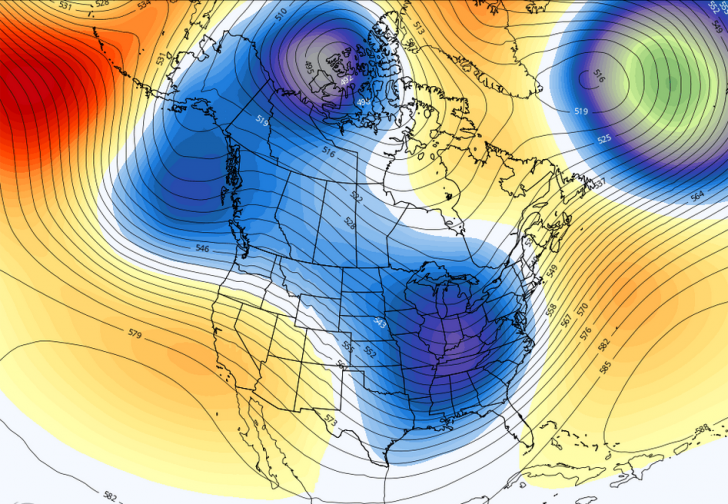
As we approach the approximate halfway point in the skiing/riding season, the slopes in all regions of the U.S. and adjacent to Canada are in good condition, with the western half of the continent still benefitting from the astounding amounts of snow that fell in late December.  This season got off to a roaring start in the West and a sluggish one in the East, but the jet stream pattern that delivers cold and storms has favored the Midwest and East for a couple of weeks now.  A western ridge/eastern trough couplet has dominated, and that setup will remain in place much of the time for the rest of this month.  In early February, a subtle change will lead to a turn to milder weather in the East.  If we look at the jet stream map as this forecast gets underway, we see strong ridging that stretches up to Alaska where the clockwise flow around that ridge can tap deep cold air over northern Canada. 

In that position, the ridge is far enough west to allow small packages of jet energy to slide down its eastern flank and bring some snow to the inland ranges of West.  Not major snow, due to the lack of a direct tap into Pacific moisture, but after lots of bluebird days of late any new snow is very welcome.  The coastal ranges from B.C. down through California will be kept rather dry by the eastern flank of the large upper ridge sitting offshore.  The jet level flow along the coast is nearly northerly right now, so the disturbances will be able to dive all the way to the Mexican border, which would bring the resorts south of I-70 some light snow this weekend…the fast movement will limit the input of Pacific moisture, but the “freshies” will do a nice job of softening the surfaces a bit.

As has been the case for the past couple of weeks, the real forecast challenges will come over the eastern half of the country, where the interaction of the northern and southern branches of the jet stream determine the track and intensity of surface storms.  In the Rockies, the track of the storm determines who get heavy snow and who gets light snow.  In the Midwest and East, it determines much more, with sleet, freezing rain, and plain rain often part of the landscape.  If we look at the Monday morning 1/24 jet stream, we can see a good example of the forecast challenge. 

The systems that swings through the Southwest is headed out to the southern Plains, where it could join forces with northern stream energy moving into Minnesota.  If they phase into one larger trough, another substantial winter storm would impact the Midwest and East.  Just where the two branches of the jet combine will determine whether the surface low goes up west of the Appalachians, just east of the mountains and along the coast, or it stays off to the south.  All three have vastly different outcomes in terms of “who gets what”.   Right now, I favor the two streams staying separate with light snow in the Lakes and Northeast.  This busy pattern will persist until the trough eases west at the end of the month, perhaps supporting a “cutter” low into the Lakes at that time.

seniorski1

The Year in Review

El Nino, Stay South. La Nina, Go North.

If you haven’t already done so, it’s close to the time when the skis and snowboards get tucked away for summer hibernation.  Between Covid-19 restrictions, National Forest leases, and Old Man Winter calling it quits prematurely in much of North America, forces have conspired to end the season for the majority of winter sports enthusiasts.  This is my final posting of the season, so I thought I might take a look back at the season that was.

Just as is the case when putting together a winter forecast, a review of the season has to be framed by the state of the Pacific Ocean.  That is, were we in the midst of an El Nino, a La Nina, or neutral conditions with respect to the water temperatures in the equatorial regions of the Pacific?  The answer is La Nina, because those waters were colder than the long term normal throughout the season.  In the summer and fall, I am often asked by friends where the best skiing will be in the coming season.  When an El Nino is present, I always tell them to favor the central and southern resorts if they are headed west.  Conversely, if it is going to be a La Nina winter, I advise that they stay north of I-70.  Why? Well, here is a map of the average winter snowfall for all La Nina years.
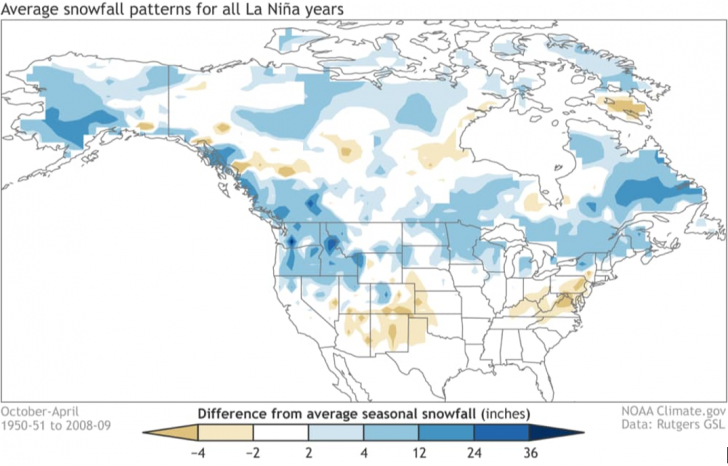
It is clear to see that when La Nina conditions are present, the jackpot for snow is typically found in the northern Rockies and Pacific Northwest, including far western Canada.  Although the correlation is weaker the farther east you go, due to the extra distance from the warm/cold pools in the Pacific, you can see that generally speaking the Upper Midwest and the northern resorts of New York and New England do pretty well.  How did this season work out?  Here’s the Top 10 resorts in terms of snowfall, through March 15th (the latest I could find).
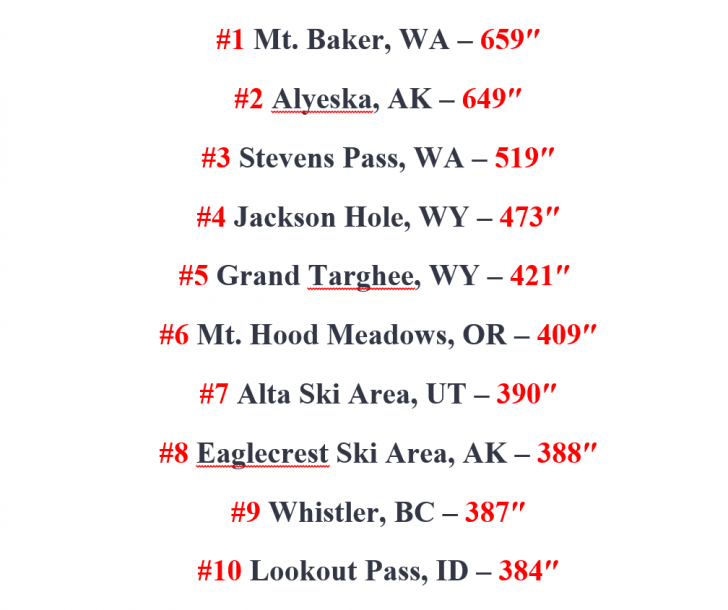
No surprise that all ten are in the West.  Only occasionally does a Jay Peak or Sugarloaf push their way onto this list and after a paltry amount of snow in March, there will be no New England “contendahs” this year.  Now, notice where 9 of the Top 10 are located…north of Interstate 70!  Alta is the only exception, and they are only slightly south of that line of demarcation.  Also, Alta’s normal snowfall is close to 550 inches, and I doubt that they will get that extra 200 inches to reach normal snowfall between mid-March and when the lifts stop turning at the top of Cottonwood Canyon.  Moral of the story – if it’s a La Nina, stay north of I-70.  If it’s El Nino, head to the central and southern resorts.

Elsewhere, the Upper Midwest bucked the La Nina trend with a below normal snowfall season at most resorts. In a more typical La Nina fashion when a southeastern upper ridge brings spells of warmth, the season was more of a struggle at times in the mid-Atlantic and Southeast but these regions had several runs of stellar conditions if your timing was right.  The Northeast enjoyed a solid season, with a “Fabulous February,” and then the flakes stopped flying in March.

For those of you who might think on a broader scale, I leave you another way to measure how this season worked out with respect to snowfall.  It’s a graph of seasonal snow extent (in square kilometers) from December 1st through February 28th, which constitutes “meteorological winter.”

This winter was better than 5 of the last 6 and 7 of the past 10 and the data trend over the past 50-plus years is positive, contrary to what some folks want you to believe.  The models that focus on El Nino/La Nina are hinting that we may be in La Nina again next winter, something to consider as you start to put together your travel plans.  Thank you very much for reading my column the past several months.  Right now, though, “That’s a wrap!”



Skiing Weatherman: The Hits Just Keep On Coming

Busy Storms. Slopes in Good Shape.

As I write this piece at the start of President’s Day weekend, the slopes from coast to coast are in fine to extraordinarily good shape, thanks to a very busy coast to coast pattern of storms that has played out in recent weeks.  A push of arctic air delivered by the stratwarm episode that was discussed in last week’s column is providing cold air over the eastern two-thirds of the country.  At the same time, upper level energy that supports the stormy pattern continues to be ejected from an upper level trough over the Aleutians.  After the holiday weekend those disturbances will continue to favor resorts north of I-70 and I-80 in the West, but as the energy tracks eastward and interacts with the cold air flowing into the center of the country from Canada, storms will bring fresh snow to the Midwest and the East.  Here is a jet stream for Friday the 19th that illustrates the snowy “handoff” pattern that is in place now and should stay in place for the next couple of weeks.

With one trough over the Gulf of Alaska and another over the eastern half of the country, combined with a blocking ridge still hanging around Greenland, storm after storm will cross the country, some small, some more significant.  Initially, the snow will fall in British Columbia and the resorts of the Pac NW and northern Rockies.  The northern Great Lakes will pick up a round of powder as the disturbance heads toward the high amplitude trough that stretches from the Great Lakes to the Gulf of Mexico.  As the disturbance in the northern branch of the jet stream interacts with the larger system, the result could be a storm that could run up the length of the Appalachians late in the week and into next weekend.  As I suggested earlier, there will be ample cold air around, as shown by this map of 5,000 foot temperatures for next Friday.

The green and gray colors show where temps will be below 32 degrees aloft, a proxy for snow vs. rain at the surface.  You can see that a long-track snow event up the eastern seaboard could indeed be in the cards.  Now if you look at the jet stream map above, you will see an extended trough reaching from the waters west of Washington northward to the Arctic region.  The counter clockwise flow around that feature suggests that after 10-12 days of domination by arctic air, Pacific air masses will get involved, leading to somewhat milder weather (less cold) by the end of the month or so.  In the meantime, enjoy the frequency of flakes and preponderance of powder!

REGIONAL HIGHLIGHTS:

Pac NW/B.C.:

Big storm late this week followed by more storms from the Gulf of Alaska rolling into the mountains of B.C., Washington, and Oregon.

Central and southern Sierra:

One storm this weekend and another early next week.  Glancing blows from storms to the north bring light snow later next week.  Heavy snow next weekend.

Rockies:

Weekend snow followed by a moderate to heavy accumulation a couple of days later central and south.  Potential for another round next weekend.  Moderate amounts of snow next week in northern resorts

Midwest:

Arctic air dominates.  Light snow from Clipper systems and some lake effect snow in northern Lakes.

Northeast:

Parade of storms continues to add snow every couple of days.  Shot at significant snow middle of next week and again late in the week.

Mid-Atlantic/Southeast:

Two shots at moderate to heavy snow in next week…first one around Tuesday and again a couple of days later.


The Skiing Weatherman: Haves And Have Nots

The Difference Between East and West Is Remarkable.

Over the past few weeks, I have shared with you some of my winter forecasting tricks of the trade but now it is time to get down to business and do some actual forecasting. 

The pattern change that was foretold a couple of weeks ago by the re-curvature of a typhoon east of Japan is well underway (The “Typhoon Rule”). By this weekend an unseasonably cold upper trough will cover the eastern half of the country.  The air that the trough delivers will be of arctic origin, and, although it travels over ground that is not yet covered with snow, it will still be cold enough for some productive snowmaking in the taller mountains of the Northeast and as far south as resorts in the central Appalachians. 

Better yet, the cold air will rush in on the heels of a low pressure system that will generate a swath of snow from the Great Lakes eastward to the interior Northeast.  Lake effect snow will kick in downwind of Erie and Ontario for a short time, but because the system will be progressive, that backside snow won’t last very long.  This looks like a three- to six- inch event from the Adirondacks eastward through the Greens and Whites and on into the mountains of Maine.  That may not seem like much, but that first inch of machine made snow is laid down a lot faster when it lands on crystals and not leaves and dirt.  The cold temps this weekend will help to chill the soil, too.

On a broader scale, the developing pattern will be one of the “haves” and the “have nots” with respect to cold weather and prospects for snow.  Here is what the jet stream pattern is likely to resemble late next week

The deep trough will cover much of the eastern half of the country, with a strong ridge covering the waters of the eastern Pacific.  Clockwise flow around the ridge will combine with counterclockwise flow around the trough to tap into air masses from far to the north. This setup is ideal for the delivery of cold to the Midwest and East.  This next map shows the expected temperature anomalies at the five thousand foot level in a week from now. That altitude level is a proxy for forecasting surface temps.

The purple shading tells me that the air will be plenty cold for snowmaking and natural snow opportunities from the upper Midwest through the Northeast.  That takes us to the middle of the month, but my sense is that the same general pattern will persist until after the 20th or so, and perhaps close to Thanksgiving.  From time to time, smaller scale disturbances embedded in the flow around the trough will spin through the Lakes and into the East, and those systems will represent the best shots at natural snow over the next couple of weeks.

That is the good news.  While eastern North America will be unseasonably cold for the foreseeable future, thanks to the trough, the not-so-good news is that the ridge over the Pacific will keep temps above normal for the most part from the Continental Divide westward, as the temperature anomaly map suggests. 

Some snowmaking will be possible at times in the higher elevations of the West, but natural snow will be hard to come by in this pattern.  In the heart of winter, there is enough cold air around for both the West and the East to be cold simultaneously, but we are still six weeks away from the START of winter, so we are playing the game of “haves” and “have nots”.  For now, it is “advantage Midwest and East”.           

The Skiing Weatherman: Knowing The NAO

A Negative NAO IS Friendly To Skiers. Right Now, It’s Smiling.

During the upcoming winter I will be producing condensed regional forecasts on a weekly basis, hopefully providing readers with another nugget of info before they pick a destination for time on the slopes.  I will refer to a number of different reasons for forecasts that you will probably not hear from other sources.  Things like the Typhoon Rule that I wrote about last week and SSW (Sudden Stratospheric Warming) episodes.  In addition, I will use a number of “teleconnections” around the northern hemisphere. 

A teleconnection is a relationship between surface and/or jet stream level features located thousands of miles apart both west to east and north to south.  Each one has a correlation to different types of winter weather in different parts of the country.  Examples are the SOI (Southern Oscillation Index), AO (Arctic Oscillation), EPO (Eastern Pacific Oscillation), and MJO (Madden Julian Oscillation).  One of the most significant winter teleconnections for snow lovers east of the Rockies is the NAO (North Atlantic Oscillation), which I would like to explain today.

The components of the NAO are found over the waters of the North Atlantic and the teleconnection is based on the difference in sea level pressure between two persistent features: the Icelandic low and an Azores high.   The relative positions and comparative strengths of these features determine the sign (positive or negative) of the NAO. 

When the two systems are relatively strong, the interactive circulation between them (counterclockwise around the low to the north and clockwise around the high to the south) speeds up, which results in more of a zonal, or west to east flow across the Atlantic.  That setup makes it easier for cold outbreaks from Canada to be ushered offshore after only a brief visit to the central and eastern U.S.  This is an example of a positive NAO.

When the two systems are weaker, the flow can buckle more easily, not only at the surface but also aloft.  When that happens, upper troughs are favored over central and eastern North America and blocking ridges can be found in the vicinity of Iceland and Greenland.  This is the configuration when the NAO is negative

Jet stream patterns are more persistent when there is greater amplitude of troughs and ridges. When the NAO goes negative, the trough acts as a receptacle for cold air from Canada.  The development of such troughs often spawns surface storms, many of which bring snow to the Lakes, mid-Atlantic, and Northeast, often in the form of a disturbance that becomes a coastal “Nor’easter”.  It is worth noting that a correlation exists between low solar activity (we are now very near the minimum of the 11 year solar cycle) and North Atlantic blocking patterns that support a persistent negative NAO. So, there is reason to believe that the NAO will be in a mode friendly to skiers and riders at least a fair amount of the time this winter. 

Here are depictions of the two modes of the NAO…

Now that November is here I know that many or you are starting to get as revved up about the season as I am and you are looking for snow, or at least temperatures cold enough for productive snowmaking.  The Rockies have gotten off a fast start and the first shot of true cold air has reached the Great Lakes this week and will spread into the Northeast over the upcoming weekend.  The first half of the new month, at least, looks good for cold and some natural snow roughly north of I-80 from the Midwest into the Northeast. It won’t be long now.

The Skiing Weatherman: How Do Pacific Cyclones Dictate US Weather?

The Typhoon Rule Can Predict Chilly Wet Air In North America.

In an age where computer models are believed to be the only viable long range weather forecasting tool, there remains a very effective technique for looking ahead a couple of weeks that had its roots in World War Two. 

It is called the “Typhoon Rule”. When the far western Pacific is active in terms of tropical disturbances, it is a great way to determine what the jet stream pattern will look like over the US with a lead time of one to two weeks. 

Military forecasters in the Pacific theatre dealt with typhoons pretty much year round, due to the persistence of water warm enough to form and sustain such storms in that part of the ocean.  One of the meteorologists noted that after a typhoon either re-curved over or east of Japan or tracked straight west into mainland Asia, a change in the weather would result in a week or two in Washington, D.C. and thus the correlations were born.  Here is how the Typhoon Rule works:

All tropical disturbances across the globe act like a cork in a stream.  They are warm systems without the warm and cold fronts that drive mid-latitude low pressure systems, and are therefore more influenced by jet stream level winds in terms of where they will move.  When a typhoon in the southwest Pacific encounters an upper ridge to the north—centered over Korea and Japan—the clockwise circulation around the ridge directs the storm westward, often through the Philippines and into Asia. 

A ridge in that position correlates with an upper level ridge and tranquil weather over central and eastern North America with a lead time of one to two weeks.  However, when the axis of the Pacific ridge is set up further east by several hundred miles or more, over the waters well east of Japan, the typhoons tend to run around the perimeter of the circulation, leading to a track that heads for Japan before turning north and then northeastward. 

This happens in a fashion similar to Atlantic storms threatening the east coast before turning around the perimeter of the Bermuda high as they head for New England and the Maritimes—when the ridge is far enough to the east, the storms miss the U.S.  A re-curving Pacific typhoon around a ridge well east of Japan correlates with a central/eastern North American trough, often leading to colder and stormy weather.

As we wait anxiously for the new season to start, the Typhoon Rule can give us a hint as to when colder air masses will be available for early season snowmaking or natural snow.  As I write this on Oct. 22, the Typhoon Rule is set up for a cold air mass to dive into the center of the country later in the week of the 28th.  The cold will also spread into the East, though in modified form.  Take a look:

This October typhoon is re-curving to the north east, transporting its heat to a trough in the Gulf of Alaska. Result: an early cold shot that will get snow guns going.

There are nuances to the rule, and one of them comes into play here.  This strong October 22 storm will not make a dramatic turn to the northeast toward the Aleutians, but it will turn north of east. This track suggests that the trough/cold shot will be centered in the middle of the country with the chilly air eventually spreading east. 

The Killington Women’s World Cup is about five weeks away, and it looks as though the snowmakers will be able to get started there around Halloween. The Typhoon Rule that an observant WWII forecaster discovered says so.