

Why is Watching the US Ski Team on TV so Damn Difficult?
I’ve been an avid alpine racing fan since I was a kid. I grew up in the industry, was a competitor in college and coached on the collegiate level. I’ve been fortunate to attend many FIS World Cup races at iconic venues around the world. I still follow the US team at every opportunity, and therein lies the rub.
Despite the incredible success of US Team members in recent years, being a fan today is as difficult as the courses those racers navigate. Trying to watch is as frustrating as skiing out on the second run. When coverage is available, I watch on NBC Sports and Peacock. NBC Sports only carries marquee events such as the Olympics and World Championships but at least, since they’re on cable, I can use my DVR (in my opinion NBC Sports did a better than average job covering the World Championships in February). Peacock? Where to begin? Simply awful coverage, if you can find it. Live coverage generally originates in Europe when it’s so early in the morning it’s hours before most people are up. Watching after the event presents a lineup of chopped up highlights and old events. When Mikaela Shiffrin returned to competition after her injury at Killington, VT she was gunning for her 100 th win. She got it, but few in the US saw it.
So, I asked myself the leading question above. Why is watching the US Ski Team on TV so damn difficult? The answers are myriad. I know there are licensing issues with the FIS but as I researched the issue, I couldn’t believe what a tangled mess the subject is. Here are the obstacles I learned about:
1. Broadcasting Rights Creating Poor Coverage
Fragmented and inconsistent broadcasting rights are a major hurdle. Unlike other sports, each country controls its own broadcast rights for FIS Alpine Ski Racing, meaning a U.S. viewer might need different platforms to watch races depending on where they are held. NBC, who holds the US rights, has shuffled ski racing coverage around their various platforms. Such inconsistency is the reason fans must subscribe to multiple services.
2. Time Zone Challenges
As previously mentioned, many races occur in the early morning hours in the U.S., often between 3 AM and 9 AM Eastern. This creates a major time zone challenge for American audiences. Some hardcore fans may wake up early to watch races live but there’s little chance to build an audience as casual viewers are unlikely to tune in at such inconvenient hours. Delayed highlights further frustrate fans who want to see the action as it happens. Worse still, delayed coverage can be poorly edited or filled with excessive commercials, detracting from the viewing experience.
3. Limited Mainstream Appeal in the U.S.
Alpine skiing remains to be a niche sport in the U.S. While recent successes by American ski racers have generated interest, ski racing still lacks the widespread appeal needed to justify consistent prime-time coverage. Without a large enough audience, broadcasters have little incentive to make ski racing more accessible. Football, basketball, or even other winter sports like snowboarding and freestyle skiing have a larger fan base. This means networks don’t see Alpine Skiing as a profitable sport to broadcast live.
4. Marketing and Promotion is Lacking
Compared to major American sports leagues, ski racing receives minimal marketing in the U.S. Many potential fans are simply unaware of when or where races are airing because they are not widely promoted. Social media and streaming services have made it easier for fans to track results and highlights, but this does not replace live TV broadcasts. Without effective marketing, ski racing struggles to grow its audience in the U.S., which further discourages networks from investing in better coverage.
5. European Network Dominance
Coverage is primarily produced by European broadcasters who cater to European audiences, often providing extensive coverage in multiple languages. In contrast, U.S. networks rely on sublicensing agreements, which means they do not have full control over the broadcasts. There isn’t a single, easily accessible platform in theU.S. where fans can consistently watch all FIS Alpine Ski Racing events.
6. Weather Uncertainty
Alpine skiing is not easy to televise. It must cover the course which often means top-to-bottom camera placements on the side of a mountain (in recent years drones have made that a little easier). It’s heavily dependent on weather conditions, which often leads to schedule changes, cancellations, or delays. Unlike sports played in controlled environments, ski races can be postponed or even canceled due to snowstorms, high winds, or unsafe course conditions. Such unpredictability makes it difficult for networks to plan TV coverage. This issue further discourages U.S. networks from committing resources to live alpine ski racing broadcasts.
7. A Rising Stream
While streaming theoretically allows for more flexibility, it’s become more complicated by leading to a fragmented viewing experience. In the past, fans could rely on cable networks like NBCSN, but now, many races are exclusive to Peacock, Ski and Snowboard Live, or other niche platforms. Watching all FIS Alpine Ski World Cup events in the US leads to what has been called “subscription overload”. This makes it expensive and frustrating to follow the full season. Additionally, some races may only be available through international services requiring VPN access, further complicating the process.
8. The Need for an American-Based Production Model
American sports networks invest heavily in high-quality broadcasts with expert analysts, multiple camera angles, and dedicated coverage teams. In contrast, alpine ski racing coverage in the U.S. often relies on European feeds with minimal local production. If an American network were to invest in a dedicated ski racing production team, it could create more engaging broadcasts, attract new fans, and make the sport more accessible. However, given the current lack of financial incentive, such an investment remains unlikely.
Conclusion: No Improvement Soon
For US fans, following our Ski Team will continue to be an uphill battle. It will require determination, multiple subscriptions, and a willingness to navigate inconvenient time zones and unreliable coverage. While streaming services offer potential solutions, they have also fragmented access, making it expensive and confusing to watch a full season of racing.
Until there is a stronger demand for alpine ski racing in the U.S., networks will likely continue to provide inconsistent coverage. The best hope for improvement lies in better streaming options, increased promotion, and American skiers continuing to dominate the sport, which could attract more viewers. For now, dedicated fans like me will continue to rely on niche streaming services, social media updates, and occasional network broadcasts to stay connected to the sport we love.
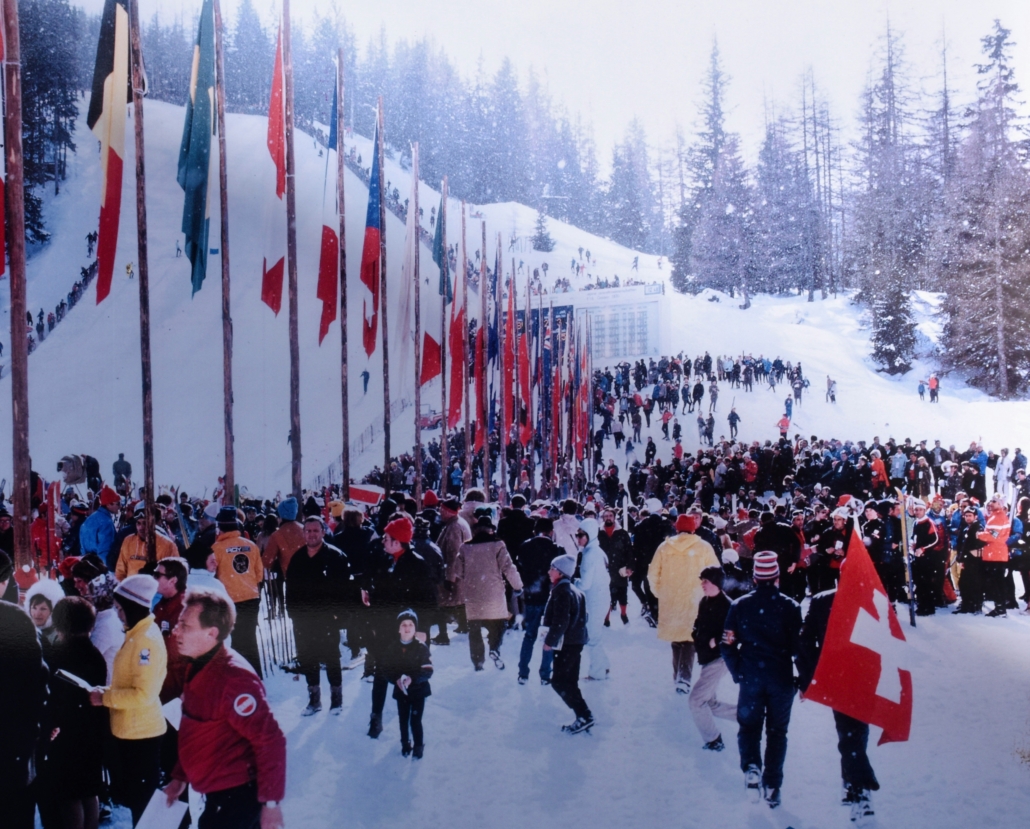
The finish of the female downhill competition at the Ski World Championship held in Val Gardena Garden Südtirol Italy. It’s February 11, 1970. This and other images were on public display to commemorate the 50th anniversary of this event. Photo by Arno Senoner on Unsplash
- Recycled Water, Real Snow: Big Sky’s Path to a Greener Ski Season - March 19, 2026
- The Rise of Private Ski Resorts for the Very Wealthy - February 5, 2026
- If It Doesn’t Hurt, You’re Not Doing It Right! - January 8, 2026


Can’t agree more I raced in the early 70s in New England and always have watched on TV. Now the US Ski Team is just as good as all the other Teams or even better coverage is a real shame. I pay for ski and snow board live and Peacock. Outside is now in the game but haven’t paid them yet. Please someone organize the coverage and. Reap the benefits of additional donations to the Team.
Good summary of what we don’t get to see, at least not often. Bu, and sure share your frustration! But with the World Cup alpine finals at Sun Valley going on this weekend, and thru March 29. there is coverage variously via Peacock and Outside TV. Not ideal but better than nothing.
Nice to hear from you KD! I hope all is well.
If you use Express VPN and connect to Canadian location you can get complete coverage on CBC (Canadian Broadcasting Co.)
Thanks for the tip, Al. I’ll give the VPN thing a try.
CBC has long had extensive race coverage. It’s often start to finish.
Previous email was incorrect Al. Actual email is above. Apologies.
So true David. I did subscribe to the skiandsnowboard.live last season but decided not to do it this year. Unfortunately, as you outline so well, our alternatives are not real good. This season I have watched some coverage on Peacock.and You Tube. You Tube has most coverage same day but it usually is just a highlight reel with about 3-4 minutes of coverage. Sometimes you get the second run but it is sporatic. We love skiing and ski racing but as you point out, most of the country does not care. Too bad. Mikaela has been a great story and she is often featured on network TV talk shows but wish we could see her race more.
in the USA any ski race is an event with small crowds, maybe Killington pulls a bigger crowd. In Europe it is and EVENT!!!!
Thank you David for this article. I had given up trying to watch the racing at the end of January due to Peacock’s lack of coverage.
Thank you also Kathe for the info on the World Cup finals coverage
Your point #3 really summarizes why it’s so ‘damn difficult’. Very simply, American sports media executives make coverage decisions based on one equation: Big audiences get big coverage and get big advertising dollars. Period. So, as long as ski racing remains a niche sport in the US (accept during the Olympics), advertisers and sponsors stay away. TV and other media are driven by eyeballs. Here’s an example. Women’s professional basketball was a clear undercard on the sports landscape, far behind the pro and college game. Suddenly a star emerges. Audiences flock in numbers to follow the sport. The networks, sponsors and advertisers ( even Vegas) take serious notice and respond. Now it’s a lead story on evening sports headlines. True, basketball is a national sport followed and participated by millions. Skiing is not and it’s unlikely that ‘damn difficult’ equation is going to change any time soon.
I actually gave up, on the day of the race I have to go to Live Timing and eventually I find the videos on Utube days later, it was not the answer but the best I could do right now. I also have friends at the ski area who are looking all over the internet for videos so we all help each other find the race . So it is getting worse not better.
I miss, “Spanning the globe, to bring you constant variety of sports…the thrill of victory…and the agony of defeat…the human drama of athletic competition…this is ABC’s Wide World of Sports!”
We all do, but at some level I am fond of an esoteric value that comes from the memories of by-gone culture. In this case, “variety of sports” has taken a back seat to the saturated coverage of live and recorded ticket selling events that can be viewed at any time of the day seven days a week, well, you know. On our black and white tv screens, on that special weekend day, at that special weekend time, the magnificence of Killy, Schranz, our own Kidd… perhaps sixty years from now… the FIS competitors of today and tomorrow will share the transcendent glory of having not been regularized.
I was just going to say that I miss “The Wide World of Sports” where they covered ALL sports. That is where I first saw ski racing and it made me a fan and later a racer. It is a shame that they have individualized coverage to the detriment of making and maintaining the fan base.
I definitely feel this frustration. I too would love to be able to consistently watch the US Ski Team and World Cup races. Another frustration for me is the lack of reporting of coverage of these races in my local paper, the Denver Post. The only time we get a good in depth article is when Michaela Shiffrin wins a race.
I don’t watch racing since all the gate crashing began. Ski racing could penalize for touching the gates, like whitewater kayak racing. Racers shouldn’t need to hit the gates to be competitive.
David, Thank you for your thoughtful analysis of why coverage of ski racing is so awful. As a former college racer and club coach I would love to follow the World Cup more closely but sadly skiing is a niche sport lacking the requisite eyeballs for the networks to justify televising. I have been able to watch you tube for short videos mostly limited to winning runs, podium finishers and the occasional norte americano. Better than nothing but …
And there is a doom loop. TV coverage drives participation. Tennis was poorly covered before the McEnroe/Borg rivalry attracted eyeballs, Borg attracts the ladies and McBrat attracted outrage.
In Europe skiing is the third to sport behind only soccer and tennis. In the U.S. it is largely a sport limited to the affluent by expense. The cost for one Jr ski racer is far from reach for the average bear.
While skiing is an expensive sport it’s quite a bit less than some other sports – my adult daughter is an international equestrian. Horses, their upkeep and training are more expensive than skis! Horse sports seem to have the same number of eyeballs as skiing and get similiar coverage.
Again, thank you for your article explaining this fine mess we’re in.
Yep, they have me over a barrel. I always subscribe. The current nuttiness is the subscription excludes Austria. When I can’t connect, I always have to remind myself, no Austria!
I have the ski and snowboard live subscription and include the world champs piece. I wish NBC/Peacock would just bow out and leave it to the full Infront. I have the races on demand if I don’t watch them live, but not the races based in Austria or US. NBC/Peacock and Outside TV skip racers, overload with commercials (with paid subscriptions). And the announcers skip specific race commentary. Almost missed Lindsey Vonn’s spectacular SG finish with a ‘OMG she finished second,’ clearly not watching the race. And both coverages missed Michelle Gisin. For the Olympics next year I will try get CBC coverage to actually watch the full race, not just pieces.
I subscribe to Atomic Ski Fans on You Tube. They do a great job covering men and women events oversees.
Unfortunately, they did not televise the World Cup finals in Sun Valley.