This Week In SeniorsSkiing.com (Aug. 24)

Weather Perplexes, Forecasts Of El Nino, Conditioning Ideas, Interesting Articles.

Ok, cut to the chase. This has been a weird summer, weather-wise. In the Northeast, unrelenting hot, humid, stormy, rainy, not just a little but a lot. Out West, dry, fires.  In Europe, heat waves and drought. Big hurricanes in the Central Pacific. (Hurricane Lane is the latest taking aim at Hawaii. A few weeks ago, Hurricane Hector was a near-miss.) [Editor Note: In the Central, North, and Eastern Pacific, cyclonic storms are called “Hurricanes”.  In the Western Pacific, they are “Typhoons,” and in South East Asia and the Indian Ocean, they are “Cyclones”.]

Some say that we are in the change that was forecast when the CO2 levels in the atmosphere started topping the charts. Others say it’s just part of a cycle.  Well, it’s not a cycle we remember. Our friends took their cruising sailboats down east to Maine and found unusual amounts of fog and rain.  It happens, but plain old odd weather seems to be happening in a lot of places.

In any case, we’ve been paying close attention to what’s been going on the the Eastern Pacific all summer long. Whether those ocean waters warm up or cool down has a lot to do with the weather we will experience this winter. Right now, the waters are predicted to warm up which means an El Nino condition setting in.  Depending on how hot the sea water gets can determine whether it will be an average year or a below average year for snow.  To see an excellent discussion of this, go to OpenSnow.com, Joel Gratz’s weather and snow conditions website.

Time To Get Into Shape For Snow Sports

Physical Therapist Rick Silverman starts us off with a basic leg lift.

Meanwhile, as we near the end of August, it would be wise for readers to consider a conditioning strategy for this coming winter. Even if you’ve been active all summer, that doesn’t mean you are totally ready for alpine or nordic skiing, snow-shoeing, or winter hiking. Consider the kayaker: Great upper body strength.  If your technique is right, you probably have some great abs, too.  But what about those quads and hamstrings?  Cyclist?  Marvelous gam strength, but is your upper body and ab section ready to support your legs’ movements?

In any case, think over what’s missing in your conditioning and get started.  You need at least two months to get back to where you want to be.

SeniorsSkiing.com’s Health>Conditioning menu has a number of suggestions for you.  We have a graded series of exercises from easy starters to most challenging from Rick Silverman, a professional physical therapist and exercise consultant. It really is a good place to start. 

In addition, we’ve found that some simple Yoga positions scan be enormously helpful in loosing hips and hamstrings, two frequent culprits that cause mischief in lower backs. We have articles on how to do Down Dog, Plank, Squats We also have an overview of Tai Chi, a slow-mo moving form derived from an ancient Asian marital art that is really useful in practicing balance and building strength.

Let us know what you do for winter snow sports conditioning.

This Week

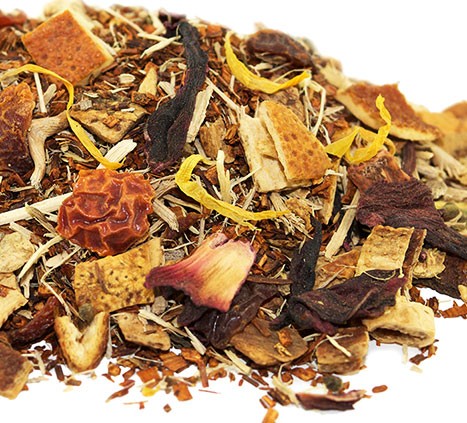
Harriet Wallis reports on the therapeutic nature of tea and an entrepreneurial company that sells a wide array of different and exotic blends with the prosaic name, The Tea Spot.  We met some of the enthusiastic staff of this woman-owned and operated company at this year’s Outdoor Recreation show in Denver.  Might want to think about replacing that cup of java.

Roger Lohr, publisher of XCSkiResorts.com and SeniorsSkiing.com’s Nordic Editor, has a review of a book senior skiers and outdoorsy types would be interested in.  It’s The Nature Fix, by Florence Williams and it presents scientific data on why it is a good thing to spend time outside.

Roger also writes about how golf courses can turn their gently rolling hills into cross-country ski trails when the snow flies.  In fact, a consulting company that transforms links to ski terrain for the winter is offering a $500 referral fee to readers who can steer it to a qualified prospect.  Read details here.

Finally, correspondent Tamsin Venn reports on a series of downhill-oriented mountain bike trails in the White Mountains that can make a late summer-early autumn weekend vacation a truly magic experience.

Next Time

On to September and more news about our Trailmasters, skis and boots for seniors, where you can ski for free or almost free, and our great, big anniversary issue coming up.

And remember, there are more of us every day, and we aren’t going away.


Short Swings!

My wife and I have a long-running gag. She’ll say, “Life is short,” to which I’ll respond, “So are you.”

Life IS short.  A brief opinion piece last week in The New York Times makes the point that we should squeeze as much out of our time as possible. The author writes: “…the appreciation of our own lives has much to do with the ever-increasing awareness of its relative brevity. It is this — an awareness and acceptance of our own mortality — that makes us human. And it is the impetus, I’d argue, for living our lives to the fullest.”

Those of us pursuing our passions live life to the fullest. Skiing is my passion and has been since I got the bug 65 years ago. As I’ll explain this week when presenting at the annual meeting of the National Ski Council Federation—the organizing body of ski club councils—older skiers are able to stay with their passion, in part, because of modern technology. Ski and boot technology make it easier to do more with good technique and less effort. Snow-making, grooming, and lift technology improve the process of getting up and down mountains. Medical advances—replacement joints included—give many of us the opportunity to continue to play in the snow.

Last season, I experienced a drop in stamina. I’m working at turning that around. I take a daily brisk 3-mile walk, half of it up a steady incline. I’m into a gym routine, guided by Dominick Juliano, my 85-year-old friend who in 1953 won the professional Mr. America competition. Around the same time, he appeared on stage as part of Mae West’s show in Vegas . For all his years and in the face of many challenges, Dominick has retained his good health, great physique, and his remarkably positive outlook. For seven years, he and wife, Carol, sailed with Carol’s then young son from the West Coast, through the Panama Canal, across the Caribbean and the Atlantic and around the Mediterranean. They met as croupiers in Vegas. His tells his story in The Essence of Being(Balboa Press, 2015).

At the end of next month we’ll return to our normal publishing schedule.

Helmet Tech: Worth the Cost

Helmet-wearing skiers/boarders have fewer head and other injuries according to a paper published in the June issue of Wilderness & Environmental Medicine. The research found that helmets protect more against cuts and bruises than concussions and that those wearing helmets are less likely to be injured. The authors mention three helmet technologies with brain-protecting technologies. They are D3O, MIPS, and EPS 4D. We at SeniorsSkiing.com believe the additional cost for a helmet with one of these technologies is worthwhile.

Rent Vermont’s Pico Peak for the Day

Pico Peak is available for private rental Tuesdays and Wednesdays January 8 – April 4. The cost is $6,500 for up to 250 guests. Food and beverage services are available for an additional fee. In recent years, other areas, including Utah’s remote Eagle Point, have introduced similar offers. If interested, contact groups@picomountain.com.

New York’s Hunter Mountain Expands

Hunter Mountain is investing $9 million to increase its skiable acreage by 25%. The expansion includes five new trails separated by four large glades. The areas will be accessed by a new high-speed six person chair. The upgrade includes an entrance, parking lots and lodge for Hunter North.

Deer Valley, Squaw Get New Management

  • Deer Valley‘s long time president and COO, Bob Wheaton, is stepping down following 38 years at the resort. He’ll take on an advisory role at Alterra Mountain Company, which recently acquired the resort. His replacement is Todd Shallan, a seasoned resort, hospitality and recreation executive. One of his earlier positions was Director of Asset Management for KSL Capital Partners, one of Alterra’s organizing entities.
  • Ron Cohen is the new President and Chief Operating Officer of Squaw Valley Alpine Meadows, another Alterra-owned resort. Cohen has been interim President & COO since April. An attorney, Cohen previously was Chief Administrative Officer and General Counsel of Mammoth Mountain.

Clever Device to Save Your Phone

Recently stumbled across this superb and inexpensive product. The Gear Beast  is a smartphone lanyard with a pocket for cash and/or cards. Worn around the neck, it prevents losing or dropping your phone. Gear Beast fits all size phones and retails for $9.99 direct from the company or from Amazon, Walmart, BestBuy and other online sources.

This Is What You Told Us You Want

A few months ago, we reported on the key finding from our Spring reader survey:


  • Grandparents are a significant influence getting grandkids into the sport. Once the kids have been introduced, almost 95% stay with it.

Another significant finding is that 56% of respondents reported they spent between $1000 and $5000 per person last season on skiing, boarding, and related activities. More than 10% spent $5000 or more, per person.

The survey also produced robust responses to the open-ended question about how we’re doing and how we could improve. The congratulatory messages gave us a nice feeling. The critical ones focused primarily on technical issues. The majority expressed what you, our readers, want to see covered in SeniorsSkiing.com. Those suggestions fall into six categories, which, when you think about it, reflect the general interests of older snow sports enthusiasts.

Here they are:

Travel/Resort Reviews/Ski Clubs

Readers want to know more about ski resorts outside of where they live, as well as in Canada and Europe. Many of you inquired about organized ski trips. In response, we’ll be increasing our coverage of ski clubs, and I’ll report on a variety of unusual ski programs from the Italian Alps.

Discounts and Free Skiing

These are important reader interests. This season, we’re expanding our list of resorts where seniors ski free (or virtually free) to include Canada.

Finding Other Older Skiers

So many of you want to meet up with your skiing contemporaries. The ski club system is a great way to accomplish that. Many clubs don’t require local membership to participate in their trips. For more information on ski clubs: http://skifederation.org. And the 70+ Ski Club has many regional and international offerings. When traveling in the US, look for a local chapter of the Over-The-Hill-Gang. They give free mountain tours for older skiers.

Health/Conditioning/Recovery

Readers facing joint replacement or recovering from other health issues want more guidance from those who already have been through the experience. How to prepare, how to recover, how to stay fit for the coming season. We have a good selection of those articles and welcome more. If interested, click “HEALTH” on the home page menu bar and start exploring.

Equipment and Technique

Readers want information about ski school programs with special senior offerings. We’ll report on them as we learn about them. Please let us know of your favorites. In terms of equipment, we work closely with realskiers.com to present the best ski selections for seniors and with America’s Best Bootfitters for the best boot choices.

General Editorial

Your suggestions include more articles profiling interesting older skiers. More on snow predictions and snow science. More on X-C (cross-country veteran, Roger Lohr, was recently named X-C and Snowshoe Editor). More on backcountry, snow biking, and Ebikes. Adapting to our age. Identifying good retirement places for older skiers.

Your input gives us direction and lifts us in moments of doubt. We’ll continue to do our best to inform you, to create a community of older skiers/boarders, and to heighten awareness of the importance of the older population to the sport.


Coasting Most Of The Way

Senior Cyclists Love Gravity And Vice Versa.

Franconia Falls offer a cooling off spot. Bring your bathing suit! Credit: Tamsin Venn

Pedaling up and down hills on a mountain bike has its rewards, but we prefer trails that have an emphasis on the downhill. We suggest three great places in the White Mountains of New Hampshire at or near ski areas to do just that. Important: We use suspension mountain bikes that absorb the bouncing over roots and rocks.

The Lincoln Woods Trail off the Kancamagus Highway (Route 112) just west of Lincoln, N.H., is one good trip. You cross the suspension bridge over the East Branch of the Pemigewasset River and follow it on a gradual climb 2.8-mile bed of an old logging railroad (https://www.fs.usda.gov/recarea/whitemountain/recarea/?recid=74669). At the next bridge, you turn left up the trail to Franconia Falls, which is spectacular with a natural water slide. Go ahead, jump in and cool off. The return trip is a screaming downhill all the way back to the parking lot. You dodge some of the old ties and rails still visible. Total trip 6.5 miles up and back.

Another good coaster is The Franconia Notch Recreation Path (https://www.traillink.com/trail/franconia-notch-recreation-path/). The asphalt path runs the length of the Franconia Notch State Park, following the Pemigewasset River for nine miles, ending at the Flume Gorge, then merging onto Route 3 for the last five miles back into Lincoln. The first leg is a bit of a climb up to Cannon Mountain, then the path drops, tempting you to whiz down the hills after you’ve crawled your way up, but there is a 20 mph speed limit (!)

The path passes Echo Lake, the Cannon Mountain Aerial Tram, The Old Man of the Mountain Historic Site, where you can use a brilliant visual gizmo to recreate the old stone face above you (the Old Man tumbled down in 2003). You also pass Lafayette campground (ice cream anyone?), The Basin (icy water cool down?), and finally the Flume Gorge. Bring a lock for your bikes. This trip is eminently doable thanks to Rodgers Ski & Sport (http://rodgersskiandsport.com/) which will shuttle you from its store in Lincoln to the path’s start for $10 a person.

Remember the Old Man? Here’s a unique tool to bring him back, sort of. Credit: Tamsin Venn

Next day, we zipped south to Waterville Valley Resort via I-93. The extensive well-maintained cross-country ski trail system is a blast for biking. You cut through the woods and explore a variety of trails for all abilities through the National Forest. Everything from meandering dirt fire roads to gnarly single-track is available, plus lift access to biking trails on Snow’s Mountain, the first ski trails in Waterville Valley. (http://www.waterville.com/adventure-center/).

Our favorite run is to take the Snow’s Mountain Chair ($9 single ride and $21 all day pass) and zoom down the wide Livermore Road back into town, crossing babbling brooks and wood bridges, in an Eden-like setting. We branch off onto Swan’s Way, a single track, which leads you back to the Town Center. More scenic is to follow the Connector past the Mad River. Then relax outside with live music and cold drinks, even if you didn’t necessarily break a sweat.

Trail junctures post YOU ARE HERE maps (a good printed map is also available), graded beginner, intermediate, expert in XC ratings, so you always know where you’re going.

Do you have a coasting trip you could recommend? We’re open to suggestions.

At the top of Snow Mountain Chair at Waterville Valley. Credit: Tamsin Venn.

Developing Golf Course Ski Trails

New Revenue Source For Those Beautiful Fairways.

Snowmaking at a golf course? When it is too cold to play golf, might as well ski. Credit: Nordic Group International

Cross country (XC) skiers hit a hole-in-one once their local golf course, which has been converted to an XC ski area, is covered in snow. Golf courses are ideal for XC skiing as they are often easier than other trail networks for skiers, and they provide easy access to people looking for a convenient winter excursion. And now, Nordic Group International (NGI) will pay $500 for a referral of a golf course that is interested in developing winter recreation such as tubing and cross country (XC) ski operations (and becomes a client of NGI). There are currently more than 170 golf courses in North America that have groomed XC ski trails.

Jonathan Wiesel of NGI wrote an article for Golf Course Management Magazine in 2009, and he is now putting his money where his mouth is.  That is, he is looking to help golf courses in snow regions develop winter operations. Why would a golf course facility want to add winter activities? The opportunity includes increased revenue, maintaining staff positions, providing community recreation, providing winter amenities for existing or prospective property owners, and so on.

A gold course in winter is a perfect setting for xc skiing, and perfect for seniors who prefer gentle slopes. Credit: Nordic Group International

Profitable winter operations could include XC skiing, tubing, sledding, snowshoeing, fat biking, sleigh rides, dog sledding, ice skating, food and beverage sales, lodging, and special events such as winter weddings and meetings. NGI has teamed up with the SE Group (an premier mountain/outdoor planning firm) to offer services such as feasibility studies, planning and design, snowmaking and lighting, tubing/snowplay layout, turf management strategies, construction oversight and marketing planning.

While such an operation makes sense in a region where it snows regularly during the winter, having a snowmaking operation would guarantee favorable snow conditions. Regular programming can extend the operating season at both ends to increase revenue from early and late season activity. Additionally, lighting the trails will attract skiers and tubers that are unable to visit during the daylight hours.

Such a winter operation would work well in an area that is a major population center, but it also allows resort destinations to take advantage of the winter season. The capital investment for an operation would involve variables such as site topography, extent of existing infrastructure and facilities and the size and orientation of the market. With as little as four-six inches of snow, a winter operation could be launched.

The golf course winter operation is not a pipe dream. Successful winter trail facilities have been in existence across the continent for many years in places such as Woodstock Resort, VT, Sun Valley, ID, Bretton Woods, NH, Weston, MA, Garland Resort, MI, Calgary, AB, Bozeman, MT, and in Breckenridge, Aspen and Steamboat in CO. For more info, contact the trails and land planning consultant at www.nordicgroupinternational.com.

Product Review: Company Based On Tea’s Cancer-Fighting Properties

Tea Offers Flavor, Enjoyment, And Health.

Cold Buster tea blend soothes colds and is caffeine-free. Credit: Harriet Wallis

Let’s make it clear. Tea cannot cure cancer. But the chemical make up of many teas can be part of a healthy anti-cancer lifestyle.

It’s not hocus pocus. Tea is a most studied anti-cancer plant. Check out what the National Cancer Institute says about tea’s anti-cancer benefits: https://www.cancer.gov/about-cancer/causes-prevention/risk/diet/tea-fact-sheet

But let’s start at the beginning.

Maria Uspenski was healthy and active until she was slammed with ovarian cancer that turned her life upside down. That’s when the IBM engineer and tech business owner launched full bore into making nutrition and lifestyle changes to give her a life-saving edge. She learned that teas can boost the immune system and might inhibit cancer.

In 2004, this cancer survivor founded The Tea Spot, a woman-owned tea and tea ware company in Boulder, Colorado.

So what about the teas?

I like tea, but I’m a beginner. I had no clue there are so many kinds of tea, and I don’t speak “tea language.” But I like to explore tea flavors and try new tea techniques. It’s okay to be a beginner and learn as you go. Real connoisseurs, however, will appreciate the breadth of The Tea Spot’s offerings.

They offer many, many types of White, Green, Oolong, and Black teas. And there are also Herbal, Mate, Organic and Pu’erh teas.

I’d never heard of this Pu’erh-thing, so I looked into it. It’s a special process that gives those teas an earthy taste. It’s thought to do good things such as: reduce cholesterol, aid digestion, improve weight loss, and it might relieve hangovers.

Each tea has its special properties and benefits. And the Tea Spot site describes each tea in detail. There are so many teas to try.

The bottom line:

The market is saturated with health drinks. Perhaps it’s time to try tea as your health drink.

To read more from Harriet click here for her stories on SkiUtah.

Book Review: The Nature Fix

Your Brain On Nature.

[Editor Note: Roger Lohr, publisher of XCSkiResorts.com and SeniorsSkiing.com’s Nordic Editor, reports on the therapeutic effects of being outside.  We thought it, now we know it.]

Lupine field, Sugar Hill, NH. Credit: Roger Lohr

The Nature Fix by Florence Williams, published by W.W. Norton & Company in 2017, provides the most compelling argument to date for people to spend more time outdoors in nature, based on an increasing amount of biological, psychological and medicinal scientific evidence.

Over the years, efforts have been made to quantify nature’s impact on mood, well being, ability to think (remember, plan, create) and sociability. The “biophilic” hypothesis involves lowering human stress, boosting mental health, restoring attention, empathy, and cognitive clarity. Nature also affects a social component like the feeling that is shared among people who spend time together outdoors or people who perform exceeding acts of kindness in the aftermath of a severe environmental event such as a tornado, earthquake, firestorm, and such.

The recommended prescription for getting outdoors in a “nature pyramid” includes both quick doses and longer spells in wild places. Specifically, humans should:

  • Get out in nature nearby on a daily basis for some minutes to de-stress, find focus, and lighten mental fatigue,
  • Spend weekly outings at parks or waterways for an hour or so, and
  • Go on monthly weekend excursions to natural areas to bolster immune systems.

The top of the pyramid includes annual or biyearly multi-day wilderness trips. More significantly, such wilderness experiences are invaluable for adolescents or those who are in grief or suffering trauma.

The author traveled the world over to investigate and experience research on nature’s impact on humans. In Japan, she saw “forest bathing” on a sensory walk in the woods on one of the 48 forest therapy trails in the country. In Scotland, they call it “eco therapy.” She met with a Korean professor of “social forestry” who introduced her to the world’s only college degree for forest healing. In South Korea from 2010-2013, visits to the forest increased from 9.4 million to 12.7 million, while in the USA there was a decline of 25% during the same time period.

The evidence (20 pages of cited notes and credits) about nature impact involves details with cortisol levels, sympathetic nerve activity, heart rate decline, and hemoglobin in the brain’s prefrontal cortex.  The book is replete with that type of information, which may be news to most people who may not be familiar with such neurological details.

One of nature’s benefits are delivered through sound—a bubbling brook, bird tweets in the early morning, the leaves moving in the wind, and so on. But the US Park Service claims that 83% of land in the lower 48 states sits within 3,500 feet of a road and that within 20 years 90 percent of the population will be close enough to hear at least one of the projected 30,000 airplane flights per day.

In Finland, 95 percent of the population spends time recreating outdoors and 50 percent ride bicycles. It is easy to access forests because 74 percent of the country is covered by trees and there are two million summer cottages for a population of two million Finns, who claim the focus on nature correlates to reduced health care costs and mental and physical fitness.

Williams visited Singapore, where 70 percent of the population lives within 400 meters of green space. The government in Singapore allocates .6 percent of the national budget to develop scenery and greenery.

There are successful nature programs to help people who suffer with PTSD (post-traumatic stress disorder) and ADHD (attention deficit hyperactivity disorder). Outward Bound did a study on a therapeutic adventure program showing 9-19 percent of participating veterans who had PTSD, improved. Williams includes a discussion about ADHD programs where 6.4 million kids are diagnosed and half of them are taking medication for the malady.

Isn’t it about time that more therapists, doctors, teachers, and parents prescribe getting outdoors more often?