

Cross-Country: Lessons Are The Best Way To Out-Think Your Feet
To Make The Switch To Cross-Country, Please Start With A Lesson And These Tips.

In the early 1970s, in a visionary but totally wrong-headed move, the fledgling Nordic ski industry declared that, “If you can walk, you can cross-country ski.”
It would have been a lot more helpful to say, “If you can walk, you can learn to cross-country ski. And it takes only one lesson from a professional to learn how to glide.”
Those were times when an alpine resort manager pigeonholed skinny skiers as, “Guys who head into the woods Friday night, and come out Sunday without having changed either their underwear or their $5 bill.” We were on the defensive—and dang, it’s tough to fight clever stereotypes!
Those were also the days that New Englander John Frado, who designed a lot of the best trails in North America, coined the hilarious phrase that’s the title of this article. And boy, was he right, because you’re going to become a better skier, use less energy, go further faster, and have more fun sooner if you start the sport with instruction. (And by that I mean ideally not just a single lesson, but one, followed by practice, then another lesson. And so on.)
Cross-country can be filled with grace—not just the dynamism, self-discipline, and athleticism you see at the Olympics, but true beauty. Or it can be an awkward downer.
So here are half-a-dozen tips to make skiing euphoric, quickly.

Credit: Ski Museum Of Maine
First, please do something the Nordic business has never been able to and come up with more endearing descriptions than “lesson,” “instruction,” “teaching,” and “ski school.” Who wants to go back to studies when you’re out to have winter fun?
Next, don’t even think of learning from a loved one—instead, learn from a ski professional. There’s always an uncomfortable level of stress and self-consciousness if your instructor is also a relative, or your sweetie. Too distracting; and incidentally, your kids or grandkids are likely to absorb everything depressingly faster than us oldies. But once you can glide, that’s the moment you discover that cross-country is incredibly social, skiing side by side with friends and family.
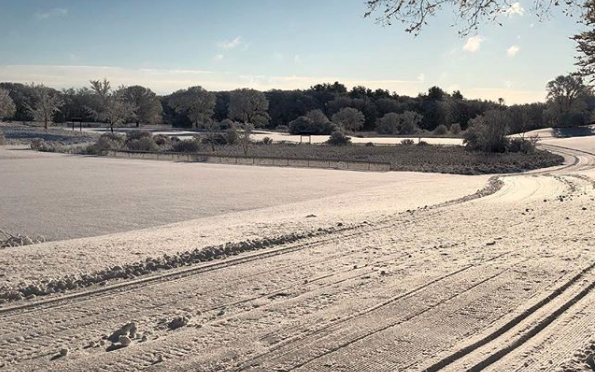
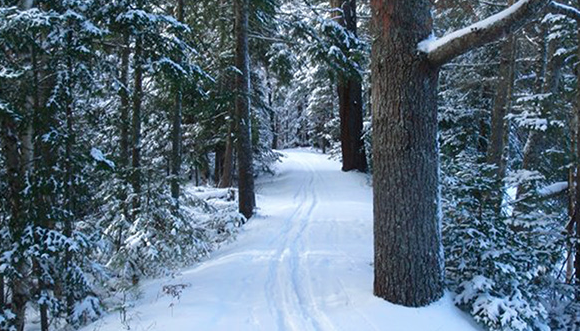
Third, learn to ski at a cross-country area or club with machine–groomed trails, where the compressed tracks will guide your skis. (More on this in a future article—promise!) A good resource on places to go is www.xcski.org and www.xcskiresorts.com.
Fourth, your ski pro needs to explain, early-on, how and why to hold your poles properly (my cliché: reach for the sky along the shaft, then shake hands through the grip). Grabbing the poles tightly means you’ll be upright, stiff, walking rather than gliding, and a lot more fall-prone.
Fifth, if you’re renting equipment, check to see if your instructor uses the same skis you do. It kinda levels the playing field.
And finally, think about a second lesson—or a private lesson—that concentrates on the whole range of descent techniques on these narrow skis that don’t have metal edges or heels held down, while you’re using footwear akin to sneakers. Wedge turns, step and skate turns, parallels, telemarking, traversing with kick turns, side stepping—they’ll all get you down that hill.
And as I found even in my prideful youth, sometimes you just have to take your skis off and walk down. It’s all legit!




 Apologies in advance to fellow skiers in other parts of the country for I’m writing about what I know about, the Northeast—New York and New England, I’ve skied at 12 of the 13 resorts mentioned in this article. In recent posts to SeniorsSkiing Torry Hack (3/15/18) and Jon Weisberg (3/20/18) also discuss the Ikon Pass.
 Though the Ikon Base Pass is disappointingly inferior to what it replaces, it will still offer value and variety for some Northeast skiers. Like any pass, if you use them enough they are a terrific deal. Multi-resort passes such as the Ikon Base Pass offer variety, and each of the Northeastern resorts included in the Ikon Pass is top-notch. If you plan a trip to any of the Ikon resorts out west, buying the pass is a no-brainer.
 Back in the early 60s, folk music was just beginning to become popular. Colleges, concert halls, and coffee houses were hosting a wide variety bands like The Kingston Trio and The Weavers with stringed instruments singing old time music as well as newly written tunes. One sub-genre soon emerged in parallel to the growth of the fast-growing sport of skiing. Oscar Brand, Bob Gibson, and a Navy vet named Ray Conrad created their own skiing songs which spread like an avalanche through the growing, ardent band of skiers.


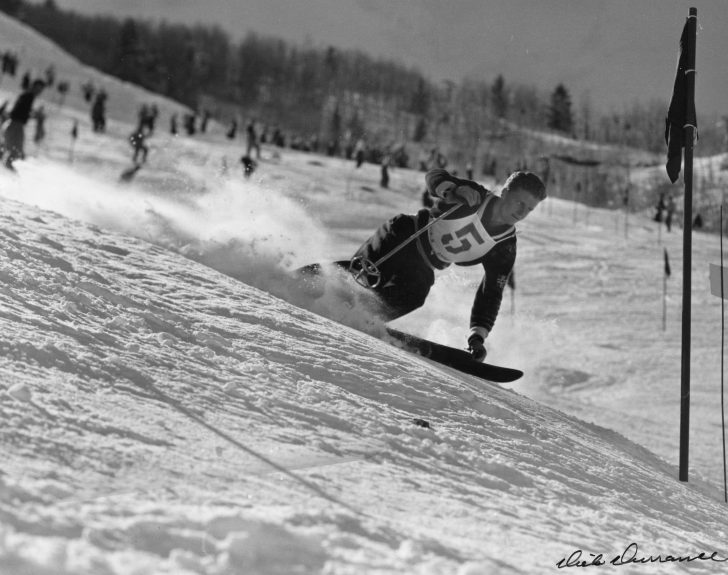
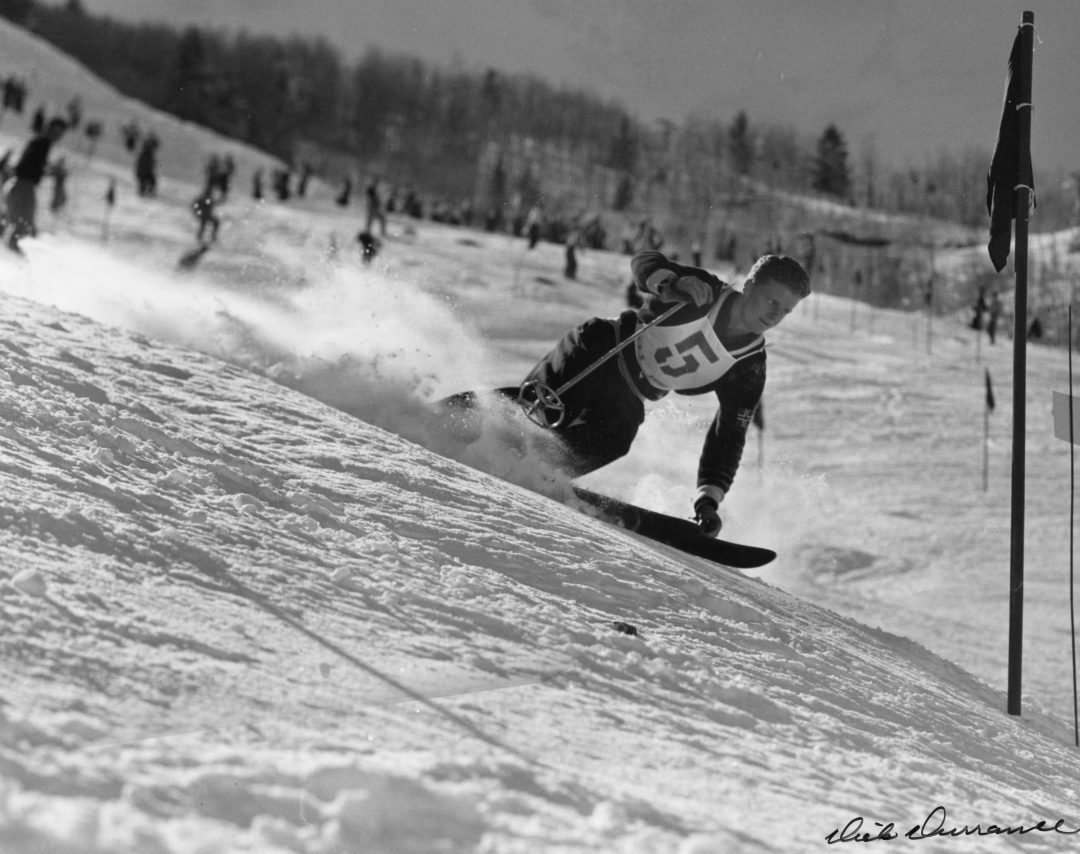
 We are frequently impressed by the deep knowledge our readers have on the personalities and history of snow sports. This week, we were blown away by the several contributors who absolutely nailed the story behind this famous picture. Well done, readers.




















 We remember in the “old days” when we used to sit on our couch watching those Olympic events, the slalom, the giant slalom, and others, thinking to ourselves, “With a little practice, I could do this.” Well, maybe not the downhill. Admit it, you thought so, too, didn’t you?
 Co-Publisher Jon Weisberg looks at Salt Lake City as base camp for


 As you can see from our posts this week, SeniorsSkiing.com is launching an initiative for the next week or so to see if we can get support from our readers to cover the costs of producing this online magazine. We were inspired by the appeals The Guardian newspaper has made to its readers which also provides free access to editorial.