This Week In SeniorsSkiing.com (Oct. 27)

Getting Fit, A Snowmaking Legend, Novel Gift Idea For Seniors, Ski Shows, Happy Birthday, Doug Pfeiffer.

Ski & Snowboard Expos are coming! Official start of the snow season.
Credit: BEWI Productions

The snow season has started, officially and unofficially, in different places around the country.  We urge our readers to start thinking about getting their gear out of basements and start spiffing up those skis and boots. It always pays to get those skis sharpened and bindings adjusted right about now, before crowds hit.

Here’s a cool video about the Boston Ski & Snowboard Expo coming up soon.

https://youtu.be/-01lk71ytJU

The Ski & Snowboard Expos are being held in Boston (11/9-12) and Denver (11/10-12).  In many ways, the coming of the shows is the point of departure for the new snow sports season.  In Boston and Denver, you can find equipment and clothing deals galore, so if you’re close by, it’s worth a trip. Click through from the banner ad on top of the page and get a $3 discount.

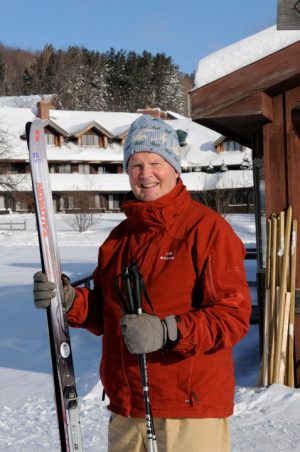
Birthday Boy Doug Pfeiffer, ski industry legend, and Mike Maginn, SeniorsSkiing.com co-publisher.

It’s also the birthday for one of our favorite ski legends, Doug Pfeiffer, a pioneer in ski instruction and editor of SKIING magazine when we worked there in the early 70s. Here’s a picture of Doug and SeniorsSkiing.com co-publisher Mike Maginn at the International Ski History Association meeting at Stowe in February this year.  Happy Birthday, Doug; you are one of our favorite Scorpios.

This week, we remind our readers that it is time to begin a shape up program for the ski season. Under the Health tab, we have several conditioning articles that will get you started, most notably, a from-easy-to-difficult set of specific exercises from physical therapist Rick Silverman.  

We have a profile of snowmaking pioneer Herman Dupre, who was an early contributor to the arcane technology of creating snow out of…air and water. Herman still hangs out at the Seven Springs Ski Resort in Western PA.  Thanks to contributor Pat McCloskey for bringing this into our pages.

Finally, talk about unusual gifts.  Correspondent Harriet Wallis has managed to discover a boutique shop in Vancouver which makes and sells a variety of beverages, bread, vinegar and other items made from Douglas Fir trees.  Clearly, this is a gift idea for the senior snow sports enthusiast who has everything.

Speaking of gift ideas, we’re looking for products you think would be appropriate for our readers—people who are active seniors, outdoor-oriented folks with an interest in fitness, socializing and adventures.  If you have any ideas, please contact info@seniorsskiing.com

Meanwhile, on to November.  Thanks once again for reading SeniorsSkiing.com, tell your friends.  If you want a free, three x three sticker, send a self-addressed, stamped envelope to SeniorsSkiing.com, Box 416, Hamilton, MA 01936.  We have a bunch to give out.

And remember, there are more of us every day and we aren’t going away!

Snow Sport Leaders: Herman Dupre, An Original Maker Of Snow

Son Of Immigrant Parents, Herman Dupre Found A Way To Give The Sport Snow.

Innovator, pioneer, snowmaker, Herman Dupre is a legend in snowsports.

Aside from building the Seven Springs ski area in western Pennsylvania into a major mountain resort, Herman Dupre’s claim to fame is that he is a pioneer in snowmaking.  He always tinkered with how to utilize high pressure air and water to help Mother Nature spread some snow on our local area which is hampered by cyclical warm weather/cold weather events.  When you ski in the mid-Atlantic, you need some help to keep the slopes open.  Snowmaking was the answer, and Herman was at the forefront.

Dupre holds 34 U.S. patents for the HKD snowmaking system. He is the chief engineer for Snow Economics, Inc. and his system is now sold worldwide. His new Backyard Blizzard home system based on the HKD concept became available in the winter of 2000. Without the benefit of his work, many winter resorts throughout the world would not have the snowmaking capability they utilize today.

In 1973, he applied for and received his first of many patents, and in 1990, he introduced the standard tower snow gun that was the first of many low energy products that he and his son in law, Charles Santry and his daughter Anni would bring to the ski area management market.

If you look at their website, you will find all the technical detail of their tower guns, and their new fan jet technology with their recent acquisition of a Canadian company which has increased their R&D capabilities as well as their engineering expertise.

Click on the video below to hear Herman tell his story.

Here’s A Special Gift Idea: Eat A Tree

If You’re Looking For Novel Gifts For Snow Country Lovers, Yummies Made From Fir Trees Are Worth A Look.

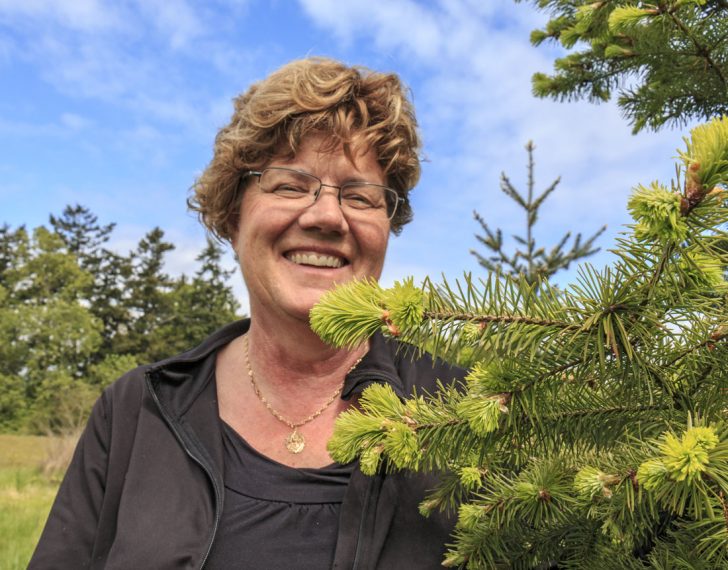
Laura Waters at her shop, Snowdon House outside Victoria, BC, Canada on Vancouver Island, where she sells edibles made from new growth on douglas fir trees. These include vinegars, jams, dried seasonings and more.
Credit: Yvette Cardozo

Of course, this is a Christmas story. What else when you are talking about eating Christmas trees?

It’s just the growing tips that you eat, actually. And the pine flavor is, well, way better than you expect if you are more used to sniffing pine sap from your fingers when handling fresh cut boughs.

When Laura Waters planted Douglas firs on her four acres of land in 2009, she intended to sell them for Christmas trees.

“But it takes six years for them to grow and then, all you wind up with is stumps,” she said one late spring day as we inspected the bright green growing tips of her trees.

“I was out there, hot and bothered, mowing to keep the grass down between the trees and I had a pot of strawberries on the stove in the kitchen. I cut a branch and out of curiosity, tossed it in.”

The same way that vinegar adds an essence of sweet/tang to fruit compote, the fir tips added … something. And it was a sweet and tangy something good. That experiment became Laura’s first strawberry fir vinegar.

A bit of research revealed that First Nations people in the area used to make tea from the fir tips. It was not only tasty, it provided more vitamin C than citrus fruit.

“When Capt. James Cook was on the BC coast, everyone had scurvy and the local natives told them to make tea out of the Doug fir tips. That took care of the scurvy,” Laura added.

There are lots of way to take the essence of fir trees and make edibles. Laura Waters has literally “botted” trees.  
Credit: Yvette Cardozo

Laura’s first vinegar led to carbonated drinks, which led to fir seasoned bread, brie toppers, a drinkable vinegar that you add to evening cocktails, dried seasoning blends and more. She sells all this in her shop, Snowdon House, in North Saanich, a suburb of Victoria on Vancouver Island. While I was there, a group of visitors arrived. They had come up from Seattle by ferry and taken a cab out to the shop.

Along with the visitors, I tasted the fir essence drink, a bottled non alcoholic drink that was amazingly refreshing. It had a piney back woods flavor that hit the top of my tongue, along with citrus and floral notes. I learned I could pretty much make my own with Laura’s fir vinegar, so I bought a bottle to add to tonic (with a bit of vodka) at home.

We also nibbled our way through her Fir and Fire Brie Topper, which is actually a sweet, piney red and green chili jam that offsets the stringent brie flavor really well. Plus I bought a packet of dried seasoning blend (parsley, lemon peel, Doug fir, dried spinach, ground juniper berries) with which I plan to make a party dip.

There’s a bread mix (with an added blend of Doug fir tips and juniper berries) that results in fresh bread with a pine accent. Laura also makes gift papers by hand and sells outside products such as organic hot chocolate mix wrapped in her hand made gift papers, plus there’s racks of her handmade gift cards. And fresh eggs she sells when her crowd of chickens are in a producing mind.

In addition, she has created a collection of recipes and holds cooking classes. The one she did the day before I visited featured chicken thighs marinated in apricot and bay leaf vinegar, cooked in the vinegar, then wrapped in flat bread with mayo and her apricot/mango topper (yes, she makes toppers that don’t involve fir tips).

If this isn’t enough, on her drawing board are plans to dehydrate the tips for a tea and she was experimenting when I visited with pickling fir tips to make into capers. And then, there was also the Doug fir flavor to be whipped into butter for popcorn topper.

Plus the B&B she opened this year.

Meanwhile, her shop is open Tuesday through Saturday 10am – 5pm.

Yes, Laura Waters is a very busy woman.

Snowdon House Gourmet Gifts

This Week In SeniorsSkiing.com (Oct. 13)

Weird Weather, Senior Profile, Von Trapp Cross-Country Innovator, Getting Ready.

October 2017 blizzard in Rocky Boy, MT, left 30 inches behind, breaking a monthly record for the state.
Credit: Shawn/Steph White

We can’t stop thinking about the major weather events that have descended across the globe this year. Hurricanes with epic levels of destruction, surprisingly early and deep snows in the Rockies, (and from what we hear, prodigious snowfalls in parts of Australia), wild fires creating horrendous destruction and loss of life in California and Montana, heat waves in Europe all point to the fact that something is going on in the atmosphere. Basically, it is warming up, as predicted by scientists across the world, and we are starting to see the consequences.

What this means for winter sports remains to be seen, but the direction of global temperatures is not positive. One group that has taken the future of global warming and winter quite seriously is Protect Our Winters, an advocacy non-profit whose objective is to create awareness of the connection between the two and to provide opportunities for businesses, individuals and others to influence policy.  If you’re interested in taking some action, check out POW and let us know what you think.

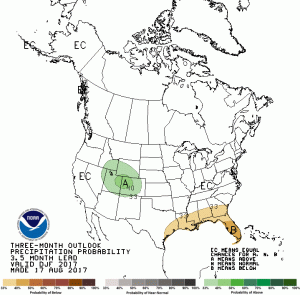
Meanwhile, here’s the latest three-month forecast from NOAA’s Climate Prediction Center for November-December-January.

Temperature Predictions Nov-Jan

Precipitation Predictions Nov-Jan


What you will notice at a glance is that the temperature predictions across most of the US (left) are above average with a probability of from 33-to-50 percent of actually happening. Above average precipitation (right) is focused in the Rockies while the Southeast looks like below average precip. Everyplace else is a toss-up; equal chance means there could be more, less, or the same as “normal”.  Of course, a prediction is not something to take to the bank.  But since the National Hurricane Center’s forecast for the number and severity of hurricane activities was spot-on for this year’s season which is closing down soon, perhaps the odds of being right about the predictions are changing as climate changes become more extreme.

This week, we revisit the Trapp Family Lodge and a scion of Sound of Music fame, Johannes Von Trapp. In this article from publisher Roger Lohr, our colleague at XCSkiResorts.com, we learn that Johannes was the first one in the US to have the idea that cross-country ski resorts could be a real thing.  In inventing a new winter vacation destination, Johannes changed how people enjoy cross-country beyond local golf courses, parks and back yards.

Don Burch shows us how to get ready for the season with some tongue-in-cheek advice for locating and dusting off your long lost gear.  Harriet Wallis profiles Ruth DeSouza, a senior skier who learned about stick-to-it-iveness from her experience in World War II.  By the way, we intend to profile more senior snow sports enthusiasts in the coming months.  If you know anyone who has a long history in snow sports and who has an interesting story to tell, please let us know.

Thanks, Ben, you’re our kind of guy.

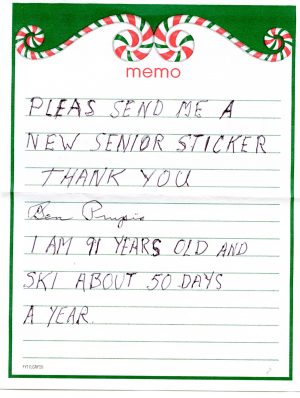
Speaking of senior skiers, we received the following note from Ben Prupis, a 91-year-old reader from Westlake Village, CA. He included it in his request for free SeniorsSkiing.com stickers.  We sent him a bunch and our thanks very much for reading our online magazine and for skiing 50 days a year. Totally awesome. We salute you, Ben.

If you want a free SeniorsSkiing.com sticker, please send a stamped, self-addressed envelope to SeniorsSkiing.com, Box 416, Hamilton, MA 01936.

And, tell your friends about SeniorsSkiing.com. Remember that there are more of us every day and we are not going away.

Short Swings

Short Swings!

Responses To SeniorsSkiing.com Reader Surveys Indicate That Finding Boots That Fit And Perform Correctly Is A Challenge. And 25% Of Readers Plan To Purchase New Boots.

Two of our advertisers can help.

America’s Best Bootfitters.com has a host of useful boot-related information, including the names of ski shops where highly trained fitters are available to get you the best fitting boots.

Apex Ski Boot System is a relatively new concept in ski boots delivering comfort and performance through a combination of three components: 1) an exoskeleton offering customizable flex, superior stability, and precise edge control; 2) a snowboard-like boot that provides comfort and warmth, and 3) a heat-molded custom-fit liner. The system uses the Boa® reel and stainless steel cable lacing system allowing the wearer to precisely control fit. I skied an earlier generation of the Apex and was impressed by its support, comfort, and infinite adjustability. They’re also great for simply walking around without the hassle of conventional ski boots. Apex boots are available in ski shops and online. The Apex website does a fine job of explaining the product.

Another advertiser has a great gift for the Senior Skier on your list. DeBooter is the elegantly simple ski boot jack for removing conventional ski boots effortlessly and painlessly. I carry one in my SUV. Those who use it absolutely love it! Click on the DeBooter ad to reach the product site. $39.95

COLORADO

The Amtrak Winter Park Express will offer expanded service for the new season. The train leaves from Union Station (downtown Denver) and drops passengers within a few steps of the lifts. It will operate Saturdays and Sundays, January 5 through March 25, plus on the first Friday of each month.

New and expanded flights to/from Colorado’s eight regional airports for the season:

  • Steamboat: new nonstops from Austin (AUS) and Kansas City (MCI) on ViaAir into Steamboat/Hayden (HDN) airport beginning Dec. 13.  Steamboat now direct air service to 14 major U.S. airports.
  • Aspen Snowmass: new daily nonstops through American Airlines from Phoenix Sky Harbor International Airport (PHX) and expanded service from both Dallas Ft. Worth (DFW) and Chicago O’ Hare (ORD).
  • Telluride: increased access through new American Airlines direct Saturday flights into Montrose-Telluride Regional Airport (MTJ) from Charlotte Douglas International (CLT) and Delta’s new flights from Salt Lake City (SLC) Christmas and New Year’s holidays.
  • Three daily non-stop flights from DEN via Boutique Air  (round-trips as low as $100) to Alamosa San Luis Valley (ALS) providing closer access to Telluride, Silverton, Purgatory and Wolf Creek..

UTAH

Ogden-Hinkley Airport, serviced by Allegiant Air, is adding Thursday through Monday flights from Los Angeles (LAX) and Las Vegas (LAS). Prices start at $35 each way. A terrific way to get closer to Snowbasin, Powder Mountain, and back country operator, Whisper Ridge.

Snowbird’s Cliff Spa has undergone a massive renovation. The rooftop outdoor pool and hot tub were upgraded with radiant heated decks and gas-fed fire pits. The spa’s interior also got a makeover.

Alta has a new co-ed Breakthrough Camp for intermediates ready to reach a higher level. The package includes four nights lodging at the Alta Lodge, full breakfast and dinner daily, three days of instruction with top coaches from Alta’s Alf Engen Ski School, lift tickets and demo skis. www.altalodge.com/ski-adventures/breakthrough-camp

Staying in Salt Lake City? The Ski City Super Pass provides unrestricted access to Alta, Snowbird, Brighton and/or Solitude. Can be purchased for three to 10 days of skiing.  Includes ski bus to and from resorts. Priced by number of days purchased. www.visitsaltlake.com/skicity/super-pass

Ski3 Pass ($157) – This new, fully loaded pass includes a full day of skiing at Snowbasin, Powder Mountain plus a full day and night skiing at Nordic Valley with the purchase of two or more nights at participating hotels in Ogden: www.visitogden.com/ski-ogden/ski3

OTHER

For the first time, 70+ Ski Club is organizing a ski trip to Japan. Dates: March 21 – April 1. Visit the 70+ Ski Club site for more information. I came across this video about skiing in northern Japan. Watch it and visit 70+.

Pre-Season Training? Consider the SkiA Ski Trainer, a unique dry-land training device, for use with ski boots. The Trainer is used by thousands of skiers, and recommended by professional skiers and racers, leading ski schools, and national ski instructor organisations worldwide. More info and pricing: http://www.skia.com

Johannes Von Trapp

Johannes Von Trapp: Climbing Every Mountain

Scion Of The Famous Family Is The Inventor Of The Modern X-C Center.

Johannes Von Trapp makes X-C skiing acccessible and fun for guests at the family lodge.
Credit: Roger Lohr

[Editor Note: This article first appeared in XCSkiResorts.com.  Our thanks to publisher Roger Lohr for allowing us to reproduce it here.]

If there was an American Cross Country Ski Hall of Fame, Johannes von Trapp would be one of the surefire inductees. The famous story of the von Trapp family is well known; their escape from Austria in the beginning of World War II, and the Broadway and Hollywood songs such as Edelweiss, My Favorite Things, and Do Re Mi. In November of 2014, Johannes von Trapp spoke at a luncheon of Nordic ski area operators and one could tell they looked at him as their living history. He grew up with nine siblings as the last born in the original von Trapp family and he is also known as the proprietor who opened Trapp Family Lodge, the first commercial Nordic ski area in 1968.

In 1938 just before World War II, the Baron and Baroness von Trapp left all their possessions and estate near Salzburg, Austria. With nine children and one on the way, they fled Austria and were granted asylum in the US. That child on the way was Johannes, who was born in 1939 and now is the president of the modern day Trapp Family Lodge in Stowe, VT.

Arriving in the US with only four dollars, the family settled in Philadelphia and, through their music, turned a family hobby into a profession as the Trapp Family Singers. In 1942, they bought a small farmhouse in Stowe, Vermont because the landscape reminded them of home. They rented out rooms at their farmhouse to skiers and ran the Trapp Family Music Camp.

Johannes commented that they were too poor to pay to use the ski lifts in Stowe, so they skied up and down in the woods around the farm. He attended Dartmouth College and upon returning to Stowe, he later operated the lodge. He started the ski area out of his barn, renting cross country skis, and giving ski lessons to become the first commercial cross country ski resort in the world. He had hired his first staff person, Per Sorlie, an ex-navy man from Norway, who had great enthusiasm for cross country skiing and who had a brother who wholesaled cross country ski equipment from Norway.

They would pack the trail in the early morning, rented and sold Nordic skis, and taught ski lessons. Johannes stated that he grossed $8,000 that first year in the cross country ski business, and he doubled the revenue in the following year. The original concept was a way to attract guests to fill the rooms at lodge.

He always thought that the business would involve backcountry skiing as the key element and today he still hopes that backcountry will grow and become a more noticeable part of the Nordic ski scene. He commented about the “violent contrast” in product development that has become “plastic, nylon, and form fitting,” citing the Americanization of Nordic skiing. But he does admit that the new equipment and clothing have great virtues, and he has come full circle embracing the high tech that has been incorporated into the sport and business.

Johannes reminisced about the first snow machine he bought for $50 to pack the trails. They built many different weighted boxes with skis on the bottom to drag behind a snowmobile and set tracks on the trails.

In the early 1970s, the lodge included a riding stable but the horses impacted the trails too much so horseback riding was discontinued. Johannes cited a recent survey taken by UVM students at Trapp Family Lodge that revealed the skiers mostly cared about the track quality. But he still believes in the psychic benefits of being outdoors and loves how the sport has taken off.

The lodge occupancy has increased over the years.  Acquiring the nearby land (Trapp Family owns 90% of the trail property) was important to maintain the trails. The lodge history included the fire in 1980 and rebuilding in 1983. In 2000, Trapp added 24,000 square feet of meeting space and accommodations to the lodge and four years later the first villas adjacent to the lodge were completed and sold.

Johannes’ son Sam became vice president of the operation in 2007 adding mountain bike trails in the summer and snowmaking in the winter. In 2008, Trapp Family Lodge celebrated its 40th anniversary and was covered in the NY Times, on ABC World News, and the lodge created its first television advertisement. In 2010, Trapp Lager beer was introduced on the property and a new facility was opened in 2015 in Massachusetts to greatly expand the brewery operation.

Johannes von Trapp is one of the American cross country skiing forefathers, who will be recognized for his vision of cross country skiing and his connection to a world famous family story.

Ruth DeSouza

Senior Profile: WWII Survival Shaped Ruth DeSousa’s Resolve

She Applies What She Learned To Life And Skiing.

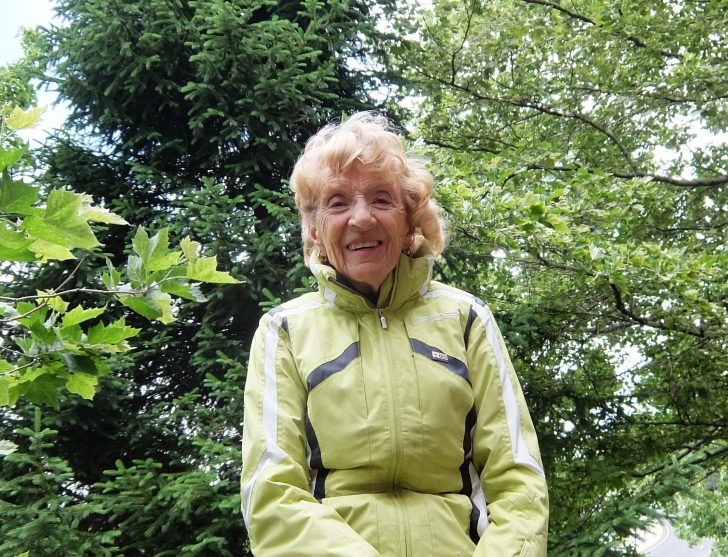
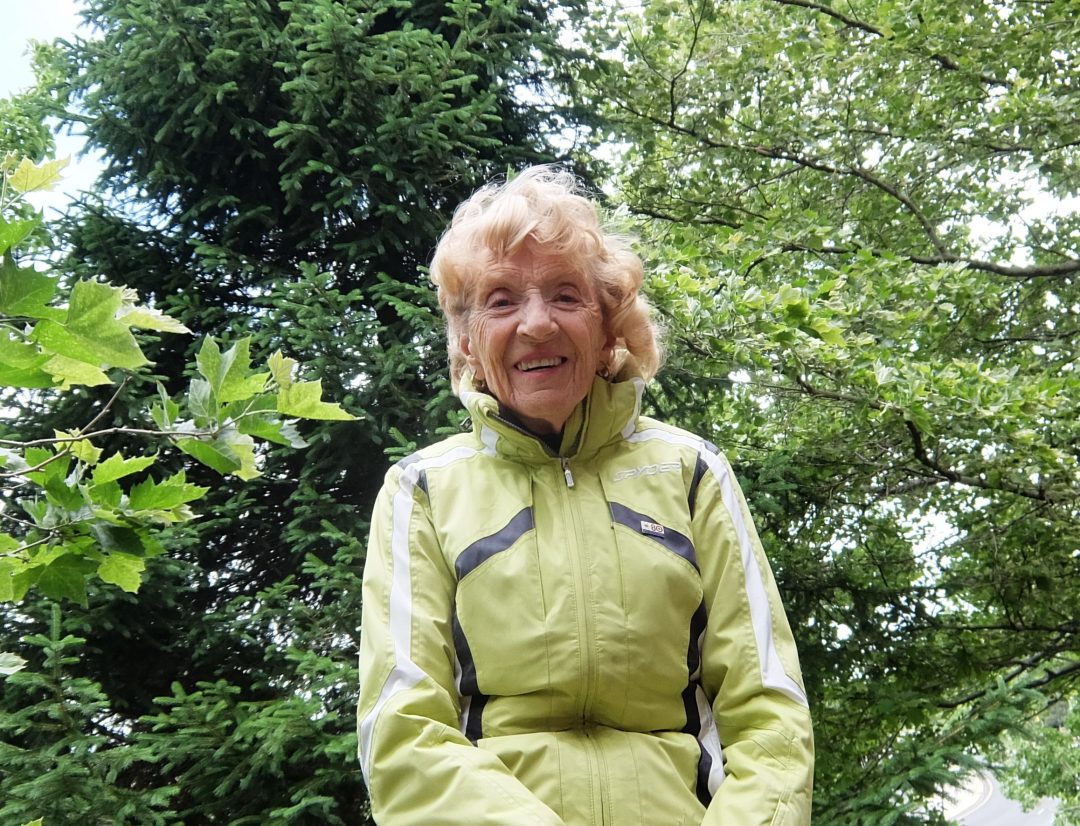
At 86 and a bona fide survivor, Ruth DeSouza offers sound advice for seniors.
Credit: Harriet Wallis

When the air raid sirens blared in Bingen, Germany, residents scrambled down into their cellars for protection. The town on the Rhine was bombed again and again by Allied forces.

After each attack, Ruth’s mother would rush to the roof of their building to pick up the burning flares that had been dropped and hurl them off the roof so the building would not catch fire.

Historically, Bingen is on a critical transportation route established in Roman times. During the war, Allied forces were not trying to destroy the town but were aiming their bombs at the major railroad hub and communication lines.

But bomb drops were not accurate. High winds carried them off target into the town destroying schools full of children and homes of those who wanted no part of the war.

At that time, Ruth was an athletic school girl in Bingen. She was a gymnast, practiced ballet, played tennis, and learned to ski on a local farm hill. The turmoil of war shaped her resolve. She learned to expect little but to keep going no matter what.

Today, she lives by the resolve she forged during the war years. Ruth is slim and active at 86. She skis three or four days a week at Alta, Brighton, or Solitude. The other days she walks for 30 minutes. “You have to keep going, and you have to stay strong,” she says.

Ruth’s attitude has always been undaunted. As the war grew worse, Ruth’s family fled from Bingen. After the war, they walked for days to get home. As Ruth walked, she decided to use the fabric of her old school uniform and make a bikini for herself. She envisioned happiness even when life was full of misery.

Today, like the bikini she made long ago, she dresses fashionably and keeps a positive attitude. She advises senior women to be positive also. “Eat right and don’t let yourself get fat,” she says.

To read more from Harriet click here for her stories on SkiUtah.


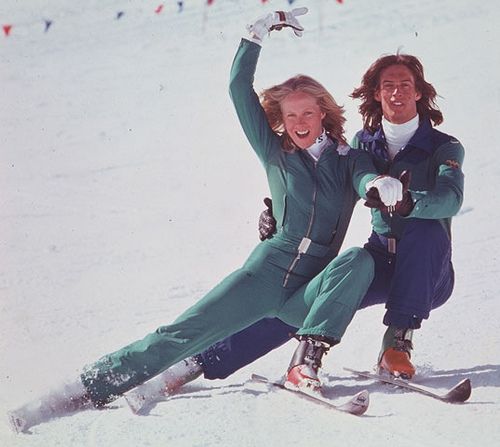
Suzy Chaffee and Mark Steigemier

Dancing With Skis

Many Readers May Remember Ski Ballet, The Graceful, Sometimes Amusing, Phenomenon From The 1980s.

Costumed performers on skis took skiing to new levels as they executed freestyle moves to a variety of musical themes.

It was the snow equivalent of free style figure skating with individual and pair performances.

Ski Ballet with Suzy Chaffee and Mark Steigemier

Some observers saw ski ballet as liberation from the restricted forms imposed by European techniques, a natural outgrowth of the freewheeling youth movement of the 60s and 70s.

Shorter skis and smooth slopes were used. Occasionally, moguls played a role. When participants took air, it generally was close to the snow. In 1988, it was exhibited at the Canadian Winter Olympics in Calgary. It appeared again in ’92 in Albertville, France. But it never made it to a full Olympic event. FIS ended formal Ski Ballet competition after 2000.

Every now and then you may spot a rare bird linking ballet moves together on the hill. When I’ve encountered this endangered species, it’s been on gentle terrain. Terrain park acrobatics — another form of pushing limits on skis — are far more aggressive.

To me ski ballet represents a different, youthful and more innocent time. It is a historical curiosity that, like other things, from our past, may one day be rediscovered.

Are there any SeniorsSkiing readers who performed back in the day? If so, let us know. Better yet, send stills or video.

Many of you will remember Suzy “Chapstick” Chaffee. She performed ski ballet with grace and beauty. In this vintage video from Bogner she performs with John Eaves.

Best Time to Buy Senior Ski Passes is Now

The Deals Are Out There.  Time To Act.

Mike “Bear Trap” Warner is a former ski instructor committed to finding discounts for seniors.

[Editor Note: Mike “Bear Foot” Warner produces SeniorsSkiDeals.com which publishes the prices of top ski resorts and offers advice on where to find the best discounts and when to buy.] 

If you are a senior skier and are planning to ski over a week this winter, you might want to consider buying a season pass. The ski resorts’ season passes  listed here are worth buying if you plan on skiing four or five days at one area. Telluride 70+ Season Pass is $900 while Aspen is $499. With daily lift tickets at $114 on a week’s ski trip you would buy the pass in Aspen but not at Telluride. There is also insurance available for your pass if you need to cancel your trip.

When Alex Cushing owned Squaw Valley, kids up to 12 and seniors 65 and over skied for free. His thinking was the kids would love the sport and come back for 60 years, and the seniors were being rewarded for a lifetime of lift tickets. Now seniors are a profit center for most resorts. An article appeared in Huffington Post in 2015 of 108 ski area’s with free lift tickets for seniors. This year of the 100 top rated ski resorts from ZRankings.com only four offer free skiing for 70+ skiers.

There are a number of ski areas that still offer very good senior season pass rates. Below is a list of the resorts that still offer real deals to 65+ or 70+ senior skiers. These resorts make it worthwhile to buy their pass if you plan to ski there five days or more.

Eastern skiers will be surprised, or already know, that there is only one good deal offered out of the top ranked 17 ski resorts. Out of the top 11 Canadian ski resorts, again only one deal is posted. An example is Killington’s senior pass 65-79 costs $659. The online daily lift ticket is $70. So you’re better off buying lift tickets if you ski nine days or less there.

California:

Heavenly Valley 65+ Epic Value Pass $389

Also good discounts with restrictions at Northstar and Kirkwood.

Homewood 62-69 $349

Diamond Peak 65-69 $169

Mammouth: 65-79 $499

Also good discounts at June, Bear Valley, Snow Summit

Utah

Sundance 65+ $150

Beaver Mountain 70+ $100

Eagle Point 62-69 $ 239  70+ $199

Idaho

Bogus Basin 70+ $229

Tamarack 70+ $199

Colorado

Aspen 70+ $499

Winter Park 60-69 $ 429 70+ $339

Loveland 60-69 $ 399 70+ $99

Copper Mountain 65+ $319

Wolf Creek 65+ $323

Also good discounts at Snowmass, Buttermilk, and Highlands

Montana

Whitefish Mountain 70+ Free

Oregon

Timberline 65-70 $ 169 71+ Free

Mt. Hood Ski Bowl 65-70 $ 149  71+ Free

Washington

Mt. Baker 70+ $ 125

Stevens Pass 70+ $ 99

White Pass 73+ $ 20

Vermont

Smugglers Notch Resort 70+ $29

British Columbia

White Water 70+ Free

Cycling Series: Update On “Arthritis Proof” Never Flat Bicycle Tires

I’ve Learned A Lot And Here Are The Lessons.

Find out what Harriet thought about these tubeless, foam-filled tires. Credit: Harriet Wallis

If your hands are arthritic, you know how hard it is get a tire back on the rim after fixing a flat. Lightweight Tannus tubeless foam tires were recently introduced into the U.S., and I was quick to buy a set. They don’t take a tube, and since they are filled with foam, they can never get a flat. Never. And they’re good for 5,000 miles. That seemed to be the perfect solution for my hands.

I had them installed just before a charity ride in the cool weather of early June. They rode wonderfully. They were the cat’s meow.

But as summer temperatures heated the road surface, the road softened the tires, and they became sluggish. The hotter the day, the slower they rode. Hot weather riding and hill climbing became work. Dang!

I think the lightweight, solid foam, Tannus tubeless tires live up to their reputation that they can never get a flat. My tires picked up several of those dreaded goat head thorns. I pulled them out and rode on. No problem. No flat. I think casual riders and commuters who face road debris will enjoy them. And they come in 12 lively colors.

But for me, it was time to move on and find another “arthritis proof” bicycle tire. Stay tuned for my review of the Bontrager brand tubeless tire-wheel system.

To read more from Harriet click here for her stories on SkiUtah.


This Week In SeniorsSkiing.com (Sept. 15)

Down Under Snow Reports, Experticity Update, Early Winter Forecast.

A unique arrangement: No lifts at Charlotte Pass in Australia, just a 30-minute Sno-Cat Ride each way to the slopes.
Credit: Bernie Weichsel

While we start thinking about buying season passes, contemplating new boots, and enjoying the last of summer activities (btw: great sailing in New England these days), the snows of Australia have been falling mightily.

We have two reports from the land of Down Under.  One focuses on the massive amounts of snow currently covering the ski hills of Victoria and New South Wales, Australia. Folks, it’s yet another weather phenomenon; it’s the most snow in a decade. Thanks to Snowbrains.com for bring this to our attention.

The second report comes from Ski and Snowboard Show Impresario and SeniorsSkiing.com advisory council member Bernie Weichsel who has just returned from a three-week trip to New Zealand and Australia.  His report is a really interesting guide to some of the most popular ski hills in those countries as well as some differences in how resorts are run done down there. Thanks, Bernie.

Last week, we published an update on the new Experticity application process for our subscribers. We are publishing it again because we know that right now and the next few weeks are the start of the equipment and clothing buying season. The discount policy offered to our subscribers is different than before, and it requires that a subscriber demonstrate some type of “professional” connection to the ski industry. There’s contact information for Experticity if you have questions.

Meanwhile, the National Weather Service Climate Prediction Center has published its early winter forecast. Here are the late-fall, early winter maps from the NWS.

Precipitation forecast: Sept-Nov 2017

Temperature forecast: Sept-Nov 2017


So, above average precip in the Rockies and Wasatch, a drier Florida, and/but above average temps radiating out from Arizona. However, do not place your bets yet.  We also hear from the folks who monitor the El Nino Southern Oscillation (ENSO) that the waters off western Peru are “neutral”, not too hot, not too cold.  Since the ENSO drives a lot of the weather in North America and around the world, having a neutral ENSO makes the forecast much more difficult to predict.  Again, these predictions are merely placeholders in an ongoing story.  We will be watching and will let you know what evolves.

Thanks for subscribing to SeniorsSkiing.com.  We very much appreciate your presence and your input.  If you’re interested in a free and wonderful 3″ x 3″ SeniorsSkiing.com sticker, please send a self-addressed, stamped envelope to: SeniorsSkiing.com, Box 416, Hamilton, MA 01936.

And remember, there are more of us every day and we aren’t going away.

Update: Change In Gear/Clothing Discounts From Experticity

There’s Been A Big Change In How SeniorsSkiing.Com Subscribers Can Access Discounts From Experticity.

When SeniorsSkiing.com was launched, we made an arrangement with Promotive.com to offer discounts to our readers.  There was no cost involved, readers who subscribed signed up with Promotive using a code provided and enjoyed the same kind of discounts offered to professional racers, teams, coaches, instructors, etc.

Promotive merged with Experticity, another discount gateway website. Experticity promises the vendors that list their products on its site that people who have access are bona fide members of a professional group of some kind to earn the offered discounts. When Experticity looked at our list of subscribers, they had no way to tell who was a pro and who was a committed amateur without industry standing.  So, the rules of access to Experticity have changed.

If you are already signed up with Experticity, you will still have access to the site up to the anniversary date of your initial sign up.  After your anniversary date of your sign up passes, you will be asked to re-apply using the application process below.

If you are new to SeniorsSkiing.com and are signing up with Experticity for the first time, you have to follow the new application process.

The new application process requires you to enter the code provided by Experticity which you can find in our Subscriber-Only Content area under Community in the top blue menu. You will be asked to complete a questionnaire and verify your status by submitting some type of evidence.

Here’s the application form.

If you have any questions about any of this, please call Experticity at 866-376-4685 or email at member.support@experticity.com.

Mount Washington

This Week In SeniorsSkiing.Com (Sept. 1)

Long-Awaited Experticity Update, Hiking Caveats, More Ski Songs.

Our thoughts are with the people in Southeast Texas who have been displaced by Harvey.  As we remember from the monster snow winter in New England 2015-16 when we had nine feet in a matter of weeks, this kind of disruption can cause much anxiety and distraction that lasts for months.  But Don’t Mess With Texas.

This week we finally have news about the Experticity discounts on gear and clothing for our subscribers. Here’s the background.

When SeniorsSkiing.com was launched, we made an arrangement with Promotive.com to offer discounts to our readers.  There was no cost involved, readers who subscribed signed up with Promotive using a code provided and enjoyed the same kind of discounts offered to professional racers, teams, coaches, instructors, etc.

But Promotive merged with Experticity, another discount gateway website. Experticity promises the vendors that list their products on its site that people who have access are bona fide members of a professional group of some kind to earn the offered discounts. When Experticity looked at our list of subscribers, they had no way to tell who was a pro and who was a committed amateur without industry standing.  So, the rules of access to Experticity have changed.

If you are already signed up with Experticity, you will still have access to the site up to the anniversary date of your initial sign up.  After your anniversary date of your sign up passes, you will be asked to re-apply using the application process below.

If you are new to SeniorsSkiing.com and are signing up with Experticity for the first time, you have to follow the new application process.

The new application process requires you to enter the code provided by Experticity which you can find in our Subscriber-Only Content area under Community in the top blue menu. You will be asked to complete a questionnaire and verify your status by submitting some type of evidence.

Here’s the application form.

If you have any questions about any of this, please call Experticity at 866-376-4685 or email at member.support@experticity.com.

Hiking Fatality Study

Over the summer, we noticed an important article in the Boston Globe, by Martin Finucane, about a research study on the causes of hiker fatalities in the White Mountains of New Hampshire. We are presenting it here because we know that many of our readers are hikers. We were surprised by the cause of most fatalities.  Read the article here.

More Skiing Songs!

Thanks to our readers, we have even more “venerable” ski songs you can listen to.  We apparently struck a nostalgic note with our readers who took it upon themselves to send in digital copies of old tunes and referred us to other favorites. Listen to some oldies here.  This all started with our archival article on Ski Songs of The Sixties which can be accessed here.

Why You Might Have To Re-Enter Your Name And Email

We hear from annoyed (and angry) readers from time to time asking why they have to re-enter their name and email address when they access SeniorsSkiing.com even though they are already subscribed.  There is an answer to this and it has to do with browsers and cookies.  We are reminding everyone about how to avoid this admittedly annoying glitch.  Read all about it here.

On To Labor Day

Once we pass through the Labor Day barrier, we will be getting closer to snow season.  At SeniorsSkiing.com, we are brushing off our notebooks and spreadsheets after a lazy (and busy) summer and planning for the upcoming season.

Hang with us, tell your friends, let us know how we are doing and what you want to see in SeniorsSkiing.com.  Remember, there really are more of us every day and we aren’t going away.


Short Swings!

Thank You. Thank You. Thank You.

It is the end of summer, and we’ll soon be back to our weekly schedule.

Mike and I want to take this moment to thank our readers, contributors, and advertisers for keeping SeniorsSkiing.com active and relevant.

Our combined efforts seem to be working.

All summer long, the number of new SeniorsSkiing.com subscribers kept increasing. The volume wasn’t as great as other times of the year, but the steady flow was both surprising and encouraging.

We have some data that shows the 50+ snow sports demographic represents almost 1/3 of all U.S. skiers, and the more who learn about the site, the more who sign up.

Our goal is to create community and help the ski industry better appreciate the value of all older snow sports participants.

I was in a meeting last week on the East Coast that had nothing to do with skiing. I mentioned SeniorsSkiing.com in passing. One of the people around the table is a reader. This morning, while hiking here in Utah, I met a couple from Washington, DC. They are skiers and have followed SeniorsSkiing.com for the past few years.

Please tell others about SeniorsSkiing.com.

UTAH

Many improvements and changes for the coming season:

  • Alta’s new Supreme high-speed quad replaces its former namesake and Cecret lifts. Its base is near Alf’s Restaurant. This will be Alta’s 80th anniversary. 2017-18 open/close dates (conditions permitting): Opening Day: November 22, 2017; Closing Day: April 15, 2018 + April 20-22; April 27-29 & May 4-6, 2018.
  • Deer Valley Resort, as reported earlier, is being acquired by an area consortium including Aspen, Intrawest, Mammoth, and Squaw.
  • Park City Mountain has a new, enclosed-surface lift and a new designated beginner trail.
  • Powder Mountain will cap day passes at 1,500 and season passes at 3,000.
  • Snowbasin is replacing the Wildcat triple chairlift with a new high-speed detachable six-pack.
  • Snowbird’s newly remodeled 13,500+ square foot Creekside Lodge, will open at the start of the season.
  • Solitude Mountain Resort invested $1.5 million in several improvements to lodges. If you’ve got limited time, fly into the Ogden-Hinkley Airport. This small airport, serviced by Allegiant Air, is located five minutes from downtown Ogden and will be adding new flights from Los Angeles (LAX) and Las Vegas (LAS) this fall.  Scheduled Thursday through Monday with starting prices at $35 each way, this is a great option for the weekend warrior.

VERMONT

Parker Riehle, who has been with Vermont Ski Areas Association (VSAA) for the past 20 years, has been named president and CEO of the National Ski Areas Association (NSAA). NSAA is the non-profit trade association that represents US ski area owners and operators. He replaces Michael Berry who will retire this winter following 25 years as NSAA president. VSAA represents Vermont’s $1.6 billion ski and snowboard industry. A search is underway for a new president.

  • Trapp Family Lodge, North America’s first cross-country skiing center is turning 50!
  • Bolton Valley is upgrading its snowmaking system
  • Burke Mountain is installing a high speed T-bar which will substantially increase uphill capacity. Burke’s snowmaking is being extended.
  • Magic Mountain has new base to mid-mountain chair and expanded snowmaking.
  • Mount Snow doubled its snowmaking capacity.
  • Okemo also upgraded snowmaking and grooming capacity.
  • Stratton increased its groomer fleet
  • Sugarbush installed RFID ticket-reading gates at all base lifts; improved its snowmaking guns and the size of its groomer fleet.
  • Suicide Six instituted trail improvements, added new load/unload decks to the summit quad, and more snow making improvements.

OREGON

And here’s an amazing shot of Crater Lake from NASA taken in mid-summer 2017. The remnants of the colossal 2016-17 snowfall in the Cascades is there for all to see.

Mount Washington

Hiking Caveats: How A Walk Can Go Wrong

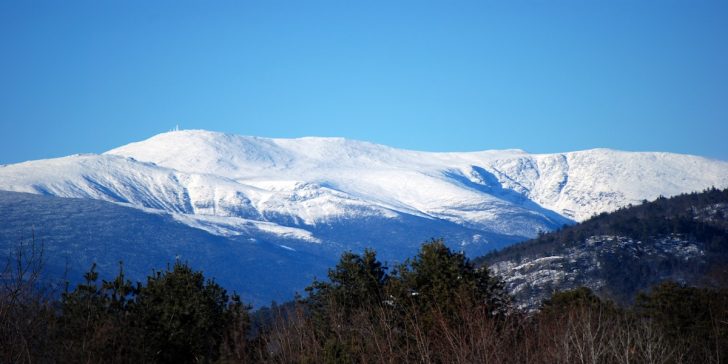
Mount Washington from Intervale, NH
Credit: Peabody & Smith

It’s Not Just Bad Weather That Can Make A Hike A Disaster.

[Editor Note: This article first appeared in the Boston Globe, August 16, 2017, and was reported and written by Martin Finucane. Click here to see the original version in the Globe.]

For years, hikers have shouldered their packs, inhaled the crisp air, and set out for adventures in the White Mountains. And for years, a small number have not made it back alive.

Sometimes it’s been a lack of proper gear. Other times it’s been a decision not to turn back when the skies were darkening. Still other times it’s been a simple slip while trying to get a look at a waterfall.

Julie Boardman has studied the fates of the unlucky ones, researching 219 deaths in the mountains, going back into the 19th century.

Boardman, author of “Death in the White Mountains: Hiker Fatalities and How to Avoid Being One’’ (Bondcliff Books, 2017), said the main reason people die in the mountains, which are just a few hours’ drive from Boston, is lack of preparation.

“People need to be educated about the dangers. I don’t think a lot of people are aware of the dangers that they’re getting themselves into,’’ she said.

She studied deaths that happened from 1849 until July (three more people died just recently). Her study focused on hikers, rock and ice climbers, and back-country skiers.

The leading causes of death were falls (74), natural causes such as heart attacks (57), hypothermia (46), and avalanches (14).

(Boardman’s book didn’t focus on rescues, which are the more common and happier outcomes of mountain emergencies. Those were up this year, New Hampshire Fish and Game officials told the Globe in May, blaming the need for rescues on a lack of preparation.)

How tricky can the White Mountains be?

One finding that surprised Boardman was that 21 of the hypothermia deaths occurred between Memorial Day and Columbus Day, a period during which you wouldn’t expect to die of the cold.

“It’s because people go out in the summer and they don’t have the gear they need, and then they run into bad weather and they get themselves into trouble,’’ she said.

The worst month for fatalities, because of the surprises provided by the weather and perhaps because of the higher volume of visitors, is August, she said.

Here are some of Boardman’s tips to stay safe in those beautiful mountains.

■ Study the weather forecast so you know what to expect.

■ Wear the proper clothing for the weather.

■ Bring enough gear. On winter hikes, bring a sleeping bag and enough equipment so if you get caught out overnight you can survive.

■ Know your route so you don’t get lost — and so you know what hazards you will face along the way.

■ Leave your plans with someone so they can alert authorities if you’ve gotten into trouble.

■ Hike with a companion. Two heads are better than one, she said, particularly because people with hypothermia can become confused. A second person can also help someone having problems with manual dexterity because of the cold or when someone is injured — in a fall, for example.

■ When in doubt, chicken out. Boardman says there’s plenty of wisdom in this saying, which she attributed to American mountaineer Miriam O’Brien Underhill. In a number of hypothermia cases, Boardman found, people had run into bad weather — and made the deadly decision to just keep going.

■ Stay on the trail. Boardman found that of 22 people who died of falls in the summers, 21 were off the trail. “A lot of them had gone off the trail to look at a waterfall,’’ she said.

■ In winter, go up and down the same trail so you’re familiar with what you’re facing on the way back. In six of 16 winter falling deaths, hikers were going down a different way than they had come up, she said.

■ Don’t hurry, and don’t push yourself. Hurrying can lead to rash decisions — and make you more prone to a fall. Pace yourself while hiking, and take breaks to avoid overexertion.

“They’re small mountains, but they can be very dangerous,’’ said Boardman, a veteran hiker.

Even experienced hikers can find themselves in trouble, she said.

“Don’t let down your guard. Don’t underestimate the mountains at all,’’ she warned.


Why Do I Have To Re-Enter My Name And Email?

For New Subscribers, You Should Know What To Do When You Get Annoyed By Pop-Ups.  There IS an answer.

If you are being asked to re-enter your email to confirm your subscription to SeniorsSkiing.com, you might be a bit annoyed.  We don’t blame you, but there is an explanation.

  • You are accessing SeniorsSkiing.com through a device that is different from the one you originally signed up on. Subscribing to SeniorsSkiing.com puts a “cookie” on your device.  If you use a different device, no cookie, so you are viewed as a non-subscriber. If you re-enter name and password, you’ll be okay with the new device.
  • You have disabled cookies or cleared browser history on your device. Even iPads can accept or disable cookies. Turn cookies back on, and you’ll not have to re-enter again, or leave it disabled and realize you have to re-enter each time.  Your call.
  • You are trying to access our Subscriber-Only Content.  Instead of building a firewall that requires usernames and passwords, we elected a much simpler way of getting to our exclusive content: Just confirm your name and email.  You will have to do that each time you want to get to that information, which, by the way, is under the Community tab at the top.

We are also hearing complaints from people who say the email delivery of SeniorsSkiing.com ends up in the spam folder.  What you should do is identify SeniorsSkiing.com as an okay email sender.  Usually if you just click on the file in the spam folder, you will get a menu allowing to change SeniorsSkiing.com to “Not Spam.”

Thanks everyone for your patience.

This Week In SeniorsSkiing.com (Aug. 18)

Summer Rounds The Far Turn.

We’ve heard there were snow falls in this mid-August in the Rockies.  Big snowfalls.  And the venerable Farmers’ Almanac, predicting the weather using its own mix of folk lore and natural observations for 200 years, has forecast a “snowier-than-normal” 2017-18 winter for the Northeast from the mid-Atlantic to the Canadian border.  The FA has even “red-flagged” five time periods for heavy precipitation along the Atlantic Seaboard: Jan. 20-23; Feb. 4-7, 16-19; and March 1-3, 20-23. Place your bets, ladies and gentlemen.  Here’s the forecast map that the folksy publication has recently produced.

Meanwhile, the hurricane watchers have upped the number of named storms to expect for the remainder of the June-Oct season.  Clearly the atmosphere is very active. And, we are watching the El Nino-La Nina reports from the National Weather Service.  It seems incredible but the temperature of the sea surface water in the eastern Pacific plays a vital role in forming weather patterns around the world.

We are still in summer publishing mode, issuing a SeniorsSkiing.com edition every other week.  This week, we are reaching back to the archives for some interesting and amusing articles.

We are reprising Harriet Wallis’ article on her adventures as a ski thief.  An innocent ski thief we hasten to add.

We are also re-publishing an article about the songs of skiing which we originally published in August, 2014, exactly three years ago.  It’s a micro-thesis on the emergence of ski songs in the 50-60s including some samples you can listen to. We’ve been wondering where the new ski songs are.  Know any? Have fun with this.

We are still figuring out the changes in our arrangement with Experticity.  If you have access to the site as a subscriber now, you will continue to have access until the anniversary date of your original sign up.  Then you will be asked to re-apply for access.  New subscribers who want access to Experticity will have to go through the new application process.We are trying to understand what that re-application process entails. So please be patient.

Enjoy the rest of August.  Wear sun screen and remember there are more of us every day and we aren’t going away.


Confessions Of A Ski Thief

[Editor Note: This personal account by contributor Harriet Wallis makes me smile. It appeared in SeniorsSkiing.com January 2, 2015.]

Start the Season Off Right: Know Where You Put Your Skis

It had been a glorious day on the slopes. Toward the end of that day, skiers and riders were coming off the hill and settling onto the patio to enjoy the late afternoon sunshine with some beverages and live music. Before I could join them, I had to park my skis, but it was nearly impossible to find an empty slot in the racks.

Where O where art thou? Getting skis mixed up is too easy in this forest of fiberglass. Credit: Harriet Wallis

Where O where art thou? Getting skis mixed up is too easy in this forest of fiberglass.
Credit: Harriet Wallis

With so many people and so many skis, I reasoned that it might be easy for someone to grab the wrong skis when they were ready to head home. To prevent such an accidental mix up, I put one ski in the rack and placed the other against the building. They were old skis, but they were my only skis, and I didn’t want them to go home with somebody else. With one ski here and the other ski over there, I was sure my skis would be waiting for me when I was ready to leave the mountain.

And sure enough, skis were waiting. I gathered one ski from the rack and the other from against the building. I threw them into the car and headed home.

A few days later – just as I was ready to ski again – I picked up my skis and was horrified. They didn’t match. I had a 170cm ski and one that was 163 cm. They were identical except for the size. Same ski, same integrated binding. Just different sizes!

I replayed the scenario in my head. I had put one in the rack and the other against the building. But another skier had done exactly the same thing – one ski in the rack, one ski against the building. And I had stolen a ski that belonged to somebody else.

I made frantic phone calls. My ski was waiting in the resort’s lost and found. When I retrieved it, there was an angry note taped to it saying: “It was the last day of my vacation, but I had to fly home to North Carolina with only one ski. Someone stole my other ski.”

I shipped the 163 cm ski to her immediately, and I included some goodies as an apology.

But when I told my son, he capped the matter. “Mother, I told you to use a ski lock. Now do it.”

Kids. We raise them with our wisdom, and then they turn around and give us a dose of their wisdom.


This Week In SeniorsSkiing.com (August 4)

SPECIAL EDITION: The SnowSports Industry And Climate Change.

A 12 acre solar farm at Jiminy Peak, MA, generates power for lifts, lodge and snowmaking.
Credit: Jiminy Peak

As we write this in early August, the National Weather Service has issued an excessive heat warning for most of the West Coast.  Seattle is poised to entertain temperatures near 100 degrees, Reno 110, Portland 106. Meanwhile, we hear of a massive snowfall in New Zealand’s Mt. Hutt, bringing 26 foot snow drifts over the weekend of July 22-23.  Here’s some video shot from a helicopter, thanks to Snowbrains.com.

We’ve seen reports from Portillo, Chile, with similar reports of gargantuan snowfalls in the Andes. Short duration, big depths.  Clearly, the atmosphere is reacting to an increase in global temperatures.

So this week, we will devote our issue to climate change and the ski business.  Obviously, there is a link and a concern. We hear from three reports from SeniorsSkiing.com correspondents Rose Marie Cleese and Roger Lohr on how the ski industry is embracing sustainable energy, conservation policies and practices, and new technologies that save money and reduce fossil-fuel consumption and carbon dioxide footprints.

In How The Ski Industry Is Fighting Climate Change, Rose Marie Cleese provides a broad look at how the industry is preparing and responding to a future with potentially less cold weather.  She reports on NSAA, a non-profit called Protect Our Winters, and two major resort operators’ efforts to deal with a game-changing threat to the business and the environment.  Rose Marie also provides links to other resources to check out where you can become more informed about the industry’s response.

In Jiminy Peak: How To Be A Sustainable Resort and At Killington, The Sun And Cows Power Lifts And Lodges,  Roger Lohr presents two case studies of how very practical resort owners have committed to alternative energy sources and conservation business practices, saving money and natural resources.  Find out how the cows play a role in fighting climate change.

On we go into the summer.  Mammoth Mountain finally ended the 2016-17 season by closing down on August 1.  Click below for an intrepid final run over snow and pumice on the final day, again thanks to Snowbrains.com.

We’ll be back later in August.  Meanwhile, summer on.  Remember, there are more of us every day, and we aren’t going away.


How The Ski Industry Is Fighting Climate Change

Climate Change Is Literally In The Air. Here’s A Roundup Of What’s Going On.

[Editor Note: This article first appeared on the Liftopia.com blog and can be found at http://blog.liftopia.com/ski-industry-fighting-climate-change/.]

Cold, snowy weather is the very foundation of the ski industry. So, it’s not surprising that climate change has been at the top of the industry’s priority list since the turn of this century. Before that, ski areas relied on rudimentary snowmaking to get them through bad snow years. Today, snowmaking is a much more sophisticated and dependable operation, and resorts and industry associations are doubling down on their environmental efforts, using energy-conscious snowmaking, other sustainable technologies, and climate sensitive business practices and policies. They know how high the stakes are—the very future of wintersports.

Here’s what ski industry organizations and ski resort management are doing in order to ensure that you’ll be able to slide down snowy slopes for many winters to come.

Julian Carr (POW Riders Alliance Member), Snocru, Ski Utah, and POW at Powder Mountain in Utah at POW Day in January 2017. Credit: Jana Rogers

1. The National Ski Areas Association has been pushing environmental initiatives over the past 15 years.

The National Ski Areas Association (NSAA) has been rolling out environmental initiatives for the past 15 years and is not about to let up. Says Geraldine Link, NSAA’s director of public policy, “Climate change presents challenges to the ski industry that require proactive planning, bold action and leadership. The good news is that the ski industry is adept at managing challenging conditions and began work on addressing this issue 15 years ago with the adoption of a cutting-edge climate change policy in 2002. While every industry is affected by climate change, impacts to the ski industry receive a great deal of visibility in the media, given the operations’ natural connection to climate. This visibility provides a unique opportunity to lead by example, and we have done so successfully with respect to climate change education, mitigation, advocacy and adaptation.”

NSAA emphasizes several important areas with its member ski areas and resorts:

  • Reducing carbon emissions through energy efficiency, on-site renewable energy, green-building/retrofitting, and alternative fuels, among other actions
  • Increasing investments in snowmaking, water facilities, and water resources
  • Developing smarter grooming technology
  • Shifting to a four-season model
  • Advocating for legislation and regulation on broader-based climate solutions

Aspen Mountain reflected in Solar Panels at resort.
Credit: Aspen Skiing Company

The association works on many fronts: Since 2009, NSAA has been providing its member ski areas grants through its Sustainable Slopes Grant Program that provides cash and in-kind funding to support resorts’ sustainability projects. Its Climate Challenge is a voluntary program that helps participating ski areas reduce greenhouse gas emissions and reduce energy costs. Its annual Golden Eagles Awards for Environmental Excellence recognizes ski resorts for their performance in several environmental categories, from overall excellence to water conservation to visitor education and community outreach. And its online Green Room provides links to resorts’ environmental web pages listed by state (and Canada) so that fellow resorts and the public are all up to speed on the latest environmental actions and ideas.

Director Link adds, “In light of the political climate in Washington, the industry needs to be even more proactive about climate solutions to forge a sustainable path forward for the industry.

Her call for advocacy is not misplaced. In a study released by the Natural Resources Defense Council in 2012, it was calculated that the ski industry loses $1.07 billion in revenue in low snowfall years. And according to a report recently issued by the EPA and prepared by Elsevier, a global information analytics company based in the Netherlands, estimates show that climate change will cause a drop of about 30% of current snow sports revenue and skier/snowboard visits in the U.S. by 2050. The report states that the drastically shortened snow sports seasons, in the Northeast and Southeast in particular, will force many resorts out of business between now and 2050.

Kelly Davis, director of SnowSports Industries America (SIA) says, “The industry must determine whether to accept the impacts and wither [or] consider options that include opening new areas for snowsports in less-affected regions, improving snowmaking technology, developing gear innovations that make skiers and riders less dependent on snow conditions, [etc.] to thrive in the next 50 years.”

POW founder, Jeremy Jones, on Capitol Hill testifying at a House Subcommittee Hearing in April 2017. Credit: Protect Our Winters

2. Protect Our Winters is dedicated to engaging and mobilizing outdoor enthusiasts in climate issues.

Protect Our Winters (POW) is a nonprofit organization, founded in 2007 by professional snowboarder Jeremy Jones to encourage various groups to be active participants in the fight against climate change. POW works closely with outdoor businesses, ski resorts, professional athletes, and outdoor enthusiasts to be in the front lines of environmental action and green practices. Its volunteer professional athletes talk to students in schools, and POW staffers are frequent visitors to state capitols and the power centers in Washington, D.C., advocating for the reduction of greenhouse gas emissions via carbon pricing, solar energy, and the electrification of public and private transportation.

3. Aspen Skiing Company is one of many ski resorts combating climate change.

Matthew Hamilton is Aspen Ski Company’s sustainability director, overseeing its community philanthropy and supporting the company’s internal environmental programs. He says, “Today there is much more significant discussion of climate change and its impact than there was 12 years ago.” Aspen’s sustainability department was the industry’s first such entity when it was founded in the early 2000s, and the company has emerged as a major industry leader in environmental issues, from issuing an annual sustainability report that dutifully records both its successes and rare failures to developing a program to use the methane from a nearby defunct coal mine to generate 24 million kilowatt hours annually—enough to power its entire operation—four ski areas, three hotels and 17 restaurants— for a year.

A presentation at Aspen’s methane-to-electricity conversion operation at Elk Creek Mine. Credit: Aspen Skiing Company

Whether it’s lobbying in Washington, funding educational opportunities, or having its visitors use paperless apps for receipts and lift tickets, Aspen is solidly in the forefront of tackling today’s environmental challenges. To get inside the head of Aspen Skiing Company’ president and CEO Mike Kaplan, read his bold manifesto that appeared in The Aspen Times last December.

Aspen is just one of several U.S. ski resorts that are environmentally proactive. Even the simplest actions make a difference. For instance, to save water, the Resort at Squaw Creek in Squaw Valley, CA, gives its guests $5 coupons to spend at the resort’s shops and restaurants every day they opt out of having their bathroom towels replaced. To learn more about what U.S. ski areas are doing to meet the challenges of a changing climate and other environmental issues, check out NSAA’s list of resorts’ environment-specific web pages.

4. Ski resorts’ commitments to the environment keep snowballing.

On July 25th, Rob Katz, chairman and CEO of Vail Resorts Inc. announced to its 30,000-plus employees at a company-wide town hall meeting Vail’s commitment to zero net emissions, zero landfill waste, and zero operating impact on forests and habitats by the year 2030. Its Epic Promise for a Zero Footprint includes everything from purchasing 100% renewable energy, restoring equal forest habitat for any habitat displaced, working with vendors to up their “green” quotient, and educating resort visitors to diverting 100% of waste from landfills and financially supporting environmental stewardship projects. Says Katz, “The environment is our business, and we have a special obligation to protect it.”

Vail Resorts’ subsidiaries operate nine major ski resorts and urban ski areas in the U.S., plus Whistler Blackcomb in Canada and Perisher in Australia, as well as RockResorts, a collection of luxury hotels in Colorado. 

What can you do to make a difference?

Want more specifics about the environmental actions many ski industry organizations, areas and resorts are currently undertaking or planning for the future? Here are some informative and action-oriented links you may want to check out!

Night time snowmaking at Aspen Mountain. Credit: Aspen Skiing Company

Jiminy Peak: How To Be A Sustainable Resort

This Almost 100% Renewable Energy Ski Resort Is A Pioneer In Harnessing Solar And Wind.

[Editor Note: Thanks to Roger Lohr, publisher of XCSkiResorts.com, for steering this article our way.  It first appeared in XCSkiResorts.com in late July.]

A 12 acre solar farm generates 2.3 megawatts. Wind power and solar power cover most of the resort’s needs.
Credit: Jiminy Peak

Jiminy Peak Mountain Resort located in the heart of the Berkshires of Western Massachusetts constructed a 2.3 megawatt community solar facility located on 12 acres of the ski area and resort’s property, owned and operated by Nexamp. Renewable energy is not new to the resort—back in 2007 it was the first ski area in North America to generate power from its own GE 1.5 MW wind turbine.

The solar project significantly expanded Jiminy Peak’s renewable energy program, while extending the environmental and cost-saving benefits of solar to up to 200 neighboring homes and small businesses. By adding the solar power facility to Jiminy Peak’s existing wind turbine, 75 kWh cogeneration unit, and extensive conservation efforts, the resort can claim to be one of the few resorts in the U.S. powered 100% by renewable energy and one of the most sustainable energy ski resorts.

Solar and Wind Energy

The solar project significantly expanded Jiminy Peak’s renewable energy program. All power generated by the 7,500-module solar facility is exported to the grid. Resort president Tyler Fairbank said, “We receive net metering credits in return. Half the net metering credits are utilized by Jiminy Peak and the balance by about 200 neighboring homes and small businesses in the local area.”

The resort uses all the power generated by the wind turbine according to Jim Van Dyke, vice president of environmental sustainability, and a veteran 43-year employee who commented “The turbine handles 33% of our energy needs on an annual basis, up to 66% in the winter when the winds blow strongest. Any excess energy is sent out to the grid and Jiminy receives a net metering credit, which is used when we need to purchase energy from the grid. So in that fashion we now use 100% of the electricity that the turbine generates.”

Lighting, Recycling, and Cogeneration

Jiminy has upgraded to more efficient lighting and programmable thermostats in the lodges, and the resort more than doubled the energy efficiency of the lights used on the slopes for night skiing. In the Country Inn, 658 lights were converted to  LEDs to be more efficient and 230 slopeside lights have been replaced with lighter, brighter, more energy efficient LED lighting covering 60 percent of the mountain. The difference has been likened to that between a manila envelope and a white envelope.

Waste oil is taken from snowmaking compressors, grooming machines, and all vehicles to heat the Mountain Operations building using approximately 200 gallons of waste oil per year, and the process avoids the storage and disposal of old used oil.

Jiminy Peak installed a cogeneration unit in the Country Inn. The unit uses propane gas that powers a turbine that in turn produces hot water for use throughout the Inn. This hot water also provides the heating source for the central core of the building that includes the year-round outdoor pool, hot tubs, and John Harvard’s Restaurant & Brewery, too.

Using the heat from two snowmaking compressors to heat 34,000 square feet of space in three Village Center buildings avoids the need of an equivalent of 63,800 kWh.

The towel and sheet program in the lodge rooms saves about 25,000 gallons of water a year by only washing the sheets and towels when requested by guests staying for more than one night. They’ve eliminated the use of toxic cleaning agents and only use green, biodegradable solvents and cleaners. Conversion to waterless urinals in bathrooms of several buildings and at JJ’s Lodge saves 40,000 gallons of water per urinal.

Snowmaking

Jiminy averages 615 acre feet of snow per winter using machine-made snow and approximately 123,000,000 gallons of water. The entire 450-gun snowmaking arsenal was replaced with energy-efficient Snowgun Technologies “Sledgehammer” snowguns. The new guns convert more water with less air and at warmer temperatures than traditional snowguns. This means the resort runs air compressors for fewer hours, consuming less electricity, while producing 100% more snow (assuming Mother Nature cooperates).

For example, the snowmaking system’s old technology would have required 4,566,100 kWh ten years ago versus 1,368,326 kWh today. The annual savings is 70% in energy or 3,197,774 kWh.

Slope Grooming

Jiminy Peak has equipped two PistenBully groomers with digital mapping and GPS to tell drivers exactly how much snow is beneath their treads, blades and rollers. The maps are based on aerial photography captured during summer, and are accurate to within two inches (5 cm). “Rather than eyeball it, the SNOWSat technology allows us to more precisely gauge depth and place more snow where the cover is thin, and less where the cover is already sufficient for skiing or riding. This means fewer passes by groomers,” Van Dyke explains, noting that Jiminy Peak is one of only a few resorts in the U.S. using the new technology.

Speaking of groomers, Jiminy Peak is purchasing the new energy efficient Pisten Bully 600 E+ snowcat, one of three in use in the northeast. Kassbohrer’s Pisten Bully “Green Machine” 600E+ is the world’s first groomer with a diesel-electric drive. One of the most significant advancements in snow grooming technology over the past two decades, the 600 E+ uses a diesel engine to drive two electric generators which power electric motors that turn the tracks and the snow tiller. It reduces the emission of nitrogen oxides and carbon dioxides by 20%, produces 99% fewer sooty particles and registers a 20% fuel savings over their standard 600 model.

Jiminy turbine.jpg

Transportation

There are plans at Jiminy Peak for the installation of four EV charging stations, working with an Albany, N.Y., EV Drivers Club, with support from Tesla. Van Dyke notes that EV car owners, in addition to saving on fossil fuels, will be recharging with renewable electricity generated by both solar and wind.

Jiminy Peak has won environmental recognition, but awards are not why Jiminy Peak Resorts conserves and invests in renewable energy. Fairbank reflected, “Conservation is practiced every day at Jiminy Peak. It’s part of our corporate DNA. We have an in-house energy management team that conducts an on-going and aggressive program to help us to identify and curtail energy waste and research ways to source 100 percent of our energy from renewable resources. They are constantly evaluating opportunities for savings. Our renewable efforts have come from facilities we’ve built, and we’re proud for reaching 100% of our electricity energy, which is from local, on site-generated renewable resources.”

At Killington, The Sun And Cows Power Lifts And Lodges

Killington Is Another Ski Resort Leading The Way In Sustainable Energy.

[Editor Note: This article by XCSkiResort.com publisher Roger Lohr first appeared in SnoCountry.com.]

Summer At Vermont’s Killington.
Credit: Killington

Ski areas in the U.S. continue to implement innovative energy conservation measures and environmental practices to reduce energy consumption and the effects of climate change. Killington Resort in Vermont strives and continues to exceed customer expectations as a steward in the battle against climate change.

Renewable Sourced Electricity

Recently Killington announced its intention to install solar arrays at Pico Mountain with 100 kilowatts (kWh) of solar panels on the Pico Base Lodge and Administration building. Tracker solar panels that move to maintain the optimum angle with the sun will be located at six sites around the resort with three trackers at each site. Power from these systems will be sent back to the electric company (net metering).

The Cow Power program is a unique form of producing energy whereby about a dozen Vermont farmers use cow manure at their farms in an anerobic digester system to generate electricity to sell to Green Mountain Power. Killington purchases 1,125,000 kWh annually of this energy to power the K-1 Gondola and the Peak Lodge.

In 2007, the resort converted 12 walk-in coolers to Freeaire Refrigeration, which uses outside air to refrigerate the coolers instead of using high energy-consuming compressors.

Recycling

Killington has been recycling for years, currently recycling 100 tons of waste annually. It uses 50,000 pounds of 100 percent recycled certified paper products annually. Killington trail maps and guest guides are printed on paper certified by the Forest Stewardship Council.

An innovative design to use recycled waste water systems in the restroom facilities is employed at the six Killington base lodges, saving up to 35,000 gallons of fresh water each day during peak days. Since 1987 when the water conservation system was installed about 62 million gallons of fresh water have been conserved.

Transportation

On transportation, Killington participates in the Marble Valley Regional Transportation District. Current resort-related ridership on “The Bus” exceeds 375,000 one way trips annually including 75,000 commuter and employee related trips.

In 2014, two ChargePoint stations for electric cars were installed at the Killington Grand Resort Hotel with dedicated spaces open to all guests. There are also plans to have two Tesla Destination Charging stations (at the Snowshed and Skyeship areas) installed prior to 2017-18 the ski season.

Snowmaking

Killington purchased 400 new energy-efficient snow guns as a part of Efficiency Vermont’s Great Snow Gun Roundup in 2014, an investment of snow guns valued at over $2 million.  That program required that for every five energy-efficient snow guns purchased, four less efficient snow guns be scrapped. Killington retired 317 snow guns in a variety of styles and added 396 new guns to its fleet.

Killington snowmaking
Killington begins snowmaking for an early season. (Killington)

Killington added 150 new tower bases for these more efficient snow guns and mounting guns on towers allows for more “hang time” in snowmaking, adding to efficiency and output while reducing noise for skiers and providing a more authentic snowfall experience. Dave Lacombe, snow surfaces manager for Killington Resort commented, “Modern, energy-efficient snow guns require up to 85 percent less energy to operate than older snow gun models, and the new snow guns represent the most advanced, energy-efficient technology available.”

One standard diesel-powered air compressor used for snowmaking produces 1600 cubic feet of air per minute (CFM). Older snow guns use 600 CFM while new energy-efficient guns use 8-26 CFM, allowing for far more snow guns to be powered by a single compressor. To further improve sustainability, all Killington diesel compressors have Tier 4 engines that use cleaner burning fuel and have increased energy efficiency overall.

Killington projected direct savings for the season associated with the new snow guns totaled 1,453,000 kilowatt-hours of electricity, 84,000 gallons of diesel fuel, 3,452,000 pounds of carbon emissions and roughly $470,000—and that’s a return on investment in about a year and a half.

Crater Lake From Space

Snow Lingers Around Crater Lake In Amazing Photo From The ISS.

An astronaut aboard the International Space Station shot this photograph of Crater Lake, in the Cascade Mountains of southwest Oregon. Snow still blankets most of the slopes surrounding the crater in late June, and clouds cast dark shadows on the lake surface. Wizard Island, a cinder cone volcano, is almost hidden by the clouds over the western part of the lake. (Note that north is to the bottom of the photo.)

This Week In SeniorsSkiing.com (July 21)

Summer Is I-Cumin.

Summer skiing at Squaw Valley. Finally, the last run.
Credit: RogerRomani/Snowbrains.com

We are approaching the mid-summer mark and note that the monumental snow fall at Squaw Valley this winter has allowed die-hards to make a final run or two this week.  Season over. July 15.  Almost mid-summer.  My, my.

It makes you wonder what machinations of weather we will see next winter.  Conditions are shaping up for a neutral El Nino season out in the eastern Pacific, according to NOAA. That means the ocean water isn’t tending cooler or warmer.  Last year saw a La Nina condition (cooler ocean water) that made a huge impact on atmospheric conditions, especially in the North American west coast where the snow was epic.  A neutral condition in Winter 2017-18 will bring perhaps the same precipitation, but perhaps higher temps, too.  ‘Way too soon the tell, but we will be watching.

Since it is almost mid-summer, we thought we’d offer something different.

Here’s a poem by Gary Snyder, Mid-August At Sourdough Mountain Lookout.

Sourdough Mountain Lookout, Rockport, WA.

Down valley a smoke haze
Three days heat, after five days rain   
Pitch glows on the fir-cones
Across rocks and meadows
Swarms of new flies.
I cannot remember things I once read   
A few friends, but they are in cities.   
Drinking cold snow-water from a tin cup   
Looking down for miles
Through high still air.
Well, that’s the feeling we know a lot of our readers have when they take to the biking and hiking trails up in mountain country.
This week, we bring you an update about the Experticity discount situation.  Some new subscribers have been frustrated in trying to access the Experticity site where discounts on gear and clothing from top brands have been available to our readers.  The update will explain the status quo which is changing yet. We ask all to have patience as we work through this hiccup.

Also, our top 10 Trailmasters have been mailed their Debooters for their huge accomplishment this past winter in skiing their age.  If you want a SeniorsSkiing.com sticker, we have a bunch.  Just send a self-addressed, stamped envelope to SeniorsSkiing.com, Box 416, Hamilton, MA 01936.

Thanks for hanging with us; you are certainly not alone, because there are more of us every day and we aren’t going away!


Cycling Series: “Arthritis-Proof” Bicycle Tires—Flat No More

Get 5,000 Miles On These Airless Tires And Never Have To Wrestle With A Flat.

The dealer installs tubeless Tannus tires onto my rims before the big charity ride.
Credit: Harriet Wallis

If your hands are arthritic, you know how hard it is get a tire back on its rim after fixing a flat. Arthritic hands just don’t have the strength they used to have. But it’s impossible to get a flat with solid tires, so that’s good news for arthritic hands.

I saw airless tires for the first time just a few weeks ago. It was the evening before a major all-women’s bicycle ride fund raiser for women’s cancer research. The annual event is sponsored by the Bonneville Cycling Club here in Utah and the women-only ride is called Little Red Riding Hood.

This year there were 3,900 riders who could choose to ride routes ranging from 27 to 100 miles through rolling rural countryside. Once again, my friend Laurie and I were good-will Course Ambassadors, which means we’d ride a route amongst the women reminding them how to ride safely.

Tires That Can’t Get Flats? My Hands Need Them.

Ride on. These colorful tires won’t get flats.
Credit: Harriet Wallis

On the evening before the ride, the start area becomes a shopping mall of vendors with bike-related products: bike clothing, bike jewelry, bike art—and for the first time, tubeless bike tires.

Right then, the night before the ride, we each bought a set of colorful Tannus tubeless tires and had them installed. During the long ride the next day they seemed to feel and ride like regular tires at 100 – 120 psi.

Details

The Tannus website says this design reduces drag to 1-2%, but we didn’t notice any drag on the Little Red route with rolling terrain and few hills. Apparently other brands of solid tires can produce considerable drag.

I’ll give you my follow up evaluation after I give the tires a good workout this summer on a variety of terrain.

The Tannus foam tires are lighter weight than a tube/tire combination. They also reduce weight because there’s no need to carry a pump or compressed air cartridge or tire tools.

They come in several road bike tire styles and in a dozen flashy colors. Aren’t my red ones pretty? Price: about $65 each plus installation

You can install them yourself, but I wouldn’t recommend it. It’s a very unconventional installation, and it uses a specialized tool to squeeze the tire onto the rim. If you already have arthritis in your hands, installation won’t be fun. But installation directions are available online.

To read more from Harriet click here for her stories on SkiUtah.