
Tag Archive for: Don Burch

Getting Ready For The New Season

Tongue-In-Cheek Tips For Dusting Off All Your Stuff…And You.

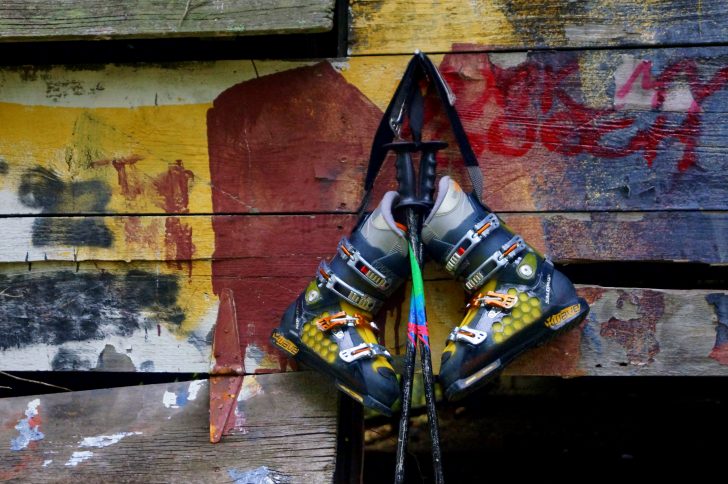
Where did you stow those boots? Keep looking, they must be hanging around somewhere.
Credit: Don Burch

You know it’s time to get ready for skiing when leaves are falling and there have been snow flurries in the mountains. You’ve started having ski dreams, and everyday you check SeniorSkiing .com (and your other favorite ski sites) for new postings.

Here’s what you need to do:

Get in shape. Go to the gym, do a plank. Spritz yourself with water so it looks like you’ve worked up a sweat. Do a lunge. Check your phone for messages. Call it a day.

Schedule all appointments for before or after ski season. Get your teeth cleaned now.

Find your ski clothing. Wash the long underwear that was lovingly stored under the bed. Clear out the pockets of your parka. Put the half-eaten protein bar in a baggy. Pull the fuzz off the loose ibuprofen pills in find a new baggie for them.

Find your new ski pass among the pile of plastic cards in the junk drawer. Throw out all the video store membership cards you find. Yes, even the Blockbuster card.

Go toward the pile of ski poles tossed in the back corner of your garage. First move all the string trimmers that you can’t start, the fishing poles with broken tips and the other things you’re going to fix. Pick out two ski poles that are the same length. No, they don’t need to actually match in any other way.

Get your ski boots out of the barn, shed or whatever outbuilding you promised yourself you’d never again store them in after what happened last year. DO NOT put your hands into the boot. First, turn them over and shake out the acorns. Shake them again, harder this time. Still do not put your hands in them. OK, they’re probably ready for the season.

Hunt for your skis. Do a visual binding check. If they are caked with highway salt and rust spray them with WD40. If they have Cubco bindings, buy new ones. Put them with the ski boots and the mismatched poles.

Watch YouTube instructional ski videos. Visualize yourself making carved turns. Get yourself centered by watching videos posted by your favorite life-coach. You’re working hard so indulge yourself with some cute cat videos.

Download the latest ski apps to your smart phone.

Bore your non-skiing friends, spouse, relatives and anyone you meet with all the new stuff you’ve learned online.

Call all your ski buddies. Subtly ask questions in order to determine their “ski status”. Do they have new grandchildren, new hips or knees, or a new sweetheart who doesn’t ski?

I know you didn’t throw out all the video store membership cards. You knew vinyl records made a modest comeback and so might Blockbuster. So get one of the plastic cards and use it to scrape sleet off goggles. Put it in the interior pocket of your parka along with the fuzz-less ibuprofen pills baggie and the half eaten protein bar. You are now fully ready for the new ski season.

Don Burch’s Funkadelic Skiing


Short productions by ski videographer, Don Burch, have been gracing these pages for a few seasons.

Each one is a personal perspective on the joys of skiing; quite different from what the ski and clothing companies have been sponsoring. Funkadelic Skiing – a compilation from the 2021-22 season — is yet another take on Don’s unique view of the sport.  Enjoy!

“Come Ski With Me”: A New Don Burch Video

Don Burch recently returned from his first ski trip to Colorado in almost 50 years. He titled this video summary of his time at Beaver Creek, Copper, Keystone, Breckenridge and Vail,  “Come Ski With Me.” It’s another fine example of Don’s refreshing new genre of ski video: brief, graphically interesting, and easy to watch.

Exhibition, Mt. Snow

Last Season

Don Burch is a frequent contributor of interesting ski pictures and videos. He put together this 2-minute video of highlights from his 2020-21 season. If you want to stoke your imagination for the coming season, click here and enjoy!

Spring Skiing At Killington

Here’s Another Don Burch Video Capturing A Blue Bird Day At The Big K.

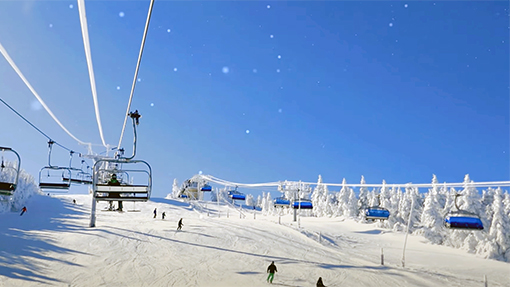
Snapshot of perfect conditions on a beautiful day.

Early Season Skiing: Okemo, VT

Shaking Off Summer Dust: First Runs Of The Season

Snow finally came to New England last week whether through machines or from the sky. It finally got consistently cold enough to make the stuff or for real snow to stick. 

SeniorsSkiing.com correspondent Don Burch ventured out to see what was going on at Okemo, VT. Here’s his video report from the slopes.  If you haven’t been out yet this year, perhaps this short video will rev up your enthusiasm.


2020-21 Survival Guide

Buckle Up, Bundle Up And Buck It Up.

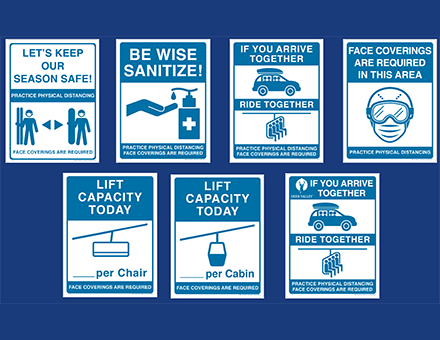
NSAA recommended signage for this season. Credit: NSAA

Never before has there been as much trepidation about a ski season as for this one.  Given all the tumult that occurred during this year, it’s no surprise we’re anxious.  What follows are some insights that will help us get the most out of what will be a most unique season.

Above all, we need to go into this season with realistic expectations.  Things are not going to be the same as ski resorts strive to provide us the best possible experience in the midst of the pandemic.  Be prepared for limits on the number of skiers allowed at resorts each day and in many instances we’ll have to reserve these days in advance online.  The result is that we will likely not get to ski each and every day that we would want to, and we will likely not get to ski as many total days as we’d like. 

As resorts work to ensure social distancing across all phases of our visits, we can expect changes to how day tickets are purchased, how food and beverages are purchased and where they are consumed.  There will be changes to how lift lines are organized, rules about who can ride lifts together and how many people unfamiliar with one another can ride together.  Because resorts will be limiting the number of people allowed in lodges, we need to be prepared to boot up, warm up, and eat in our cars.

It will behoove each and every one of us to be as self-reliant as possible.

There are a number of stakeholders in skiing, and it helps to understand that we all share the same goal: to make skiing as fun as possible for as many people as possible and to keep everyone safe. We are all in this together and the 2020 ski season will be th ebest possible if we recognize our interdependence. If people choose not to follow the rules, it could lead to further restrictions.

In addition to the demanding tasks involved in reopening each year, resort operators are facing a daunting array of challenges including redesigning how services are delivered, complying with federal, state and local mandates, financial challenges, acquiring an adequate work force and doing all this amidst tremendous uncertainty.

As a result, resorts are not going to get everything righ,t and we should expect things will not always run smoothly. In essence, we need to be understanding and patient.

Because the impact of the pandemic is so fluid, resorts will likely change policies throughout the season. So, know before you go. Staying up to date on information regarding a resort’s policies will help us avoid unwanted events.

Now the lemonade: The thing we love most about ski trips is the actual skiing, and this season time on the slopes will be just as much fun as ever. Additionally, we may come to like some of the changes.  Strategies for more “low-touch” interaction with guests may lead to smoother and more efficient ticket sales, use of passes and quicker access to food and beverages. Resorts are considering some very creative options for dining such as food trucks, other satellite food stations and take-out.

So, buckle up, bundle up and buck it up.

This Week In SeniorsSkiing.com (Aug. 28)

We’re On Vacation!

Seniors Skiing is a video produced by correspondent Don Burch. Click the image below to bring back images of last winter.

Mask-covered, social-distanced, sanitized-hands, take-out vacations are the end of August things to do at SeniorsSkiing.com.  Jon has isolated himself in a travel trailer somewhere in the North West, and I’ve been on a sailboat in Maine, watching ospreys and sunsets.

However, we do want to send you a reminder of winter dreams.  Here’s a neat video from SeniorsSkiing.com correspondent Don Burch that shows us what it is all about. Enjoy. Just click on the image to watch.

Thanks, Don, for this wonderful gift of winter.

Remember, there are more of us every day, and we are not going away.


Fact Or Fiction

Test Your Ski Knowledge

  1. The most ancient ski in existence was found well preserved in a peat bog in China, dating from about 450 AD.
  2. The furthest anyone has Nordic skied in a 24 hour period is nearly 300 miles.
  3. In 1918 Denmark had the first “ski army”.
  4. With about 472, the US has the most ski reports of any country.
  5. Skiing is available in nearly half the countries of the world.
  6. The longest ski ever used was over 1,800 feet long.
  7. The fastest anyone has skied backwards is over 80 mph.
  8. The most vertical skied in one season is over 6 million feet.
  9. The longest T-bar in the world is nearly four miles long.
  10. Though attempted many times, no one has successfully run a marathon in ski boots.

Don’t Peek Yet. Answers Below.

  1. Fiction: The oldest ski was found in a peat bog but it was in Norway and dates from 2500 BC.
  2. Fact: Hans Maenpaa of Finland skied 293 miles in 24 hours.
  3. Fiction: Norway had the first “ski army” in the 1700s.
  4. Fiction: Japan has the most with about 500.
  5. Fact: Of the roughly 196 countries in the world about 97 offer skiing.
  6. Fact: At an event in Norway 170 skiers skied 44 feet on a pair of 1,800 foot long skis.
  7. Fact: Elias Ambüehl of Switzerland skied backwards at over 80 mph.
  8. Fact: In the 2014 – 15 ski season Canadian Pierre Marc Jette skied 6,025,751 vertical feet at Whistler Blackcomb. In doing so he raised money for Alzheimer’s treatment and research.
  9. Fiction: The longest T-bar is at Murray Ridge, BC, Canada. At just under 2.5 miles long it runs at a speed of about 12 mph. To put that in perspective, that’s about the same speed as detachable chairlifts.
  10. Fiction: Dr. Paul Harnett holds the record; he ran a marathon in ski boots in five and a half hours.  Check out this video about his accomplishment:
Analogy Test

SeniorsSkiing.com Analogy Test

[Editor Note: Thanks to SeniorsSkiing.com Correspondent Don Burch for this challenging test. Good luck, you’ll need it. Answers at the end.]


Correspondent Don Burch Wraps the Season

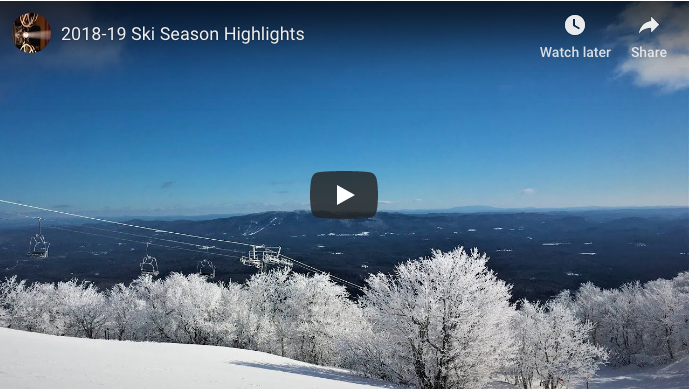
Don Kept A Video Diary Of His 2018-19 Season.

Perhaps this will keep you cool in July. If you have videos of this past season, please let us know at info@seniorsskiing.com.

(Some videos by Peter Hines)


Selling Skis: 50 Years Of Gibberish

Remember Lange’s “Soft Inside”?

Now this ad turned a few heads back in 1969. Credit: Lange

I get it. It’s not easy to sell skis. With so many advances in ski design, there are tons of great skis out there. So how does a brand differentiate their products from others? Just like they always have, advertising and marketing. This means slogans, endorsements, performance claims, use of exotic materials and “systems” and of course, transference (associating the product with being sexy, unique, rugged…See Lange boot ad above.)

Sprinkled in among the gibberish is useful information such as amount of rocker, turning radius, profile, and such. But most of it is nonsensical, indecipherable, and unintentionally amusing.

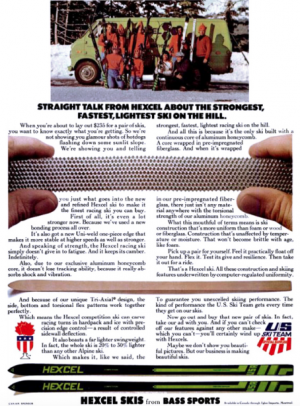
Back in the 1970s, some Fischer skis had wooden cores “made up of finely-cut laminations of lightweight African Okoume”. Rossignol skis were touted as “the greatest moment-makers that ever smoked the slopes”. Regarding one of their skis, Hart stated, “If you’re a swinger who skis for the sheer fun of it, Jubilee is your baby”.

Hexcel had a honeycomb metal core. Credit: Pugski

In the 1980s, Hexcel skis had an “aerospace-proven honeycomb/prepeg technology”. Atomic advertised that their skis had a new “Hy-Vitronic System” and Dynastar skis had a “metal ‘omega’ rib for torsional stiffness”. Not to be outdone, Molnar skis had a “unique Prismatic construction consisting of two channeled fiberglass blanks mated along the ski’s neutral axis”.

In the 1990s, Tyrolia urged buyers to go with Tyrolia skis because you’ll be with a “fast and smooth crowd.” Rossignol asserted that their skis are “limited only by your courage”. Meanwhile K2 had a ski with “TRIXIAL SYSTEM 3” which “balances flex, torsion and lateral deflection”.

In the 2000s, Salomon skis had “hard elastomer transmitters”.  Atomic had skis that had “the reviewers drooling, so if you want a pair, you’d better jump”, and Rossingnol had the “Powerpulson System”.

In the 2010s, Head race skis only began “to work at speeds that would get your ticket pulled.” Volkl hawked a ski that was “just a little piece of heaven in the big scheme of things, but heaven nonetheless”. Atomic promoted a ski with “double-deck construction”. The two decks were “joined by rubbery fasteners.”

And, nowadays, little has changed. Some Volkl skis have “Multi Layer reinforced wood core, powered by titanium and UVO (Ultimate Vibration Object)”, and high-end Head skis have KERS. This “technology works like a turbo charger that provides additional power and acceleration by stiffening the tail of the ski in out turns. The effect: a boost, catapulting the rider into the next turn. Just like when Formula 1 pilots push a button for that extra notch of speed.”

Kers, whatever that is. Credit: Don Burch

I have a pair of Head skis with KERS, and I love them. Of course, I have no idea whether KERS has anything to do with my liking the skis, but I’m hoping next year they’ll have a button I can push for that speed boost!

Mike On A Fat Bike On Snow

A Fat Bike Neophyte Takes To The Trails. Here’s What’s Different.

Correspondent Don Burch (l) and Co-Publisher Mike Maginn pose before heading out. Credit: Tamsin Venn

Exploring alternative snow sports always interests us.  We like snowshoeing around the woods when the snow is too deep for cross-country skiing. We go ice-skating on the pond behind the house when it gets cold enough and there’s no snow cover, an uncommon combination. We even tried snow camping, and we are researching ways to build an igloo or a snow tepee for our grandson in the backyard. So, when the opportunity to go fat biking in the New Hampshire winter mountains came around, we saddled up.

A group of ski journalists were given a chance to explore the Great Glen Trails Outdoor Center in Pinkham Notch, just up the road from Wildcat Mt.  The center with its base lodge, store, cafe, and rental shop is just across the road from the brand new Glen House Hotel, on the exact site of four previous hotels dating back to the mid-19th century at the entrance to the famous Mt. Washington Auto Road.  The spacious Outdoor Center has 45 km of groomed trails for xc, snowshoeing, and fat biking as well as tubing.  Another fantastic activity is riding the Snow Coach up the Auto Road to the 4,200 foot tree line on Mt. Washington. There’s a whole other slate of activities for summer, too.  Only a half hour or so from North Conway, this resort is an historic, ultra family-friendly, non-skier welcoming, Nordic-focused, relatively undeveloped area, and we predict it is going to be growing like a snowball.

Don whisking along on the flat. It helps to have a groomed trail. Credit: Mike Maginn

But we came to try fat bikes because we heard they had become a new winter thing to do. See Pat McCloskey’s recent story on biking in the winter. We’ve seen fat bikes on sandy beaches, on trails in the woods, but we’ve never been on one, let alone riding one on the snow. We’re not new to cycling, that’s for sure.  We’ve been on two Boston-New York AIDS Rides, a Pan-Mass Challenge, and numerous local charity rides. We are happy on road bikes and a rail-trail hybrid. So, not a newbie.

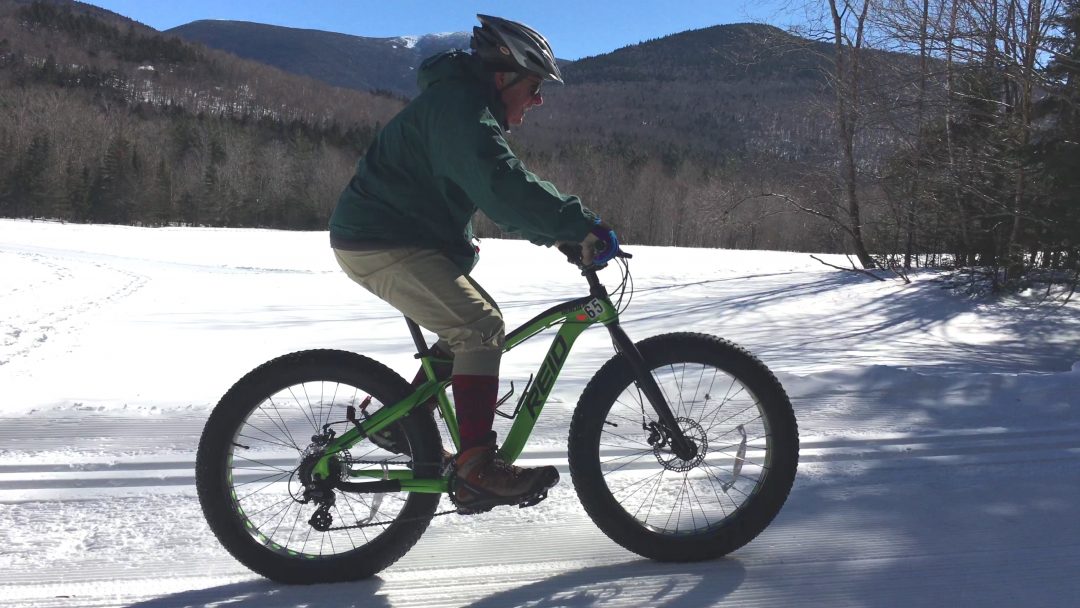
A fat bike has gigantic balloon tires, a triple chain ring in the front with a tiny granny gear, and a frame that looks like beach cruiser. SeniorsSkiing correspondent Don Burch and I started off from the Outdoor Center with a little downhill run to the trail. So far, so good.

To bike at Great Glens, you follow the ski trail, riding in the center of the groomed corduroy, keeping away from the classic cross-country tracks. Right away, you notice the differences.

Rolling resistance is noticeable. With a five inch tire width, you’d expect that. But wow, it is different. We decided that hammering for speed was not our game, instead going slow was good. Finally finding the right gear combination made pedaling easier  Those adjustments helped.

Soft snow acted like a brake. When we hit a soft patch, we felt the wheels sink, and we had to power out. Harder snow is much better. Look for hard snow in the woods; open field snow gets soft first on a sunny day.

Bouncy, bouncy can happen. Somewhere along the way, those big balloon tires made us feel as if we were bouncing up and down along with our pedaling. Perhaps it happened on an uphill where we tended to half-stand on our pedals. Kinda fun, but obviously not very efficient.

For a first outing, it was fun and challenging. Like all new things, now we know what to expect. Give fat bikes a try on a nice, cold, sunny day. You will have a thorough workout, learn some new cycling techniques, and have another way to enjoy the winter.

Mike riding the Fat Bike. Knickers are just for fun. Credit: Don Burch


Rope Tow Escapades

Grabbing That Twirling Rope Was Not Easy.

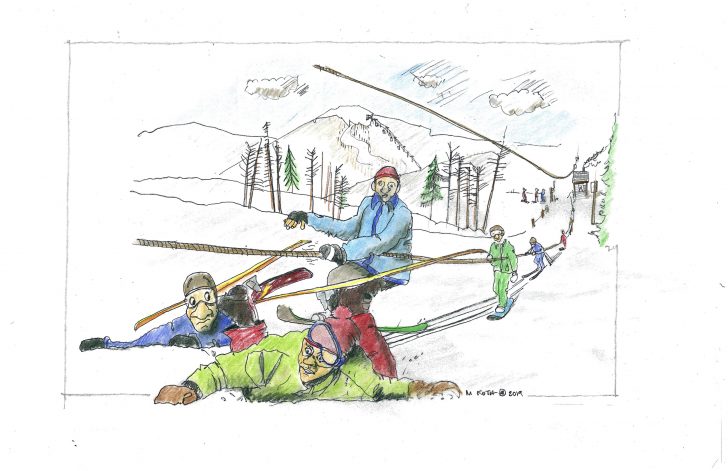
We’ve all been there. Cartoon Credit: Mike Roth

It was the early 1960s, I was in first or second grade and learning to ski at Mohawk Mountain in Connecticut. At the time Mohawk had just installed the first chairlift in Connecticut but most of the experiences I remember where on their numerous rope tows.

The first thing newbies had to master was slowly gripping the rope. Despite instructions to slowly grasp the rope, all first-timers, including myself instantly use a death grip. As a result I’d get hurled up the mountain about five feet before doing a face plant.

To my relief (and later amusement) there was no shortage of people making the same mistake. Every so often there’d be heaps of beginners tossed about on both sides of the tow. Sometimes people got so jumbled up it was impossible to tell whose arms, legs, skis or poles belonged to whom.

After repeating this several times in front of my laughing, older siblings and their friends I finally learned to adjust my acceleration by gently grabbing the rope. Once underway it was an exhilarating ride up the hill.

It was exhilarating because the rope tows at Mohawk moved at about 16 mph. To put that in perspective, modern-day high-speed chairlifts travel at about 12 mph.

After a few tiring rides up the hill someone showed me how to reach my left hand behind my back and grasp the rope while still holding on with the right hand. This did wonders in making the ride physically tolerable.

Another essential skill was learning how to stop once underway. This skill was needed when someone further up the tow fell and blocked the path. Until this skill was learned there would be spectacular pileups. Easing up on your grip wasn’t sufficient because the friction of the rope would tear your gloves apart. Instead you would have to turn one of your skis perpendicular to the hill and use it to keep you from sliding backwards.

The people who didn’t learn this skill would inevitably slide backwards down the hill bumping those behind them. I remember struggling to maintain my place on the tow while two or three skiers slid back into me.

Being six or seven years old the last thing I wanted was to be on the rope tow without others close ahead and behind me. Without other riders close by I would desperately try to hold the rope up off the snow. Being so heavy I’d have to bend over and hold the rope just inches above the snow; a backbreaking way to ride up the hill.

Another challenge was following a tall skier and when you’re a little kid they’re all tall. One of my friend’s fathers was 6’2″. When I rode behind him I’d have to reach up at head level to hold on to the rope. This was another excruciating way to ride up the hill.  In the lift line there was always jostling among my friends to be in the middle of the pack among like-sized skiers.

Being the youngest of three brothers and skiing with a bunch of boys from our neighborhood there was no shortage of mischief. When unloading from the rope tow the older boys would whip the rope in an attempt to knock those following off the tow.

The art form was perfected when one could whip the rope enough to knock off a follower but not so much as to get yelled at by the lift attendant. Those who excelled at this learned to look innocent and express dismay over what happened.

Years later it occurred to me that it was ironic that rope tows, one of the most difficult lifts to master, were most often found serving beginner slopes. I guess they served to toughen us up.

End note: I just recently learned about rope tow speeds at Mohawk having read Nicholas Howe’s fabulous article The Wonders of Walt in the December 2004 issue of Ski Heritage Magazine. Walt Schoenknecht was the ski visionary who founded Mohawk and soon after Mount Snow, Vermont.

Fryeburg, ME, 1936. First rope tow. Credit: MaineSkiMuseum

Trail Name Series: Pennsylvania

Extrovert, Powder Puff, and The Elevator

Spend a little time looking at resort maps and you’re sure to find some attention-grabbing trail names. When I looked at Pennsylvania resorts I found some beauties. Powder Puff and The Elevator at Jack Frost along with Extrovert at Blue Knob topped the list.

Among the best is High Hopes also at Blue Knob. Seven Springs has three trails making it into the top of the list; Santa’s Beard Terrain Park, Lost Boy Trail and Lost Girl Trail. Also noteworthy are Vertigo Park at Liberty Mountain and White Lightning at Montage Mountain.

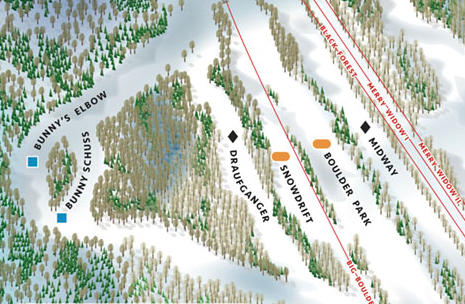
See if you can spot Draufganger on Big Boulder’s Trail Map.

Rounding out the list is Draufganger (German for daredevil) at Big Boulder.

Several Pennsylvania resorts stand out for having trail names that follow a theme. At Roundtop Mountain many trail names relate to the Revolutionary War. These include Recruit, Bunker Hill, Lafayette’s Leap and Fife and Drum. At Camelback trails are Egyptian themed such as Nile Mile, Pharaoh, Asp, King Tut and Cleopatra.

As you’d expect, at Eagle Rock trails (and lifts) are eagle-related. Trails include Baldy, Talons, Nestling and Screaming Eagle. Lifts include Wings and Soaring Heights. At Elk Mountain trails have Native American names such as Mohawk, Kickapoo, Seneca, Iroquois and Chippewa.

Do you have a favorite trail name that’s been overlooked? Please let us know in the comments section.

This Week In SeniorsSkiing.com (Nov. 23)

Free (Or Almost Free) Skiing Directory, Skis For Seniors Recommendations, Chile Wrap, Trail Name Series, Ski History Gala, Skiing In Skirts.

Here’s one Tom who made it past Thursday, glad to be trotting on the snow. Credit: SnoCountry

Happy Thanksgiving On The Snow!  For the first time in recent memory, there are plenty of lifts spinning in New England areas and in Colorado and other places in the West. The recent East Coast Nor’easter brought a snow covering and this week’s persistent precipitation has raised the snow level up to the top of boots in many areas.  Fingers crossed this is a harbinger of a long, cold season.  By the way, that is counter to the official El Nino-fused forecast for warm and wet here in the North East.

Last week, we published an update to our listing of resorts where the US and Canada where seniors can ski for free or almost free. We believe this is the only listing of its kind in the ski world.  You can access this list by clicking on the third menu box from the left under the blue ribbon at the top of the page.

We also published our list of ski recommendations for seniors which we compiled with the help Realskier.com, a long-time and respected reviewer of and commentator on skis and ski design. You can find this listing on the second menu from the left, next to the free (or almost ski list) list.

You may be asked to re-enter your name and email address to access these resources. There is no charge for any of these assets. We’re presenting them to the SeniorsSkiing.com community of readers to give you more specifically tailored resources for senior.

This Week

Casey Earle reports on the ski season in Chile, sharing some good news-bad news. Despite a shortage of snow, there were some great days and he took advantage of them.  If you haven’t even seen pictures of South American skiing, his article is a good introduction.  We’ve also included a link to more comments on Casey’s Ski Chile page on Teton Gravity Research.

We continue Don Burch’s trail name series with a swing through Michigan’s many resorts. Also Harriet Wallis reports on the University of Utah’s Ski Archives Gala where awards were handed out to Olympic visionary Harold Peterson and the US Forest Service and the Utah Avalanche Center, a team which has played a major role in controlling errant snow flows in the state.

Finally, our Mystery Glimpse looks at a pair of young ladies skiing in skirts more than a hundred years ago. We report on what the significance of that big brass bell was from last week’s puzzle.

Thanks for reading SeniorsSkiing.com.  Tell your friends, and remember, there are more of us everyday and we aren’t going away.

Chile skiing. Credit: Casey Earle


Michigan Skiing

Trail Name Series: Michigan

Idiot’s Delight, Fun Bubble and Crisis.

[Editor Note: Last week, we launched Don Burch’s Trail Name series with a round-up of trail names from resorts in California.  This week, we move to Michigan. If you have some trail names that stick in your memory, please let us know in the comments section below.]

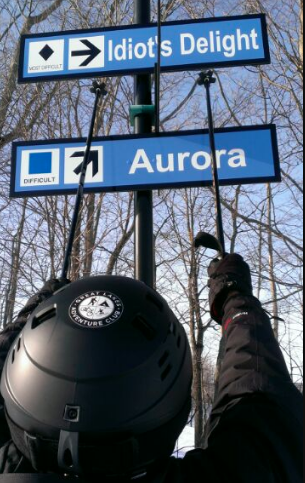
Look at some resort maps and you’ll find some very creative trail names. Among resorts in Michigan, I found some gems. Making the top ten are Idiot’s Delight at Boyne Mountain, Fun Bubble at Marquette Mountain and Crisis at Pine Knob.
Marquette Mountain has another trail in the top ten, Oh, Zone. Nub’s Knob also has two in the top ten; Hot Flash and Bark Eater (there is also a Bark Eater at New York’s Titus Mountain). Rounding out the list are Don’t Chute at Big Powderhorn, Coffin Canyon at Mt. Holly, Elf Buster at Schuss Mountain and Old Face Full at Treetops.

Michigan has a slew of great trail names making the Honorable Mentions list: At Alpine Valley there are Mineshaft and Hidden Splendor. At Big Powderhorn Crazy Trail and Vertical Drop make the list as do Lois Lane and Joust at Boyne Highlands. Big Snow has No Name Trail making the list which is also the name of a trail at California’s Mt. Waterman and New York’s Labrador Mountain.

Crystal Mountain has three trails on the Honorable Mentions list: Abbey Road, Penny Lane and Giggles. Mountain Slayer Chute at Caberfae and both Old School and Bear Trap at Cannonsburg are also noteworthy (there is also a Bear Trap at Vermont’s Mount Snow).

Bonsai and The Sweet Spot at Mount Ripley, Mogul Mania at Mt. Holly, Chicken Chute at Brighton, Kingdom Come at Schuss Mountain, Whitewater at Ski Brule and Boneyard at Marquette Mountain round out the list ( there is also a Boneyard at Dodge Ridge in California).

Mount Bohemia deserves its own paragraph for the number of creative trail names at the resort. These include Cursing Werewolf, Thirsty Vampire, Hungry Vulture and Wacky Jackrabbit. Not to be overlooked are Dynamite Blast, Forbidden Cliffs and Ghost Trail.

A final note about the popularity of skiing in Michigan: Michigan ranks number two as the state with the most ski resorts (42). It is only surpassed by New York with 48. Tied for third are Colorado and Wisconsin each with 30 (based on 2015-16 data from SnowBrains.com).

Do you have a favorite trail name that’s been overlooked? Please let us know in the comments section.

Mount Bohemia. Credit: Ramada Hancock


Trail Name Series: California

Consider The Name Of A Trail. You Will Often Find Uniqueness And Whimsy.

High Voltage, Squaw Valley. Credit: Patrick Saffarian

Peruse a few resort maps, and you’re sure to come upon some great trail names. Doing so with California resorts was no exception. Training Wheels at Mammoth is a wonderfully apropos name for a beginner trail. Amusement Park at Big Bear is fitting for a trail designed for park skiing and riding and Bone Yard at Dodge Ridge is a trail calling for respect.

Top honors also go to Secret Spot at Mammoth (there is also a trail named Secret Spot at Michigan’s Alpine Valley), Chute That Seldom Slides at Alpine Meadow, Lost in the Woods at Mammoth, Mambo Playground at June Mountain and Hogwild at Summit at Snoqualmie. Rounding out the top of the list are Ewe Turn and No Name Trail at Mt. Waterman (there is also a No Name Trail at Michigan’s Big Snow and New York’s Labrador Mountain), Ditch of Doom and Trench of Terror at Kirkwood and His and Yours at Boreal Mountain.

Honorable mentions go to:

High Voltage                        Squaw Valley

Elevator Shaft                      Kirkwood

Snowsnake Gully                 Kirkwood

Hornets’ Nest                        Northstar

Cop out                                   China Peak

While viewing trail names at California resorts a few unexpected patterns emerged. First, several had the word stump in them. There is a Stump Alley at both Mammoth and Northstar, Stump Farm at Crystal Mountain and Stump Run at Kirkwood.

Two resorts have named trails after a traditional samurai practice. These are Hari-Kari Gully at Sugarbowl and Hari Kari Gate at Bear Valley.

Several trails are named after animal anatomy. At Squaw Valley there are Mule’s Ear and Red Dog Face.  At Northstar.  there’s Cat’s Face. At Sugarbowl, you will find Crow’s Face, and at Sierra-at-Tahoe there is Horsetail.

Do you have a favorite trail name that’s been overlooked? Please let us know in the comments section below.

12 Tips And Tricks For Skiing And SnowSports

Clever Hacks For A Better Winter Experience.

Nevertheless, she’s having fun by using Don Burch’s tips and tricks.

  1. When skiing wet and slushy snow, spray the top of your skis and even your ski boots with silicone (wipe it off after spraying). The faster heavy snow slides off skis, the easier it’ll be to make turns.
  2. Toe warmers work better in gloves than hand warmers. Use the sticky back on toe warmers and attach them to the backhand side of your gloves. If you’ve used hand warmers, you know they have a tendency to fall out when you take your gloves off.
  3. When skiing groomers, especially hardpack, wider skis put more stress on knees because they require more angulation to get them on edge.
  4. Skis with softer tips puts less stress on skiers’ knees.
  5. When purchasing used skis, make sure the bindings aren’t so old that ski shops won’t service them. A Google search with the words “Binding Indemnification List” will provide you with an up-to-date list of acceptable bindings. Better yet, ask your local ski shop if they’ll service them.
  6. Don’t use lens wipes on the inside of your goggles. Most goggles have anti-fog on the inside and wiping it may cause damage.
  7. On crowded days, the single line will almost always be faster even when skiing in groups. Lifts that don’t start at the main lodge are also good bets on crowded days.
  8. Always stop on the side of trails where you can be seen by uphill skiers. Look up hill before starting. Wear a helmet and make sure it is strapped.
  9. Thoroughly dry your boots each day after skiing especially if skiing back-to-back days. If your boots are the least bit damp, your feet will be cold. I use a dedicated boot dryer.
  10. If you want to demo skis, do it at a mountain where you can try several during the day. On less crowded days, you’ll get a much better selection and won’t have to wait for the model or size you want to try. Select a day that will have varied conditions on the mountain; this way you can try the skis on both hard pack and softer snow. Within a specified time period, many shops will apply the cost of the demo to a pair of new skis; ask about their policy.
  11. If you plan on sharing skis, consider getting demo bindings. These bindings can be adjusted to fit about any size ski boot without needing to remount the binding.
  12. In a pinch, you can use a plastic card from your wallet to clear sleet from goggles.

If you have any tips that work for you please share them with other readers in the comments section.


The Ultimate SeniorsSkiing Ski Quiz

You’ve Think You’ve Been Around Snow Sports For A While?  Okay, Test Your Knowledge.

I know what you’re thinking; “Ultimate, I doubt it.” You’re a really good skier, you’ve been skiing for years and you’ve skied just about everywhere. “There’s no quiz about skiing that’s going to humble me.” Let’s see…
  1. As of the 2016-17 ski season, what state has the most operating ski areas?
  2. What state or province has the longest ski lift?
  3. What is the oldest operating ski lift in North America?
  4. What ski resort in the East has the greatest true vertical drop (lift-served, continuous fall-line runs)?
  5. Season pass holders account for what percent of all ski area visits?
  6. How long is the longest trail in the East?
  7. What ski area in North America has the greatest lift-served continuous vertical drop?
  8. In mph, how fast is the average detachable lift?
  9. In mph, how fast is the typical fixed-grip lift?
  10. What is the largest ski area in North America (as defined by lift accessible terrain).

Answers:

  1. This one surprises most of us: New York has the most with 48 followed by Michigan with 42, Wisconsin and Colorado tie with 30 each, California has 29, Pennsylvania and New Hampshire tie with 26 each and Vermont has 24 (Source: SnowBrains).
  2. Vermont’s Sugarbush has the longest lift, Slide Brook Express at 11,012 feet (just over two miles). The Slide Brook Express connects Lincoln Peak with Mt. Ellen and carries skiers in both directions (Source: Peter Landsman author of LiftBlog).
  3. The Single Chair at Mad River Glen (VT) is the oldest operating lift having been constructed in 1948. In 2007 it was been extensively renovated and updated (Source: Peter Landsman).
  4. According to the folks at MountainVertical.com, Whiteface in NY has the greatest true vertical drop at 3,216 feet. They define true vertical drop (or True-Up Vertical Drop as they call it) as “the most vertical distance at a resort that can be achieved on commonly skied, lift-served, continuous fall-line runs”.
  5. According to SAM (Ski Area Management) passholders now account for 40 percent of ski area visits.
  6. According to Wikipedia, Juggernaut at Killington (VT) is the longest trail in the East at 6.2 miles.
  7. Revelstoke (BC) with 5,620 feet has the most vertical drop (Source: MountainVertical.com).
  8. The average detachable lift moves at 12mph (Source: Peter Landsman).
  9. The typical fixed-grip lift travels at 5.6mph (Source: Peter Landsman).
  10. Whistler Blackcomb (BC) is the largest with 8,171 acres (Source: Liftopia The Blog).

In the comments section, let us know how you did. Were there any surprises? Are the any answers you’d like to contest?

A Wad of Tobacco, A Chairlift, And A Ford Maverick

A Long Forgotten Incident Comes Rushing Back.

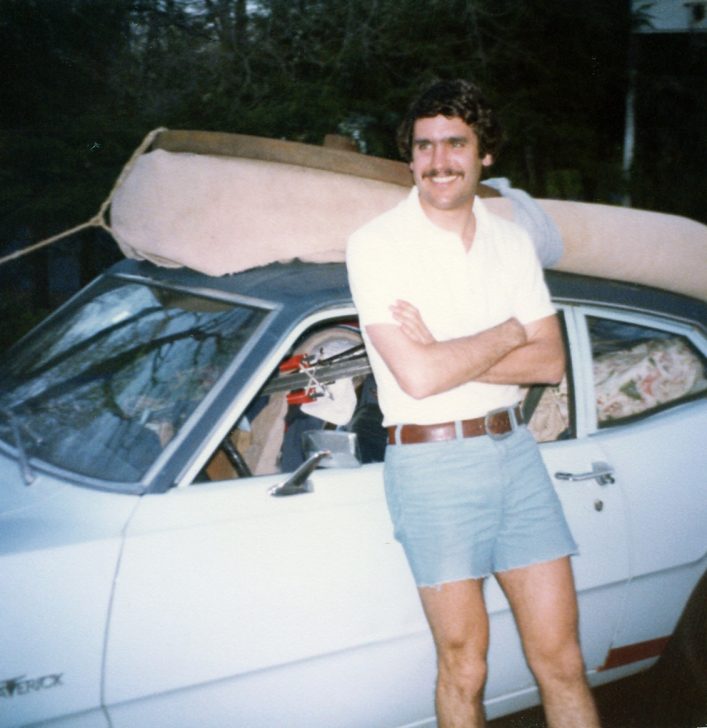
Don Burch, circa, 1970, with the infamous Ford.

In the late 70s, I was working at a ski resort and poor as could be. When the Head Maintenance Engineer asked around for someone to pick up a part for one of the chairlifts, I quickly volunteered. He probably figured I knew what I was volunteering for and wouldn’t have done so without a pickup truck or some other appropriate vehicle.

It was after hours, and we needed the part in order to run the lift in the morning. The supplier agreed to stay open until I arrived.

As a twenty-one-year-old male, there may have been some other decisions I made without much forethought. In my mind, the part was a few bolts or something like that.

Though I was to drive 90 minutes in the dark on country roads, I had confidence in my mature Ford Maverick (Yes, the photo is of the car I used). It was starting to snow, but I knew my new retread snow tires were up to the task. Using the finest workmanship I could muster, I had recently jury-rigged an eight-track tape player under the dashboard so I knew the trip wouldn’t be totally devoid of entertainment.

When I arrived later than promised, the supplier was grumpy as hell. He spat a wad of tobacco into the snow, pointed to large gear laying against a fence post and grumbled, “How the hell are you gonna get that in there?”

Sliding the front passenger seat all the way back, it looked like the gear might just fit. With the grizzly old guy providing special lubricant in the form of sub-vocalized mutterings, we managed to get it in. The car listed unnervingly to starboard.

With no more words spoken, the receipt was tossed in the car, and the parking lot lights were off before I was out the driveway.

On the return trip,  the crown of the road, under slippery conditions and tilt of the car, overcame my ability to keep the old Maverick on the road. Into the ditch I went.

To my great relief, a pickup truck pulled over just minutes after the mishap. With the sweet smell of liquor wafting from their breaths, two good Samaritans offered to pull me out. One attached a chain to their hitch, and the other hooked up somewhere under my car. I took a moment to look under the car, saw the hook on the steering rod and moved it to the frame.

I profusely thanked my new best friends, made it back to the mountain, the chairlift was operational by morning, and I had a windfall of $22.00 bonus.

Thanks to Harriet Wallis whose recent article entitled Lift Maintenance 101 sparked this long forgotten memory.