Each issue of SeniorsSkiing.com has a picture to help test your skiing knowledge. Generally, the pictures are from collections in a variety of participating ski museums, which we encourage readers to visit.
In the 1930s the hill pictured here was a popular New England ski location. The first reader to correctly identify its name and location will receive the new Licensed To Ski poster. Please email answers to jon@seniorsskiing.com.
While several readers correctly identified the man in the picture as Junior Bounous, Terrell W. Smith of Salt Lake City was first. Terrell has been on skis 70 years. He raced in high school and taught at Alta when Junior headed Snowbird’s ski school. He says, “Skiing is cheaper than psychiatry,” a sentiment hard to disagree with. Junior is a celebrated deep powder skier and contributed to the sport’s development throughout the Intermountain West. He is 96 and still skiing. The picture came from the Utah Ski & Snowboard Archives, which preserves the history of skiing in Utah and the Intermountain region. The extensive collection contains thousands of digitized images of photographs and print materials, all of which can be accessed online.
https://seniorsskiing.com/wp-content/uploads/2022/03/Screen-Shot-2022-03-02-at-6.20.03-PM-e1646270750467.png449728seniorsskiing/wp-content/uploads/2014/04/Seniors-Skiing-since2013-Logo@2x-300x68.pngseniorsskiing2022-03-03 18:20:422022-03-03 21:26:01Test Your Skiing Knowledge
Here’s a note from Shelley Canalia, a reader, who has come into possession of this old hat with numerous pins from resorts and events.
My brother is Anthony Isham West. Great guy, comes from a Nordic ski family on his Father’s side. In 1985-86 he was working at Beaver Creek in Vail. He found this hat. Fast forward to 2021. He gives it to me. I want to find the owner or the owner’s family. Most of the pins are fromEuropean ski areas and a lot are from different Olympic events. There is a Lake Placid 1980 Olympics ABC pin. Also American Express Olympic pin. The person was definitely a skier. The hat is classic 60’s Moriarty Hat from Stowe, Vermont. So, if everyone would share this post maybe we can find the person or family this hat belongs to.
Anyone have a clue who this might belong to? Or, what can you infer about the owner from what you see, knowing it was lost at Beaver Creek in the mid-1980s?
If you have any information or what to comment, please LEAVE A REPLY below. Shelley will be monitoring responses for leads and clues.
https://seniorsskiing.com/wp-content/uploads/2021/04/MoHat.jpeg509477seniorsskiing/wp-content/uploads/2014/04/Seniors-Skiing-since2013-Logo@2x-300x68.pngseniorsskiing2021-04-12 13:06:492021-04-13 17:35:06Anyone Lose A Moriarity Hat 35 Years Ago At Beaver Creek?
Jan and Judy Get New Ski Gear, New Snow Adventures In A Land That Loves Skiing.
After breaking her leg on our disastrous first ski date in Michigan, my wife Judy was still a bit stiff in the left leg when we arrived in Norway in late June 1956 to begin my Fulbright-student year studying Norwegian folklore. But we had all summer to get in shape—walking around Oslo, hiking in the forests and mountains, and taking some long bike trips.
In the fall, we bought ski gear: wooden skis, cable bindings, leather boots, and bamboo poles. State of the art stuff. I had my favorite ski clothes, including the Norwegian striped cardigan I had been using since 1953; Judy bought a spiffy new outfit (maroon ski pants and grey jacket) that she occasionally still uses.
Oslo was a great place to practice. The tram lines run right up to the edge of Nordmarka, the vast wooded park above the city, and there were ski racks integrated into the sides of the old wooden cars. (I assume they have metal tram cars by now.) This photo of Judy loading her skis was taken on a weekday; on weekends and holidays the whole side of the car would be covered with skis.
Judy racks skis and boards tram to suburbs of Oslo.
I believe the only ski lift we rode all year was a T-bar in Nordmarka; the rest was cross country. After touring up there we could glide right back down to the area where we lived via ski tracks maintained between houses and businesses.
Early in the winter we took a train to Lillehammer, stayed in the youth hostel, and skied both in town around the open-air folk museum and in the surrounding countryside.
Next we did a weeklong trip with some friends to Numedalen, staying in a rented cabin (hytte) above the treeline. The snow was great, and we got lots of practice and exercise climbing up hills and sliding down. Judy, only in her second season as a skier, got pretty good, despite having little coaching beyond “Follow me!” Here she is enjoying some powder.
Judy in powder on her new skis and outfit.
One day on that trip I skied down to a village to buy some food, expecting a long slog back up with a heavy rucksack. But just as I was starting up, a group of Norwegian army men came along in a tracked vehicle. They tossed me a rope and pulled me back to the level of our cabin. Sweet!
In March we attended the annual jumping meet at Holmenkollen with my uncle and his family. It was a foggy day, and the jumpers came sailing out of the murk, most of them sticking the landing as if it had been a clear day.
Easter was late in 1957 (April 21st) so when we made another mountain trip, this time to a cabin in Telemark, the weather was balmy and snow was thin except in the shadows. Here we are enjoying the traditional Norwegian Easter ski trip, me still in that favorite sweater.
Jan and Judy, Easter ’57.
In June when we returned to the States we had enjoyed a great year of study and skiing in my ancestral home, so to speak. I brought back an article that got published in the Journal of American Folklore, kicking off my academic career. And, of course, we kept our Norwegian ski gear.
But would there be much skiing in our immediate future? After all, we were headed to Bloomington for my graduate work at Indiana University. Not exactly in a major ski zone, but who knows?
To be continued . . .
https://seniorsskiing.com/wp-content/uploads/2021/02/Judy-in-powder-e1614099688850.png960728Jan Brunvand/wp-content/uploads/2014/04/Seniors-Skiing-since2013-Logo@2x-300x68.pngJan Brunvand2021-02-22 15:11:132021-02-24 11:30:06Skiing In Norway: 1956-57
Dave had to teach a group of local women, and he never even had a lesson himself.
Before I ever had a ski lesson, I had become a ski patrol director, certified (the highest level) by both the National Ski Patrol and the Professional Ski Patrol Association. One morning while working at a small ski area (240 feet of vertical), I was called into the base lodge by the woman who scheduled the ski school programs. This tiny area actually within the city limits ran a number of programs mid week, mostly for housewives, and this morning they had a couple of no shows among their instructor corps.
After numerous phone calls to no avail, it was decided that I would have to teach one of the classes. I asked what level they were as skiers and was told level B, or it might have been C. Neither told me anything. I didn’t know an A from an E. I later learned that A were true beginners, never-evers. Fortunately, these ladies could ski enough to get down the hill. On this second week of their once-a-week program, they got the pro patrolman.
In front of the lodge the ski school director introduced me to the four ladies before he headed off to also teach a class. Having no idea what to say, I simply stated, “I hope you ladies have a good sense of humor. We’re all going to learn together today. Not only have I never taught a lesson, I have never even had one!” One of the ladies laughed while the other three gave me strange looks.
I took them up the lift and watched as they skied down to the top of a broad low intermediate slope. I explained that I needed to see what they had worked on the previous week so I skied part way down and asked them to demonstrate as best they could the turns they had worked on last week.
As each one stopped by me, I complimented them on what they had just done. As they were just breaking into parallel, I decided we would work on a combination of up unweighting and pole plant. I demonstrated the way I thought a real ski instructor might, planting the pole and rising up to ski around it. It seemed to make sense to them so we worked our way back to the lift. We spent the rest of the time skiing around the area, and I made it a point to ride the lift with each one so we could talk about their progress. I also took them on a longer flatter run which circumscribed the area so they could let the skis run and feel how much easier it was to turn with a little speed. Mostly I listened and passed out tips and compliments.
When the lesson ended, I thanked the ladies for their patience and told them I hoped they had as much fun as I had. Later I talked with Shirley who had recruited me for the lesson, and she told me that two of the ladies asked if they could have me the next week. Unfortunately, that was the end of my career as a ski instructor. The following week, they got Bruce Fenn, one of the PSIA gurus who had been in on the beginning of that organization, and knew everything there was to know about teaching skiing. Thanks to Bruce, and his clinics, that small ski area had close to a 100 percent pass rate on PSIA certification exams. And skiing with him and the instructors at those final form clinics were the closest I came to ski instruction at that time.
https://seniorsskiing.com/wp-content/uploads/2021/01/Lineofwomenskiers.png401589Dave Irons/wp-content/uploads/2014/04/Seniors-Skiing-since2013-Logo@2x-300x68.pngDave Irons2021-01-25 12:54:052021-01-27 12:36:42My One Morning Career As A Ski Instructor
[Editor Note: SeniorsSkiing.com is asking our readers to contribute to support our online magazine. Yes, we have grown in the number of subscribers and advertisers. But our expenses have also grown. You can help us defray some of these expenses by helping us out with a donation.]
Esquire Magazine Published “The Snows Of Kilimanjaro” 84 Years Ago. We Celebrate With An Excerpt.
In Ernest Hemingway’s story, “The Snows Of Kilimanjaro”, the main character, Harry, a writer on safari with his rich wife, lies dying on a cot, his leg gangrenous from a thorn cut he neglected to treat. He reflects on his writing and his wasted talent, dissolute lifestyle and the few incidents in his life that could have redeemed him from failure. Several times he drifts into an internal monologue where he writes in his mind what he could have written, but never did. Here is Harry’s remembrance of skiing in Austria after the war. These scenes are considered autobiographical, reflecting Hemingway’s own excursions and experience of skiing in the 20s and 30s in the Voralberg region. You can read the whole story by clicking here.
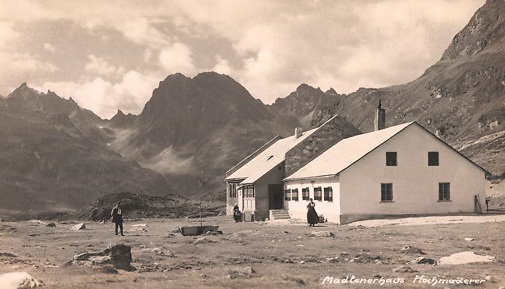
Madlern Haus in the Austrian Alps, circa 1930s
From “The Snows Of Kilimanjaro”
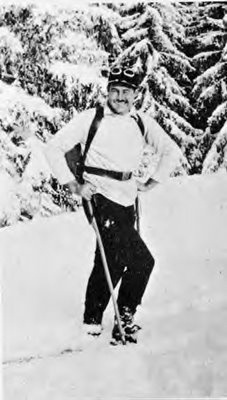
Ernest Hemingway skiing in the 1920s.
In Schrunz, on Christmas day, the snow was so bright it hurt your eyes when you looked out from the Weinstube and saw every one coming home from church. That was where they walked up the sleigh-smoothed urine-yellowed road along the river with the steep pine hills, skis heavy on the shoulder, and where they ran down the glacier above the Madlenerhaus, the snow as smooth to see as cake frosting and as light as powder and he remembered the noiseless rush the speed made as you dropped down like a bird.
They were snow-bound a week in the Madlenerhaus that time in the blizzard playing cards in the smoke by the lantern light and the stakes were higher all the time as Herr Lent lost more. Finally he lost it all. Everything, the Skischule money and all the season’s profit and then his capital. He could see him with his long nose, picking up the cards and then opening, “Sans Voir.” There was always gambling then. When there was no snow you gambled and when there was too much you gambled. He thought of all the time in his life he had spent gambling.
But he had never written a line of that, nor of that cold, bright Christmas day with the mountains showing across the plain that Barker had flown across the lines to bomb the Austrian officers’ leave train, machine-gunning them as they scattered and ran. He remembered Barker afterwards coming into the mess and starting to tell about it. And how quiet it got and then somebody saying, ”You bloody murderous bastard.”
Those were the same Austrians they killed then that he skied with later. No not the same. Hans, that he skied with all that year, had been in the Kaiser Jagers and when they went hunting hares together up the little valley above the saw-mill they had talked of the fighting on Pasubio and of the attack on Perticara and Asalone and he had never written a word of that. Nor of Monte Corona, nor the Sette Communi, nor of Arsiero.
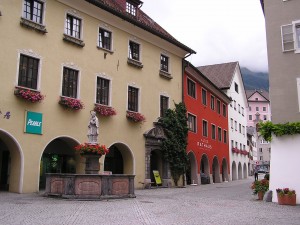
Alpine town Bludenz, long a skiing and hiking center in the Voralberg.
How many winters had he lived in the Voralberg and the Arlberg? It was four and then he remembered the man who had the fox to sell when they had walked into Bludenz, that time to buy presents, and the cherry-pit taste of good kirsch, the fast-slipping rush of running powder-snow on crust, singing ”Hi! Ho! said Rolly!’ ‘ as you ran down the last stretch to the steep drop, taking it straight, then running the orchard in three turns and out across the ditch and onto the icy road behind the inn. Knocking your bindings loose, kicking the skis free and leaning them up against the wooden wall of the inn, the lamplight coming from the window, where inside, in the smoky, new-wine smelling warmth, they were playing the accordion.
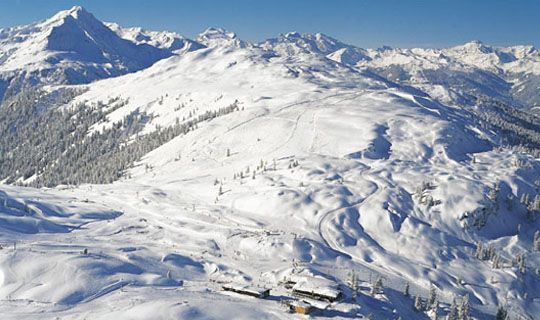
Voralberg region, Austrian Alps, was visited by Hemingway and friends.
https://seniorsskiing.com/wp-content/uploads/2016/03/IMadlern-Haus.jpg289505mikemaginn/wp-content/uploads/2014/04/Seniors-Skiing-since2013-Logo@2x-300x68.pngmikemaginn2020-02-05 19:44:542020-02-06 09:10:28Snow In Literature: Hemingway In The Voralberg, 1920-30s
Who owns a hat for 50 years? Well, if it’s a Moriarty hat, perhaps you understand why.
Getting ready to shovel the driveway one cold morning last winter, I reached to the top shelf of the hall closet for a hat. My fingers felt the double-thick headband of my old Moriarty hat tucked up out of sight. I pulled it over my ears and went a-shoveling. Working the shovel in knee-deep in snow, a thought occurred to me. Wait a minute. I bought that hat from Mrs. Moriarty’s shop on the Stowe Mountain Road in 1964. That made it fifty years old. My hat was fifty. It has been with me in trunks, suitcases, boxes and dresser drawers in moves from New York to California to Japan back to California and then to Massachusetts. Been with me at Mammoth Mountain, cross-country in Appleton Farms, MA, going to class in Syracuse, sailing the Gulf of Maine, walking to work from North Station in downtown Boston. Fifty years is a long time to own a hat. Of course, I had other hats, but my Moriarty kept popping into my hand from time to time from the top shelf. How did this happen?
Back in the 60s and 70s, Moriarty hats were iconic. The Preppy Handbook lampooned them as an essential part of the spoiled college kid outfit. Almost everyone I skied with at Song Mountain, Tully, NY, had one. The three points on the top were like a rooster’s cockscomb, distinctive and bold. You wore your hat down tight over your ears with your goggles wrapped around your head. No helmets in those days. It was a “look” that even the most tentative skiers could exhibit.
Mrs. Moriarty founded a cottage industry around weaving those hats. Soon outpaced by the volume of orders, Mrs. M. enlisted an army of fifty weavers in Stowe village, producing as many as 40,000 in 1965. At its height, the Moriarty hat was as ubiquitous a symbol of skiing as Head skis and Marker turntable bindings. An ad in SKI was bold enough to say, “The people of Vermont make great maple syrup, great cheddar cheese and the best ski hats in the world.” As I said, icon status.
You can buy a vintage Moriarty hat on eBay or from the Vermont Ski and Snowboard Museum that somehow has a stock of left over inventory from the later days of the company. The Moriarty family got out of the business in the 80s.
Mrs. Moriarty was told by skiers that “they skied better” with her hat on. Credit: SKI January, 1965
Don’t ask why I never sent my hat off to the Salvation Army. Despite the odd moth hole, it has simply always been part of my kit along with a handful of books, a banjo, a lighter from my Navy destroyer, and other small remainders of the past. Things that travel through life with you have value. When you pick them up again after many years, memories start to emerge in layers. Even after many years. Even a ski hat. That’s why I love my Moriarty hat.
https://seniorsskiing.com/wp-content/uploads/2014/07/BlueMoriartyHat.jpg32643879mikemaginn/wp-content/uploads/2014/04/Seniors-Skiing-since2013-Logo@2x-300x68.pngmikemaginn2020-01-21 18:45:332020-01-22 16:53:41This Old Moriarty Hat
There’s a lot of skiing literature from the past, some of which still has relevance. If you have a favorite that you’d like to share with other SeniorsSkiing.com readers, please write an appreciation and send it in. Our goal is a maximum of 500 words. Thank you, Susan Zangrilli, for this nice account of We Learned to Ski.
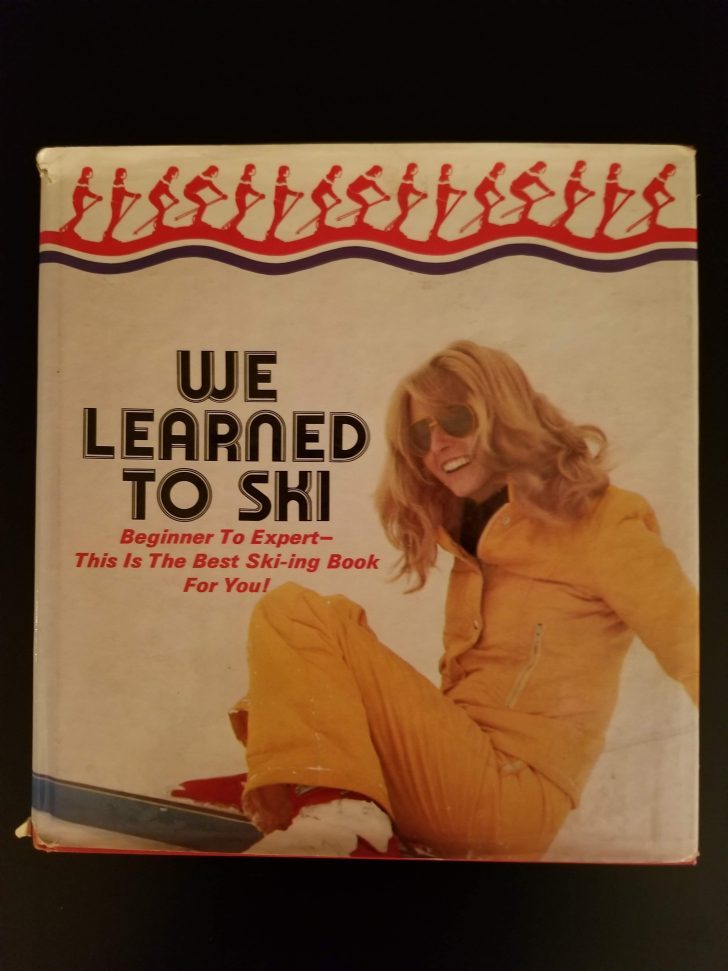
Although equipment and ski teaching has changed since the 70s, We Learned to Ski, produced by writers and artists of The Sunday Times of London, remains one of my personal ski library favorites.
The not-quite-coffee-table 10” by 13” format is filled with photos, illustrations, easy to read headings and text, and covers everything about skiing from choosing a resort, equipment, and lessons starting from day one on snow, to getting fit for the sport.
Authors Harold Evans, Brian Jackman and Mark Ottaway write “their main impetus is a conviction about the teaching of ski movements.” They explain that the book addresses those mainly unbitten by the ski bug and recreational skiers with less than three years experience.
In Chapter 1, Where to Go, the authors illustrate “Goodalp” and “Badalp.” Lift access in the “Goodalp” allows skiers to ski the upper slopes without having to return to the bottom at the end of each run. A “Badalp” forces many of the skiers do just the opposite, creating bottlenecks at the base.
Lessons for Beginners, Stopping and Going Slow, mentions using a “half-plough,” when there may not be room for a wide basic snowplough. One ski stays flat in the fall line, the other has an open tail, is set on its inside edge, and acts as a brake. This might come in handy for me this winter.
Large illustrations in Chapter 25, Ski Craft, compare the descent of a “crafty skier” and a “snarled-up skier”; how to navigate a narrow, icy catwalk, and the best path through a mogul-filled gully.
It’s fun to read about older ski techniques in Section 6, Lessons for the Advanced Skier: the “jet turn,” with its “sit-back style,” classical and braking wedel turns, and the avalement turn to master moguls.
https://seniorsskiing.com/wp-content/uploads/2019/10/20190928_232132-1-e1571156050998.jpg971728Susan Zangrilli/wp-content/uploads/2014/04/Seniors-Skiing-since2013-Logo@2x-300x68.pngSusan Zangrilli2019-10-10 09:50:102024-08-21 10:51:171974’s We Learned to Ski: Still Fun to Read
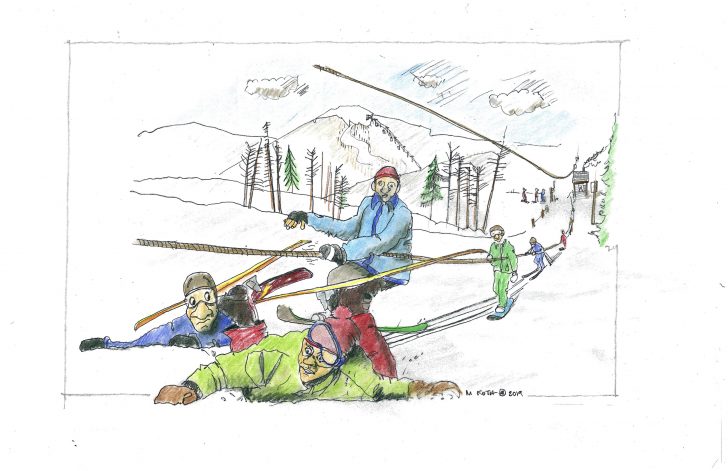
It was the early 1960s, I was in first or second grade and learning to ski at Mohawk Mountain in Connecticut. At the time Mohawk had just installed the first chairlift in Connecticut but most of the experiences I remember where on their numerous rope tows.
The first thing newbies had to master was slowly gripping the rope. Despite instructions to slowly grasp the rope, all first-timers, including myself instantly use a death grip. As a result I’d get hurled up the mountain about five feet before doing a face plant.
To my relief (and later amusement) there was no shortage of people making the same mistake. Every so often there’d be heaps of beginners tossed about on both sides of the tow. Sometimes people got so jumbled up it was impossible to tell whose arms, legs, skis or poles belonged to whom.
After repeating this several times in front of my laughing, older siblings and their friends I finally learned to adjust my acceleration by gently grabbing the rope. Once underway it was an exhilarating ride up the hill.
It was exhilarating because the rope tows at Mohawk moved at about 16 mph. To put that in perspective, modern-day high-speed chairlifts travel at about 12 mph.
After a few tiring rides up the hill someone showed me how to reach my left hand behind my back and grasp the rope while still holding on with the right hand. This did wonders in making the ride physically tolerable.
Another essential skill was learning how to stop once underway. This skill was needed when someone further up the tow fell and blocked the path. Until this skill was learned there would be spectacular pileups. Easing up on your grip wasn’t sufficient because the friction of the rope would tear your gloves apart. Instead you would have to turn one of your skis perpendicular to the hill and use it to keep you from sliding backwards.
The people who didn’t learn this skill would inevitably slide backwards down the hill bumping those behind them. I remember struggling to maintain my place on the tow while two or three skiers slid back into me.
Being six or seven years old the last thing I wanted was to be on the rope tow without others close ahead and behind me. Without other riders close by I would desperately try to hold the rope up off the snow. Being so heavy I’d have to bend over and hold the rope just inches above the snow; a backbreaking way to ride up the hill.
Another challenge was following a tall skier and when you’re a little kid they’re all tall. One of my friend’s fathers was 6’2″. When I rode behind him I’d have to reach up at head level to hold on to the rope. This was another excruciating way to ride up the hill. In the lift line there was always jostling among my friends to be in the middle of the pack among like-sized skiers.
Being the youngest of three brothers and skiing with a bunch of boys from our neighborhood there was no shortage of mischief. When unloading from the rope tow the older boys would whip the rope in an attempt to knock those following off the tow.
The art form was perfected when one could whip the rope enough to knock off a follower but not so much as to get yelled at by the lift attendant. Those who excelled at this learned to look innocent and express dismay over what happened.
Years later it occurred to me that it was ironic that rope tows, one of the most difficult lifts to master, were most often found serving beginner slopes. I guess they served to toughen us up.
End note: I just recently learned about rope tow speeds at Mohawk having read Nicholas Howe’s fabulous article The Wonders of Walt in the December 2004 issue of Ski Heritage Magazine. Walt Schoenknecht was the ski visionary who founded Mohawk and soon after Mount Snow, Vermont.
Fryeburg, ME, 1936. First rope tow. Credit: MaineSkiMuseum
https://seniorsskiing.com/wp-content/uploads/2019/01/MikeRothCartoon-e1548170689747.jpg471728Don Burch/wp-content/uploads/2014/04/Seniors-Skiing-since2013-Logo@2x-300x68.pngDon Burch2019-01-22 11:00:152019-01-22 15:37:21Rope Tow Escapades
Gene Hackman and Robert Redford in “Downhill Racer” (1969). This heart throb really loved to ski.
Back in the early ‘70s, SKI Magazine (remember it?) developed a program called SKIpp that stood for “ski performance prediction” developed by the late John Perryman. He was a talented engineer who spent years in aerospace and worked with Howard Head at Head Ski Company. SKIpp had two parts, the laboratory analysis that predicted how the ski would perform and on-snow testing. Each year we tested 200+ skis.
John did the analysis and I ran the on-snow testing. Our testers were a mix of male and female skiers, primarily ski instructors with some racing experience. In March, 1974, we were at Park City which let us set up our testing tent near the base of the Shaft lift. Every morning, we tested ten pairs of skis. After lunch, each tester picked his favorite ski from the day or prior days and headed for the lifts.
One bright sunny morning, my lovely wife Betty was collecting test forms in the tent along with Joan, John’s wife, when one of the testers who was, at the time, the ski school director of Sundance Ski Area, walked into the tent and asked a simple question. “Would we allow Robert Redford ski on some our skis?”
We had skis that weren’t on sale yet, some that wouldn’t make it to the market, some that should never been sold to skiers, and Redford hadn’t signed the liability waiver. All of this went out the tent flap when Redford walked into the tent.
I tried to be my best cool, calm and collected Naval Aviator self, but the look on our wives’ faces was priceless – eyes and mouth wide open. Both were speechless that, if you knew them, was rare. His presence attracted the other three female testers who were nonchalantly trying to swap skis or ask Betty, John, or me a question just so they could get in the tent with Redford.
John looked at me, I looked John, and we shrugged. While our wives stared at the famous movie star, I managed to ask, “Can you ski 200 centimeter skis?”
“Yes.”
“What size boot do you wear?”
He gave me a size that I don’t remember. This was back in the days when boot sole shapes weren’t standardized, and we were using Market Rotomat rental bindings that took some fiddling to adjust. None of the easy-to-adjust bindings that we see today existed.
To this day, Betty will tell you she talked to him for a few minutes but has no idea what she said or was she coherent. What we do remember was that Redford was as good-looking in person as he was on the screen.
Oh, and one more thing. By the time he returned the skis, the word was out that Redford was around and a larger than usual crowd had gathered around the tent. None of us were smart enough to get him to autograph the test card he graciously filled out. Oh well!!!
An Undergraduate’s Parody Ski Song Led To An Academic Achievement.
How did a ski silly ski song to the tune of a classic melody wind up on a Folkways record which became a classroom classic?
As an undergraduate at Michigan State University in the early 1950s I joined the ski club, and I learned, among other things (like how to kick turn), a bunch of ski songs. We sang them driving up to Caberfae resort near Cadillac and apres ski in a local joint, The Pine Gardens.
These songs—passed from person to person—were often parodies. A takeoff on “The Battle Hymn of the Republic” told the sad tale of an injured ski racer with the chorus “Gory, gory, what a Hell of a way to die!”
Another disaster-themed favorite re-worded the cowboy ballad “Streets of Laredo.”
When I was a-skiing the hills of Sun Valley,
As I was a-skiing Old Baldy one day,
I spied a young skier all wrapped in alpaca,
All wrapped in alpaca, and cold as der Schnee.
This lugubrious piece went on to quote the injured skier who “Once upon Baldy used to ski gaily” but then “caught a right edge, and I’m dying today.”
Later as a graduate student in folklore at Indiana University I took a course on British ballads and learned that our Sun Valley song was part of a much older cycle of variations on the theme of “The Unfortunate Rake.” That’s “rake” in the archaic sense of a dissolute person, a libertine.
Author Jan Brunvand, occasional singer of ski songs, in the 50s.
In the original Irish and English versions the victim was a young soldier, dying from an STD, who describes his sad condition and requests a funeral: “Get six young soldiers to carry my coffin,/ Six young girls to sing me a song.”
In the cowboy song the funeral request became “Beat your drums slowly and play your fife lowly, /Get six of them gamblers to carry me along.” Our skiers’ parody called for “Six from the ski school to carry my coffin,/ Six little bunnies to sing me a song.”
One of my classmates, a rising star in folksong studies, was compiling a record of versions and variants of the “Rake” cycle. He enlisted me to sing the skiers’ version. Trouble was, I couldn’t sing worth a darn.
So we got another fellow student who performed in a local folksong group to plunk guitar chords to keep me more-or-less on key, and I managed to lay down a decent track, as we say in the business.
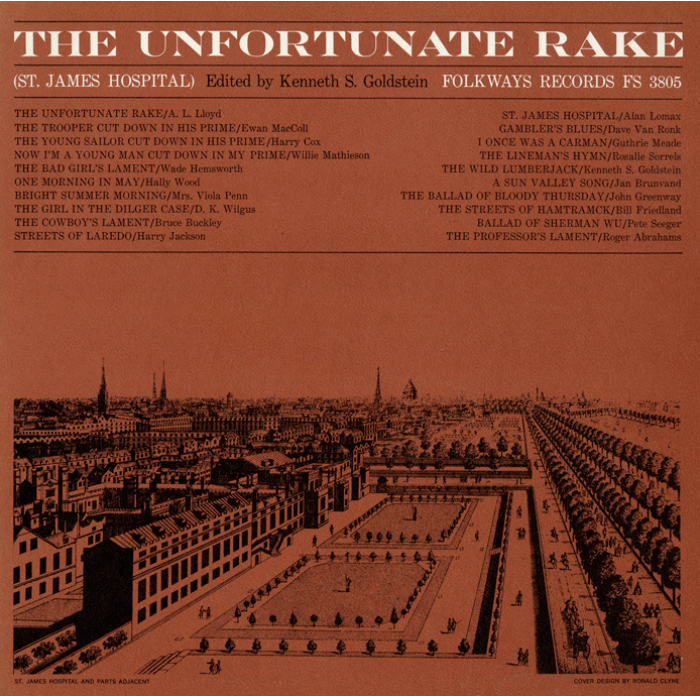
The LP was issued by Folkways Records in 1960, and there I was earnestly chirping my “Sun Valley Song” on the same disk as nineteen real folk singers, including Alan Lomax and Pete Seeger.
“The Unfortunate Rake: A Study in the Evolution of a Ballad” became a classroom classic used to illustrate how texts change as they are transmitted via oral tradition.
I still like to sing an occasional ski song, to myself, usually while cruising western slopes, including a few times even those at Sun Valley.
https://seniorsskiing.com/wp-content/uploads/2018/11/Rake-Album.png696700Jan Brunvand/wp-content/uploads/2014/04/Seniors-Skiing-since2013-Logo@2x-300x68.pngJan Brunvand2018-11-26 09:20:592018-11-29 09:58:14My Career As A Folk Singer
Our Next Mystery Photo Is Someone Who Became A Ski Celebrity.
If you think you know who you think this guy is, write your guess in COMMENTS below, just scoll down. We’ll reveal the answer next week.
Credit: SKIING Magazine
Last Week’s Mystery Glimpse
This is Olympian Picabo Street as a young racer. Thanks to the Alf Engen Ski Museum in Ogden, UT, for picking this out of its archives for us.
Picabo Street is an American former World Cup alpine ski racer and Olympic gold medalist. She won the super G at the 1998 Winter Olympics in Nagano and the downhill at the 1996 World Championships, along with three other Olympic and World Championship medals. She was also a heart throb for a lot of men and boys who followed her during her competition. [Wikipedia]
We remember a news clip from coverage of one of her Olympic races. It said that in the midst of a medal run, she gave herself some encouragement by saying,”Come on, come on, come on.” That mantra stuck with us as a useful way to kick oneself into another gear whenever circumstances seem to warrant. She became an inspiration to hundreds of young women ski racers. Thanks, Picabo.
https://seniorsskiing.com/wp-content/uploads/2018/01/JCK_69_487-e1515073469695.jpg728398seniorsskiing/wp-content/uploads/2014/04/Seniors-Skiing-since2013-Logo@2x-300x68.pngseniorsskiing2018-01-04 09:05:062018-01-04 09:07:50Mystery Glimpse: Who’s This Unhappy Fella?
In 1974 while living in Vienna, Virginia, I had a midlife crisis. On December 27, I turned 40 with the thought that I had reached middle-age and would have to limit my skiing.
In the past, while living in California, the family had gone skiing on my birthday. Now in Virginia, my nine-year-old son, Bill, said, “There aren’t any mountains. If you want to ski we’re going to have to go to Utah or Colorado.” There was only one thing to do, jump into the Mercedes and drive to Utah, where we all loved to ski.
Bill Emerson in his yellow ski suit on his 40th birthday
As a belated birthday surprise my wife provided me with a form-fitting yellow ski suit. My first day with the yellow suit was spent at Park City, enjoying a beautiful sunny day.
Thus began a tradition of skiing on special birthdays in my special yellow suit. Between those events, the yellow suit hung in the back of a closet.
It emerged next in 1984 for my 50th. My very grown up son and I headed to Snowbird to celebrate. The yellow birthday suit went with us.
After that trip, the suit moved again to the back of the closet. Its next adventure w
Bill skiing Park City on his 80th
as 25 years later. This time on my 75th.
In September 2014, approaching my 80th, I returned to the gym to work off a few pounds. I wasn’t going to celebrate on skis without the suit or my son. He was over 40, older than I was when I received the suit on my 40th.
We agreed to meet at Park City.
The cold day required wearing a newer and much warmer red jacket.
At one point I donned the yellow suit so Bill could snap a few shots of my yellow ski suit and me.
https://seniorsskiing.com/wp-content/uploads/2017/11/9.-2014-Bill-in-Yellow-Suit-e1509559915709.jpg487728Bill Emerson/wp-content/uploads/2014/04/Seniors-Skiing-since2013-Logo@2x-300x68.pngBill Emerson2017-12-07 11:17:362017-12-07 14:40:40The Story Of The Yellow Ski Suit
In the late 70s, I was working at a ski resort and poor as could be. When the Head Maintenance Engineer asked around for someone to pick up a part for one of the chairlifts, I quickly volunteered. He probably figured I knew what I was volunteering for and wouldn’t have done so without a pickup truck or some other appropriate vehicle.
It was after hours, and we needed the part in order to run the lift in the morning. The supplier agreed to stay open until I arrived.
As a twenty-one-year-old male, there may have been some other decisions I made without much forethought. In my mind, the part was a few bolts or something like that.
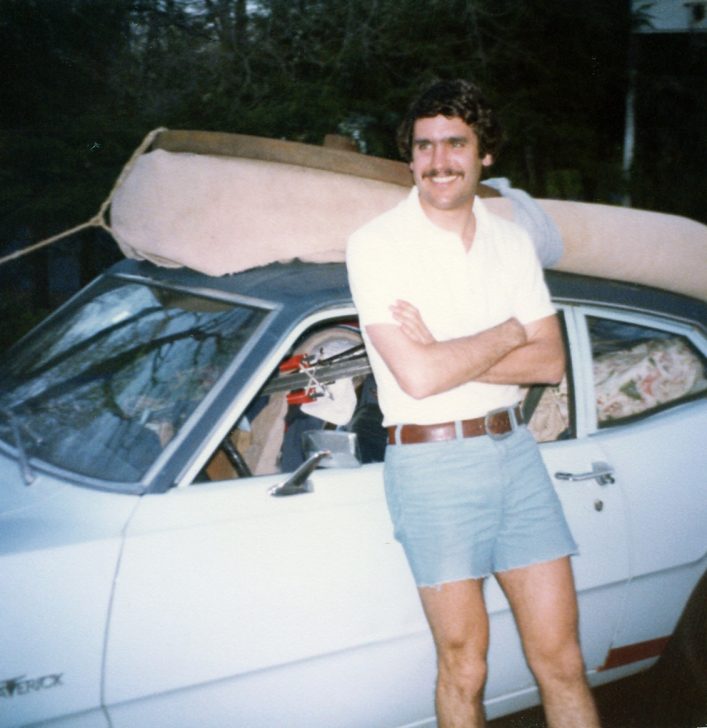
Though I was to drive 90 minutes in the dark on country roads, I had confidence in my mature Ford Maverick (Yes, the photo is of the car I used). It was starting to snow, but I knew my new retread snow tires were up to the task. Using the finest workmanship I could muster, I had recently jury-rigged an eight-track tape player under the dashboard so I knew the trip wouldn’t be totally devoid of entertainment.
When I arrived later than promised, the supplier was grumpy as hell. He spat a wad of tobacco into the snow, pointed to large gear laying against a fence post and grumbled, “How the hell are you gonna get that in there?”
Sliding the front passenger seat all the way back, it looked like the gear might just fit. With the grizzly old guy providing special lubricant in the form of sub-vocalized mutterings, we managed to get it in. The car listed unnervingly to starboard.
With no more words spoken, the receipt was tossed in the car, and the parking lot lights were off before I was out the driveway.
On the return trip, the crown of the road, under slippery conditions and tilt of the car, overcame my ability to keep the old Maverick on the road. Into the ditch I went.
To my great relief, a pickup truck pulled over just minutes after the mishap. With the sweet smell of liquor wafting from their breaths, two good Samaritans offered to pull me out. One attached a chain to their hitch, and the other hooked up somewhere under my car. I took a moment to look under the car, saw the hook on the steering rod and moved it to the frame.
I profusely thanked my new best friends, made it back to the mountain, the chairlift was operational by morning, and I had a windfall of $22.00 bonus.
Thanks to Harriet Wallis whose recent article entitled Lift Maintenance 101 sparked this long forgotten memory.
https://seniorsskiing.com/wp-content/uploads/2017/12/38981-PH-008-e1512490877512.jpg728707Don Burch/wp-content/uploads/2014/04/Seniors-Skiing-since2013-Logo@2x-300x68.pngDon Burch2017-12-05 10:37:562017-12-07 11:33:19A Wad of Tobacco, A Chairlift, And A Ford Maverick
Our Readers Search Their Attics For Old Ski Songs. Hear Them Now.
Wow, what a response! Thanks everyone for comments and emails on our reprised article, Skiing Songs of The Sixties. We not only heard about ski song memories, we had some folks sending us (digital) recordings.
We have to tip a pole to Boyd Allen, Exeter, NH, for taking the time to send us two digitized versions of the very songs that some readers requested as a result of the article. Boyd grew up listening to his dad’s Harry Belafonte, Kingston Trio and other folk records. In college, he says he came across an old Intercollegiate Songbook with skiing tunes bases on folk songs. That find launched a hobby where Boyd tracks down and collects old recordings and song books, especially about skiing! Boyd is a teleskier these days. Thanks so much, Boyd.
Boyd sent us two versions each of Let’s Go Skiing and The Skier’s Daydream by SeniorsSkiing.com reader Ray Conrad. Click on the links below to play.
Let’s Go Skiing by Bernie Knee and the Irving Fields Orchestra.
Let’s Go Skiing by Frank Yankovic
The Skier’s Daydream by Ray Conrad
The Skier’s Daydream by Oscar Brand
And to SeniorsSkiing.com reader Alison, we thank you for remembering and sending in a reference to Schifoan, a tune in German written by Austrian folk singer Wolfgang Ambros. As Alison says, it’s a catchy tune, even if your German is a bit rusty. Here’s a version we found on Youtube by Wolfgang himself.
Finally, here’s Cotton Pickin’ Lift Tower, another Ray Conrad tune, performed by John Sidle at a coffee shop in Santa Clara, CA.
Fun stuff, thanks everyone!
https://seniorsskiing.com/wp-content/uploads/2017/08/09-Lets-Go-Skiing-Frank-Yankovic-mp3-image.jpg200200mikemaginn/wp-content/uploads/2014/04/Seniors-Skiing-since2013-Logo@2x-300x68.pngmikemaginn2017-08-28 10:25:022017-08-28 10:25:02More Skiing Songs Of The Sixties And Beyond
[Editor Note: Here’s an archive article that will bring back some memories. Back in the Sixties, there was a host of songs devoted to the relatively new and growing sport of skiing. This article from SeniorsSkiing.com August, 2014 highlights some of the songs and the singers.]
Well, they called him Super Skier
As he sat around the sun deck,
For he swore that he would never take a spill.
When they finally brought him down
They had to use three toboggans
To carry all the pieces down the hill. Bob Gibson, Super Skier
In the late 50s and early 60s, three cultural threads knit together simultaneously—folk singing, the comedy album and the sport of skiing. Inspired by the Kingston Trio, Smothers Brothers and the comedy records of Bob Newhart, Woody Allen, Shelly Berman, and Lenny Bruce, a small band of singers created a niche art form: The Stand Up Comic As Skiing Folk Singer.
A pioneer on the scene was Chicago-based Bob Gibson, a 50s folksinger, who, among other things, wrote novelty songs, especially about skiing. One of those, Super Skier, later recorded by the Chad Mitchell Trio*, became the genre’s archetype. Here’s a version:
The novelty ski song had a pattern. A naïf—nerdy office worker, country hick, cowboy—goes skiing because it’s macho, ladies find skiers attractive, and it’s cool. His goal is showing off, joining the Jet Set, finding the girl and having “the look”. But, misadventures and slapstick outcomes ensue. All of this is often to a familiar folk tune: Sweet Betsy From Pike, Turkey In the Straw, Railroad Bill and the like, with simple acoustic string-band accompaniment.
Utah skier and resident Ray Conrad is a prime example of this novelty genre. He was a topical folk singer back in the 60s. Here’s his song The Big Downhill Skis about a “hard-butt” cowboy who is challenged to go skiing by a city slicker. Pretty funny.
Ray also has a serious side. Here’s the opening lyric of his song, “A Skier’s Daydream”.
In the fall of the year, when the summer grows old When the air has a chill, and the green hills turn cold It’s then I grow restless and feel at my ease I yearn for the mountains and the snow in the trees
Then there’s his song Two Cubes and A Slug of VO that compares the joys of skiing with the benefits of “drinking gin with a touch of vermouth, yo-ho.”
The genre went in a different direction when Oscar Brand issued an entire album of ribald ski songs. Brand, a contemporary of Pete Seeger and the Weavers, had an uncanny knack for writing and collecting off-color songs. His discography (about 100 albums) includes bawdy sea shanties, army ditties, navy songs, and hearty drinking carousers.
Oscar Brand’s 1961 collection of ribald ski songs are still funny today.
Ray Conrad was in the mix in those days and contributed two songs to Brand’s 1963 “A Snow Job For Skiers”. Here are some lyrics from The Ski Instructor from that album. The rest of the songs range from clever and witty all the way to silly. Discretion prohibits adding an actual audio track.
Impress her with your ability, don’t let her answer no Remind her that skiing with no sex involved is nothing but cold, cold snow.
We haven’t noticed après-ski lounge singers embracing these songs or even making up their own in our recent travels. Google “ski songs,” and you get rock music for your skiing playlist, not the topical send-ups of yesteryear.
Do you have a ski song you remember?
Now the moral of my story
Though my story’s kinda gory
For all you sundeck Charlies, there’s still hope
You buy the fastest clothes you can
Then talk skiing like a man
But don’t let people catch you on the slope…And Get Charlie Off The MTA
_____________________
*By sheer happenstance, the author was present at Brooklyn College in May 1961, when the Chad Mitchell Trio first performed “Super Skier” on stage and made the recording you can hear on the Youtube link. They raised the roof on that one. Here’s the admission (autographed on the back) ticket to prove it.
https://seniorsskiing.com/wp-content/uploads/2014/08/BrandAlbum-Edited_edited-1.jpg587600mikemaginn/wp-content/uploads/2014/04/Seniors-Skiing-since2013-Logo@2x-300x68.pngmikemaginn2017-08-14 13:24:542017-08-15 13:06:18Super Skier: Skiing Songs of the Sixties
Blandford has three chairlifts. When I learned to ski, it had seven rope tows but only one chairlift. Credit: Harriet Wallis
Nothing can replace this family-based ski area in southern Massachusetts. But Blandford is now on the brink of being closed or sold. It has offered what mega resorts cannot offer.
If kids got tired of skiing, they’d go off trail with their friends and build snow caves and ski jumps. When my son broke the tip off a ski, we knew exactly how it happened. When my daughter needed a break, she discovered she could mooch cookies from skiers in the lodge.
It was all part of the ski experience. Something that doesn’t happen at the big resorts.
Adults had their fun too. In spring, we’d take a picnic lunch and a bottle of wine to the picnic tables at the summit.
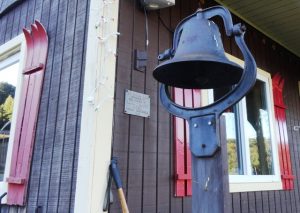
The ski school bell rang when it was time for lessons. Credit: Harriet Wallis.
If it rained we put on garbage bags and did “worm turns” rolling on the soggy snow. One rainy day when no one was riding the T-bar, a group of us slalomed the T-bar line. The Ts were moving targets coming up, and we skied around them going down. Naughty but fun.
Après ski was a food fest. Families brought crockpots and plugged them in on the deck letting dinner simmer while they skied. Oh the glorious smells! At the end of the day, everybody shared.
We skied there every Saturday and Sunday during the 1960s and early 70s when my kids were growing up.
There were family races—our first race experience with gates and awards. My daughter didn’t yet understand the race concept. She stopped to chat with each gate keeper.
The Blandford race team won many competitions even though they trained mostly on dry land because early season snow was too skimpy. The kids honed their muscles and reflexes by quick stepping through an array of tires and other dry land exercises.
The race coach also gave ski tuning demonstrations, a skill I continue to use today.
And he demonstrated ski binding release. He careened down the hill in Olympic form, carving hard lefts and hard rights. Then he would stop, lift each foot and shake his skis off! If you ski technically correct, your binding don’t have to be cranked down, he said.
The ski patrollers found ways to busy themselves as there were few accidents. One day, a patroller watched a youngster cut the chairlift line, slithering through the long line up to the very front. Just before the child got onto the chair, the watchful patroller sent him to the back of the line. The child never cut the line again.
One spring, the patrollers decided to tap the many maple trees and make syrup. Their first morning duty was to gather the makeshift syrup buckets — #10 size cans – and carry them to the patrol’s dispatch shack at the summit. There the dispatcher kept the golden liquid stirred on the pot belly stove. The patrol bottled the syrup and invited everyone for après ski “syrup on snow.”
Then there were parties. In summer, we enjoyed the camaraderie of work parties, pitching in to help with lodge and slope maintenance. That was always followed by a corn husking contest and a giant BBQ.
In winter, there were celebrations with a caldron of gluehwein simmering over a fire, torchlight parades with real torches, and then dinner and dancing. Kids danced. Adults danced. Everybody danced. Everybody danced with everybody.
Small ski areas are the heart and soul of skiing. It’s sad that this could be the end of iconic Blandford Ski Area that’s been in operation since 1936.
https://seniorsskiing.com/wp-content/uploads/2017/06/alg-chair.jpg480576Harriet Wallis/wp-content/uploads/2014/04/Seniors-Skiing-since2013-Logo@2x-300x68.pngHarriet Wallis2017-06-19 08:53:332017-06-19 08:56:54Fond Memories Of Blandford Ski Area
Back Road Scenery And Ski Slope Puddles Formed Indelible Pictures.
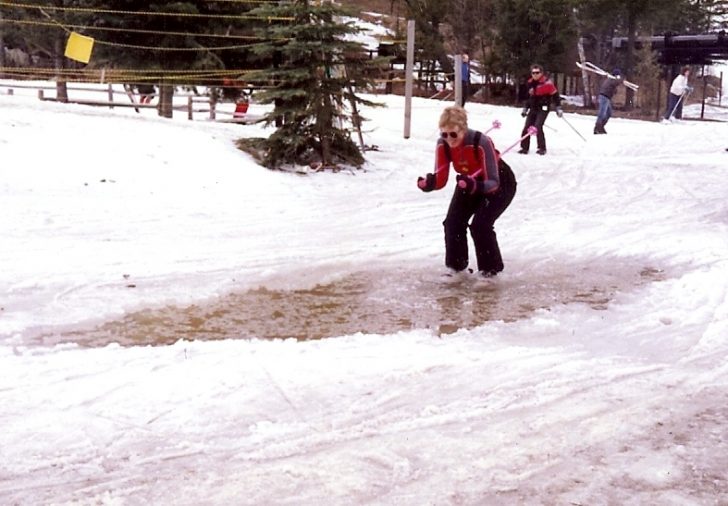
Author Harriet Wallis tries out a puddle at Mt. Snow, Vermont, back in the 80s. Credit: Harriet Wallis
I loved the scenic springtime drive to the slopes. Steam rose from little sugar shacks as the golden syrup was simmering inside. Horses stood motionless in frozen pastures and breathed clouds of fog into the frosty morning air. Christmas tree farms had fallen silent.
Lichen-covered stone walls divided the winter-flattened landscape into a patchwork quilt. Farmhouse porches that had been stacked solid with fire wood were now nearly empty. What remained was a littering of chips and bark. Frozen laundry flapped on a few clotheslines.
And then there was mud. Road shoulders were rutted. Unpaved roads were impossible, and some parking lots were a quagmire.
Above all else, I loved New England’s ski slopes in spring. When it rained, we put on garbage bags. Those were the days before Gore tex. The bags rattled in the wind. Rain ran down the bags and soaked the legs of our ski pants. Then it wicked into everything we were wearing. We were soaked inside and out.
But the rain also softened the ice, and the ice became slush. It slid downhill like a glacier and melted into puddles. The base area became puddles. A maze of puddles. Many puddles. Deep puddles. Normal skiers went around them. But I loved skiing through those puddles—spraying water everywhere and hoping I could dry my boots by morning. And hoping there would be big puddles the next day.
If you see a puddle at the base of your ski area, please ski it for me—or send me some vibes that springtime puddles still exist at ski areas.
https://seniorsskiing.com/wp-content/uploads/2017/04/Mt-Snow-CROP-Harriet-puddle-skimming-e1491843556104.jpg506728Harriet Wallis/wp-content/uploads/2014/04/Seniors-Skiing-since2013-Logo@2x-300x68.pngHarriet Wallis2017-04-10 13:01:042024-09-06 15:27:42Favorite Memories Of Skiing New England In Spring
After 7o Years Of Chronicling The Sport, The Venerable Publication Closes.
The rumors are true. SKIING Magazine, like so many other classic magazines, has finally closed down after nearly 70 years of publishing. This is especially sad for me because I worked for SKIING in the early 1970s as a junior editor. It was there I found myself catapulted into the whole ecosystem of the ski business where SKIING and its uptown rival, SKI, were the nexus of all that was happening.
Under Doug Pfeiffer, editor-in-chief and already an industry legend, and Al Greenberg, executive editor, the magazine in those days was a creative, innovative and exciting place to work and for readers a valuable and entertaining look at what was emerging as a growing winter sport. Interest in skiing was bursting in the early 70s; celebrities were being recognized and promoted by the press: Billy The Kid, Jean-Claude Killy, Karl Schranz. Harry Leonard’s Ski Shows—with a young Bernie Weichsel on his staff—descended on major cities. The movie, “Downhill Racer”, starring Robert Redford, brought the drama and beauty of racing to the public. There were new boots, new bindings, new skis, new everything from destinations to accessories, and SKIING covered it all with expertise, a touch of irreverence and some really great writing.
I will never forget learning the basics of cross-country skiing in Al Greenberg’s office at One Park Avenue, New York. Or watching Senior Editor John Henry Auran getting his feet “foamed” for ski boot liners, an outstanding innovation back in the day. “Have you been foamed?” he always asked mischievously. There were also 3:00 AM deadlines, last minute changes, hysterical laughter when coming up with headlines with Managing Editor Dinah Witchel. It was always fun watching Fashion Editor Cathie Judge sort through piles and piles of new clothes for photo shoots.
One month, we were so late in getting final editorial done that I—the junior person— was tasked to personally hand deliver the physical page layouts and copy down to the printing plant in Doraville, GA. I was driven to the airport in New York for an ultra-early flight straight from the office after an all-nighter by John Henry and some other anxious production people. When I landed, I took a cab from Atlanta miles out to Doraville only to find the plant was closed for Confederate Memorial Day. So I left the whole edition—packaged in a giant cardboard sandwich bigger than two super-sized pizzas—with the security guard at the gate who promised to get it to the right person the next day. I gulped, left it with him, got back into the cab, and flew back to New York.
And of course, I will never forget the early 70s ski tests with Wayne Wong, Doug and Ginny Pfeiffer and Jim McDill out in Mammoth Mountain after Memorial on spring snow and bright sunshine near the top of the mountain.
Memories, bound volumes, and reunion phone calls from long-ago colleagues are left. Thanks SKIING for the run.
If you worked at SKIING, what are your stories? I know that several contributors to SeniorsSkiing.com were on staff back when the magazine was a vibrant center of the skiing community. Tell us your memories.
https://seniorsskiing.com/wp-content/uploads/2017/02/SKIING_601-e1487605834488.jpg942728mikemaginn/wp-content/uploads/2014/04/Seniors-Skiing-since2013-Logo@2x-300x68.pngmikemaginn2017-02-20 11:20:062017-02-20 15:55:53SKIING Magazine Folds: Goodbye, Old Friend.
If You’ve Been Around The Ski Biz, You Will See Some Familiar Faces.
Flipping out at a 60s ski show.
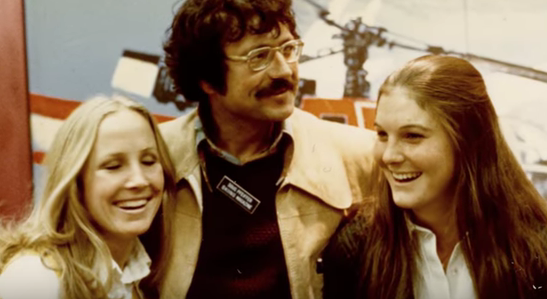
Thanks to Cathie Judge for sending us this video commemorating the famous Harry Leonard Ski Shows, starting in the late 60s with lots of clips of several giants of the ski industry back in the day.
Ski and Snow Board Show impresario and SeniorsSkiing.com advisory board member Bernie Weichsel, who contributed archival photographs to this video, said that Harry Leonard’s son, Adam Leonard, produced this for Harry’s 90th birthday.
SKIING magazine editor and ski legend Doug Pfeiffer at the show sometime in the early 70s.
So many familiar faces: Barbara Alley, Stein Ericksen, Doug Pfeiffer, Bob Beattie, and many other industry personalities.
https://seniorsskiing.com/wp-content/uploads/2016/12/Screen-Shot-2016-12-28-at-10.36.01-AM.png216399mikemaginn/wp-content/uploads/2014/04/Seniors-Skiing-since2013-Logo@2x-300x68.pngmikemaginn2016-12-28 11:19:282016-12-28 11:23:39Ski Show Retro Video Brings Back Memories
This Throw-Back Cartoon Reveals The Stereotypes Of Skiing In The 70s.
Credit: Walt Disney Productions (Of Course!)
https://seniorsskiing.com/wp-content/uploads/2016/12/Screen-Shot-2016-12-28-at-9.27.19-AM.png340650seniorsskiing/wp-content/uploads/2014/04/Seniors-Skiing-since2013-Logo@2x-300x68.pngseniorsskiing2016-12-28 09:28:432016-12-28 09:31:04Goofy And Mickey On The Art Of Skiing
Everybody knows Pete Seeger and his folk songs from archival ballads to anthems of struggle, the peace and labor movement, and the rest. What is not widely known is that Pete was a lyrical poet, and some of his lesser known works are rich with images and emotion. One of those is “Snow, Snow,” appropriate for listening to by a fireside on a cold night with a gentle snow fall outside. It’s a bit minimalist, perhaps somber in its simple description of snow falling on a town. We offer it here as a chance for our readers to reflect on what else snow can be. Click on the Youtube video below to hear a rendition.
Credit: Shot Photos
Snow, Snow By Pete Seeger
(Chorus after each verse)
Snow, snow, falling down
Covering up my dirty old town
Covers the garbage dump, covers the holes
Covers the rich homes, and the poor souls.
Covers the station, covers the tracks,
Covers the footsteps of those who’ll not be back
Under the street lamp, there stands a girl,
Looks like she’s not got a friend in this world.
Look at the big flakes come drifting down,
Twisting and turning, round and round.
Covers the mailbox, the farm and the plow.
Even barbed wire seems beautiful now.
Covers the station, covers the tracks.
Covers the footsteps of those who’ll not be back.
“Snow, Snow” was released on the 1973 Rainbow Race album.
https://seniorsskiing.com/wp-content/uploads/2016/11/Snow-Falling-in-the-Night-600x375.jpg375600mikemaginn/wp-content/uploads/2014/04/Seniors-Skiing-since2013-Logo@2x-300x68.pngmikemaginn2016-11-14 12:05:502017-03-30 13:04:36Skiing In Literature: Pete Seeger’s “Snow, Snow”
Check Out The Change In Equipment, Styles, Spectators Through The Years.
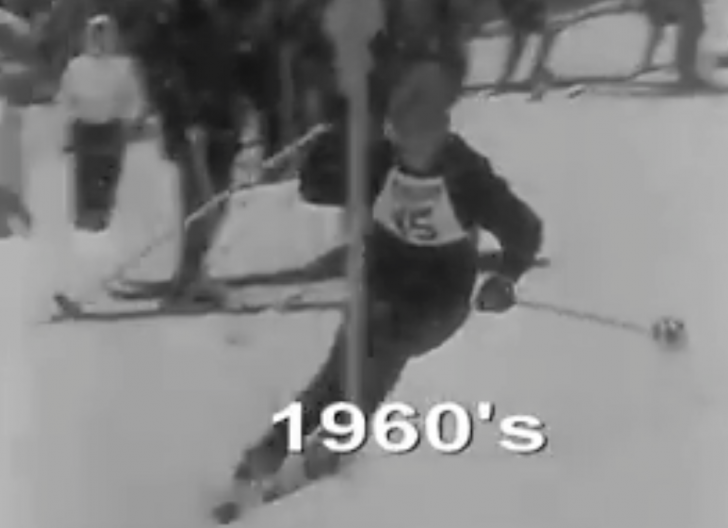
Leather, buckle boots. No helmet, skidding turns. Snow was still snow, though. Credit: Pathe
Many thanks to the Canadian Ski Instructors Alliance for posting this really interesting clip. The CSIA got it from Skitourowe Zakopane.pl., a Polish ski travel group enticing visits to the Tatra Mountains, the highest mountains in Poland and part of the Carpathian chain in Eastern Europe. In any case, it’s an interesting perspective on how ski racing has changed.
https://seniorsskiing.com/wp-content/uploads/2016/11/Screen-Shot-2016-11-02-at-9.38.34-AM-e1478094139461.png528728seniorsskiing/wp-content/uploads/2014/04/Seniors-Skiing-since2013-Logo@2x-300x68.pngseniorsskiing2016-11-02 09:46:072016-11-02 09:48:28Fifty Years Of Ski Racing In Two Minutes
Fifty Years Ago, Portillo Changed Everyone’s Idea About Skiing Below The Equator.
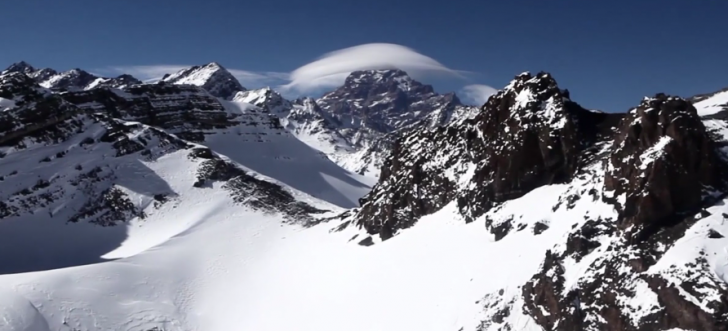
Portillo improbably hosted the first FIS World Championship below the equator in 1966. It changed a lot of minds.
At the time, it was a wild idea. Hold the FIS World Championships in Chile, at Portillo, at 3,300 meters, in the Northern hemisphere’s summer. Somehow, resort owner Henry Purcell convinced the FIS to award the 1966 event to the nascent resort. Despite a 1965 hurricane that destroyed lifts and created monstrous snow falls and avalanches, the FIS held fast and the World Championships were (heroically) held in the Andes with skiers gathering from all over the world. You can read about Portillo’s history here.
In the commemorative documentary video below, you’ll see Henry Purcell, the owner, describing how the event changed the world’s view of South American skiing. Nancy Green, Canadian super star, Austrian ski race legends Egon Zimmerman, Hermann Maier, and Erik Schinegger, Carlos Senorer, Italian gold medal winner, and even modern day whiz Ted Ligety offer their thoughts and memories about that most pivotal event.
Portillo continues to attract summer skiers and racers preparing for the season. As we have seen, this season has had its moments of really, really big snowfalls. Click here for a report of a nine-foot snowfall this June. Have you skied ‘way down south?
https://seniorsskiing.com/wp-content/uploads/2016/08/Screen-Shot-2016-08-22-at-10.13.20-AM-e1471875240753.png331728mikemaginn/wp-content/uploads/2014/04/Seniors-Skiing-since2013-Logo@2x-300x68.pngmikemaginn2016-08-22 10:26:442016-08-22 10:26:44Remembering Portillo’s FIS World Championships 1966
Clever Video Shows The Evolution of Dressing For The Snow.
A touch of nostalgia for antique ski clothing. Perhaps it’s time to fetch a retro-look in ski fashion. Wool hats anyone? Credit: Colorado Ski and Snowboard Museum.
Thanks to the Colorado Ski and Snowboard Museum and Hall of Fame for producing this trip through ski history. Click below for a six-minute video clip. Perhaps you might remember wearing some of these outfits?
https://vimeo.com/162455377
https://seniorsskiing.com/wp-content/uploads/2016/04/Screen-Shot-2016-04-21-at-8.59.17-AM.png500757seniorsskiing/wp-content/uploads/2014/04/Seniors-Skiing-since2013-Logo@2x-300x68.pngseniorsskiing2016-04-21 13:05:042016-04-21 13:07:26100 Years Of Ski Fashion



















 This is Olympian Picabo Street as a young racer. Thanks to the