
Tag Archive for: seniorsskiing.com 50+

Getting Ready For The New Season

Tongue-In-Cheek Tips For Dusting Off All Your Stuff…And You.

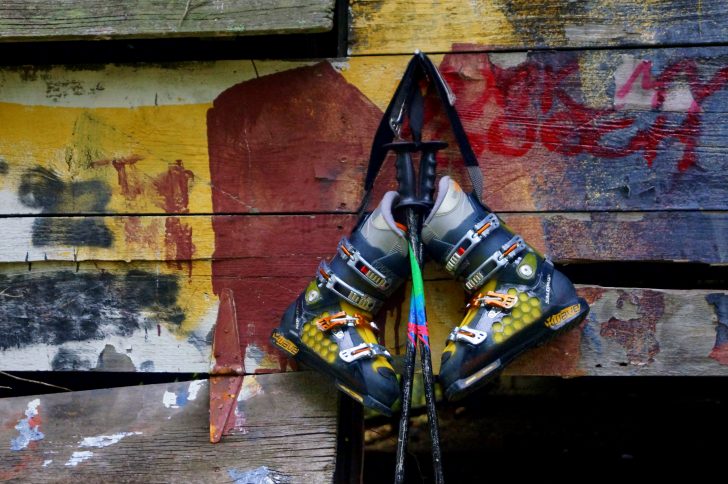
Where did you stow those boots? Keep looking, they must be hanging around somewhere.
Credit: Don Burch

You know it’s time to get ready for skiing when leaves are falling and there have been snow flurries in the mountains. You’ve started having ski dreams, and everyday you check SeniorSkiing .com (and your other favorite ski sites) for new postings.

Here’s what you need to do:

Get in shape. Go to the gym, do a plank. Spritz yourself with water so it looks like you’ve worked up a sweat. Do a lunge. Check your phone for messages. Call it a day.

Schedule all appointments for before or after ski season. Get your teeth cleaned now.

Find your ski clothing. Wash the long underwear that was lovingly stored under the bed. Clear out the pockets of your parka. Put the half-eaten protein bar in a baggy. Pull the fuzz off the loose ibuprofen pills in find a new baggie for them.

Find your new ski pass among the pile of plastic cards in the junk drawer. Throw out all the video store membership cards you find. Yes, even the Blockbuster card.

Go toward the pile of ski poles tossed in the back corner of your garage. First move all the string trimmers that you can’t start, the fishing poles with broken tips and the other things you’re going to fix. Pick out two ski poles that are the same length. No, they don’t need to actually match in any other way.

Get your ski boots out of the barn, shed or whatever outbuilding you promised yourself you’d never again store them in after what happened last year. DO NOT put your hands into the boot. First, turn them over and shake out the acorns. Shake them again, harder this time. Still do not put your hands in them. OK, they’re probably ready for the season.

Hunt for your skis. Do a visual binding check. If they are caked with highway salt and rust spray them with WD40. If they have Cubco bindings, buy new ones. Put them with the ski boots and the mismatched poles.

Watch YouTube instructional ski videos. Visualize yourself making carved turns. Get yourself centered by watching videos posted by your favorite life-coach. You’re working hard so indulge yourself with some cute cat videos.

Download the latest ski apps to your smart phone.

Bore your non-skiing friends, spouse, relatives and anyone you meet with all the new stuff you’ve learned online.

Call all your ski buddies. Subtly ask questions in order to determine their “ski status”. Do they have new grandchildren, new hips or knees, or a new sweetheart who doesn’t ski?

I know you didn’t throw out all the video store membership cards. You knew vinyl records made a modest comeback and so might Blockbuster. So get one of the plastic cards and use it to scrape sleet off goggles. Put it in the interior pocket of your parka along with the fuzz-less ibuprofen pills baggie and the half eaten protein bar. You are now fully ready for the new ski season.

Book Review: The Nature Fix

Your Brain On Nature.

[Editor Note: Roger Lohr, publisher of XCSkiResorts.com and SeniorsSkiing.com’s Nordic Editor, reports on the therapeutic effects of being outside.  We thought it, now we know it.]

Lupine field, Sugar Hill, NH. Credit: Roger Lohr

The Nature Fix by Florence Williams, published by W.W. Norton & Company in 2017, provides the most compelling argument to date for people to spend more time outdoors in nature, based on an increasing amount of biological, psychological and medicinal scientific evidence.

Over the years, efforts have been made to quantify nature’s impact on mood, well being, ability to think (remember, plan, create) and sociability. The “biophilic” hypothesis involves lowering human stress, boosting mental health, restoring attention, empathy, and cognitive clarity. Nature also affects a social component like the feeling that is shared among people who spend time together outdoors or people who perform exceeding acts of kindness in the aftermath of a severe environmental event such as a tornado, earthquake, firestorm, and such.

The recommended prescription for getting outdoors in a “nature pyramid” includes both quick doses and longer spells in wild places. Specifically, humans should:

  • Get out in nature nearby on a daily basis for some minutes to de-stress, find focus, and lighten mental fatigue,
  • Spend weekly outings at parks or waterways for an hour or so, and
  • Go on monthly weekend excursions to natural areas to bolster immune systems.

The top of the pyramid includes annual or biyearly multi-day wilderness trips. More significantly, such wilderness experiences are invaluable for adolescents or those who are in grief or suffering trauma.

The author traveled the world over to investigate and experience research on nature’s impact on humans. In Japan, she saw “forest bathing” on a sensory walk in the woods on one of the 48 forest therapy trails in the country. In Scotland, they call it “eco therapy.” She met with a Korean professor of “social forestry” who introduced her to the world’s only college degree for forest healing. In South Korea from 2010-2013, visits to the forest increased from 9.4 million to 12.7 million, while in the USA there was a decline of 25% during the same time period.

The evidence (20 pages of cited notes and credits) about nature impact involves details with cortisol levels, sympathetic nerve activity, heart rate decline, and hemoglobin in the brain’s prefrontal cortex.  The book is replete with that type of information, which may be news to most people who may not be familiar with such neurological details.

One of nature’s benefits are delivered through sound—a bubbling brook, bird tweets in the early morning, the leaves moving in the wind, and so on. But the US Park Service claims that 83% of land in the lower 48 states sits within 3,500 feet of a road and that within 20 years 90 percent of the population will be close enough to hear at least one of the projected 30,000 airplane flights per day.

In Finland, 95 percent of the population spends time recreating outdoors and 50 percent ride bicycles. It is easy to access forests because 74 percent of the country is covered by trees and there are two million summer cottages for a population of two million Finns, who claim the focus on nature correlates to reduced health care costs and mental and physical fitness.

Williams visited Singapore, where 70 percent of the population lives within 400 meters of green space. The government in Singapore allocates .6 percent of the national budget to develop scenery and greenery.

There are successful nature programs to help people who suffer with PTSD (post-traumatic stress disorder) and ADHD (attention deficit hyperactivity disorder). Outward Bound did a study on a therapeutic adventure program showing 9-19 percent of participating veterans who had PTSD, improved. Williams includes a discussion about ADHD programs where 6.4 million kids are diagnosed and half of them are taking medication for the malady.

Isn’t it about time that more therapists, doctors, teachers, and parents prescribe getting outdoors more often?


Commute, Rent, Or Buy?

The Best Way To Enjoy Your Ski Time.

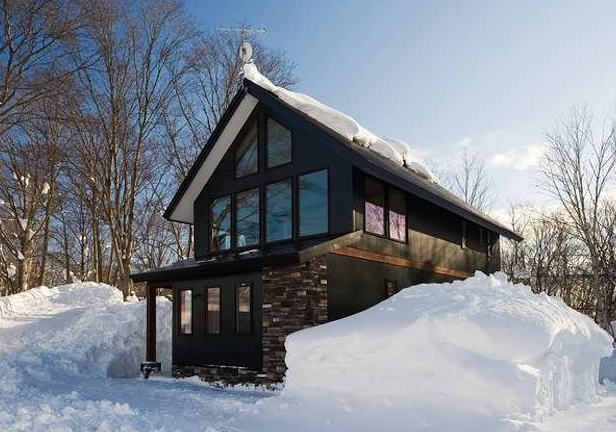
Choose a small chalet…

While some snowsports enthusiasts are fortunate enough to live and work in ski country, most skiers and riders have to commute from their homes, often two, three or more hours from their favorite mountain. For the frequent skier—those who want to spend every weekend, plus vacation weeks on the slopes—their commute can become very tiresome.

This can be especially true for families with young kids. Parents, and grandparents, have to get the kids organized every morning to get in the car at an early hour so as to be at the slopes for the start of the day. If the kids are in some kind of racing program or weekend recreational class, hitting the road in a timely fashion becomes even more important. “Did you remember your gloves, goggles, hat”, even “your boots”, is sometimes heard as the car heads out the driveway.

…or a luxury, slope side condo. It all depends…
Credit: Steamboat Springs

Many families opt out of this weekly hassle by renting a house or condo near their favorite resort or perhaps in close proximity to several areas so they have a choice throughout the season. Ski gear and clothing can be left there, they can drive up on Friday evening, relax and be ready to go on Saturday morning without the stress of an early morning drive, and return after a day on the slopes for a relaxing evening.

What should you look for when renting a property in ski country?

Well, that depends a bit on your lifestyle and the resort where you want to spend your time. If very young grandchildren children are part of the mix, you might want to find something slope side or very close to the mountain so one family member can take a child home when he tires out. A ski in, ski out unit is best for this, but even a house or condo a mile or two from the area will let someone be delivered home easily without disrupting the entire family’s day.

Another thing to consider is what you like to do in the evening. If you’re content to return to your rental after the lifts close, have dinner in, watch tv or movies or play games, then you might look for something out of town in a quiet, country setting. But if you want entertainment, like to eat dinner out frequently, sample the nightlife, then perhaps a house in a town or around the base area (depending on the resort you choose) is a better option.

As far as the actual property goes, you need to again examine your lifestyle as well as your budget. How many bedrooms do you need? Will you or your children or grand children be bringing guests? Is one living space, whether large or cozy, where you can all be together preferable? Or would separate spaces for relaxation work better for the family? Do you prefer something upscale, in a condo community with amenities such as a spa, swimming pool, workout equipment? Or will a simple house work fine for your group?

Budget is an obvious important consideration. If you rent a single family house, in addition to the rent, you will likely be responsible for paying utilities including cable and wifi as well as plowing costs. Be sure to ask about the type of heat the house has and how efficient it is. Fuel costs over the course of a winter can sometimes come as a big, surprising shock, and you want to be prepared.

When searching for a seasonal rental property, it is a wise idea to use a real estate rental agent. These folks know the properties and, by asking a few questions, can often direct you to something you might not find on your own. They will have a handle on expenses for the winter, condition of the property and lots of tips on location relative to the mountain and other activities that may be of interest to you. There are plenty of ways to book lodging on line, but if you go this route be sure to use reputable web sites and ask a lot of questions.

Another option is purchasing a home in ski country, clearly a more complicated process which will be addressed in a future article.

Waterville Valley Pioneer Tom Corcoran Dies At 85

Tom Corcoran, an Olympic skier and developer of Waterville Valley Resort, has died at 85 at this home in Seabrook Island, SC.

Read the story of how he created a mountain resort from scratch and brought the Kennedys to visit by clicking here.

Two-time Olympian Tom Corcoran was an all-around athlete who put Waterville Valley on the map.
Credit: Waterville Valley Resort.

Adventures In Cycling Series: Happy Valley (PA) Cycle

Serious Cycling For This Senior Who Hangs With A Younger Crowd.

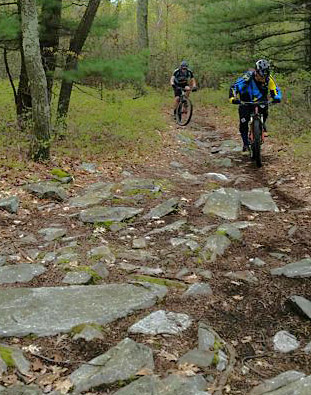
Trails at Rothrock require some technical skills.
Credit: Pat McCloskey

Nothing like a road trip with 23 of your mountain biking friends to State College, Pa. aka “Happy Valley”.  Our merry band of warriors converged on the Hilton Garden Inn and prepared for three days of riding the challenging terrain of the Rothrock State Forest.  As one of two “senior riders”, I was a little hesitant seeing that it was early spring, and my conditioning was not quite there yet.  But as the first climbs of the first day ensued, it was eat or be eaten with this group of very accomplished riders.  Rothrock has many ride options for different skill levels including gentle fire road climbs, but it also has some of the most challenging terrain in the east.

Our first day was spent near the Tussey Mountain Ski Area with a climb that led to the Tussey Mountain Trail which gave us great vistas looking over “Happy Valley” and the remote mountainsides of Central Pennsylvania.  The rocks and boulders along the trail kept the full suspension bikes busy; most of the riders have gone with the new technology of mid-fat 3-inch wide tires with loads of suspension.  Many of the riders used fat bikes to help absorb the punishing grind of the rocky terrain.

Only two seniors in this group of mountain bikers for this early season rally.
Credit: Pat McCloskey

The second day was spent with our guide Craig Matthews, at the Coopers Gap area which is directly over the mountain from where we rode on Friday.  This area is remote, but the trails are superbly maintained by the local hiking and mountain bike clubs of the State College area.  One of the highlights of Day Two was the “Beautiful Trail” which lived up to its moniker with rhododendrons in bloom lining the relatively level ridge top terrain.

Our last day was back at the Tussey Trails with a side trip to Lemont, PA to hike Mt. Nittany.  A beautiful early morning hike that was welcomed by a smaller contingent of the group with a stop at the quaint and peaceful Café Lemont. Here you can rest on a relaxing outdoor patio or beautifully appointed living room with a freshly brewed coffee of your choice accompanied by homemade pastries and granola cereals.

As the “senior guy”, I made it through and am looking forward to another trip in October where the leaves will be ablaze and the Central Mountains of Pennsylvania will be vibrant with the fall colors.  Just have to maintain the fitness level for that one over the summer.

If you go, the Hilton Garden Inn in State College is very accommodating to mountain bikers.

Ride Support is available from two very good bike shops:

Freeze Thaw Cycles: Rentals and all mountain bike related clothing and accessories available.

The Bicycle Shop: Specialized dealer with rentals and all bike related clothing, and accessories.

Buy the Purple Lizard Map of the local trails.  Available at both shops.  And ask the shop guys for a ride or rides that fit your needs.

From the top of Mt. Nittany, Penn State’s namesake.
Credit: Pat McCloskey