Tag Archive for: Skiing History

Short Swings!

I was in a place I shouldn’t have been. When I entered the gate, I thought I had been on this part of the mountain years earlier. But as I descended, nothing about it seemed familiar.


It was steep beyond my comfort. There were bumps and trees, and the surface was getting icy. Signs on the trees warned this was a cliff area.

At my age, this was no place to be skiing alone.

I heard scraping skis below me and saw someone near a rope line skiing to the left. 

Then I was alone. My skis were long past their useful life. My goggles kept fogging. I had a phone, but not a whistle. It was at home in a pack. No use to me now.

Before passing through the gate, someone had warned me not to go. I said not to worry, I knew what I was getting in to.

That was a mistake. Steep, Icy surface. Tight trees. 

I wasn’t scared, but I had lost confidence. Side-slipping and kick turns were all I could muster. Even when I found a stretch of softer snow, I couldn’t bring myself to make a few turns. 

It was beautiful in there. Cliffs above and below; twisted trunks rising to blue sky. Quiet.

How would someone find me? Maybe they’ll start looking when my car is the only one left in the lot?

Eventually, I saw a trail.

I must have been in there 30 or 40 minutes. It’s unlikely I’ll try it again, but if I do, it will be on better skis, I’ll have a whistle, and I won’t be in there alone.

Vail Announces Northeast Passes and Rewards Program

Vail just announced two regional passes for the Northeast (US). The Northeast Value Pass (adults, $599; college students, $419) provides unlimited, restricted access to Okemo, Mount Snow and Hunter, 10 restricted days at Stowe, plus unlimited, unrestricted access to Wildcat, Attitash, Mount Sunapee, Crotched, Liberty, Whitetail, Roundtop and more. The Northeast Midweek Pass ($449) has similar access, but restricted to Monday through Friday, and five restricted midweek days at Stowe. 

Vail also announced ‘Epic Mountain Rewards,’ which gives pass holders a discount of 20 percent off food and beverage, lodging, group ski and ride school lessons, equipment rentals and more at the Company’s North American owned and operated resorts.

For details, click here

2020-21 IKON Pass Discount

Renew your Ikon Pass and Ikon Base Pass before Wednesday, April 22, and (depending on the pass) get up to $100 on next season’s IKON Pass.

When Skiing Utah, Visit The Lift House

My first visit to a ski shop was when I was 10. It was a narrow and deep store in Albany, NY, and what I remember most is the rich smell of leather boots. Over the years I’ve been in many ski shops: some okay, some quite good, and some terrific. Spending much of the winter in Utah, I’ve been reminded that The Lift House, the venerable store near the mouth of Big Cottonwood Canyon, is an absolutely terrific place. Its location is ideal for people skiing Alta, Snowbird, Solitude or Brighton. It is consistently well-stocked with the top equipment and clothing brands. And the personnel are knowledgeable, helpful, and friendly. Years ago, when we visited with kids in tow, The Lift House is where we rented. Over the years, it’s one of the places I’ve relied on for quality tunes. It’s the kind of place with a deep inventory of useful accessories And when they have a sale, they really mean it. Many people stop on the way to the mountain to purchase discount lift tickets. For example, a weekday at Snowbird costs $130. At The Lift House, it’s $97. An Alta day pass is $125. At The Lift House it’s $105, a better deal than the $119 if purchased directly from Alta online. There are other excellent shops in the area, most with similar brands, some specializing in only the most expensive ski and casual clothing. When headed in the direction of Big and Little Cottonwood Canyons, The Lift House is highly recommended.

International Skiing History Association

The International Skiing History Association (ISHA) is the non-profit with the mission of preserving and advancing knowledge of ski history and increasing awareness of skiing’s heritage. ISHA publishes Skiing History magazine the bimonthly filled with interesting articles and great illustrations. A six-month digital subscription is free. Click here or on the adjacent ad to subscribe.

Two more things from ISHA:

  • As a member ($49 annually; $59 international members) you’ll receive hard copies of Skiing History and have access to the organization’s digital archives. Among other things, you’ll find a guide to more than 160 ski museums and collections in 22 countries.
  • If you’re attending Skiing History Week in Sun Valley, March 25-28, sign up for ISHA’s annual Awards Banquet. Click here for details.

How Snowbird Trails Got Their Names

It’s not that often that we get to know the stories behind the trail names. The Snowbird website has a wonderful short article about how many of its trails were named. Written by frequent SeniorsSkiing.com contributor, Harriet Wallis, it’s informative and amusing. Who wouldda thunk that the West Second South trail refers to Salt Lake City’s long gone red light district? It’s an easy trail named for a the street of easy women.

This Self-Massage Device is Essential for Older Skiers
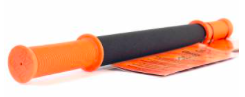
Last year, a skier friend recommended the Tiger Tail, a highly effective self-massage tool that doesn’t require getting on the floor, like you do with a foam roller. OMG!!! What a fantastic device! I get off the mountain and roll out my quads. At home, when my calves start to cramp, Tiger Tail comes to my immediate rescue. The company’s website is rich with useful text, picture and video instructions. Last month at the big industry trade show in Denver, I met Spring Faussette, who invented Tiger Tail and owns the company. She’s offering SeniorsSkiing.com readers a discount code for 30% off Tiger Tail and the company’s other products. Visit the Tiger Tail website and enter snowski50 during checkout to receive the discount.

Mont-Tremblant, Extends Season

The Quebec area will be open through April 19, and kids under accompanied by an adult will ski free.

Short Swings!

This morning only the silver slice of moon interrupted the pure blue sky. 

Capitol Reef NP

The landscape here in south central Utah is exceptional. My summer grounds are at the base of Boulder Mountain, not far from Capitol Reef National Park. Boulder Mountain is the eastern end of the Aquarius Plateau, the highest plateau on the continent. The mountain peaks at 11,328’ and is crowned by an escarpment currently spotted with snow. One north facing section is long enough to get about twenty turns. It probably would take a few hours to get up there and find the spot. More runs would be guaranteed if I drove the 3½ hours to Snowbird, where lifts are still running. It’s a possibility, but a few hours of turns may not be worth the effort.

Last weekend, 20” fell at Steamboat Springs. Snowfall this late in the year is due to a warmer and wetter atmosphere. At cooler, higher elevations it turns to snow. The last time Colorado had this amount of snow in June was 91 years ago.

If you’re fortunate to live close to Snowbird, Mammoth, Squaw Valley, Arapahoe Basin or Timberline Lodge, you may be enjoying an extended season. I’m envious. 

If you plan to be visiting my corner of the West, please let me know (jon@seniorsskiing.com).

***

Elan Introduces First Foldable Ski

Elan’s new folding ski

Elan’s Ibex Tactix is the world’s first foldable ski. Made for backcountry, skis, bindings and skins weigh in at 5.5kg. The 163cm skis use a folding mechanism that reduces skis to 90cm for easier transport. The company’s claim that the package is good for all conditions is demonstrated in this video.

***  

Many National Parks Plagued by Air Pollution

Ninety-six percent of America’s national parks are plagued by significant air pollution problems reports the National Parks Conservation Association. The group evaluated air, haze, and soil and water pollution in 417 national parks. The results are available in NPCA’s report, Polluted Parks: How America is failing to protect our national parksNPCA is the leading voice safeguarding America’s national parks. 

***

Alta’s (Now Past) Ski and History Tour with Alan Engen

For many years, Alan Engen served as Alta’s Director of Skiing. Alan is a strong contributor to the history of skiing in the Intermountain West and was the driving force behind the Alf Engen Ski Museum in Park City (named for his father, one of Alta’s founding fathers). Alan took great pleasure in sharing Alta’s history and its terrain with its senior visitors. This poster announcing the program is from the late 1990’s.

Videos Worth Watching

I recently stumbled across this 7-minute review of skiing in the US from the 1930’s through the 1950’s. It’s great fun. 

This 8-minute instructional film from 1941 appears to be a US Army production explaining skis, bindings, boots, and skins. The difference between then and now is amazing!!! 

The History of Alpine Skiing shows the evolution of the sport from its earliest days. Produced by Alpine Life, the video is about 12 minutes.

Mystery Glimpse: This Lady Created The First…

…What?

Hints:  New Hampshire. She went to Smith. Her husband’s last name was the name of the creation.

Credit: New England Ski Museum archive

Many thanks to the New England Ski Museum, now with an Eastern Slope branch in North Conway, NH, in addition to their home base at the foot of the Cannon Mountain gondola, Franconia.

Last Week

Lots of clues here. Who’s in the speed suit?

Yes, Buddy Werner is the skier on the cover of the January 27, 1964 edition of Sports Illustrated, harkening the Winter Olympics, held that year in Innsbruck, Austria.  At the time, Werner was a vibrant, new personality in the ski world, a Steamboat native, and a persistent competitor. Werner, as many senior snow sports people know, went to the 1964 Winter Olympics with Billy Kidd and Jimmie Heuga, but never placed. It was just after the Olympics that Buddy joined other athletes filming a movie in Switzerland, produced by Willy Bogner, the fashion designer. He and German racer Barbi Henneberger were lost in an avalanche during the production.  He was only 28.

What makes this photo so interesting to me is that I had a similar photo tacked above my desk at SKIING Magazine, One Park Avenue, NY, NY. That was in 1970. The photo which you can see below, you have to agree, is pretty dramatic, an airborne downhill racer coming full on, in helmet and speed suit. There was no identification on the print as to who it was or when it was taken. I always wondered.

Last week’s photograph from the Tread of Pioneers Museum archive, triggered a response. I rifled through several old files, and there it was. That old picture matched the cover shot of Sports Illustrated, but obviously a different frame from the shoot.  It been taken at the same on-hill session as the cover photo, and somehow a print made its way to SKIING magazine’s offices, where I commandeered it, and pinned it to the wall. When I went on to other things, I took it with me, and it’s been around ever since.  And here it is.

After almost 50 years, we now know this is Buddy Werner.

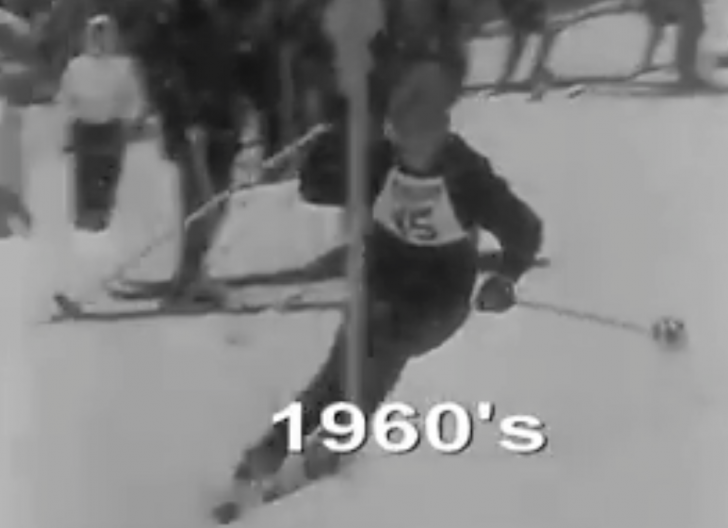
Fifty Years Of Ski Racing In Two Minutes

Check Out The Change In Equipment, Styles, Spectators Through The Years.

Leather, buckle boots. No helmet, skidding turns. Snow was still snow, though. Credit: Pathe

Leather, buckle boots. No helmet, skidding turns. Snow was still snow, though.
Credit: Pathe

Many thanks to the Canadian Ski Instructors Alliance for posting this really interesting clip.  The CSIA got it from Skitourowe Zakopane.pl., a Polish ski travel group enticing visits to the Tatra Mountains, the highest mountains in Poland and part of the Carpathian chain in Eastern Europe.  In any case, it’s an interesting perspective on how ski racing has changed.

Warren Miller’s Story: You May Be A Skier Because Of Him

New Autobiography Shows How Miller Created Skiing’s Visual Brand.

Ski Pioneer Film-Maker Warren Miller lacing up at the Matterhorn. His beautiful and fun-filled films brought new people to skiing in the 60s and 70s. The WME company continues to produce over the top visual feasts.

Ski Pioneer Film-Maker Warren Miller lacing up at the Matterhorn. His beautiful and fun-filled films brought new people to skiing in the 60s and 70s. The WME company continues to produce over the top visual feasts.

For any senior who’s ever attended a Warren Miller film, Freedom Found, My Life Story will provide an intriguing look at skiing history as well as Miller’s success story. The autobiography is a must-read for anyone with a mindset to dig into the ups-and-downs of skiing—and real life.

Freedom Found is also a candid, moving, and adventurous story of how Miller became America’s most famous and prolific maker of ski and sports films.

As Miller details his journey from childhood deprivation to filmmaker success, he delves into the effects of being an “invisible” child during the Depression. In sharing his dysfunctional family life—alcoholic father doesn’t work, mother incarcerated, embezzlements—he shows how parental neglect led to his own drive to work hard.

He also acknowledges the saving grace of grandparents who provided attention at just the right times—an inventor grandfather who teaches him skills in his workshop and pays him for work; a grandmother whose gifts (bicycle, roller skates, Scout uniform) provide the attention and help needed. Living with them for two years while his mother was “away,” Miller finds the support that “changed my life” and gets to join the Boy Scouts in 1936 at age 12, another life-changing event.

Loving the outdoors, he enjoys hiking and learning to ski with his troop. By taking Scout trip photos with his 39-cent Univex camera and selling a print, he discovers the profit motive, commenting, “This was the kernel of the idea that taking pictures of great places would be a good way to make a living.”

It was skiing and surfing—he lived in Hollywood near the ocean and a teacher helped him make his first surfboard—that provided an escape to a world of delight and freedom. Miller graduated to even more freedom with his driver’s license, and soon his filmmaking turns into a career, starting with Surfing Daze in 1949 and Deep and Light in 1950.

An “original ski bum,” Miller lived out of a trailer and cooked over a camp stove to afford his ski habit and to make films. Marketing his ski features as fundraisers—for ski shops, clubs, organizations—he built his touring business into a huge success by personally narrating the showings (narration tracks came later). He entertained us with wry humor and comedic ski scenes—frustrating rope tow struggles, awkward situations (splitting stretch pants, etc.), crazy crashes—and inspired us to ski with his thrilling action shots and gorgeous scenery.

Warren’s success helped build skier participation and was a major contributor to the 1960s and 1970s ski boom. I saw that firsthand after showing The Sound of Winter (1970) to two high school assemblies and at an evening fundraiser: several non-skiing students joined our ski club and parents came forth to chaperone! The proceeds paid for the bus to Whiteface and made possible a $70 six-day trip (skiing, lessons, lodging, meals). To say thousands took up skiing because they enjoyed his films is an understatement.

Warren sold his film company in 2004, but the Warren Miller Entertainment (WME) film tour lives on. This year’s feature Here, There, and Everywhere (reviewed here by Seniorsskiing.com co-publisher Jon Weisberg) weaves the Warren story into several segments.

The just-published, 444-page biography, written with collaborator Andy Bigford whose 35 years in publishing include SKI Magazine and WME, is available at bookstores, warrenmiller.net, and via online outlets. Suggested retail price is $29.95.

Order Freedom Found by Warren Miller from Amazon, WME or at your bookstore.

Order Freedom Found by Warren Miller from Amazon, WME or at your bookstore.


History, Memories, Books, And More

ISHA’s 2016 Skiing History Week at Aspen.

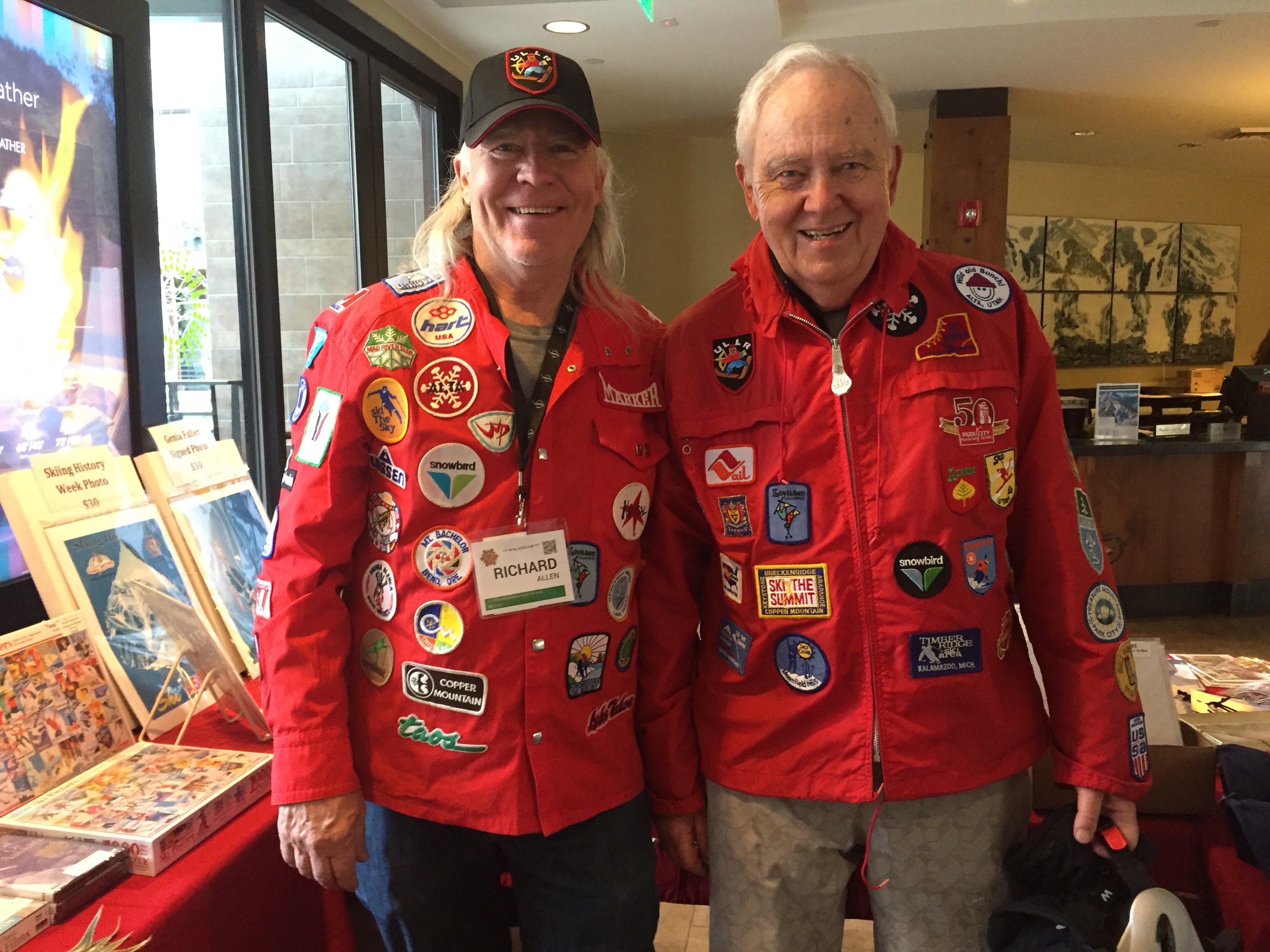
Author compares patches with Richard Allen of Vintage Ski World . Credit: Jan Brunvand

Author compares patches with Richard Allen of Vintage Ski World . Credit: Jan Brunvand

The International Skiing History Association (ISHA) and the US Ski and Snowboard Hall of Fame held their annual Skiing History Week at Aspen on April 5 – 10. My wife Judy and I attended, partly for the presentations, but also for the $32 day passes.

How avid are people about skiing history? Very! Folks lined up to buy a 240-page book on the history of ski poles written in Norwegian. Most bought it as a collector’s item, signed by the author, Karin Berg, director of the Holmenkollen Ski Museum. Berg received a Lifetime Achievement Award.

Maybe a few others, like me, hoped they could read some of the book by drawing on dim childhood memories of our Norwegian parents speaking the language at home and making liberal use of a dictionary. If not, well the illustrations are lavish.

The welcome on Wednesday evening included a tribute to Aspen, which happens to be my first Western ski resort. In 1954 as an undergrad at Michigan State I came with ski club pals during spring break. Passes were $21 per week, and rooms were $5.00 a night. We ate cheap dinners at the Red Onion, still an Aspen fixture.

In those days I didn’t even consider entering the ritzy Hotel Jerome. How things have changed.

At Thursday night’s banquet in the Jerome, ISHA presented annual awards “For Outstanding Creative Works of Ski History.” These included eight other books, one more in Norwegian and two in German. We came away with a couple more: License to Jump! about women’s ski jumping, and Freedom Found, the autobiography of filmmaker Warren Miller.

On Friday a buffet dinner was followed by two lectures. One was a presentation by sons of skiing legend Dick Durrance with film clips and photos including his time at Alta. The second was on the Warren Miller book by his collaborator Andy Bigford.

The highlight of the Hall of Fame program was the induction ceremony Saturday for seven new members at a banquet at the St. Regis. Two inductees had Utah connections: Bob Salerno, pioneer freestyler and a native of Ogden learned to ski at Snowbasin; and the late Edgar Stern, founder of Deer Valley. There were also memorial presentations on Olympic champions who died in the past year, Stein Eriksen and Bill Johnson.

MV5BNTc3MjU5ODc0M15BMl5BanBnXkFtZTcwMDMyMTk3Mg@@._V1_UY268_CR4,0,182,268_AL_Five ski films received awards. Since these were screened in the daytime when we would rather be skiing, we skipped them, but, at least, we had seen the 1969 classic Downhill Racer honored as “one of the best sports films ever made.”

Among skiing greats we met this year were racers Klaus Obermeyer and Billy Kidd; the writers or editors Doug Pfeiffer, John Fry, and Harry Kaiser; and early freestylers Genia Fuller Crews and Barbara Alley.

How was the skiing? Very good spring conditions all week, meaning a bit crunchy on the groomers in the morning and softer snow as the days warmed. Definitely worth the trip and the lift prices.