
Tag Archive for: spring skiing

Short Swings: Timely Tidbits of Snowy News
Credit:nicolamargaret

There’s always something happening in snow country.  This is the March edition of timely tidbits to know, to help you plan the rest of this season and important news for next season, too.

Epic Pass 2026/27 Offers New Discounts

In a major step to get more young people on the slopes and shape the future of skiing and snowboarding, Vail Resorts is reducing the cost of passes for skiers and riders ages 13 to 30. They can now purchase next season’s 2026/27 Epic Pass and Epic Local Pass now for 20% less than regular pricing, for up to $220 in savings. Next season’s Epic Pass is on sale now at $869 and Epic Local Pass at $649.

All Passes for next season are on sale now at the lowest price of the year – and will increase around Memorial Day and again around Labor Day.

Ikon Pass 2026/27 Offers New Perks

It goes on sale March 12, with new expanded access to Colorado resorts; the addition of Tamarack in Idaho, Lutsen Mountain in Minnesota, Snowriver Mountain Resort in Michigan and Granite Peak in Wisconsin, all with no blackout dates.  Ikon also is cutting down on plastic pollution by us re-use this year’s pass for another season.  There also are new discounts for passes for  children and those aged 23-28.

New passholders also get immediate and unlimited spring skiing at around one dozen mountains in the Rockies and Sierras.  Prices are $1,349 for the full Ikon Pass and $924 for the Ikon Base Pass; additional prices are on the Ikon Pass website.

Another Family-Owned Resort is Sold

Pomerelle, an old-fashioned, low-key, family-owned resort in Southern Idaho, has been sold by the Anderson family, which has operated it for decades.  But fear not – it’s unlikely to change much, if at all, since the new owners are mountain manager Zach Alexander and his wife, Crystal. He is the grandson of longtime and recently retired director of snowsports instruction Barry Whiting, so it’s pretty much like keeping it in the family.

I’ve skied here. It’s a great mountain with long groomers along with some challenging steeps and trees.  And lift ticket price are around half the price of nearby Sun Valley.

Spring Skiing in the Poconos

 Thanks to the recent massive snowstorm in the Northeast along with enhanced snowmaking techniques, Camelback Resort is extending winter well into spring, with daily skiing and riding through Sunday, April 12, followed by weekend operations through the first weekend of May – conditions and weather permitting. That mean the resort’s longest ski season ever, surpassing the

previous record of April 9, 2009, and marks a significant moment for Pennsylvania winter sports. With a deep late-season snowpack and sustained cold-weather, Camelback is boasting spring skiing conditions typically reserved for northern New England – and just 90 minutes from Times Square.

Remember Your SPF

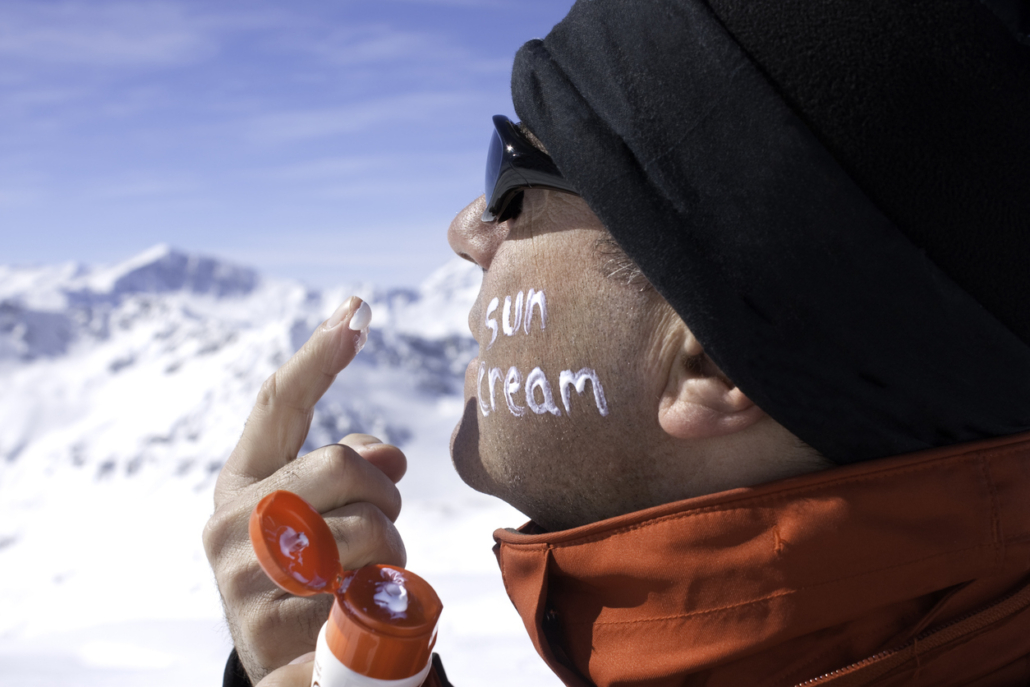
The return of Daylight Saving Time on the second Sunday of March, when our clocks and watches “spring forward”, means days are longer – and brighter. No more skiing or riding in flat light at 2pm and wishing you were wearing your low-light goggles. Brighter sunlight until the lifts close also means applying sunscreen more often.  Don’t forget the tip of your nose!

Sunday River

Look Back: Sunday River

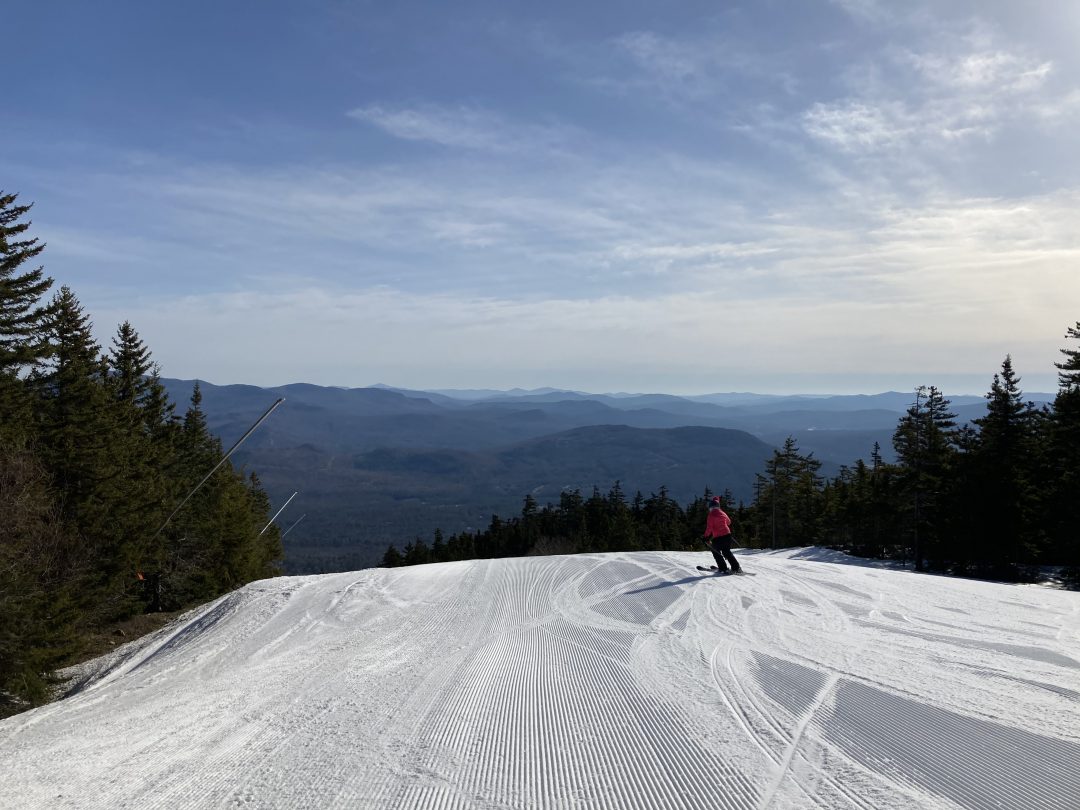
Smooth sailing on Risky Business. Photo by Tamsin Venn.

For the record, early morning skiing was just the best at Sunday River, Maine.

We skied this reliable, late-season spot over Easter weekend with two gorgeous sunny days, happy the travel restrictions into Maine had eased for us at last. Better late than never.

Everyone wore masks. Photo by Tamsin Venn.

Count SR’s season-long commitment to snowmaking (90 percent coverage) as the insurance that makes the late season possible, especially with paltry late-season snowfall. Also, a three-mile-long ridge of eight peaks gives skiers and boarders varied snow conditions at different exposures. You can always find something holding up well. Big vert lets you stay on upper slopes in afternoon to avoid lower-elevation slush. Good grooming helps put things right the next day in New England’s freeze and thaw cycle: 8 a.m. crispy corduroy.

All good.

The crowds were the biggest challenge. At the popular Barker Chair, social distancing was a little ragged, but everyone was wearing masks. People in the lift line were polite, waiting their turn, and no grumbling heard for riding alone. Slopes were busy, but most people knew what they were doing, including the rug rats, probably mostly passholders. (Note to senior self – the later in the season, the safer you are.) The one exception was the young, helmetless dude on the snowboard straight-lining White Heat.

There were a few surprises. We agreed to meet for Easter lunch at the sunny deck at North Peak Lodge, but only the bar was open. So we drank instead and ate chocolate bunnies. One closed trail we wanted to ski suddenly opened. The top of White Heat is nothing but a granite ledge with snow on top of it (you don’t realize that mid-winter). The schlep across a dry parking lot is not so bad.

I checked in with the millennials with me on what they liked at Sunday River and what they hope will be carried over into next year.

On the way over to the next peak. Photo by Tamsin Venn

Increased RFID use and access? Already there. Food trucks? Already had them. Outdoor dining? Great, unless it’s a blizzard. They can’t wait to get back to booting up in the lodge and more places to eat. They plan to renew their Ikon passes.

As for changes going forward, Sunday River says while plans for next year aren’t finalized, it will likely continue to encourage online advanced ticket sales, offer online food ordering at certain eateries, and hopes to expand takeout options.

Kelly Pawlak, President of the National Ski Areas Assn., noted successes that will likely be carried over into next year at most ski areas. Those include advanced ticket sales (ski areas like to know how many skiers will show up); reconfigured indoor spaces that open up space within lodges; increased use of ticket kiosks; outdoor living fixtures like fire pits, chairs, food trucks, outside food windows; and for employees, daily wellness checks, staying home if sick, plus sick pay for seasonal workers.

Summary of the 20-21 ski season? Like many, with the skis now hung up, I was very grateful there was one to begin with, and Sunday River made for a very rewarding finale.

Corn Snow And Mashed Potatoes: Know The Difference.

One Fun, The Other Not So Much.

Spring brings corn for a few precious hours. Credit: Jans

We’re nearing that time of year in New England and the upper Midwest where the snow melts a little during the day and freezes at night. The repetitive process creates tiny balls of ice. In the morning, they’re rock hard but as the sun comes up, they melt a little and turn into ball bearings lubricated by water. The condition is known as “corn snow.”

The skis carve when rolled on their edges, a platform builds up under the bottom making it easy to unweight, if you are old-fashioned like me, or roll your knees in the direction you want to go.

The day starts with rock-hard, frozen granular until the melting starts. Then for the next three or four hours, the skiing is divine. Depending on the temperature and the slope’s exposure to the sun, by mid-afternoon, the snow becomes sloppy. That’s when it is time to quit and start early again the next day.

Corn snow: Coarse, granular, and wet. Credit: FIS

In the Rockies, the drier snow doesn’t “corn up” as well as it does in the east. Until late in the spring, the conditions are packed powder at the top and soft and mushy as you come down in altitude.

Late spring snows in the Far West and east of the Mississippi are often full of moisture. The snow is heavy. Gloppy is an appropriate term. Way back when, we called the conditions mashed potatoes.

Venture into mashed potatoes, and you’ll find that turning requires effort and strength. Unless you have your weight equally balanced throughout the turn, the heavy wet snow grabs your skis, making turns hard to make.

Lose your balance in mashed potatoes, and you are in what we used to call a “slow, twisting fall.” If you are lucky, you get up, wetter than when you went down and keep skiing.

Mashed potatoes? Go home.

However, if you are a subscriber of SeniorsSkiing.com, danger lurks in the mashed potato fall. Even with modern bindings and shorter skis that reduce the torque on the leg, your bindings may not release immediately. Why? Because the initial torque may be below the threshold needed to free your boot. Then as you “slowly” fall, torque is slowly applied to the leg that might result in a nasty spiral fracture. The break could take weeks, even months to heal.

So how do you ski corn snow? The answer is simple. In the morning when it is hard and rutty, ski the same way one would hard, frozen granular. Then, as the snow softens, ski the same way you’d take on packed powder and enjoy the corn snow ride.

How do you ski mashed potatoes? Avoid the condition. Go home and ski another day!


Spring Comes to Wildcat

Long And Winding Runs. Great Views.

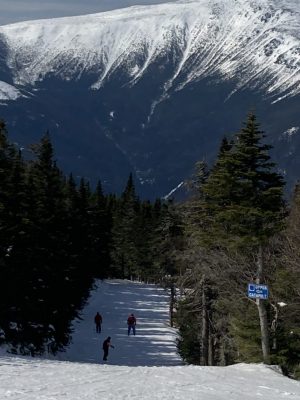
Getting ready for spring skiing at Tuckerman. Credit: Tamsin Venn

It was serendipity to arrive at Wildcat in the northern Presidential Mountains of New Hampshire the first week in March and find spring skiing. Many of us missed that part of the ski season last year in the pandemic shut-downs.

Due to its north facing slopes and deep snowpack, Wildcat usually is the last ski area to close in New Hampshire. This year it’s April 18.

While there, temps shot up to 66 degrees. Wildcat is not always so hospitable. It sits across the street from weather magnet Mt. Washington, tallest peak in the Northeast at 6,288 feet, and highest recorded wind speed 231 mph.

Away we go down Upper Catapult. Credit: Tamsin Venn

This year we were on the lookout for non-crowded midweek slopes, a friendly local atmosphere, and no state travel restrictions for us. Wildcat fit the bill.

The L-shaped parking area minimizes the schlep to the main lodge. Boot up from your tail gate, tiptoe across the icy parking lot, hike past four new, neon-colored porta-potties, get your RFID card zapped, and hop onto the Wildcat Express Quad. Seven minutes later, in one of the swiftest trips in skidom, you have reached the summit.

For several hours I lapped the Express Quad, zipping up-down-up, alternating from the left to the right flank on long, winding trails of 2,100 vertical feet. The trails draw you down as the head and shoulders of Mt. Washington rise. It’s like being in a movie… with good lighting.

Snow was corn, sweet, smooth. My left-foot steering was working as well as my right, always a good sign. Around 11, soft conditions required maneuvering into skied-off slots to save on thigh burn. Clearly early-morning skiing is best for spring skiing, even at a north facing mountain. But when I left early afternoonish, the parking lot was jammed. Spring fever had hit.

Although it has a reputation as an expert’s mountain, Wildcat has beginner terrain (20 percent)—Pole Cat is a 2.5 mile beginner trail, longest in New Hampshire—(see video article in this issue)— intermediate terrain (47 percent)—Lynx is a sweet roller with fun intermediate pitches—and expert terrain (33 percent)— famed black bump runs under the lift line. Midweek, you’ve got your turns to yourself and stress-free trail junctions.

The “cans” are display only. Credit: Tamsin Venn

Looking across to the top of Mt. Washington and thinking of spring skiing Tuckerman Ravine, you will always be grateful for the Express Quad that whips you to the area top at 4,028 feet. No hiking required. On wind holds, the Tomcat Triple gives you the bottom three-quarters.

When Vail Resorts bought Wildcat two years ago to add to its Epic mix, it took many by surprise. Wildcat is loved for its no-frills amenities and boot-scarred lodge, not exactly a Vail kind of place.

But a modern mega-resort corporation can’t erase the memories. My neighbor asked me:

“Does Wildcat still have those cold gondolas? When skiing there circa 1950s, the cable jammed [and] we near froze in the can in the hour it took to get them moving.  When people did emerge at the top, all the men ran for the bushes!  Anyway, it was exciting to ski there.”

It still is.


Click here for Wildcat Trail Map

Click Here for Wildcat Tickets

Click Here for Uphill Access

Click Here for Mountain Cams


Spring Skiing And Gaping At Jackson Hole

The First Week Of April Brings “Gapers” To JH And A Different Skiing Experience

Weirdness prevails on Gaper’s Day (April 1) at Jackson Hole. Credit: Buckrail.com

Editor Note: We are quite pleased when readers submit articles for publication in SeniorsSkiing.com.  David Barnes is a long-time reader who sent us this account of a yearly ritual at the venerable Jackson Hole.  Thanks David.


Jackson Hole.  Two words that strike double-black-diamond terror in the hearts of many skiers, young and old alike.  But, it shouldn’t.  Sure, half of the runs are black diamonds, including one called Corbet’s Couloir that’s more akin to a cliff than a ski run.  But the other 50% of the mountain’s runs are blue and green, making for a welcome ski experience for any senior skier. 

I first skied Jackson Hole in the late 80’s, with my new wife whose great aunt and uncle lived at the base of Rendezvous Mountain in Teton Village.  At 72 years old, Uncle Warren took me on the old aerial tram, up 4,139 vertical feet to the 10,450’ summit.  The wind was howling, the air was thin, and the run was steep.  “Ready?” grinned Uncle Warren?  I swallowed hard, clicked into my bindings, squeezed the poles hard, and nodded like a rodeo cowboy on a wild bull, waiting for the gate to open and release the snorting, bucking beast.  I was 30 years old and quickly realized I was being out-skied by a 72 year old.  When we’d reached the bottom, I declared I wanted to be like Warren when I grew up. 

Since then, we’ve had the privilege of visiting Jackson Hole a dozen times or so, including the last week of skiing (first week of April) for the last three years.  This is thanks to my mother-in-law, who owns a fraction of the Teton Club, a beautiful and massive log structure near the base of the Tram.  Does this make me an expert on spring skiing at the Hole?  Not exactly.  But I’ve learned enough to understand that skiing the Hole in early April makes for a different experience.  Generally, the weather is warm, sometimes too warm at the lower elevations; later in the week, the snow conditions at or near the bottom can be mashed potatoes.  But the upper elevations typically provide good snow conditions. 

In addition, there’s a fun day.  April 1st is Gaper Day at the Hole.  What’s Gaper Day?  If you have to ask, you are one.  I had to ask.  Gaper Day is a chance for locals to poke fun at tourists by dressing up in kooky outfits on April Fools’ Day.  You’ll see everyone from Uncle Sam, girls in bikinis and dudes in shorts and Hawaiian shirts with old film cameras hanging around their necks.  And for some reason on this particular day, and, only this day, every chairlift spouts a prominent sign reading, “Absolutely no Alcohol on Lifts.”  The signs didn’t seem to be 100% effective…

Loose Moose. Credit: David Barnes

Finally, the moose.  Jackson Hole Mountain Resort is just south of the Grand Teton National Park, which in turn is just south of Yellowstone.  Hence, wildlife is abundant in the area, including moose.  We saw a number of them this year, some on the mountain and some right in Teton Village at the base of the mountain.  Most people are wise enough to keep their distance from the moose.  Some don’t, either deliberately or by accident. My wife, for example, took a walk around the village one morning.  As she turned a corner, she saw the back-end of a large brown animal close by.  As she approached what she assumed was a cute stuffed moose, it slowly turned its big head and looked at her.  Wide-eyed, my wife slowly backed away and then hot-footed it back around the corner, where she nearly ran into a Jackson Hole Mountain Resort employee.  “It’s REAL!” stammered my wife.  The employee gave her a dispassionate look.  “Oh no,” thought my wife as she watched the employee amble away.  “I’m a Gaper…”

Editor Note: The video below is from 2013, but it shows the “spirits” of Gaper Day, honoring April 1, a day for foolishness.

Mt Snow CROP Harriet puddle skimming

Favorite Memories Of Skiing New England In Spring

Back Road Scenery And Ski Slope Puddles Formed Indelible Pictures.

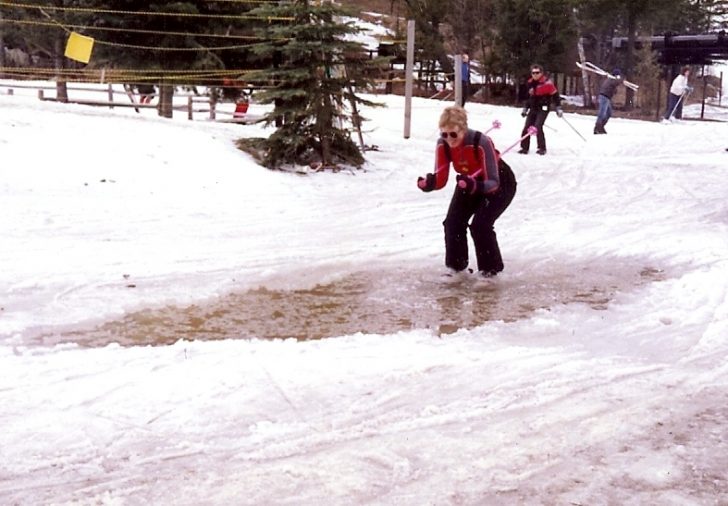
Author Harriet Wallis tries out a puddle at Mt. Snow, Vermont, back in the 80s.
Credit: Harriet Wallis

I loved the scenic springtime drive to the slopes. Steam rose from little sugar shacks as the golden syrup was simmering inside. Horses stood motionless in frozen pastures and breathed clouds of fog into the frosty morning air. Christmas tree farms had fallen silent.

Lichen-covered stone walls divided the winter-flattened landscape into a patchwork quilt. Farmhouse porches that had been stacked solid with fire wood were now nearly empty. What remained was a littering of chips and bark. Frozen laundry flapped on a few clotheslines.

And then there was mud. Road shoulders were rutted. Unpaved roads were impossible, and some parking lots were a quagmire.

Above all else, I loved New England’s ski slopes in spring. When it rained, we put on garbage bags. Those were the days before Gore tex. The bags rattled in the wind. Rain ran down the bags and soaked the legs of our ski pants. Then it wicked into everything we were wearing. We were soaked inside and out.

But the rain also softened the ice, and the ice became slush. It slid downhill like a glacier and melted into puddles. The base area became puddles. A maze of puddles. Many puddles. Deep puddles. Normal skiers went around them. But I loved skiing through those puddles—spraying water everywhere and hoping I could dry my boots by morning. And hoping there would be big puddles the next day.

If you see a puddle at the base of your ski area, please ski it for me—or send me some vibes that springtime puddles still exist at ski areas.

To read more from Harriet click here for her stories on SkiUtah.


May 26: Spring Skiing At Stowe

Now This Is Hard Core.

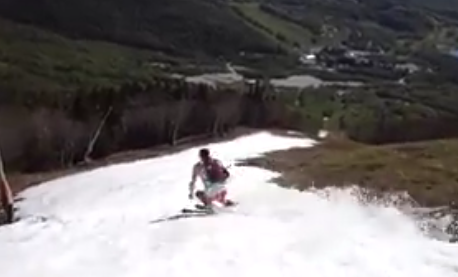
Saw this on Facebook and had to show you.  This is from Robby Kelley at Stowe Mountain Resort.  His pal Ryan Siegle hiked and skied in 80 degree weather. Comments?

This is definitely the last run, right? Credit: Robby Kelley

This is definitely the last run, right?
Credit: Robby Kelley