Knee Replacement—Interviewing The Docs: Part 3

Practical tips to help you evaluate surgeons

Inspired by a Brighton, Utah, ski patroller with two artificial knees, I buckled down and researched the knee replacement process. I soon felt like I had a PhD on the subject. I’m glad I did the homework. It charted my course.

Make a list. From my research, I generated 20 questions to ask potential surgeons. [Editor Note: You can download Harriet’s Knee Replacement Questions here.] I typed the list, printed five copies, and took a sheet with me to each of the five knee surgeons I interviewed. The list allowed me to ask the same questions, and I had space to write down

Harriet waits to interview a surgeon amidst clear evidence of sport-orientation. Credit: Harriet Wallis

Harriet waits to interview a surgeon amidst clear evidence of sports orientation.
Credit: Harriet Wallis

their answers. In addition, I could evaluate their answers later without forgetting what each one said.

I literally interviewed them while they examined my knees. It might sound ludicrous to interview five doctors, but why not? They’re my knees.

And their answers were amazingly different.

The visits were worth it. I evaluated the surgeon’s differences and choose the right one for me.

Use your radar. When you go to an appointment, look around the waiting room. Does anyone there look athletic? Or does everyone look fat, old and sedentary? It could be a clue for you.

Check the doc’s girth. Does an obese doctor understand an active life style? Will a fat doc comprehend how you want to use your new knees and that you want to ski?

Consider the alternatives. I bet you know at least one person with a replacement body part: a hip, knee or shoulder. But replacement might not be right for you. Be open to doctors’ recommendations to try another solution first.

I’ve heard many people say: “My knee really hurts. I want to have it replaced.” Replacement is not a magic bullet. And it is a major and irreversible action. You need to be sure that replacement is the right solution.

Editor’s Note: This is a 5 part series in which SeniorsSkiing’s correspondent Harriet Wallis describes her knee replacement journey with tips to guide you if you’re anticipating knee replacement. Part 1: Inspired by a ski patroller with artificial knees. Part 2: Research 101 – why and how to do it.  Upcoming Part 4: How I found the right doctor for me. Part 5: Rehab and why to love it.

Chic CP Visor Helmet Replaces Goggles

Hot-Looking Helmet Channels F-15 Pilot Look.

I’ve written previously about the Osbe Proton Senior, a clever helmet with an integral visor which replaces goggles, providing an effective solution to the problem of foggy eyeglasses. Swiss-based CP raises the bar with their Italian-made Camurai, which adds some significant tweaks to the pivoting visor concept.

 Both helmets feature a visor that allows a small, controlled airflow through the inside, which keeps your lenses from fogging. To achieve this flow, the Osbe’s visor does not actually seal against either your face or the helmet. Generally this works very well, but I have found

CP Camurai is a full visor helmet that eliminates googles and makes you look like an F-15 pilot. Credit: Mike Conley

CP Camurai full visor helmet gives you that Top Gun aura.
Credit: Mike Conley

that occasionally fine snow can find its way inside and collect atop the foam “air-dam”. On the other hand, when closed, the CP visor’s foam seal lightly contacts your face and a rubber strip seals against the helmet at the top. Three small vents at the bottom edge of the visor allow air to circulate inside, and this does the trick. After an entire season in varying conditions, I never had the slightest fogging, nor did the smallest snowflake find its way inside. At the end of a long day wearing the Osbe I’ve sometimes felt a bit dry-eyed, perhaps from circulating air, but I have not noticed this happening with the CP.

 Like Osbe, CP offers a range of UV-filtering visors which can be quickly changed, but the CP has no small loose parts to risk losing when you do so. CP will soon be offering a full-range, photochromic visor, which should be nice. They make an extensive line of sunglasses that translates to excellent visor quality. I’ve been using a mirrored yellow visor which is great in flat light. As I’ve done with the Osbe, I stick with that one visor and use my clip-on shades on bright days. Both helmets feature a retainer strap; so, you have to option of leaving the visor off and using goggles.

 The CP is more of a three-season helmet than the Osbe with removable leather-covered ear-pads and far more venting, including 12 slots in front and on top that can be opened or closed with a slider as needed. Another nice extra is a knob in back to fine-tune the fit. The inmolded CP has a higher, domed profile and features a thick Coolmax-covered liner. I prefer the look of the Camurai; I felt the Osbe had a certain “bowling ball” look which brought back painful childhood comparisons to Charlie Brown.

 Both helmets are priced similarly – around $300 – which is reasonable considering the cost of a helmet and goggles purchased separately. The Camurai is available in a pricier carbon-fiber version if your wallet needs slimming. Visit CP/Fashion/At/Sports website  to see the full range of choices.  For a US dealer, try contacting: CP SPORTS NORTH AMERICA365 Sinclair Rd, PO Box 5968, Snowmass Village CO 81615, Phone:+1 970 710 9633

All you need is an aircraft carrier to complete the ensemble.

Huff Post: Second Thoughts On Returning To The Hill?

Huffington Post features SeniorsSkiing.com’s Co-Founder encouraging seniors to come back to skiing.

We get around.  SeniorsSkiing.com’s Co-Founder Jon Weisberg has posted an article on Huffington Post’s Post 50 blog about the concerns seniors have about either continuing to ski or returning to skiing and how the sport has changed to help accommodate them.  Click the Huffington Post Post 50 Blog to read more.  What are your thoughts?  What advice do you have for seniors who are thinking of leaving the wonderful world of winter sports?

HuffPost__


Watch for more Huffington Post Post 50 comments from Jon on senior snow enthusiasts.

Who Are You? The Ski Patrol Wants To Know

Carrying Identification Can Help The Ski Patrol Help You.

HIghly trained ski patrollers will be looking for your id. Credit: Deer Valley

Highly trained ski patrollers will be looking for your id.
Credit: Deer Valley

Accidents happen. And when they do, the ski patrol will likely be your savior. But the patrol needs your help. Here’s what you should have with you every time you ski or ride–just in case.

Carry identification. If you’re injured and can’t speak for yourself, the patrol will have to figure out who you are. Chris Erkkila, assistant ski patrol manager at Deer Valley resort in Utah, said: “We’re trained to look for ID and medical necklaces and bracelets.”

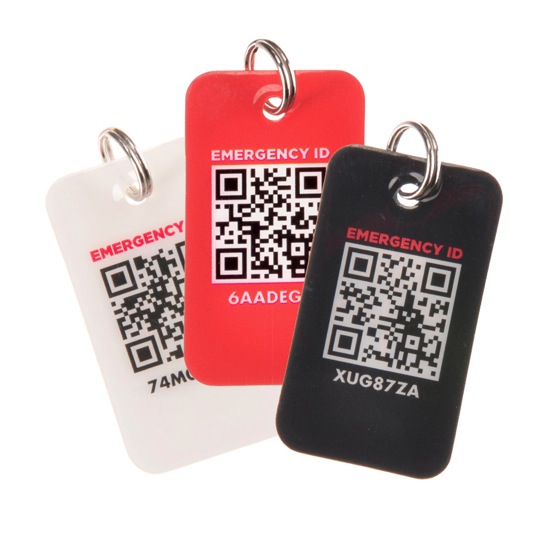
Emergency ID tags from Ecosperformance can be worn as bracelets, plastic tags or as stickers that can be applied to a helmet or even stuck on a phone.

EID Tags contain important profile information in case of emergency. Credit: Ecosperformance

EID Tags contain important profile information in case of emergency.
Credit: Ecosperformance

EIDs store identification, emergency contact and important medical information. When the QR code on the EID is scanned by a Ski Patroller’s smartphone, a skier’s Emergency Profile appears. A seven-digit EID number that can be entered into Ecosperformance website is a backup.

Other times patrollers have to be Sherlock Holmes to find even the most basic information about you—your name. They’ll look for a season pass that carries your name or look for your driver’s license. Sometimes they have to search your cell phone for information. “Often skiers don’t know each other very well, but a ski companion can tell us that the phone is in his injured friend’s right pocket,'” he said.

Carry a list of medications. “Seniors typically take more medications than others,” he said. Based on your condition, it might be vital for the patrol to know what prescriptions you’re taking. Same goes for allergies to medications

“Be sure to carry this information every time you go skiing,” Erkkila said. “Very basic things help us the most.”

And one more thing.

If you’re part of an accident, stay and identify yourself. And then there’s another aspect of accidents, he said. Sometimes there’s a collision between several skiers. Erkkila pointed out that the local city’s ordinance requires you to stay on the scene and identify yourself.  And, “We’re trying to educate the public about this,” he said. For those of us who are veteran skiers, staying on the scene after a collision seems to be common sense courtesy. But it’s also an official part of some resort areas’ regulations.

Afterglow: Visual Night Skiing Poetry

When Was The Last Time You Skied In The Dark?  We bet it wasn’t like this.

Credit: Sweetgrass Productions

Credit: Sweetgrass Productions

So far, this year’s pre-snow-season has seen at least two new dazzling ski movies hit the screens. First, we couldn’t help but notice Warren Miller’s 65th ski movie, No Turning Back, which we reviewed here and concluded it was the best yet. That movie is working its way around the country, showing in schools, colleges, theatres and even ski lodges. Click here for show times and locations near you.

Now, we have Afterglow, a short but incredible visual feast featuring night skiing in light suits over dramatic Alaskan wilderness terrain. Think about that for a second. Night skiing. Light suits. Alaskan wilderness. Think of the logistics. And you have troubles getting your grandkids booted up for the day.

Credit: Sweetgrass Productions

Credit: Sweetgrass Productions

This is a creative cinematic experience that goes into places we guarantee you’ve never seen before. Big time ski pros Pep Fujas, Eric Hjorleifson, Daron Rahives, and Chris Benchetler take slo-mo runs down night-time chutes and powder pillows with dramatic big lights capturing the flying snow. The best part is when they wear LED-light suits and head down into the darkness. The effect is otherworldly and quite beautiful. We had instant flashbacks to our college skiing nights at Song Mountain in Tully, NY, where the dark skies and arc lighting made us lose our sense of space and proportion. This movie brought those impressions back, leaving us wondering where, when and if we should try that sort of skiing again.

The film is presented by lighting manufacturer Phillips, Atomic and produced by Sweetgrass Productions, a far-edge filmmaker which is out to “capture the indescribable”. You can watch this one online; it’s just about 10 minutes. We bet you will be forwarding it to your skiing buddies.

All of this visual spaghetti adds to the building psyche-up for the coming season, a season which has already started in some places in Colorado and Maine.