May 26: Spring Skiing At Stowe

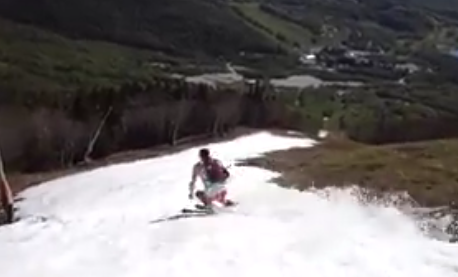
Now This Is Hard Core.

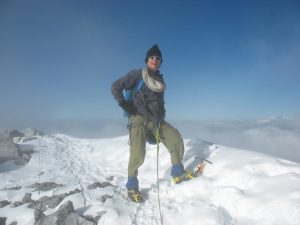
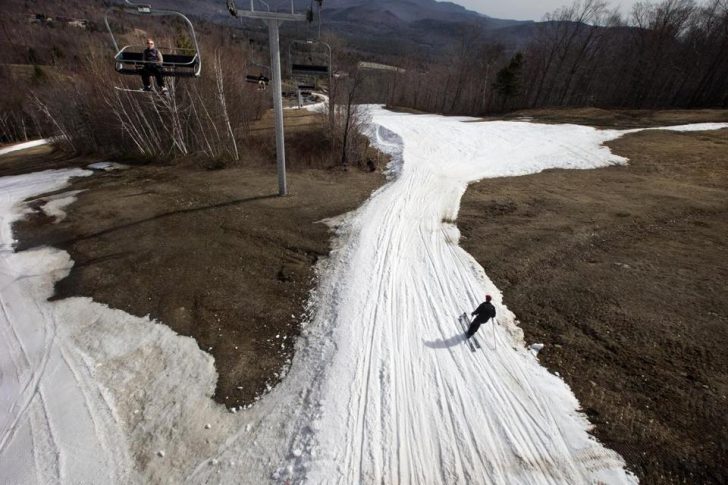
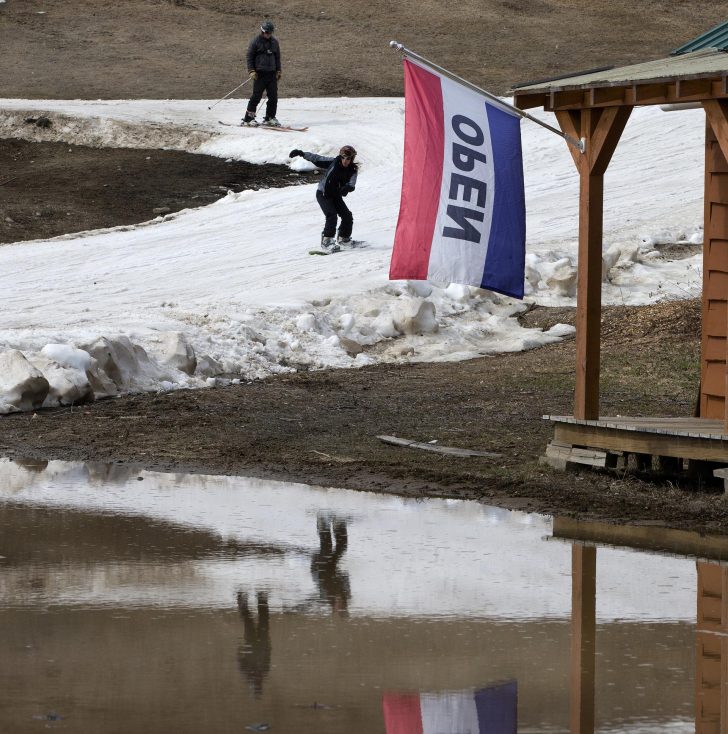
Saw this on Facebook and had to show you.  This is from Robby Kelley at Stowe Mountain Resort.  His pal Ryan Siegle hiked and skied in 80 degree weather. Comments?

This is definitely the last run, right? Credit: Robby Kelley

This is definitely the last run, right?
Credit: Robby Kelley

Cycling Series: Small Ski Town Turns To Bikes In Non-Snow Season

Western New York Ski Town Has Lots Of Cycling Opportunities.

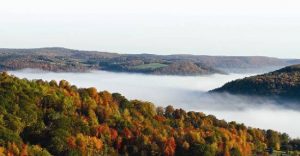
Western New York State has some awesome cycling terrain. Ellicottville is at the center. Credit: Pat McCloskey

Western New York State has some awesome cycling terrain. Ellicottville is at the center.
Credit: Pat McCloskey

One of the more interesting things that happens to a ski town is the metamorphosis that occurs after mud season.  Mud season is traditionally when spring rolls along and the snow melts and the locals in ski town head for vacation.  Soon after, the festivities that define the area in the “off season” begin.  Large ski areas are great with this transition but so are the smaller ski towns like Ellicottville, NY.  When summer comes to this region, the mountain bike and hiking trails come alive in the Allegheny National Forest and the riding/hiking  can compete with anywhere in the country.

Personally, my favorite loop is to ride from the Inn at Holiday Valley to the Race Loop at the ski area.  Then proceed to Big Merlin Trail, the Dead Dog Loop, to Sidewinder and back to Big Merlin and the Race Course Loop.  All these trails are available on www.mtbproject.com or also in a regular map provided by the Western New York Mountain Bike Association.  These trails are not too technical in nature, but there is some climbing.  Also, this loop can lead to miles of maintained trails in the Allegheny

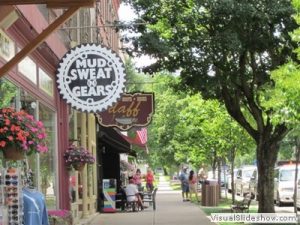
Ellicottville is a cool place the just hang-out. Non-cycling spouses can browse in many boutiques. Credit: Pat McCloskey

Ellicottville is a cool place the just hang-out. Non-cycling spouses can browse in many boutiques.
Credit: Pat McCloskey

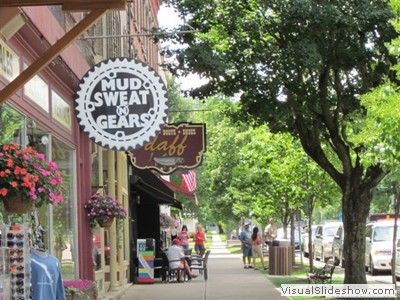
National Forest.  Check with Mud, Sweat and Gears , a very cool ski/board/cycle shop in the center of Ellicottville, for rental information as well as great choices of cycling clothing, accessories, and of course a wide selection of road and mountain bikes.

For those who have noniriding spouses, the town of Ellicottville has many shopping options including boutiques, ski shops turned to cycling and outdoors shops, and a myriad of restaurants including the John Harvard Brew Pub in the Tamarack Club at Holiday Valley Ski Resort.  The pot pie there is not to be missed.  Also, the Ellicottville Brewing Company (EBC)  has a weekly menu board of craft  beers produced on site for your post ride and post shopping enjoyment.  Their food is also great.

Lot to Trails

All of the trails leaving Ellicottville can be accessed from the parking lots at Holimont Ski Area or Holiday Valley Ski area via the Race Course Loop which is clearly marked.

Terrain

Typical Eastern Singletrack with some steep climbs but not terribly technical in nature.  Not hybrid friendly but mountain bike accessible.

Whether it is EVL or any other ski town, don’t miss the summer activities that are available in the “off season”.

This Week In SeniorsSkiing.com (May 27)

Indoor Skiing, Inspiration From A Senior Swimmer, Update On Free Senior Skiing In NH, College Course On Mountains And Art.

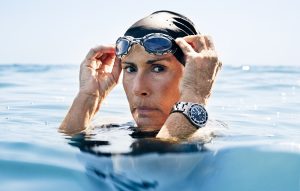
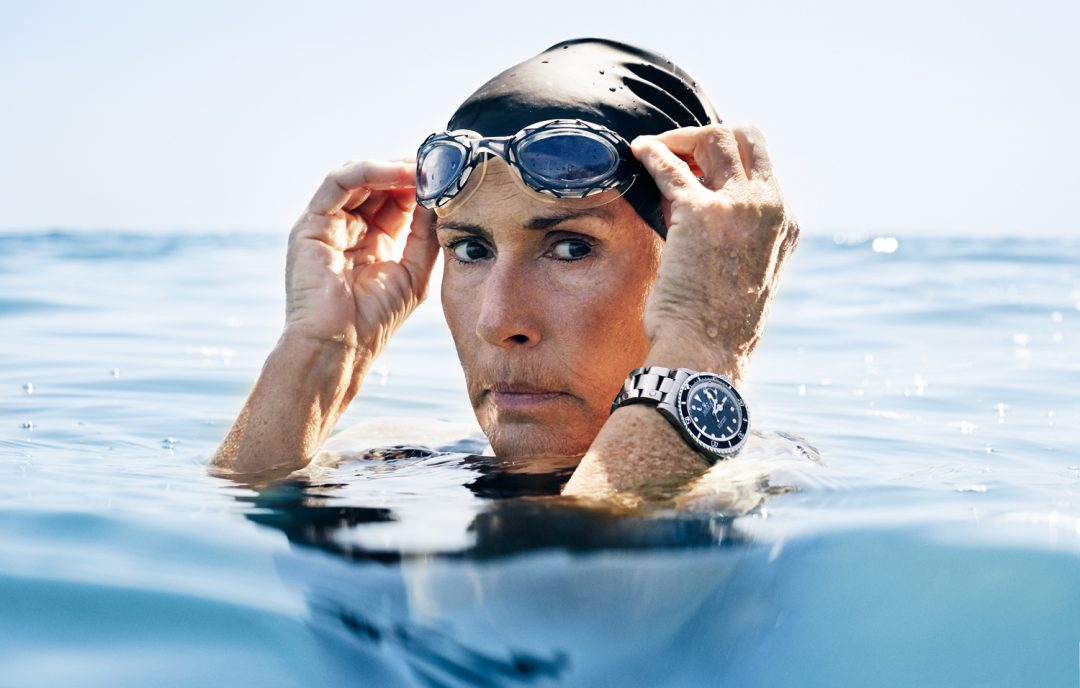
In 2013, Diana Nyad swam the Florida Straits, 110 miles, without a shark cage in 53 hours. She was 64 years old. Credit: Steven Lippman

In 2013, Diana Nyad swam the Florida Straits, 110 miles, without a shark cage in 53 hours. She was 64 years old.
Credit: Steven Lippman

The response rate to SeniorsSkiing.com’s Spring Subscriber Survey 2016 is, frankly, astonishing.  We’re at 29%, a number that reflects how engaged our readers are.  Thank you so very much.  Next week, we’ll start reporting the results, at least the big insights we see in the data.  These fascinating and surprising results will help us steer how we manage our content and our relationships with our readers.

This week, we look at yet another indoor skiing facility, this one in the Toronto, ONT, area.  There are many indoor ski areas around the globe, but most have man-made snow.  This new one has “dryslope”, that is, faux snow.  Very interesting development.

We report an update about the threat to free skiing for senior NH residents.  There have been some developments on the positive side, but the final outcome is still up in the air.

Diana Nyad is a senior marathon swimmer who swam from Cuba to Key West at 64 years old.  We discovered some words of advice and inspiration for all seniors.  Let us know what you think.

Finally, what promises to be an ongoing feature on SeniorsSkiing.com is an account of a Wesleyan University course on Mountains and Art by professor Peter Mark.  Professor Mark is an inspired teacher and outdoor enthusiast who combined his expertise to produce a unique view of mountains and their place in the history of art.  His students have written essays on various topics that may become articles of interest for our readers.  Stay tuned.

Meanwhile, to our very engaged readers, remember: “There are more of us every day, and we aren’t going away.

Indoor Skiing Tries Again: Toronto Next

Experts And Beginners Can Ski All Year On Faux Snow.

Many years ago, we remember when the town of Etobicoke, ONT, a suburb of Toronto, used its municipal trash collection to build a ski hill. That’s a clue to how geographically feature-less the terrain around Toronto is.  While the greater Toronto area has at least 10 ski areas in driving range of the city and reasonable ski ticket prices, the dimensions are modest.

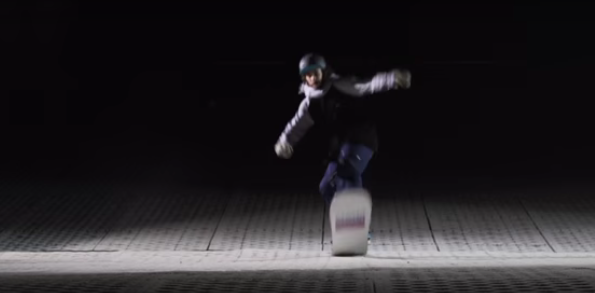
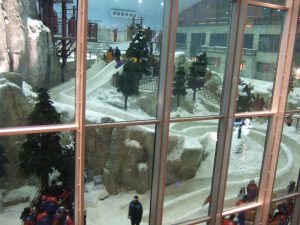
Shredding is possible on "dryslope" faux snow.

Shredding is possible on
“dryslope” faux snow.

Into this mileau comes a bold idea: Indoor Skiing.  We’ve seen how indoor skiing has been tried in other parts of the world, most notably at Tokyo’s Lalaporte Skidome SSWAS.   There’s also one in the Middle East called Ski Dubai which features real snow and penguins.

Now, a company is building a 20,000 square foot indoor facility in Vaughan, ONT, just north of Toronto.  Axis Freestyle Academy is billed as “Canada’s Indoor Ski and Snowboard Progression Park”, a year-round dry snow, aka, dryslope, training facility.  There is also a 4,000 square-foot trampoline area for fitness and fun.  The ski hill is divided between open slope for beginners and terrain filled with rails and jumps for experts or wannabes.

SkiDubai's indoor ski area has real snow, interesting features, and cold temps.

SkiDubai’s indoor ski area has real snow, interesting features, and cold temps.

In any case, Torontonians—especially young ones—will have another option to practice and prepare for winter.  On second thought, we’re curious if some folks find the faux snow appealing enough to stick with the indoor facility all year round.  Oh, no lifts, by the way.  It’s a walk-up; that won’t be too bad because the elevation is 17 feet.

The facility is scheduled for opening in June 2016.

Here’s an artsy two-minute view of what snowboarding can be like on a “dryslope”.


Cannon

Update: Free Senior Skiing at Reinstated In NH House Bill

Now The State Senate Must Approve.

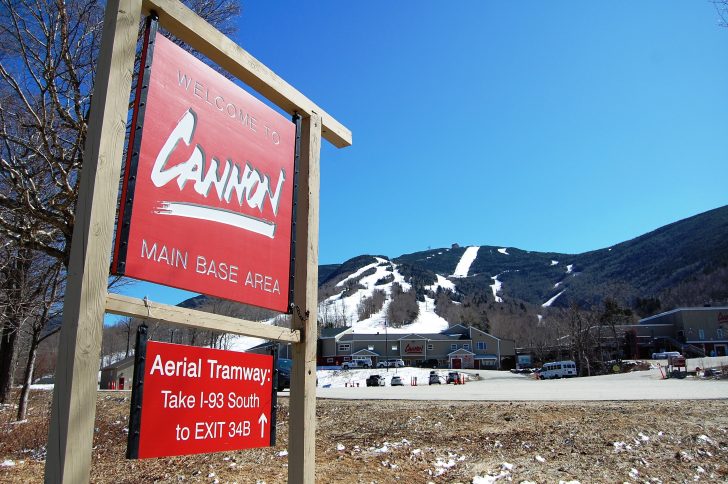
Cannon Mountain is a state-owned area, famous for its aerial tram and free skiing for 65+ seniors. Credit: Cannon Mountain

Cannon Mountain is a state-owned area, famous for its aerial tram and free skiing for 65+ seniors.
Credit: Cannon Mountain

A bill that would have eliminated free skiing for NH seniors has been amended to reinstate the senior benefit and is being sent back to the Senate for approval. The bill would have charged seniors different rates for weekday and weekend skiing and was an attempt to cover the large deficit at state-owned Cannon Mountain. NH residents over 65 had skied for free at the resort for years. According to New England Ski Industry, projections show Cannon nearly $2-million in the red for 2016. Charging seniors was viewed as a way to partially fill the gap.

The challenge to free senior skiing isn’t over. The State Senate has to approve the amended bill.

The change came when senior skiers meet in a forum with state representatives and ski area management. A coalition of Republican and Democratic representatives worked together to strike the provision.

Apparently, senior skiers have a loud voice in New Hampshire.

Representative Leon Rideout raised the elephant-in-the-room question that has hung over Cannon Mountain for years: “Why is the state in the ski business?” So, the spotlight from this controversy is back on the whole concept of state management. Add to that the operational deficit and a tramway evacuation incident last winter that hit the national news, and you have an opportunity for big changes.

We’ll keep you posted on events as they occur.

Diana Nyad: Breathing Primal Life Force at 66

Inspiration Department: Marathon Swimmer Reflects On Staying Vital and Bold.

In 2013, Diana Nyad swam the Florida Straits, 110 miles, without a shark cage in 53 hours. She was 64 years old. Credit: Steven Lippman

In 2013, Diana Nyad swam the Florida Straits, 110 miles, without a shark cage in 53 hours. She was 64 years old. Credit: Steven Lippman

When Diana Nyad attempted to swim from Cuba to Florida when she was 28 years old, she failed.  She was 64 when she finally succeeded.  Her message about defining who we are as we move into aging is uplifting.

They say age is a state of mind. Age is, of course, a state of body as well. It is up to each of us to live bold, vital days, free from subjugation to the mass, limited interpretations of our respective ages.

That’s why she says she is more comfortable in her late 60s than ever before.  “I’m breathing the life force of my primal physical self now…I am more resilient.  My immune system is a stronger fortress. I can summon strength I never had in the day.”

I was a thoroughbred then, more finely tuned but also somewhat fragile. These days I’m more of a Clydesdale, sturdy and stalwart. If you told me I’d be left stranded in the wilderness for many months and could choose at which age I would attempt to survive the ordeal, I’d pick this very age, 66.

Click here for her story in a recent LA Times Op-Ed piece.  If you need a bit of perspective about the passing years and your changing world, this might be helpful.

Here’s her provocative Ted talk on achieving.

Wesleyan University Course: Art, Mountains, and Skiing

Professor Combines Passions and Art; Students Publish Textbook on the Subject

Editor Note: The author is this article is Peter Mark, a professor of Art History at Wesleyan University. He is author of five books about pre-colonial Africa, has taught in France, Germany, and Portugal. He lives in Connecticut and Strasbourg, France.  He hikes, cross-country skis in the Catskills, the Vosges, and the Black Forest. He now climbs in the Italian Alps every summer where he reports “the food is better”.  We hope to publish the essays his students produce in his course, The Mountains and the History of Art, in the future.

Joseph Mallord William Turner - Mountain Landscape with Lake - Google Art Project

Mountain Landscape With Lake. JMW Turner, circa 1842.

In 2013, I decided to join three lifelong passions—hiking, climbing, and skiing—to my career as an art historian at Wesleyan University, by introducing a course on the mountains and the history of art. If you want to learn a new subject, teach that subject.

Two central themes have emerged: mountain passes are highways for movement of artistic styles, and the mountains are the embodiment of “the Sublime.” I expected also to teach my students basic hiking craft, replacing GPS with map and compass. But several of them are more experienced than me. One had climbed Mt McKinley, another was a mountain guide on Central American volcanoes. I benefit from my students’ enthusiasm and their insights..

Since Moses climbed Mt. Sinai, peaks have symbolized the Transcendent or the Holy. And since the first-century Romans constructed their Via Claudia Augusta across the Italian Alps, mountain passes have funneled the movement of people and culture. But interest in the peaks themselves dates only to the Enlightenment—the first climb of Mt Blanc was in 1786.

The mountains truly became a symbol of the Sublime, the Transcendent, in the 19th century. Wesleyan students study the Romantic era: the poetry of Wordsworth, Turner’s magnificent mountain landscapes of chaotic storms, and Ruskin’s philosophical writings about the natural world, all of which present mountains as a manifestation of the Sublime. In early 19th Century America, “mountains” meant the Catskills. The crags and summits painted by Thomas Cole became a symbol of American identity—the wilderness, untrammeled and majestic. But true Transcendence was still to be found in Europe, in the Alps. Some of the finest travel writing of the late 1800s comes from Mark Twain’s account of the Alps.

Mark Twain's "Climbing The Riffelberg" appears in Tramp Abroad, an account of his journey through the Alps.

Mark Twain’s “Climbing The Riffelberg” appears in Tramp Abroad, an account of his journey through the Alps.

We look at mountains as subjects for landscape painters, for poets, and for philosophical essays from Emerson to Twain. But we mix in a healthy dose of the history of mountaineering. Twain was one of the first authors to write on this subject! We spend a week studying the British 1920s Everest expeditions. And we cover the history of skiing both in Austria and in New England—some SeniorsSkiing.com readers will recall the ski school at Cranmore Mountain, where Hannes Schneider brought modern technique from the Vorarlberg to New Hampshire. Schneider’s career, from ski instructor to film star in 1920s Austria, to refugee from Hitler, fills one lecture.

Were I to teach “The Mountains and the History of Art” in German, there would be a wealth of literature, in English, less so. But my students have produced some wonderful essays for this course. At their suggestion, we decided to bring together a collection of the best essays. “Next fall our book, “The Mountains and the History of Art” will be available both online via the Wesleyan University website and in a print version, published by Wesleyan University Press.

Stay tuned for more insights about how mountains have made an impact on art.

Professor Peter Mark summits somewhere in the Alps. Credit: Peter Mark

Professor Peter Mark summits somewhere in the Alps.
Credit: Peter Mark

This Week In SeniorsSkiing.com (May 20)

Spring Survey Responses A Wow, Fling Golf, La Nina Coming Soon, More Cycling Series.

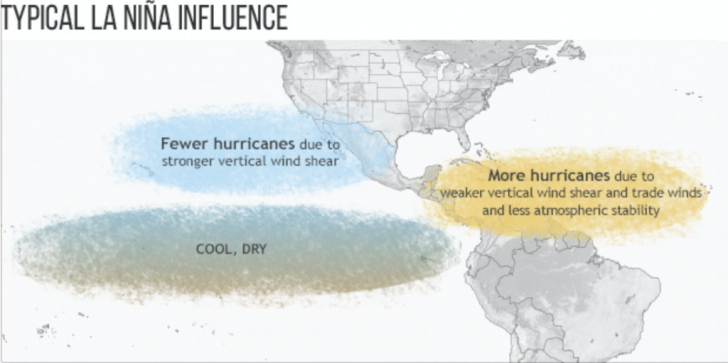
La Nina is next year's weather maker. Here's what happens in a typical La Nina year. Credit: NOAA

La Nina is next year’s weather maker. Here’s what happens in a typical La Nina year.
Credit: NOAA

We are truly awed and grateful for the incredible, enthusiastic responses we’ve been getting to our Spring Subscriber Survey 2016. If you’re familiar at all with surveys, you know that response rates are often in the single digits. So far, we’ve received fantastic 27.5% response rate. To us, that means our readers (you) are engaged and interested in what we are trying to accomplish. Thank you so very much. We will report results after we dig into the data.

Our stories this week venture into the world of golf, well, sort of. Fling Golf is a new take on the old game. Check out the video in the story. Flinging is really different. Will golfers like it?

We’ve been watching the weather lately as the spring and summer months are when winter patterns start to emerge. Right now, the El Nino we’ve seen create unusual snow amounts both east and west is fading away. In its place comes La Nina, cooler sea surface temperatures in the Eastern Pacific. This change will definitely play a role in next season’s snow predictions. Check out the story and resources for further study.

Our Northwest correspondent John Nelson has sent a really neat article for the Cycling Series about Arches National Park in Utah. We have learned from our survey that many of you cycle in the non-snow season and Moab, UT, home base for Arches, is a center of activity. Some amazing pictures, too, from John.

Next Week

We will be updating you on the attempt to eliminate free skiing for seniors at Cannon Mountain, NH. We’ve heard that there has been resistance to making that change. We’ll see.

We will also continue our Cycling Series as well as the usual fun stuff.

Finally, we plan to give you a first peek from the highlights of the survey. A quick glance shows there are so many wonderful ideas we can use. Once again thank you so very much for your terrific response.

And remember, there are more of us every day, and we aren’t going away.

Tower of Babel watches over Arches National Park, UT. Credit: John Nelson

Tower of Babel watches over Arches National Park, UT.
Credit: John Nelson

New Golf: Ready For A Fling?

Snowboarding:Skiing as Fling Golf:Golf.

https://www.youtube.com/watch?v=zVDUq1Rqd10

We love sport entrepreneurs.  These folks are creative and have bold ideas about bringing new sport ideas to the public.  The guy who invented Fling Golf is certainly bold.

Into the hallowed traditions of the golf world comes a very different way to get around the links.  The idea is to fling a golf ball from a device that has a close resemblance to a lacrosse stick.  Instead of hitting the ball with a golf club, you flip it down the fairway.  Same basic game, different equipment.

The premise is that it is an easier game to play than “real” golf, and more people can be attracted to golf courses. More people would be a good thing because golf participation has fallen and leveled off since a high in 2003.

How this will go over with 1) other golfers and 2) golf course management is yet to be determined.  Do flingers share the course with clubbers? Do clubbers let flingers into the sanctum sanctorum golf clubs (think Augusta, The Country Club in Brookline, MA, Pebble Beach, St. Andrews)? Do we have the Alta version of golf courses? (Alta doesn’t permit snowboarders). Is that good or bad?

It is interesting how a new way of playing an old sport causes one to reflect on the nature of change.

What do you think, golfers? Are you ready for a fling?

Same game, different gear. Are you ready to share the links? Credit: Fling Golf

Same game, different gear. Are you ready to share the links?
Credit: Fling Golf

Adios, El Nino, Hola, La Nina

Big Changes Are Coming Again To Next Season’s Weather.

View post on imgur.com

The image above shows how the sea surface temperature is changing from warm to cooler, signaling the advent of a La Nina event.

Weather scientists are predicting that the sea surface temperatures in the Eastern Pacific will continue to drop, ending the extraordinary, record-breaking El Nino conditions that drove so much of last winter’s weather. When the sea surface water temps drop below .5 degrees C off the coast of Peru, the new La Nina will be in the wings, bringing yet another set of changes to next ski season’s weather. Some reports predict this La Nina can be as dramatically cold as the fading El Nino was warm.

During the summer coming up, the first impact you’ll see will be more hurricanes in the Atlantic. The hurricane season in the Atlantic starts on June 1 and goes to November 30. The prediction is for more storms because of weaker upper level winds.

For the winter months, a typical La Nina pattern will be cool weather in the Northwest, warm and dry across the southern border, and a wet East.  Click here for an interesting discussion from the Weather Network. 

Fun Fact: La Ninas last longer than El Ninos.  The La Nina event that followed the the 1997/98 El Nino lasted 33 months!

Here’s a more technical discussion from NOAA. 

Stay tuned for more updates as we watch how La Nina takes shape and how it will impact next winter’s weather.

The first La Nina impact could be more frequent Atlantic hurricanes. This year's La Nina is predicted to be as cool as last year's record-breaker El Nino was warm. Credit: NOAA

The first La Nina impact could be more frequent Atlantic hurricanes. This year’s La Nina is predicted to be as cool as last year’s record-breaker El Nino was warm.
Credit: NOAA


Cycling Series: Rolling Among The Rocks At Arches

Once Past The Crowds, Another World Opens Up.
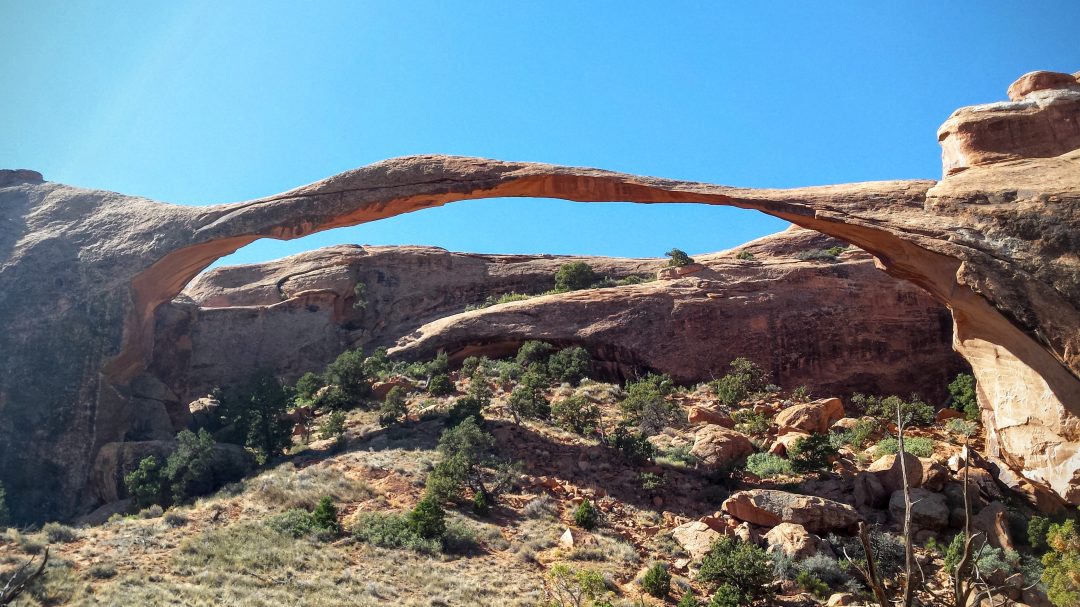
Landscape arch in the Devils Garden Trail in Arches National Park. Credit: John Nelson

Landscape arch in the Devils Garden Trail in Arches National Park.
Credit: John Nelson

Looking out the window of a car just can’t capture the otherworldly beauty of Arches National Park in Utah.

In this stark and dramatic landscape of towering spires, delicate arches and balanced rocks, I chose to bike and hike on my pathway to discovery.
John Nelson along the Fiery Furnace Trail. Credit: John Nelson

John Nelson along the Fiery Furnace Trail.
Credit: John Nelson

I visited Arches in Fall 2015. I pulled into the nearby town of Moab in the evening and found that things were hopping among a diverse crowd of cyclists, hikers, river-runners, ORV enthusiasts and vacationers, all with plans to recreate in the rugged region.

I decided to start early the next morning to get a jump-start on the crowd.

So much for solitude. My outdoors-loving brethren had the same idea, and we all got stuck in a long backup at the Arches entrance gate. Arches National Park is a popular place with nearly 1.4 million people visiting last year.

Once through the entrance, I parked a couple of miles from the visitor center, climbed aboard my bike, and happily left my car behind. The roads were initially busy, but after a few miles, things calmed down and traffic dispersed, leaving me to pedal among the wide-open vistas.

What I saw over the next few hours was mind-blowing.

The National Park lies atop an underground salt bed. Over millions of years, the salt bed became unstable, eroded and shifted, leaving dramatic rock features carved by wind and weather that remain today.

My ride along the main road passed some of the very best sights in the park to its end at Devils Garden 18.5 miles from the entrance gate. Some side roads take visitors to other arch locations, but I wanted to go as far as I could inside the park and return later to see the other attractions.

The ride to Devils Garden takes place on rolling terrain between elevations of 4,500 and 5,500 feet. Once at Devils Garden, I slipped on hiking shoes to visit some of the park’s most famous arches along a 7.2-mile loop trail.

After a picnic lunch, I climbed back on my bike to head back. In some ways, the return ride was even better than the ride out. The light had changed, giving me a different view of these amazing formations.

Back at the car, I was exhausted from the ride and hike—and utterly satisfied. I had seen the park in way that author Edward Abbey, a former park ranger at Arches, would certainly appreciate.

“A (traveler) on foot, on horseback or on a bicycle will see more, feel more, enjoy more in one mile than the motorized tourists can in a hundred miles,” Abbey wrote in Desert Solitaire.

If you go:

Where to start the ride: Don’t park at the visitor center, which is usually swarming with tourists. Instead, drive 2.5 miles inside the park to the La Sal Mountains Viewpoint parking lot. By doing so, you’ll get out of the high-traffic area, and you’ll also avoid a 1,000 vertical foot climb.

When to visit: Spring and Fall, with more moderate temperatures, are the best times to see Arches. Summer temperatures can soar above 100 degrees.

Fitness concerns: At about 30 miles, the ride is difficult, but has only a couple of climbs. Much of the terrain is rolling and pleasant. Carry ample water, and you can refill at Devils Garden.

Safety: Even with traffic, I never felt unsafe riding at Arches. The roadways have good shoulders, and I found that drivers were mostly courteous and careful.

Food: Arches has no food concession, so pack along anything you want to eat. Moab has a wide array of restaurants and markets where you can stock up.

Highlights: Almost too many to count. The Courthouse Towers Viewpoint, The Great Wall, Balanced Rock, Panorama Point and Fiery Furnace all are along the road. If you have the energy, consider a hike around Devils Garden to see some of the park’s best sights.

Accommodations: Moab is the place. You’ll find a wide selection of condos, motels, resorts and bed and breakfasts.

Camping: The Devils Garden Campground inside the national park has 52 spaces, but these fill up very quickly. Don’t arrive thinking you’ll get lucky. Reserve a spot ahead by clicking here or by calling (877) 444-6777. Outside of Arches, there are several other options, including Willow Flat Campground in Canyonlands National Park and Dead Horse State Park, as well as primitive BLM campsites along the Colorado River. Click here for details.

Click here for maps of the area.
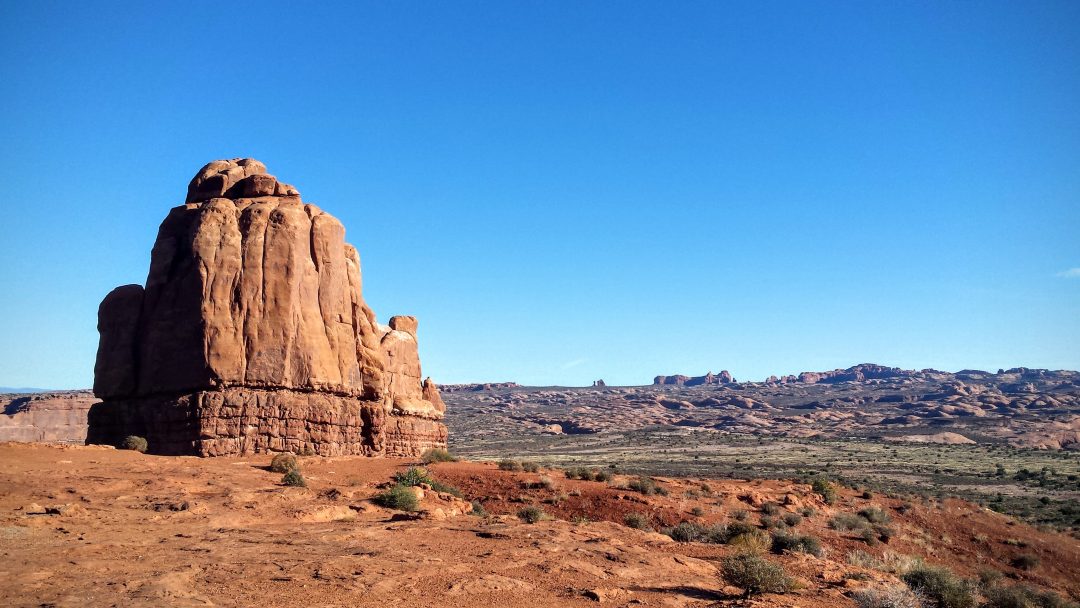
Tower of Babel watches over Arches National Park, UT. Credit: John Nelson

Tower of Babel watches over Arches National Park, UT.
Credit: John Nelson

This Week In SeniorsSkiing.com (May 13)

Survey Launch, Hiking Boots, Basics Of Fly Fishing, John Christie Passing.

Skiers are attracted to fly-fishing because of the skills, the outdoors, and the lore. Credit: Jan Brunvand

Credit: Jan Brunvand

As we write this, our SeniorsSkiing.com Spring Survey 2016 was sent out just over three hours ago, and we are already approaching a 10 percent response rate.  Three Hours!  Thank you all so much.  We really, really appreciate your support.  If you haven’t responded yet, please join the crowd.

This week features Steve Hine’s story on the highlights of picking hiking boots.  We went to Steve’s REI store for boots before we hiked the Routeburn Track in New Zealand.  Steve’s advice was spot on, and the boots he recommended were fantastic choices for that rugged walk.

We also hear from Jan Brunvand who is switching from one favorite pastime—skiing—to another.  His article on fly-fishing contains some truly wise suggestions for getting involved in this very attractive sport. Anyone can learn the simple basics of casting and fly selection in a few days.  However, the intrigue and delight of fly-fishing is learning the sophisticated intricacies and arcana.  That’s a long range journey. Careful, you can get hooked very easily.

Finally, the ski world lost John Christie whose presence in the business of running resorts and associations goes back at least five decades.  John was a legend in Northeast skiing, founding, owning and managing some of New England’s biggest and well known resorts. We are extremely proud to have published an article in March that John submitted to us about his re-discovery of Nordic Skiing. We are saddened greatly to lose a friend and writer.

Next Week

On we go into mid-Spring.  More Cycling Series, more product information, interesting historical glimpses and perhaps an oddity or two about seniors and sports.

Remember to please respond to our SeniorsSkiing’s Spring Survey 2016.  And don’t forget, there are more of us every day and we aren’t going away.

HikingBoot

The Right Hiking Boot For The Senior You

Balancing The Scales: Hiking Footwear—Comfort vs. Support.

HikingBoot

Picking the right kind of hiking boot can make a big difference. It pays to learn the trade-offs between types. Credit: REI

At the shop where I work, questions customers often ask include:

  • “I’ve been wearing the same boots for over twenty-five years, is there anything new?”
  • “How comfortable should my hiking shoes/boots be?”
  • “What’s the boot that gives me the most support?”
  • “Which type of hiking footwear protects my ankles best?”

While hiking footwear is no longer restricted to the heavy leather boots we all wore in our younger days, the variety of hiking boots on the market today and the technology in them can help get you back out on the trails quickly and safely.

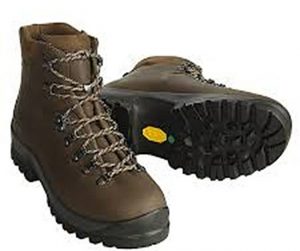
A leather hiking boot is the most supportive, but potentially has some comfort issues. Credit: Steve Hines

A leather hiking boot is the most supportive, but potentially has some comfort issues.
Credit: Steve Hines

I usually suggest either a lightweight and supportive boot or one of the new “mids”. A mid is a lower boot that instead of lacing above the ankle, laces at the ankle. For those who haven’t hiked in a while or are new to hiking and want to “gear up” a balance of features is best.

In a one sense, the choice between Comfort versus Support isn’t binary. Just because a boot is supportive (rigid across the sole from toe to heel) doesn’t necessarily mean the boot must be uncomfortable. Cushioned mid-soles, improved in-soles, softer grippy outsoles and proper break-in all help a boot balance the scale.

SUPPORT

A supportive boot usually needs more break-in time to become that boot you can wear all day. The best supportive boots are usually made of all leather.

Leather boots come in one of three types or “grades” of leather:

  1. Top grain – The lightest and most durable, but they must be cared for.
  2. Suede (split grain) – Resists scratches. However, thicker than top grain can make the boots heavier.
  3. Nubuck (split grain) –Ages nicely. Again, thicker than top grain can make the boots heavier.

COMFORT

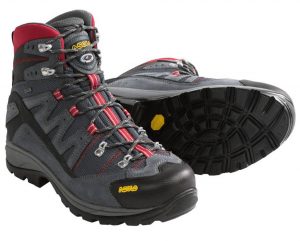
Fabric and leather boots are tipped to comfort. Credit: Steve Hines

Fabric and leather boots are tipped to comfort.
Credit: Steve Hines

Common belief is that boots which combine fabric with leather pieces are more comfortable right away. It is true that combination boots break in quicker. It’s also true that a poor fitting fabric and leather boot can hurt your feet as easily as a non-broken in leather boot.

When people ask me how comfortable a boot should be I use this scenario: Imagine you are involved in some emergency situation in which you are required to have your boots on for 24 hours. Your boots should be comfortable enough that at the end of the 24 hour emergency you would not be dying to get those boots off your feet.

Seems like the hiking world is leaving heavy leather boots behind, instead opting for light weight, low boots and shoes. When I’m asked which is best I usually try to determine the kind of hiking being done and the level of hiking experience. For instance:

  • Terrain – mountain trails, dense woods, higher altitudes
  • Climate, season, weather
  • Duration of the hike or trip
  • Pack weight

In summary, find the right boot for you that will combine the right amount of support and is as comfortable as possible. Remember, a lighter weight boot can have good support and an all-leather boot can be comfortable.


Fly Fishing: Three Ideas For Getting Started

There Are Parallels Between Skiing And Fly-Fishing.

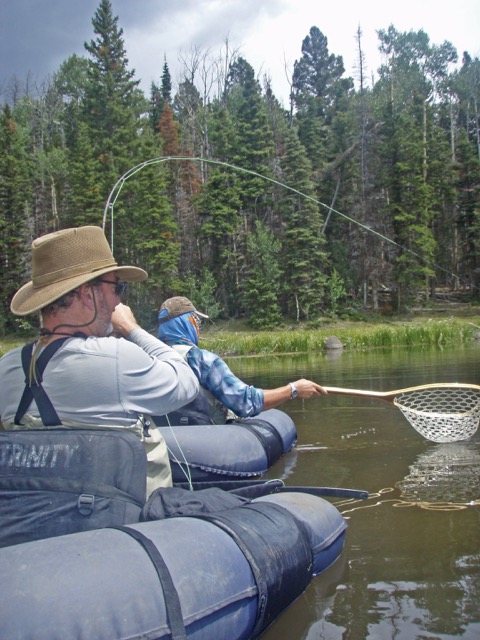
Skiers are attracted to fly-fishing because of the skills, the outdoors, and the lore. Credit: Jan Brunvand

Skiers are attracted to fly-fishing because of the skills, the outdoors, and the lore.
Credit: Jan Brunvand

Ski season is over; what now? Some turn to hiking, biking, tennis, or pickle ball. For me it’s fly fishing.
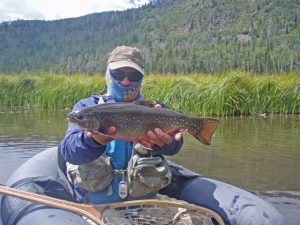
The pursuit of wily trout with fake insects has things in common with skiing. Both involve exercising in beautiful places, both are great family activities, and both offer satisfying complications of gear and technique.
The daunting details of fly fishing, however, deter many from trying it. How to navigate the complex world of equipment, casting, fish behavior, and aquatic etymology? The challenges are part of the fun, but they erect a barrier for beginners.

You can sample fly fishing without too much frustration. I offer three suggestions.

First, go with a pro, if you can possibly afford it. Nobody learns to ski from the pal who takes you to the top of a run and says “Follow me.” Similarly, you usually won’t get the best introduction to fly fishing from a friend or partner. Hire a guide for your first time out.

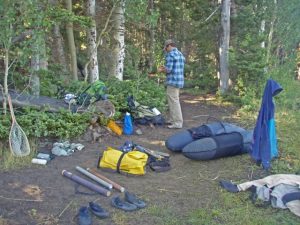
Step One: Hire a guide to show you the basics. Credit: Jan Brunvand

Step One: Hire a guide to show you the basics.
Credit: Jan Brunvand

A guide provides gear, lunch, flies, and coaching. Explain that you are entry-level. Guides know where and when to go, and they want you to catch fish. A day of guided fly fishing is costly, but you’ll get a good start, have fun, and learn if you want to lay out cash on rods, reels, waders, etc.

Even after years of fly fishing, if I’m on new waters or trying a different approach I like to hire a guide the first day.

Second, find a local support system. If there’s a chapter of Trout Unlimited or the Federation of Fly Fishers near you, join. Look for fly fishing classes taught by community colleges or local sports shops. Go fishing and chat up others you meet on the stream.

Third, start to read about the traditions and subtleties of fly fishing. I say “start” because you’ll never finish. For basic information, get The Orvis Fly-Fishing Guide by Tom Rosenbauer. Someday you may acquire top-of-the-line Orvis gear, but for starters buy this affordable paperback.

Even cheaper in its comic-book format is Sheridan Anderson’s The Curtis Creek Manifesto which offers excellent advice in a rib-tickling style. Published in 1976, it’s outdated as to gear, but the fish-catching techniques, including “The Curtis Creek Sneak,” are priceless.

Beyond facts, you want inspiration, so watch the 1992 film A River Runs Through It, and read Norman Maclean’s story that inspired it. Forget about the fancy “Shadow Casting,” though; that’s more Hollywood than realistic.

There’s much wonderful writing about fly fishing, but let’s keep it simple. Google Robert Traver’s “Testament of a Fisherman” and print a copy to ponder. This classic statement consists of one extended sentence less than a page long; it’s packed with emotion, whimsy, and poetry. Traver concludes that he loves the sport, “ . . . not because I regard fishing as being so terribly important but because I suspect that so many of the other concerns of men are equally unimportant—and not nearly so much fun.”

Amen!

Like skiing, there's more to fly fishing than just fishing. Credit: Jan Brunvand

Like skiing, there’s more to fly fishing than just fishing. Traditions, literature and lore abound.
Credit: Jan Brunvand

John Christie, Ski Legend, 1937-2016

Ski Area Operator, Author, Story-Teller, Outdoorsman, and Hardy Mainer.

Credit: Jamie Walter

Credit: Jamie Walter

Maine ski legend John Christie, 79, unexpectedly passed away on Monday, May 9th.  He was a former owner of Saddleback Mountain, former GM of Sugarloaf and Mt. Snow, an inductee to Maine’s Ski Hall of Fame, raconteur and industry veteran.  Click here for the Bangor Daily News story.

SeniorsSkiing.com just published a new article by John about his rediscovery of Nordic skiing and his love of the solitude of winter trails.  He competed in cross-country as a Bowdoin ski team member in the 50s only because it was required as a four-event collegiate racer. After many years away from Nordic skiing, he found the new technology and the peaceful pace to be appealing. “I was struck that without the need to better your competitors, you could actually ski along at a leisurely pace and even enjoy the serenity and the scenery and the exhilarating fun of being out in nature on a crisp winter day,” he wrote.

We were very proud to have John Christie contribute to SeniorsSkiing.com. He will be missed.


This Week In SeniorsSkiing.com (May 6)

Season Finales, Cycle Series Continues, Poll Results, and BC Resort Review.

Boston Globe's Stan Grossfeld reports on May skiing at Sunday River, ME. Credit: Stan Grossfeld/Globe Staff

Boston Globe’s Stan Grossfeld reports on May skiing at Sunday River, ME.
Credit: Stan Grossfeld/Globe Staff

It’s mud time in New England, and we’ve yet to see one of those beautiful, warm, aromatic May spring days around here. It’s been more like November: chilly, raw, drizzly. Yet spring skiing season still carries on in the West. Our poll results re: who is still out there reflect that. To say it has been an odd snow season is an understatement; El Nino did it to us, didn’t he?  Perhaps his sister, La Nina, who could be coming in this summer, will be different. We will keep you informed about what the weather prediction story is as it emerges.

Nevertheless, we are gearing up for non-snow time.  We will be bringing our readers an array of articles on different kinds of warm weather sports, fitness tips,  product reviews, and curiosities from the world of seniors and snow sports.

Before the season ends, though, we wanted to bring you one last resort review.  Our new Melbourne-based correspondent Marg Malkin tells us about SilverStar, a jewel of a resort in BC, and right-sized for senior skiers.  Thanks to Marg, we will be hearing more about the ski season down under which is getting going right about now.

Regular correspondent Pat McCloskey writes about the Lost Coast Trail in Northern California as another installment of our cycling series.  As our regular readers know, Pat and a group of his senior skiing pals make a Tahoe area ski trip every year.  This year, he went back to ride his bike along the coast.  Since most of our readers view cycling as a prime non-snow sport, we thought you’d be interested.  If you have a cycling story, please let us know.

Finally, we refer you to a Boston Globe report on the final runs at Sunday River, ME, one of the two or three ski resorts still spinning.  It’s interesting to see what conditions die-hards will find skiable.

Our Spring Survey Is Coming

SeniorsSkiing.com has learned so much from our reader survey, information that helps us direct our editorial content and show potential advertisers who our readers are.  Soon, you will be seeing our Spring Survey 2016 coming your way.  We ask you to please take a moment to respond to this.  We promise it will be short and to the point.

Thank you for reading SeniorsSkiing.com.  Remember, there are more of us every day, and we’re not going away.


Poll Results: People Are Still Out There

The Odd Snow Season Lingers On.

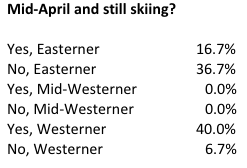
Screen Shot 2016-05-04 at 4.38.14 PMWe hear from lots of SeniorsSkiing.com readers about places they are currently skiing and intend to ski all the way into Memorial Day. Most are from the West, but, as we have seen in this week’s Boston Globe article, there is a persistent and hardy group of folks in the East as well.  Our mid-April poll results confirm what you’d expect: The West is Best, at least for this year. And there are big deals for seniors right now.

Reader Tom Levak writes, “Timberline (OR) is open through May 31 with free skiing for 71-plus. The three best runs are open: Stormin’ Norman, the Magic Mile and the Palmer Snowfield.  Loads of groomed terrain and lots of parks. I was up there Wednesday, and I’m going back right now. Mt Hood Meadows opens tomorrow for Sat-Sunday only through May 15; free for 75-plus.”

SeniorsSkiing Guide: SilverStar—BC’s Uncrowded And “Happy” Ski Resort

Great Skiing And Social Life Makes SilverStar A Lively Scene For Seniors.

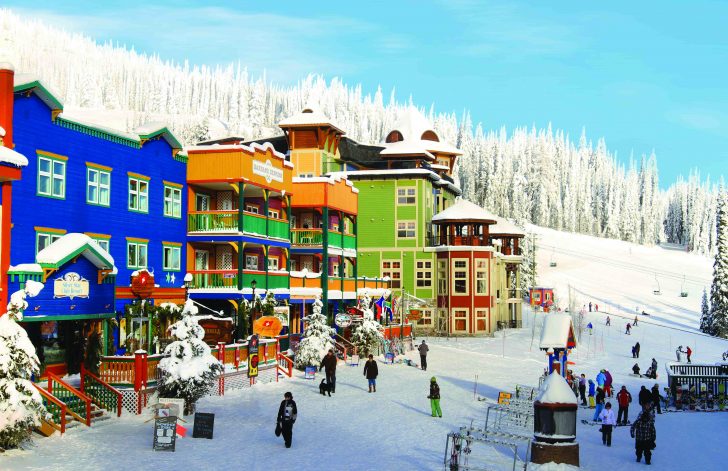
SilverStar Village is a mid-mountain, self-contained resort in itself with restaurants, shops and lodging. Credit: SilverStar

SilverStar Village is a mid-mountain, self-contained resort in itself with restaurants, shops and lodging.
Credit: SilverStar

[Editor Note:  This review was written by Melbourne, Australia-based Marg Malkin, a retired ski industry veteran who spends February and March at SilverStar.  She’s also the informal SilverStar liaison with a group of Ozzie skiers who travel to BC every winter. SeniorsSkiing.com welcomes her as our first Australian contributor.  We hope to see more news from her.]

SilverStar Mountain Resort is a hidden gem, tucked up the northern end of the Okanagan Valley, B.C.  I found this wonderful place 12 years ago and keep coming back to enjoy its magical village, breathtaking views, awesome terrain and uncrowded highways of ever reliable snow.

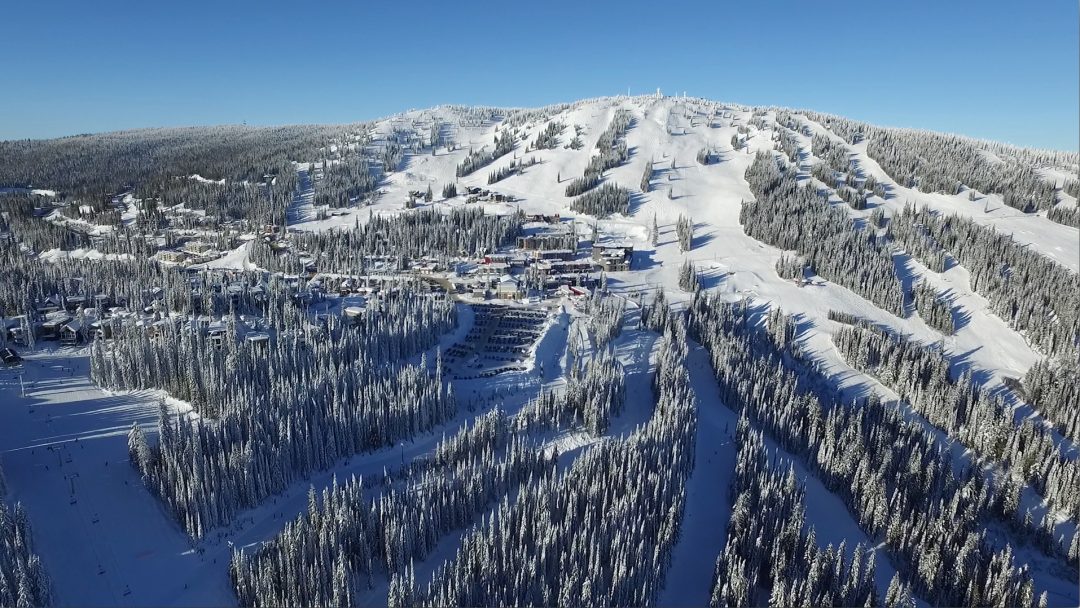
SilverStar is the third largest ski resort in BC with 131 runs, a 2500-foot vertical and, on average, 23 feet annually of champagne powder.  Twelve lifts service over 3500 acres of skiing as well as 60 miles of Nordic trails, heli-skiing opportunities, and night skiing on Friday and Saturday, too.

Themed after an early 1900’s mining town, the mid-mountain village Main Street with its bakeries, restaurants and shops has real old world charm.

First impression on arrival in the Main Street of this mid-mountain village is that everyone is smiling.  And little wonder; the joy and freedom of wide open, uncrowded slopes makes it a dream come true haven for safe, fast top-to-bottom skiing. It’s where you find long-time residents and local characters who give SilverStar its safe, “homey”, community feel.  Just ask and you’ll find these locals willing to share their secrets that have kept them calling SilverStar home for so long. Tour the mountain with them, and you’ll find they are only too willing to share their knowledge of the best stashes and little known areas of the terrain.

That’s what makes SilverStar so special—a big mountain, a small town feel, with all the terrain you’d expect at a larger resort, without the crowds.

It’s why I keep coming back. The fabulous snow, the welcome by locals and to meet like-minded older skiers to socialize and ski with from all over the globe. I’m in my late 60’s, enjoy excellent health and thanks to my many times at Silver Star have a large network of skier friends with whom I spend six to eight weeks with each Feb and March.  Many of these friends I have “gathered” during my times in the resort, where friendships are easily established because of its small and friendly village community. Hence, I have a real “collection” of like-minded skiers who make the most of their good health and freedom away from the everyday family obligations of home. I’d just like people—particularly single travelers and couples—to know there’s fun to be had at a ski resort without spending too much and having a great social circle.

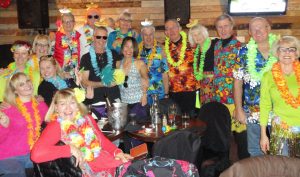
Hawaiian party in BC? Sure. Social activities are frequent and fun at SilverStar. Credit: Marg Malkin

Hawaiian party in BC? Sure. Social activities are frequent and fun at SilverStar.
Credit: Marg Malkin

We have such a great time.  There’s always someone to ski with or have a coffee or drink with. There’s a variety of ski skills, some diehards who hit the slopes at 8:15 and ski until 2:30 every day of their time there! Others ski out at 10-ish through until 2-ish depending.

We’ve developed “progressive drinks night” social life where people take a turn at hosting a drinks night at their unit—everyone comes with a bottle and a plate to share, making for fun and hilarity.  We also get to enjoy the many restaurants; Paradise Camp Dinner Tours in a Snow Cat, Horseman’s Cabin Snowshoe Dinner Tour are only a couple of night experiences. Tubing, ice skating and snow shoeing are wonderful apres activities, all included in the ski lift pass at Silver Star.  And there’s fat tube biking! Also ten pin bowling! The list goes on.

Getting There:  Fly into Kelowna International Airport, serviced by several US and Canadian air carriers.  Then shuttle north about an hour to SilverStar.

For SilverStar trail maps, click here.

Bottom Line:  Most visitors will take advantage of  a variety of lodging and ski pass packages.  To give you an idea of the value, though, a SilverStar M1Pass, good for three days of free skiing at each of 13 alliance partner ski areas, and which includes Nordic, family discounts, discounts at Whistler Blackcomb and lots of other savings opportunities is only $899 plus tax (2015-16) for seniors 65-plus. An Early Bird Senior Pass will be available after June 1 for $459 plus tax.  That’s a season pass!

SilverStar has four mountain faces for skiing. Uncrowded, friendly, big snow. Credit: SilverStar

SilverStar has four mountain faces for skiing. Uncrowded, friendly, big snow. Plus lots of other snow sports!
Credit: SilverStar

Cycling Series: Finding And Riding The Lost Coast Trail

Senior Skiers Shift To Mountain Bikes To Ride Coast Of California.

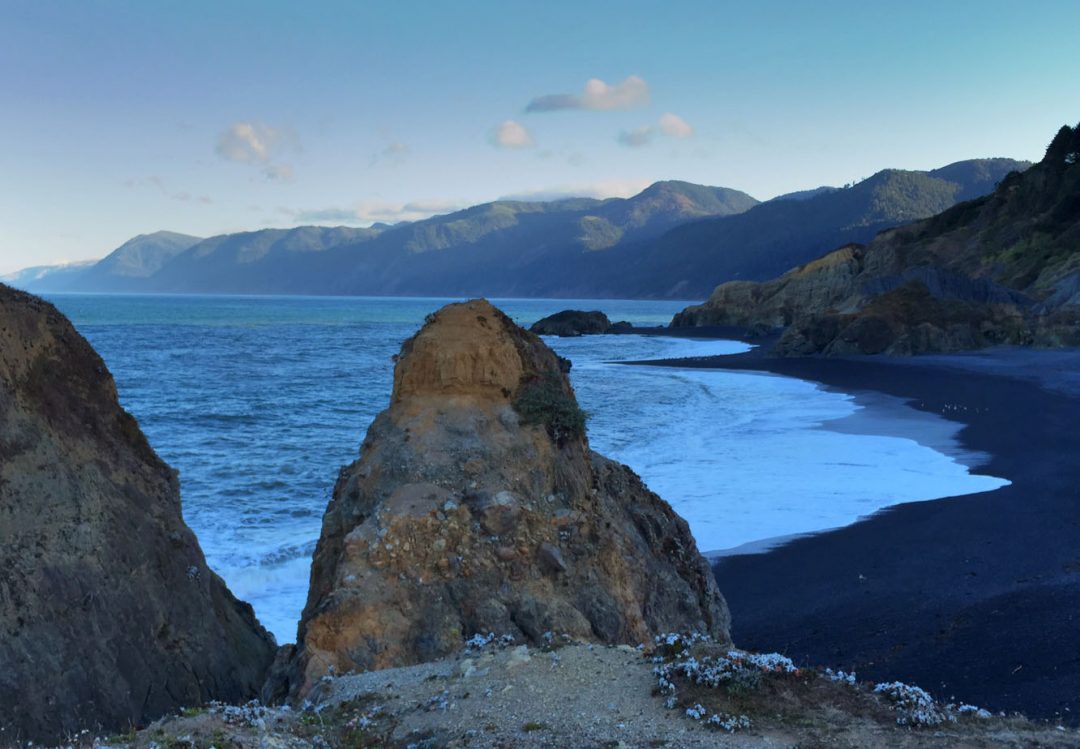
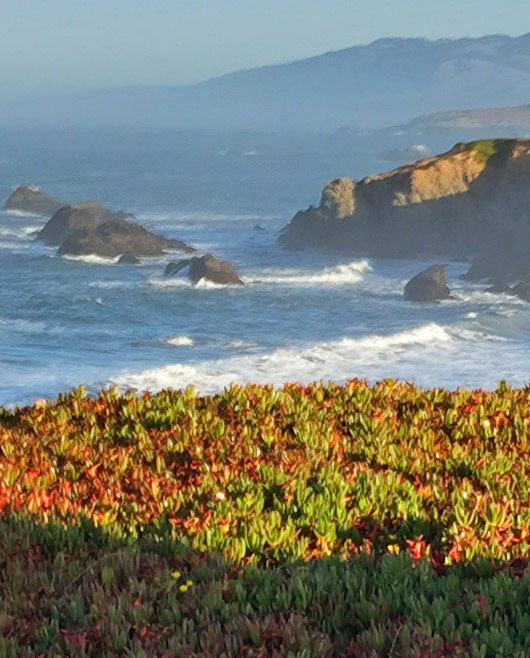
Cycling By The Sea, the Lost Coast Trail has spectacular scenery. Credit: Pat McCloskey

Cycling By The Sea, the Lost Coast Trail has spectacular scenery.
Credit: Pat McCloskey

So, my ski buddy Eric says to me, “Patrick, let’s ride the Lost Coast of California”.  The next thing I know I am winging westward to Sacramento with my mountain bike packed securely in my bike box and looking forward to a week of “van camping” with my good friend from Tahoe.  Now when I say van, the vehicle is really a Sportsmobile—a van conversion that is an amazing off road vehicle equipped with everything including a pop up compartment on the roof which was my room for the week. We have used this vehicle for skiing, but it also serves to house two old guys wandering around the Lost Coast which is about 160 miles north of San Francisco.

Fast forward: We have our RV spot right on the ocean in Fort Bragg, CA., and are ready to ride 150 miles of single and double track which is easily accessed from the camp site.  Most of the trails are in the Jackson Demonstration State Forest, Woodlands State Park, and Big River State Park.  We were amazed at the variety of trails which are loamy and smooth and give you a great appreciation for Redwood trees which are ever present and ancient.  You can even ride through an old Redwood which is called “The Drive Through Tree,” a fun diversion from the standard mountain bike trail.

SeniorsSkiing.com correspondent Pat McCloskey switched a mountain bike for his skis and headed out up the Lost Coast Trail. Credit: Pat McCloskey

SeniorsSkiing.com correspondent Pat McCloskey switched a mountain bike for his skis and headed out up the Lost Coast Trail.
Credit: Pat McCloskey

The amazing thing about riding in this area is the lack of riders and general feeling of remoteness.  The only riders we encountered were the original designers of the trail and are the current trail stewards.  They are all in the late 60s and 70s—amazing senior mountain bike riders.  Jack Columbe, a 74-year-old ex fireman and World Senior Games champion and Roo Harris have mapped out, carved out, and maintained this 150 mile network of trails that stretch from Mendocino to Ft. Bragg.  At 48,652 acres, Jackson State Demonstration Forest is one of California’s crown jewels and is maintained by CalFire (California Department of Forestry and Fire Protection).  In speaking with Pam Linstedt, a 24-year veteran of CalFire, we learned that although tourism is replacing some of jobs lost after the 2002 closing of the GP lumber mill in Ft. Bragg, research and logging are still first and foremost priority in the California forests.  With the efforts of the senior cycling community under the guidance of Jack and Roo, mountain biking is becoming an attraction which they hope will once again put Ft. Bragg and Mendocino on the map for riders all over the world.

The amazing advantage of riding in this area is that you have access to the coastal mountains but you can camp or stay right on the ocean in Ft. Bragg or Mendocino.  Lots of available bed and breakfast options as well as an abundance of RV parks which seems to be the preferred way for Californians to see the coast inexpensively.

As we made our way northward, we rode a trail called Paradise Royale near the Lost Cove area in Humboldt County.  The trail is filled with berms and features and one wonders who maintains this nationally known trail literally in the middle of nowhere.  After finishing our time in Lost Cove, we drove our way through the Redwood National Forest which was truly a visual cornucopia of thousand year old gigantic trees.  Camping out under those behemoths really make you understand that you are only passing through life in a very short time period.  These giants have been around for over a thousand years and still flourish today under the California sunshine and coastal mists.

Lot to Trails

From any campsite or Bed and Breakfast on the coast, the access is available by bike in only a matter of a few miles. We rode to the McDonald’s for breakfast in Ft. Bragg and were on the trails in less than 15 minutes.

Terrain

None of the trails in this area are overly technical.  I would rate them intermediate with the exception of the Paradise Royale trail which had a killer of a climb stretching over 4 miles of vertical ascent.

For More Information

Fort Bragg Cyclery (707-964-3509) can provide rentals and accessories like complete maps to the area.  Most of the rides are currently on MTBProject.com

Also, Mendocino Bike Sprite can provide tours at a nominal fee.  707-962-4602.  Ask for Amy.

Not too often can a couple of 62 year olds van camp and ride trails as pristine as these, and the only guys we ran into were older than us.  Senior riders rule!

Remote and beautiful, the Lost Coast Trail had few other cyclists. Credit: Pat McCloskey

Remote and beautiful, the Lost Coast Trail had few other cyclists.
Credit: Pat McCloskey

Final Ski Run In New England

May Skiing In Maine? Who Knew?

Boston Globe's Stan Grossfeld reports on May skiing at Sunday River, ME. Credit: Stan Grossfeld/Globe Staff

Boston Globe’s Stan Grossfeld reports on May skiing at Sunday River, ME.
Credit: Stan Grossfeld/Globe Staff

The hardcore showed up in the first weekend of May this year to take their last licks on the…ahem…snow.  As we all know, it has been a bad, bad season in the East, but the miracle snowmakers and groomers have managed to salvage a tendril of a season.

Here’s a story from the May 3 Boston Globe by Stan Grossfeld.  He describes how Sunday River, Newry, ME., managed to create a season for its skiers.  We quote:

After having its third-earliest start in history, Sunday River received just 60 inches of natural snow, compared with an average of 167.

But just because this is not Vail, it doesn’t mean that skiing has to fail. Sunday River came out with guns blazing. Snow guns, that is. Its 2,200 guns converted 400 million gallons of water into snow this winter. It even won an award for exceptional snowmaking capabilities in an online vote.

Grossfeld reported that there were spring conditions at the top and mid-sections of the mountain, but there was a “mild meltdown” down by the lifts.  He writes that 600 skiers showed up on May 1, about half of them getting a free ride for the day.  He quotes one visitor, “Considering that it’s May 1, and we didn’t get any snow this year, the snow is really good.”

Once again, kudos to the snowmakers and groomers all over New England.  Oh, and Killington will still have a trail open on weekends until the bitter end.

The Globe reports about 600 skiers showed up for a final fling before Black Fly season. Credit: Stan Grossfeld/Globe Staff

The Globe reports about 600 skiers showed up for a final fling before Black Fly season.
Credit: Stan Grossfeld/Globe Staff