Using Old Clothing And Accessories: Part 2

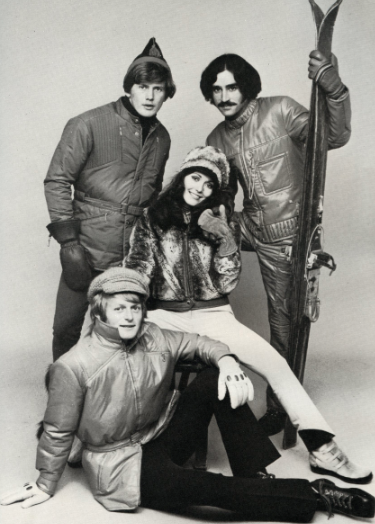
But Do You Really Want To Be Seen In A Neon Jumpsuit From The 80s?

[Editor Note: Correspondent Val E. rummages through his closet to assess what old stuff is still useful and what isn’t.  Here’s the second part of his report. The first part dealt with skis, boots and bindings.]

Still wearing 35 year old ski clothing? It looks it.

Clothing

Base layers— cotton is NOT for skiing, silk could be OK for hot conditions, synthetic (polypropylene, acrylic) and merino wool and combinations of them will work. Some items can be used for 20+ years with no problem.

Mid layers—the same situation as with base layers, major brands make mid-layer jackets combining down with wool and synthetic materials. They are light and practical, if you do not use them as outer layers.

Outer layers—you love your neon overall from 1987? If it still works well and looks well, distinctive, use it! Check the zippers for leaks, especially if you ski where you may experience rain or wet snow. Sometimes people think their membrane jacket or pants are leaking. It could be delamination of the waterproof breathable layer. Spray DWR (Durable Water Repellant) coating on your jacket, and water will bead off.

Goggles and Sunglasses

The foam layer around your face and on the top of the goggles may start crumbling, and, in case of wet snow or rain, your vents will leak. Light sensitive lenses may lose their properties (will not be as dark as before). If you like your old school sunglasses, and they protect you well from all sides—use them. Beware—in case of collision, mineral glass may shatter into small sharp pieces.

Bags

You will be surprised to find new, more ergonomic and lighter bags for your ski boots, skis and other goodies. New ski boot bags have room for a helmet, goggles, and other critical things. Plastic ski bags will protect your skis, bindings, and poles better than padded ones. Some companies started making light ski bags with wheels which you can roll up when not in use. Bags on wheels will help you to save your back while traveling so you have more energy for skiing.
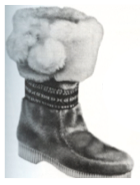
Old boots might be worth keeping.

Apres Ski Boots

Old school rubber-leather wool lined boots made by Sorel and Kamik are hard to beat, if staying warm for the entire cold season is your priority. Moon boots are cute… Boots with membrane fabric and soft and grippy soles are light and very comfortable for longer walks, they often look elegant, and they keep you comfortable both in warm and cold conditions.

Heaters

Chemical heaters have shelf life two-four years, but they may work outside of this time frame. Don’t throw them away, try them first. Electric heaters—if you ski less than 30 days a season, then your rechargeable batteries should be good for 10 years or more.

Your thoughts on old equipment?

Yes, neon jumpsuits were the rage…a zillion years ago. But you can get a new one by clicking here. Thanks to Shinesty for the pic.
Credit: Shinesty


028 Silver Lake Area_Deer Valley

SeniorsSkiing Guide: Deer Valley—Service And Senior-Friendliness

14 Things Seniors Love About Deer Valley.  Read on.

Silver Lake Area at DV.
Credit: Deer Valley

Monday morning, 9 a.m. Deer Valley Resort, UT. Members of the Park City Mountain Sports Club are buckling their boots. Their goal? Be safe, have fun.

Typically, about 20-25 members, mostly retirees who scoff at Florida’s balmy temperatures, gather in groups of blue, double blue, or black to ski the smooth and the steep at this quintessential Utah resort tucked into the trees behind the town of Park City.

Ahhh. Fresh morning tracks.
Credit: Deer Valley

They meet at 10 a.m. at the “beach” outside Silver Lake Lodge, ski two hours, then break for lunch at the Empire Canyon Grill, “best food on the mountain,” they say. Some ski after lunch, others head home. But no worries, next day is Tipsy and Taco Tuesday at Park City. Each day, they ski a different area, alternating between Deer Valley, Park City, and the Canyons, according to a standard schedule that includes an après ski party every Sunday. It’s only $25 to join.

Most buy the Epic Pass that provides skiing to all Vail Resorts—which owns Park City. But some buy a season pass at Deer Valley for the relaxing pace.

Deer Valley is known for its service to skiers and much of what it created for coddling those with deep parka pockets serves us seniors well.

Here are 14 things for seniors to love about Deer Valley:

1) Wide intermediate slopes groomed to perfection like a prized Appaloosa. Meanwhile, for your inner college-era zeitgeist, the area has some serious deep and steep in places such as the Mayflower and Lady Morgan Bowls.

2) Fresh tracks to yourself, since most skiers stick to the tamed slopes. A forester on staff keeps the glades clear for well-spaced tree skiing.

3) A lot of variety. Plus all six peaks have a beginner or intermediate run down so you can ski as a family with varying abilities.

4) No snowboarders allowed. (Ditto drones).

5) Attentive staff. With a one to seven ratio of helpers to customers, the area treats you like royalty.

6) At drop off, ski valets rush to take your skis off the car.

7) Hosts stand at trail map boards to offer suggestions on where to go.

8) Good food! The Natural Salad Buffet, grill items, carved roasts, deli sandwiches, paninis, soups, chilies, and chocolate chip cookies nearly as big as a Frisbee, plus the new Bald Mountain Pho at the Silver Lake Lodge. That’s just for starters. Where most eat to ski, here you ski to eat.

9) Short vertical drops—average 1200 feet so you don’t lose too much steam before hopping back on a fast moving lifts (12 high speed quads) for a well-deserved rest.

10) Free mountain host tours in the morning and afternoon to ski with others.

11) An elevator.

12) Lift ticket sales limited to 7,500 daily so short waiting lines, roomy trails and mountain restaurant seating.

13) Watch the grandkids learn to ski right outside the window of the Snow Park Lodge, while you sip a latte, maybe spiked with something.

14) Free overnight ski storage, so you don’t have to schlep your boards back and forth every day. Worried about skis getting stolen? You can drop them off for storage for any length of time.

Prices 2016-17:

Full day senior pass, 65 and older: $89

Season Pass, 65 and older $1,255; midweek only $1,140; 72 and older, $1,140

The Facts:

2,026 acres

Base elevation 6,570 feet; Summit 9,570 feet

101 runs, 21 lifts

Longest vertical, 1,380 feet off Little Baldy

Average snowfall: 300 inches

27 percent beginner, 41 percent intermediate, 32 percent advanced terrain

Trail Map: Click here

Web Cam: Click here


This Week In SeniorsSkiing.com (Jan. 6)

More Resort Reviews, Stein Honored In Deer Valley, Using Old Equipment, XC History Lesson, Boot Wisdom from the Master of MasterFit.

Snowfall forecast for the Rockies from a Denver TV station.
Credit: Joe Durzo

This week has seen some extraordinary snowfalls in the west, from the Canadian Rockies and Cascades to the Wasatch, measured in feet and meters these days. Wow.  Clearly, the snow dances have worked there. In the East, we had a perfect storm in the middle of the holiday vacation week which laid down a base that should last for the rest of the season.  And cold will continue for snowmaking.  So we’re having a better start than last year.  But, from what we hear, European Alps are still snow-starved.

SeniorsSkiing Readers:  Do you have a video of some extraordinary runs you’ve made? Some graceful runs? Some funny events?  Please send them along, or contact us and we’ll figure out how to share them. We’d like to create a readers’ video section with clips you provide. Okay?

Powder at Solitude

Co-Publisher Jon Weisberg and correspondent John Nelson visit two really extraordinary areas:  Solitude in Utah and Mt. Hood Meadows in OR.  Both are high, with magnificent views and varied terrain where seniors can ski comfortably.  And both are the recipients of mucho snow this season, so worth a look if you are planning vacations or visits.

Stein thrilled visitors to Park City with his aerial flips. He was a gymnast in school and his graceful moves influenced several generations of free stylers.
Credit: Park City

Correspondent Tamsin Venn visited Deer Valley over the holidays and was an eyewitness to the Stein Eriksen Memorial ceremony.  Stein’s son and grandson were there to unveil a plaque to one of skiing’s greatest innovators.  Did you know Stein was a gymnast by training growing up in Norway? We’ll be posting Tamsin’s resort review of Deer Valley next week.

MasterFit’s CEO, Steve Cohen, talks about boots and what to do to make them fit and perform correctly.

Should you continue to use your old skis?  Occasionally, we see an old pair of 360s and such on the lift line and wonder why. Some folks just like retro-skiing, we guess.  Correspondent Val E. suggest some caveats re: using old stuff.  Be careful, but it could be okay. Read Part 1 of his article here.

Finally, XCSkiResorts.com publisher Roger Lohr offers an inventory of the big milestones in the evolution of XC skiing.  We remember the days when XC was a niche sport practiced by only a few athletes and outdoor types.  Wooden skis, leather boots, four-pin bindings, exotic ski waxes (skivox), pine tar, and bamboo poles were the style.  Then came fish-scales and plastic skis. Today, XC equipment is high-tech and much more user friendly.

So off we go to the heart of the season.  Let us know how it’s going out there.  Reminders to our subscribers about our FREE content:

You have access to Skis For Seniors recommendations developed with realskiers.com, a guide to 108 areas in North America where seniors can ski for free, access to Experticity’s Snow Influencers Group where you can get discounts on top gear and clothing from major manufacturers, and you can download a 16-page booklet of historic ski posters developed with the International Ski History Association.

GO TO THE TOP NAVIGATION BAR, CLICK ON COMMUNITY, THEN CLICK ON SUBSCRIBER-ONLY CONTENT.  

See you next week.  There are more of us every day, and we aren’t going away.

Famous Lange boot ad from the early 70s


Short Swings!

Jean Vuarnet, whose use of metal skis and unique tuck position won gold in the Men’s Downhill in the 1960 Squaw Valley Winter Olympics, died, January 2 in Salanches, France.

Jean Vuarnet in the l’Oeuf tuck

Many generations know his name from the sunglasses that carry it. But for skiers across the world, his use of the egg-shaped “l’oeuf” tuck, was a game changer. It’s aerodynamic shape reduced drag and helped propel him and other racers to the finish line more quickly. He was 83.


CALIFORNIA

If all goes as forecast, Squaw Valley Alpine Meadows will have been hammered with 6.5 feet of fresh this past week. Great way for the Tahoe resorts to start the New Year!

COLORADO

The Vail Valley Foundation will announce the newest inductee into the International Ski Hall of Fame this afternoon. The event also will unveil “The Edge,” a sculpture by artist Gail Folwell. The event is one component of the worldwide celebration of 50 years of FIS World Cup ski racing occurring this month.

NEW HAMPSHIRE

Waterville Valley Resort hosts The U.S. Ski and Snowboard Association’s Toyota Revolution Tour, January 8-13, 2017. After a five-year hiatus, the Rev Tour will return to the East Coast for Slopestyle competitions for freeskiing and snowboarding will be held at the resort’s Exhibition Park. The event features athletes from the US, Canada, Mexico, New Zealand, Australia, Japan, and Great Britain.

UTAH

Ever innovative in its promotion of Utah powder, Ski Utah has arranged for skiers to have free one-day rentals of Rossignol powder skis following “Monster Dumps.”. Ski Utah defines a “Monster Dump” as 12″ or more in a 24-hour period (This season, it’s happening frequently). When that occurs, skiers have 48 hours to visit one of the 14 Ski’N See ski shop locations where they’ll get the free pow ski rental after purchasing two Monster Energy drinks on site.

The inaugural 12.4 mile Sweaty Yeti Fat Bike Race will happen February 4 at Wolf Creek Resort Golf Course in Eden, a few miles from Snowbasin. The race is for amateurs and pro/open riders. Fat bikes use super wide tires to navigate snowy trails.

OTHER

The Mountain Collective pass is still on sale. $499 delivers 28 days at 14 legendary destinations, plus 50% off any additional days, no blackouts. For the peripatetic among us, it is one helluva deal!

Patagonia catalogs have interesting articles and terrific pictures of skiers wearing the brand’s clothing. The one that just arrived is a winner. If you’re not on the list, visit patagonia.com.

Snow Sports Leaders: Steve Cohen, CEO, MasterFit Enterprises

[Editor Note: Steve Cohen, CEO and co-founder of Masterfit Enterprises, oversees the Masterfit University Training Centers, the America’s Best Bootfitters organization of top ski bootfitting shops, and Masterfit’s insole and bootfitting products lines. He created the annual national on-hill boot testing program in 1988 while serving as executive editor of Ski Magazine. He is a senior contributor and co-authors all the boot content for Ski and Skiing magazines and their websites, and for the America’s Best Bootfitters website (www.bootfitters.com).]

Steve Cohen, CEO, MasterFit

Experienced skiers advise that ski boots rank most important. Why is that?

Boots are both the suspension and steering link between the body and the ski. If your boots don’t fit comfortably and efficiently transmit power between foot and ski, you’ll never ski to the best of your ability.

What’s more important for comfort and performance: boot liners or boot insoles?

Both are important. But the liners that come with most quality ski boots are pretty good and bootfitters are great at making comfort and fit modifications to them.

The insole is a critical fit, stance and performance component. But the dirty little secret of the ski boot world is that the insoles that come in most ski boots, even the most expensive ones, aren’t very durable or supportive. In fact, boot companies expect skiers to upgrade their insoles so they see it as a place to shave cost.

Think of your boot insole as the foundation for the entire boot. If you aren’t standing on a stable, well-balanced platform, all the joints above that are so crucial to executing a ski turn—ankles, knees and hips—will be out of kilter. That can lead to pain and make it difficult to execute turns.

Explain the importance of Masterfit University and seeking out a shop with an “America’s Best Bootfitter” designation when getting boots fitted.

Would you rather go to an auto mechanic with professional training or one who figured stuff out by trial and error? Masterfit University is where ski retailers send their personnel to be trained in the science and art of bootfitting by the world’s elite bootfitters.

The shops that earn the America’s Best Bootfitters mark of distinction are the best of the best. They have elite skills, knowledge and a complement of specialized tools to provide the best in boot sales and service.

Do you recommend custom insoles for ski boots, or are off-the-shelf models sufficient?

Depends on how often you ski and your aspirations. What we call drop-ins or cut-to-fit models definitely provide better fit, stability and comfort than stock insoles. They’re great for skiers on a budget and those who ski infrequently or at a casual pace. But if you have a complex foot problem, stance issue, ski frequently, or aspire to ski at an advanced level, custom insoles should be inside your boots.

How frequently should skiers replace their boots?

That’s a function of how often they ski. Full-time instructors and others who ski daily will replace their boots every year or two.

For recreational skiers, figure 150-175 days of use or 7-8 years. Whichever comes first. The boot’s shell is subject to incredible stresses in every turn. The plastic eventually loses resiliency and strength and can even crack or explode. The padding in the liner also compacts and loses its resiliency. Components like buckles start breaking. I like to have a transition season where I phase out a boot and break in a new one.

If you frequently walk on hard surfaces with boots, all the guidelines above can be tossed out. Once your soles start wearing thin or losing their shape, it can affect how your binding releases. That’s serious stuff. Your binding may not hold you in when it should or it might not release when it should. Both are dangerous situations. Your boot/binding interface should be inspected and tested periodically by a certified shop.

What should older skiers be looking for when they’re shopping for a pair of boots?

A good bootfitter to guide them. Older feet have more problems and need someone with experience and skills to help in the selection and make modifications and accommodations. Older skiers might also want to consider a softer boot than they used in the past as well as one designed for easy entry/exit and easy to close and open buckles.

Masterfit organizes the annual event where the coming season’s boots are evaluated. The results appear in Ski, Skiing, and at the America’s Best Bootfitters website and inform ski shop sales personnel around the country. How is this information relevant for older skiers?

We have a lot of exceptionally-experienced skiers who are 50+ testing boots for us. Their experiences and feedback gives older skiers a reference point from which to start a boot search.


Solitude Mountain Resort: Perfection at the Top of a Canyon

The Nearby Area for Local and Destination Skiers Who Know.

Solitude Mountain Resort

Like most great places, Utah’s Solitude Mountain Resort, combines the obvious with the subtle. Its 1200 acres are laced with a variety of groomers ranging from gentle to intense. In between are the woods and hidden openings where those who seek the untracked may find just what they’re looking for. It may require some effort to get there, but once you arrive…what a pleasure!

Overall, it is one of the most scenic areas in the state. Dense with trees and punctuated by cliffs, it sits near the top of Big Cottonwood Canyon, 15 miles of spectacular amphitheaters, steep slopes and manageable hairpin turns. It is adjacent to Brighton Ski Resort, and the two areas offer a joint pass for a slight premium.

Like other Wasatch Mountain resorts, it is comprised of several canyons, the most dramatic of which is Honeycomb, with skiable walls that provide almost endless opportunity for fun. Intermediates can enjoy moderate challenge along the floor of the canyon. On a clear day, every skier is exposed to the kind of natural beauty found in a national park.

We skied there the day after Christmas, and, for Solitude, it was crowded. That doesn’t mean Park City, Snowbird, or Deer Valley crowded. A few slopes had too many skiers and boarders, but lift lines were virtually nonexistent.

Powder at Solitude

That, unfortunately, could not be said for the cafeteria line at the Roundhouse, the lower, mid-mountain eatery renovated following a fire last Spring. There’s is no doubt that the resort, now owned by Deer Valley, will figure it out. And, I know from experience, that on less crowded days, skiers can get a tasty meal in a few minutes. Food choices include the conventional (hamburgers, sandwiches, fries), the less conventional (homemade chicken pot pie), and the exotic (dals, naans, paneers, and other Himalayan choices).

Solitude is ideal for senior skiers. There’s terrain for everyone. Those visiting with families and/or grandchildren, will find nice lodging options at the Village at Solitude and a good selection of eateries. Solitude Mountain Spa has a full range of treatments.

Day tickets for those 65+ are $25 below rack rate. I checked their website for two weeks out, and the cost dropped to $32.99. The restrooms I visited were not fancy, but they were clean. That says a lot about management’s attention to details, especially on a very busy day.

I know a number of local serious skiers whose season ticket choice is Solitude. They like committing to an easily accessible place and having it to themselves. It is a beautiful, well-run resort with an endless variety of appealing terrain. If you want nightlife, go to Park City or stay in Salt Lake City. If you want fantastic and varied skiing, good accommodations, first-rate food, and not too many people, this is your place.

SeniorsSkiing Guide: Mt Hood Meadows

Free Skiing For 75-Plus.  Nice.

A skier hits the slopes of Powder Keg at Mt. Hood Meadows.
Credit: John Nelson

This resort on the southeastern flank of a 11,249-foot volcano has a lot to recommend it: great terrain, great proximity to the hipster-haven of Portland, OR., and ample snowfall from regular winter storms.

If you’re 75 and older, you’ll have another reason to love Meadows: It’s free.

Jeanne Farwig, a ski instructor at Mt. Hood Meadows for 44 years, is honored in a ceremony last season by Chris Kastner, Meadows ski school director.
Credit: Mt. Hood Meadows

“It reminds me of the Matterhorn—it’s just so majestic,” says Jeanne Farwig, a Mt. Hood Meadows ski instructor. “There’s something for everyone here.”

Farwig, 84, is entering her 44th season of teaching on the mountain. Her passion for Meadows remains as strong as her desire to pass on her slope knowledge.

“I love working with older skiers,” she says. “I especially like working with people who have given up skiing and are taking it up again.”

And the free skiing isn’t bad either.

“Now my boyfriend has a free pass,” she says.

Snow, terrain and more

  • Location: Hood Meadows is about 60 miles from downtown Portland via U.S. Highway 26, and 35 miles from the Columbia River Gorge outdoors mecca of Hood River.
  • Snowfall: 440 inches of snow pile up every year from Pacific storms that pummel the mountain.
  • Terrain, lifts: With the pointy summit of Mount Hood looming above, Meadows feels wild, with runs that take advantage of the many ridges and canyons falling off the side of Oregon’s tallest peak. About 35 percent of the mountain’s 2,150 skiable acres is rated advanced, 65 percent is rated intermediate or beginner. Six of the resort’s 11 chairlifts are high-speed quads that do most of the people-moving on the mountain.
  • Vertical: Nearly 2,800 feet from the base at Hood River Meadows (4,528 feet) to a lift-served high point of 7,305 feet. On nice days, hikers can gain an additional 1,700 feet of vertical by climbing to the top of the double-diamond Super Bowl run.

Lot to lift access

  • The roadways from the Portland metro area can be clogged on weekends, so plan on skiing during the week if possible. Parking at Meadows requires a $5-per-day pass from the Forest Service, which you can purchase from a parking lot attendant. A large loading zone is available to dump gear near the lodge.
  • Public transportation: Several companies offer shuttles to Mt. Hood Meadows from downtown Portland.
  • Accommodations: Nearby Timberline Lodge is a national treasure if you manage to score a room. Cooper Spur ski area and the town of Government Camp have lodging, and Hood River is just 45 minutes away.

Culture

  • The vibe: A mixture of hard-cores who love the Meadows’ extreme terrain and friendly locals who enjoy cruising its many groomers.
  • Dining: You’ll find most food in the main base area’s two lodges; on slope, check out two cafes, one at the base of the Hood River Express and the other at the top of Mt. Hood Express.

Bottom line

  • You’ll ski for free if you’re 75 and older. Seniors (65-74) pay $54; regular adult passes are $79.
  • Weather can close the mountain’s upper lifts limiting skiers to lower slopes during storms.
  • A big-mountain feel to the dramatic upper slopes.

Trail Map: Click Here

Webcam: Click Here

Skiers ski the run Discovery near the top of the Shooting Star Express at Mt. Hood Meadows. Credit: John Nelson


Stein Eriksen Honored

Pioneer of Modern Skiing and Beloved Park City Community Member Remembered.

Stein thrilled visitors to Park City with his aerial flips. He was a gymnast by training, and his graceful moves influenced several generations of free stylers.
Credit: Park City

Stein Eriksen’s kind demeanor and passion for alpine skiing defined him in equal measure. An accomplished gymnast, Stein transformed skiing by integrating aerials and other acrobatics into the sport. Stein proudly represented his home country of Norway in the 1952 Oslo Olympic Winter Games, winning gold in giant slalom and silver in slalom. In 1954 Stein became the first alpine skier to win “Triple Gold” in the World Championships in Åre, Sweden. As admired as he was for his grace on the slopes, those who knew him personally will attest just as much to his thoughtfulness, generosity and sense of humor.

Stein’s son Bjorn (right) and Cameron Berard at the dedication ceremony.
Credit: David Eden

Stein arrived in Utah in 1969 and resided in Park City until his death in 2015. He proudly served as director of skiing for Deer Valley from the resort’s inception in 1981, working closely with founders Edgar and Polly Stern to fulfill their vision of providing a resort experience unlike any other in the industry. Stein’s desire to develop an internationally-renowned luxury hotel was fulfilled in 1982 with the opening of the now world-famous Stein Eriksen Lodge. His influence in the ski industry and at both Deer Valley and the lodge that bears his name was infinite and his legacy will always be a fundamental aspect of their success.

This plaque was dedicated by Park City’s City Council on December 11, 2016 to honor Stein’s enduring memory and his outstanding contribution to the sport of skiing and the town of Park City. It also officially commemorates December 11 (Stein’s birthday) as Stein Eriksen Day.

Stein Eriksen is remembered for his charm, his infectious passion for skiing, and his enduring love of family. A favorite saying of Stein’s was, “Na har vi det godt igjen.” “Now we have it good again.”

Use Your Old Ski Equipment? Maybe: Part 1

Frugality Or Familiarity Might Be Reasons To Hang On. Should You? It Depends.

Editor Note: This is the first of a two-part article where ski industry veteran Val E. discusses whether using old equipment is safe and/or worth it.  We’ve seen people on the lift line with really old equipment; ours not to reason why. But you should know what the risks are.

Skis

Well, maybe not 360s.

Imagine you have 20+ year old skis, you used them 7-10 days a year, so the total work days would be 200-300 days. Can you still use them? If they have no major delamination, cracked edges, broken sidewalls, then yes. Do you want to use them? Maybe not. Test a few pairs of skis made in recent 10 years. You may notice that they are easier to maneuver, easier to carry, and have different graphics. If you still want to ski on your old skis, then sharpen the edges, clean and wax the base, make sure you bindings are safe (see below).

Bindings

Bindings are for safety and comfort. Manufacturers do not allow ski service people to service bindings older than 10 years, and they send a list of “serviceable” models every fall. Bindings stored 360 days a year in a dusty room or wet garage may not release when you need it or can false release. Dust on lubrication, corrosion, and other factors may change the planned schedule. Major problems could be cracks in plastic parts that are hard to identify. A binding can still be OK for many, many years. Manufacturers just don’t want to be responsible for risk anymore, and they also want us to buy new and better bindings. You can install new binding on your old skis (if you love them unconditionally); a technician will plug the old holes.

Boots

Famous Lange boot ad from the early 70s

Most people don’t like to change ski boots often, though there is always a limit. We are talking about boots that are 15-20+ year old. Shell: if you see cracks in plastic, your soles are worn out and won’t have good contact with the binding. If buckles are broken and non repairable, go to a ski shop. Liner: you should feel comfortable without two pairs of thick home made wool socks, your heel shouldn’t ever move up from the insole. If your shell is in a good shape, but you are not happy about the liner (too loose or destroyed) keep in mind that you can purchase a pair of liners. Canadian company Intuition Liners makes different types.

Helmets

Almost all ski helmets use foam (Polystyrene or Polypropylene) in their construction to crush, thus absorbing energy when contacting something hard. Researchers say this foam doesn’t change much for 20-30 years under normal conditions. But hard hits, long exposure to UV and heat sources may change the properties of these materials. Manufacturers recommend replacing a helmet after a significant collision. Once foam is compressed at some spot, it would not protect you anymore.

Helmets have come a long way since Jean Vuarent wore this variant from the cycling world.

Milestones of Modern XC Skiing In the US

Remember Skiing On Wooden Skis With A Pine Tar Base And Lathered In Klistervox? Wasn’t That Long Ago.

Norway-born Snowshoe Thompson learned to ski in Telemark, his home town.

Editor Note: XCSkiResort Publisher Roger Lohr has catalogued the main events that propelled XC skiing from a peculiar sport with a small following in the US to a major recreational and racing enterprise with a huge following.  Thanks, Roger, for tracing the trail.

Since wooden skis were found in a peat bog in Sweden dating to 2,000 BC, there have been many milestones that brought xc skiing to where it is today. In the US, the forefathers of xc skiing include legends like Snowshoe Thompson, who delivered the mail in the Sierra Mountains of California and Jack Rabbit Johannsen, who xc skied in northern New York.

The editors of XCSkiResorts.com researched the milestones of modern XC skiing in order of significance:

1. Development of synthetic xc skis in 1974.
2. Development of the waxless based ski in the early 1970’s, most notably the Trak ski with synthetic fish scales on the ski base to eliminate the need for ski waxes. The waxless base gave the recreational skier grip on uphill travel while also allowing gliding downhill.
3. Integrated xc ski binding systems, which provided substantial improvements in simplicity of boot/binding interface and control in the mid 70’s.

4. Bill Koch won the Olympic silver medal in 1976  at Innsbruck and at the World Cup in 1982, the first American to ever win at that level. The Nordic Track exerciser used the Koch image as a fitness icon in advertisements for years. In 2010, there were US Olympic medalists in Nordic Combined and in 2012 there was a World Cup winner in women’s sprint.
5. The onset of the commercial xc ski area concept began in 1968-69 at Trapp Family Lodge. This brought designed, groomed, and maintained trails making xc skiing easier and safer for the average person.
6. The skating technique proliferated for a faster paced and higher performance form of recreation.
7. Revolution Skis developed by Fischer led the way to shorter skis, which were easier to use and consolidated ski sizing and simplified ski selection.
8. New, lighter clothing with synthetic and breathable materials made XC skiing more comfortable; company brands such as Mother Karen led the way in the late 1970’s.
9. Other technological advances such as the 2 Wax System that offered one wax for cold temperatures and one for warm temperatures simplified ski waxing.  BackCountry binding systems provided a beefed up boot/binding system that provided substantially more support and control for backcountry recreation.

New NIS bindings link boot with ski using a plate.

10. Will the Nordic Integrated System (NIS) developed in 2005 change the ski/binding interface? This system combines the ski and binding at manufacture rather than at the retail store.