This Week In SeniorsSkiing.com (May 26)

Survey Results Highlights, Trailmaster Statistics, Fitness Focus Series Starts, Senior Woman Skier Wanted.

Click on the picture to learn how to do a body squat.
Credit: New York Times

This week, we have waded through the responses to the Spring Subscriber Survey 2017 and, by analyzing the data, we are discovering exactly who our readers are.  Jon does a nice job summarizing the main points of the research.  Thank you for responding; we had an incredible 27% response rate again. That’s really an impressive sign of engagement of our readers.  We continue to be awestruck how much our readers want SeniorsSkiing.com to continue to be a voice for them.

We are also announcing statistics on our Trailmasters, those readers who “skied their age”, that is, the number of days equal to or exceeding their age.  This year, we had 77 respondents who qualified as Trailmasters.  The statistics on their average age, number of days skied, and number of years as a skier are interesting. We will publish the full list of names when we verify the topmost super skiers.

We are also starting a summer series this week we’re calling Fitness Focus.  Respondents to our survey suggested we have more articles on fitness, so here you go.  With each edition over the summer, we plan to focus on one exercise, stretch, pose, activity that can benefit seniors’ conditioning.  Our inaugural article is on the squat which can be performed as moving exercise or as a yoga pose.  It’s considered one of the “essential” exercises.  Hope you like the series.

Finally, we were approached by a talent agency who is looking for a senior female skier who can appear in a TV commercial.  The timing is tight, so if you know someone, take some quick action.  Click here for the details.

We will be starting our summer schedule next week.  That means, we’re going to be publishing every other week instead of weekly.  We’ll still be at SeniorsSkiing.com world headquarters, however, so if you have ideas, comments, etc., you know where to find us.

If you want a few SeniorsSkiing.com 3″ x 3″ stickers, just send us a stamped, self-addressed envelope to SeniorsSkiing.com, Box 416, Hamilton, MA. 01936.  We’ve already received many letters from far and wide, even a nice chap from Australia has sent for some.

And remember, dear readers, there are definitely more of us every day, and we are not going away.

SHORT SWINGS!


We spent last weekend with the kids.

Not our own children who live far away or are busy with their own spawn. These are a group of younger friends, ranging from early 30s to late 50s. They’re all single. They enjoy hiking, making food, talking about ideas. It was tiring and terrific. We walked them to the rock art down the road and showed them how to look for stone tools and points in our desert landscape. Conversation went to all the places people tell you not to go: politics and religion among them. It also took us to music and art. We sat around the fire pit underneath what Bob Dylan, in “Mister Tambourine Man,” termed “a diamond sky.” Everyone participated in the kitchen and cleaning up. Age differences were more apparent when discussing past political and cultural events. But what we had in common — an openness to each other’s experiences and ideas — bridged those gaps. A business acquaintance used to advise taking younger colleagues to lunch and asking what mattered to them, what they’re reading and what ideas they’re following. I had several relationships like that when I was younger. It helped me get a broader sense of what was going on. Throughout the ski season, I’ve used brief chairlift conversations toward the same end. A few days with younger people who aren’t part of the family is a terrific way to refresh knowledge and spirit. It’s also a bit exhausting…but well worth the effort.

VERMONT

KILLINGTON has 17 acres open. Senior (65-79) tickets are $55. They plan to be open until the snow melts.

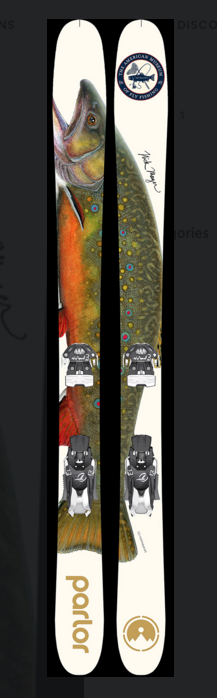
PARLOR is a New England custom ski maker. Working with Vermont-based American Museum of Fly Fishing, Parlor has developed a spectacular looking limited edition ski featuring art by Nick Mayer. The skis are $1000 and for each pair sold, Parlor donates $150 t0 AMFF. Thanks to contributor Jan Brunvand for calling this to our attention

WISCONSIN

Wigwam, the venerable sock manufacturer, recyles about 2000 lbs of socks each month and will make them available to people in need. It’s all part of the company’s goal of becoming a zero landfill company. Wigwam also plans to work with Martex Fiber to recycle discarded yarn and eliminate textile waste.

OTHER

Emerald Expositions, producer of the semi-annual Outdoor Retailer show, has acquired the SnowSports Industries America (SIA) Snow Show. Outdoor Retailer will merge the Snow Show into its January event, making it the largest outdoor and snowsports industry gathering in North America. The first combined show will occur in January, 2018.

SPOT is a small satellite connection device that signals home and/or search and rescue when users are stranded or lost. As of April SPOT products had initiated 5000 rescues worldwide. I had difficulty getting over some tech issues to make it work. But I’m confident that the more thechnologically adept can figure it out. The device works virtually anywhere. The company has a 50% off sale: www.FindMeSPOT.com/SafeSummer

Our supply of  current SeniorsSkiing.com stickers is dwindling. If you’d like some for your skis, helmet, locker, car,friends, or just to enjoy the pleasure of a good looking graphic, please send a self-addressed, stamped envelope to SeniorsSkiing.com, Box 416, Hamilton, MA. 01936. Over the past few weeks, requests have come from as far away as Australia.


You Are 66.6. You Skied 25.4 Days. You Buy Lunch At The Lodge.

And, You Like SeniorsSkiing.com.

The most recent SeniorsSkiing.com reader spring survey explored how readers spend a typical ski day and how much they spend in the process.

As with earlier reader surveys, this one had a 27% response, unusually high in the world of print and digital magazines. It shows that the SeniorsSkiing.com community is enthusiastic and engaged! We plan to use this information to help change perceptions about older snow sports enthusiasts within the ski industry.
Who You Are

  • The average age of all respondents is 66.6
  • The average number of days skied in 2016-17 was 25.4. Trailmasters, those who reported skiing their age or more, had an average age of 66.03 and skied, on average, 84.49 days. (I’m humbled, with a total of 35 days—less than half my age).

Where You Stay When You Ski

  • More than 56% stay at your nearby condo or home or in a hotel or lodge close to the resort. About 44% drive from your homes located up to three hours away.

How Long You Ski and Who You Ski With

  • More than 60% ski with one or two companions; about 25% ski alone.
  • Almost 50% ski 3-4 hours and almost 38% ski 5-6 hours. About 6% ski six hours or more.

How Much You Spend

  • For a typical day at your home resort, 30% of you spend $100 or more per day for lodging, passes, restaurant and at the ski or gift shop.
  • For a typical day on an away from home multi-day ski vacation, about 50% spend $200 or more per day.
  • More than 53% buy lunch at the lodge. Almost 33% make apres ski beverage and snack purchases at the area. Almost 10% also purchase dinner there.

The survey also requested comments and advice.

You asked for more articles on areas in the Northeast, Midwest, Canada, and Europe, more on equipment, exercise, technique, and discounts. Several readers asked about ride share programs and ways to meet others for a day on the slopes.

One or two readers asked if we could organize content more clearly. A few commented on having to re-enter their email addresses (that happens when the device history is cleared or a new device is used). At least one suggested changing the name because “none of us want to be reminded that we are old.”

Some would like to see more about restaurants and “great culinary experiences.” Requests for more personal stories surfaced, especially about experiences with hip and knee replacements. A few asked for more articles about female skiers, instructors, patrollers. Several asked for more ski club pieces. A few commented with humor, “Tough to ski my age anywhere in the US. There just aren’t that many days in the season.”

Mike and I are committed to continuous improvement for SeniorsSkiing.com. Your input is valuable to that process. We also appreciate the many comments stating “Keep up the good work.” This one seems to sum it all up: “An excellent website with great info…keep on keeping on.”


Fitness Focus: Do You Know Squat?

Squat Lately? Try It Every Day For A Week And See What Happens.

Editor Note: This week marks the beginning of our summer exercise series, Fitness Focus, where we will highlight one particular exercise, activity, stretch, or pose that leads to increased strength and flexibility.  Our first is the ubiquitous, simple, and under-appreciated squat.

Did you know the squat sit, or the crouch—feet planted shoulder width, as flat on the ground as you can get them, backs of thighs on calves—is one of the most useful and healthy poses you can assume at the gym, at home, or anywhere?

Hanging out in the squat sit is common in many parts of the world.
Credit: Asian People Like

If you’ve traveled in Asia, you’ve seen squat toilet facilities, people chatting with neighbors while squatting, and even squatting while waiting for trains or buses. Children everywhere squat, too, playing in the sand or around a collection of toys. The squat position is a natural pose, something we have grown out of as we grow up and sit at desks and on chairs. Yet, the squat is a powerful and effective position you can use for flexibility as well as strength training.

You can simply squat sit, or you can raise and lower yourself with or without weights.  Learn how to do a body weight squat by clicking here.

Jamie Lauren Keiles’ recent “Learning To Squat” in The New Yorker extols the virtues of this simple exercise. She writes,

“Squatting involves the whole body. The legs and the hips control the lowering motion, while the abdominals and the lower-back muscles work to stabilize the torso. Add a weighted barbell along the span of the shoulders, and the deltoids and the arms become implicated, too. Weight-bearing squats help to improve balance and flexibility and build muscular strength. In a squat’s concentric phase, as the legs extend to stand, the gluteus contracts to pull the hips forward.”

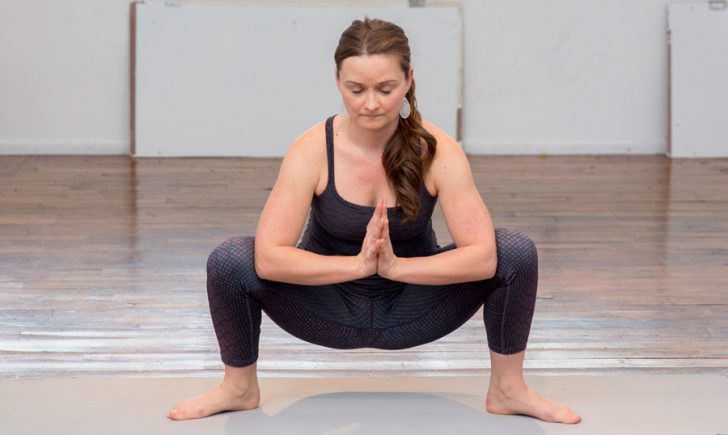
Malasana or garland pose is a squat sit that might be a good place to start.
Credit: REI

You don’t have to flex up and down to get the benefits of the squat position.  In yoga, you can assume malasana or garland pose, where you assume a wide stance—almost a plie position, squat down, lowering your hamstrings to your calves, putting your elbows inside your knees and your hands in front of your chest. Hold that for 30 seconds, gradually building up to a minute or so, and you will be stretching lower back, glutes, hamstrings, inner thighs, and working your core.

From the NYTimes Magazine, What’s the Best Exercise?:

“I nominate the squat,” said Stuart Phillips, Ph.D., a professor of kinesiology at McMaster University and an expert on the effects of resistance training on the human body. The squat “activates the body’s biggest muscles, those in the buttocks, back and legs.” It’s simple. “Just fold your arms across your chest,” he said, “bend your knees and lower your trunk until your thighs are about parallel with the floor. Do that 25 times. It’s a very potent exercise.” Use a barbell once the body-weight squats grow easy.

Click on the picture to learn how to do a body squat.
Credit: New York Times

So you have options: squat with or without weights, flexing up and down, or assume the malasana or garland pose.

To state the obvious, if you have any issues with knees, hips, or lower back, you may want to consult a trainer, physical therapist, or your physician before you try any squatting variation.

Super Senior Skier Trailmaster Results Are In

Here Are The Stats From This Extraordinary Group Of Senior Skiers.

Our recent Spring Subscriber Survey 2017 had a question asking if the respondent had skied a number of days that equaled or exceeded their age in years.  The results are extremely interesting.

We had 77 respondents who qualified as this year’s group of Trail Masters, that remarkable group of super senior skiers who really hit the slopes this past season.  While we await verification from the top skiers, the most senior with the most days, we wanted to give you some statistics that describe who these super seniors are.

  • The average age of the Trailmaster group: 66.03
  • Highest lowest age range: 50 and 83
  • The average number of days skied: 84.49
  • The highest lowest number of days skied: 60 and 160 (!)
  • The average number of years the respondent has been skiing: 49.4
  • International locations of Trailmasters: Italy, Canada, France, Australia
  • Most frequently mentioned home state of Trailmasters: Vermont

We’ve sent emails to the super duper top of the list of Trailmasters to validate their numbers.  We’ll let you know who these folks are and who else is on the list of SeniorsSkiing.com’s Trailmasters for the 2016-2017 season soon.


WANTED!!

88-94 Year Old Female Skier for TV Commercial.

A talent agency in Vancouver is looking for an older female skier. She must be 88-94, live in North America, and be available to travel to Whistler to participate in filming, May 27 – June 5.

According to Sonya Bertolozzi, president of Canada-located Reel Athletes Agency, the assignment is for a car commercial featuring multiple athletes including ParaOlympians, runners, and people on skis. Anyone interested in the assignment should email current face images, date of birth, and her city of residence. The assignment pays $600 per day on set plus a $12,000 buyout if her face appears on the final edit. If interested, email requested information to reelathletessonya@gmail.com or call Sonya on her US cell phone: 720-421-2455. Please let us know if you’re selected!

This Week In SeniorsSkiing.com (May 19)

Cycling Series Begins, Ski Video Compilation, Survey Comments, Publishing Schedule News.

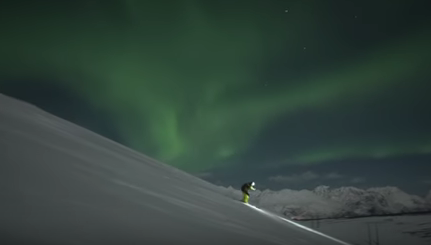
Night skiing under the North Lights. See the compilation video in this week’s edition.
Credit: Good Time With Rider

This week, you can see that we are shifting focus to summer activities.  We know our readers are also cyclers, hikers, kayakers, and to a lesser extent, golfers and fishermen.  With that in mind, here’s the first of our cycling series for this season.

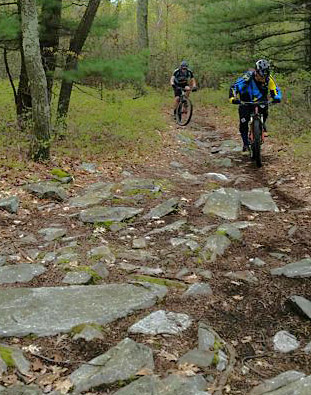
Correspondent Pat McCloskey tells us about his early season mountain bike ride in Happy Valley in Central Pennsylvania. If you’re into mountain biking, you can appreciate Pat’s challenge in keeping up with a bunch of younger spinners who climb gnarly, rugged, rock-strewn trails with vigor.

Roger Lohr, publisher of XCSkiResorts.com, reports on an adaptive bike program in Vermont that will host vets and people with disabilities all summer long in different locations. If you are in the area, you might want to check in and see if you can help out.

Trails at Rothrock require some technical skills.
Credit: Pat McCloskey

Finally, we have a compilation video depicting skiing from all ends of the spectrum, from silly and zany to serious and thrilling.  It’s a tribute to the unbeatable 2016 season and worth a four-minute view.

We are compiling our list of Trail Masters, those readers who have “skied their age” this past season.  We have an amazing list of over 150 names to vet and are getting it ready for publication soon.

Speaking of our survey, we want to respond to some comments that seem to have come up frequently, based on a scan of the data. This is not a thorough analysis, just a quick hit:

  1. Our readers want us to provide information on discounts and lobby ski resorts for additional price breaks for seniors. Roger that and will continue to do even more.
  2. You want to connect with other senior skiers.  We hear that loud and clear.  First step, go to COMMUNITY in the top menu, scroll down to Find Ski Buddies With NSCF, which is the National Ski Council Federation, an umbrella organization for ski clubs in the US, and find a club near you. Then, check out 70+ Ski Club, one of our fantastic advertisers.  Also add a comment in our FORUM under the COMMUNITY menu.
  3. Many comments revolve around reporting on resorts.  Our correspondents will be fanning out next season to add even more Resort Reviews to our collection.  By the way, we welcome contributions from our readers.  Let us know what you have in mind, and we’ll send our submission guidelines.
  4. Video submissions: You want to see them from other seniors, and so do we.  Please send our clips.  Keep them short, 3-4 minutes.  We started a collection, have only two on the site, and we welcome more. If you post them on Youtube, it is an easy pick up for us.
  5. Lessons, technique, skills.  You want advice for seniors on adapting to changing abilities. We will take that on board as a to-do for next season.

There’s much more, of course.  We will analyze and learn from your valuable comments.

One comment did get to us in a very good way.  One of you wrote, “You’re on a significantly important mission by providing an excellent quality read.” Tears in eye, man.  Thanks.

Finally, our readers are still vexed with the problem of having to re-enter email addresses. Here is how to resolve this problem:

If you are being asked to re-enter your email to confirm your subscription to SeniorsSkiing.com, you might be a bit annoyed.  We don’t blame you, but there is an explanation.

  • You are accessing SeniorsSkiing.com through a device that is different from the one you originally signed up on. Subscribing to SeniorsSkiing.com puts a “cookie” on your device.  If you use a different device, no cookie, so you are viewed as a non-subscriber. If you re-enter name and password, you’ll be okay with the new device.
  • You have disabled cookies or cleared browser history on your device. Turn cookies back on, and you’ll not have to re-enter again, or leave it disabled and realize you have to re-enter each time.  Your call.
  • You are trying to access our Subscriber-Only Content.  Instead of building a firewall that requires usernames and passwords, we elected a much simpler way of getting to our exclusive content: Just confirm your name and email.  You will have to do that each time you want to get to that information, which, by the way, is under the Community tab at the top.

Finally, finally, we are considering changing our publishing schedule from weekly to bi-weekly for the summer months.  The new schedule will start at the beginning of June.

Once again, thanks for reading SeniorsSkiing.com, tell your friends, and remember, there are more of us every day, and we aren’t going away.


Short Swings

Short Swings!

To Our Readers

It’s cold where I’m writing this. I drove several hours yesterday to get here. One hour of it was through flurries; at least one-half hour through blizzard. I got the stoves working, changed into warm clothes and had a few sips of single malt. Then I started reading the hundreds and hundreds of answers to our survey question about how we’re doing. Your overwhelmingly positive and supportive feedback are wonderful. When I spoke today with Mike, we agreed that your comments provide a warm embrace for what we’re doing. Your guidance is important to us. Your support is invaluable. Thank you!

My Neighbor Was Breaking in New Boots.

He’s made the fitting process a DIY project, heating the shell with a hair dryer and shaping it to a more comfortable fit. I mentioned the value of using the services of a qualified boot fitter (easy to locate at America’s Best Boot Fitters), but he had purchased his boots online and was committed to doing it himself. It reminded me of the old Strolz and Molitor double leather boots. Anyone remember them? As I recall, you’d lace them tight, stand in the bathtub until they we’re totally soaked, then spend the next few hours walking around until they dried to the shape of your feet.  My first European trip was in 1965 and Austria was among the countries I visited. Somehow, I learned of a place that made bespoke ski boots. They did the fitting and on the promise of a two month delivery, I paid up front. Five months later, still waiting, I sent a letter in English, only to receive a response in German stating they didn’t read English. I found a professor of German who kindly took up my case. They took his letter seriously, and the boots arrived a few weeks later. They were the most ill-fitting things I ever owned. Nice to look at but totally, irreversibly, uncomfortable. Bathtubs and hairdryers were useless. I’ve relied on professional bootfitters ever since.

Still Skiing

A handful of North American resorts are still open, some still receiving snow.
Arapaho Basin got 9″ this week, Snowbird got 7″,  Timberline Lodge,  5″, Squaw Valley, 3″, and Mt. Bachelor, 2″. Other areas still open include Donner Ski Ranch, Killington, Mammoth, Mont Saint-Sauveur, Sunshine Village, and Whistler Blackcomb. Several European resorts are still skiing, and, those in the Southern Hemisphere are just gearing up.

Bears Ears

Anasazi structure in Bears Ears. KUTV

Bears Ears is the most recent national monument. It’s a vast area in southern Utah, sacred to Native Americans; a spectacular wilderness filled with natural and archeological wonders. The White House has signaled that it intends to reverse or reduce its national monument status. Secretary of Interior Ryan Zinke recently visited the area, meeting primarily with locals who support its development. That includes Utah’s governor and congressmen who value business opportunities from extraction industries more than those from tourism. I studied the arguments on both sides and conclude that it’s in the greater public interest to keep Bears Ears as a national monument. Patagonia, also in favor of preservation, produced a short video along with a pitch to weigh in on the issue. Regardless of where you may stand on this controversy, it’s worth seeing what’s there.

Night skiing under the North Lights

Best Of Skiing 2016: A Tribute To All Kinds Of Skiing Last Year

A Superb Skiing Year In Most Places Deserves A Fitting Remembrance. This One Is Over The Top.

Night skiing under the North Lights. One of the amazers in this compilation video.
Credit: Good Time With Rider

In this video, you will see some examples of skiing in 2016, including cool powder skiing, jumping off cliffs, skiing on roads, night skiing under the Northern Lights, bikini skiing, nude skiing, street skiing, jumping from buildings and bridges “skiing”, indoor skiing, skiing down Joy Street, Boston, on tops of cars, ski joring (horse skiing), rock skiing, kite skiing, tandem skiing, and lawn skiing.

As we said, it was quite a year.  Thanks to Good Time With Rider for this video.

Vets Take Part In VT Adaptive Bike Program

Special Bikes Available At Different VT Locations This Summer.

[Editor Note: This article first appeared in XCSkiResorts.com; we thank Roger Lohr, editor-in-chief, for sharing this with SeniorsSkiing.com readers.]

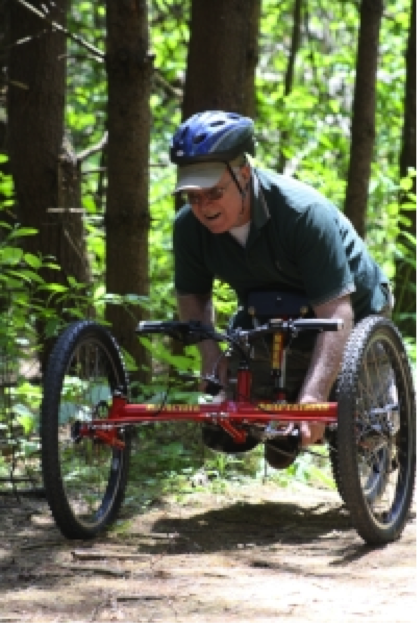
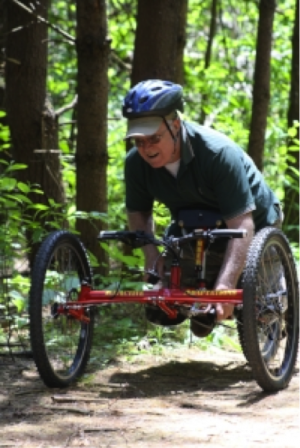
Adaptive bikes make it possible to get to the top of the trail. Each one is handmade.

The Vermont Adaptive Ski and Sports organization’s new Adaptive Mountain Bike Program, which is one of the first in New England offers special dates for outings in various location and limited adaptive mountain bikes to use. All abilities are welcome and participants may bring their own equipment as well.

The program is scheduled at multiple locations with outings and events planned for all level mountain bikers who have their own equipment. In addition, four adaptive mountain bikes are available for participants on a first-come, reservations-based system.

These highly adjustable bikes are ideal for individuals with spinal cord injuries, amputations or limb differences, or balance and motor skill disabilities. Vermont Adaptive purchased the bikes last summer with funding from the US Dept. of Veterans Affairs grant and Phil Black, owner of Lookout Tavern who donated monies for Vermont Adaptive to purchase a trailer for hauling the bikes to various locations statewide.

“Participants gain a sense of accomplishment when reaching the top of the mountain and that is great to see,” said Kelly Walsh, Vermont Adaptive program coordinator, who is responsible for Vermont Adaptive’s veterans programs.

For 2017, the US Dept of Veterans Affairs again awarded Vermont Adaptive grant monies to help purchase 10 two-wheeled mountain bikes and 10 bicycles for use on recreation paths. These bikes will be added to the existing fleet, allowing participants who don’t need to use an adaptive bike to get outside, exercise and socialize with other veterans, to enjoy Vermont alongside their peers with physical disabilities.

The custom hand cycles are crafted specifically for rocky terrain with unique hand cycles that are designed for adaptive riders to cruise down the trails smoothly.

There is open enrollment for free to the mountain bike program this summer. Although Vermont Adaptive will have a limited number of adaptive mountain bikes for use, all adaptive riders are encouraged to bring their own bikes and participate in any of the summer events. Reservations are required for programming and equipment use.

The schedule will kick off with the Summer Solstice Bike Ride on June 21 at Blueberry Lake in Warren, VT followed by the Mountain Bike “Snowshed Session” on June 24 at Killington Resort. Other events include the Green Mountain Trails Bike Ride is July 9 in Pittsfield, the Blueberry Lake Bike Ride on July 9 in Warren, the Vermont Mountain Bike Association Festival on July 21-23 in Warren, the Killington Bike Ride on July 29 and the Pine Hill Park Bike Ride on August 13 in Rutland. This program is limited to Vermont but you can look for similar programs in other regions across the country by contacting organizations that resemble Vermont Adaptive.

This year’s Killington Resort Adaptive Event for Independent Riders will also have bike demos “encouraging adaptive awareness for proper use of hand cycles,” said Olivia Joseph, Vermont Adaptive program coordinator and organizer of the adaptive mountain bike program.

The program is seeking volunteers who have an interest in mountain biking and for further info, contact Olivia Joseph at north@vermontadaptive.org.

The custom hand cycles are crafted specifically for rocky terrain with unique hand cycles that are designed for adaptive riders to cruise down the trails smoothly.

There is open enrollment for free to the mountain bike program this summer. Although Vermont Adaptive will have a limited number of adaptive mountain bikes for use, all adaptive riders are encouraged to bring their own bikes and participate in any of the summer events. Reservations are required for programming and equipment use.

Adventures In Cycling Series: Happy Valley (PA) Cycle

Serious Cycling For This Senior Who Hangs With A Younger Crowd.

Trails at Rothrock require some technical skills.
Credit: Pat McCloskey

Nothing like a road trip with 23 of your mountain biking friends to State College, Pa. aka “Happy Valley”.  Our merry band of warriors converged on the Hilton Garden Inn and prepared for three days of riding the challenging terrain of the Rothrock State Forest.  As one of two “senior riders”, I was a little hesitant seeing that it was early spring, and my conditioning was not quite there yet.  But as the first climbs of the first day ensued, it was eat or be eaten with this group of very accomplished riders.  Rothrock has many ride options for different skill levels including gentle fire road climbs, but it also has some of the most challenging terrain in the east.

Our first day was spent near the Tussey Mountain Ski Area with a climb that led to the Tussey Mountain Trail which gave us great vistas looking over “Happy Valley” and the remote mountainsides of Central Pennsylvania.  The rocks and boulders along the trail kept the full suspension bikes busy; most of the riders have gone with the new technology of mid-fat 3-inch wide tires with loads of suspension.  Many of the riders used fat bikes to help absorb the punishing grind of the rocky terrain.

Only two seniors in this group of mountain bikers for this early season rally.
Credit: Pat McCloskey

The second day was spent with our guide Craig Matthews, at the Coopers Gap area which is directly over the mountain from where we rode on Friday.  This area is remote, but the trails are superbly maintained by the local hiking and mountain bike clubs of the State College area.  One of the highlights of Day Two was the “Beautiful Trail” which lived up to its moniker with rhododendrons in bloom lining the relatively level ridge top terrain.

Our last day was back at the Tussey Trails with a side trip to Lemont, PA to hike Mt. Nittany.  A beautiful early morning hike that was welcomed by a smaller contingent of the group with a stop at the quaint and peaceful Café Lemont. Here you can rest on a relaxing outdoor patio or beautifully appointed living room with a freshly brewed coffee of your choice accompanied by homemade pastries and granola cereals.

As the “senior guy”, I made it through and am looking forward to another trip in October where the leaves will be ablaze and the Central Mountains of Pennsylvania will be vibrant with the fall colors.  Just have to maintain the fitness level for that one over the summer.

If you go, the Hilton Garden Inn in State College is very accommodating to mountain bikers.

Ride Support is available from two very good bike shops:

Freeze Thaw Cycles: Rentals and all mountain bike related clothing and accessories available.

The Bicycle Shop: Specialized dealer with rentals and all bike related clothing, and accessories.

Buy the Purple Lizard Map of the local trails.  Available at both shops.  And ask the shop guys for a ride or rides that fit your needs.

From the top of Mt. Nittany, Penn State’s namesake.
Credit: Pat McCloskey

This Week In SeniorsSkiing.com (May 12)

More Ticks, More Storage Ideas, Sharks That Swim Under Snow, Oh Boy.

Don’t go near the…snow. Avalanche Sharks are out there.

Thanks to all our readers who responded to our SeniorsSkiing.com Spring Subscriber Survey 2017.  We had an incredible 28 percent response rate. If you are familiar with surveys, you will instantly see that is an extraordinary number.  Our readers—you guys—are definitely engaged in our online magazine/community.  And the comments and advice you offered were wise, humbling and most encouraging.  We are very grateful for your input.  More on what we learned later.

One thing we learned immediately from scanning the responses is that many readers looking for other people to ski or travel with. There are at least two avenues to pursue:

  1. Check out the 70+ Ski Club, a group of seniors who ski together on trips around North America and Europe.  [You don’t have to be 70+ to join, by the way.]
  2. Find a ski club near you. We have partnered with the National Ski Council Federation—an umbrella group of ski clubs across the US—and have posted a link to their map of clubs.  Just go to the map, click on your city and you will get names of ski clubs and the email addresses of club officers.

As for this week, we continue some themes from last week. Correspondent Val E., a specialist in retail and ski industry products, adds tips for the careful storage of gear over the summer. A few simple steps now can avoid complex steps later.

Steve Hines, our outdoorsman and Wilderness First Responder, offers Part 2 on the tick infestation we are experiencing. This time he discusses treatment and prevention. This is serious business folks; he also reminds us to pay attention to the Powassan virus, another tick-carried disease that is serious and even deadly.  If you spend any time in the woods this summer, this is important stuff.

Finally, we have a movie review to share.  Avalanche Sharks is a modern monster movie featuring an avalanche, a bikini contest at a ski resort, and sharks that swim under the snow. Seriously, that’s the plot.  Check out review and see the trailer here.

Finally, finally, here’s why you may be asked to enter your email address when you come to SeniorsSkiing.com.  It’s the most common comment/complaint we get here at SeniorsSkiing.com World Headquarters.

If you are being asked to re-enter your email to confirm your subscription to SeniorsSkiing.com, you might be a bit annoyed.  We don’t blame you, but there is an explanation.

  • You are accessing SeniorsSkiing.com through a device that is different from the one you originally signed up on. Subscribing to SeniorsSkiing.com puts a “cookie” on your device.  If you use a different device, no cookie, so you are viewed as a non-subscriber. If you re-enter name and password, you’ll be okay with the new device.
  • You have disabled cookies or cleared browser history on your device. Turn cookies back on, and you’ll not have to re-enter again, or leave it disabled and realize you have to re-enter each time.  Your call.
  • You are trying to access our Subscriber-Only Content.  Instead of building a firewall that requires usernames and passwords, we elected a much simpler way of getting to our exclusive content: Just confirm your name and email.  You will have to do that each time you want to get to that information, which, by the way, is under the Community tab at the top.

Next week, we’ll get into more summer activities. For now, we are experiencing a cool and wet mid-Spring  here in New England.

Thanks for reading SeniorsSkiing.com.  And remember, folks, there are more of us every day and we aren’t going away.

Short Swings!

End of Season House Cleaning

We’re moving out of Salt Lake City. Anyone who has gone through the exercise knows about getting rid of stuff. You categorize three ways: stuff you need; stuff you think you need; stuff you know you don’t. Which brings me to skis, boots, and clothes. I have seven pairs of skis and enjoy all of them. BUT, a few pairs haven’t seen snow in several years. At least one goes to the thrift store. There are two pairs of custom boots in the closet. The DaleBoots are the newest and fit best. I harvested the custom insoles from the old SureFits and hope a thrift store customer with my feet gets them for a lot less than I paid. The biggest dilemma? Parkas and pants. My wife shamed me into getting rid of Old Yella, it was dirty and way out of fashion. I have a few recent vintage parkas that cover most of my needs. They stay. The black one I picked up at a yard sale around 15 years ago still looks good and is great in powder. It’s only issue? Far too many zippered pockets. Finally, I’m giving up the pants that were waiting for my waist to change. A few still had tickets from 2003. And that black and silver Colmar one-piece? It’s a beaut, but it hasn’t been outside for more than a decade. Time for it to find a new home.

CALIFORNIA
Squaw Valley
is a pretty hot real estate market. 2016 showed an 8% increase in home sales and a 17% increase in dollar volume. Greg Rankin is a ski friend specializing in Squaw Valley real estate. His newsletter is GOSQUAW.com.

MONTANA

Big Sky set a record for skier visitation. Its last biggest season was ’15-’16.

QUEBEC

Most ski resort summer activity is in the form of music, rides, mountain biking, etc. Mont Tremblant offers those and more. Its Tonga Lumina is a sound and light show showcasing the mountain’s natural elements and inspired by the its history and legends.

OTHER

Epic Pass doesn’t offer senior discounts, but season passes for some of its affiliated ski areas do. For example, the Tahoe Value Pass gives those 65+ access to Heavenly, Northstar and Kirkwood for $389. Holidays, peak periods and Saturdays are excluded. For $439, seniors can ski Kirkwood only, with no restrictions. The threshold age for Minnesota’s Afton Alps is 62 and unrestricted skiing is $309 for the season. At Michigan’s Mt. Brighton, skiers 62+ ski unrestricted for the season for $369. Purchase before May 29, and you get two Buddy Tickets, each providing a fixed ticket price for a day at one of the Vail Resorts. A ticket at Vail/Beaver Creek would cost $116 with a Buddy Ticket; one at Park City would be $85. Stowe, Vail’s most recent acquisition, currently is not shown as part of the Epic Pass program. According to a Vail spokesperson, once the deal closes Stowe will be included.
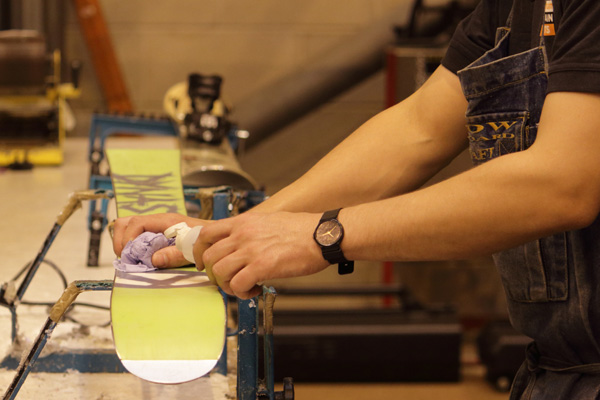
Shred Optics, Sync Performance and Slytech are partnering on a discount program that delivers up to 50% off their brands. Shred makes helmets and goggles. Sync makes down items and other wearables. Slytech makes a variety of protection devices for the back, knees, arms, elbows, shins, etc. When visiting the sites, use discount code: NEWPARTNER.

Putting Away Stuff: More Advice On Cleaning And Storage

Things You Can Do To Show How Much You Love Your Equipment.

[Editor Note: We received several comments about last week’s article by Don Burch about putting your skis away.  So, we asked retail expert and SeniorsSkiing.com correspondent Val E. offer some more advice.  Here you go.]

Ski Cleaning

Care for your equipment in the springtime pays off in the fall.

All ski bases are made out of polyethylene which is a chemically neutral and relatively durable material. You can’t ruin it with household chemicals, but you should keep in mind that the base material is porous.  So, clean dirt from the surface and from the pores (hot wax cleaning is for that). Acetone is a simple, cheap and easy option for base cleaning. Use rubber gloves.

To slow down oxidation of polyethylene (see any whitish areas?), seal the base with wax, that is why hot waxing is better than cold waxing. A thick layer covering the base and the edges doesn’t let oxygen infiltrate.

I would suggest you file down nicks on aluminum tail and tip inserts as well as round up the nicks on the top surface edge, especially in the areas where you grab your skis. The top layer and the sidewalls are often made out of ABS plastic which doesn’t like acetone, so to be on a safe side use household soap to clean these areas.

Binding Cleaning

Try to avoid getting liquids besides water and special lubricant into your bindings. A ski bag should protect your bindings from dust sticking to the internal parts. Don’t have a ski bag? Wrap the bindings or the entire skis in a plastic bag. Two big garbage bags will work.

Keeping skis in a shed or cold garage is even worse as driving with your skis on the car roof unprotected; be nice to your skis and you will be a happy camper…oops, skier!

Poles

If tips are rusty and dull, sand them and sharpen. Aluminum poles may bend and stay bent or break, while composite poles never stay bent, they just break in case of high load. Check the shafts: in case of aluminum poles—file any nicks if found. In case of composite poles (carbon or fiberglass), fill in deep cuts or delaminated areas with epoxy resin. Look at the baskets, they should not have any deep cuts.

Boots

Pull out the liner and wash the shell of your ski boots with soap and nylon brush. Dry out the liners and the shells.

Store your boots buckled up. You may want to fit them with newspapers or thick wrapping paper. It may sound very old school, but it will help your liners to stay in shape.

Clothing

Wash all your ski soft goods—pants, jackets, base and mid-layers, face masks, socks using the right detergent; read the tags first. Most dry cleaning companies will not accept your clothing made of membrane fabric. If your gloves are very dirty, hand wash them, carefully squeeze the water out, starting with the fingers, and hang the glovers with the fingers up to dry. If your gloves have membrane liners (Gore-Tex or similar), try to not mess with it, if your pull the liner out of the fingers, it would be very difficult to put them back.

Store your ski jacket on a “fat” plastic hanger, not wire or thin plastic or wood. This is especially important for a natural down jacket. I prefer my ski pants to spend the summer hanging on a belt loop, not folded. Fold it less and you will extend the life of a waterproof/breathable membrane!

Synthetic fleece pieces and mid-layers with synthetic insulation are very easy to wash and store. Some items can be used off season for biking, running or walking. A fleece sweater is my favorite item while traveling by airplane—light, easy, and comfortable. If you have wool layers (merino or regular wool), make sure they are protected from moth.

Helmet

The liner may need a wash, check for cracks, the buckle and adjustments should work well. Dry it out and put in a fabric bag, don’t keep in a direct sunlight or in a hot shed.

Electronics

If you use batteries in your ski gear (goggles, heated gloves, boot heaters, helmet camera, etc.) pull them out. Replace batteries at the beginning of next season.

What’s Biting You? Part Two: Treatment And Prevention

[Editor Note: This is Part Two of a two-part article on Lyme disease by Steve Hines, outdoorsman and Wilderness First Responder. Click here for Part One: What’s Biting You?]

Treatment

The best treatment for Lyme disease bacteria is antibiotics. According to the Centers for Disease Control (CDC), “Patients treated with appropriate antibiotics in the early stages of Lyme disease usually recover rapidly and completely.” Patients with certain neurological or cardiac forms of illness may require intravenous treatment.

However, the National Institutes of Health (NIH) tells us, “Physicians sometimes describe patients who have non-specific symptoms (like fatigue, pain, and joint and muscle aches) after the treatment of Lyme disease as having post-treatment Lyme disease syndrome (PTLDS).”

So, don’t assume that because you and your doctor caught it early, and you took a course of antibiotics that you need not be careful. This is the case especially for seniors, since one symptom is cognitive impairment. The question comes up, “What’s normal age related ‘forgetfulness’ and what’s a lingering symptom of my Lyme disease?”

Prevention

It seems, then the best treatment for Lyme disease is prevention.

And prevention falls into two categories:

1. Personal protection

The first line of defense is protection when outdoors. Personal tick sprays use the chemical DEET.

The CDC recommends 30-50% DEET to prevent the spread of pathogens carried by insects, and it should be applied every 3-6 hours

Examples of tickproof gators. Worth it if frequently in high scrubs.

Finally, a number of outdoor clothing makers offer clothing in which the fabric’s threads are infused with permethrin. Hats, shirts, pants, socks, bandanas and gaiters are available from brands including Outdoor research, Orvis, ExOfficio, Craghoppers all offer these clothing pieces. Check with your local outdoor retailer.

Clothing containing the insecticide Permethrin (also known as Nix) is effective. Products like Sawyer’s Permethrin Spray can be squirted on clothing to make it tick (and mosquito) repellent.

Once you gear up with these products, don’t get overconfident. The critical activity for Lyme disease prevention is to inspect yourself from head to foot thoroughly when you come indoors. Ticks like warm dark moist places—so you know what that means for inspection.  Don’t be shy.

2. Controlling ticks in the environment.

CDC experts suggest that, in the absence of a human vaccine for Lyme disease, “no single method will be sufficient to substantially reduce Lyme disease.” Therefore, a main goal of researchers is not only to develop new treatment methods, but to assess the effectiveness of combined treatments for habitat.

What’s a potential habitat for Lyme? Richard C. Falco, of Fordham University has conducted research on this and asks questions including:

  • Is the property located in a Lyme-disease-endemic neighborhood?
  • Is there a history of tick bites associated with the property?
  • What is the proximity to woods?
  • Are deer observed on the property?
  • Is the property shaded?

If the answer is “yes” to all these questions, you should consider a tick-management plan from a professional. However, if the answer is “yes” to some of the questions, agree on a plan you are comfortable with given the estimated level of risk.

The deer tick is now carrying a disease more deadly than Lyme called Powassin. The CDC says approximately 75 cases of POW virus disease were reported in the United States over the past 10 years. But the danger is real and no cure exists. So, take precautions. [Editor Note:  As Steve suggests, Powassin is important to know about.  Click here for our SeniorsSkiing.com Powassin story from 2015.]

[A Final Editor Note: Our own SeniorsSkiing.com correspondent Suzie Winthrop alerted us to an important effort to better understand and fight Lyme disease. The Bay Area Lyme Foundation is asking people who get bitten to send the tick to them for analysis. You can learn more by checking out bayarealyme.org. They have been getting submissions from all over and will send you a report on your submission after it is analyzed.]

Find out how you can fight Lyme by submitting ticks from your area.

Movie Review: Avalanche Sharks

Jaws Comes To Snow Country And Attacks Bikini Contest. Terrifying, No?

Don’t go near the…snow. We’ve heard of snow snakes but this is ridiculous.

We would have loved to have been around the conference room table—or more likely, cocktail bar—when the idea for this movie took form.

“Let’s make a movie about a ski resort in avalanche country,” says one genius.

“With a spring break bikini contest around the hot tub at the base lodge,” opines another.

“Yeah, with a herd of sharks that swim under the snow and eats skiers,” says the another genius.

They stare at each other in recognition of a profound ideation and shout in unison, “Avalanche Sharks”. High fives all around.

And so it came to pass that a movie about sharks that swim under the snow during a bikini contest and eat skiers was made.

For those of us who love the absurd, the ridiculous, and the irreverent, this is one for you.  We cannot imagine how the actors managed to not break out hysterically laughing in the midst of some of these scenes.

For students of horror films, this one has all the elements: The crazy outsider shouting a warning no one believes, ancient curse, astronomical event, disbelieving authorities, brave young people, beautiful young people, omnipotent monsters, and, of course, a predictable ending.

This 2014 movie can be rented from Amazon, Youtube, or other streamers. Watch with a group of friends with adult beverages and potato chips.

Dum-dee-dum-dee-dum-dee-dum.


This Week In SeniorsSkiing.com (May 5)

Cinco de Mayo Skiing, Skiing On Stones, Why Re-Enter Name/Email?, Storing Skis, Ticks Are Coming.

Proof that more than one person has skied the scree in Austria.

The responses to our Spring Survey 2017 are rolling in.  Thank you for your encouraging comments and suggestions.  It is very heartening to know there are so many readers out there who are rooting for us and for senior skiing.  Yes, we are trying to promote senior discounts. And we will continue to highlight the “second-tier” ski areas where discounts are more generous and skiing more…relaxed.  And yes, we will have more articles on fitness and gear reviews.  So much helpful information.

If you haven’t responded, there is still time. We’ll send out a reminder soon.

Spring skiing in Arizona?  Who woulda thunk?  But here it is. Arizona Ski Bowl is celebrating Cinco de Mayo with open lifts. Click below to see short news story.

“Why Do I Have To Re-Enter My Name and Email Address?”

If you are being asked to re-enter your email to confirm your subscription to SeniorsSkiing.com, you might be a bit annoyed.  We don’t blame you, but there is an explanation.

  • You are accessing SeniorsSkiing.com through a device that is different from the one you originally signed up on. Subscribing to SeniorsSkiing.com puts a “cookie” on your device.  If you use a different device, no cookie, so you are viewed as a non-subscriber. If you re-enter name and password, you’ll be okay with the new device.
  • You have disabled cookies or cleared browser history on your device. Turn cookies back on, and you’ll not have to re-enter again, or leave it disabled and realize you have to re-enter each time.  Your call.
  • You are trying to access our Subscriber-Only Content.  Instead of building a firewall that requires usernames and passwords, we elected a much simpler way of getting to our exclusive content: Just confirm your name and email.  You will have to do that each time you want to get to that information, which, by the way, is under the Community tab at the top.

Co-publisher Jon Weisberg found a place in this whacky world where people ski on rocks.  Okay, we’ve seen skiers in canoes going down ski trails, surfers wearing skis, skiers in streets and urban parks, but this one gets the nutsy award.  Okay, maybe once to say you’ve done it, but not every weekend. Check it out.

Lyme’s tell-tale ring rash appears 36-48 hours after a tick bite.

Correspondent Steve Hines brings us the first part of a two-part series on Lyme disease. We know our readers are active summer people, many cyclists and hikers.  The news is that Lyme is spreading, no longer the exclusive disease of New England.  It pays to pay attention to this; having Lyme disease is a serious condition. The good news is it can be avoided.

Finally, Correspondent Don Burch gives us some tips on putting our gear away.  If you haven’t thought about storing your equipment with just a little TLC, now is the time to rectify.  We typically thrown our boot and ski bags down by the furnace after our last outing without so much as a fare-thee-well.  Not a good idea.


Our sticker, free with a self-addressed, stamped envelope.

Finally, finally, if you’d like a SeniorsSkiing.com sticker, please send a self-addressed, stamped envelope to SeniorsSkiing.com, Box 416, Hamilton, MA. 01936. We will send you a couple for sticking on things.

We appreciate our readers more and more every day.  Thanks again so very much for your responses to our new survey.  Keep ’em coming.  And remember, folks, there are more of us every day, and we aren’t going away.


Short Swings!

Sometimes Coming Up With Content For This Weekly Column Is Challenging…Especially Now That The Season Has Ended.


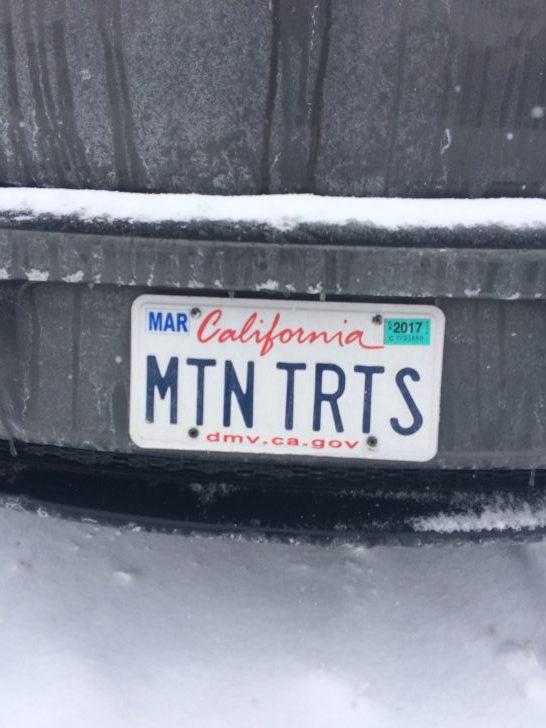
In season, resorts and others seeking publicity provide us with a steady stream of options to consider. That’s dried up. So this week, I went through the ski-related photos I’ve snapped and forgotten about…until now. Most are license plates, the majority from Utah, where I live. It’s amazing how skiers combine seven letters/numbers to express their love. The plates, some weird decals and signs, a ski-inspired fence or two, and some pre-Christmas pictures while window shopping in NYC are now posted. Simply go to the top of the home page, click Features then (in the drop down box) Terrific/Funny Photos. You are invited to submit ski-related pictures throughout the year.

Spring Reader Survey

Our Spring Reader Survey was distributed this week. It’s a quick one. We’re trying to determine how much older skiers spend when they go skiing. The results will be useful in helping area management appreciate the value of the older skier. They also may help us attract advertisers.

The survey also is your opportunity to be listed as a Trail Master. If you skied your age this season, let us know, and we’ll add you to the annual Trail Master listing.

SeniorsSkiing.com Sticker

Want a few free SeniorsSkiing.com stickers? They look good on skis, helmets, lockers, cars. Send a pre-addressed, stamped envelope to SeniorsSkiing, Box 416, Hamilton, MA 01936.

ALASKA

Dean Cummings’ H2O Guides is booking trips for 2018. Dean has been operating in the Chugach Mountains surrounding Valdez since 1995. H2O accesses 4,000 square miles of terrain. Visit their site for details.

OTHER

Mountain Collective passholders can extend the season at Squaw Valley and Mammoth Mountain which expect to be operating into summer. The pass also covers southern hemisphere destinations such as Valle Nevado, Thredbo and Coronet Peak/The Remarkables.

SHAREaCAMPER, a peer-to-peer motorhome rental platform, analyzed Google searches of adventure activities and came up with a ranking of the countries with the “most adventurous” people. They analyzed searches for activities ranging from skydiving to skiing. On a per capita basis, the Netherlands ranked #1 followed by Australia, Sweden, Germany and France. The U.S. ranked 9th. On search volume, alone, the U.S. raked first. Skiing is most popular in Norway, but the U.S. has the highest number of searches per month for the sport. Full results at the SHAREaCAMPER site.

Looking for a previously owned ski lift? Skilifts.us is one place to find everything from a second hand quad to an old-fashioned rope tow.


New Twist on Skiing “The Rockies”

Most areas have turned off the lights on ’16-’17.

Scree Skiing in Haiming, Austria

Nonetheless a few places in North America are still operating. They include Blackcomb Mountain, Snowbird, Mammoth, Squaw Valley, Mt Bachelor, and the place that skis 12 months a year, Timberline Lodge.

Over the years I’ve heard about sand skiing. The following are associated with sand boarding, but I’m sure if you want to try skis, you won’t be turned away: Great Sand Dunes National Park & Preserve, Mosca, CO, Sand Master Park, Florence, OR, Silver Lake State Park, Mears, MI, and Marina State Beach and Dunes Preserve, Marina, CA.


Proof that more than one person has done it.

If you’ve really got the itch and are in the vicinity of Haiming, a small town 45 km west of Innsbruck, you might want to try scree skiing. Apparently, some hardy locals don their Kevlar ski suits, use skis with big rockers and make turns on a surface that makes you yearn for New England ice. No lifts to our knowledge, but we did hear that they’re discussing a celebrity ski race with who else but Sharon Stone.


What’s Biting You? Lyme Is Now A National Problem

If You Are Walking In The Woods This Spring, Be Wary Of Ticks.

[Editor Note: This is the first of a two part article on Lyme disease by Steve Hines, an avid outdoorsman and certified Wilderness First Responder.]

Lyme disease is a bacterial infection caused by the bite of an infected black-legged or deer tick. Lyme disease has become a nation-wide epidemic with 300,000 cases reported last year with a significant increase predicted for 2017. The highest concentration of cases has been the Northeastern United States including the New England states, New Jersey and Pennsylvania. Outbreaks will also occur in the west most noticeably in Colorado, Wyoming and Montana.

NPR has reported that back in the early ’80s, the disease wasn’t that big a problem. Cases were confined to two small regions: western Wisconsin and the area from Connecticut to New Jersey.

However, in 2015, the CDC reported Lyme is present in more than 260 counties. The disease shows up in Maine, swoops down the East Coast into Washington, D.C., and southern Virginia. Then it hops to the Midwest into northern Indiana, Illinois, Wisconsin, and Minnesota. There are also small pockets of Lyme on the West Coast. This map shows the extent of Lyme disease for 2015, the latest year for which complete date is available.

Lyme disease is no longer considered limited to the Northeast.
Credit: CDC

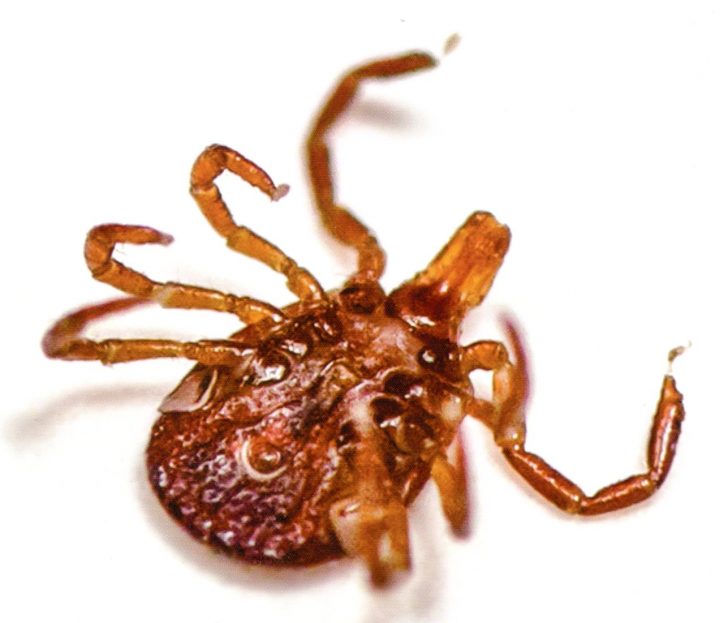
We are vulnerable almost anywhere outdoors. So, hikers, hunters and fishermen and gardeners are all susceptible. The size of the deer tick can vary depending on the sex of the tick, and its maturation state. Approximately the size of a sesame seed, a female adult deer tick measures about 2.7 mm in length. They are orangish brown but may change to be rust or brown-red in hue following feeding. The body becomes engorged after a meal and may expand considerably. Regardless, the deer tick’s body is approximately half as large as that of the common American dog tick.

According to the CDC’s Kiersten Kugeler. “In the Northeast, most people catch Lyme around their homes,” she says. “People out gardening. People playing in their backyard. Mowing the lawn.”  The ticks are transmitters of the disease, picking up Lyme pathogens from deer mice or other infected hosts.

Notice the cycle of Lyme and the tick life cycle.

Deer are hosts; Lyme is transmitted to ticks via mice or other infected organisms.
Credit: CDC

Diagnosis

The main problem in diagnosing Lyme disease has been physicians’ lack of education about it. Many doctors won’t recognize Lyme as an ailment. That denial caused a serious lag in treatment and investigation into an effective vaccine. Some victims have developed home remedies and antibiotics have been reasonably effective with early diagnosis.

Another difficulty has been how Lyme’s mimics other ailments like Influenza, chronic fatigue, arthritis.

The classic symptoms include fever, facial paralysis, joint and muscle pain and the classic Erythema migrans (EM) rash referred to as the “bullseye” rash. All symptoms of infected victims appear within 3 to 30 days, which is why early detection and diagnosis is critical.

Lyme disease is a real threat to our health. As seniors, if infected, we can be very sick and take a long time to recover—if ever (the disease if untreated can be chronic). Next week, we’ll discuss treatment and prevention.