This Week In SeniorsSkiing.com (June 22)

Southern Hemisphere Special, Safe and Sane Cycling For Seniors, Zany Videos, El Nino Coming.

Yes folks, it’s the start of the ski season in far away places below the Equator. Here’s a picture of downtown Santiago, Chile, which received a highly unusual coating of snow for the first time in years.

If there’s snow in the city, there’s more in the mountains. Credit: anis_velasco/instagram

And in New Zealand, The Remarkables, those beautiful, mystic mountains from Lord of the Rings fame near Queenstown, are open for the season.  Check out the video of opening day at the bottom of this article. Nearby Coronet Peak has been open for a couple of weeks.  Here’s what the early season skiing looks like down there.
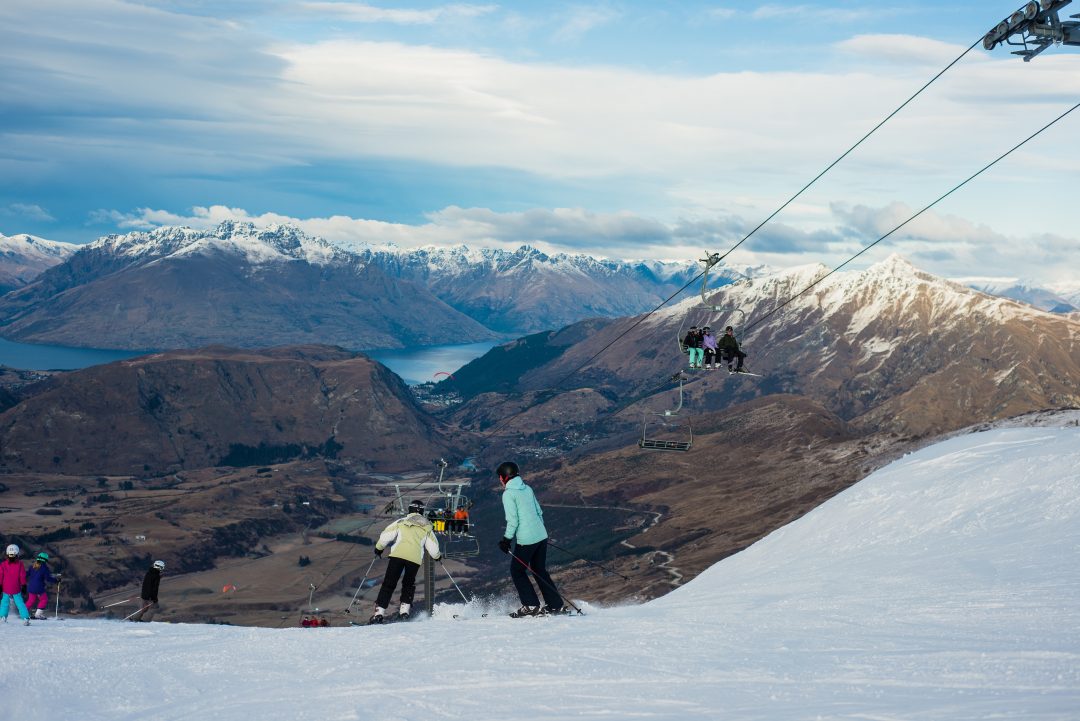
First turns of the season at Coronet Peak, Queenstown, New Zealand.

Skiing Chile

If you’ve ever wondered what it might be like to follow the snow during the summer and weren’t quite sure how to do it, we have a new series that might get you started.

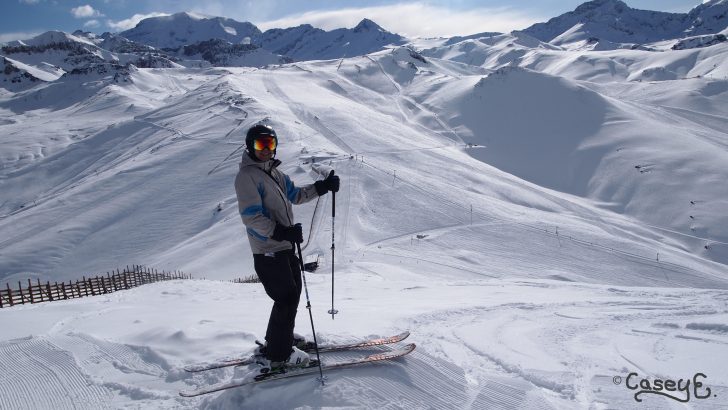
Portillo Plateau, Chile. Amazing skiing starting now. Credit: Casey Earle

In celebration of the beginning of the snow season in the Southern Hemisphere, we have an orientation to skiing in Chile by a new SeniorsSkiing.com correspondent Casey Earle, an American ex-pat who lives and skis down there.  His first article describes the different resorts what line the magnificent Andes mountains. You will hear more about skiing in Chile in the coming months.

Biking With Young Hammerheads

Veteran cyclist, skier, and SeniorsSkiing.com correspondent Pat McCloskey offers some advice for seniors who ride with a gang of younger riders.  He has strategies for going around the loop safely and saving face at the same time. It pays to recognized the limitations that senior status brings, especially on a mountain bike.

Have You Seen These Videos?

Here’s Opening Day at The Remarkables, Queenstown, New Zealand. Click below for the festivities.

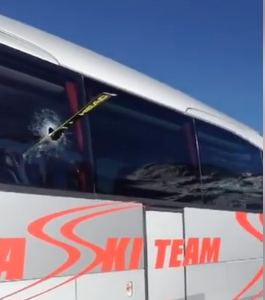
And, Check Out What Happens To A Show Off When His Ski Flipping Trick Doesn’t Work. Click the picture below.

Finally, mountain biking down Corbet’s Couloir? First time ever, but you can be sure it isn’t the last.  Thanks Teton Gravity Research. Click on picture to view.

And Looking Ahead. El Nino Is Knocking.

Weather worriers are looking at an emerging El Nino pattern forming in the eastern Pacific. El Nino comes around when the surface water temperature increases ever so slightly in the ocean west of the Peru and Ecuador. Since everything in the weather world is connected, that water temperature change impacts the atmospheric wind patterns which impacts the everyone’s weather.  From the Weather Channel Explainer:

“If El Niño conditions are present during the winter, the jet stream pattern over the U.S. shifts and can result in a wetter-than-average winter across the southern tier of the U.S., including portions of California.

“During an El Niño winter temperatures are also typically cooler-than-average from the southern Plains into the Southeast and warmer-than-average from eastern Alaska into western and central Canada and into the Pacific Northwest, northern Plains and Midwest.

“The strength of the El Niño plays an important role in impacts across the U.S., including in the tropical Atlantic. At this point, it is too early to know when an El Niño pattern may develop and how strong it might be.”

Happy First Day Of Summer.

Onwards.  Have you bought your season ticket yet? Time to pay attention to whatever deals are left.

And tell your snow loving buddies about SeniorsSkiing.com.  Remember, there are more of us everyday, and we aren’t going away.


Short Swings!

Jeeping the High Country

A few weeks ago we took the five hour drive to Ouray, Colorado, to escape our desert heat. Ouray sits at 7792′ surrounded by peaks in the San Juan Mountains in the southwest  section of the state. The scenic Victorian mining town rightfully calls itself “The Switzerland of America.”

Jeep, Jon, Pam, and April high above Ouray, Colorado. Mark is behind the lens.

It’s 47 miles from Telluride on normal roads; about 17 miles via old miner’s roads that ascend to 13,000+’, through meadows, past waterfalls and snow fields. Our friends Mark and April took us on a tour. Mark saw it as an opportunity to demonstrate the super powers of his super Jeep, a high-clearance 4WD,  tricked out to take rough high country roads like a Lexus takes the freeway. What a ride! We climbed “roads” that on foot you’d need to navigate with pitons. We descended cliffs that mountain goats avoid. Given the choice between stream and bridge, you can guess the choice we made. Eventually, we travelled a stream. Others might seek the dry route. With this vehicle, the wet way was just fine. We picnicked near a waterfall before descending back into the valley. If you go, we can recommend staying at the Hotel Ouray, a fine Victorian hotel in the center of town and dining at The Outlaw. There are other good restaurants scattered around the town. Although we’ve never used it, Ouray has a large hot springs facility. The “Million Dollar Highway” (US Route 550) from Ouray to Silverton is gorgeous, and Silverton (home of Silverton Mountain, the legendarily steep lift- and heli-served back country ski area) is filled with neat stores, restaurants, bars and art galleries.

Alterra Purchasing Solitude Mountain Resort

Alterra Mountain Company announced this week the acquisition of Solitude Mountain Resort, the gem in Utah’s Big Cottonwood Canyon. Alterra was formed last year and owns Deer Valley, Steamboat, Winter Park, Squaw Valley Alpine Meadows, Mammoth Mountain, June Mountain, Big Bear Mountain, Stratton, Snowshoe, Tremblant, Blue Mountain, and CMH Heli-Skiing & Summer Adventures in British Columbia. It also owns the IKON Pass.

Vail Acquiring Crested Butte, Okemo, Mt Sunapee

Vail Resorts is in the process of acquiring Crested Butte Mountain Resort in Colorado, Okemo Mountain in Vermont, and Mount Sunapee in New Hampshire. The sale includes Vermont’s Okemo Valley Golf Club and Tater Hill Golf Club. The three areas are being sold by Triple Peaks, LLC, owned by members of the Mueller family which purchased Okemo in 1982, Mount Sunapee in 1998, and Crested Butte in 2004. The State of New Hampshire needs to approve the Sunapee acquisition for it to proceed. Vail Resorts announced it will honor previously purchased Okemo, Mount Sunapee, and Crested Butte 2018-19 season passes.

Deer Valley Adding New Chair

Deer Valley Resort, recently acquired by Alterra, is investing $8 million in a new high speed quad, improved snowmaking, expanding its fleet of groomers, and replacing its rental equipment. The quad will replace the Homestake chair which carries skiers from Silver Lake Village to the top of Bald Eagle Mountain.

Utah Skier Visits Drop 10%

Poor and inconsistent snowfall contributed to a 10% drop in skier visits to Utah last season. The state had 60% of average snowfall according to the National Weather Service. Nationally, skier visits were down 3%.

Hedy Lamarr Doc Filled with Surprises

Bombshell: The Hedy Lamarr Story is a documentary film released last month. The exceedingly well-done film tells the story of the Austrian-born actress who helped define Hollywood beauty and informed the visual portrayals of Disney’s animated Snow White and Batman comics’ Catwoman. The surprising part of her biography is that she was an inventor who patented a communications technique contributing to Allied victory in WWII and that is used in virtually all modern telecommunications. Why do I mention this in SeniorsSkiing.com? She also started a lodge in the early days of Aspen. It’s now the Aspen Villas. The film is available on Netflix.


Vail and Alterra’s Unfairness Doctrine

Editorial

Regardless of whether the steady elimination of season pass senior discounts is personally insignificant or presents a financial burden, you should be aware of the lack of fairness and gratitude exhibited by this new policy.

Through Vail’s EPIC Pass and Alterra’s IKON pass, the companies are advancing elimination of senior discounts, while acquiring more areas. In fairness, some localized Vail Epic passes offer senior discounts. But Alterra’s pricing policy is more draconian because it substitutes its own IKON bundled pass for (most) local area season passes. In doing so, it also eliminates local area senior pass discounts.

Granted, for those who choose to travel to ski, IKON and EPIC offer decent value. But for most Alterra resorts, those who don’t travel but want to ski at one of the Alterra areas are now forced to purchase the bundle.

Why is the elimination of senior discounts unfair? Because areas removing senior discounts still offer student and military discounts.

Why does the elimination of senior discounts reflect a lack of gratitude? Perhaps the most obvious reason is related to our years of participation and support. After 30, 40, 50, 70 or more years of supporting ski resorts, why can’t resort operator’s reward us for our collective loyalty? It’s done in many other industries.

A subtler and possibly more significant reason is the older skier’s role in introducing young people to a  sport whose US  base hasn’t grown in 35 years. The most recent SeniorsSkiing.com reader survey shows that grandparents are a major factor introducing grandkids to skiing and boarding. Fifty-eight percent of the respondents were grandparents. They introduced more than 68% of their grandkids to the sport. Of those, 94.5% continue to participate. Considering that each grandparent or grandparent set has an average of 3.7 grandkids, the influence of older skiers on new skier/boarder recruitment — one of the biggest issues facing the ski resort industry — is profound. Why yank discounts when we’re helping to add new skiers and boarders?
Maybe they think they can boost revenues because we’re an easy and decentralized target. Maybe the people making the decisions have a built-in age bias. Maybe it boils down to old-fashioned greed.

And maybe it wouldn’t be so disturbing if it were fair. But it’s not fair. It doesn’t recognize our decades of support to the industry. It does not take into account that most of us go midweek. And it ignores our role introducing new skiers and boarders to the joys of being on snow.

We’d like your thoughts on this point of view. Please comment.

Ski Chile: An Introduction For Neophytes

Chase The Snow To Summer’s Skiing Headquarters In The Southern Hemisphere.

Come May, you have probably set your skis into hibernation and begun patiently waiting for the snow to fly next fall. But you really don´t have to wait!  Southern America’s greatest mountain range starts getting snowed on in May, and by June the ski areas are normally in full swing.

In Chile the resorts are sprinkled just east of the Pan Am highway along the 700 mile stretch from Santiago south, at roughly the equivalent latitude of central California. With an 80 year tradition of skiing, you will find a whole new world of winter adventure, lasting into October on good years.

Santiago and the Andean foothills, after a rare low altitude snowfall. Credit: Casey Earle

Visitors will be happy to know that within a two hour drive of the airport in the capital, Santiago, there are four good ski areas, and upwards of 70 percent of winter days are sunny. Closest are the Three Valleys, which hang above Santiago on the western slopes of the Andes. At night, you can see the snocats grooming trails from this metropolis of seven million!

The La Parva, Valle Nevado, and El Colorado ski areas are interconnected, and it is possible to enjoy a total of 40 lifts and dozens of groomed runs, with multiple options for lodging and dining. Skiing here starts at 8,000 to 9,000 feet, reaching up to 12,000 feet, and is entirely above the treeline. The sunsets are extraordinary.

Casey looks out from El Colorado ski area towards the upper Valle Nevado and La Parva lifts. The 18,000 foot El Plomo mountain looms in the background. Credit: Casey Earle.

Two hours north of Santiago is the world-renowned Portillo hotel and ski area, smack in the middle of some of the highest mountains in the Western Hemisphere. The hotel sits looking north over the mysterious and beautiful Laguna del Inca lake and boasts a long tradition of great service and entertainment. Here you can rub shoulders with racers and ski fanatics from all around the globe.

Portillo and the Plateau chairlift (spot it!), with the Laguna del Inca. Credit: Casey Earle.

Further south, the ski area infrastructure and access may leave a bit to be desired, but I love it nonetheless. All of the ski areas are situated on volcanoes which have varying levels of activity. They are also surrounded by gorgeous temperate rainforests, lakes, rivers, and hot springs. The main ski areas are Nevados de Chillan, Corralco, Villarrica, and Antillanca. The first three have adjacent towns within a 30 minute drive with plenty of lodging and other touristic services. All but Villarrica have a good hotel at the ski area base.

Villarrica ski area, note the smoking volcano. Credit: Casey Earle.

My recommendation for potential visitors is to contact one of the tour companies operating in Chile, or book directly with one of the on-hill hotels such as Portillo. You will have one of the best and most unusual ski trips of your life. Most of the tour operators

Las Araucarias ski area, west side Volcan Llaima. Credit: Casey Earle

in Chile are mainly for younger, adventurous skiers, such as Casa Tours or Powder Quest. However, for the +50 crowd, I can recommend DreamSki Adventures which offers group guided resort based tours in Chile and Argentina for the 45-70+ skier. Their guides are seasoned ski instructors trained in the CSIA (Canadian Ski Instructor Alliance) and offer a high degree of customer service on and off the snow.

Come on down!

For the latest in conditions in Chile from Casey Earle, click here.

Here are the resorts mentioned.

Cycling Efficiency For Seniors

Bottom Line: Knoweth Thy Limits, Wise One.

Ride with younger guys? Then ride wise and slow down. Credit: Pat McCloskey

As I  was pounding the rocks of  Laurel Mountain on the mountain bike with  a group of younger riders here in Pennsylvania’s beautiful Laurel Highlands, I was thinking strategy.  At 63 years old, I am still in pretty good shape but the older I get, I start thinking about the old adage “age and treachery will beat youth and skill”.  Not really applicable in most cases but at least I can try – right?  So the first thing I think of is: don’t push the anaerobic limit to be the first up the hills and over the rocks.  Let the young guns deal with that and I will just keep them in sight.

I have learned to ride within myself and only exert myself enough to keep a visual on the group, especially with a longer three hour + ride.  A more scientific approach is the below which is done with a heart rate monitor:

  • Zone 1: 60 to 70 %; very comfortable effort; use this for warmup and cool down
  • Zone 2: 70 to 80 %; comfortable enough to hold a conversation; most training is done here
  • Zone 3: 81 to 93%; “comfortably hard” effort; you may be able to say short, broken sentences.
  • Zone 4: 94 to 100%; hard effort; the pace is sustainable, but conversation is a few words at a time.

Author Pat McCloskey ponders whether to go around a big section to get back to the parking lot.

Basically the zones are dictated by two theories.  The original theory is dictated by the target maximum heart rate of 220 minus your age. Then you can calculate with a heart rate monitor which zone you can ride in.  This calculation is not quite accurate because it does account for conditioning.  A better way to use the zones is to calculate what is called Heart Rate Reserve which is your max heart rate minus your resting heart rate. Find out what your real max heart rate is by exerting yourself in Zone 4 with a monitor and then in the morning at rest, calculate your true resting heart rate.  This allows for conditioning and the zones can be used according to that calculation on a heart rate monitor.  All in all, I use a monitor on rides to tell me when I am exerting myself above my perceived rate of exertion which will lead to fatigue on a long ride if I am not careful. Use the monitor and slow down accordingly.  As long as I keep the group in sight and can be in the Zone 2 area, I am a happy rider.

Another strategy is not to ride every section but take a breather and bypass a section and/or coast to the next meeting area.  Sometimes that means taking a fire road instead of a technical trail..  I like to challenge myself and take the technical sections but I know if I take them all, I will not be able to keep up or complete the ride.  Ride to ride another day is my motto, and I am not out to prove anything.

Lastly, know your limits and know when you are finished.  You don’t want to get hurt and if you are too fatigued, it can happen easily on a mountain bike.  Sometimes you have to cut out and take the fire road back to the parking area for a head start on the post ride beer.  Hey, you had a good ride, with younger, stronger riders, but for a guy who is older, this is the way to stay involved without compromising your ride or theirs.

Riding season is upon us, and there is no reason not to challenge yourself within limits.  Go for it.  Have fun but as Harry Callaghan once said, “ A man has to know his limitations.”

Cross or divert? Use your noggin and your heart rate monitor to decide. Credit: Par McCloskey