This Week In SeniorsSkiing.com (Sep. 28)

Other Great Ski Publications, Protect Our Winters, Anticipation, Snowmaking As Fire Protection.

As you may have read, SeniorsSkiing.com is entering its fifth season of publishing. Over these last few years, we have entered the amazing world of ski publications and their publishers, all of whom have been welcoming, supportive, and collegial to Jon and me as newcomers. You should know about some of them.

The Ski Diva is a weekly publication focused on women who ski.  Wendy Clinch, The Ski Diva’s publisher, has been an extremely helpful colleague and friend from the very beginning of SeniorsSkiing.com’s journey.  We thank her for that.  The Ski Diva has won awards from the North American Ski Journalists Association and is recognized for its unique, woman-focused articles.  Its Forum contains thousands of posts from its many subscribers.

Another highly niche-oriented publication, XCSkiResorts.com is published by Roger Lohr, targeting the activities of cross-country ski resorts. Roger has been reporting on cross-country for years and is not only an expert on resorts but also equipment, personnel, travel, technique, and safety. If you are interested in a magical stay at a cozy cross-country resort, XCSkiResorts.com should be your first stop.

Snowbrains.com has been an inspiration to us. We don’t personally know the California-based publishers Miles Clark and Eric Bryant, but we admire their newsy, high quality approach. There’s always an awesome video or current event story worth checking.  There’s also snow reports and forecasts.

OpenSnow.com is a weather/snow reporting site, publisher by Joel Gratz, a professional meteorologist. The site has a ring of correspondents around the country reporting snow conditions and forecasts. There’s also a very cool “Powder Finder” if you’re interested in that sort of thing, and news from resorts. Well done site, especially if you are amateur weather-watchers like us.

We mention these because you, or someone you know, might find them interesting. In one way or another, each of the above has offered—directly or indirectly—material help and support to SeniorsSkiing.com as it got up and running. There are many others that are worth mentioning; we’re sorry we didn’t get to them all.  And we’d like to hear from you what other sites you like.

Of course, SeniorsSkiing.com is the ONLY online magazine for senior skiers, offering a listing of Free Skiing (or Almost Free) For Seniors, Ski and Boot Recommendations,  Experticity Discounts, and Historic Ski Posters, so don’t wander, you guys!

And, also of course, readers of SeniorsSkiing.com can get a FREE SUBSCRIPTION to Ski Magazine, the granddaddy of ski publications, just by signing up under SUBSCRIBER-ONLY CONTENT. (You will be asked to confirm your name and email address.)

Climate Brouhaha

Our recent series of articles on El Nino and its impact on winter weather caused a small handful of readers who are climate change deniers or skeptics to send some flak our way. Let there be no doubt, SeniorsSkiing.com is concerned about global warming and the increasing level of CO2 in the atmosphere. The reality of the impact of those atmospheric changes are all around us from mega-cyclones and hurricanes, droughts, excessive snow or no snow, and coastal flooding.

We admire the work of Protect Our Winters, a non-profit group that is advocating action in the outdoor sports community against climate change. This climate activist group is trying to influence the political agenda as well as educate students and the public about what they can do it mitigate what is happening to the atmosphere. After all, the snow sports industry is dependent on snow and when and if it falls. There are some ski resorts that are actively working to reduce their carbon footprint with different strategies. This is an important development worth paying attention to.

This Week

Speaking of climate change, the wildfires in the west this summer have been frightening. Ski resorts in the high country could be targets and what they can do to avert or minimize damage is an important ingredient the confronting the danger. Correspondent Harriet Wallis offers a story on how Deer Valley has a plan to deal with potential catastrophe.

Also, we have a lovely note on anticipating the ski season from correspondent Don Burch. Think about it; it’s pre-ski show time, pre-parka-buying season.  We’re buying season tickets, and that alone gets excitement going. We can see the season rolling in with snow falling out west, snowmaking operating at A-Basin, and folks bringing in their skis for sharpening.  Anticipation.

Coming Soon

We are preparing the 2018-19 Where Ski Resorts Can Seniors Ski Free (Or Almost Free) directory. Look for it soon. This year, we will be including a host of Canadian resorts.

Don’t forget our SeniorsSkiing.com “gathering” in New York on Nov. 14.  Details below. 

Dear readers, there are more of us every day, and we aren’t going away. See you soon!

A Message From Mike And Jon

SeniorsSkiing.com is entering its fifth publishing season. When we started in 2014, we had a vision of creating an online magazine for snowsports enthusiasts over 50 and with it a community.

Getting the magazine off the drawing board required many decisions. What should we call it? How frequently should it publish? Should it be free? Should we pay contributors? Etc. Etc.

We struggled with the name: ElderSkier seemed too religious. SkiGeezer, too self-effacing. MatureSkier, too staid. We settled on SeniorsSkiing.com with full knowledge of its limitations. People in their 50s don’t perceive themselves as “seniors.” That moniker starts to fit after 65. Interestingly, the average SeniorsSkiing.com reader age is about 67.

Frequency of publication is something we’re still thinking about. For the past year, we published every Friday in season and once a month off-season. This season, we’re back to our every Friday cadence. What amazes us is that even off-season, readers continue to sign up.

We started by making SeniorsSkiing.com free and have kept it free. From time-to-time we’ve considered charging a small fee for premium subscriptions that would provide access to a variety of services and products. At present, we have no plans to go there.

Contributors are an essential asset. Over these five years, almost fifty writers have published with SeniorsSkiing.com. Some are professional journalists. Others are amateurs who love to write about their special interests. Still others are simply people with wonderful stories to tell.  We rely on our contributors and appreciate what they do for us and for you.

When we launched in 2014 we had virtually no subscribers. Word of mouth and articles in Huffington Post and other places brought in several hundred readers. Then, The New York Times published a half-page interview, and the floodgates opened. We started publishing the annual list of US ski resorts where seniors ski free. As word got around, more and more people signed up. That was followed by the annual lists of the best skis for older skiers compiled by realskiers.com and the best boots for older skiers compiled by America’s Best Bootfitters. More subscribers.

Then we added access to Experticity’s deeply discounted access to outdoor products. That lasted a few years before the company changed policy. Currently, SeniorsSkiing.com subscribers have access to free subscriptions to Ski Magazine and to Skiing History Magazine.

Since we started, we’ve published almost 900 articles. Subscribers have access to the annual reports of places to ski free (this year Canadian resorts will be included), best skis, best boots, and other subscriber-only materials explaining ways to improve technique, etc.

To celebrate our 5th, we’re hosting a party, Wednesday, November 14 in Manhattan. If you’re in the NYC area, please come. Areas and ski-related companies are sending products and SWAG. Among other things 70+ Ski Clubis providing a free trip to Okemo; APEX Boot Systems, a free pair of boots; Bootsteris sending some of it’s compact ski boot horns to help you get your boots on, and DeBooteris sending several of its ingenious skiboot jacks to help you remove them. Orsdenis providing a few ski parkas for the raffle. Jon wears the Orsden parka. He loves it! For invitation and RSVP info click here look at the top of the home page.

Before closing, we want to share with you our mission:

SeniorsSkiing.com is committed to advancing the interests of older snow sports enthusiasts by

  • Publishing relevant and useful information
  • Encouraging an engaged online community, and
  • Advocating on their behalf.

Thank you for subscribing to and supporting SeniorsSkiing.com. We’ll continue to do our best to keep you interested in and on the snow.


Short Swings!

“Snow is the cosmetic of the Earth.” That’s one of many memorable lines from Moby Dick, Herman Melville’s masterpiece about one man’s obsession with the destruction of a gigantic white whale.

Riding early morning lifts, especially on a powder day, brings Melville’s observation to life. The smooth, undulating surface conceals what’s below. My skiing dreams and day-dreams invariably show untouched surfaces. There’s a reason we call it virgin snow.

With rare exception, conditions like that don’t last long. Dropping into an untracked slope and leaving your own lines is a joy. By definition, joy is ephemeral — a fleeting moment of intense happiness. Powder snow is ephemeral. Anything that is temporary is ephemeral. We’re about to enter another season, and we’re not getting younger. Relish the anticipation. Experience the joy. Embrace it all.

Bootster Is THE ESSENTIAL Older Skier’s Accessory

Our newest advertiser is Bootster, a compact ski boot shoehorn that makes boot entry effortless — even when they’re cold and stiff. It utilizes a super slick material that eases foot into boot. It is compact and fits into a pocket. Many of you will have your own techniques: talcum powder; various sprays; etc., etc. but Bootster does the job with perfection. No need for contortions. It’s one of those simple solutions for a persistent problem. Having used an earlier version of the design, I fully endorse its effectiveness. And at $25, it’s an ideal gift for any older skier on your list.


Documentary Explores Abandoned Colorado Ski Areas

Abandoned is the title of a soon to be released documentary about independent Colorado ski areas that no longer exist. The film explores skiing before the influence of corporate resorts and current effects of climate change. I’ve only seen the trailer. It’s well worth watching.

Tremblant Video Shows Latest Improvements

Last week’s Short Swings! column described Mont-Tremblant’s new high speed quad and the expanded glade areas it serves. This very cool short video shows it with unusual creativity.

Jiminy Peak, Bromley, and Cranmore offer savings through their respective value cards (check websites for details):

  • Jiminy Peak‘s costs $62 and includes two days of skiing followed by savings of lift tickets purchased throughout the season.
  • Bromley‘s costs $81 before December 14 and includes one day ticket and $30 off additional tickets throughout the season.
  • Cranmore‘s is $89 and includes one day ticket and $20 off additional tickets throughout the season. Every seventh ticket is free. Cranmore also allows those purchasing a ticket after 2:00PM to use the same ticket the following day.

Ikon Pass Price Increases Oct. 10

The full adult pass (unlimited access to 14 destinations and 7-days or 7-days combined at 21 destinations; no blackouts) is currently available for $999. Starting Oct. 10, it increases to $1,049. The IKON Base Pass (unlimited access to 12 destinations and 5-days or 5-days combined at 23 destinations; 10 blackouts) is currently available for $699. Starting Oct.10, it increases to $749. More at www.ikonpass.com.

Maine Ski Hall of Fame To Induct 19th Century Adventurer, Others

Norman Libby, the winter adventurer who was the first to ski Pleasant Mountain (Shawnee Peak) in the 1890’s will be inducted (posthumously) to the Maine Ski Hall of Fame, Oct 27 at the Grand Summit Hotel at Sunday River. Also being added to the Hall of Fame are Karen Colburn and Anne Dowling, US Freestyle Champions; Leon Akers, cross country coach and ski shop owner; David Stonebraker, prep school ski coach; Warren Cook, Sugarloaf ski executive, and Kristina Sabasteanski, biathlete. The Maine Ski Hall of Fame is a program of the Ski Museum of Maine.

Skiing the Great Indoors

The world’s largest indoor ski resort will open in Shanghai, China in 2022. It will feature three slopes, numerous other attractions, and four hotels with a total of 1,000 rooms.


How Deer Valley Prepares For Worst Case Scenario: Wildfire

Laying pipe with heavy equipment. A hot engine can quickly spark a blaze. Credit: Deer Valley

Fires continue to rage throughout the western states. It’s an annual phenomenon: drought, dry grass, tinder-dry forests killed by bark beetles. Lightning strikes. Human carelessness. Just one spark can set an entire mountain ablaze.

For Deer Valley, it’s a normal summer. Hikers and mountain bikers enjoy the trails, and they dine outdoors on the patios. Aspen leaves ripple in the cool mountain breezes. Everything is right.

But the threat of wildfire is always there. And Deer Valley is prepared to fight back.

The resort keeps its extensive snowmaking system operational and ready throughout the entire off-season. Water for the system comes from the 20 million gallon reservoir high up on the mountain, and gravity feeds the network of snowmaking pipes that span the vast resort.

In addition, every mountain vehicle carries fire-suppression equipment. An errant spark from construction, maintenance or welding could start a catastrophic blaze.

Deer Valley is prepared to be its own first line of defense.

“But we’re not trained or prepared for a full wildfire battle. We’re back up for the professionals,” said Steve Graff, Deer Valley’s Director of Mountain Operations.

“We work closely with the Park City Fire Department. They have access to the mountain, they know the gate codes, and they know water is available for their attack,” he said.

Being ready to squelch a fire sounds straight forward, but there are intricacies.

If snow melt doesn’t fill the 20 million gallon reservoir, water is pumped uphill to fill it so it’s ready.

“And, every summer we work on the snowmaking system,” said Graff. “We make capital improvements, we repair hydrants, and we systematically replace pipes. That means some pipes are drained and temporarily out of service. Crucial weekly staff meetings inform everyone where water is available that week and where it is not—just in case.

Winter comes once a year, but “We start working on next season the day we close,” said Graff, and that includes preparing for the worst case scenario: wildfire.

He added: All ski areas do so much work behind the scenes and during the off-season that skiers never know about and never see. But it’s a testament to the dedication and hard work of everyone in the ski industry.

To read more from Harriet click here for her stories on SkiUtah.

Anticipation

A Chill Is In The Air.

It’s usually the cusp of late summer and early fall when I first start thinking about skiing. All it takes is some cool days and seeing the first leaves starting to turn. Wearing long slacks for the first time, turning on heat for the first time, and the beginning of football season get me thinking I’ll be skiing in the not too distant future. I hear weather reports of snow flurries in the high mountains and maybe even see photos of the dusting.

I start getting e-mails from ski resorts that have the audacity to put to print opening dates. Though I know these are pie-in-the-sky expectations I buy into the hope that they will open that early in the season.

Warren Miller Entertainment sends me a link to the trailer of their new film. I recall that as a boy, my father, a non-skier, took me to numerous Warren Miller films. It was just him and me, and I am forever grateful. I’m nostalgic when I hear Warren’s live narrations.

I start to visit my favorite online skiing sites. When I see something particularly interesting, I email it to my ski buddies. For the sake of my non-skiing wife, I try not to talk too much about skiing.

I daydream about special moments from last ski season. In the gym, I double down on ski-related workouts.

I start to make plans for the upcoming ski season. This includes visiting some resorts I’ve never been to. I think about friends I didn’t get to ski with last season and promise myself to make plans to do so this year. I’ve already renewed my membership in the Mountain Laurel Ski Club.

I make mental notes on things I need to do. I know I need a new parka. I think I’ll get my skis tuned. My snow tires should still be good, but I need new wipers.

I often wish I could ski year round but suspect this would detract from my passion for the sport.

My wife says I need to live more in the moment. Obviously I haven’t been able to limit talking about skiing. I know she’s right so I continue to enjoy my other sports and hobbies. But deep inside there is a longing to ski again.

Maybe I’ll write some ski articles.

This Week In SeniorsSkiing.com (Sep. 21)

Snow Is Happening Now, Winter Weather Prediction, Portillo Report, XC Binding News.

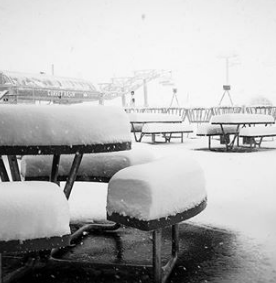
So it begins.  There’s snow in British Columbia, some parts of Washington, Idaho, and Montana. Check out the very recent snow map above from Snow-Forecast.com.  The green represents snow; it’s not very much accumulation, —though we did hear Banff got blasted just today—but it’s there. Someone please ring a bell or something.

Sundeck at The Remarkables, Queenstown, New Zealand’s famous resort. Big snow happening there this summer. Credit: Snowbrains.com

And, we have heard that four resorts in New Zealand’s South Island have been forced to close because of too much snow this week. That reminds us of the snow-heavy winter we had in 2015-16 when the California Sierras were inundated. Such is the nature of climate change.  Go to Snowbrains.com for the story on how epic snow closed the mountains in En-Zed. 

Free (or Almost Free) Skiing For Seniors Listing Almost Ready.

This week, we are getting back into full swing here at SeniorsSkiing.com. Our correspondents are sending in early season stories which you should be seeing in a week or two. We have completed our research on where seniors can ski for free (or almost free) at ski resorts in North America.  Yes, indeed, we are including Canadian resorts this year in our listing.  It’s amazing how many resorts there are that do offer a significant break for seniors. Those discounts are out there; you have to look.  We know our annual listing will certainly help.

We’re busy designing the Free Ski list and getting it ready for publication.  Stay tuned.  Until then, you can still access last year’s listing under Subscriber Only Content. 

This Week

The Woolly Bear knows what winter will bring. Credit: TheInfiniteSpide

We’ve been paying perhaps too much attention to the winter weather forecasts this time around. That ol’ El Nino seems to be hanging in there, and if it does, it will definitely play a role in what happens in snow country. So, just to corroborate what we’re been hearing from the National Weather Service’s Climate Prediction Center, we branched off to collect some tradition folk nostrums of what winter will be.  Find out what the old-timers looked to around this time of year to predict how much snow was in store for winter.  We also checked the annual Farmers Almanac prediction.  Read all about it.

Chile-based correspondent Casey Earle continues his series on skiing in Chile. He wrote some great articles orienting folks to what to expect down there and a recap of some of the principal resorts. This time, he zones in on Portillo, the venerable Chilean resort every skier knows about. Check out his resort review here.

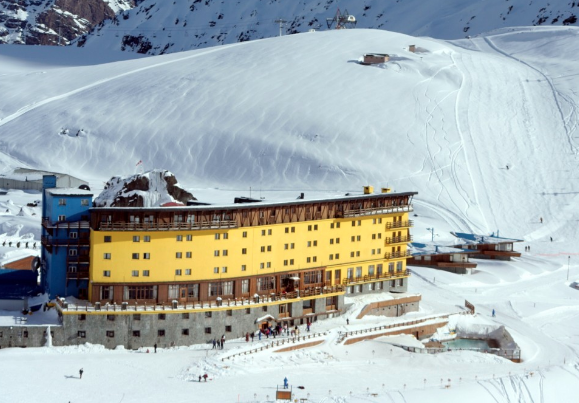
Filled with amenities Hotel Portillo is the only place to stay at the resort. Credit: ChileSki.com

Cross-country editor and XCSkiResorts.com publisher Roger Lohr brings us some breaking news on the xc ski binding front. He describes the brand new Rottefella binding with a Move Switch that allows you to adjust the weight distribution on your skis. This could be an important break thru for senior xc skiers because it can actually enhance both glide and grip.  Certainly worth a look if you are thinking about new xc gear.

On a more serious note, we have a new article on Sarcopenia this week, a condition where muscles become less efficient in seniors. We found it remarkable that we never knew about this condition until we were introduced to it through a contributed article by one of our readers last year.  If we didn’t know, then probably a lot of our readers don’t either.  Study this one, dear readers.  The good news is that the weakening effects of sarcopenia can be mitigated through weight lift training.

If you have any story ideas, or want to submit an article, please let us know at info@seniorsskiing.com.  The season has started, and it is time to get ready.

Remember, readers, there are more of us every day and we aren’t going away.


Short Swings

Short Swings!

In my never-ending  battle with weight, I found myself wondering if we weigh more at sea level than we do in the mountains.  We do.

It’s not a lot, but it is physically factual.

The science of it has to do with gravitational pull, which is what weight is, and the size difference between the entire planet and you. Pretty weird, huh?

Another factor is that gravity decreases as it leaves the part of the planet with the greatest mass; in other words, the higher you are in altitude, the less you weigh.

One estimate I found stated that a 150 lb person standing at 10,000′ above sea level (e.g. 500′ or so below the top of Vail Pass) would weigh 149.92 lbs.

Not enough to tighten the belt, but another good reason to be in the mountains.

You’re Invited to Help Celebrate Our Fifth!


We’re hosting a party to celebrate SeniorsSkiing.com’s fifth publication year. It will be on Tuesday, November 14 on the Upper West Side of Manhattan. Lots of neat raffle prozes (e.g. ski trip to Stratton from 70+ Ski Club; APEX boots; Orsden ski parkas, DeBooters, Bootsters, etc.) plus food and SWAG. Click here for the full invitation and RSVP link.

New This Season

This is the time of year when Northern Hemishphere ski resorts tout improvements for the coming season. In addition to many snowmaking and lodge upgrades, look for the following:

California

Squaw Valley | Alpine Meadows reports that electricity will be sourced from 100% renewable resources, thus reducing its carbon footprint by 49%. In a related green initiative, the resort is increasing convenient parking facilities for carpooling customers.

Tahoe Donner: New triple chair replacing the original double from 1971.

Mammoth Mountain New daily, year-round non-stop service from LA on United, starting Dec. 1; new daily, seasonal non-stop service from Denver on United, starting Dec. 19; and new seasonal non-stop service from Orange County on JetSuiteX.  

Colorado

Arapaho Basin: New four-person Beavers chairlift will access 468-acre  expansion into Beavers and Steep Gullies.

Copper Mountain: Two new chairs at Center Village. American Flyer will now be a high speed six-person chair with bubble enclosures, the only active bubble chair in Colorado. American Eagle will be a high-speed combination lift featuring six-person chairs and eight-person gondola cabins.

Loveland: Inaugurating Chet’s Dream, the first high-speed quad in Loveland’s history.

Silverton:Introducing new heli-skiing terrain, featuring diverse high-alpine terrain and early-season snow. Area also is expanding its Unguided Season Pass to include a 150 percent increase in available ski days to the unguided season.

Winter Park: Features a new 10-person gondola, the resort’s first new lift since 2007.

Wolf Creek: New high-speed, detachable quad, the 10th lift in its system. 

Quebec

Mont-Tremblant: A new high-speed quadon the North Side will boost capacity to 600 per hour.

Vermont 

Killington: New 6-person high speed bubble chairlift and new lift service at South Ridge.

Magic Mountain: New base-to- mid mountain double chair.

Stratton: New high-speed quad will reduce ride time from 14 to five minutes. 

Ski Insurance

Safe Descents is an affordable ski insurance plan providing coverage for transportation costs associated with accidental injuries sustained while skiing, snowboarding, riding a lift, and participating in a lesson within a resort. It cost $4.75 per day or $56.99 per season.


Dreaming of Skiing the Alps? Follow Warren Miller’s Advice: Don’t Delay.

Warren Miller has been gone for less than a year, and his wisdom about not postponing your next ski adventure has been on my mind.

There’s one experience in particular that beckons. It is based in the beautiful ancient village of Saint Vincent in the Aosta Valley in the western Alps, close to Mont Blanc, Zermatt, and Monte Rosa.

Organized by Alpskitour, clients stay in their choice of five- and three-star hotels. The village serves as hub, and every day, they join their guide and a few other people to explore trails and slopes on the highest peaks in the Alps, crisscrossing between Italy, France and Switzerland.

The groups are mostly European-based intermediate and advanced skiers, with the occasional American, Canadian, New Zealander, or Australian. The guide and group ski together for five days, always riding different lifts and exploring new terrain.

They stop at quaint mountain refugios for lunch. Forget burgers and fries. This is on-mountain dining in beautiful settings.

The landscape is incredible. Dramatic peaks. Trails snaking through magnificent rock formations. Slopes that descend through scenic hamlets.

The dreamlike experience is what I remember from the Warren Miller films of my youth and from ski trips to the Alps in the 60s and 70s.

Then, wrapped up in family and career, I skied closer to home, exploring Colorado, Utah, New Mexico, Wyoming, Idaho, Montana, and British Columbia.

The skiing has been great, but the dream of the Alps was always there.  My wife and I booked with Alpskitour for mid-March, 2019. We’re looking forward to returning to the roots of modern skiing, enjoying its history and culture; its  exceptional beauty, and hospitality.

Alpskitour has been advertising with SeniorsSkiing.com since last season. Their website explains the group’s unique concept and is filled with wonderful images of what to expect. I’ve been emailing with Gerry Walsh, a Brit who has booked with Alpskitour for several family ski holidays. He wrote glowingly about the guides, the hotels, the scenery, and the outstanding hospitality.

I know that the exchange rate isn’t optimal. We could wait until it is. And the flight to Milan will be a few hours longer than if I were traveling in the U.S. And committing this early has some risk regarding snow levels.

But forecasters tell us this will be an El Nino year with higher moisture and warmer temperatures and southerly snowfall.  And wherever you go, lodging and skiing tend to add up.

I’ll ski a few weeks in the West this season. Might even catch some warm corn days in New England. But come March, we’ll be in the Aosta Valley with Alpskitour.

Warren Miller had it right. Don’t put it off. If you love skiing, try something different. This will be my 65th consecutive ski season. We’ll be celebrating in the Alps.

INVITE

Come To Our 5th Anniversary Bash!

Winter Weather Forecasting: From Caterpillars To El Nino

What Will The Winter Weather Be? There Are Many Ways Of Telling, So Place Your Bets.

The Woolly Bear knows what winter will bring. Credit: The Infinite Spider

We grew up with several folk rules about forecasting the winter weather.  Most people know about the width of the bands of Woolly Bear caterpillars and the increased frenzy of squirrels gathering nuts and stowing them away. But did you also know that folklore points to other, more subtle indicators that certainly must have some validity from the test of time.

Have you noticed the following having a correlation with deep, cold, snow winters? [Thanks to the Farmer’s Almanac for pointing these out.]

  • Heavy fogs in August
  • Two or more woodpeckers on the same tree
  • Mice chewing doorways into a house
  • Really big spider webs
  • Pigs collecting sticks (!)
  • Acorns galore
  • Thicker coat on your dog

And many more.  We suppose that if all these indicators appear in parallel, then winter will be a big one. Now that would be an interesting dissertation in Meteorology.

However much fun it is to tell your grandchildren that the wiggly caterpillar climbing the backyard tree with a big, thick, orange band is a sign of snow to come, we also prefer to keep an eye on the National Weather Service’s Climate Prediction Center.  Granted, a forecast is subject to being wrong, but, in the grand scheme of things, it certainly is worth consideration, especially if you are planning winter activities.

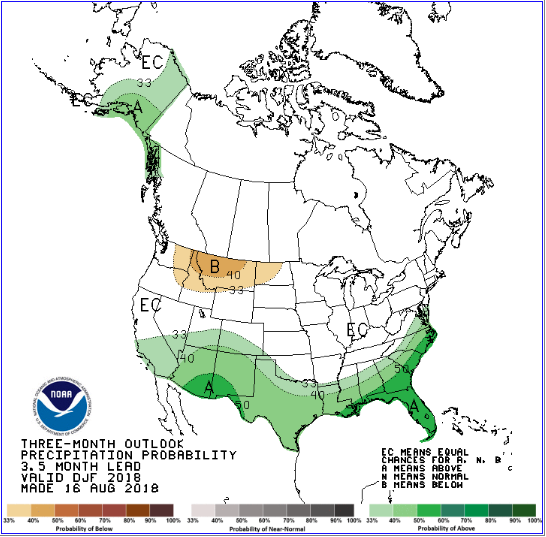
The CPC has recently issued its prediction for winter conditions for January, February, March 2019, the core of the snow season for most folks. As we have pointed out earlier, this winter will be influenced by a weak-moderate El Nino that is showing up as warm water in the eastern Pacific. Below are two graphics that reflect the forecast for Jan-March 2019, one reflects Temperature, the other Precipitation.  The colored areas reflect the probability of variance from “average”, that is, the historic amounts of rainfall and temperature recorded over the year.  So, some areas can be “EC” for “Equal Chance”, of being above, normal, or below average, or, in other words, a toss-up.  “A” is a predicted probable variance  “Above”, “B” is “Below”, and “N” is “Normal” or historic average.

You can see at a glance that temperature predictions are forecasting above average temps in the Northwest and extending across a swath of the northern tier of the country. And, the Precipitation map shows above average for the southern tier with a toss-up for a middle band across the country, and pockets of below average precip in the Northwest and Midwest. Put the data from the two maps together, and you get the official NWS prediction for winter: Warmish and toss-up wet in the middle swath of the country, toss-up temps but above average wetness across the south.

Just remember, this is a prediction about what the weather will be four-six months from now and treat it as such. Incidentally, you may want to compare these forecasts with the venerable Farmer’s Almanac’s Official Winter Weather prediction. Alas, The Farmer’s Almanac’s secret forecast formula is calling for “More Rain, Less Snow.”

So, the stakes are set on the table; let’s see how the dice rolls.

Two woodpeckers in a tree means snowy, cold winter, or so they say. Credit: Dreamstime.com


BowlerSkier_489

Conditioning Can Beat Sarcopenia: Pay Attention Seniors

Sarcopenia Weakens Muscles In Aging Bodies, But It Can Be Managed.

If you’ve been lax about starting, continuing, or expanding your current conditioning program, it is time to get with the program. Many seniors are susceptible to weakened muscle as a natural effect of aging. When was the last time you picked up trash barrel, laundry basket, your bike, kayak, or even your skis, and you realized that they seem heavier than they used to be. The condition is called Sarcopenia, and it affects 13 percent of 60 year olds and as many as 50 percent of 80-plus.

In a recent New York Times article, Jane Brody, a personal health and fitness columnist, says that although the condition is fairly prevalent, not many seniors know about it.

Few practicing physicians alert their older patients to this condition and tell them how to slow or reverse what is otherwise an inevitable decline that can seriously impair their physical and emotional well-being and ability to carry out the tasks of daily life.

Dr. John E. Morley, a St. Louis University School of Medicine geriatrician, says that sarcopenia is to muscles as osteoporosis is to bones. “Sarcopenia is one of the most important causes of functional decline and loss of independence in older adults.”

The good news in all this is that the effects of sarcopenia can be reversed by exercise.

No matter how old or out of shape you are, you can restore much of the strength you already lost. Physical therapist, Marilyn Moffat, a professor at New York University, noted that research documenting the ability to reverse the losses of sarcopenia — even among nursing home residents in their 90s — has been in the medical literature for 30 years, and the time is long overdue to act on it.

That’s yet another reason to get back to conditioning.  Start a strength-building program using weights, bands, or machines.  As Dr. Moffat points out,

Start with two repetitions and, using correct form through the full range of motion, lift slowly and lower slowly. Stop and ask yourself how hard you think you are working: ‘fairly light,’ ‘somewhat hard’ or ‘hard.’ If you respond ‘fairly light,’ increase the weight slightly, repeat the two reps and ask yourself the same question. If you respond ‘hard,’ lower the weight slightly and do two reps again, asking the question again.

If you respond truthfully ‘somewhat hard,’ you are at the correct weight or machine setting to be exercising at a level that most people can do safely and effectively to strengthen muscles. Continue exercising with that weight or machine setting and you should fatigue after eight to 12 reps.

Now here’s a surprising insight. Your current exercise program might not be adequate to hold sarcopenia at bay.

The fact that you may regularly run, walk, play tennis or ride a bike is not adequate to prevent an incremental loss of muscle mass and strength even in the muscles you’re using as well as those not adequately stressed by your usual activity. Strengthening all your skeletal muscles, not just the neglected ones, just may keep you from landing in the emergency room or nursing home after a fall.

Exercise and paying attention to protein in your diet are the keys to remaining strong or at least as strong as you can be as you age. Read Jane Brody’s article and get busy.


SeniorsSkiing Guide: Portillo, Chile

Ride The “Va et Vient” Lift Up The Steeps, Ski With Ski Teams, Enjoy The Vistas Of Remote Mountains. There Is Only One Portillo.

Editor Note:  Casey Earle has written several articles for SeniorsSkiing.com, introducing Norte Americanos to skiing in the Southern Hemisphere. Also click here for advice for neophytes . Portillo hosts international ski teams in training during the summer months, and it boasts amazing runs, unique lifts, and a curious sense of remoteness with luxury amenities. Here’s his Resort Review.

Filled with amenities Hotel Portillo is the only place to stay at the resort. Credit: ChileSki.com

Portillo should be on every skiers bucket list. It’s a beguiling combination of big mountains, a sense of remoteness, old world charm, and wild skiing. Known for intense suntans from its brutal sun, young whippersnappers pumping adrenaline to the limits, a heated pool with a lake view to make even jaded travelers swoon, fine formal dining, and great après ski, you can´t go wrong.

Riding the Roca Jack “Va et Vient” with the US Ski Team. Credit: Casey Earle

Located near the Chile-Argentina border two hours north east of Santiago, 14 miles from the Western Hemisphere’s highest mountain (the Aconcagua at 23,000ft), the area is accessed by the only paved highway to Argentina for over 400 miles. Founded in 1949, the ski area was bought in 1961 by two Americans, Bob Purcell and Dick Aldrich and is still run by the Purcell family. The original hotel has been preserved and remodeled to modern standards.

The area has five chairlifts, four pomas, and four “Va et Vient”. While most are short lifts, several will provide you with about 1,000 vertical feet on the aprons of 14,000 ft mountains, or in combination, more. The “Va et Vient” are specially designed for steep slopes, with only one tower at the bottom, and two bull wheels suspended from the rock above, giving the lift a triangular form. Four or five people load up to the platters hanging from a crossbar, and when ready, the lift starts up and whisks them up the mountain. One can release before or after the lift stops at the top, but be careful getting off on the steep slope, you do not want to fall there!

While there are several good groomed runs, notably Juncalillo and Plateau, much of Portillo’s attraction comes from skiing those steep, ungroomed runs. Famous challenges for skiers are the Garganta (throat), the Lake Run, and the Roca Jack. The most ambitious hike over two hours up takes you to the “Super C”, a lengthy couloir for extreme skiers only. Also, some great heli skiing for intermediate and advanced skiers can be had on the surrounding mountains. All the while, you will be surrounded by a united nations of skiers, and some of the world’s top racers in training.

Taking on the Lake run. Credit: Casey Earle

The only lodging available within 90 minutes of Portillo is the Hotel Portillo. With a variety of options from US$1,150 to $3,950 for a week, meals included, there is something for everyone. A range of activities are available, including a gym, game room, and a full court for sports such as basketball. For lunch, there is no better venue than Tio Bobs, at the top of the Plateau chair, where you can gaze down at the Laguna del Inca and up at the surrounding Andes, while feasting on BBQ’s, fish, salads, and of course a potent Chilean pisco sour!

For more information, click here. For a trail map, click here. 


Worse case scenario, you can always just kick back in the pool, get a massage, or hang out in the bar. Credit: SkiPortillo.com

Trail map gives an orientation to Portillo. Click here for more detail.

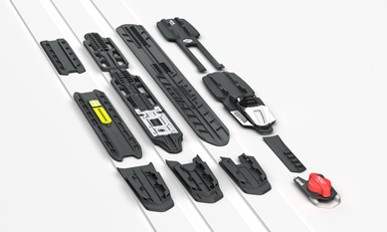
Breaking News: Rottefella Introduces the Move Switch for Enhanced XC Ski Performance

New, Adjustable  XC Binding Concept Hits The Trails.

Rottefella Move Switch allows for adjustable weight distribution. Credit: Rottefells

The Rottefella company has created the binding solution for waxless and skin cross country skis. The Move Switch is a dial on the front of the binding that will allow skiers to slide the binding forward or backwards without releasing the ski from the boots. That’s right, while you are on the ski trail, you can just bend over and turn the switch for the binding to slide and adjust to the desired weight distribution on each of the skis.

The intention of the Move Switch is for quick adjustment and better performance on flat or hilly terrain for recreational skiers who use waxless skis and particularly the quiet skin skis that have a mohair-type strip embedded in the ski base. If you want to glide better on a slow snow day on the flat trail, then stop and slide the bindings backwards to distribute your weight on the ski to provide more glide. If you need more grip to go up a hill, then slide the bindings forward to attain an enhanced grip to prevent slipping backwards on the snow.

Rottefella has created a moveable binding system that will be available for and can adapt to work with major existing ski plate systems at the other binding manufacturers including Rottefella NIS, Fischer, Rossignol, Salomon, and Atomic. There is also a binding, Rottefella Classic or Skate Quicklock plate that is moveable when skis are removed for those not expecting to move the bindings while skiing.

The Move Switch will make it easier to adjust the ski bindings as necessary correlating to the snow conditions or terrain. In the olden days, such changing required applying different waxes but with the new products, those days should be in the past for recreational cross country skiers. Using waxless skis eliminated the need for waxing the bases, but they worked differently in varying conditions or terrain – some grip well but are slow on the flats, while others glided well but did not hold when going up a hill. The retail price for a system or plate package will run between $69.99 and $149. Currently, the skin waxless skis may comprise about 25 percent of the new XC ski market as skiers are opting for the quiet base that provides good grip and glide in various ski conditions.

Spike Clayton at Skirack, a retail outlet in Burlington, VT, commented that he’s impressed that a Nordic company came out with a product that can be used universally on any ski brand for the ever expanding skin ski market.  “The product will give our customer a true choice to improve the performance of the skis easily.  The great thing about The Move system is it simple and effective for the skier to use.”

Rottefella Move Switch adapts to many brands of bindings. Credit: Rottefella