This Week In SeniorsSkiing.com (June 28)

Steamboat gets a summer snow dump. Thanks to SnowBrains.

Isn’t It Time For You To Go Home?

We’ve all hosted house parties where one or more guests have decided to hang around long after everyone else has gone. Perhaps the table has been cleared, dishes stacked, and the corks put back in bottles. Perhaps the hostess has gone to bed with a telling backward look. Yet, here they are, discussing with vigor something about something.

Is this not the case with this year’s never-ending ski season? At last look, there were at least four areas still operating, some on weekends, but nevertheless. SnowBrains reports the summer skiing is “unbelievable” at Mammoth. Snowbird is winging. A-basin is open, too, with snow STILL falling in Colorado. Always a late closer, Timberline Lodge is going to end end of August. Although it is closed, Steamboat got a 20″ dump last weekend. Something happening here.

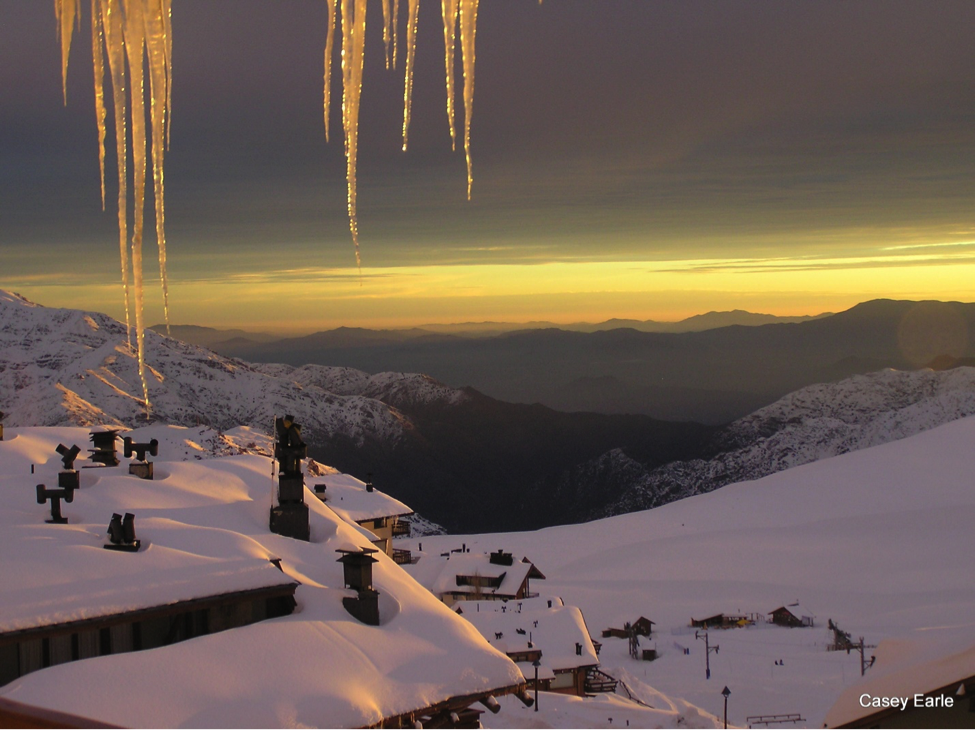
La Parva, Chile, sunset through the icicles. Credit: Casey Earle

Amazingly, this “season” appears to have no end, now running consecutively with resorts in Australia, New Zealand, and South America whose season has just started.

And so we wonder, gentle readers, is it time to call it a season? Or not. Please tell us if you are still out there. More importantly, what keeps you going into the summer? Curious minds want to know. Drop a comment down below in the Comment Box.

Speaking of Latin America, our Chile-based correspondent Casey Earle offers a resort review of La Parva, right outside of Santiago. Check out the webcam links in the story. Lotsa snow there, too.

Riding the foothills of the Tucson Range. Credit: White Stallion Ranch

Even if the snow season refuses to shift, this week we are on to different topics. Pat McCloskey discovers a brand of ultra great maple syrup from Vermont’s famous Cochran ski-racing family that he simply has to write about. Our ever-traveling correspondent Yvette Cardozo visits a dude ranch…er, guest ranch…giving us a snapshot of yet another non-snow season activity. Did you know legs strong from skiing help you stay on a horse?

Finally, we’re publishing a season summer video diary by correspondent Don Burch. He’s taken the time to document this season with pictures and videos (some taken by ski journalist Peter Hines). Perhaps the idea of a video journal of the season is something that might catch on. At least, watching it might keep you a bit cooler in July.

Off we go into summer. We’re going sailing. What about you? Thanks for reading SeniorsSkiing.com . Wherever you go, remember, there are more of us every day, and we aren’t going away.

Short Swings!

This morning only the silver slice of moon interrupted the pure blue sky. 

Capitol Reef NP

The landscape here in south central Utah is exceptional. My summer grounds are at the base of Boulder Mountain, not far from Capitol Reef National Park. Boulder Mountain is the eastern end of the Aquarius Plateau, the highest plateau on the continent. The mountain peaks at 11,328’ and is crowned by an escarpment currently spotted with snow. One north facing section is long enough to get about twenty turns. It probably would take a few hours to get up there and find the spot. More runs would be guaranteed if I drove the 3½ hours to Snowbird, where lifts are still running. It’s a possibility, but a few hours of turns may not be worth the effort.

Last weekend, 20” fell at Steamboat Springs. Snowfall this late in the year is due to a warmer and wetter atmosphere. At cooler, higher elevations it turns to snow. The last time Colorado had this amount of snow in June was 91 years ago.

If you’re fortunate to live close to Snowbird, Mammoth, Squaw Valley, Arapahoe Basin or Timberline Lodge, you may be enjoying an extended season. I’m envious. 

If you plan to be visiting my corner of the West, please let me know (jon@seniorsskiing.com).

***

Elan Introduces First Foldable Ski

Elan’s new folding ski

Elan’s Ibex Tactix is the world’s first foldable ski. Made for backcountry, skis, bindings and skins weigh in at 5.5kg. The 163cm skis use a folding mechanism that reduces skis to 90cm for easier transport. The company’s claim that the package is good for all conditions is demonstrated in this video.

***  

Many National Parks Plagued by Air Pollution

Ninety-six percent of America’s national parks are plagued by significant air pollution problems reports the National Parks Conservation Association. The group evaluated air, haze, and soil and water pollution in 417 national parks. The results are available in NPCA’s report, Polluted Parks: How America is failing to protect our national parksNPCA is the leading voice safeguarding America’s national parks. 

***

Alta’s (Now Past) Ski and History Tour with Alan Engen

For many years, Alan Engen served as Alta’s Director of Skiing. Alan is a strong contributor to the history of skiing in the Intermountain West and was the driving force behind the Alf Engen Ski Museum in Park City (named for his father, one of Alta’s founding fathers). Alan took great pleasure in sharing Alta’s history and its terrain with its senior visitors. This poster announcing the program is from the late 1990’s.

Videos Worth Watching

I recently stumbled across this 7-minute review of skiing in the US from the 1930’s through the 1950’s. It’s great fun. 

This 8-minute instructional film from 1941 appears to be a US Army production explaining skis, bindings, boots, and skins. The difference between then and now is amazing!!! 

The History of Alpine Skiing shows the evolution of the sport from its earliest days. Produced by Alpine Life, the video is about 12 minutes.

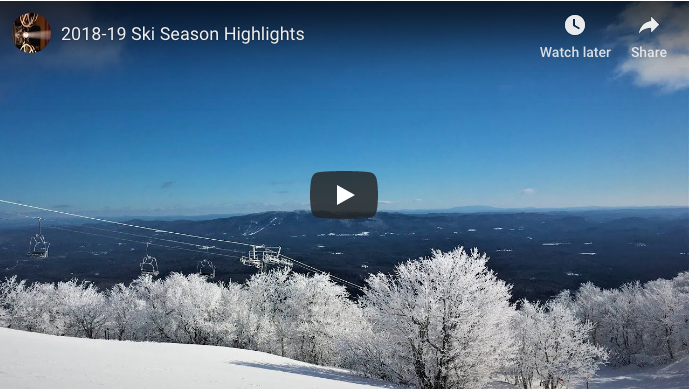
Correspondent Don Burch Wraps the Season

Don Kept A Video Diary Of His 2018-19 Season.

Perhaps this will keep you cool in July. If you have videos of this past season, please let us know at info@seniorsskiing.com.

(Some videos by Peter Hines)


Non-Snow Activities: Dude Ranchin’

From Yodeling To Yippee-ing, Yvette Rides The Range.

Riding the foothills of the Tucson Range. Credit: White Stallion Ranch

 I’m not sure if skiing gets you into shape for horseback riding or vice versa, but, yes, a lot of the same muscles are at play. 

Either way, both take strong legs.

I confirmed all of this at White Stallion Ranch just outside Tucson, AZ at the end of last ski season. 

I packed my schedule full because I wanted to do EVERYthing. 

So on my first day, I went on the slow mountain horseback ride. We left the main ranch compound and sauntered leisurely across the valley, following a well worn path through the cactus.

Fast ride. Credit: White Stallion Ranch

At the foot of the volcanic, granite hills of the Tucson Range, we headed up via a rocky trail, passed the tall fingers of saguaro cactus and all sorts of blooming brush: yellow, purple, violet flowers. All in all, a great intro to the ranch rides.

There are also breakfast rides, wine and cheese rides, and a beer and Cheetos ride. Yum.

Such is life at one of the two remaining guest (aka dude) ranches in the Tucson area. Not that many years ago there were a hundred but population growth and development swallowed them one by one.

The White Stallion Ranch has been around since the turn of the 20th Century, first as a cattle ranch, and later home to 30,000 chickens.  In 1945, it became a guest ranch. The True family bought it in 1965, and. when they saw that the area guest ranches had already dwindled to about 30, they started buying land and adding rooms. Today, the 3,000 acre ranch has 43 rooms, a five bedroom hacienda, 160 horses, 120 cows, and wranglers on hand to lead rides, teach, tend to the livestock, cook and all the rest.

 For me, it wasn’t all riding. A couple of mornings I went shooting. I’ve only touched a gun once before in my life, but Bob and Sharon Callan will talk you through everything, how to aim, how to cock the guns, how not to accidentally blow your head off.

They’ve run the firearms training program for the Tucson police department, so they’re used to teaching.

You get to use a six shooter and a rifle, and there’s a set of steel plate targets.

“Consider all guns loaded and don’t point at anything you don’t want to shoot,” Sharon said. And added, “You can shoot the pistol one handed, but if you want to hit something, use two.”

All those cowboy movies where folks at a gallop shooting one-handed pick off the bad guys? Not on your life.

Western star Loop Rawlins does rope tricks during evening entertainment at White Stallion Ranch. Credit: Yvette Cardozo

I also did the movie tour by van. 

The ranch has been a popular site for movies since the 1930s. And for good reason. It’s literally around the corner from Tucson. You leave the ranch, climb a low hill and there, on the other side are the outskirts of the city. Talk about convenient.

Marty Freese, the ranch’s history guy, took us to all the popular sites where dozens of movies, TV shows, and commercials have been filmed,  including High Chaparral, a Lone Ranger movie and enough others to fill a two-page list.

 Each night there an activity. Bill Ganz sang cowboy songs by a campfire. Phil and Hector brought tarantulas and scorpions and a bearded dragon named Stumpy that attached itself to Phil’s chest like velcro, along with a Burmese python so long, it took nine kids to hold it. 

But the star of the week was Loop Rawlins who is an artist with gun and rope. He kept the Spring Break crowd of kids spellbound as he twirled guns, flipping them into his holster, skipped rope with his lariat and did a finale that involved a flaming, twirling lasso. 

On one of my last days, the ranch held its once-a-week rodeo. It’s sort of Rodeo 101, which is great if you’re like me and have never been to one. Russell True, who was five when his folks bought the place and now pretty much runs it, explained barrel racing, bulldogging, where you ride alongside a steer and jump astride it to bring it down (as bone rattling and dusty as you imagine) and team roping which Russell says he calls “cowboy judo” and is even more frenetic than bulldogging.

I also took a horse riding lesson and discovered all the things I was doing wrong. 

So maybe next time, I can actually get my horse to canter.

For more information on the White Stallion Ranch, click here.

Guests leave the breakfast corral on horseback during a breakfast ride. Blooming hedgehog cactus in foreground. Credit: Yvette Cardozo

SeniorsSkiing Guide: La Parva, Chile

La Parva Is A GS Cruiser’s Heaven.

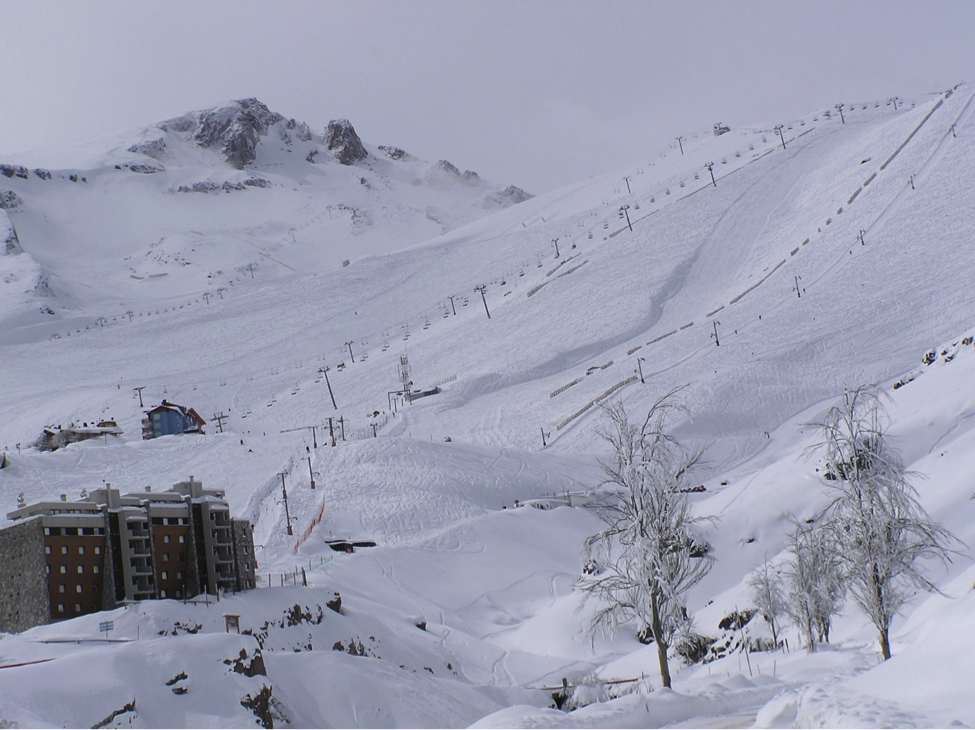
As a first installment on the Three Valleys of ski fame in Chile, I’ll write about La Parva. One hour and a half from the Santiago airport, La Parva is perched up at 8,700 ft on the front side of the Andes, and overlooks the city. The road up involves 40 switchbacks and a vertical rise of 7,000ft.  I do not recommend tackling it during a storm!

The furthest north of the three ski areas, the village rests at the base of the La Parva peak (13,000ft), which itself is a sub-peak of the El Plomo Massif (18,000ft). Stretching for a width of three miles across several watershed— all connected with skiable cat tracks— the area faces mostly west, with the north sides of the valleys collecting the most snow. While this western orientation exposes it to the sun and north wind, often leaving bare ridge lines, it also means snow accumulates in those multiple bowls where the snow is blown, and the sun hardly shines.

On a good year such as this, even the north faces are skiable.

As a bonus, the sunsets over Santiago are wildly beautiful.

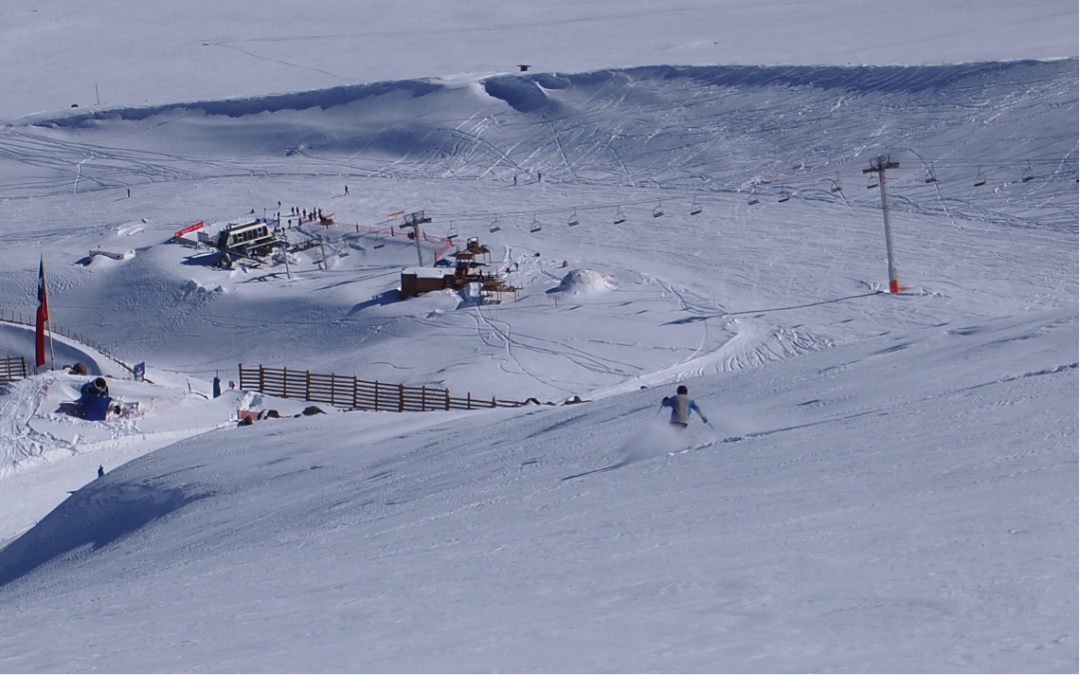
To get you up the hill, there are four chairlifts, each serving different terrain, and seven good surface lifts (platters, thank god). In windy weather, the platters are safest, as you can bail out wherever you want. But, with 80% of the days being sunny, and often with no wind, the weather is generally not an issue. Grooming is excellent with no mogul bashing required, ever, but add in 70% of the runs being intermediate level, and this is a GS cruisers heaven. The entire vertical rise of 3,000 ft can be skied in one go, so get the long boards out boys!

The village itself is like a classy suburb of Santiago with no hotels, but several restaurants. Most of the 2,000 or so beds are ski in-out apartments, and the family-oriented atmosphere is manifest in the hoards of little racers out at 9 am sharp every weekend. Racing is the name of the game in La Parva, and while often fun to watch, it does take up some of the best runs, especially when the international teams arrive in August. Fortunately, there is a lot of room in the ski area, especially when the off-piste is in good shape.

Casey finds a lonely route down to the Las Aguilas chair, and the small restaurant at its base.

For lodging, there many private apartments, and a few houses on Airbnb or Booking.com. The village has three restaurants, a bar/disco, and a small grocery store. On the hill, aside from the three restaurants mentioned (all accessible on skis) there are two mid-station restaurants, and a small, occasional, open-air one at 11,400 ft. Careful with the pisco sours, it is a long way down…

For La Parva Trail Map, click here

For La Parva Webcams, click here

Check out the La Parva website here.

Slopeside Syrup: Ski Racing And “Golden Delicate”

The Cochran Family Makes Maple Syrup And Ski Racers.

Slopeside Sugar House run by ski racing’s famous Cochran family. Credit: Cochran Family

There are a lot of Vermonters and others in the ski racing world who could tell you a lot more about the famous Cochran Family of Richmond, VT.  I have friends who know them personally and tell the tales of the first rope tow that Mickey Cochran built in his back yard with the vision of a community ski facility.  He and his wife Ginny ultimately had four children who all made the U.S. Ski Team and had outstanding success including a  gold Olympic medal for Barbara Ann and a World Cup GS Title for Marilyn.

World Cup GS Champ Marilyn Cochran helps out at Slopeside. Credit: Vermont Sports Hall Of Fame

My friend Mark Hutchinson remembers the time that Mickey’s jacket caught on fire because of all the oil and engine grease embedded in the fabric as a result of countless hours maintaining the tows at Cochran’s.  Today, Cochran’s is a legendary ski training center for young ski racers all over Vermont with coaching and operational duties falling to the Cochran family, relatives, and grandchildren.  They are currently a non-profit ski area with training and races held each winter.  Donations are gratefully accepted at www.cochranskiarea.com/donate But that is not what the subject of this article is.  I am talking pure Vermont Maple Syrup of which I am a true connoisseur or as my friends say, a “common sewer”.

I have this habit of taking pure Vermont Maple Syrup, heated, in a jar when my wife and son and I  go to breakfast.  They look at me with disdain, but I will not use anything else on my hot cakes, waffles, or oatmeal.  I am always on the hunt for the recently re-named “Golden Delicate” syrup that is elusive.

With the re-naming of the descriptions of different grades of syrup by the Vermont Maple Sugar Makers Association  (www.vermontmaple.org) ,  there has been some confusion as to what is actually the top syrup for consumption.  Personally, I like the lightest syrup currently described as “Golden Delicate”.

Recently, four of the grandchildren—all cousins—of Cochran decent, decided to enter the maple syrup space in Vermont by constructing a timber frame sugar house close to the ski area.  This has expanded since 2010 to an operation of 22,000 taps and PVC collection lines that all feed the operation in the sugar shack.

Maple syrup from Vermont. Hmmmm. Credit: Slopeside

Slopeside Syrup has become the standard bearer for all Vermont syrup, and I am so happy that I found them.  One day, while perusing the Durfee family refrigerator in Lake Tahoe, I came across a bottle of this delectable treat.  I asked Eric Durfee about it as he is a native Vermonter and friend of Marilyn Cochran.  He told me about the operation and how he and Marilyn converse about the old days of ski racing and training to this day.  Turns out that Marilyn helps out occasionally with the syrup operation.  When I ordered several bottles online and told her I was a friend of Eric’s, she wrote me a nice personalized note that she packed in with my order.  That little bit of customer service and kindness will always make me a Slopeside Syrup fan for life.  You should be as well.

Go to www.slopesidesyrup.com, and you will see ordering information as well as some history of the family.  Not often that a World Cup GS Champion will oversee your order.  Take it from me, the “Golden Delicate” is nothing like you have ever tasted before.  Most times when I have ordered the formerly labeled “Grade A Delicate”, I got something less with more of an amber color and traditional taste.  However, the Slopeside Syrup product is truly that elusive grade which I know and love and bring with me to every breakfast.

So treat yourself, buy Slopeside Syrup and support Cochran’s Ski Area for the kids in Vermont.  Not all of them can go to the elite ski academies because of cost. But they can come to Cochran’s, get world class coaching, and immerse themselves in a culture of champions.  Ski racing, and maple syrup.  What a combination.

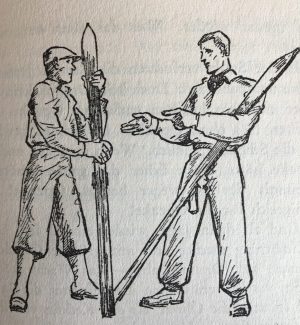
Two Skiers

Ask an Expert: Lodging at Powder Mountain, Utah

Advice From The Marketing Head of Powder Mountain.

Reader Ellin Jaffe  asks:

I’m curious about Powder Mountain near Eden, Utah, and wonder if there are any ski-in ski-out condos there?

Here’s the reply from J. P. Goulet, Director of Marketing, Powder Mountain:

Powder Mountain has ski-in ski-out luxury homes for rent. There also are many condos available in Eden only four miles from the resort and on the public transportation route. All info can be found at www.powdermountaingetaways.com

Powder Ridge Condos and Columbine Inn are other lodging options on mountain. 

Have a question about technique, gear, destinations, travel, or any other aspect of winter sports? Send it to mike@seniorsskiing.com, and we’ll do our best to find an expert to respond.